-
-
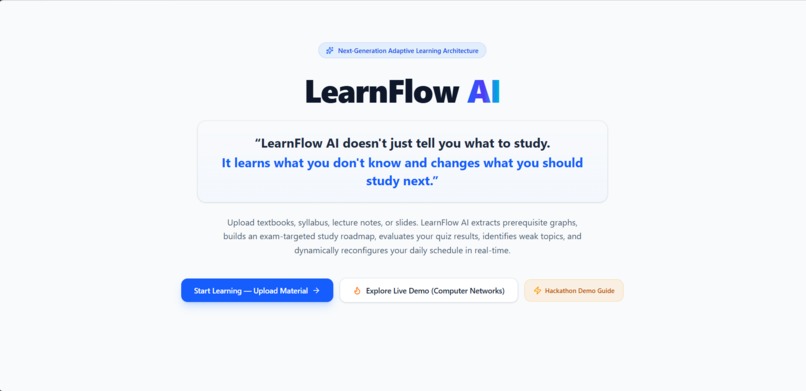
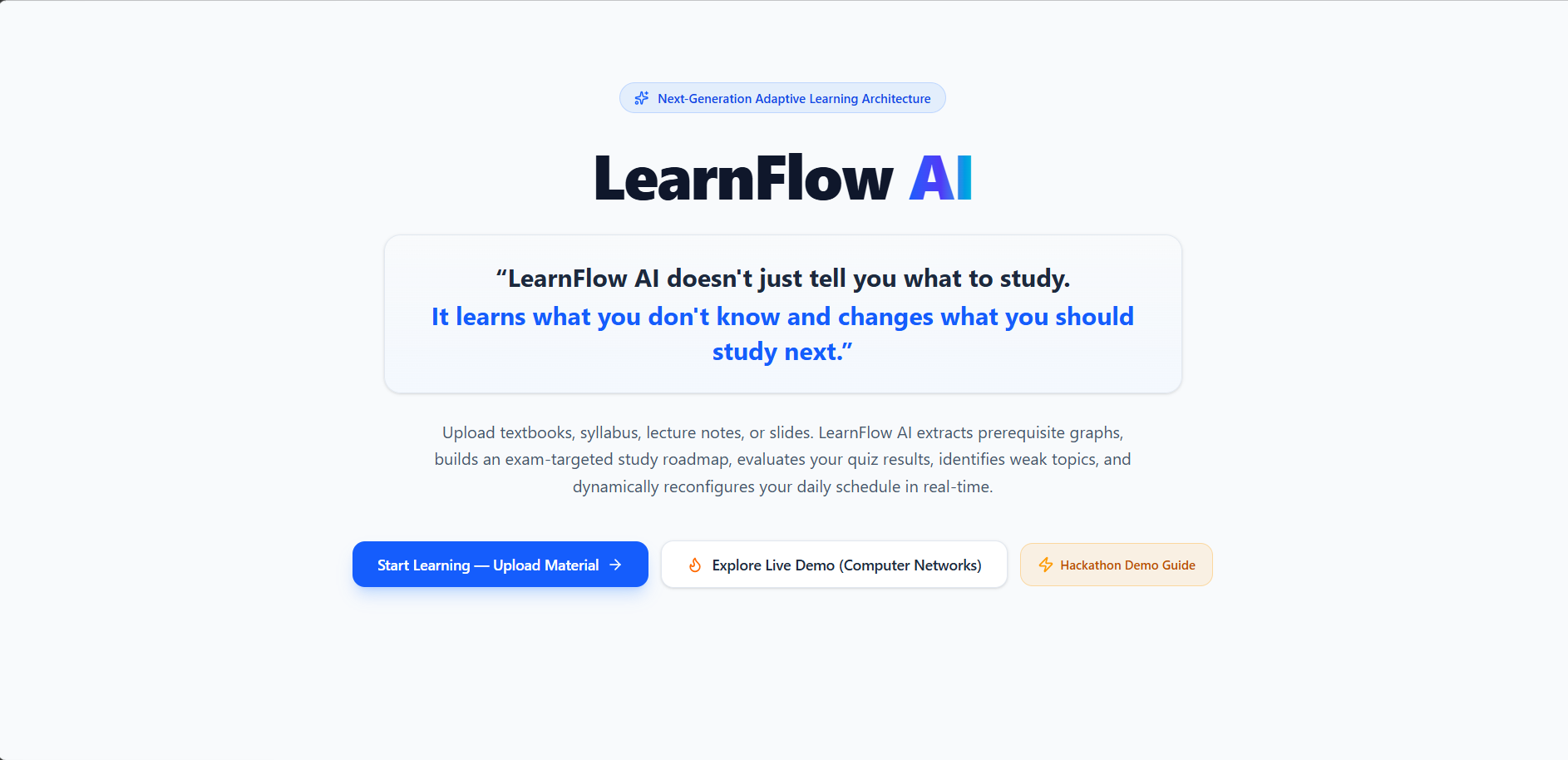
The Intro Page
-
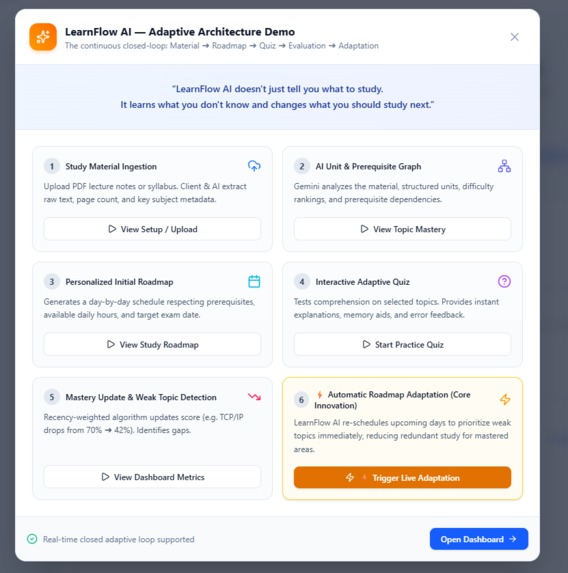
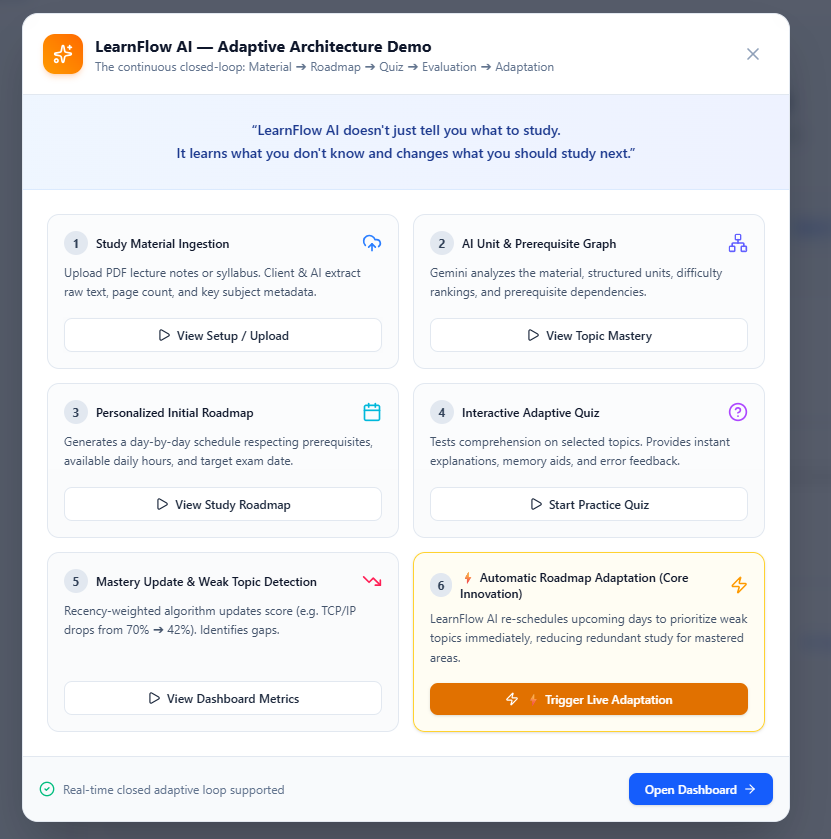
Demo Intro
-
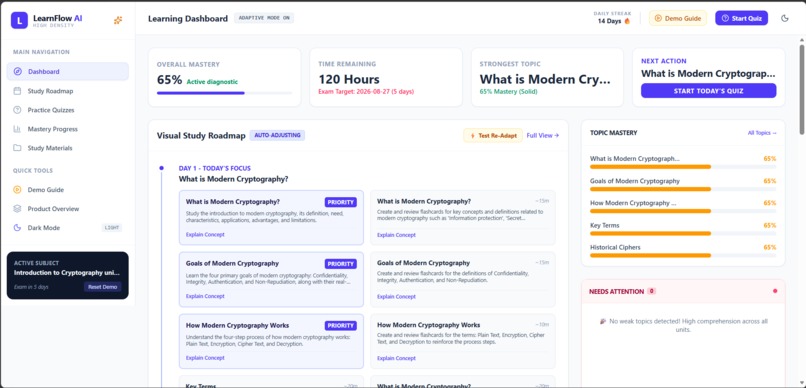
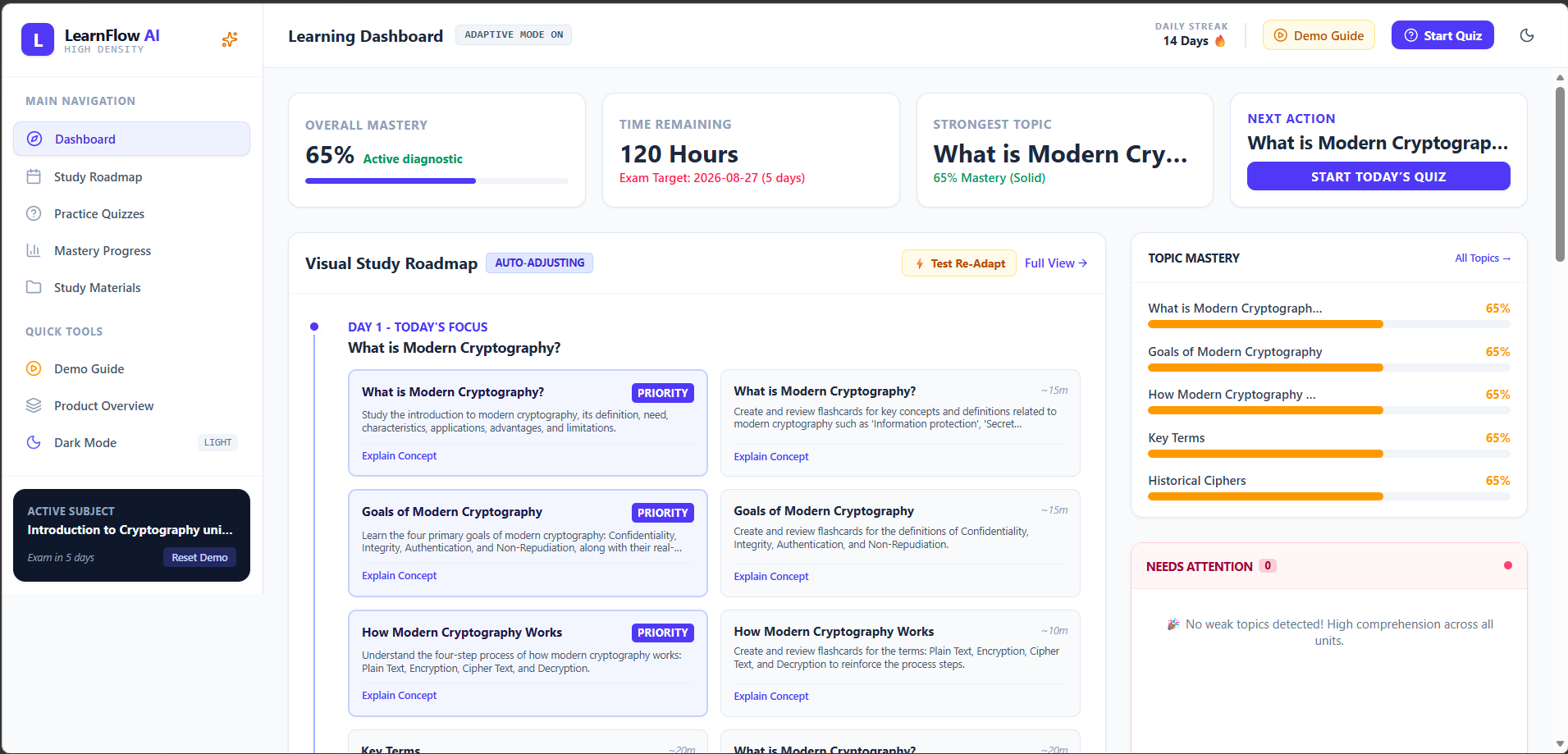
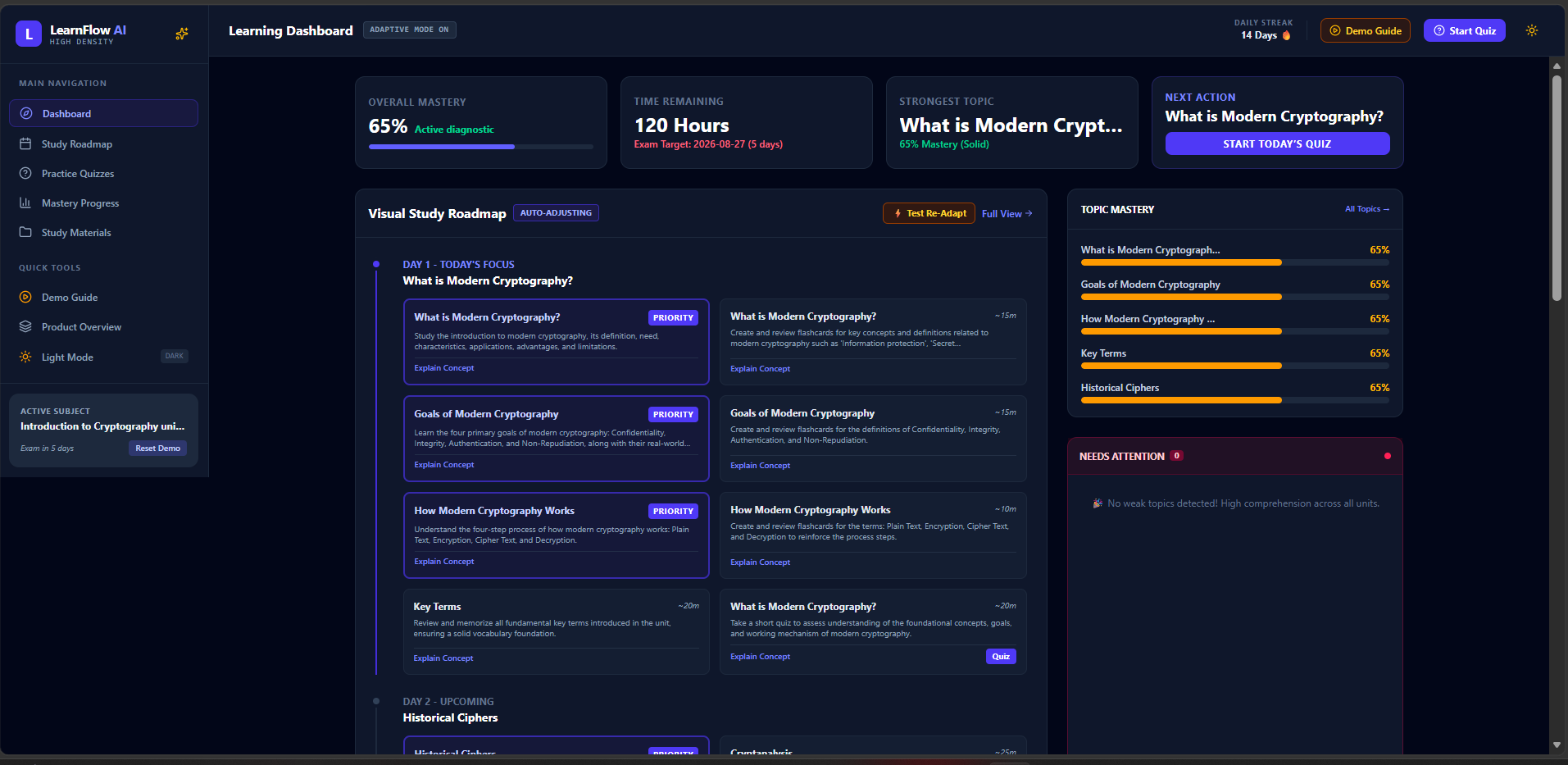
Dashboard
-
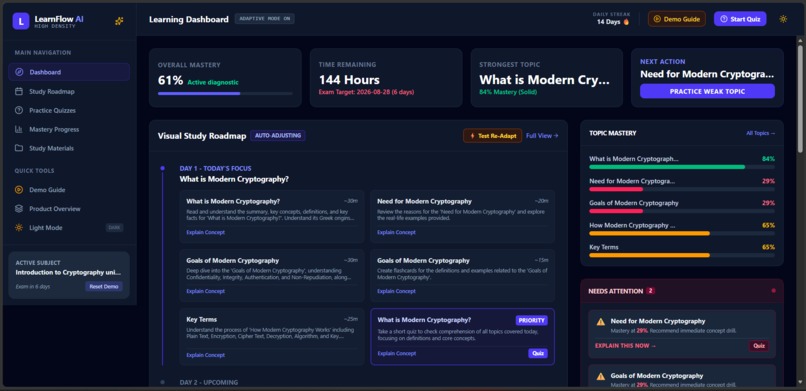
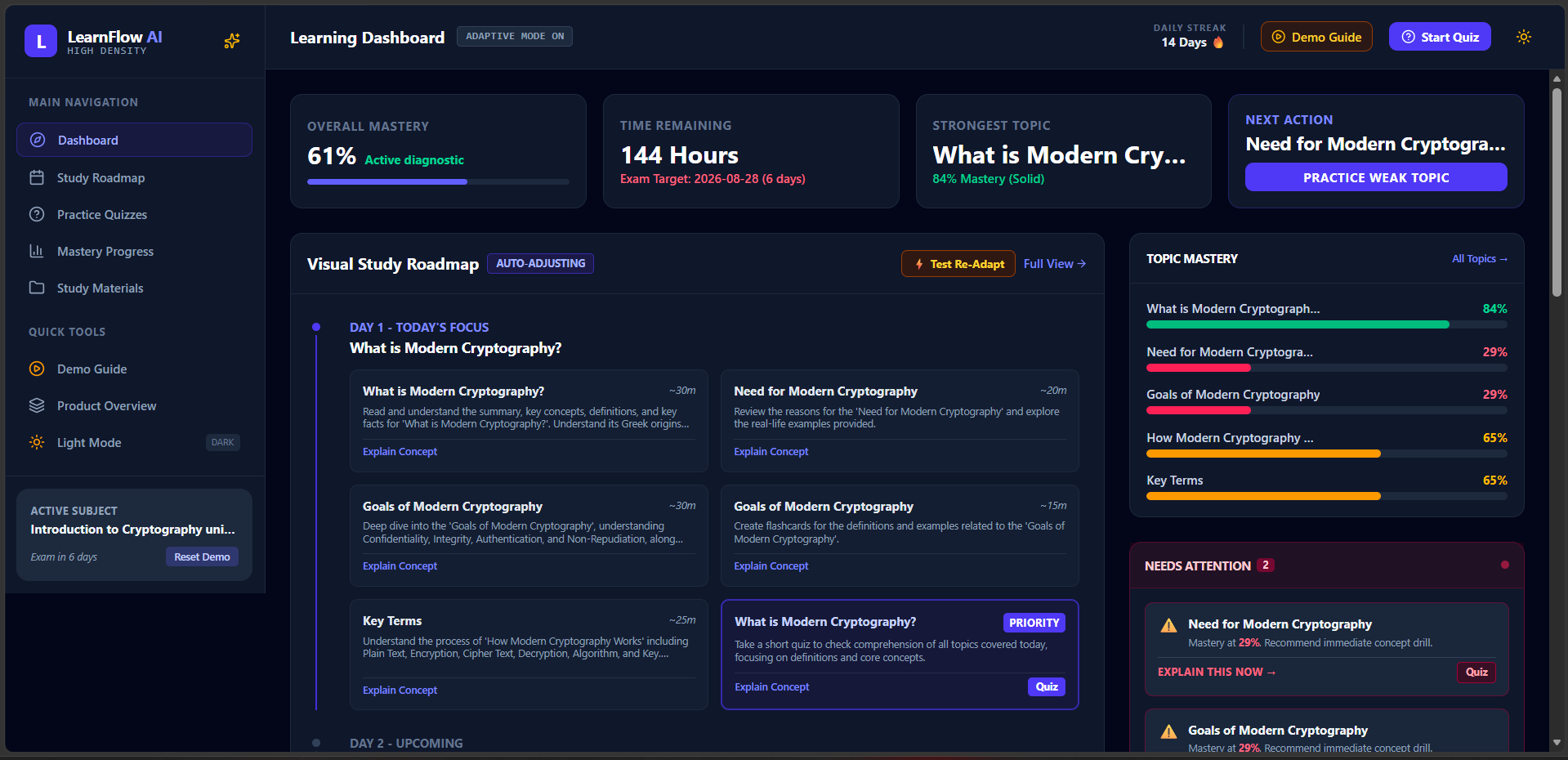
Dashboard "Dark Theme"
-
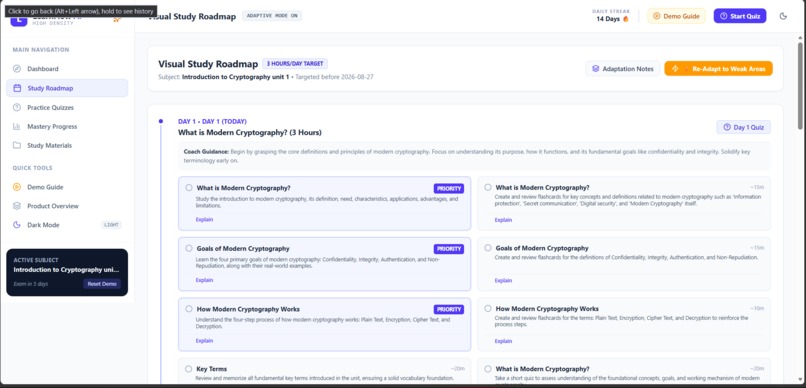
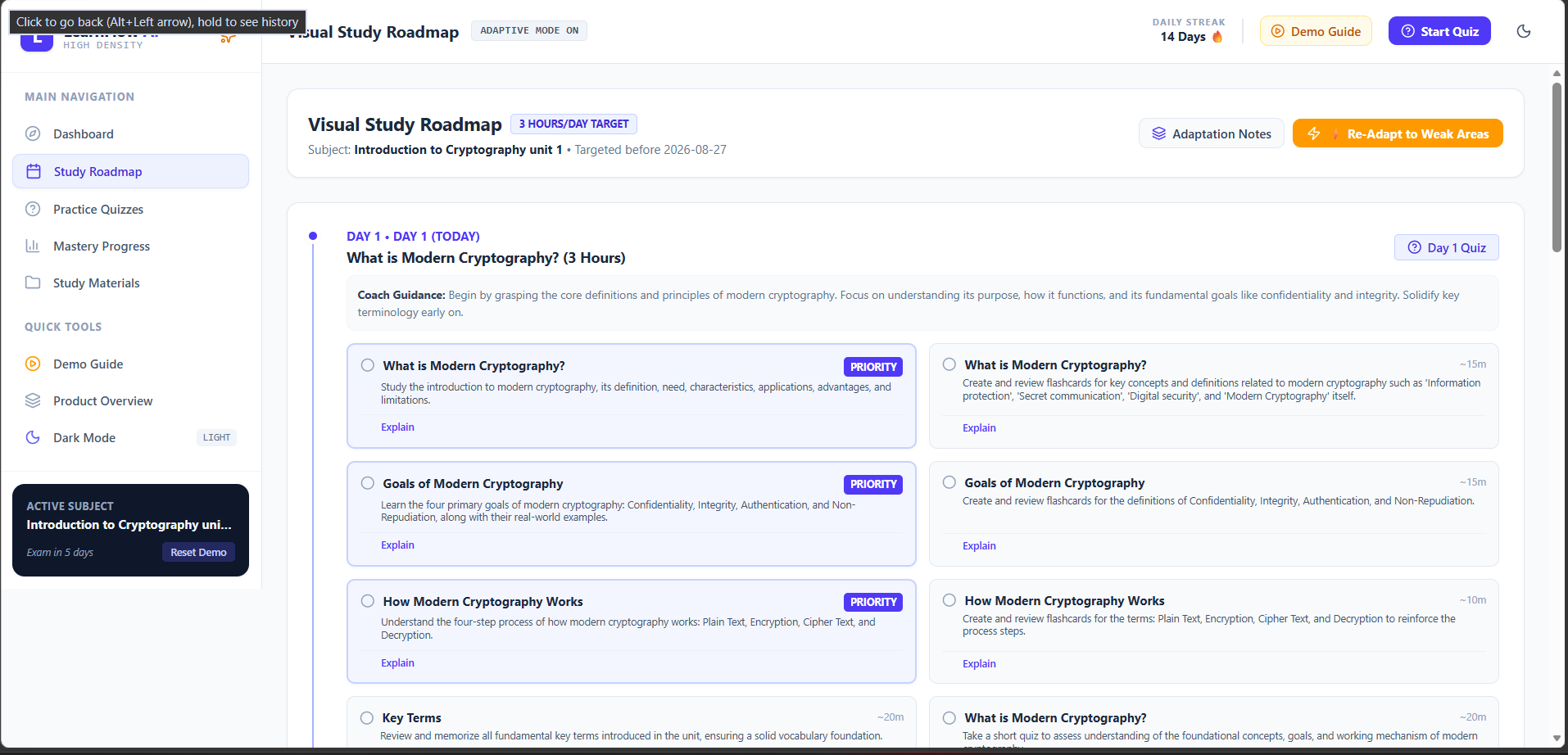
Roadmap
-
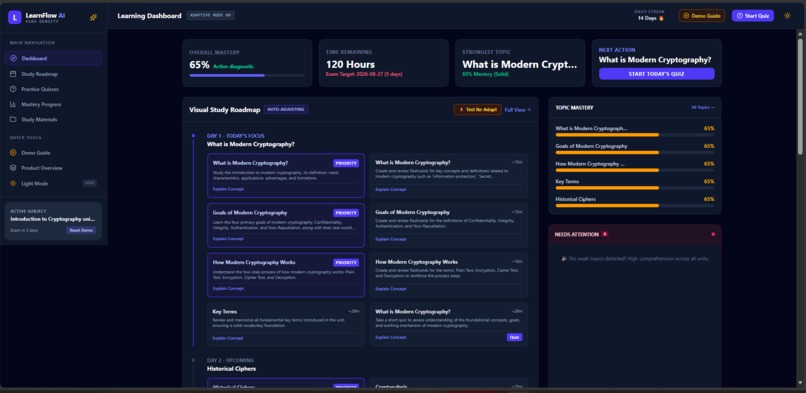
Roadmap "Dark Theme"
-
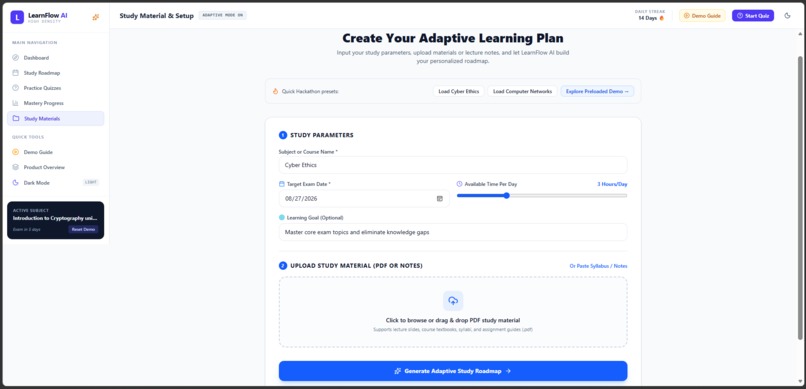
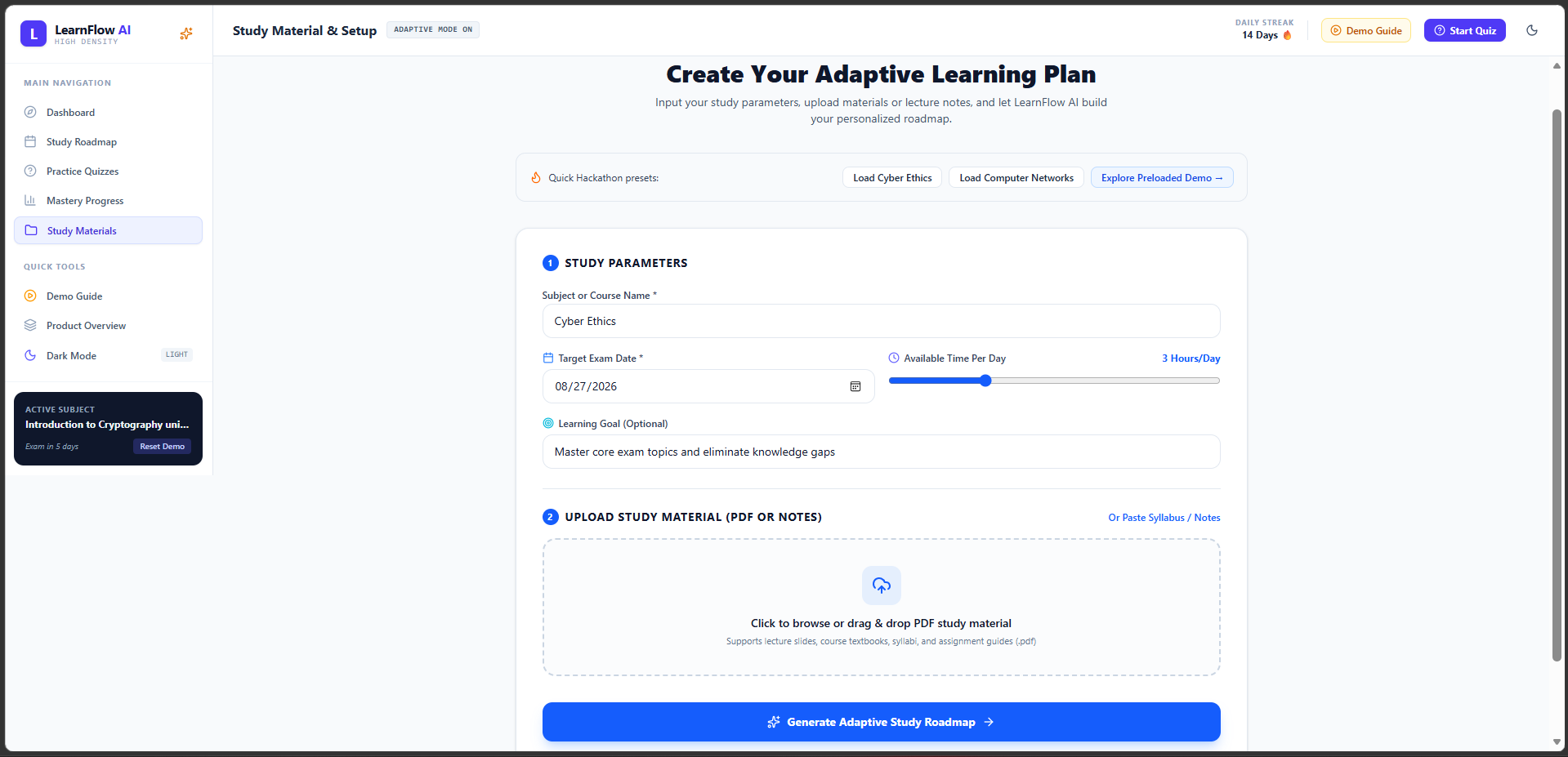
Resource Uploading Page
-
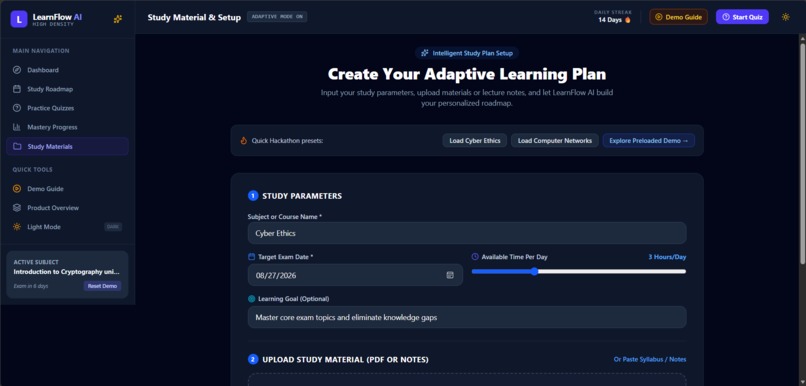
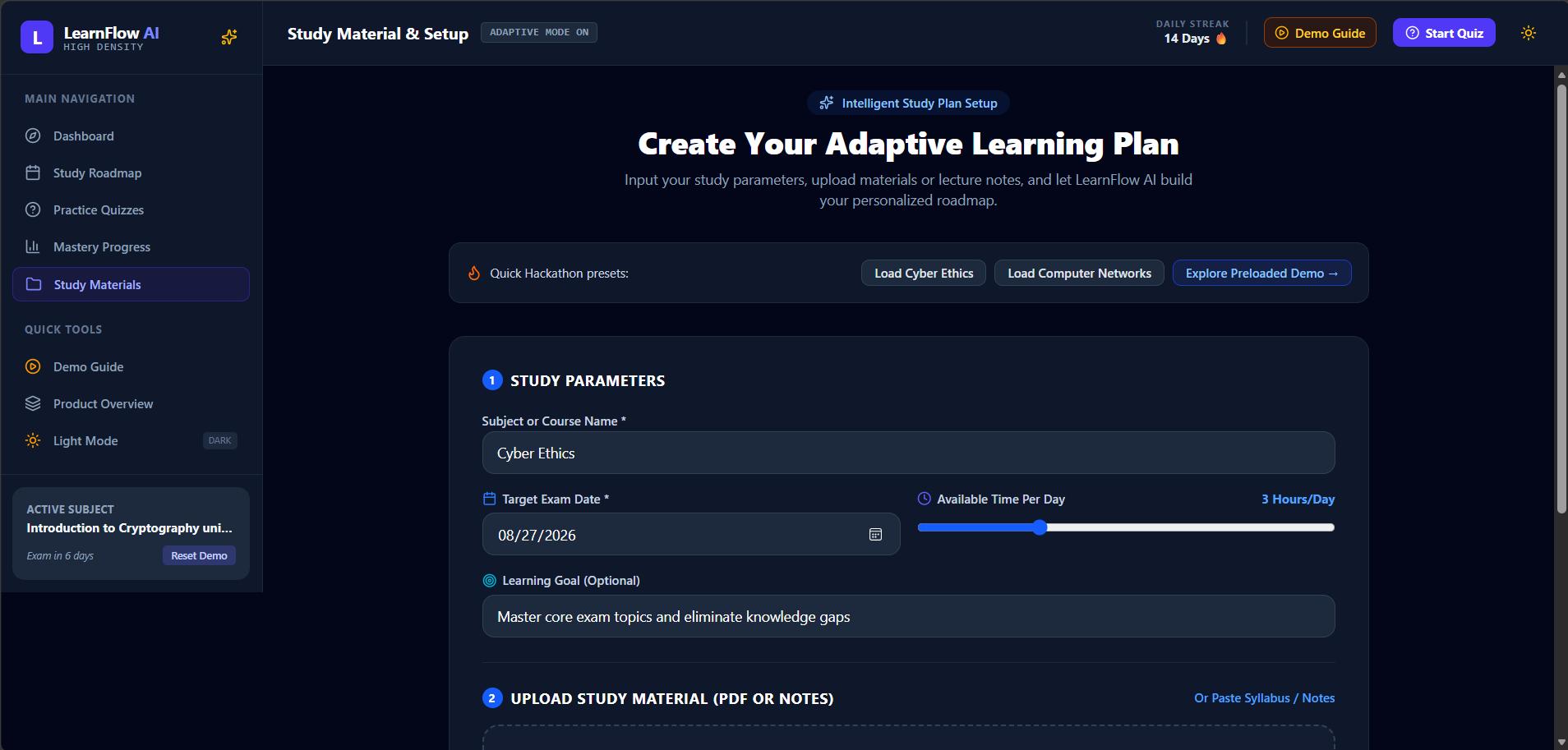
Resource Uploading Page "Dark Theme"
-
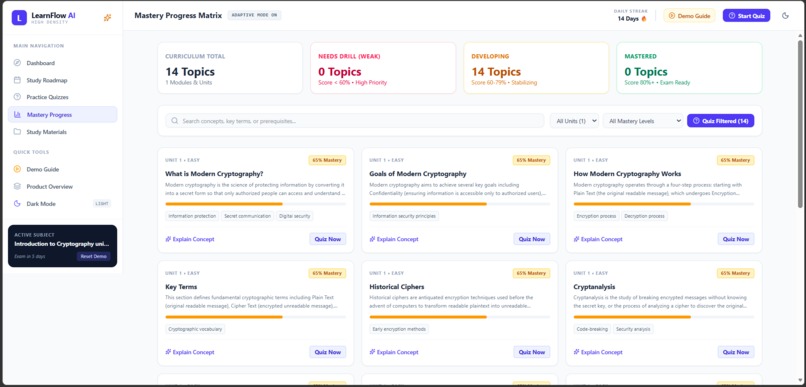
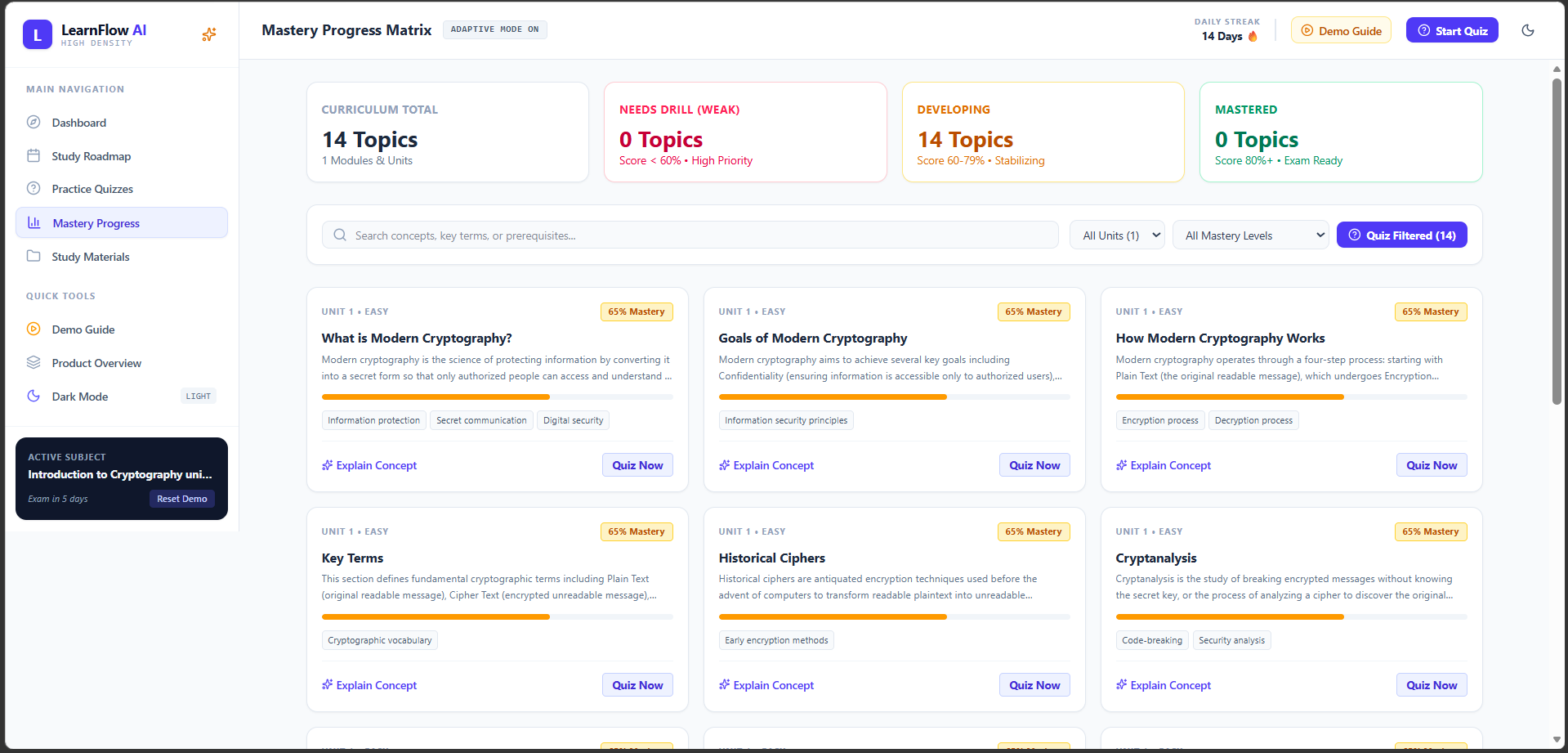
Master Process Matrix
-
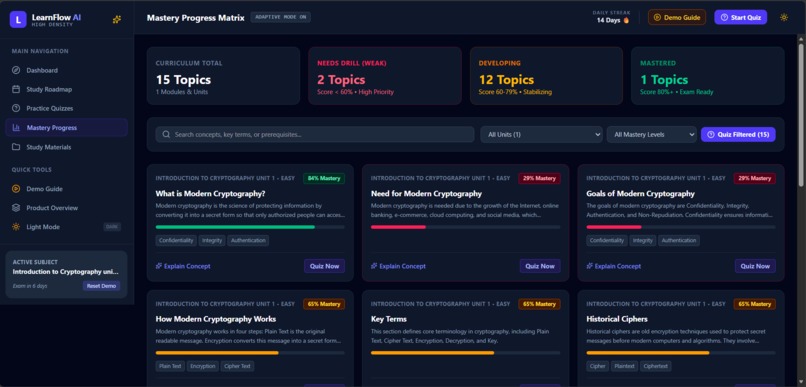
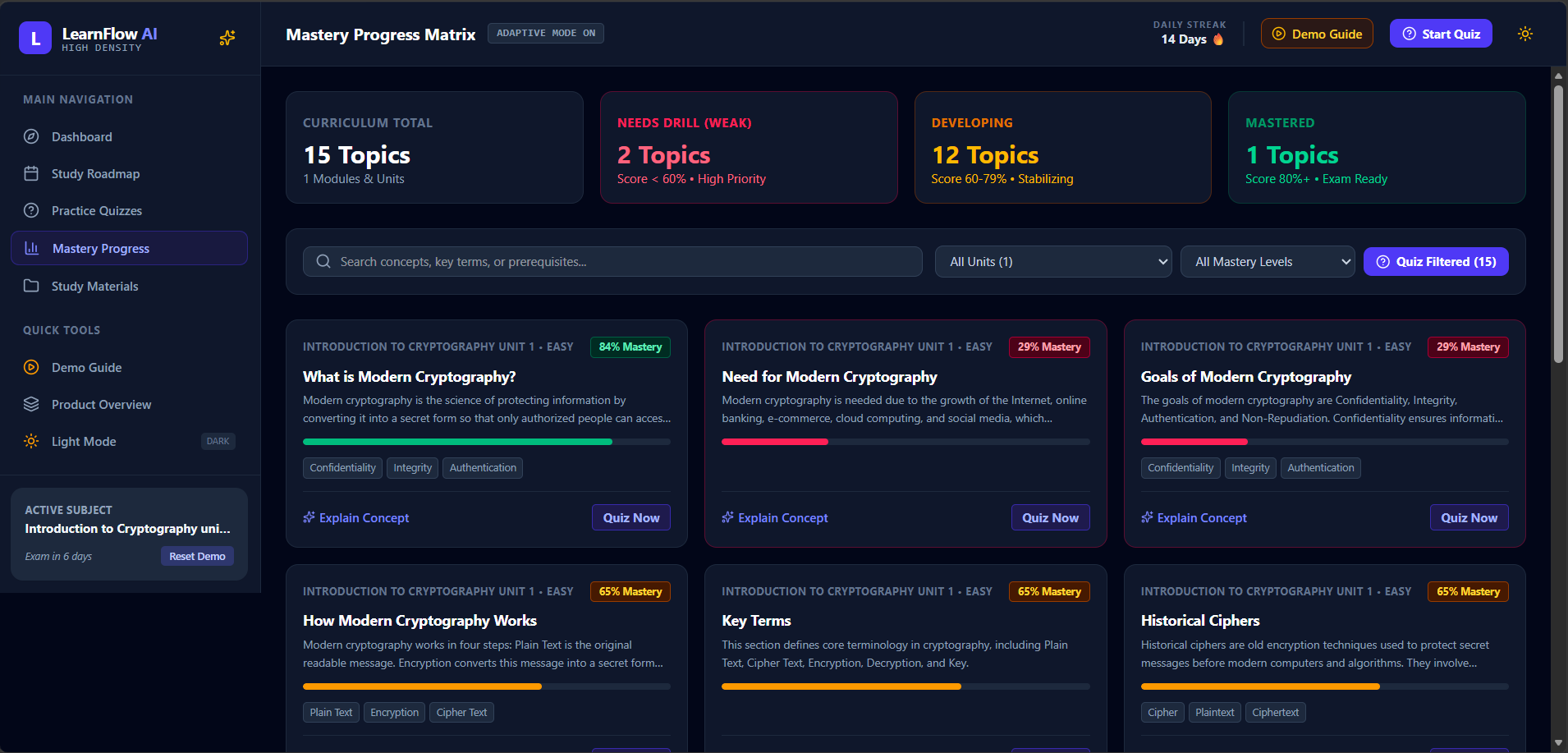
Master Process Matrix "Dark Theme"
-
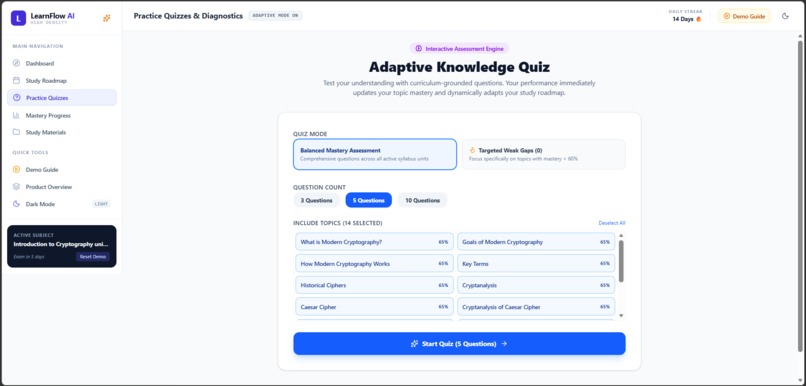
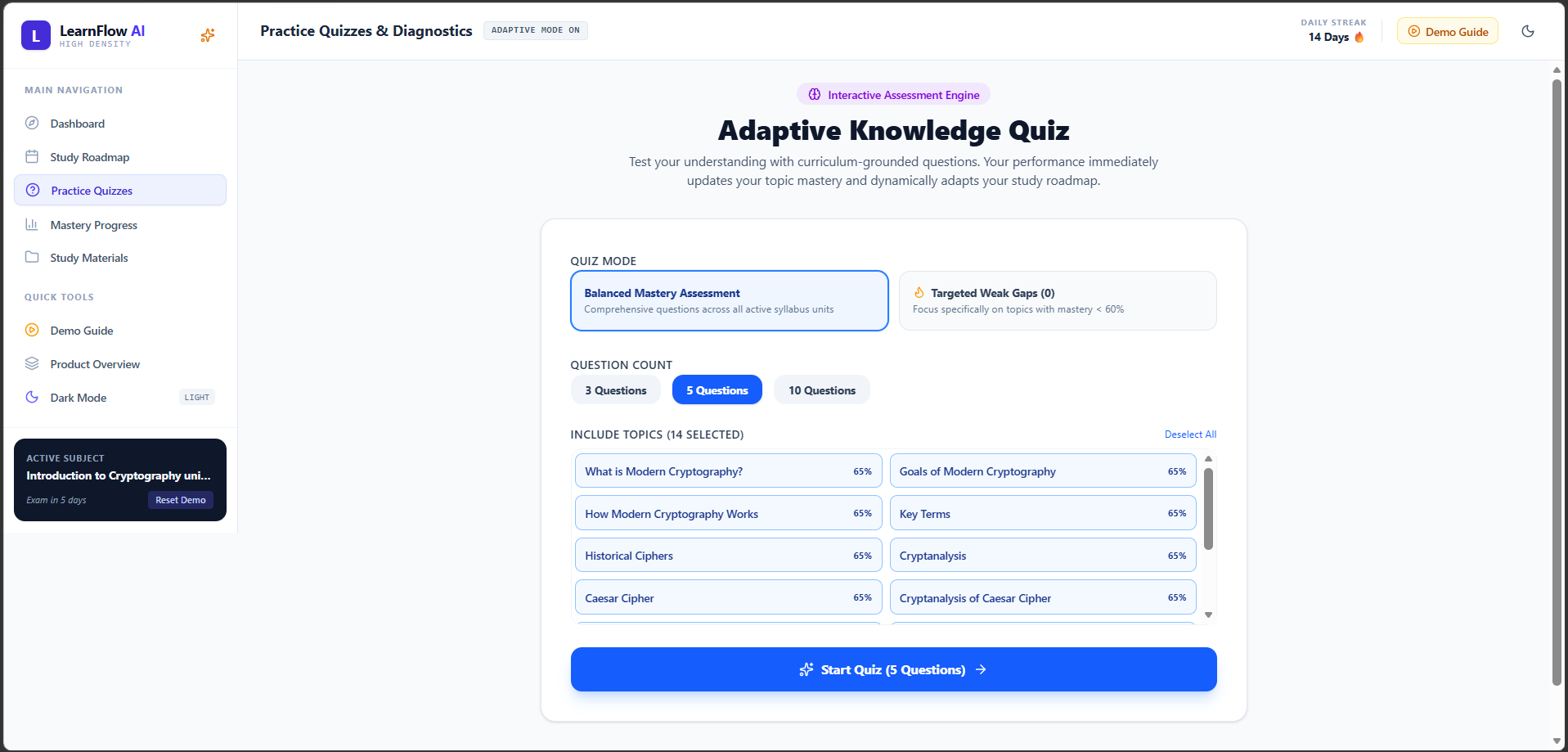
Quiz Page
-
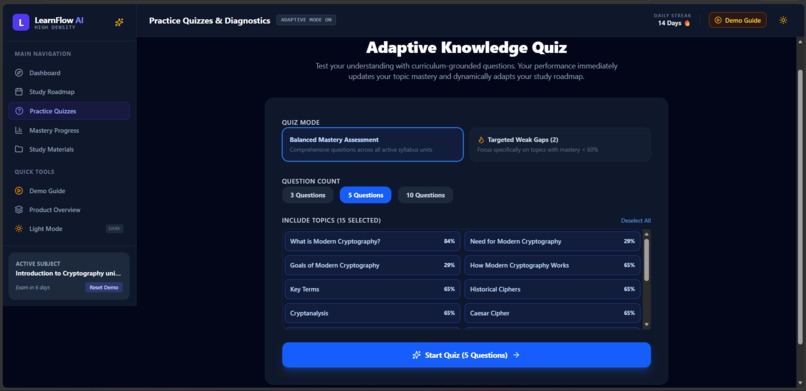
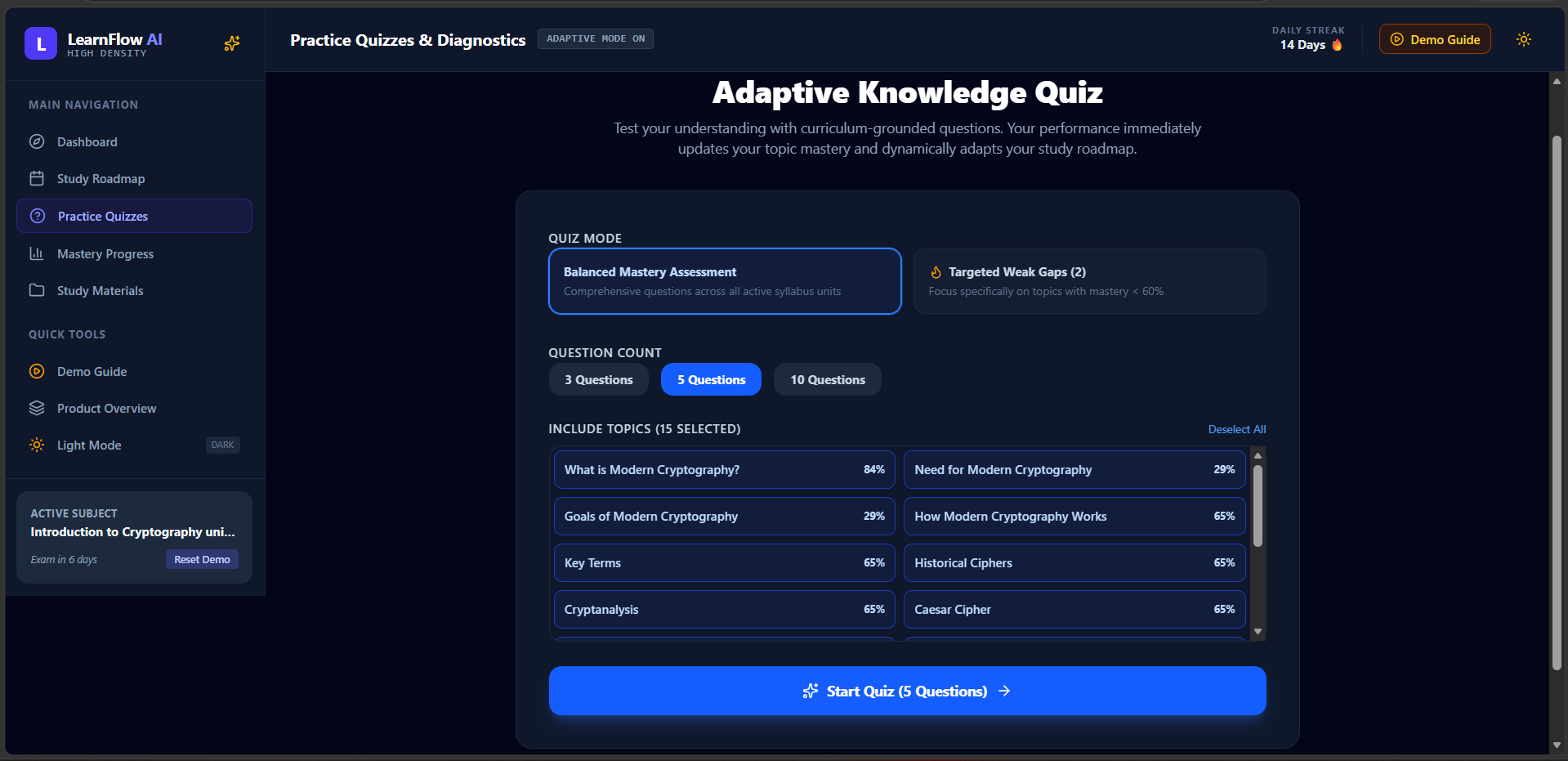
Quiz Page "Dark Theme"
Inspiration
Students often have plenty of study material but struggle to turn it into a clear, personalized study plan. Generic timetables do not consider what a student actually needs to learn, their exam deadline, available study time, or weak areas.
We built "LearnFlow AI" to solve this problem by turning unstructured study material into an adaptive learning journey.
What it does
LearnFlow AI allows students to enter their subject, exam date, available study time, and learning goal, then upload their study material. The system extracts readable content from PDFs and uses AI to identify the actual educational topics and concepts present in the material. It then creates a prioritized study roadmap organized across available days. Students can:
- Explore prioritized topics
- Get concept explanations
- Take targeted quizzes
- Track topic mastery
- Identify areas that need attention
- Follow an adaptive study roadmap
How we built it
The application uses a React-based frontend with a Node.js backend. PDF.js is used to extract text from uploaded PDFs, while Gemini AI analyzes the extracted educational content and generates grounded learning topics and study plans.
The application is deployed as a live web service so students can use the complete workflow directly in their browser.
Challenges we ran into
One of our biggest challenges was reliable PDF text extraction. Initially, binary PDF data could be incorrectly interpreted as text, producing unusable content. We solved this by implementing proper PDF.js extraction and validation before sending the content to the AI.
We also focused on grounding AI-generated topics in the uploaded material so that the roadmap remains relevant to the student's actual study content.
What we learned
Building LearnFlow AI taught us how to combine document processing, generative AI, frontend development, backend APIs, and deployment into a complete product.
The project also showed us that AI becomes much more useful when it is connected to a user's actual context rather than simply generating generic answers.
Accomplishments that we're proud of
We are proud of turning LearnFlow AI from an idea into a working, deployed product within the hackathon timeline.
- Built a complete end-to-end AI learning platform rather than just a prototype.
- Successfully implemented PDF text extraction and validation using PDF.js.
- Integrated Gemini AI to analyze real study material and identify meaningful educational topics.
- Built an adaptive study roadmap based on the student's exam date, available study time, and learning goals.
- Added prioritized topics, concept explanations, targeted quizzes, and mastery tracking.
- Implemented source-grounded topic generation to keep AI recommendations connected to the student's uploaded material.
- Successfully deployed the application as a live web service that judges can access and test.
- Most importantly, we created a practical tool that addresses a real student problem: turning large amounts of study material into a structured and actionable learning plan. ## What we learned Building LearnFlow taught us that useful educational AI is not only about generating good answers. The larger challenge is understanding context: which exam the student is preparing for, which resources are relevant, what the student already knows, and what they should work on next.
We also learned that a strong AI product needs a workflow around the model. The model provides intelligence, but the surrounding system provides organization, context, state, and a useful experience.
What's next for LearnFlow AI
Our long-term vision for LearnFlow is an autonomous learning partner that can continuously analyze exam requirements, understand a student's resources and performance, plan preparation, identify weaknesses, generate targeted practice, and adapt the study strategy as the student progresses.


Log in or sign up for Devpost to join the conversation.