-
-
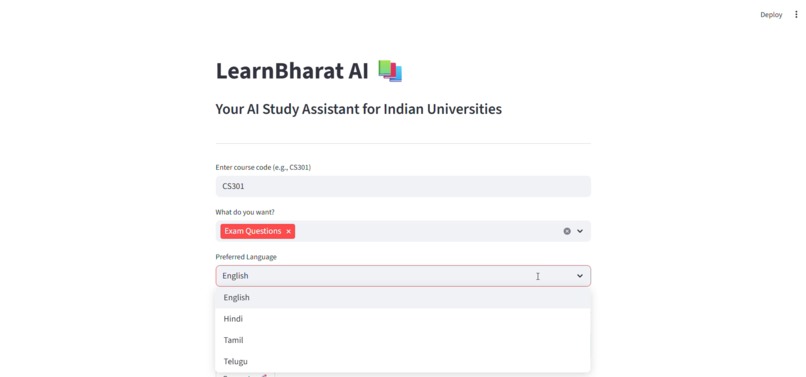
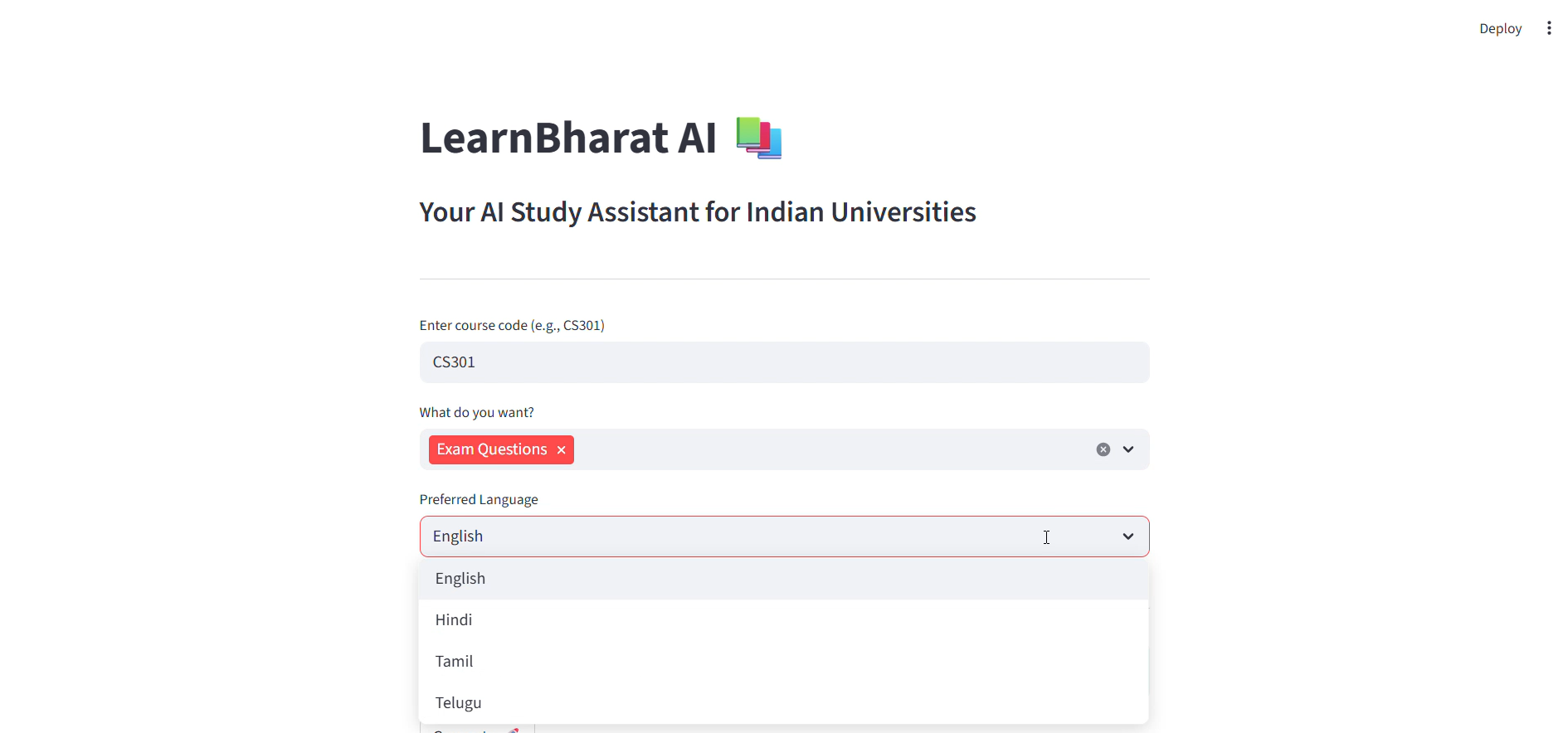
languages dropdown
-
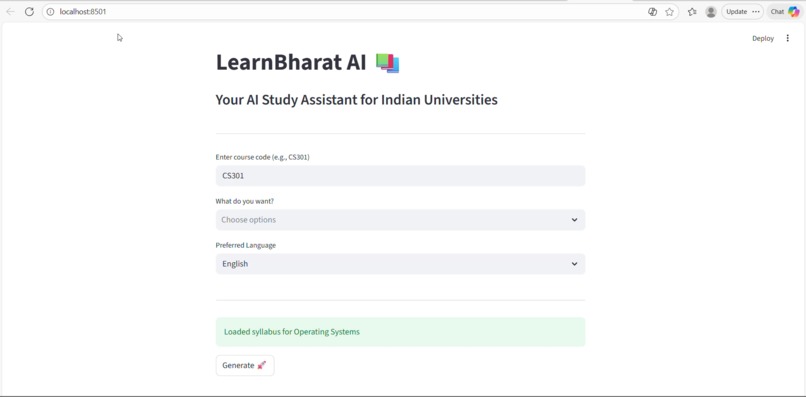
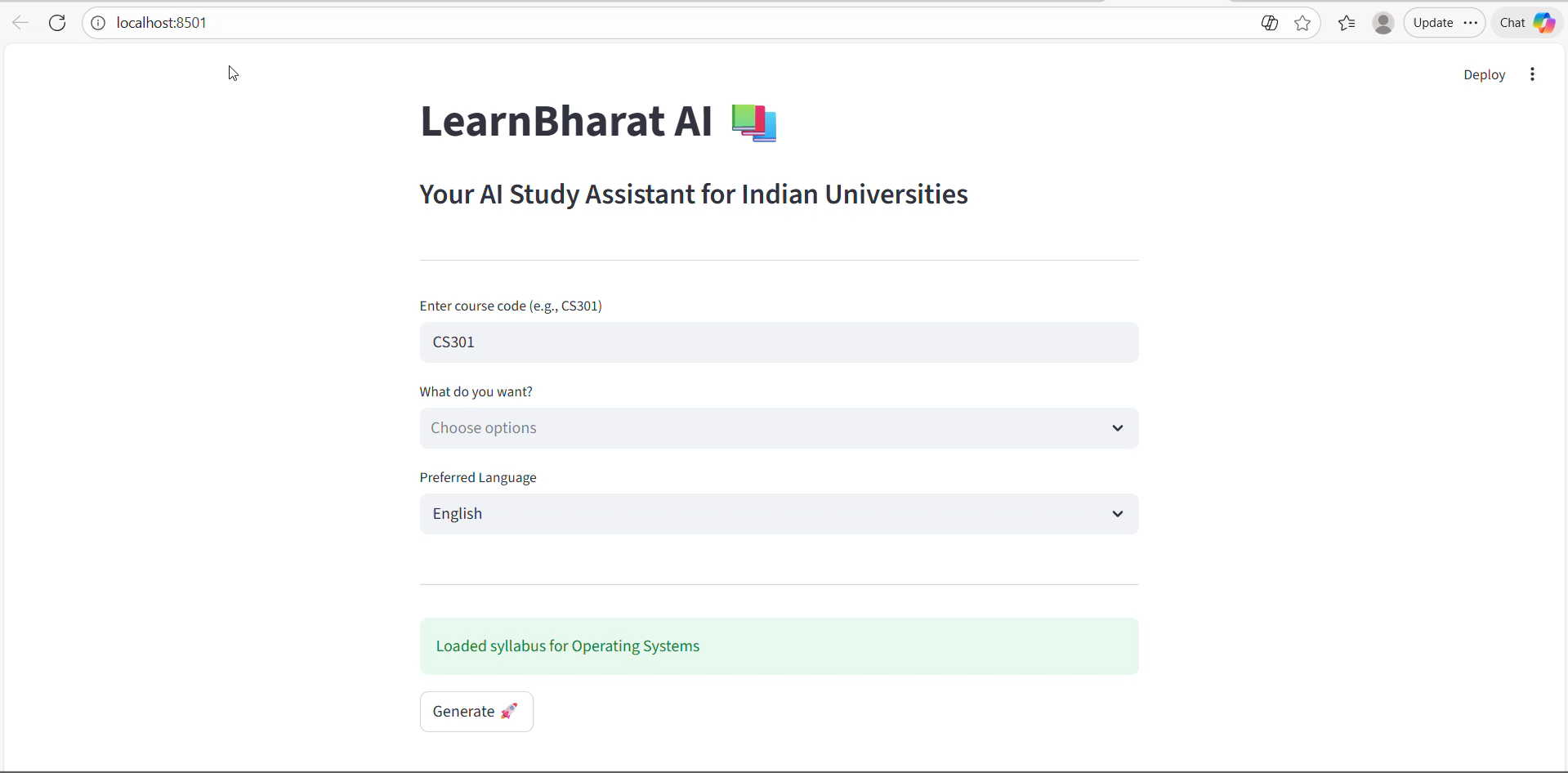
home page
-
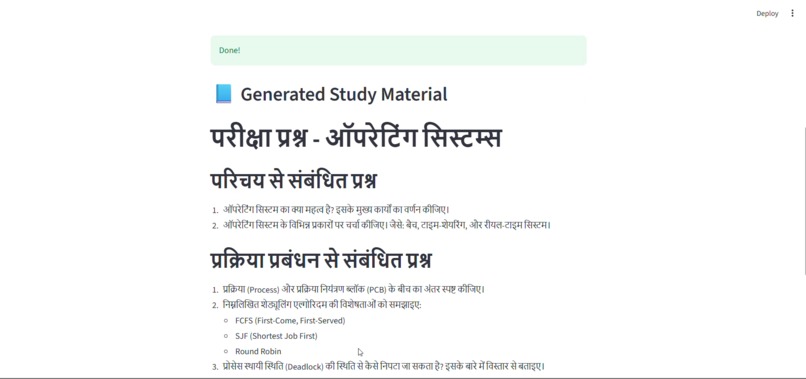
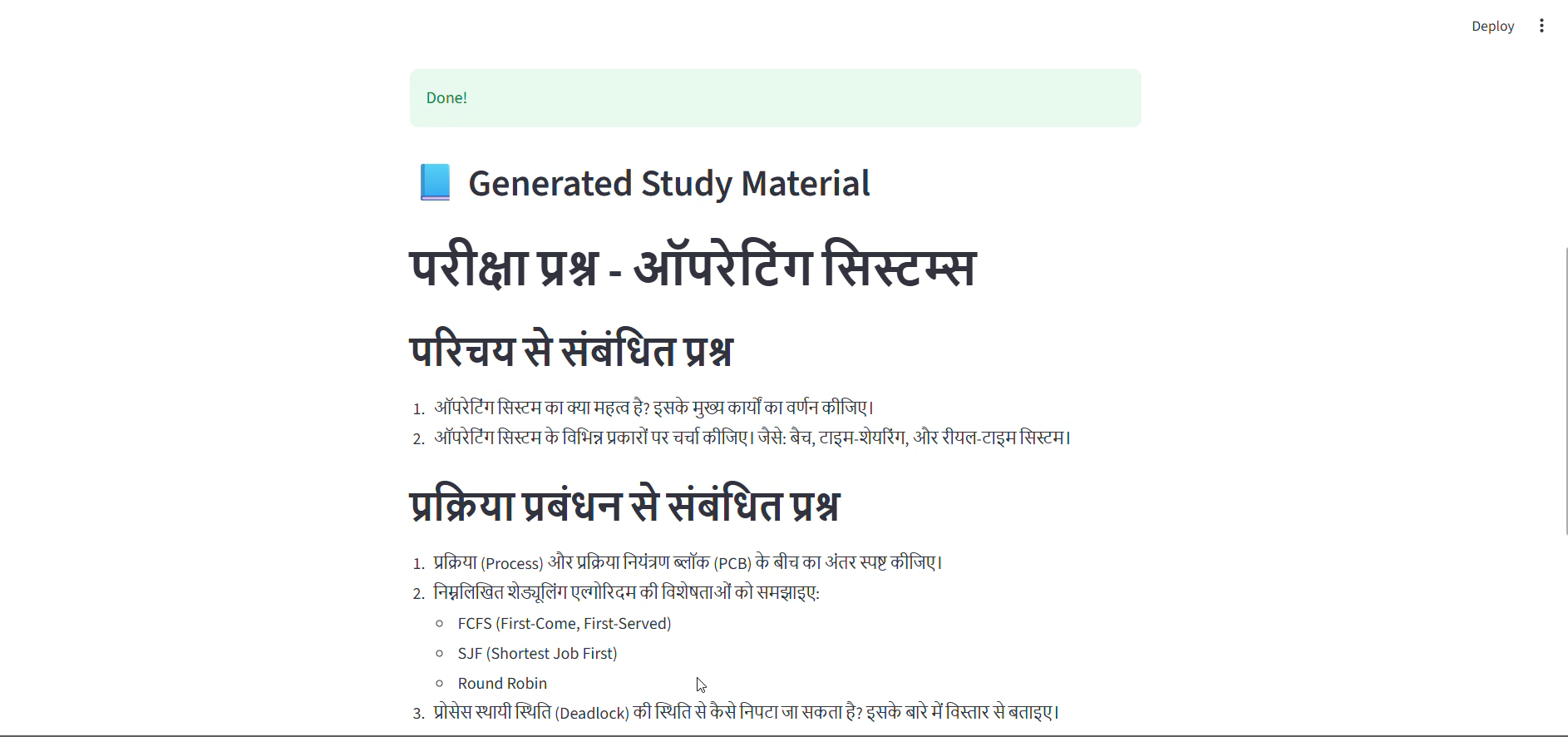
exam questions generated in regional language
-
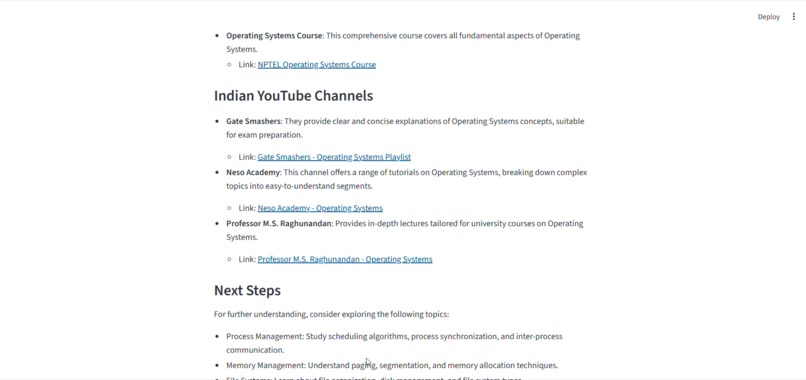
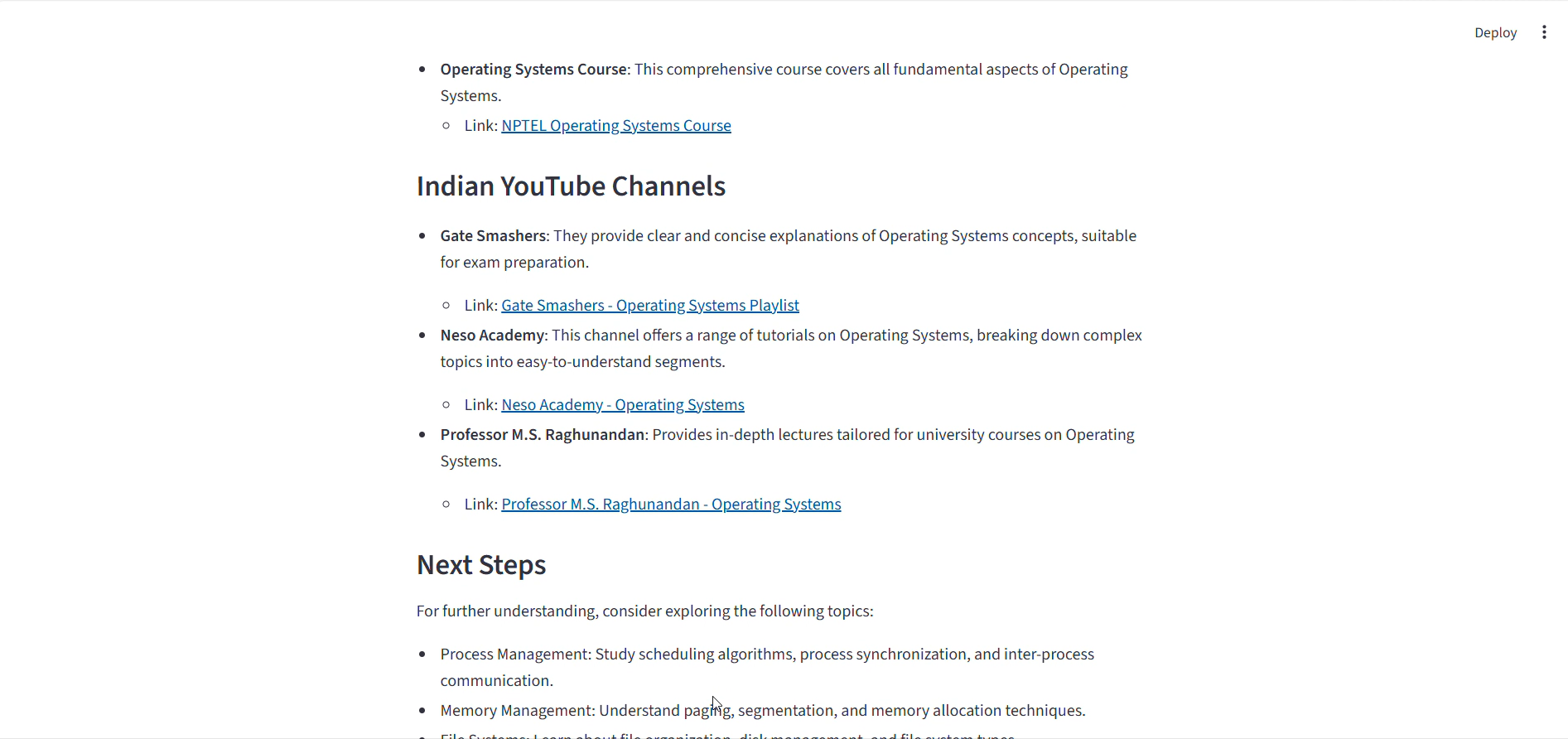
links for video references
-
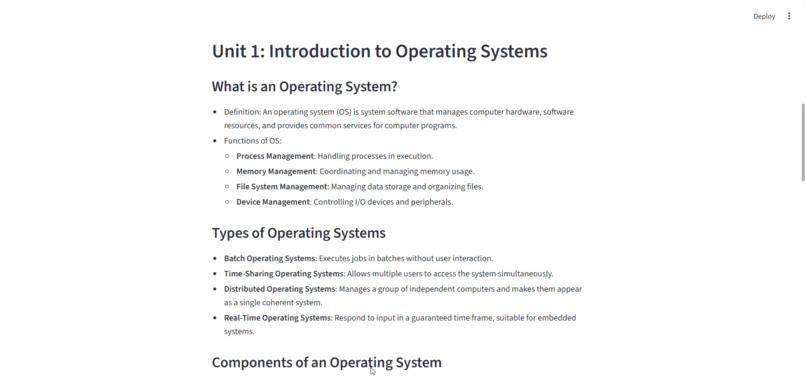
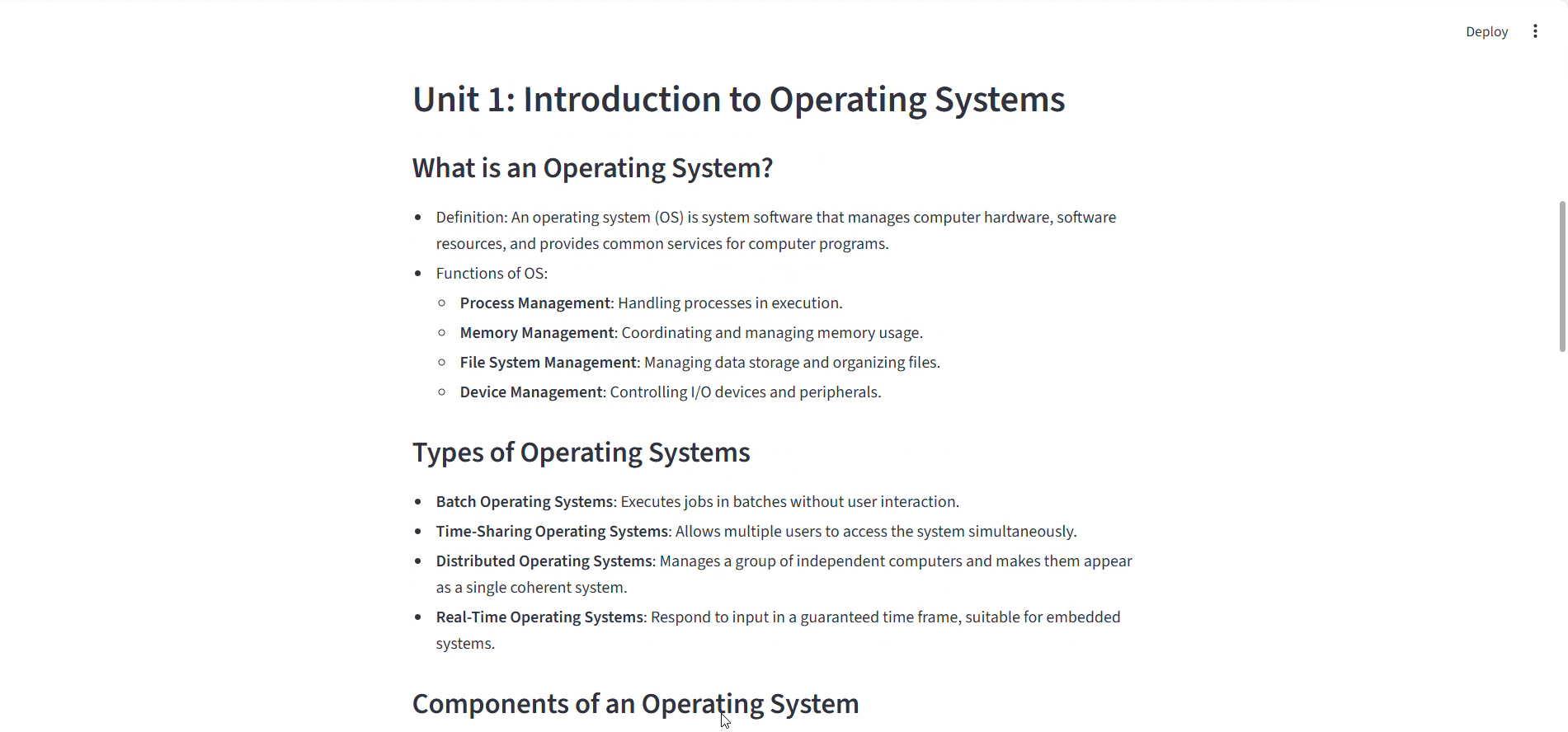
notes generated
LearnBharat AI: Your AI-Powered Study Assistant
LearnBharat AI is an AI-powered study assistant built to address the challenges Indian students face in preparing for competitive exams and understanding their university curricula. It takes a university course code as input and generates personalized study materials, including notes, exam questions, video resources, project ideas, and exam readiness insights. The goal is to provide a focused and efficient study experience, tailored to the Indian education system and accessible even with limited internet connectivity.
Inspiration
The inspiration for LearnBharat AI stemmed from personal experiences and observations of the Indian education landscape. Many students struggle with fragmented resources, unclear syllabus understanding, and a lack of personalized study guidance. Existing AI tools often lack the specific knowledge of Indian universities and exam patterns. We wanted to create a tool that bridges this gap, providing a syllabus-aware and exam-focused learning companion. Seeing the potential of large language models like GPT-4o-mini further fueled our desire to build this project.
How LearnBharat AI Works
LearnBharat AI functions as a virtual Indian university professor. Here's a breakdown of its core functionalities:
- Course Code Input: Users enter a valid Indian university course code.
- Syllabus Mapping: The system maps the course code to its official syllabus, ensuring all generated content is relevant and accurate.
- Personalized Content Generation: Based on user preferences (notes, videos, questions, projects) and the syllabus, the AI generates:
- Unit-wise notes, summarizing key concepts.
- Exam-style questions (mimicking GATE and university exam formats).
- Practical project ideas related to the course.
- Recommendations for Indian learning resources (NPTEL, YouTube channels, etc.).
- Language Adaptation: Content can be adapted to the user's preferred language.
- Exam Readiness Score: A readiness score is calculated based on the user's progress and focus areas.
- PDF Export: All generated content can be downloaded as a PDF for offline access.
Technical Architecture
The project utilizes a layered architecture, combining several technologies:
- Frontend: Streamlit (Python) - Chosen for rapid development and a clean user interface.
- Backend: Python - Handles core logic, syllabus mapping, and API interactions.
- AI Engine: OpenAI GPT-4o-mini - Selected for speed, cost-effectiveness, and structured content generation.
- Syllabus Database: Custom Python dictionary (
syllabus_data.py) - Stores course code-to-syllabus mappings. - Personalization Layer: Hybrid rule-based and AI-driven system.
- Exam Readiness Engine: Weighted scoring system.
- PDF Generation: FPDF
Challenges Faced
During development, we encountered several challenges:
- Syllabus Data Acquisition: Obtaining accurate and up-to-date syllabus data proved difficult, requiring reliance on publicly available information and manual curation.
- AI Hallucinations: Mitigating inaccuracies and irrelevant information generated by GPT models was crucial. We addressed this by grounding the AI in the syllabus database and carefully crafting prompts.
- Prompt Engineering: Optimizing prompts to elicit the desired content and format from GPT-4o-mini required significant experimentation.
- Unicode Encoding: Ensuring proper Unicode encoding for PDF generation was necessary to handle Indian languages correctly.
- Maintaining Cost-Effectiveness: Balancing content quality with OpenAI API costs led us to choose GPT-4o-mini.
Key Learnings
- Prompt Engineering is Key: The quality of AI-generated content is highly dependent on prompt design.
- Syllabus Grounding is Essential: Preventing hallucinations and ensuring relevance requires grounding the AI in a structured knowledge base.
- Personalization Enhances Engagement: Tailoring the learning experience improves engagement and outcomes.
- Streamlit Simplifies Development: Streamlit significantly accelerated the development process.
- The importance of Unicode handling: Ensuring proper support for Indian languages is crucial for accessibility.
Future Directions
We envision expanding LearnBharat AI with the following features:
- Voice Input: Implementing voice input for a more hands-free learning experience.
- Mobile App: Developing a mobile app for increased accessibility and convenience.
- Fine-tuning: Fine-tuning GPT-4o-mini on Indian academic data to improve content quality and relevance.
- Integration with LMS Platforms: Integrating LearnBharat AI into college learning management systems (LMS).
- Expanded Syllabus Coverage: Continuously expanding the syllabus database.
- Community Features: Adding forums and Q&A to foster peer-to-peer learning.
Exam Readiness Score Calculation
The exam readiness score is calculated using a weighted average:
$$ \text{Readiness Score} = 0.35 \times \text{Notes Score} + 0.35 \times \text{Questions Score} + 0.20 \times \text{Projects Score} + 0.10 \times \text{Videos Score} $$
Where:
- Notes Score: Score for completed notes.
- Questions Score: Score for answered exam-style questions.
- Projects Score: Score for completed project ideas.
- Videos Score: Score for watched video resources.
Built With
- and-linux)-deployment-platform-(potential):-heroku
- api
- fpdf
- in-memory
- mac
- macos
- openai
- python
- streamlit
- streamlit-cloud
- windows-10

Log in or sign up for Devpost to join the conversation.