What Inspired Us
We are students at the University of Rwanda. We watch brilliant classmates graduate and struggle to find work — not because they lack intelligence or ambition, but because there is no affordable, practical bridge between what universities teach and what employers need.
We also know that the tools to close this gap already exist and are free. CS50. freeCodeCamp. The Odin Project. Thousands of hours of world-class instruction on YouTube. But for a student in rural Rwanda, these resources are an ocean with no map.
We built the map. We built the guide. We built Learn4Africa.
What We Built
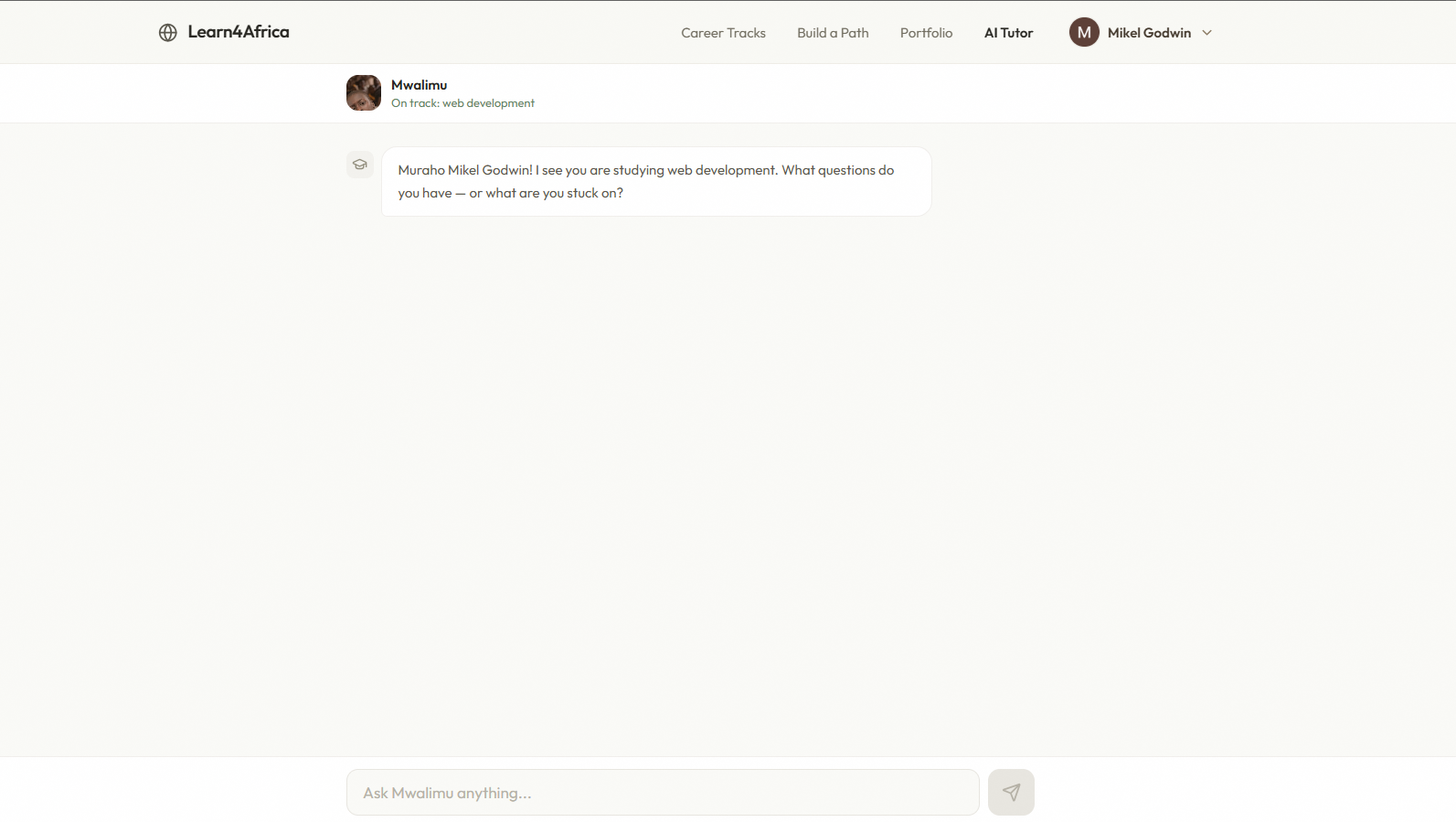
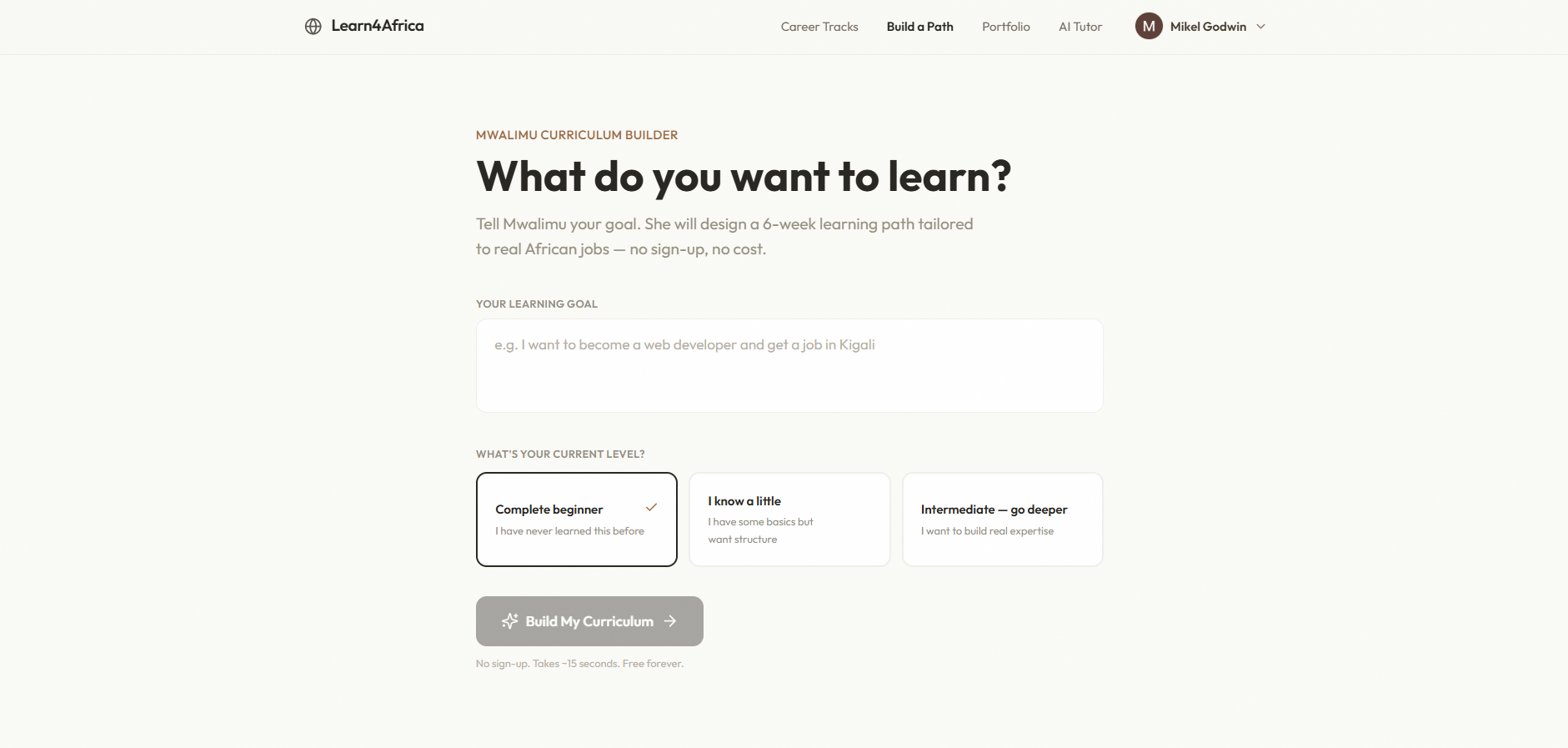
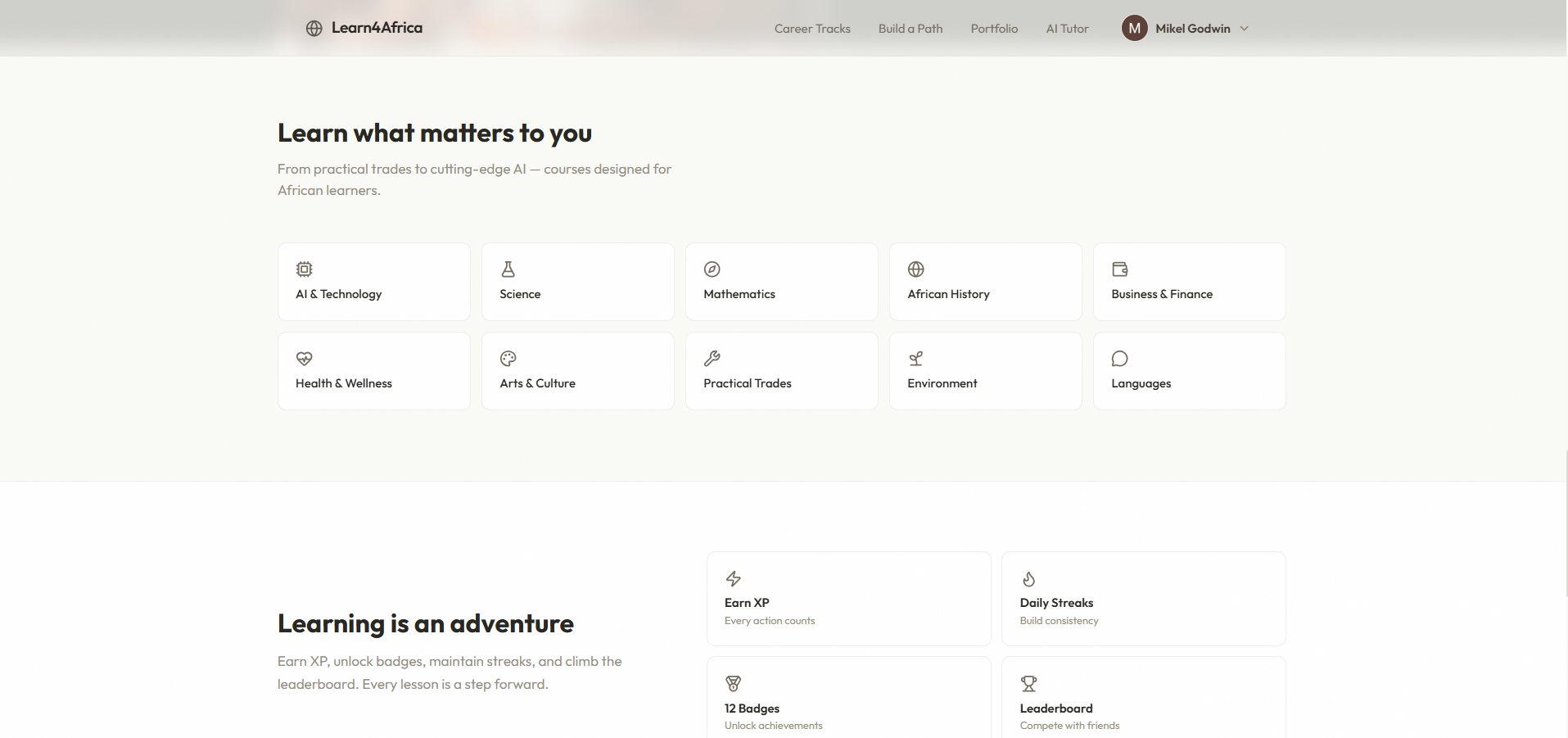
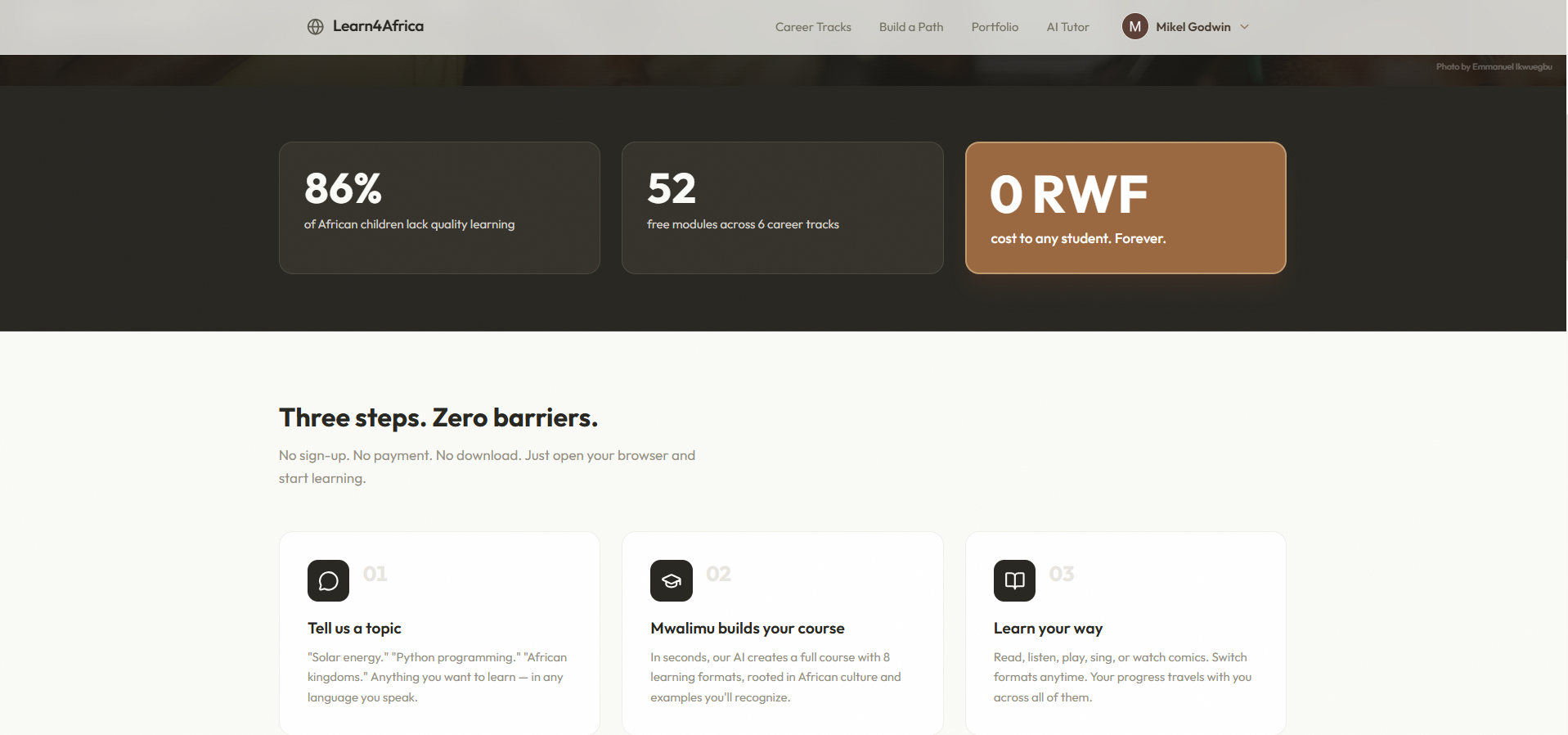
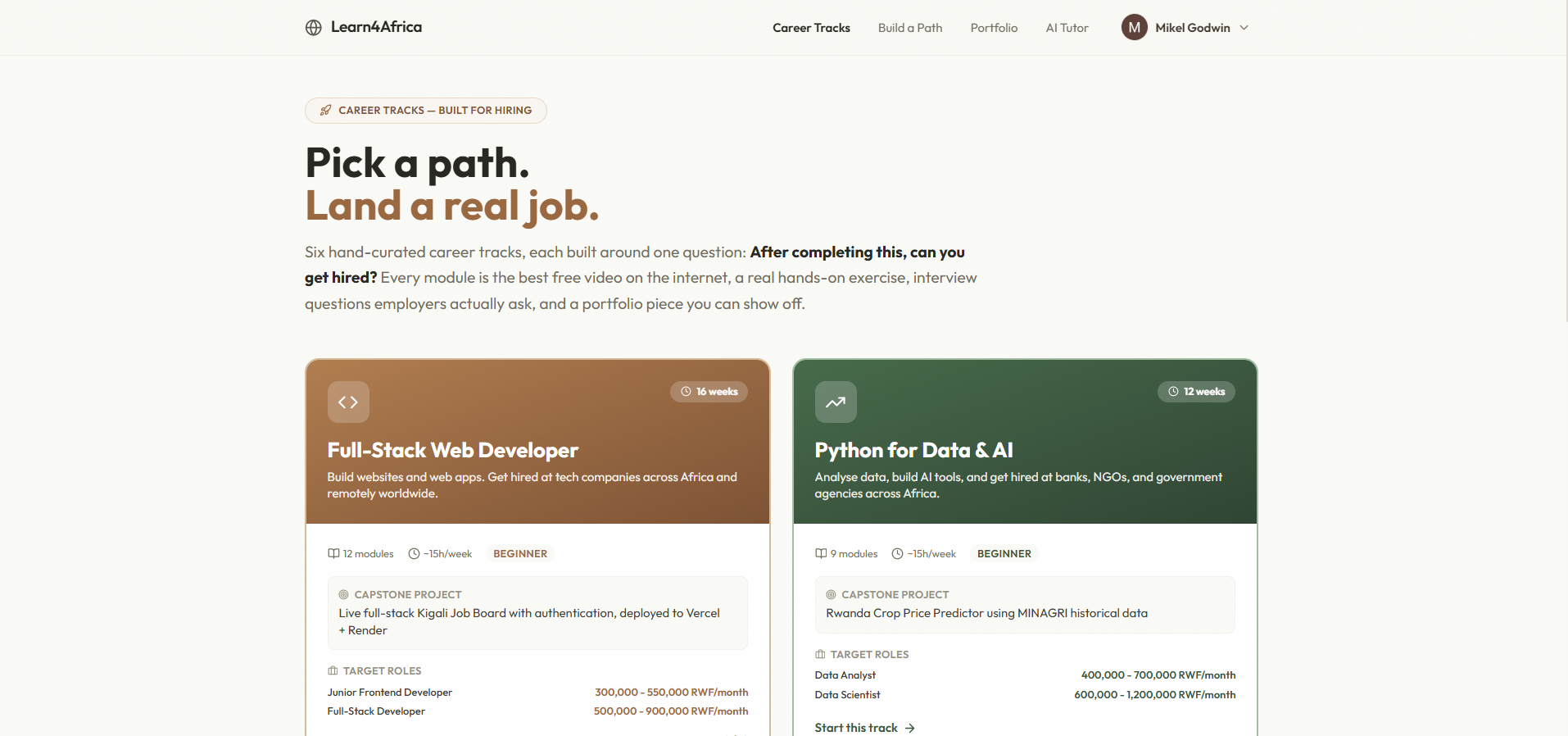
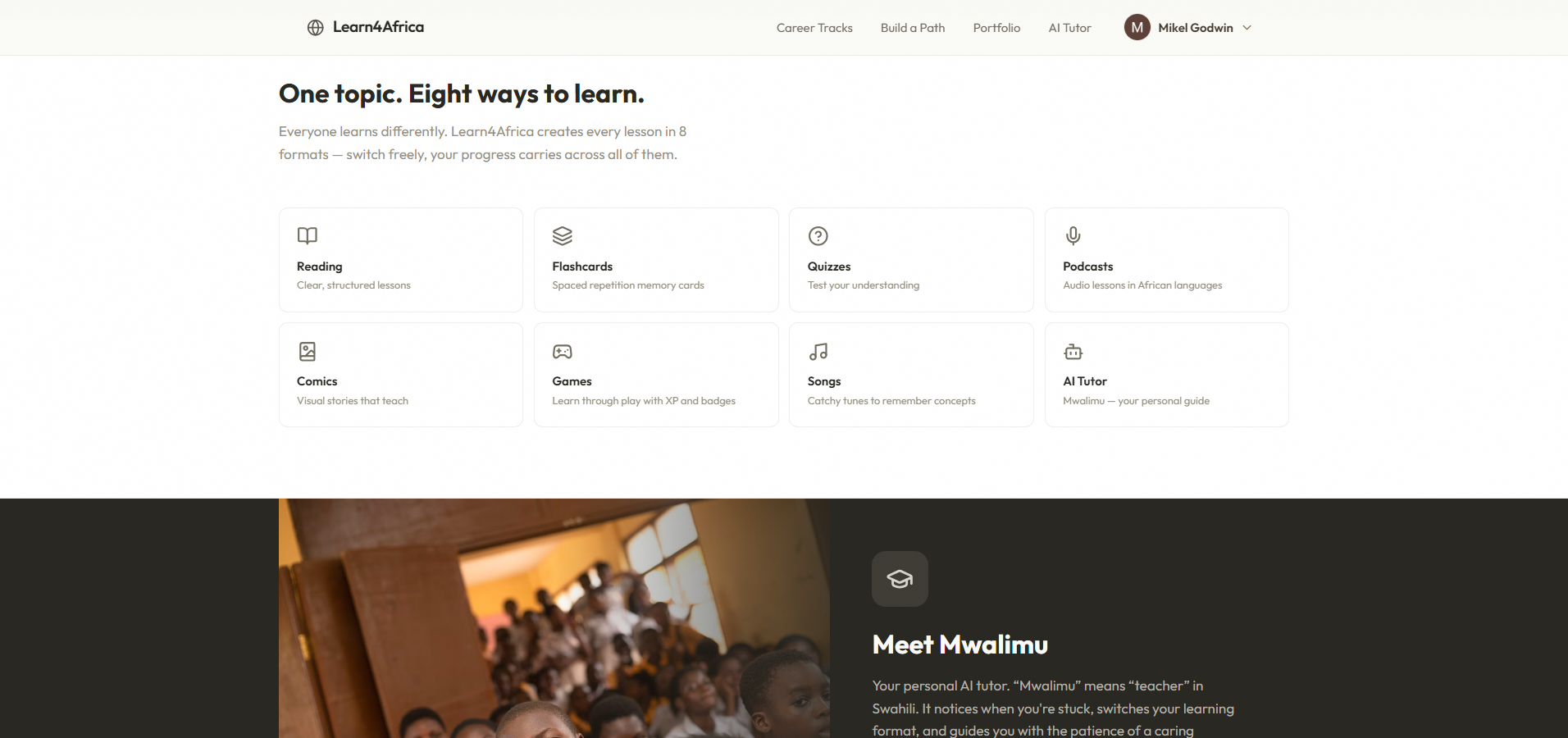
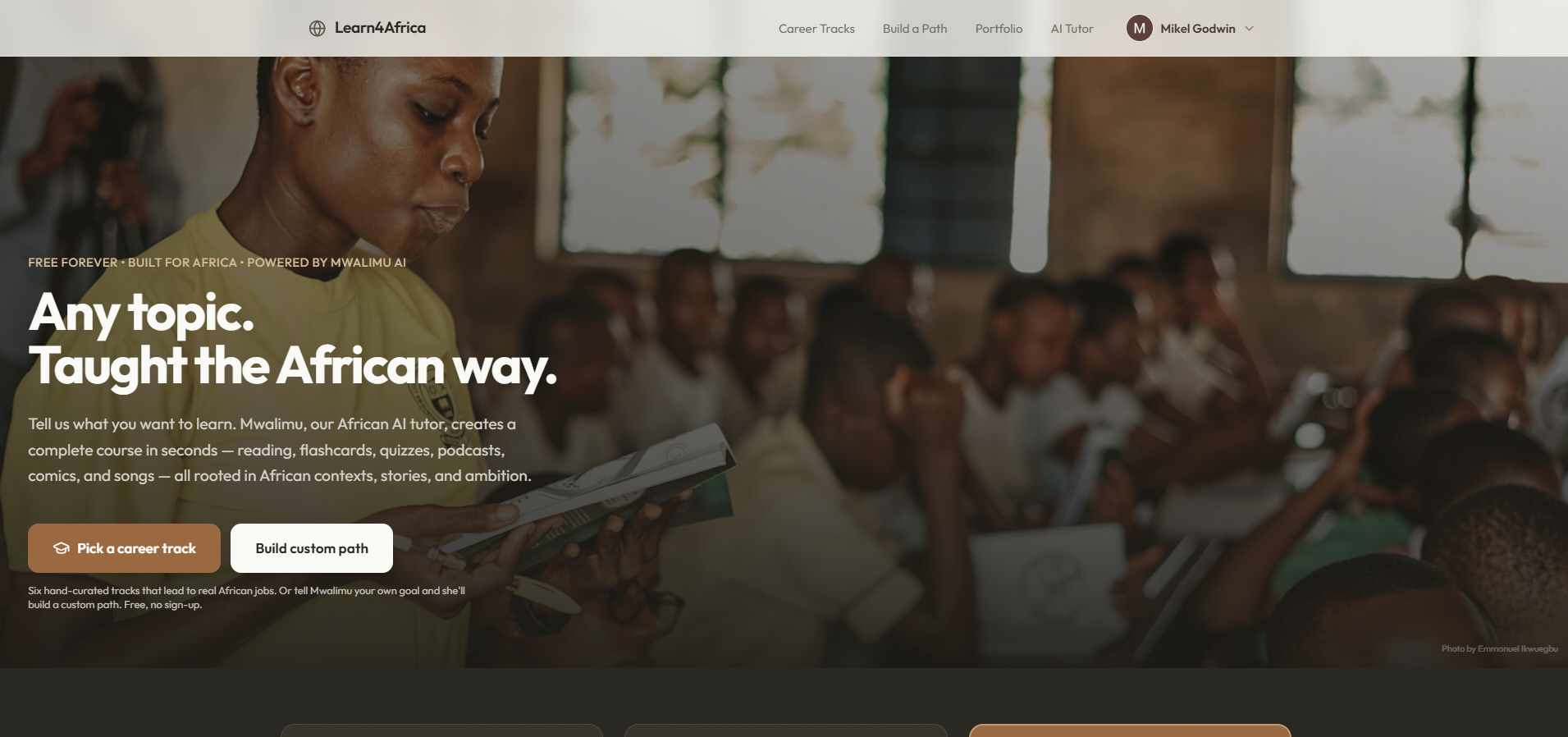
A free AI-powered learning platform with six career tracks, 52 modules, and an AI tutor called Mwalimu — which means Teacher in Swahili — powered by Claude.
Mwalimu is not a chatbot. It is a teacher who knows Rwanda. It explains APIs using the analogy of ordering food at a market. It uses African names in code examples. It responds in Kinyarwanda when you write in Kinyarwanda. It knows what BK Tech pays junior developers and what questions Andela asks in interviews.
Every module follows a five-layer standard:
- Why This Matters — African context first
- Best Free Video — curated from YouTube
- Hands-On Practice — African real-world exercises
- Interview Preparation — real employer questions
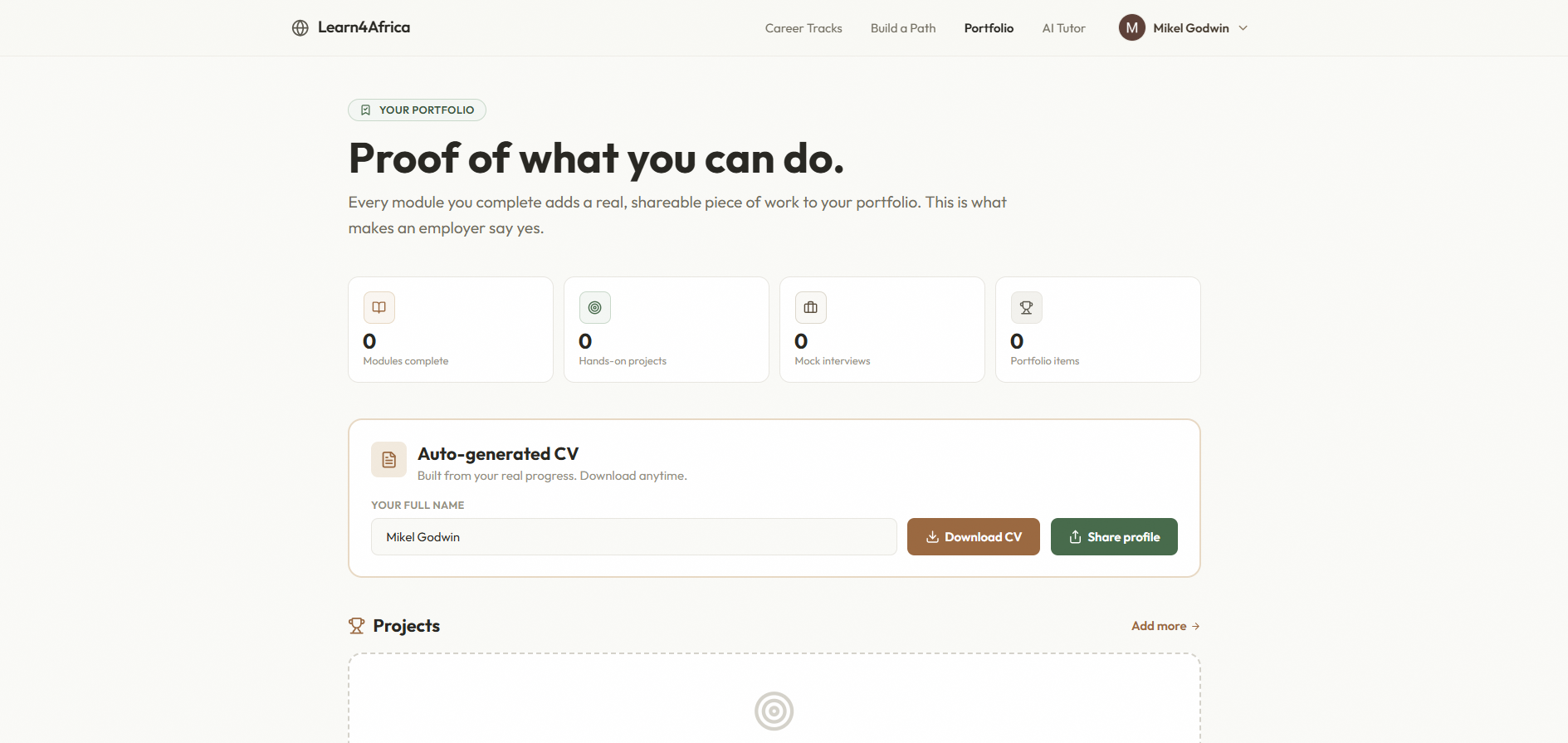
- Portfolio Contribution — deployed GitHub projects
How We Built It
The stack: Next.js + Convex + Claude + Vercel. Four things. That is the entire platform.
The hardest part was not the code. It was the Mwalimu system prompt. Getting Claude to consistently respond in African cultural context — using African names, African analogies, African job market knowledge — took dozens of iterations. The final prompt is the core intellectual contribution of this project.
The content — 52 modules across six tracks — was designed backwards from employer requirements. We started with real Rwandan job postings and worked backwards to build the shortest, most practical path to those roles.
Challenges We Faced
API access during development. We built the platform without paid API credits by implementing a provider abstraction layer that switches between Claude and Gemini with one environment variable. This made the platform more resilient.
Cultural accuracy. A UNESCO 2025 study confirmed that AI tools trained on Western data fail African students — ChatGPT told researchers there are four seasons in West Africa. Getting Mwalimu to consistently know it is in Africa required persistent prompt engineering.
Content quality. Generic AI content fails students. We enforced a strict five-layer standard across all 52 modules and verified every interview question against real Rwandan job postings.
What We Learned
The hardest part of building for Africa is resisting the temptation to copy what exists elsewhere. Every major EdTech platform was built for Western learners and adapted for Africa as an afterthought. We did not adapt. We built from scratch, for Africa, by people who understand what Africa actually means.
What Is Next
Community partnerships with Rwandan universities, NGO grant applications to sustain the free model at scale, and expanding Mwalimu's Kinyarwanda capabilities to serve students whose primary language is not English.
The continent does not need another tool built somewhere else and shipped here. It needs tools built here, for here.
This is Learn4Africa.
Built With
- api
- convex
- css
- mermaid.js
- next.js
- nextauth.js
- oauth
- speech
- tailwind
- typescript
- vercel
- web

Log in or sign up for Devpost to join the conversation.