-
-
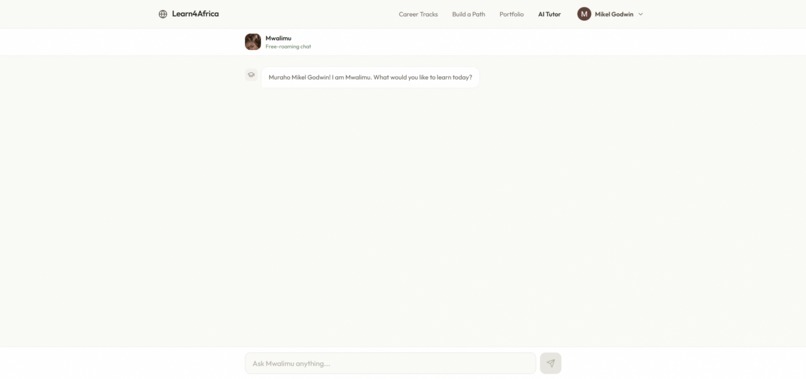
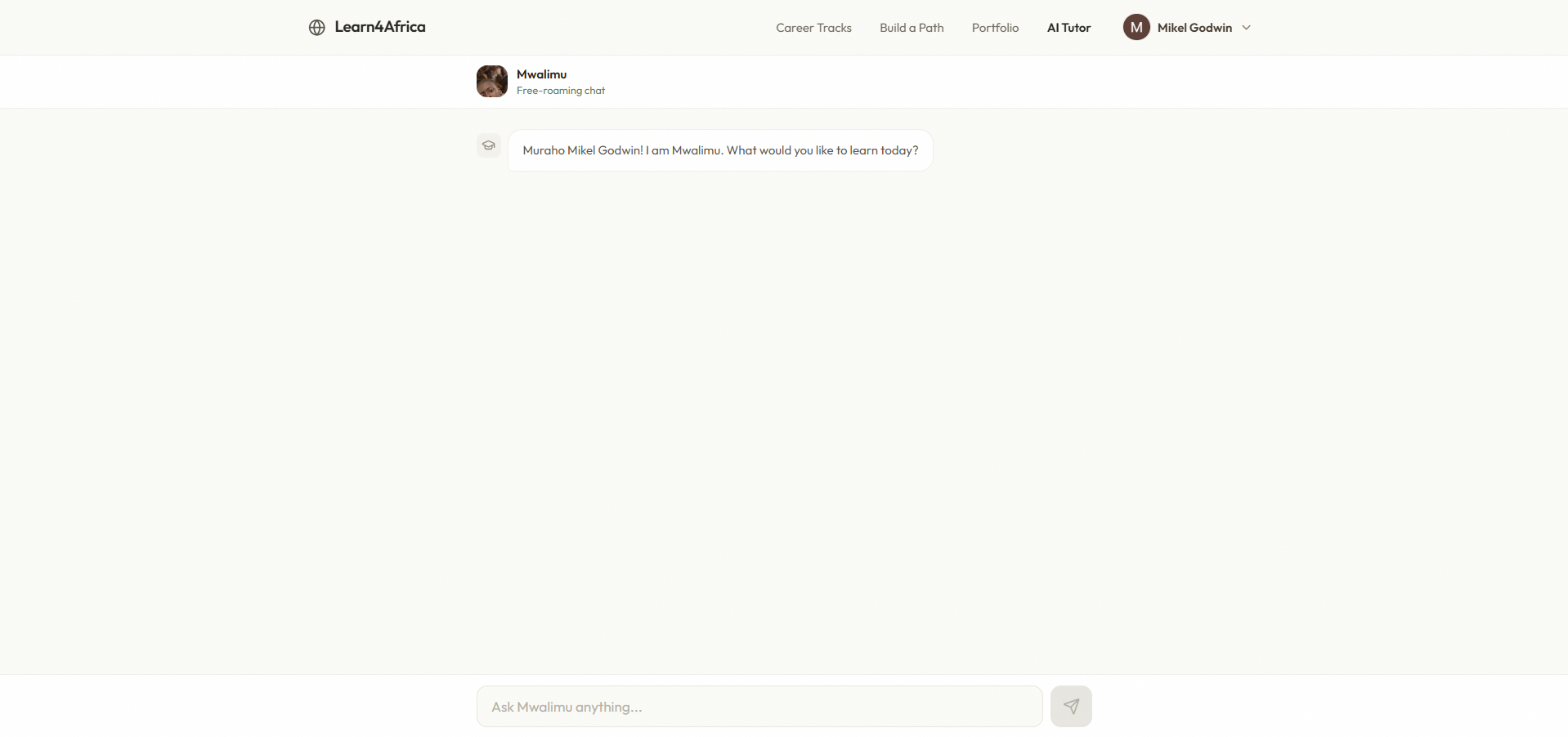
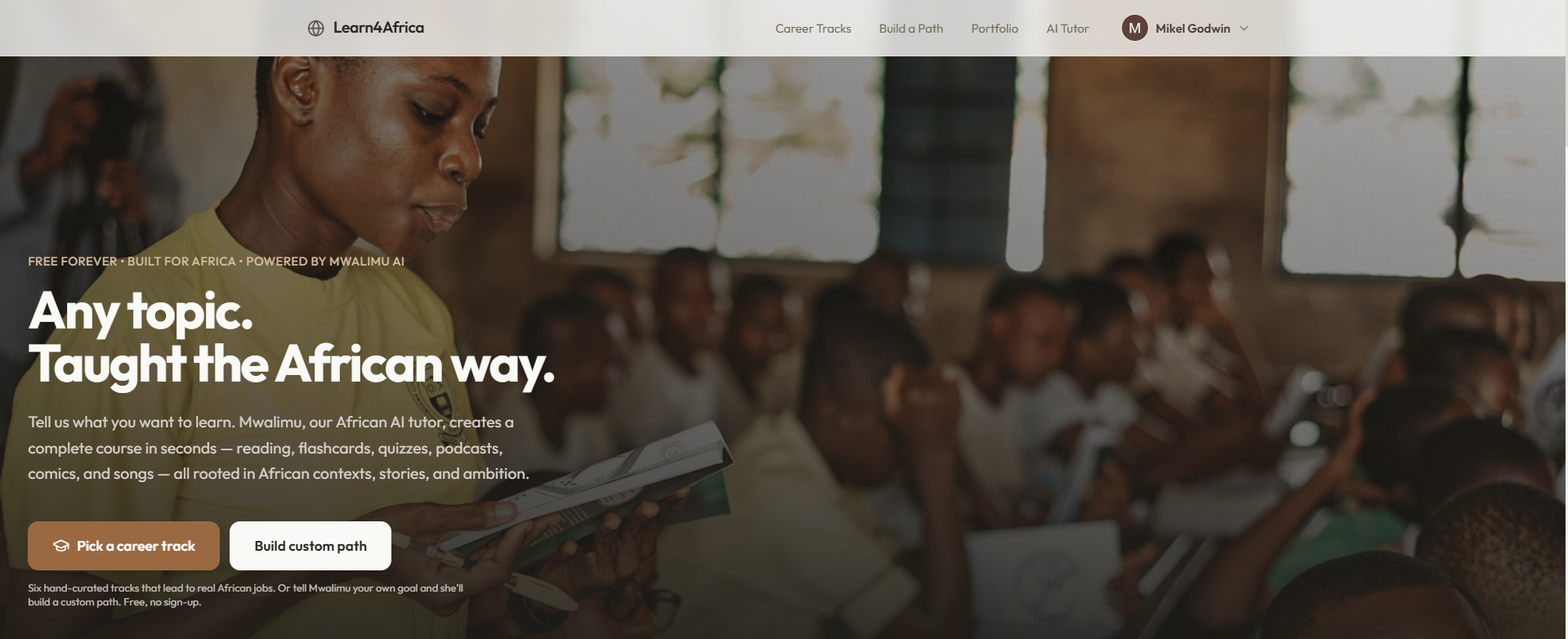
tell mwalimu a question you have she will answer you the african way
-
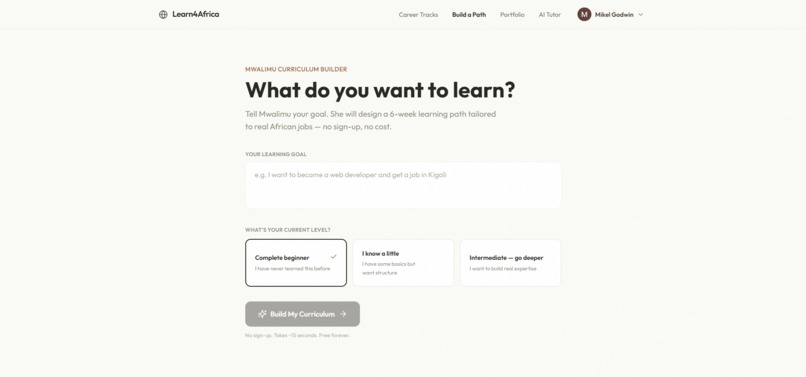
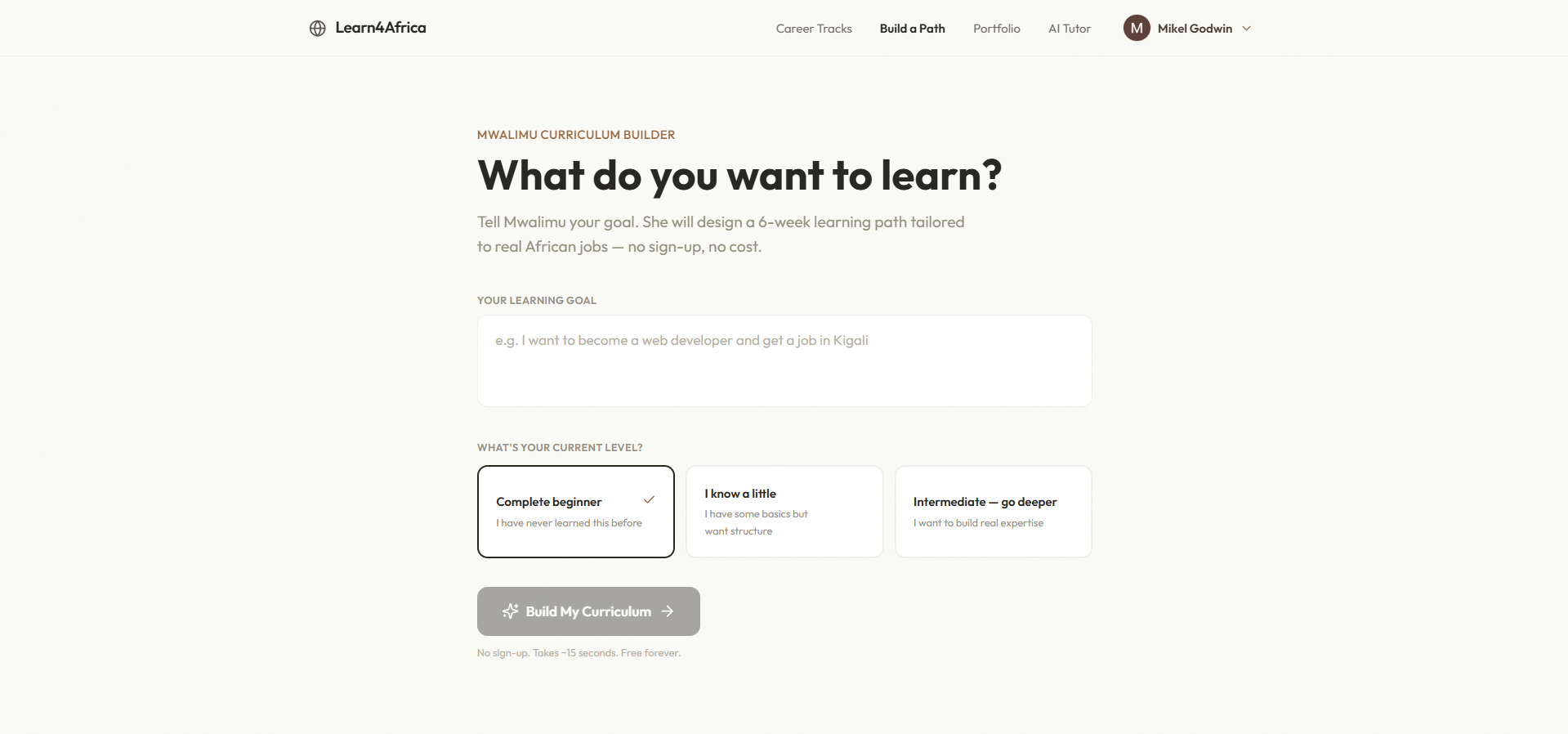
pick any topic you want
-
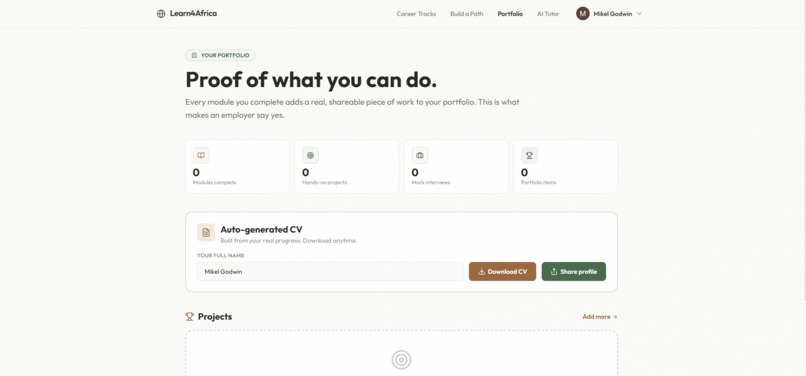
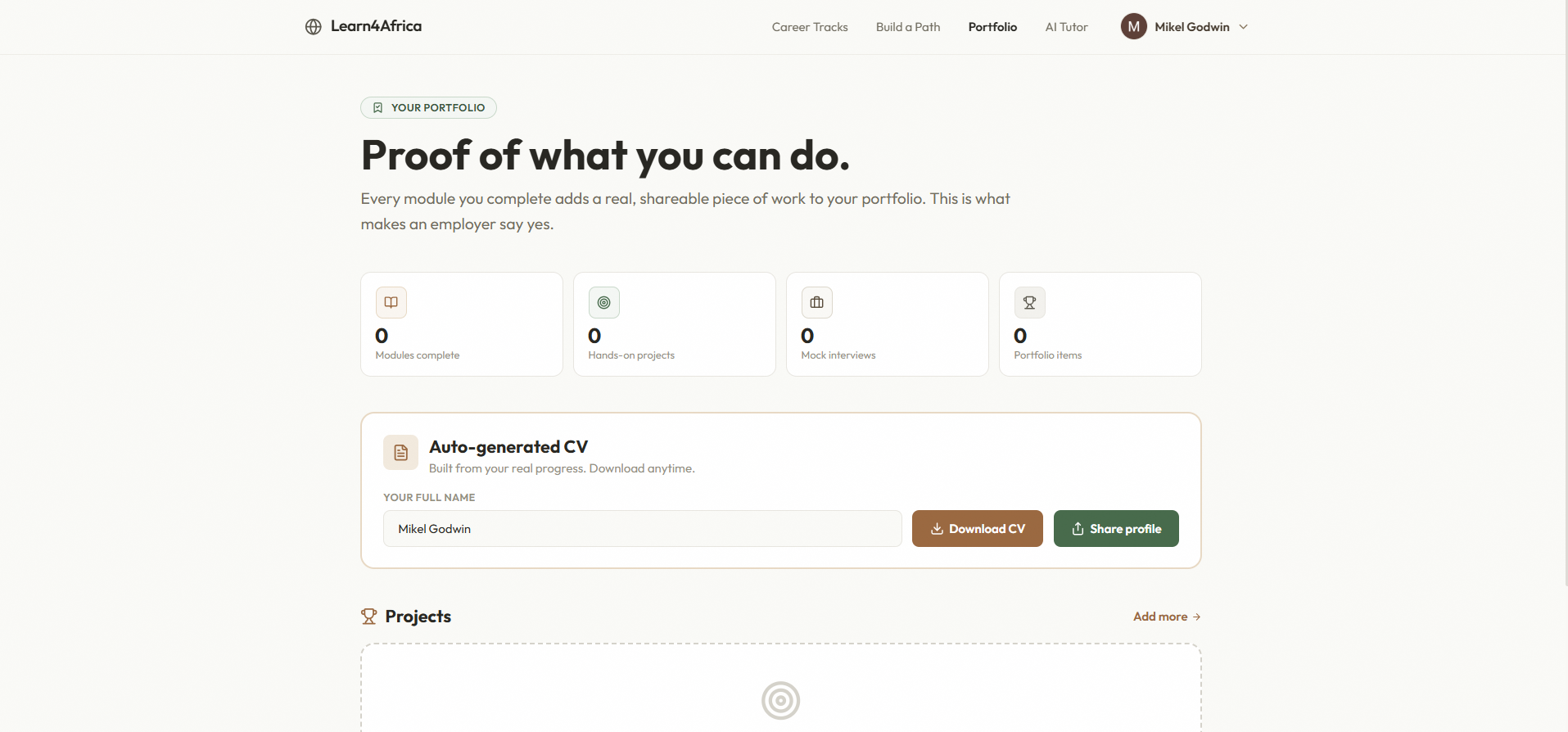
everything you build is tied to youe portifolio
-
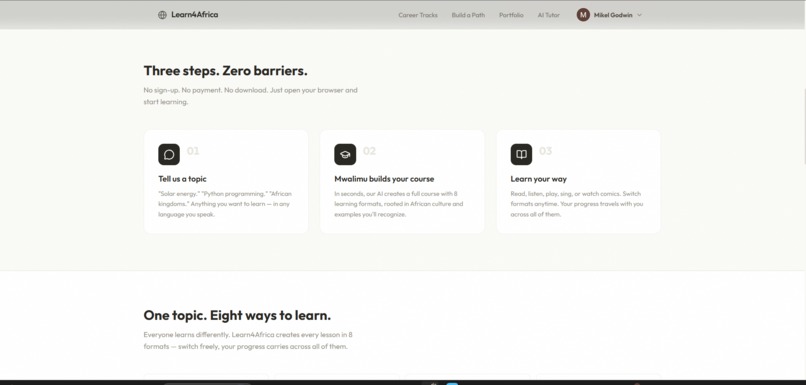
what we offer
-
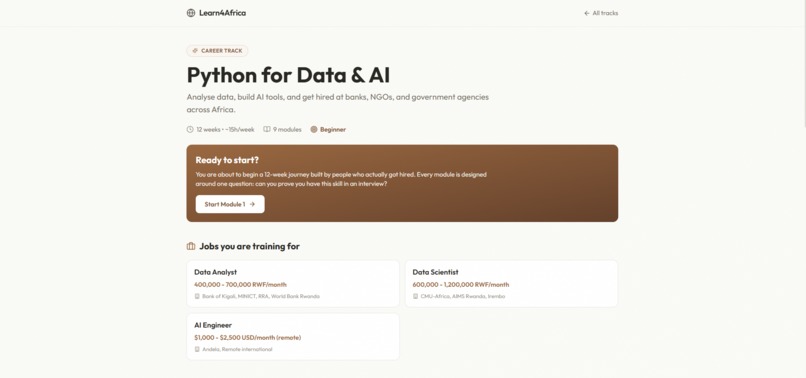
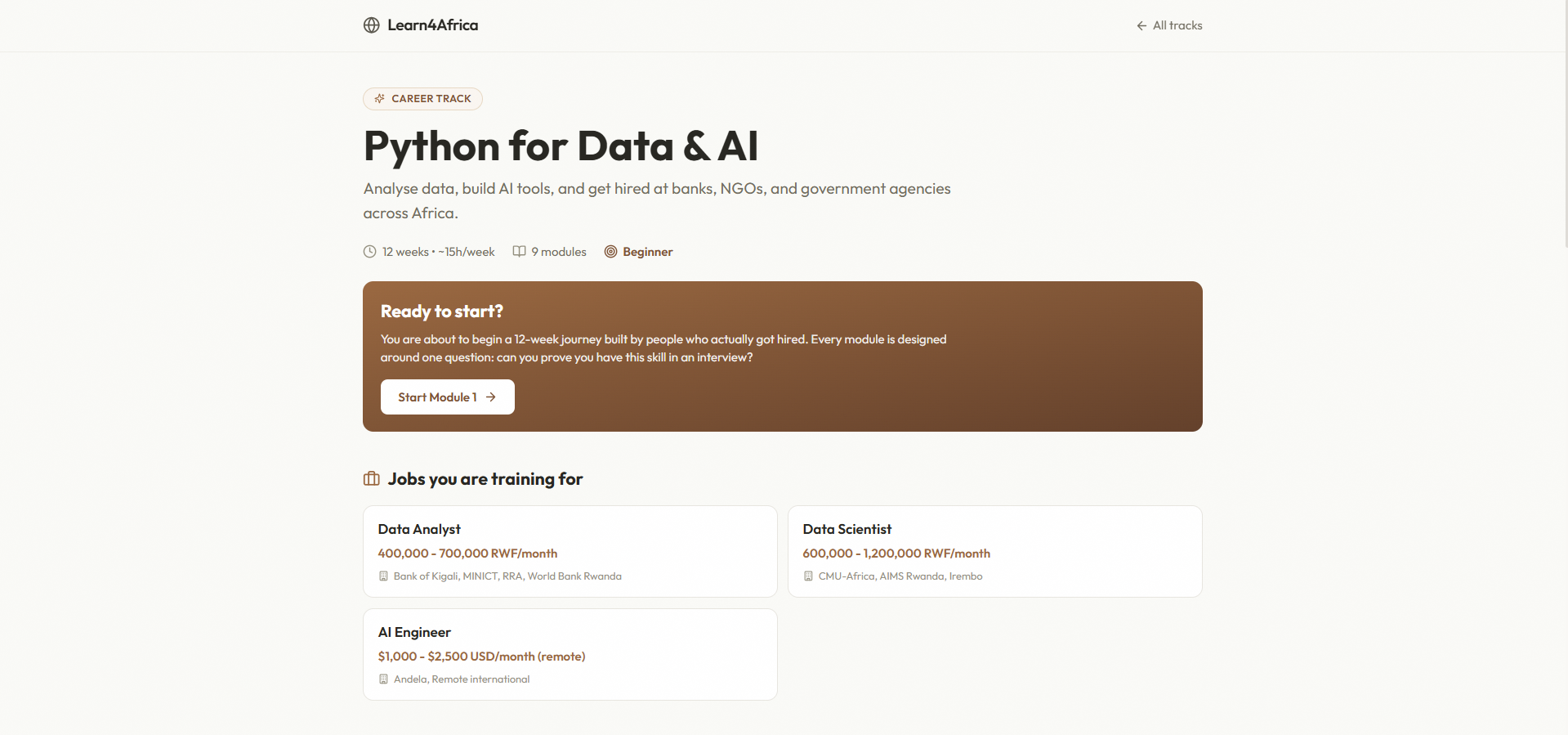
Wanna be a data analyst join this
-
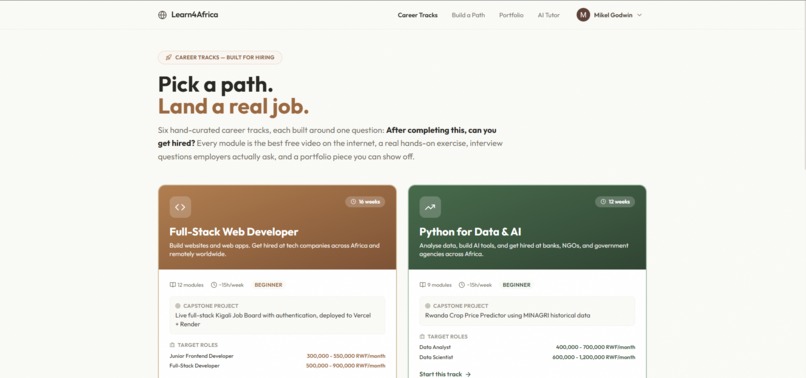
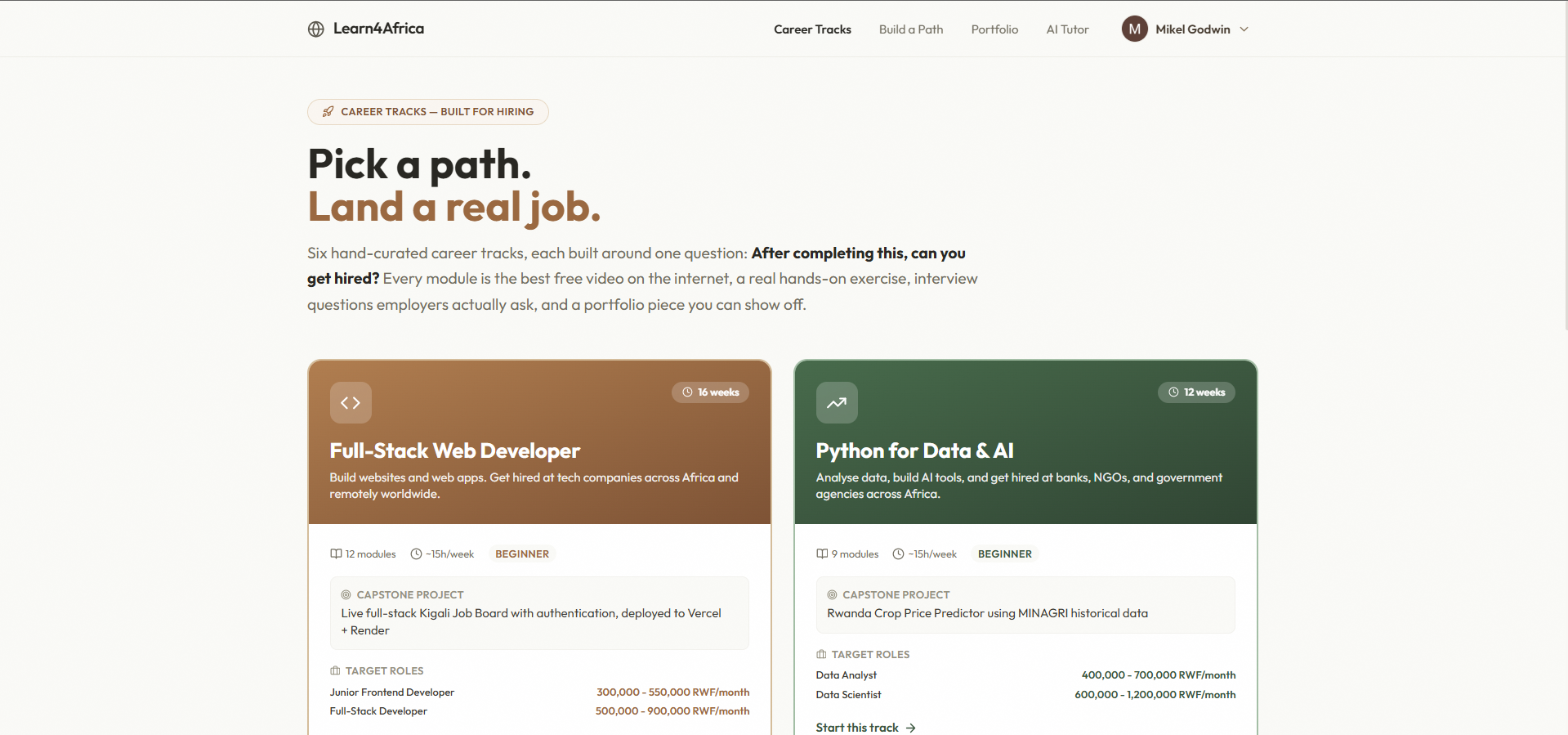
Career paths
-
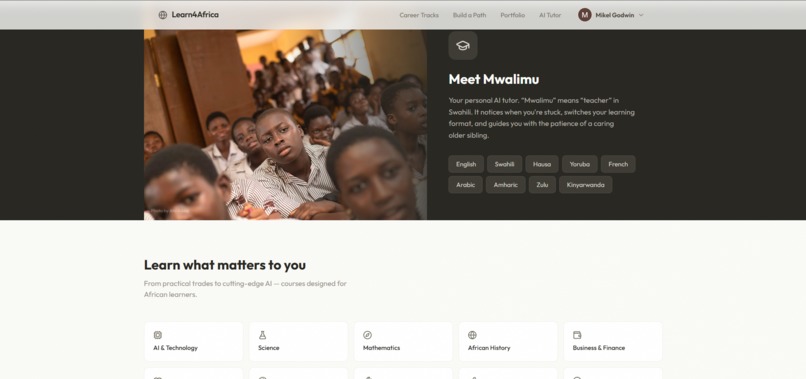
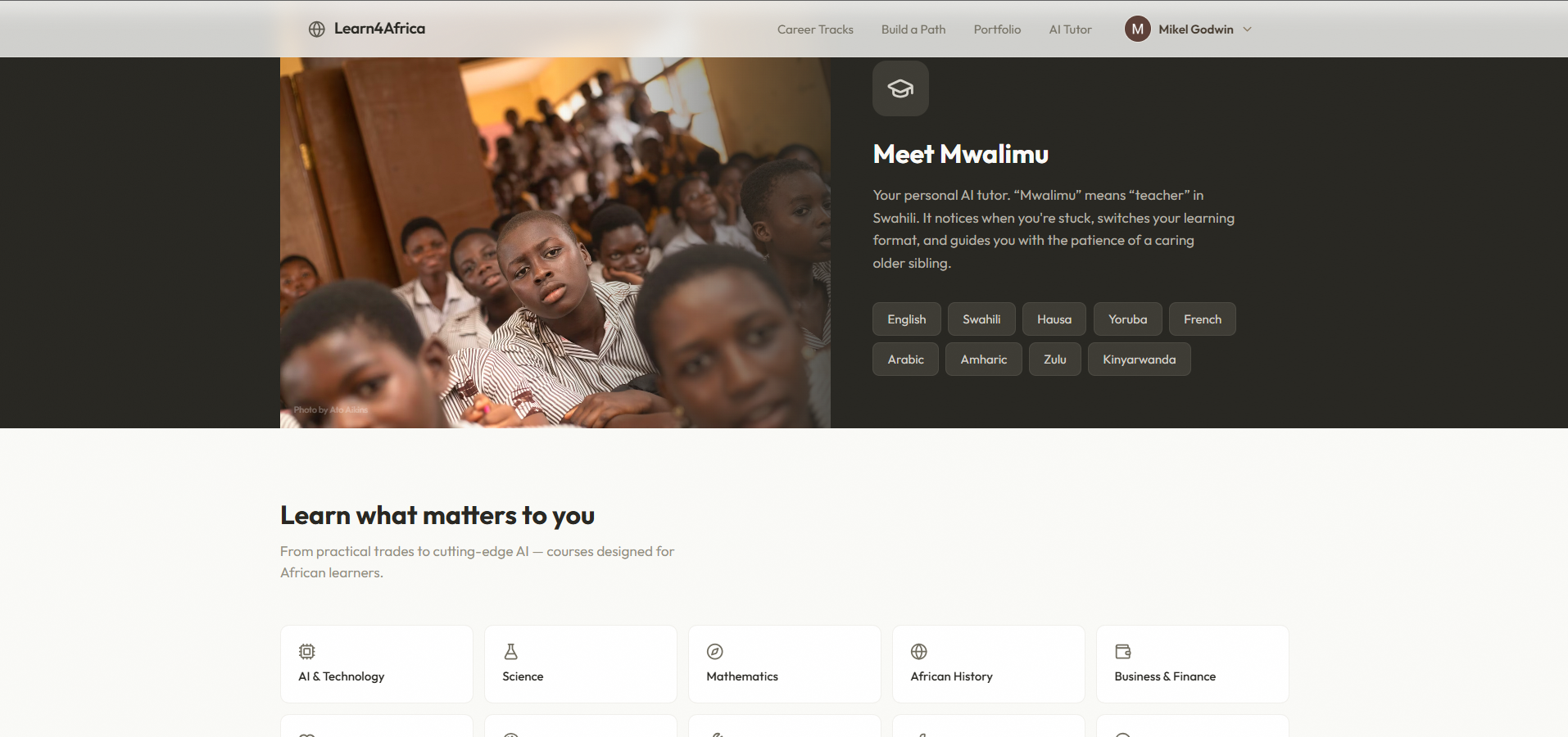
Meet our Ai tutor
-
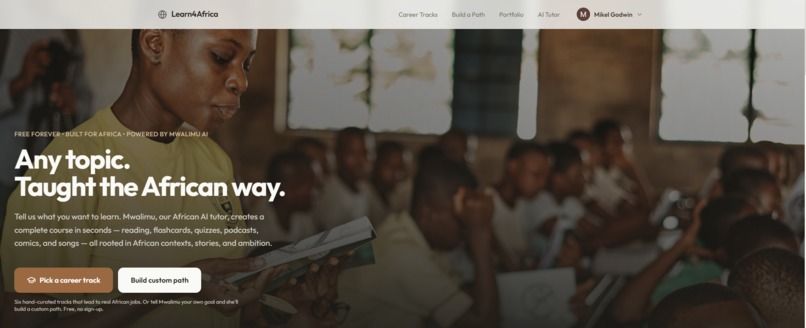
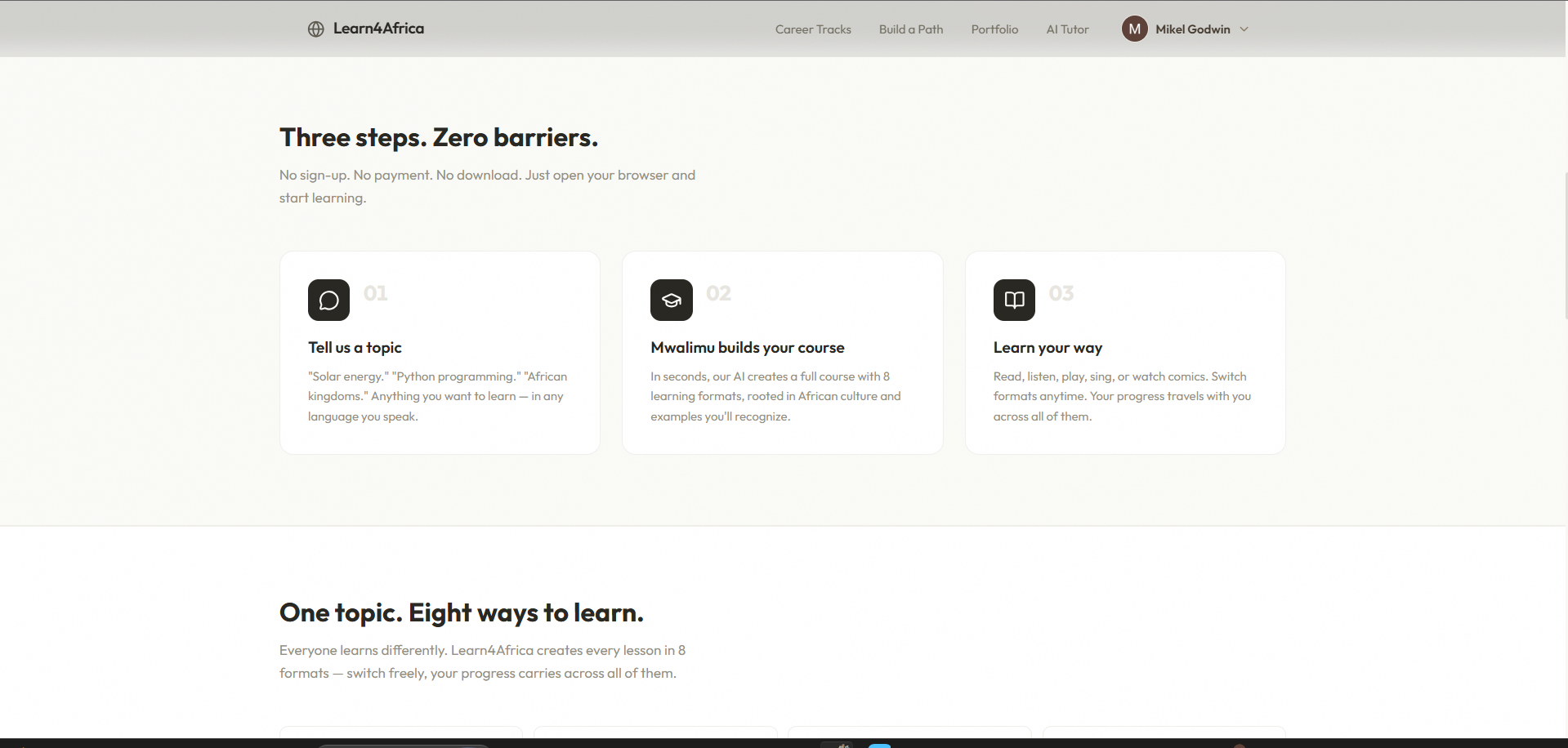
Landing Page
The Problem We Witnessed
Walk into any university in Rwanda and you will find students who are brilliant, motivated, and hungry to build careers in technology. Walk into any tech company in Kigali and you will find hiring managers who cannot fill junior developer roles because qualified candidates simply do not exist in sufficient numbers.
This is not a motivation problem. It is an access problem.
Rwanda has a 57:1 student-to-teacher ratio. Youth unemployment stands at 18.8%. The ICT sector grows at 15% annually but faces a 30% skills shortage. And 85% of Rwandan tech firms cite skill gaps as their primary operational constraint.
The tools to close this gap exist. Harvard's CS50 is free. freeCodeCamp is free. The Odin Project is free. Thousands of hours of world-class instruction sit on YouTube waiting to be watched. But for a 20-year-old student in Musanze with a smartphone and a dream, these resources are an ocean with no map, no guide, and no connection to the Rwandan job market.
We built the map. We built the guide. We built Learn4Africa.
What We Built
Learn4Africa is a free AI-powered learning platform that gives every African student a personal AI tutor — Mwalimu — who teaches in African cultural context, guides students through job-ready skills using the world's best free content, and connects their progress directly to real employment opportunities in Rwanda and across Africa.
Mwalimu means Teacher in Swahili. And that is exactly what it is. Not a chatbot. Not a search engine. A teacher who knows Rwanda.
When a student asks Mwalimu what an API is, Mwalimu does not say "an Application Programming Interface is a set of protocols." Mwalimu says: "Think of ordering food at a market. You make a request. They prepare it. They deliver it. That is an API."
When a student writes in Kinyarwanda, Mwalimu responds in Kinyarwanda.
When Mwalimu gives examples, the names are Kalisa, Amina, and Chidi — not John, Mary, and Bob.
How We Built It
The Architecture
Learn4Africa is built on four things only:
- Convex — database, backend logic, and real-time sync in one platform
- Next.js on Vercel — frontend, free forever at our scale
- Anthropic Claude — the AI brain behind every Mwalimu interaction
- Google OAuth — one-click sign in, no password to remember
Every AI feature runs through a single, carefully engineered system prompt we call the Mwalimu Identity — a set of cultural, pedagogical, and ethical instructions that transform Claude from a general AI into a teacher who genuinely understands Africa.
The Content
We built six career tracks with 52 modules, each following a strict five-layer standard:
- Why This Matters — African context first, always. Every concept connected to something the student sees in daily Rwandan life.
- Best Free Video — curated from freeCodeCamp, CS50, Traversy Media, and The Odin Project. Scored and selected. Not random.
- Hands-On Practice — real exercises built around African context. A mobile money fee calculator using Rwanda's actual MTN MoMo fee structure. A Kigali job board built in React.
- Interview Preparation — real questions that BK Tech, MTN Rwanda, Irembo, and Andela actually ask. With model answers written for Rwandan interview culture.
- Portfolio Contribution — every track ends with deployed projects on GitHub. Not certificates. Proof.
The African Intelligence Layer
We built africa_context.json — a knowledge base of 10 Rwandan tech companies, salary benchmarks in RWF, 12 African coding analogies, and job board resources across Rwanda and East Africa. Mwalimu draws from this on every interaction so responses are never generic and never Western by default.
What We Learned
We learned that the hardest part of building for Africa is resisting the temptation to copy what already exists elsewhere.
Every EdTech platform we studied — Khan Academy, Coursera, Duolingo — was built for Western learners and adapted for Africa as an afterthought. The examples use Western names. The job market references are American. The cultural defaults are European.
A UNESCO report published in 2025 confirmed what we suspected: AI tools trained primarily on Western data fail African students. ChatGPT told researchers there are four seasons. West Africa has two.
We did not adapt a Western tool. We built something new. And we built it backwards — starting with the question "what does a junior developer at BK Tech need to know?" and working backwards from that answer to design every module, every exercise, and every Mwalimu interaction.
The Challenges We Faced
The API credits challenge. Building an AI-powered platform without API credits during development required creative problem-solving. We implemented a provider abstraction layer that allows Learn4Africa to switch between AI providers with a single environment variable change — a design decision that made the platform more resilient and maintainable.
The content quality challenge. Generic AI-generated content fails students. We established and enforced a strict five-layer module standard across all 52 modules. Every interview question was verified against real Rwandan job postings. Every salary benchmark was sourced from Rwanda Labour Force Survey data.
The cultural accuracy challenge. Getting AI to consistently respond in African cultural context required extensive prompt engineering. The Mwalimu Identity prompt went through dozens of iterations before Mwalimu reliably used African analogies, African names, and Kinyarwanda when appropriate.
The Ethical Foundation
Learn4Africa is named after Dario Amodei's essay Machines of Loving Grace — which inspired this hackathon's Loving Grace Ethics Award. We took that inspiration seriously.
Dignity by design. Mwalimu never tells a student their answer is wrong. It says "let us approach this from a different angle." Students are never made to feel behind, slow, or less than.
Free forever by commitment. Not free with a premium tier. Not free until we find investors. Free forever. Sustained by grants, NGO partnerships, and institutional licensing — never by student payments.
Data minimalism. We collect only what is needed for progress tracking. No student data is sold, shared, or used for advertising. Ever.
Empowerment not dependency. Mwalimu teaches. It does not do the work for the student. Every feature is designed to build independence, not create reliance on AI.
What Is Next
Learn4Africa launched during this hackathon building period. Amina from Musanze is a real archetype — there are hundreds of thousands of her across Rwanda and millions across Africa.
Our next steps are community partnerships with UR-CST and other Rwandan universities, NGO grant applications to sustain the free model at scale, and expanding Mwalimu's Kinyarwanda capabilities to serve students whose primary language is not English.
The continent does not need another tool built somewhere else and shipped to Africa.
It needs tools built here, for here, by people who understand what here actually means.
This is Learn4Africa.
Built With
- api
- claude
- convex
- css
- mermaid.js
- next.js
- oauth
- speech
- tailwind
- typescript
- vercel
- web

Log in or sign up for Devpost to join the conversation.