-
-
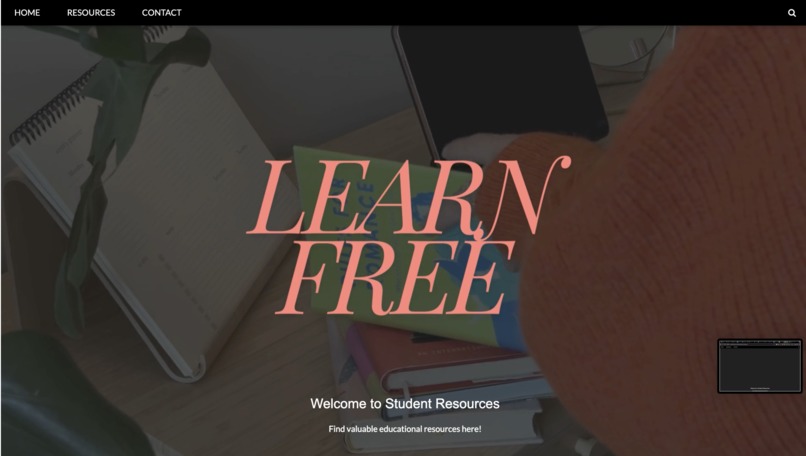
Home page
-
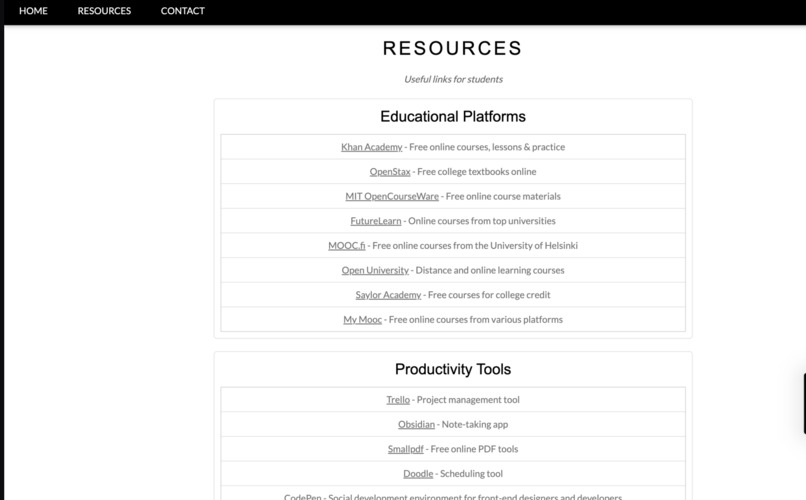
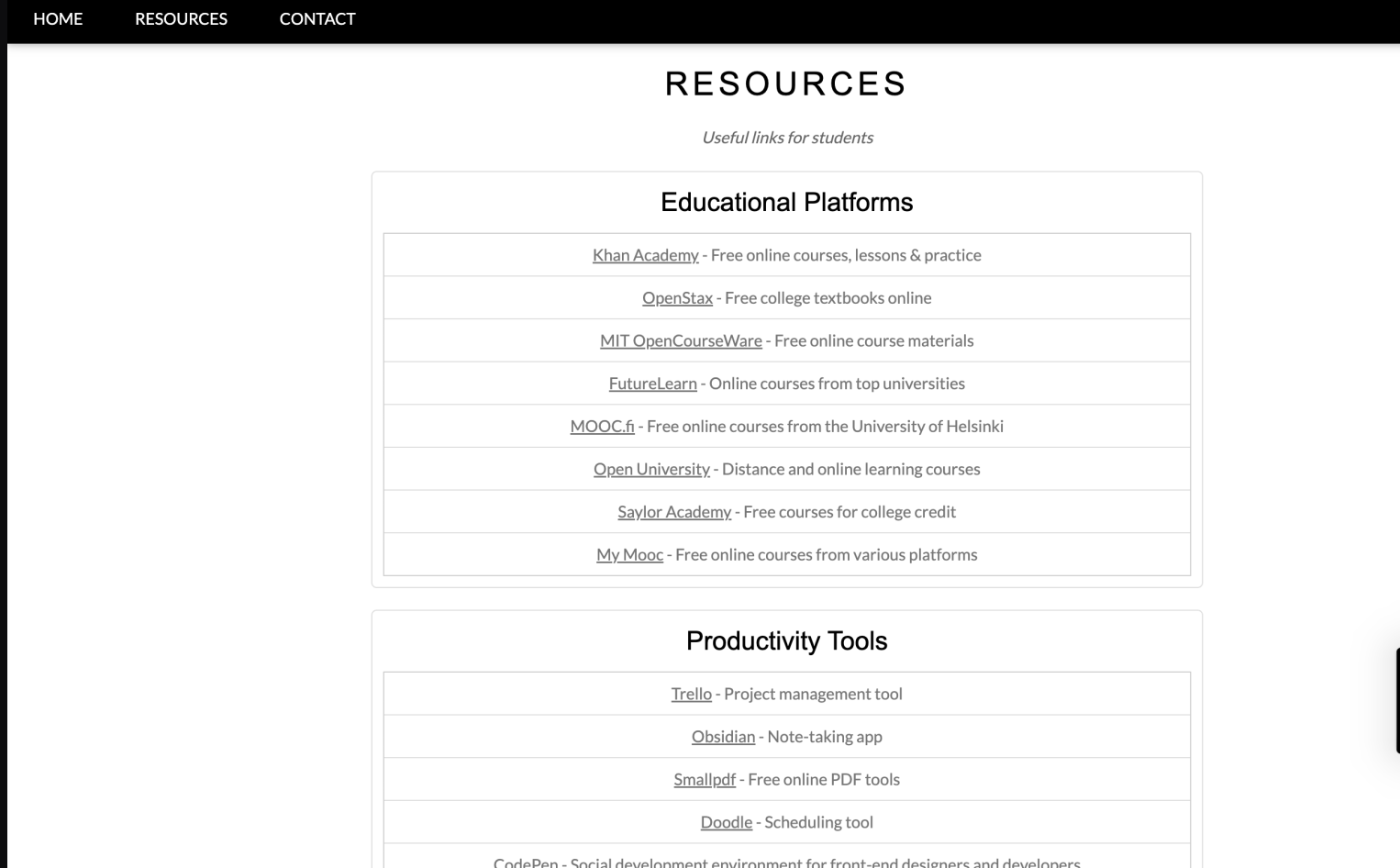
Resources pages
-
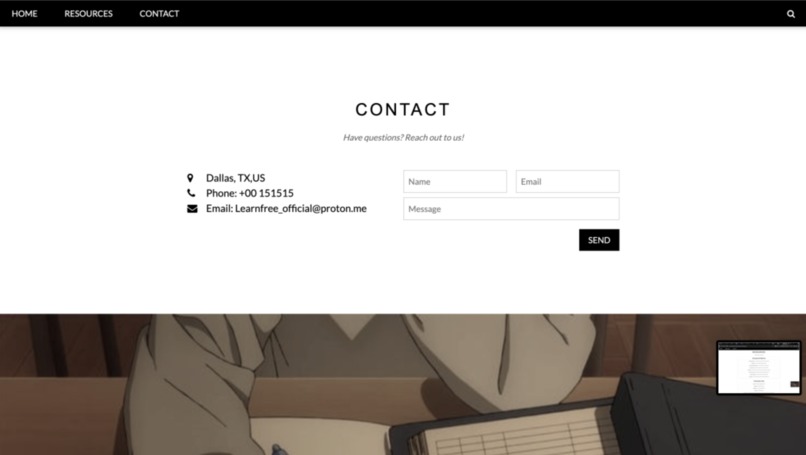
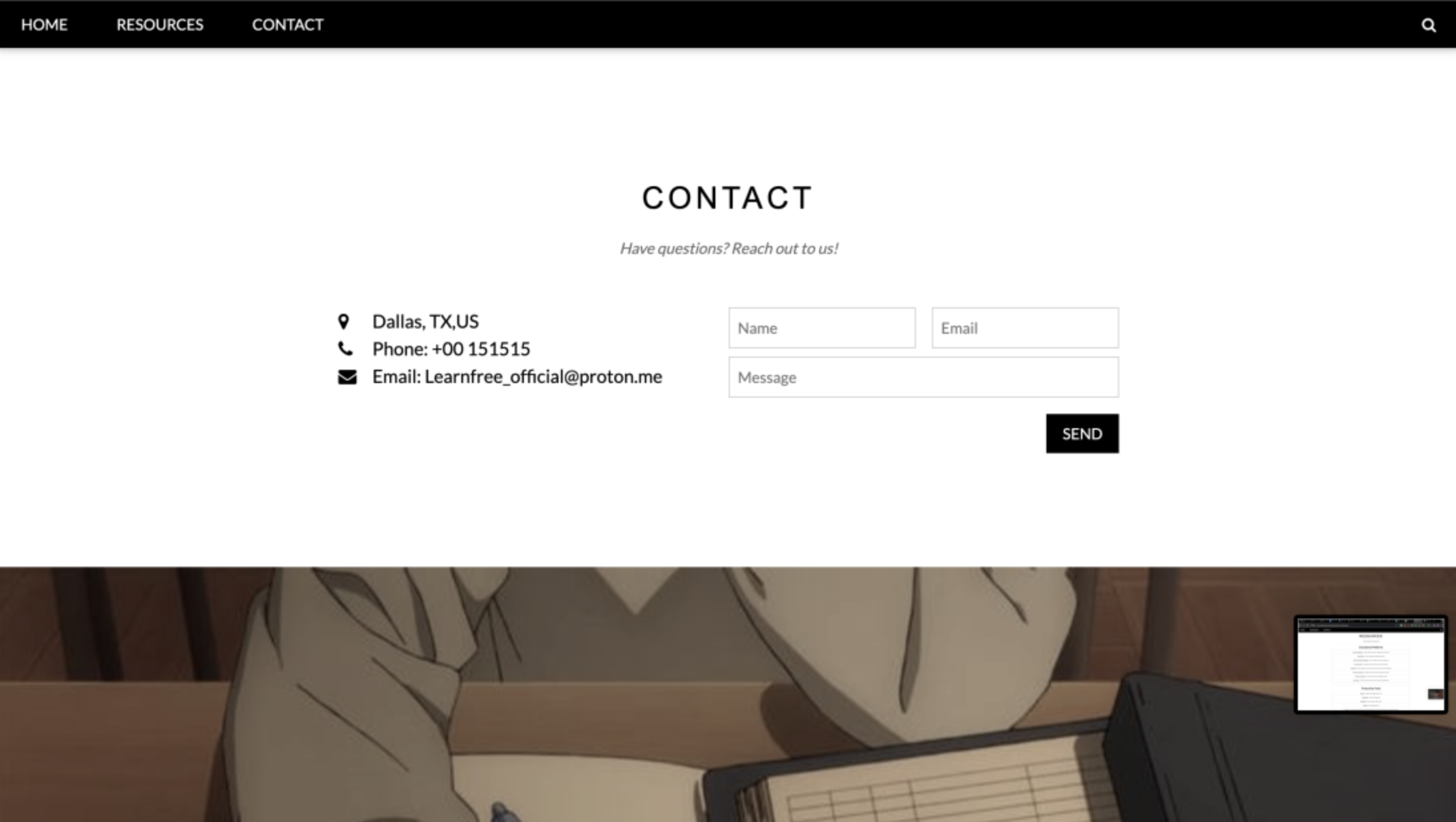
Contact page
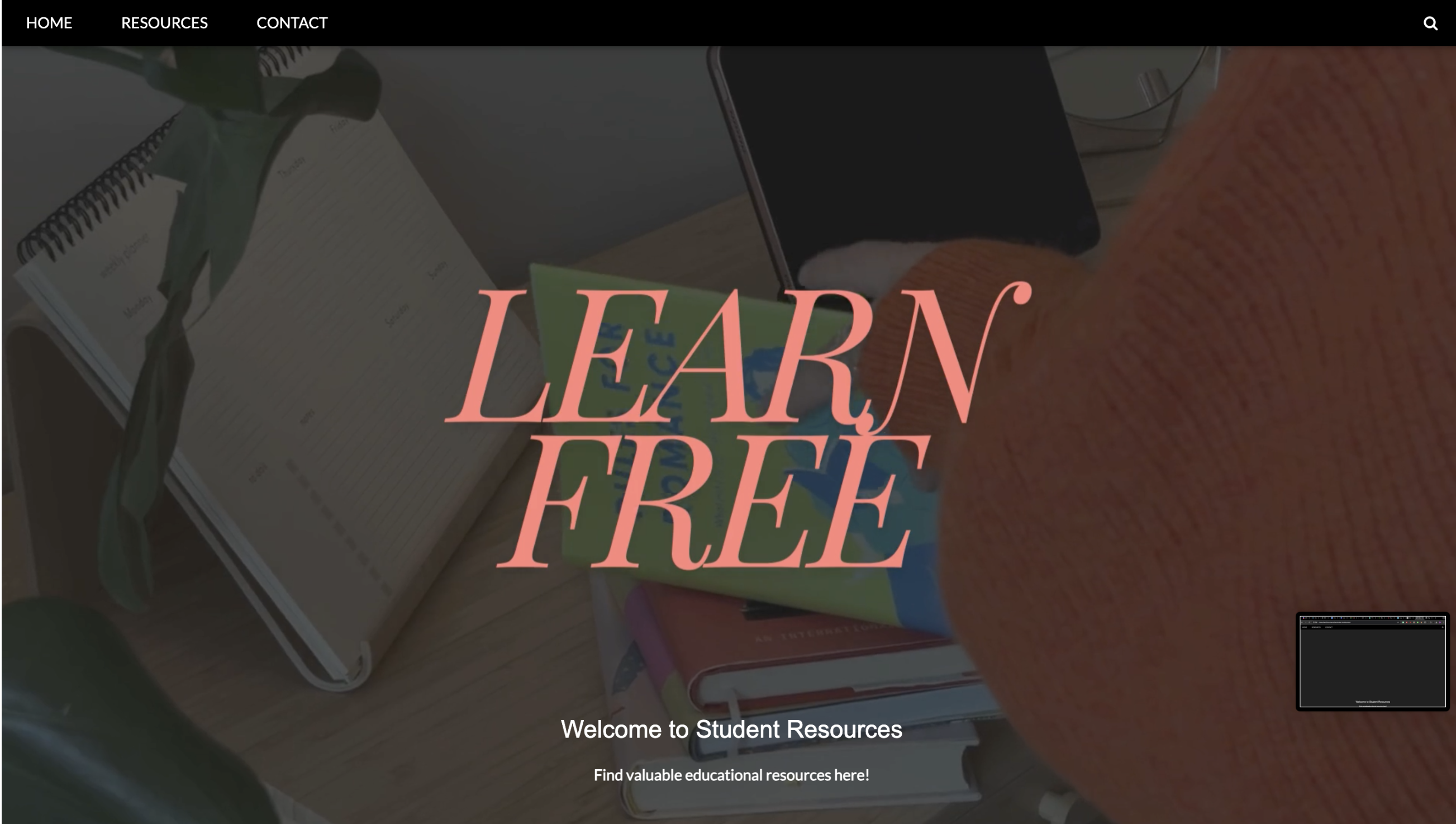
Inspiration The inspiration for creating a slogan came from a desire to highlight the importance of accessible education. Seeing how students often face barriers due to financial constraints, I wanted to emphasize the value of free resources in supporting their learning journey. The goal was to create a slogan that not only promotes the availability of these resources but also inspires and motivates students. What I Learned
Through this process, I learned the power of concise, impactful language. A slogan needs to be more than just catchy—it should resonate with its audience and clearly convey the core message. It taught me the importance of balancing clarity with creativity, ensuring that the slogan communicates the benefit of the resources effectively while also engaging the audience. Building the Project
Research: I began by researching existing slogans related to education and free resources. This helped me understand common themes and what resonates with students and educators. Brainstorming: Next, I brainstormed a list of words and phrases related to education, support, and empowerment. I focused on words that evoke a sense of opportunity and assistance. Drafting: I then combined these ideas into several draft slogans. The goal was to craft a message that was both encouraging and straightforward. Feedback: I sought feedback from peers and educators to gauge the effectiveness of each slogan. Their input was invaluable in refining the final version. Challenges Faced
One of the main challenges was ensuring the slogan was inclusive and appealing to a diverse student population. It was important that the message felt relevant to students from various backgrounds and academic levels. Another challenge was keeping the slogan brief yet powerful, which required careful word choice and phrasing. In the end, the slogan " Free Resources for Every Student!" emerged as the most effective. It encapsulates the essence of providing free educational resources while inspiring students to make the most of these opportunities.
To build this website, we used HTML, CSS, and JavaScript, coding it in Visual Studio Code and keeping track of our progress with GitHub. We chose to create a website because it gives us a central, customizable space to share information and resources anytime, offering more control and a professional touch compared to other formats. Plus, websites come with useful analytics that help us understand and improve user engagement.
We based our design on a W3Schools template because we wanted something that looked great and would keep visitors coming back. Our code features a responsive navigation bar that adapts to different screen sizes, a slideshow to display multimedia content, and a neatly organized resource section for easy navigation. We also added a contact form to make it simple for users to get in touch. These choices make our website not only functional but also user-friendly.
We’ve implemented several key features that really enhance the site’s usability and functionality. The responsive navigation bar works smoothly across different devices, while the slideshow grabs attention with dynamic content. By categorizing the resource section, we’ve made it easier for users to find what they need. The contact form adds a personal touch, allowing users to reach out effortlessly. Overall, these features help us create a website that’s both effective and enjoyable to use.
Built With
- css
- github
- html
- javascript
- vscode


Log in or sign up for Devpost to join the conversation.