Inspiration
As a lifelong learner juggling exams and remote work, I grew frustrated with generic background music that either distracted me or failed to match my study rhythm. I noticed peers struggling with the same—music that didn’t adapt to deep focus sessions vs. creative brainstorming. That’s when I set out to build a tool that truly aligns with how we learn.
What it does
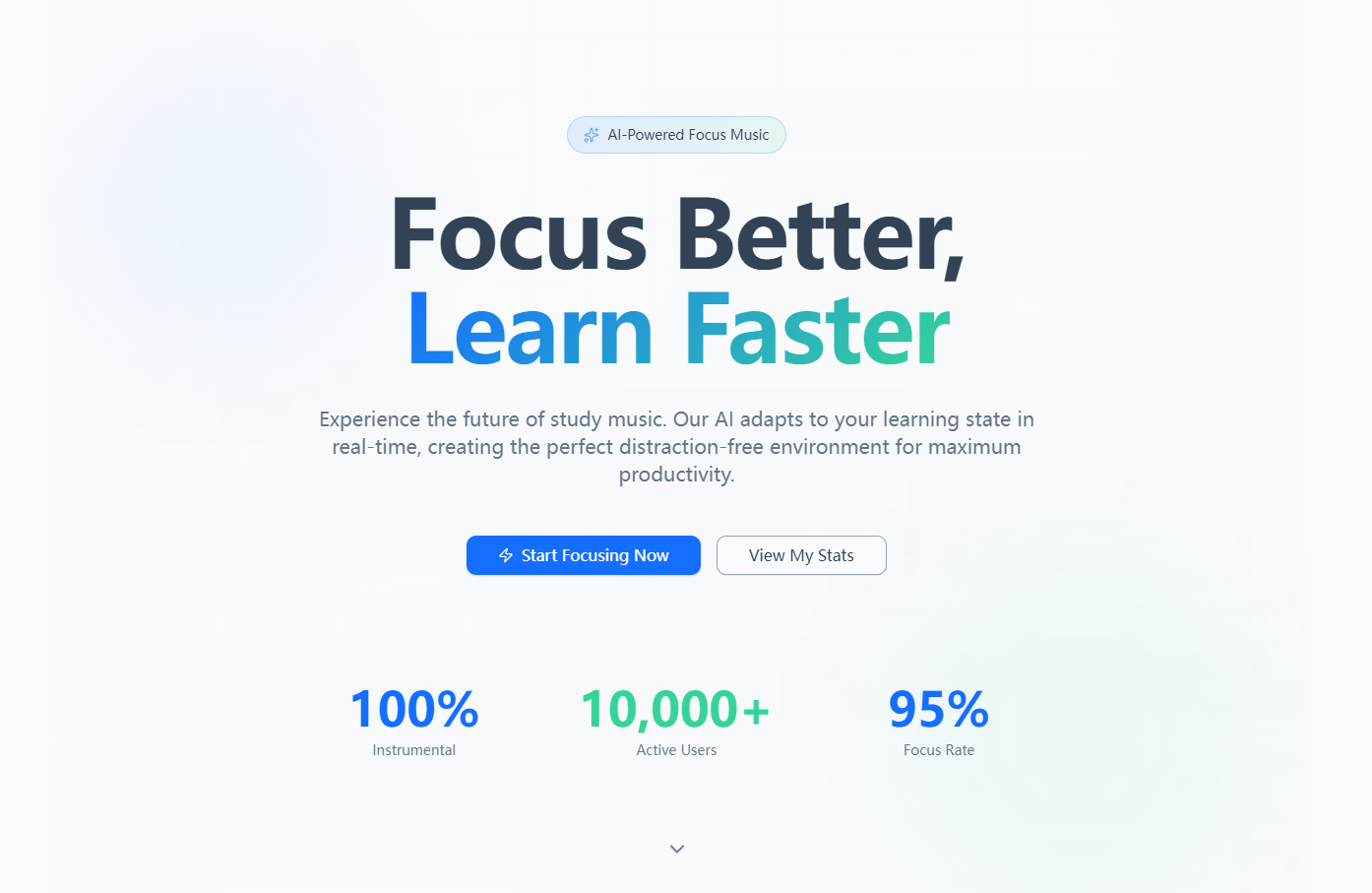
StudyMusic AI creates instrumental music tailored to 3 core study modes (Deep Focus, Light Review, Creative Thinking). Users mix ambient sounds (café, library, nature) with independent volume control, and the AI adjusts music intensity to support sustained focus. It also saves favorite audio combinations for future sessions, with clear premium features for full access.
How we built it
I started by mapping user study behaviors and defining music generation rules (stable tempo, lyric-free tracks). Using React for the frontend UI and Node.js for backend logic, I integrated the Web Audio API to mix AI-generated instrumentals with ambient sounds. Firebase tracked user preferences, and TensorFlow powered the adaptive music adjustment logic. The UI followed a minimalist, distraction-free design with a cohesive color scheme.
Challenges we ran into
Balancing audio clarity when multiple ambient sounds were mixed at high volumes was tricky—finding the right balance between customization and usability took dozens of iterations. Also, ensuring the AI music adjustment felt seamless (no jarring tempo/volume shifts) required refining the logic to prioritize consistency over over-adaptation.
Accomplishments that we're proud of
Creating a tool that puts user focus first—every design and feature choice centers on reducing distractions. The ambient sound mixer became a fan favorite, and the clear free/premium model avoids paywalls for core functionality. Most importantly, testing with fellow students showed improved focus during long study sessions.
What we learned
I deepened my understanding of audio engineering basics and user-centric design—small UI choices (like non-intrusive upgrade prompts) made a huge difference in user experience. I also learned to balance AI personalization with simplicity; over-engineering the adaptation logic risked overwhelming users, so simplicity won out.
What's next for this project
We plan to expand study modes to niche learning styles (e.g., language learning, math problem-solving) and refine the AI to learn faster from user preferences. Adding offline playback and integrating with popular productivity tools (Notion, Todoist) are also on the roadmap, plus expanding ambient sound options to include more cultural and natural soundscapes.

Log in or sign up for Devpost to join the conversation.