Inspiration
I’ve always struggled to retain what I learn—until I discovered the Feynman Technique. The idea of learning by teaching clicked, but I couldn’t find a tool to practice it interactively. That’s when I decided to build LearnByTeaching: a platform that turns the Feynman Technique into a daily, guided practice for anyone craving deep mastery.
What it does
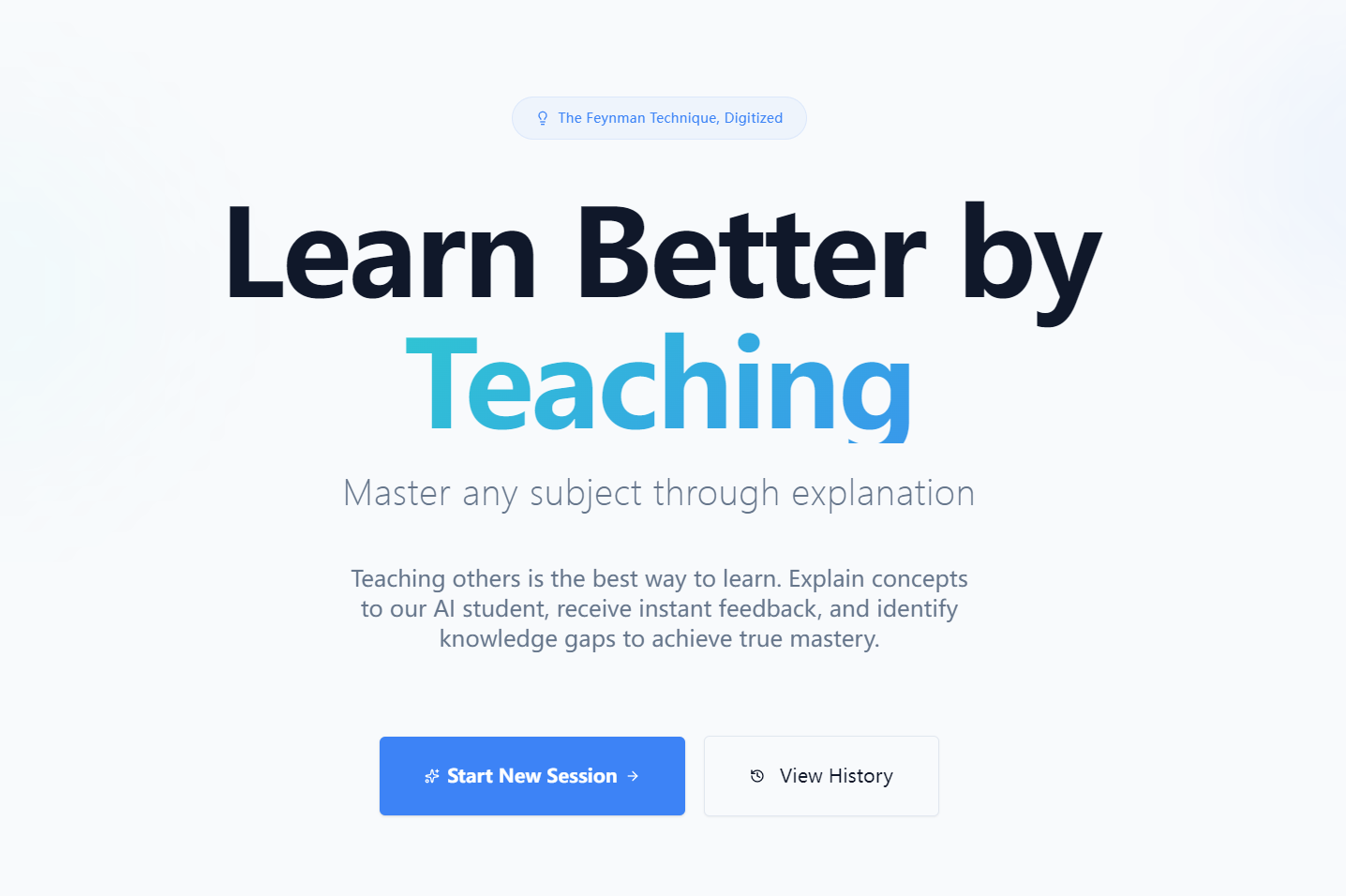
LearnByTeaching lets users explain any topic (academics, tech, business) to an AI student. The AI asks targeted follow-up questions, scores explanations (0-10), highlights knowledge gaps, and tracks progress over time. Free users get 3 daily sessions; subscribers unlock unlimited practice.
How we built it
We started with core UX design for simplicity—3 clicks max to start a session. Frontend: React for responsive, distraction-free input. Backend: Node.js/Express to handle session logic, scoring, and progress tracking. OpenAI API powers the AI student’s questions; MongoDB stores session history (LocalStorage for browser-based saves). Deployed on Vercel/AWS for speed.
Challenges we ran into
The biggest hurdle was refining the scoring logic—balancing clarity, simplicity, and completeness to make scores meaningful. We also struggled with AI question relevance: early iterations generated generic questions, so we fine-tuned the API prompts to target logical gaps in user explanations. Handling session limits (free vs. subscribed) and offline draft saving added edge-case complexity.
Accomplishments that we're proud of
We built a tool that’s intuitive (no login for demo!) and actionable—users get specific review focus points, not just a score. The progress tracking feature shows tangible improvement for repeated topics, and the community page lets users learn from top anonymized explanations. We hit all acceptance criteria, including mobile responsiveness and instant load times.
What we learned
I learned to prioritize user experience over feature bloat—even small friction (like extra clicks to start a session) hurts adoption. Working with AI APIs taught me to iterate on prompts for context specificity, and handling tiered access (free/subscribed) sharpened my business logic skills. Most importantly: users value concrete feedback over vague praise.
What's next for this project
First, add an account system for cross-device progress sync. Then, introduce peer-to-peer teaching challenges and advanced topic categorization. We also plan to integrate speech-to-text for voice explanations and expand to more languages. Long-term: partner with educational platforms to embed LearnByTeaching into coursework for deeper learning outcomes.
Built With
- amazon-web-services
- css
- html
- mongodb
- openai-api
- vercel

Log in or sign up for Devpost to join the conversation.