-
-

app logo
-
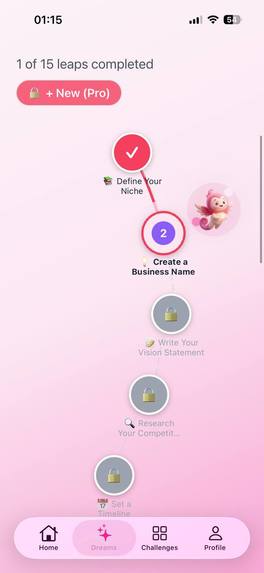
Leap path
-
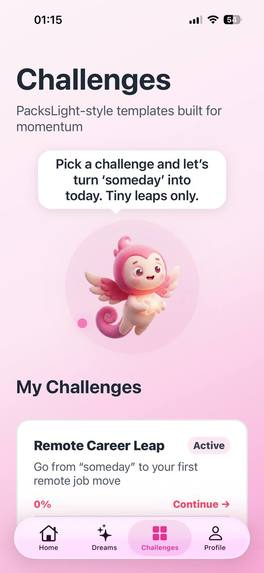
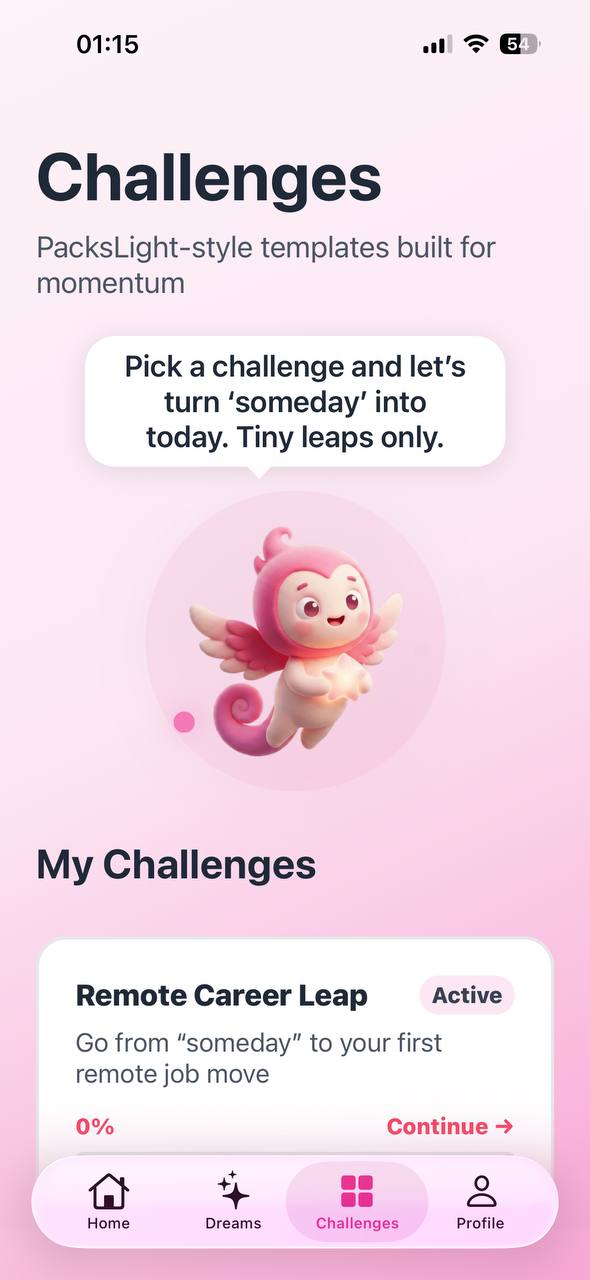
challenge screen
-
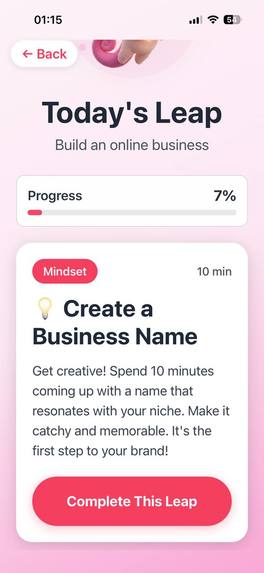
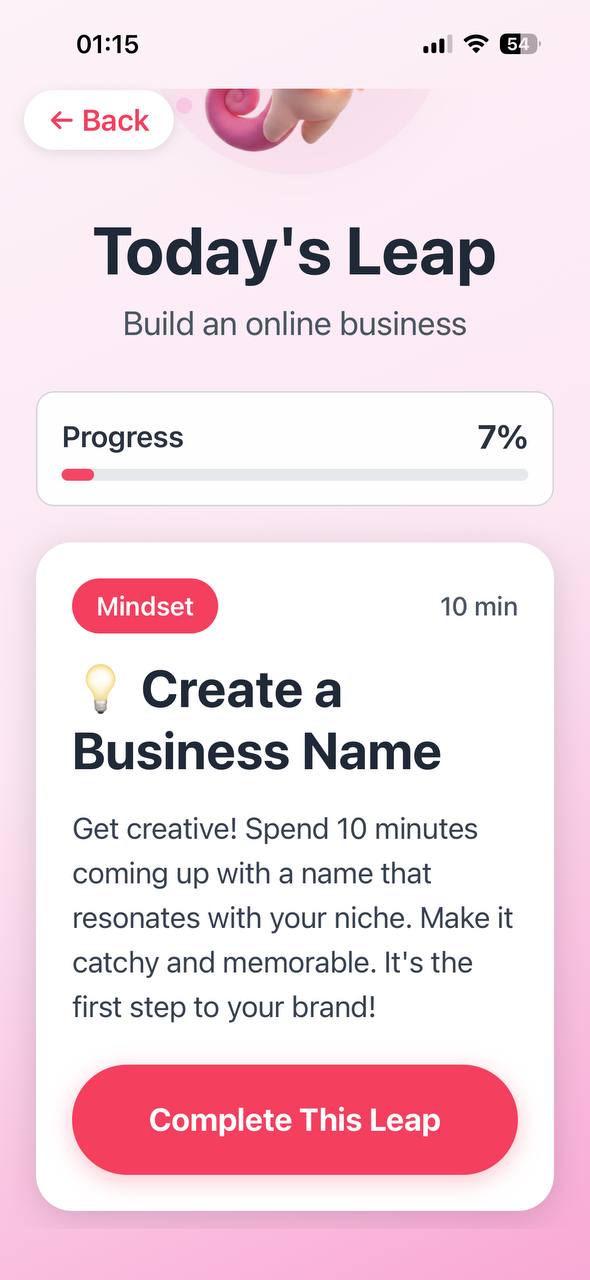
Leap screen

Devpost Project Story - Improved Version
Inspiration
Gabby Beckford (PacksLight) champions bold, audacious dreams—moving abroad, winning major grants, building unconventional lives. But I noticed a critical gap: her audience of ambitious Gen Z/Millennial women gets inspired but then paralyzed by the "how." They're drowning in "dream big" content but lack a system to turn that inspiration into daily action.
They don't need another generic to-do list; they need a companion that embodies Gabby's "hype-woman" energy and breaks down those scary goals into tiny, non-intimidating steps. I built LeapLit to bridge that gap—turning bold dreams into undeniable daily progress.
What it does
LeapLit is an upbeat, motivating app that transforms massive life goals into daily micro-actions, designed specifically for ambitious women ready to take action.
Dream Decomposition: Users define a bold dream (e.g., "Solo Trip to Bali"), and AI instantly breaks it down into 15-20 "micro-leaps"—tiny, actionable steps that take just 5-30 minutes each. Each leap is tagged (Logistics/Money/Mindset/Community) so users know exactly what they're tackling.
Lumi, Your Dream Guide: Lumi, our supportive mascot, lives throughout the app. He reacts to your progress, offers encouraging pep talks when you're stuck, and celebrates every win with confetti explosions. He's not just decoration—he's your hype companion.
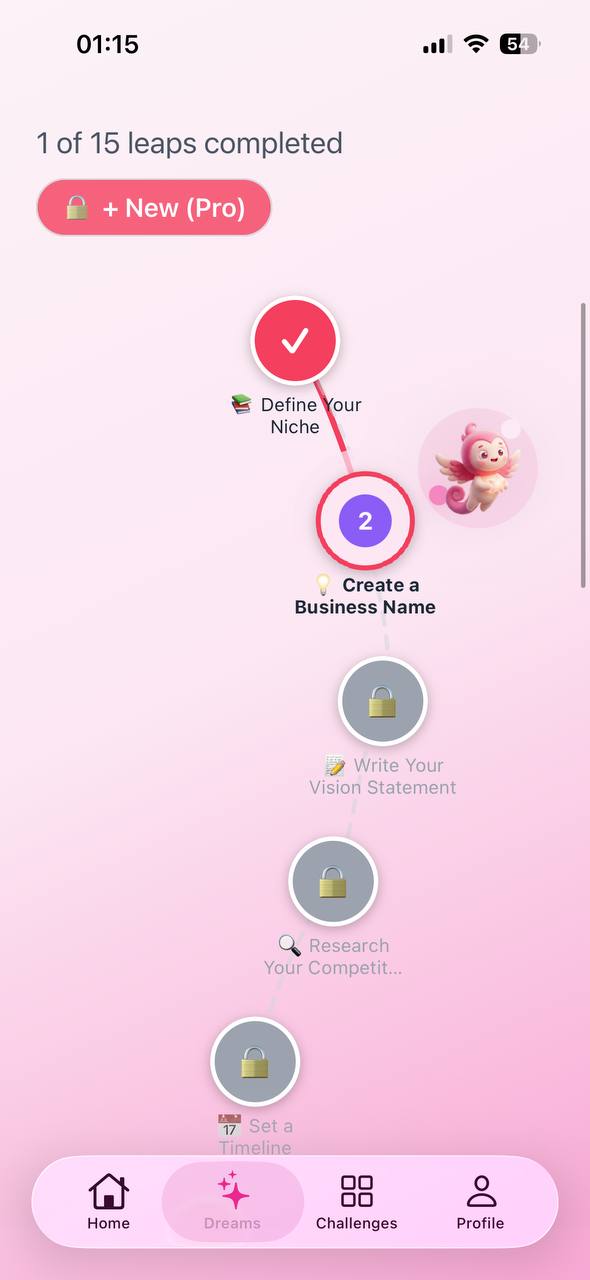
Streaks & Progress Tracking: The app tracks daily completions, maintaining current and longest streaks to build consistency. Visual progress paths show exactly how far you've come, with each completed leap lighting up your journey.
The Challenge Vault: Pre-built "Challenge Templates" curated from Gabby's actual advice (like "Remote Career Leap") let users start instantly with proven roadmaps. Free users get one challenge; Pro unlocks the full vault.
Dream Wraps: When you finish a dream (at 80% or 100%), you get a beautiful "Spotify Wrapped" style story card of your journey to share on Instagram—proving to the world (and yourself) that you did it.
Monetization: Freemium model with RevenueCat. Free users get 1 dream + 1 challenge. Pro ($4.99/month or $39.99/year) unlocks unlimited dreams, full challenge vault, Dream Wrap exports, and advanced streak features.
How I built it
I built LeapLit as a polished, native-first experience using React Native (Expo SDK 54) with TypeScript for type safety.
Frontend: I used standard React Native StyleSheets with Expo Linear Gradient and Glass Effect to create a premium, cohesive design system without heavy UI libraries. Lumi is brought to life with Lottie animations and Reanimated for fluid, delightful interactions. The visual path system uses react-native-svg for smooth, Candy Crush-style progress visualization.
Backend: Supabase handles authentication, database, and cloud sync with local fallbacks for offline support. I used Supabase Edge Functions (Deno) to securely manage the OpenAI integration, ensuring API keys stay server-side while delivering instant, personalized AI dream plans.
Monetization: RevenueCat powers the entire subscription system. I integrated it from Day 1, using hosted paywalls (react-native-purchases-ui) for a seamless upgrade experience. RevenueCat manages entitlements (Pro vs Free), allowing me to change offerings remotely without app updates—crucial for iterating on pricing.
Challenges I ran into
Making AI Feel Human: Raw AI-generated lists felt cold and robotic. I spent significant time crafting prompts for GPT-4o-mini to adopt a "hype-woman" persona—using emojis, bold encouragement, and specific tags (Logistics/Mindset/Money/Community) so responses feel like advice from a friend, not a bot. The system prompt includes Gabby's actual tone and energy.
The "Dream Wrap" Magic: Getting the shareable story cards to look perfect required complex view-capture logic (react-native-view-shot) and precise timing to ensure generated images render correctly across all device sizes. I had to handle edge cases like long dream titles, varying completion percentages, and maintaining visual hierarchy.
Seamless Paywall Timing: Showing paywalls at the right moment (high intent, not annoying) required careful feature gating logic. I built a system that detects when users hit limits naturally, presenting the upgrade as unlocking potential rather than blocking access.
Accomplishments that I'm proud of
The Dream Wrap Engine: I successfully built a system that dynamically generates beautiful, shareable images of the user's journey. It's a complex feature involving view capture, image composition, and social sharing—and it works flawlessly across devices.
Invisible Monetization: The RevenueCat integration feels natural. Paywalls appear exactly when users have high intent (creating a second dream, accessing Pro challenges), not as nagging popups. The upgrade flow is seamless, and I'm proud of how it enhances rather than interrupts the experience.
Lumi's Personality: I created a mascot that feels alive. Through subtle animations, progress-reactive states, and randomized encouraging messages, Lumi feels like a real companion cheering you on—not just a static icon.
Perfect Audience Fit: Every feature—from the "hype-woman" AI tone to the confetti celebrations to the PacksLight-aligned challenges—is designed specifically for Gabby's audience. The app doesn't just solve a problem; it embodies the energy they're seeking.
What I learned
User Psychology > Features: For this audience, "features" matter less than "feelings." Adding a mascot, confetti, and encouraging copy wasn't just polish—it was core to overcoming the anxiety that prevents action. The emotional layer is as important as the functional one.
RevenueCat is a Superpower: Using RevenueCat's hosted paywalls (react-native-purchases-ui) saved me days of dev time. Instead of building custom billing UI, I could focus on the unique value—the Dream Wrap engine and Lumi's personality. The SDK handles edge cases I never would have considered.
AI Prompting is an Art: Getting GPT-4o-mini to consistently output the right tone, structure, and tag distribution required iterative prompt engineering. I learned that system prompts need to be as detailed as user prompts, with clear examples and constraints.
What's next for LeapLit
Community Squads: Matching users with the same "Dream Archetype" (e.g., a "Bali 2026" squad) for peer accountability and shared motivation. Users can see others' progress and celebrate wins together.
Creator Marketplace: Allowing other creators to sell their own "Challenge Templates" via RevenueCat non-renewing subscriptions. This turns LeapLit into a platform for all ambitious creators to monetize their expertise while giving users access to diverse, proven roadmaps.
Advanced Analytics: Deeper insights into what types of leaps users complete most, where they get stuck, and personalized recommendations based on success patterns.
Social Sharing Enhancements: Making Dream Wraps more interactive—allowing users to tag friends, create "dream duos" for shared goals, and build a feed of completed dreams for inspiration.
Built With
- expo.io
- lottie
- openai
- postgresql
- react-native
- revenuecat
- supabase
- typescript


Log in or sign up for Devpost to join the conversation.