Team 38
Inspiration
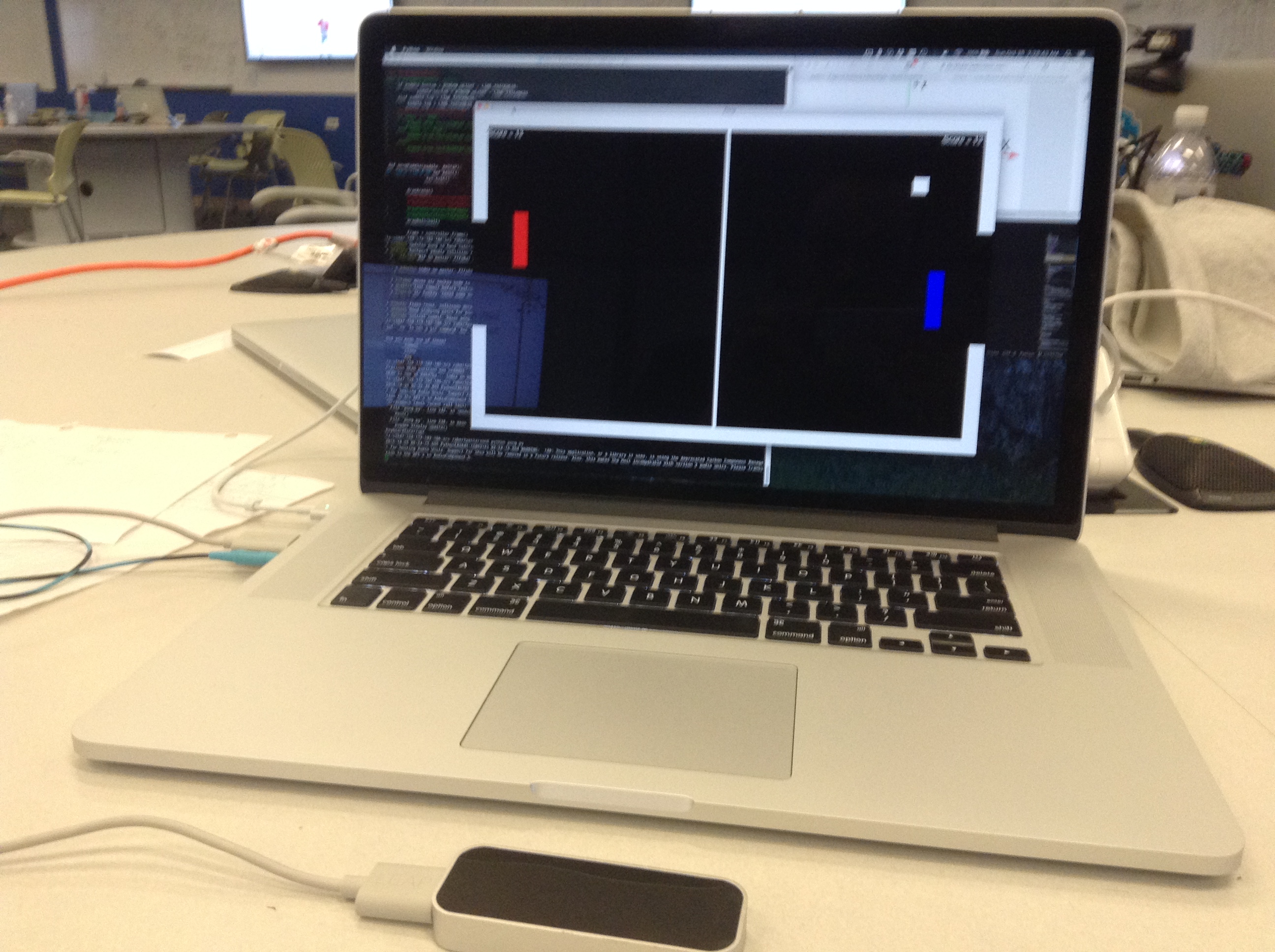
Pong is an icon of computer gaming. By adapting it into the developing and exciting context of virtual reality, we can show some of the most exciting aspects of the technology in a simple, easy to pick up game.
What it does
Uses pygame to implement Pong and Air Hockey, utilizing the Python API for Leap Motion. Also uses Leap Motion combined with Oculus to create a "Baby Simulator", putting you into a familiar environment, from a different context - for example knocking blocks down with your hand. This further demonstrates the power of virtual reality when paired with more "natural" input methods.
How we built it
Built in Atom text editor, ran through the command line. Pygame does the drawing graphics and game physics. Unity game physics with Oculus and Leap Motion plugins.
Challenges I ran into
None of us has ever developed a game before. No experience drawing GUI and writing game physics. There were some issues conflicting Python libraries between native installed Mac OS X version and updated Homebrew version. Reliance on old Python 2.7 resources. Lack of familiarity with unity was challenging, but by setting demanding standards for ourselves, the experience was ultimately very rewarding.
Accomplishments that I'm proud of
Smooth movement of controls and a fun multiplayer experience. It's an attention grabbing project that is instantly visually relatable and can be used to draw more people to computer science.
What we learned
Valuable experience in Python and interfacing with third party APIs. Learned the basics of unity, especially in a VR context. Helped us to start thinking in terms of the oculus rift's and leapmotion's capabilities.
What's next for Leap Motion Retro Arcade
Tetris, better graphics, and using more of the available Leap Motion API features such as gestures and grip.

Log in or sign up for Devpost to join the conversation.