-
-
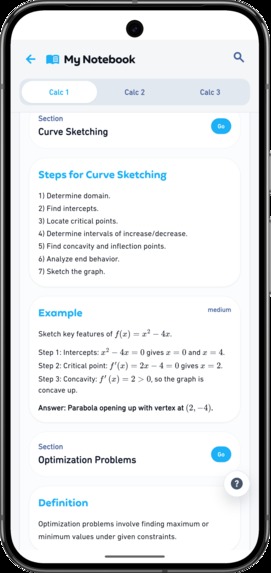
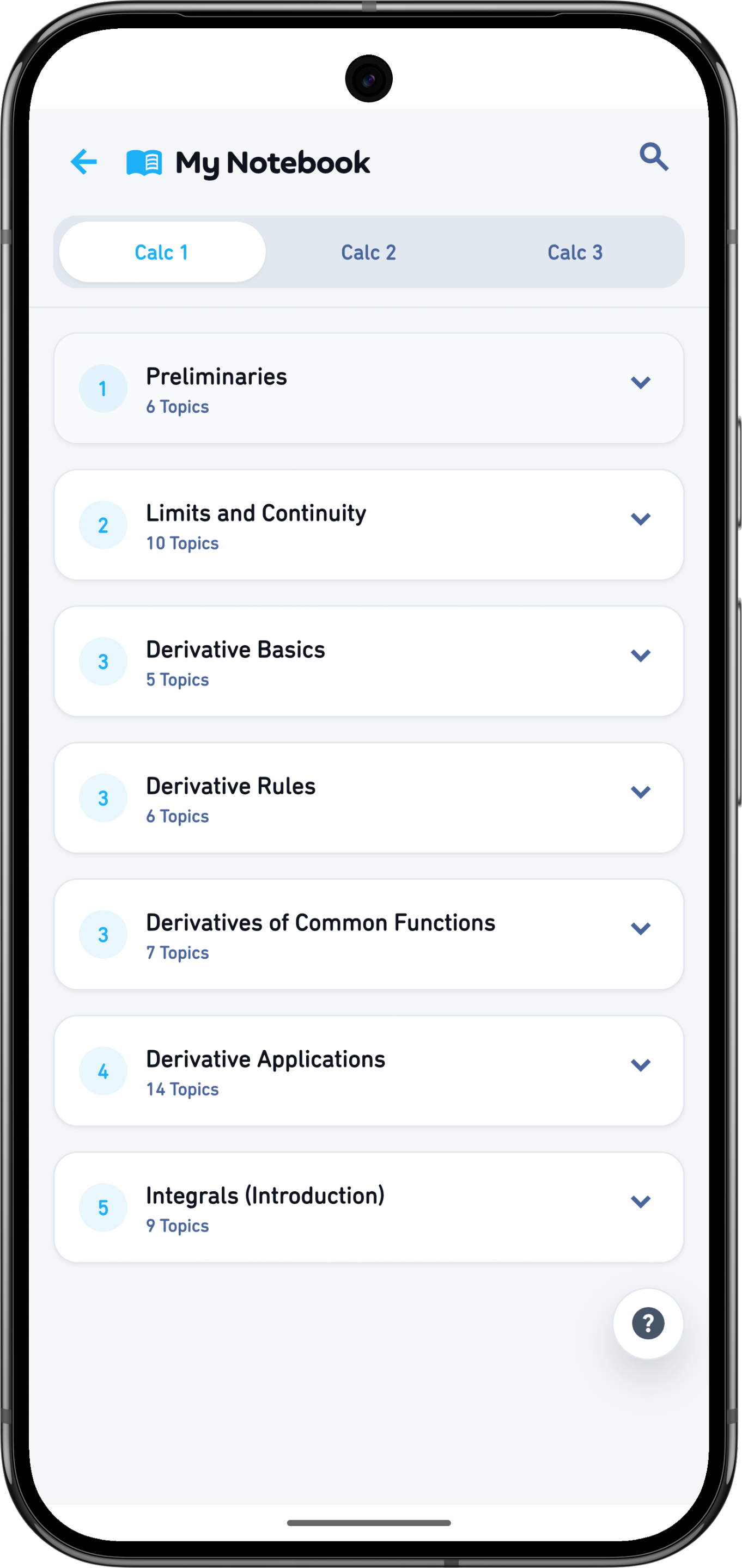
Expanded Topic Selection Screen On Android Mobile Phone
-
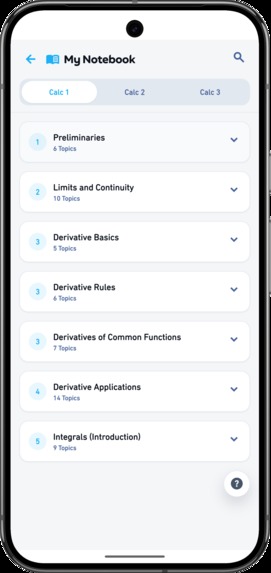
Topic Selection Screen on Android Mobile Phone
-
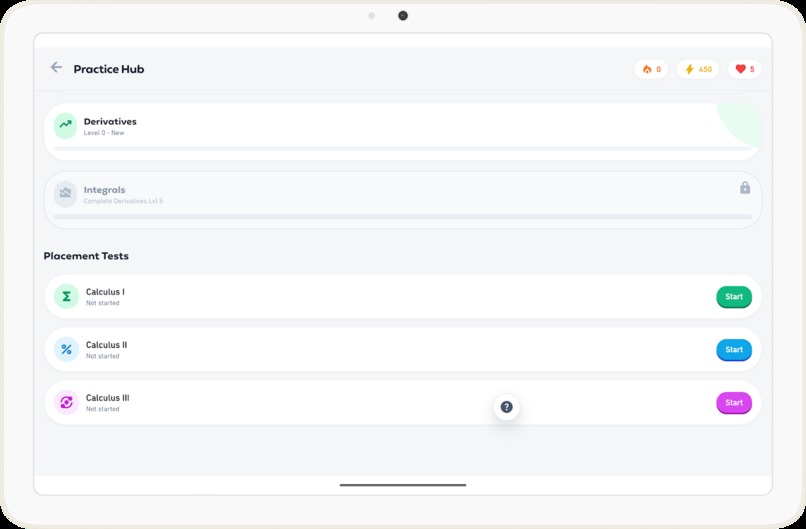
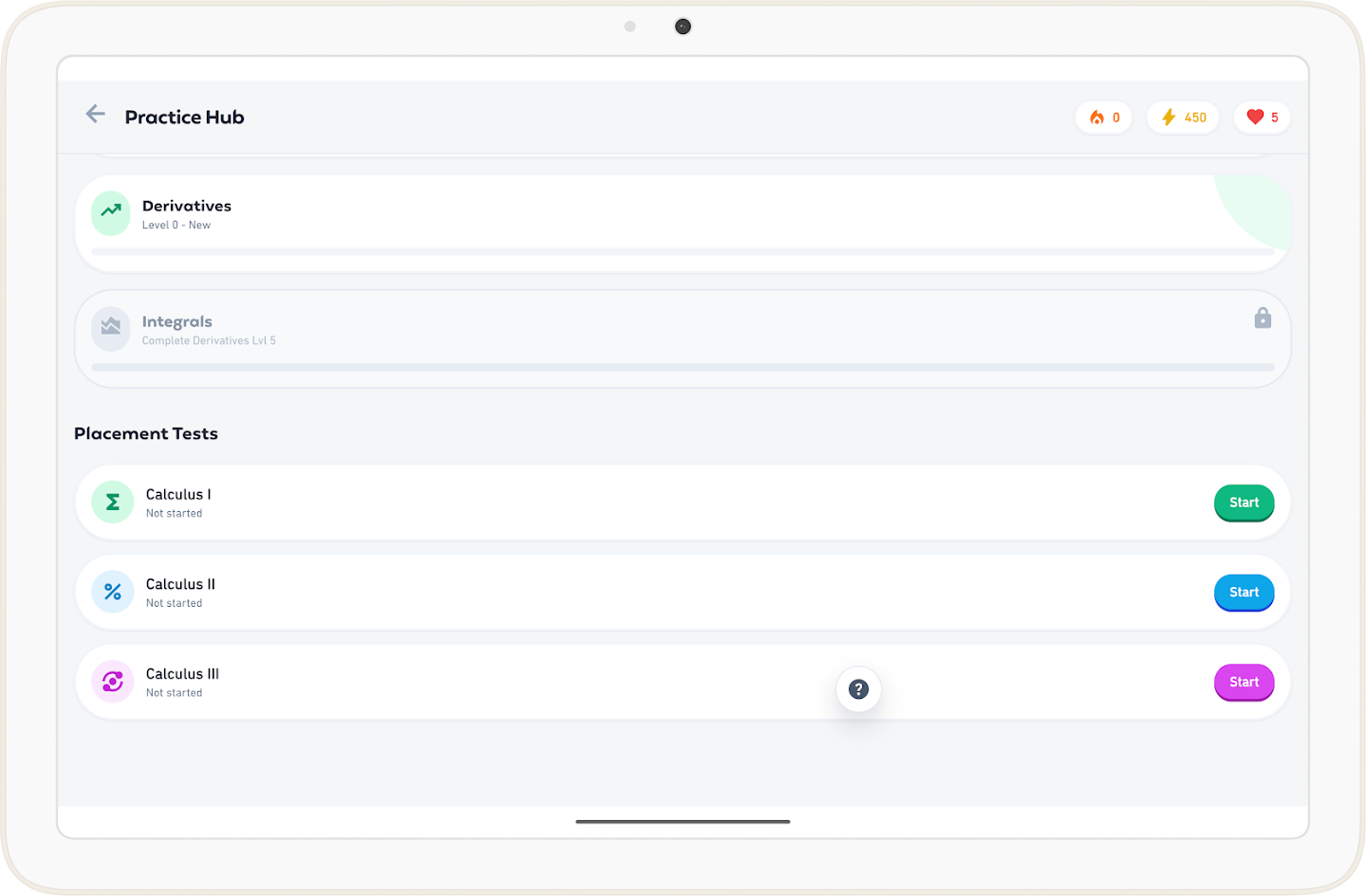
Practice Hub Dashboard on Android Tablet
-
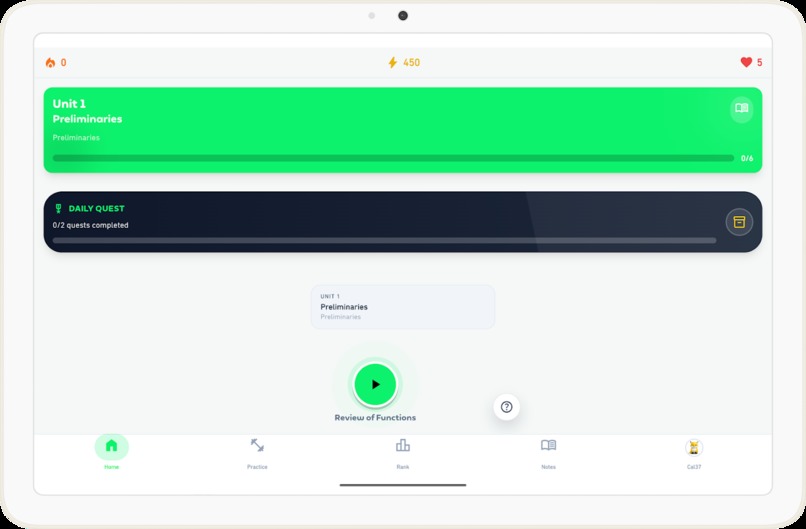
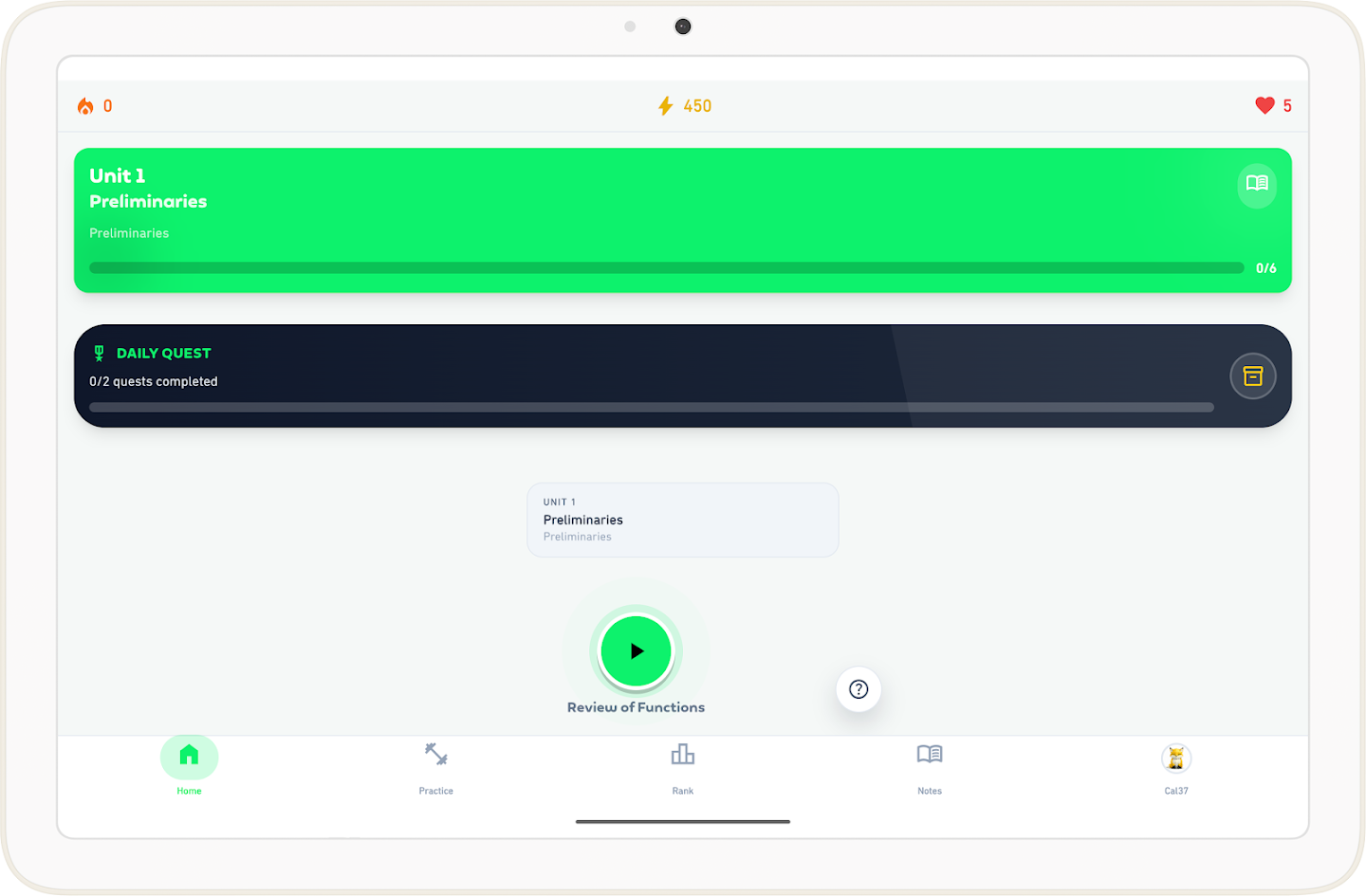
Home Screen/Dashboard on Android Tablet.
-
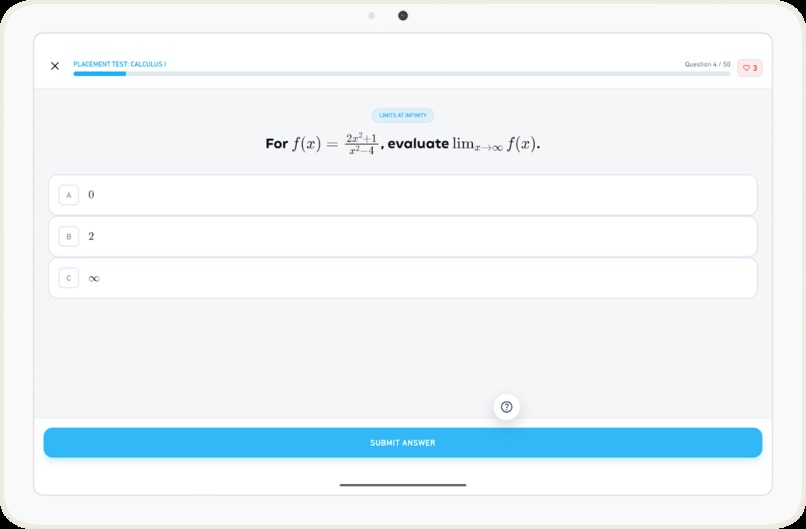
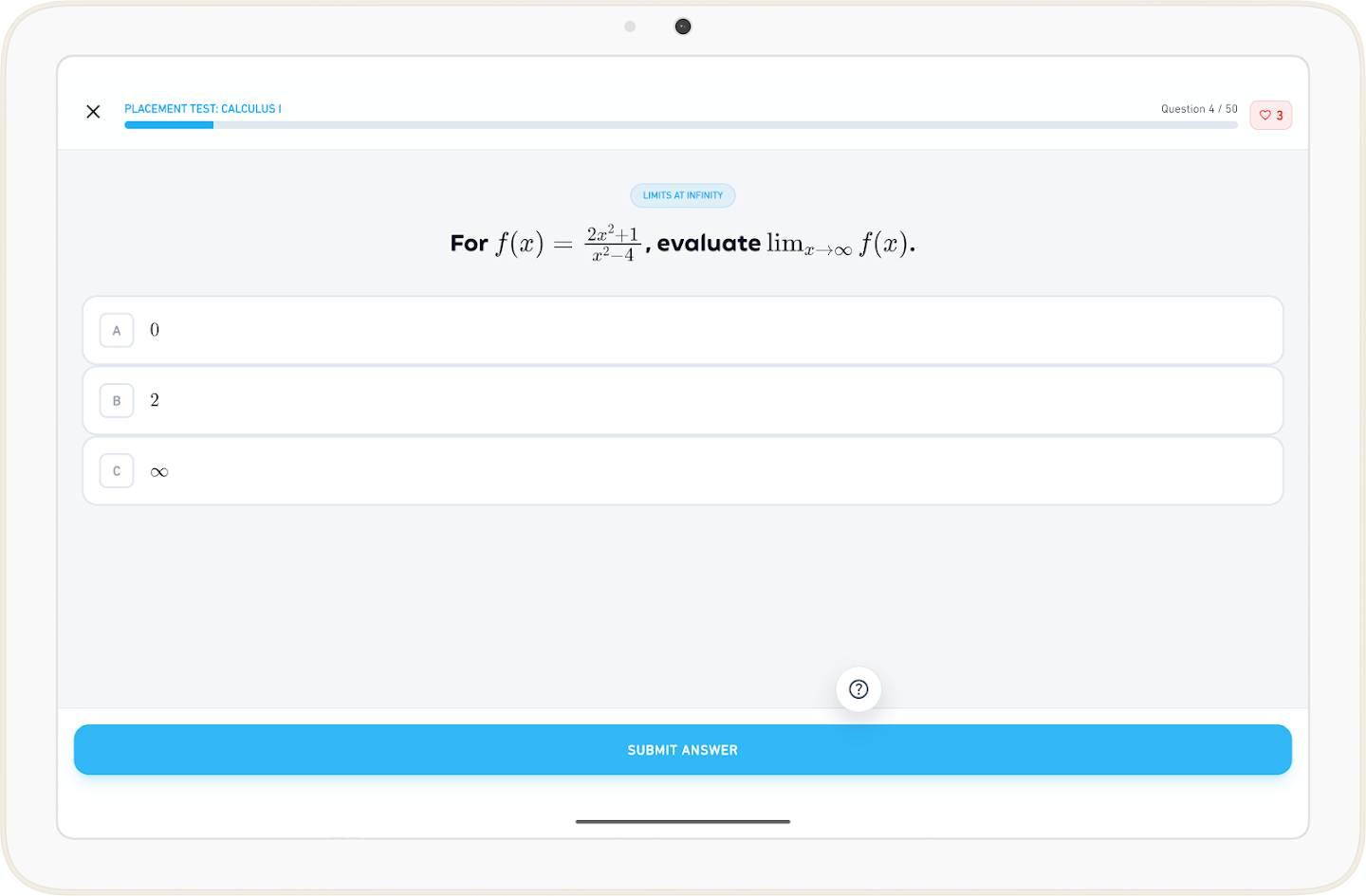
Placement Test Interface on Android Tablet
-
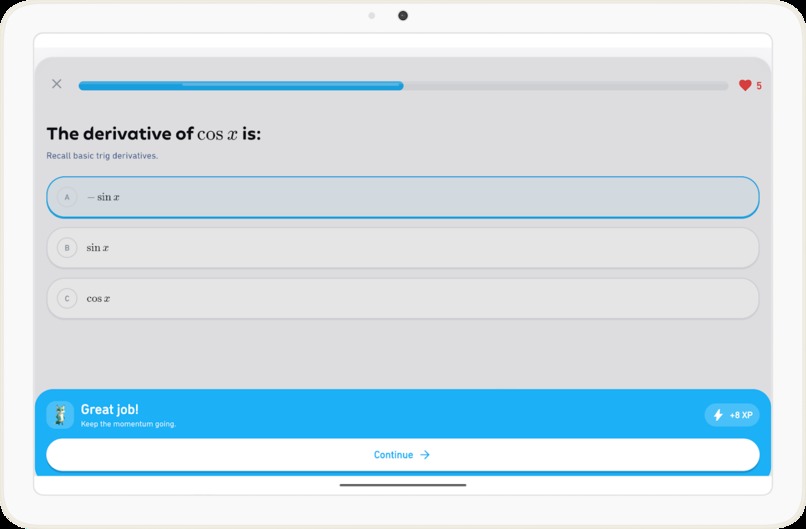
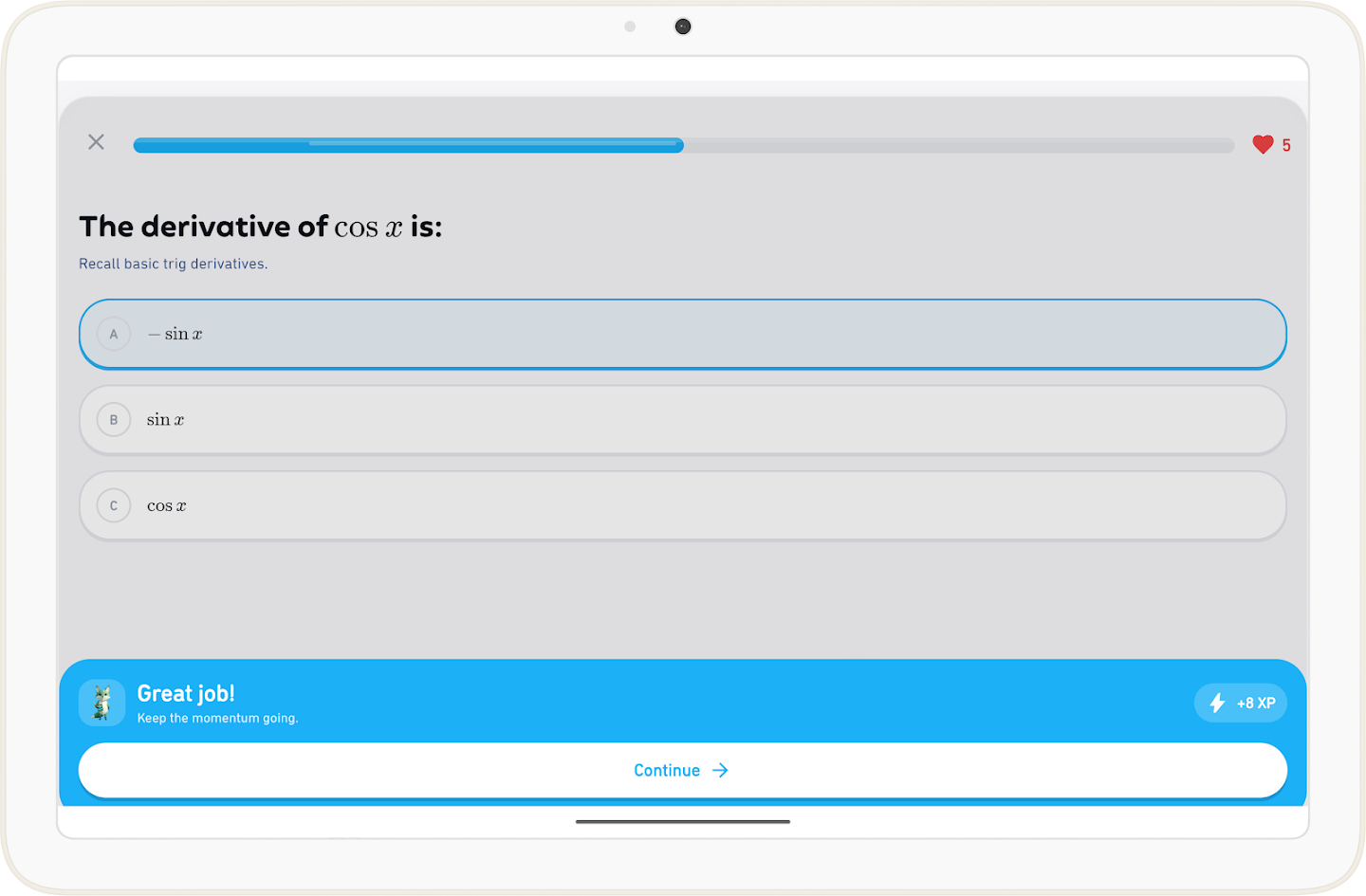
Interactive Learning Interface on Android Tablet
-
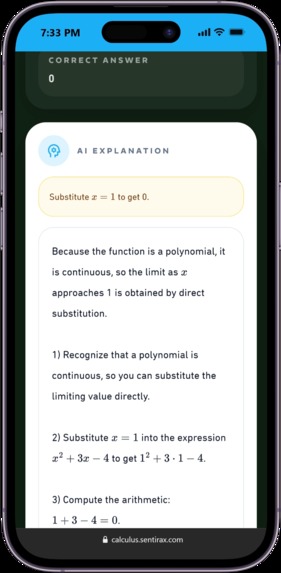
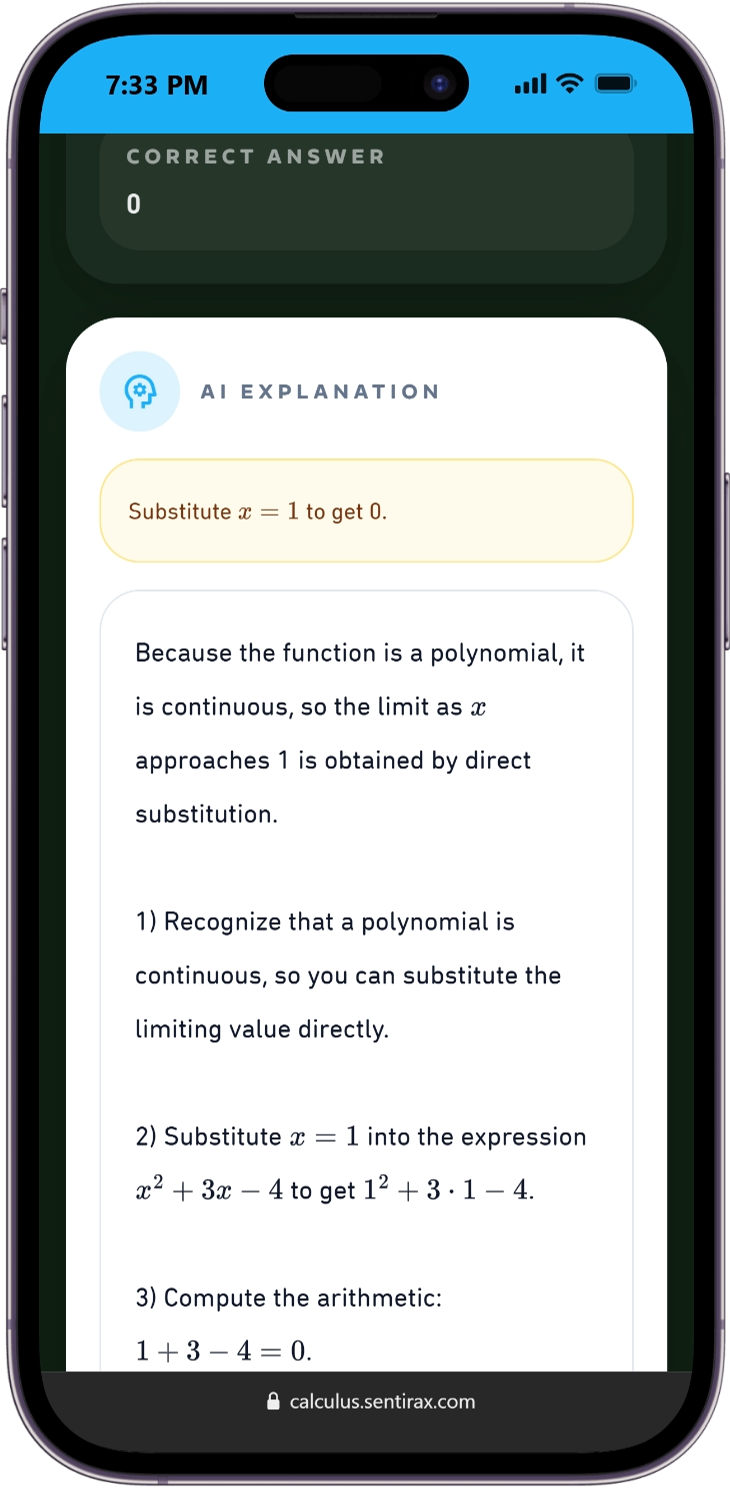
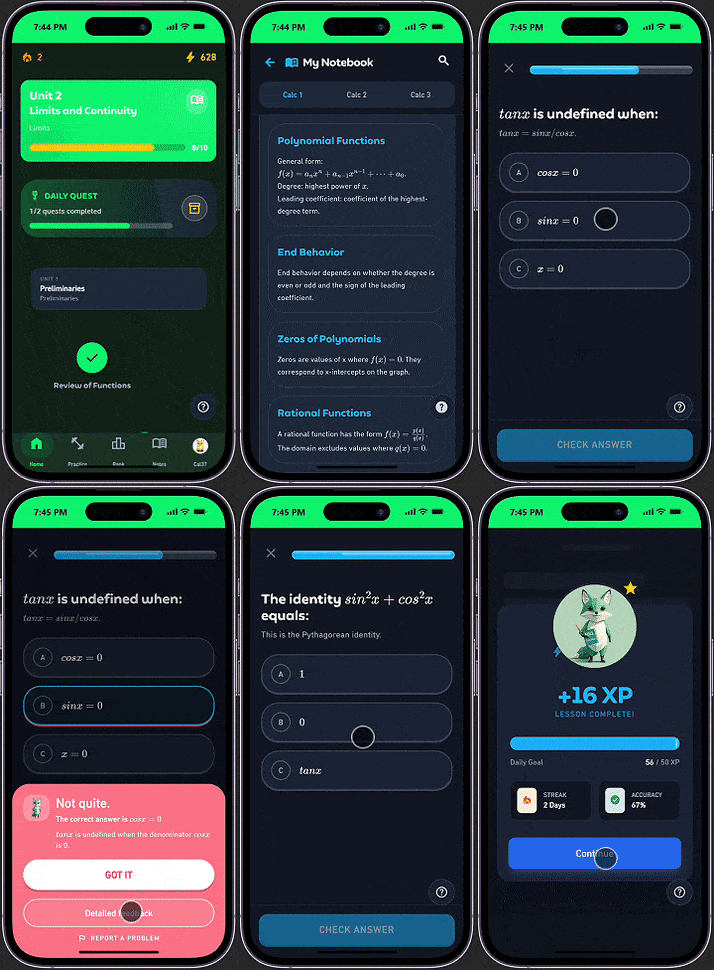
AI Powered Explanation for Learning Question on iPhone
-
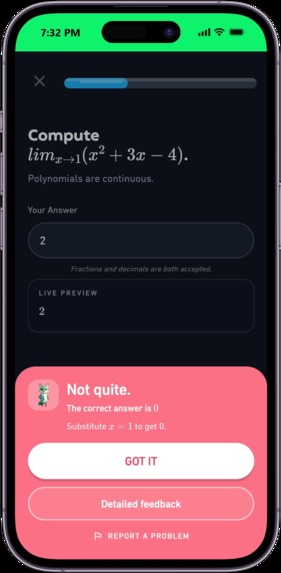
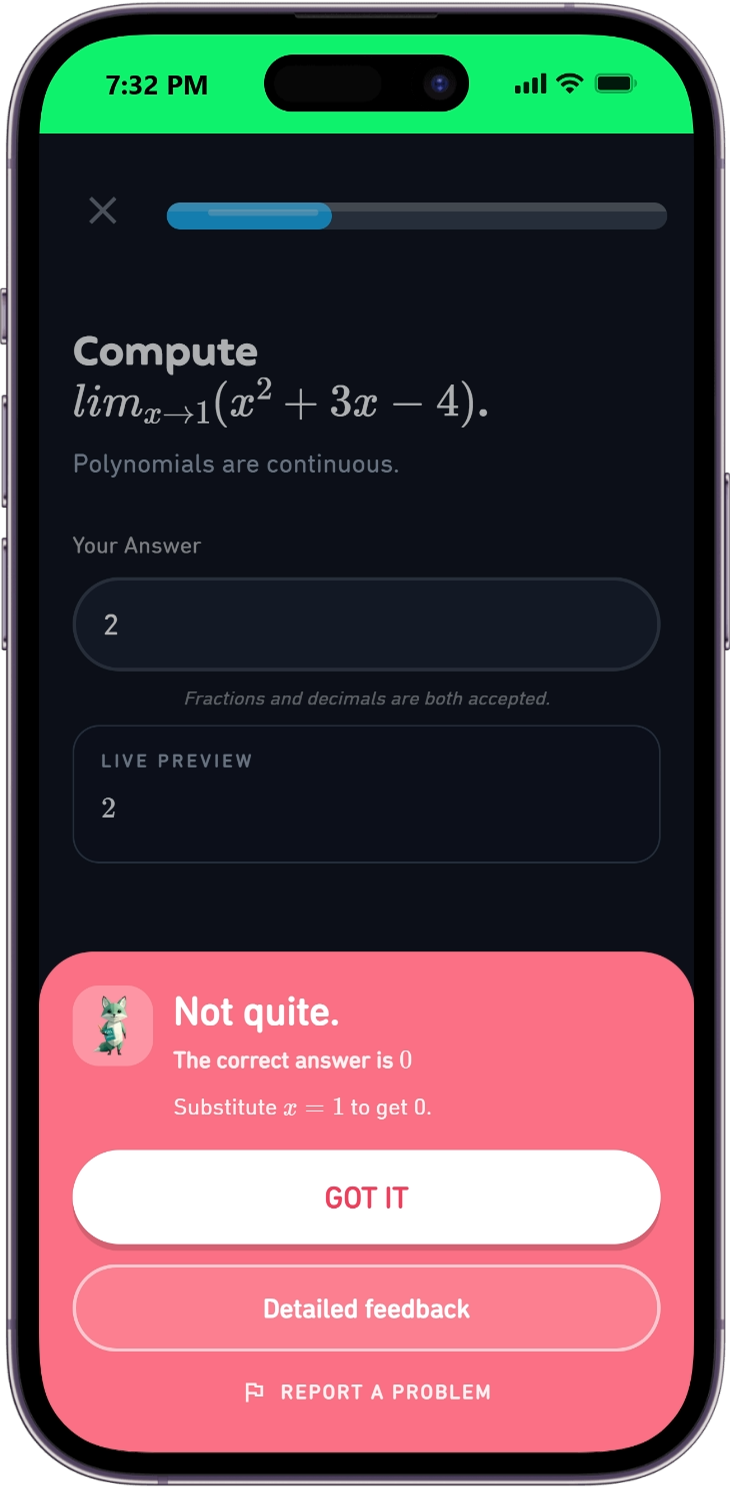
Wrong Answer Feedback and Correction on iPhone
-
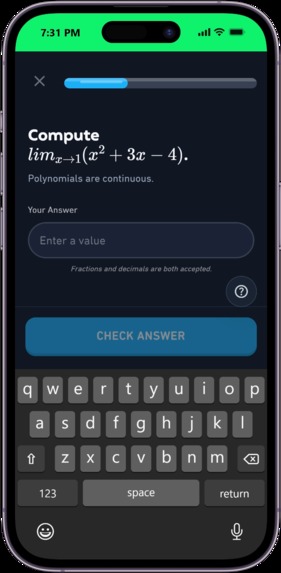
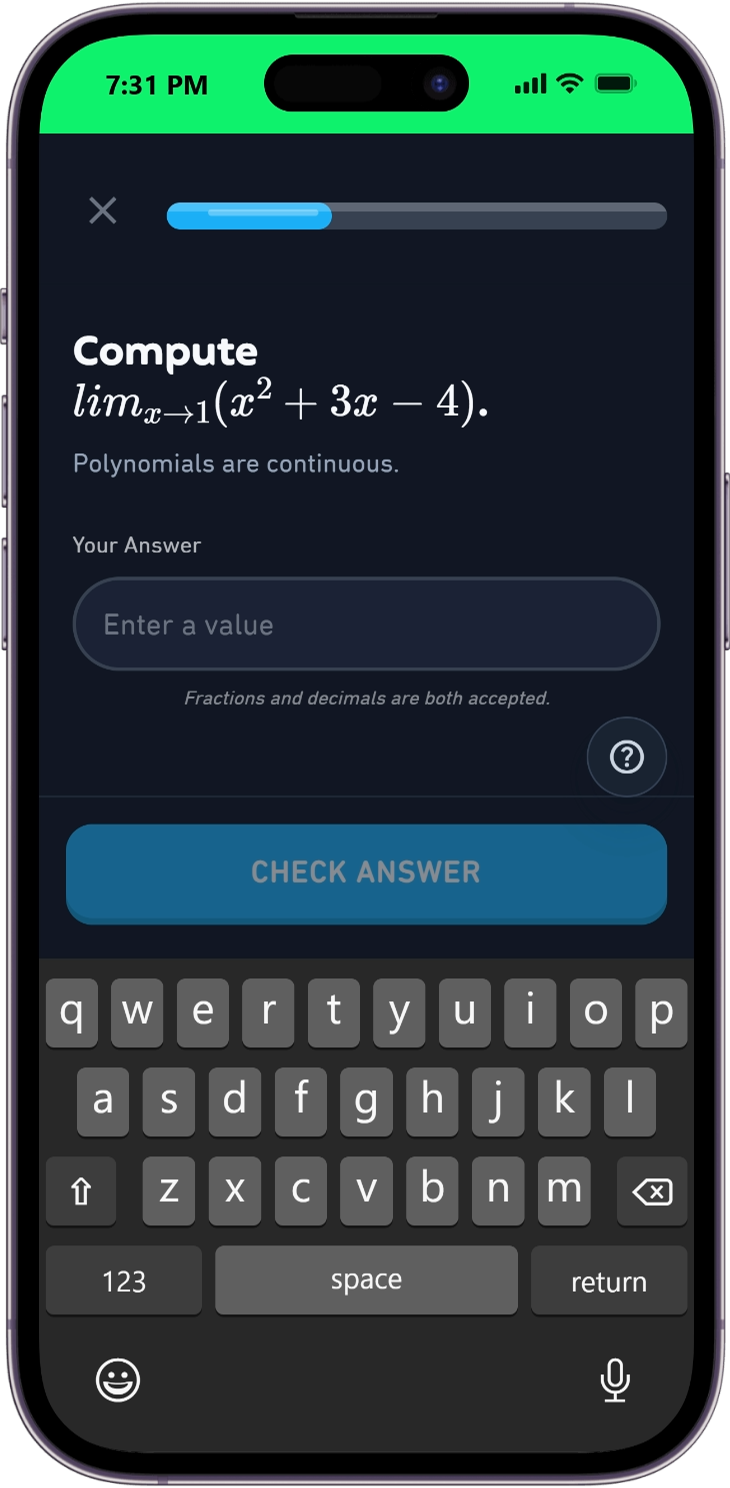
Sample Lesson Question and Answer Interface on iPhone
-
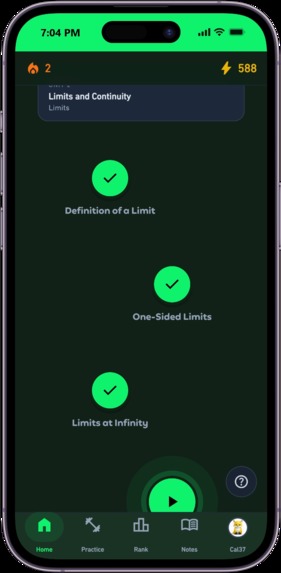
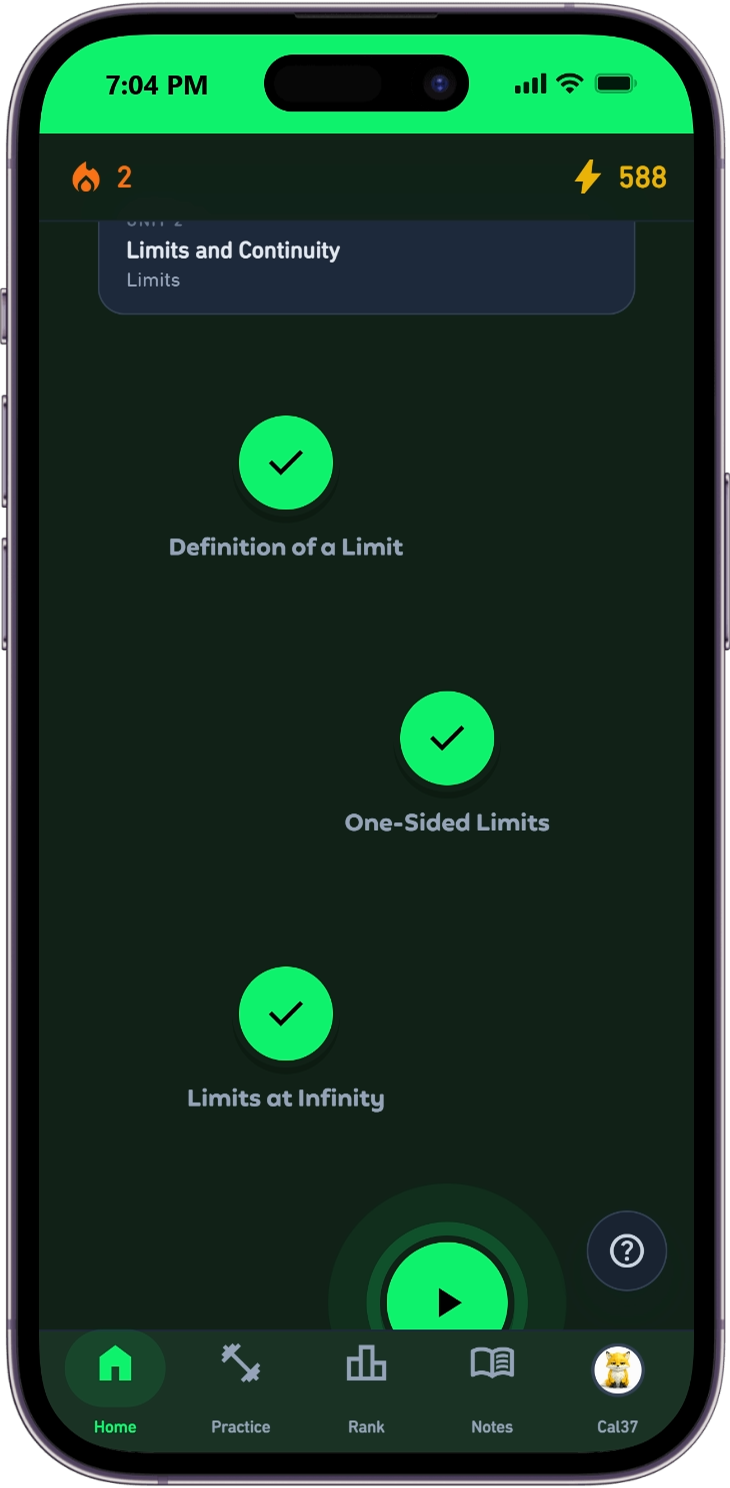
Home Dashboard Progress and Learning Overview on iPhone
-
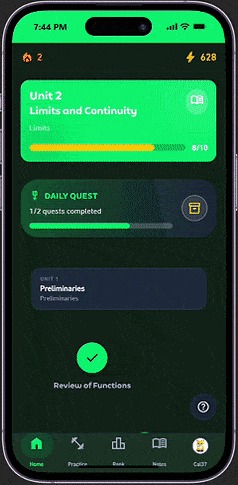 GIF
App UI and Lesson Interaction Overview
-
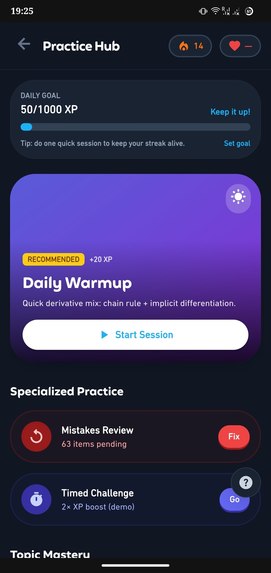
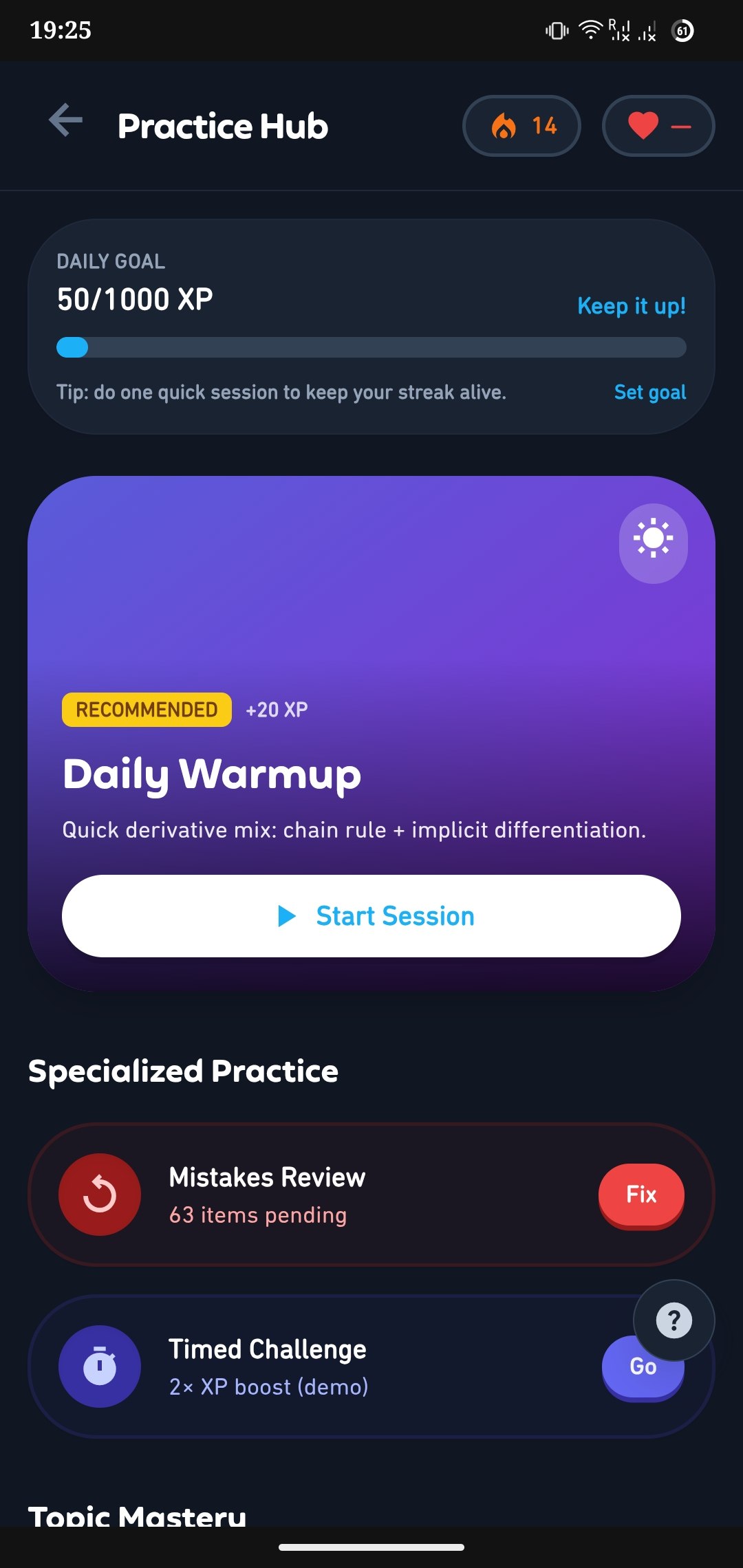
Practice Hub Dashboard on Android Phone
-

Leaderboard on Android Phone
-
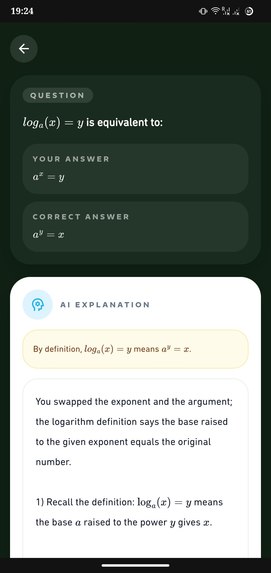
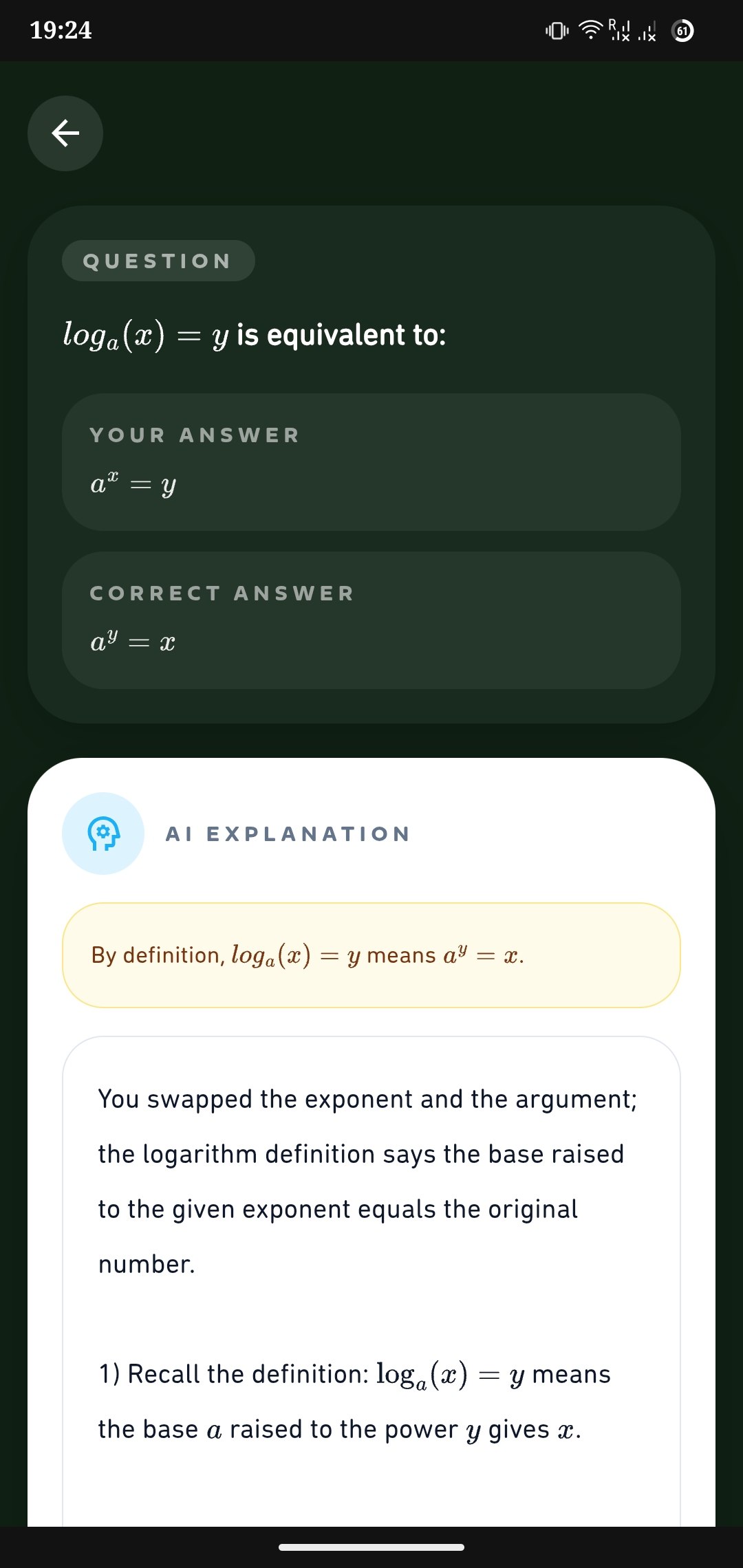
AI Powered Explanation on Android Phone
-
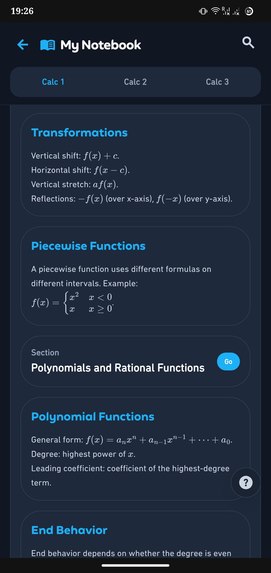
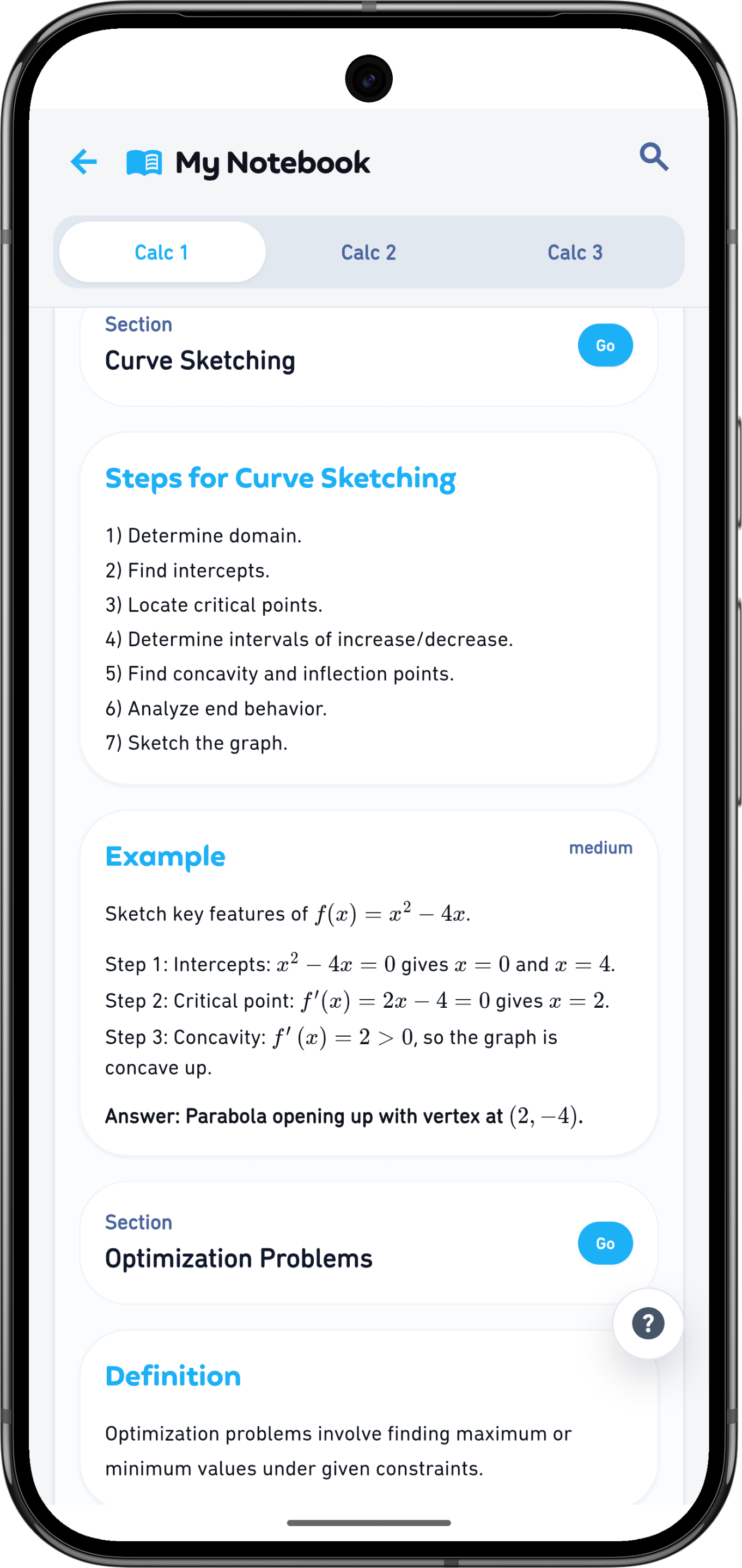
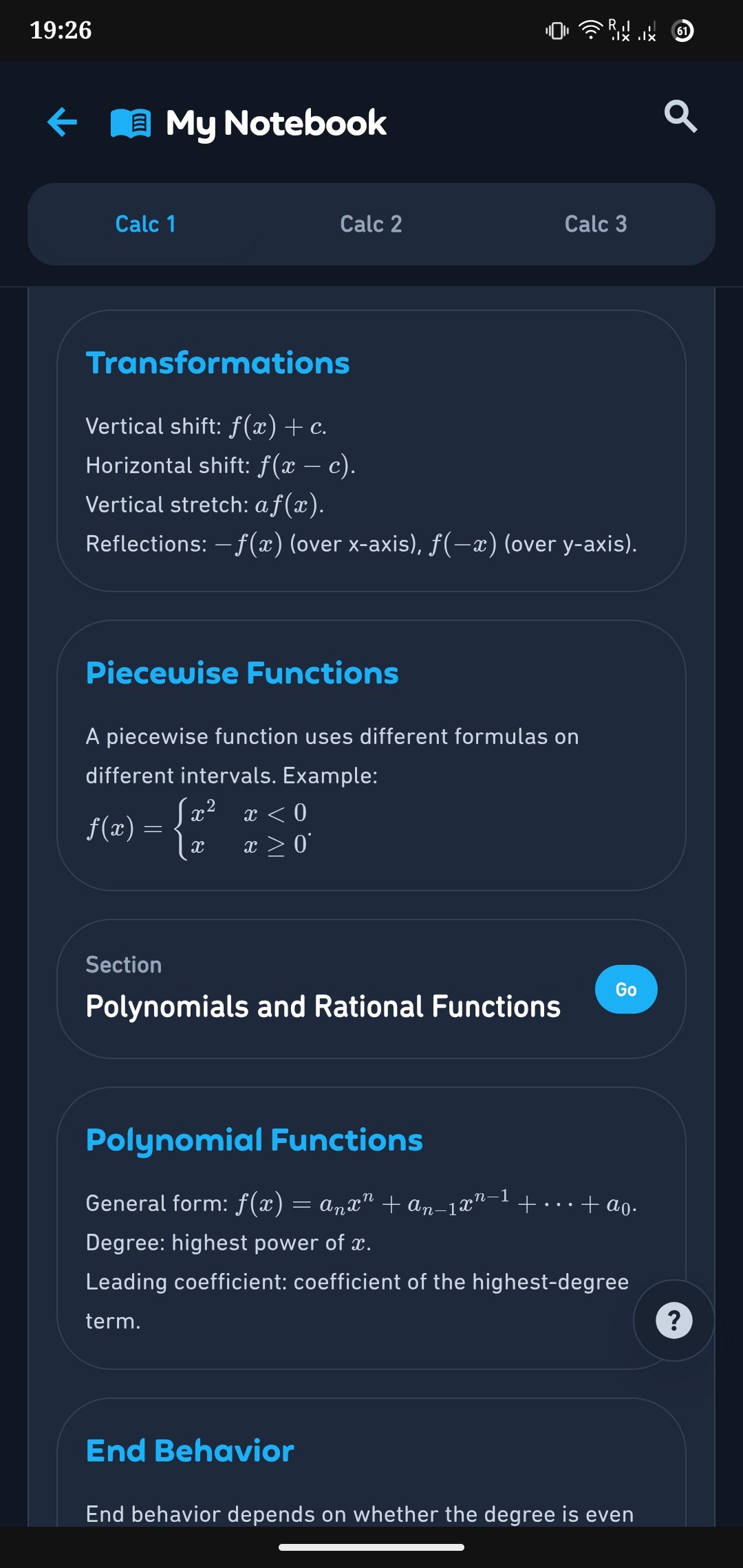
Calculus Course Notes on Android Phone

Full Calculus
Inspiration
Calculus is one of those subjects where understanding the process matters just as much as getting the final answer. Many students, including me, struggle because they have to jump between lecture notes, textbooks, calculators, solution websites, and different learning platforms just to study one topic.
I wanted to build a single platform that could take a student from the fundamentals of Calculus I through the more advanced topics of Calculus II and III, while also allowing them to learn, practice, check their answers, and get help when they are stuck.
That idea became Full Calculus.
What it does
Full Calculus is an interactive calculus learning platform covering:
- Calculus I: functions, limits, continuity, derivatives, applications of derivatives, and introductory integration
- Calculus II: integration techniques, applications of integration, parametric equations, polar coordinates, sequences, series, convergence tests, and power series
- Calculus III: vectors, vector functions, multivariable calculus, multiple integrals, and vector calculus
The platform is designed to achieve active learning and practice, not simply providing formulas or answers.
How I built it
I built Full Calculus as a web-based application using JavaScript, HTML, and CSS, with a modular JavaScript architecture for lessons, exercises, grading, and application functionality.
One of the more technically challenging parts was building the mathematical answer-validation system. Instead of relying on simple string comparisons, the system parses mathematical expressions and evaluates whether a student's answer is mathematically equivalent to the expected answer.
For example, expressions such as:
2x
and
2*x
can be interpreted consistently, while expressions involving fractions, powers, trigonometric functions, logarithms, and variables can also be validated.
The validation engine supports mathematical operators, parentheses, fractions, constants such as \(\pi\) and \(e\), and functions including \(sin\), \(cos\), \(tan\), \(sqrt{}\), \(log\), and \(ln\) It evaluates expressions across multiple sample points while safely handling singularities rather than relying on raw eval().
The project also includes an AI-powered solver to provide additional assistance when students get stuck, alongside account functionality and a mobile/PWA-oriented experience.
Challenges
The biggest challenge was making mathematical interaction reliable.
A traditional quiz system can simply compare a submitted answer with a stored string. Mathematics is different: two completely different-looking expressions can represent the same mathematical result.
I therefore had to think about:
- Parsing mathematical expressions safely
- Handling implicit multiplication
- Determining mathematical equivalence
- Supporting both numerical and algebraic answers
- Handling undefined values and singularities
- Providing useful feedback to students
- Designing lessons that work across hundreds of calculus concepts
Another challenge was organizing such a broad curriculum into a coherent learning experience. Full Calculus currently spans material from basic functions and limits all the way to topics such as Taylor series, multiple integrals, Green's Theorem, Stokes' Theorem, and the Divergence Theorem.
What I learned
Building Full Calculus taught me that educational software requires more than simply presenting information.
I learned how important it is to design around how users learn, rather than just what information an application contains. I also gained experience building mathematical parsing and validation logic, designing interactive exercises, integrating AI assistance, and structuring a large educational application into reusable components.
Most importantly, the project showed me how software engineering can be used to solve a problem I personally understand: making difficult technical subjects more accessible and interactive.
What's next
Full Calculus very young still evolving. Future improvements will include expanding interactive explanations, improving personalized learning paths, adding more sophisticated mathematical feedback, and continuing to improve the mobile experience.
The long-term goal is to make Full Calculus a practical companion for students studying calculus and making it a place where they can actually learn how to solve problems.
Built With
- ai
- css
- edtech
- education
- firebase
- groq
- html
- javascript
- javascript-math
- mathematical-computing
- pwa
- rest-api
- serverless
- vercel
- web-app


Log in or sign up for Devpost to join the conversation.