-
-
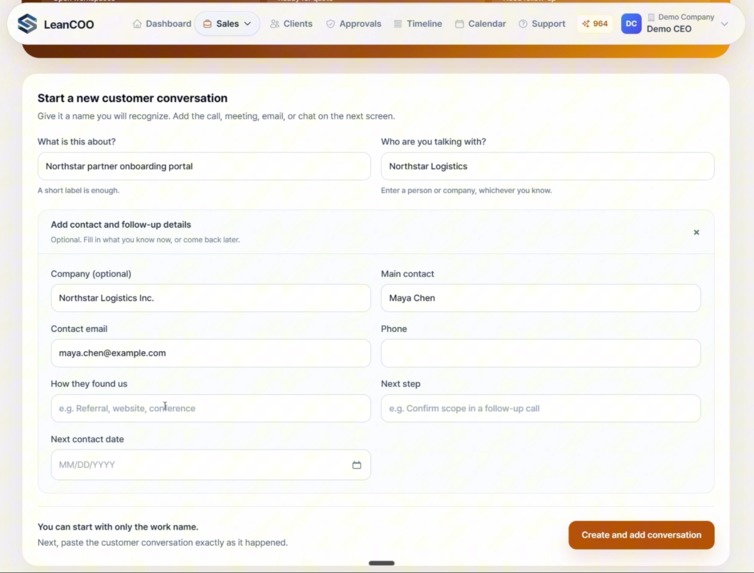
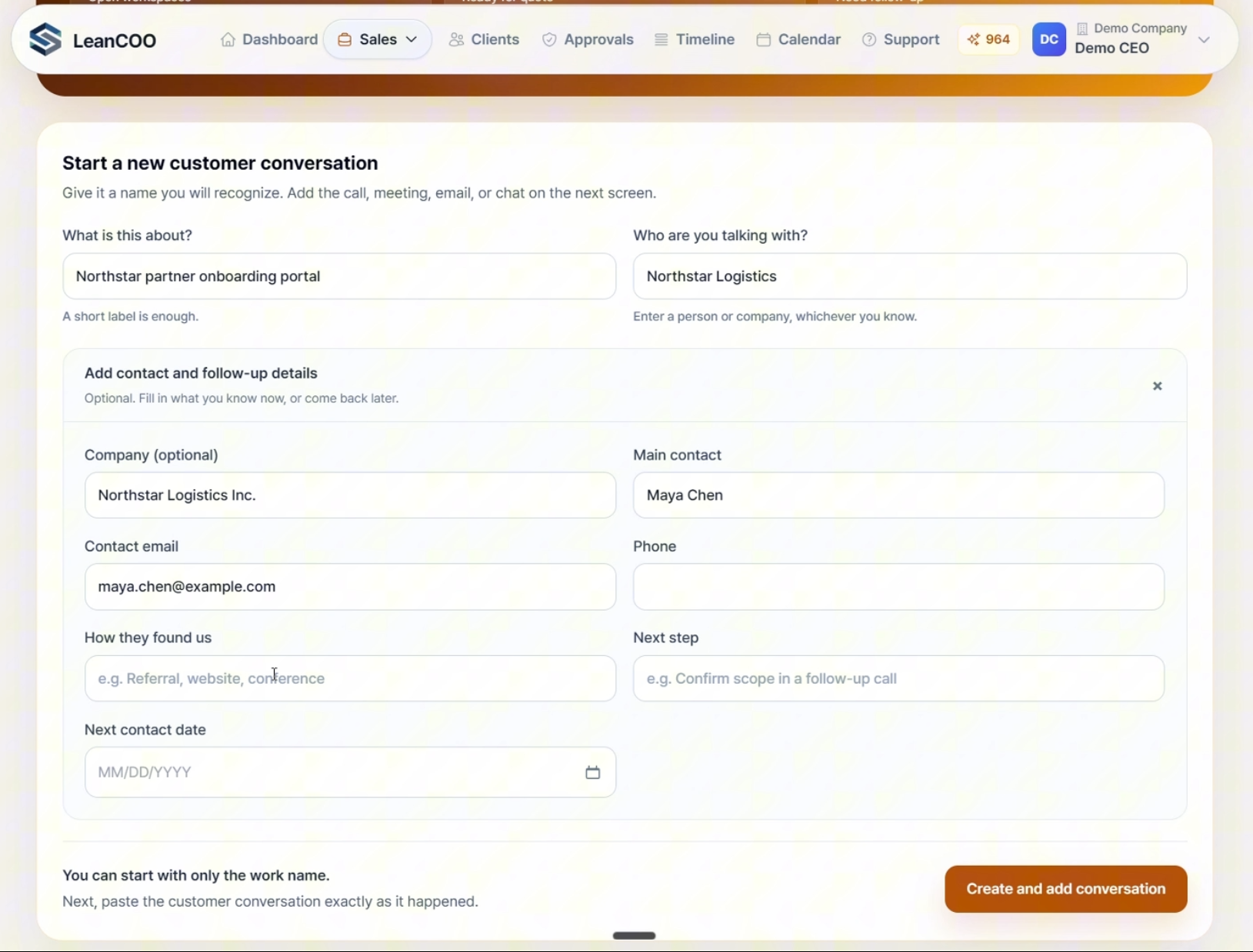
Create a pre-contract workspace with the customer, contact, and follow-up details needed to turn a conversation into actionable work.
-
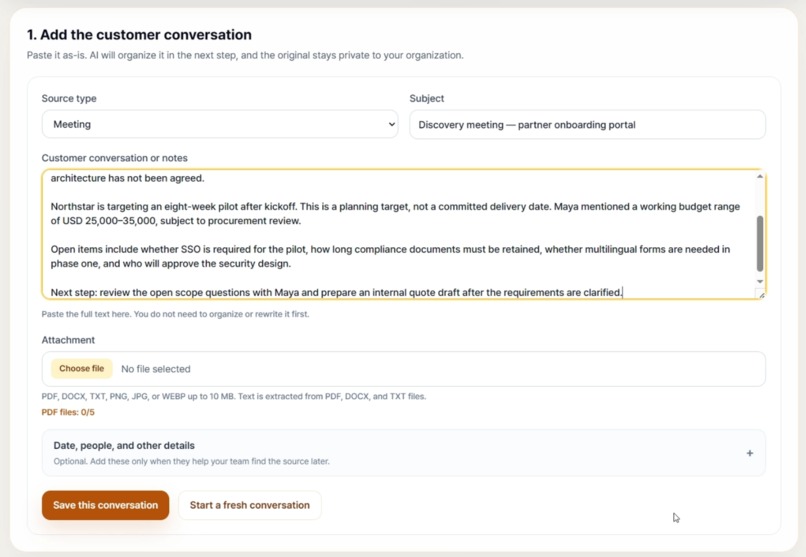
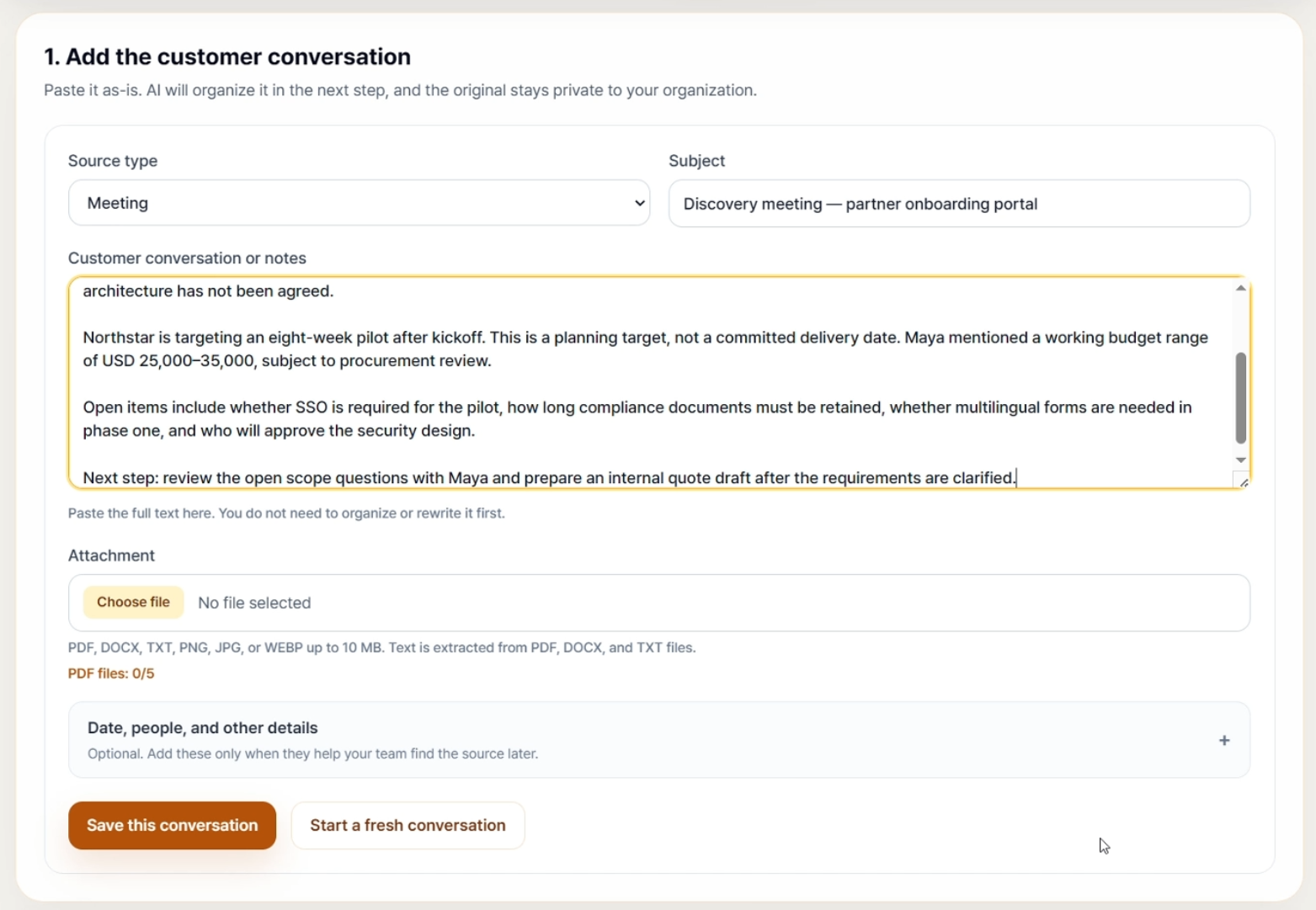
Paste calls, meetings, emails, chat, or files as they are. LeanCOO preserves each original source privately for AI-assisted review.
-
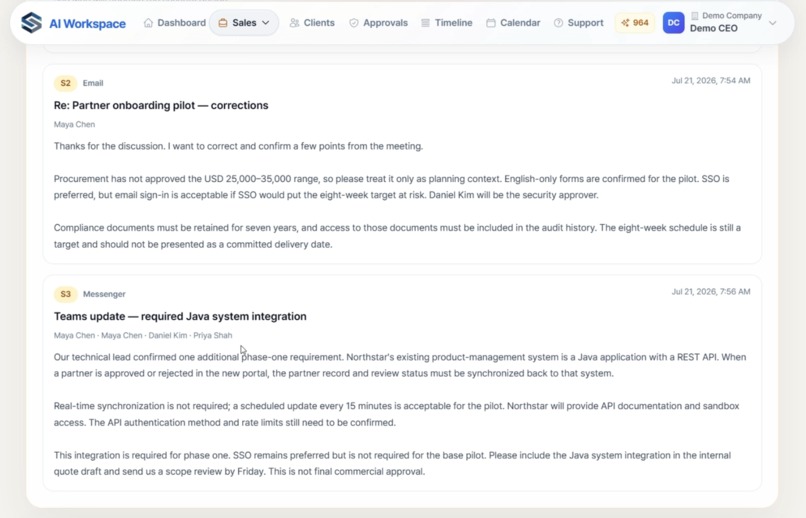
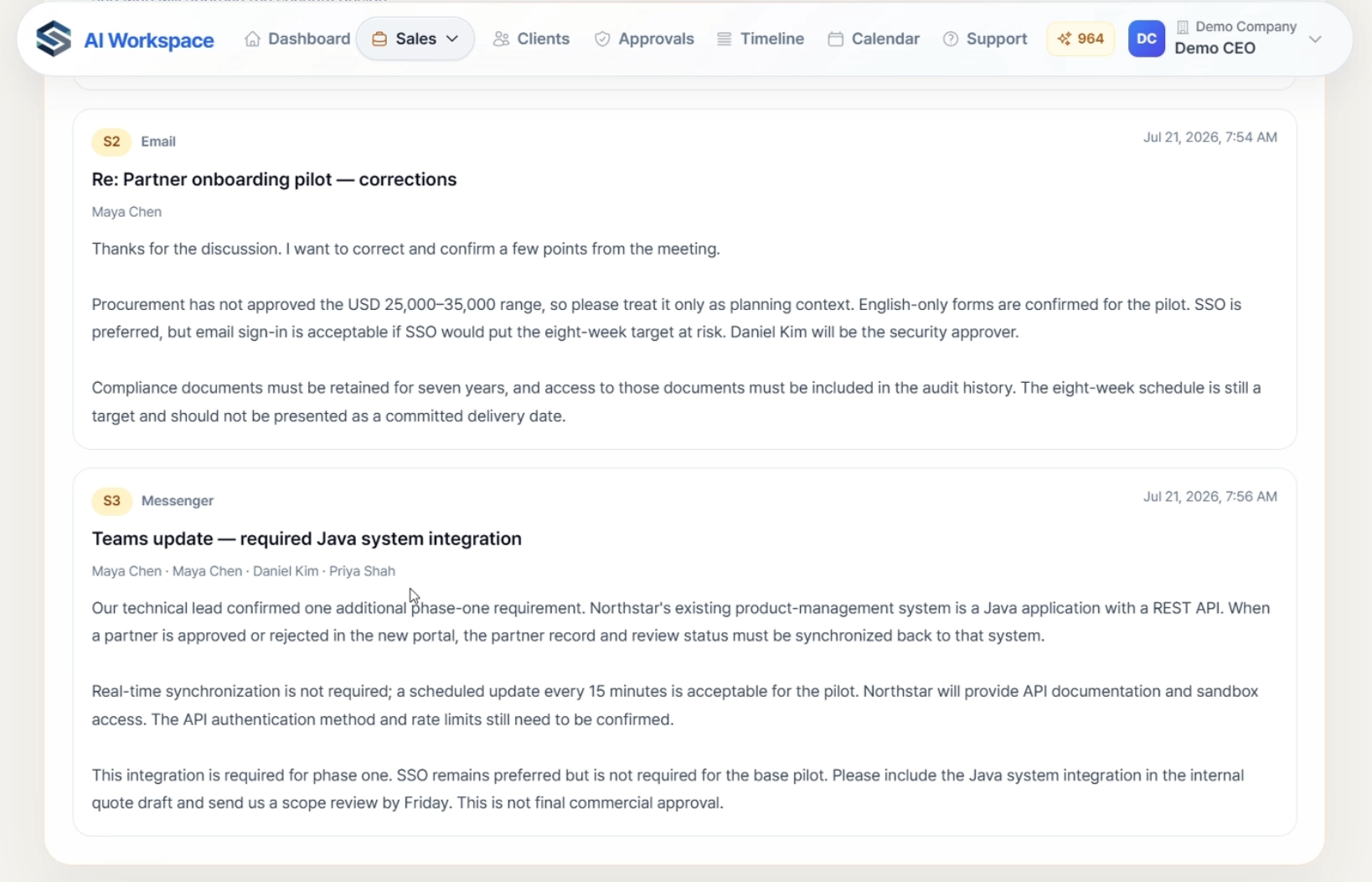
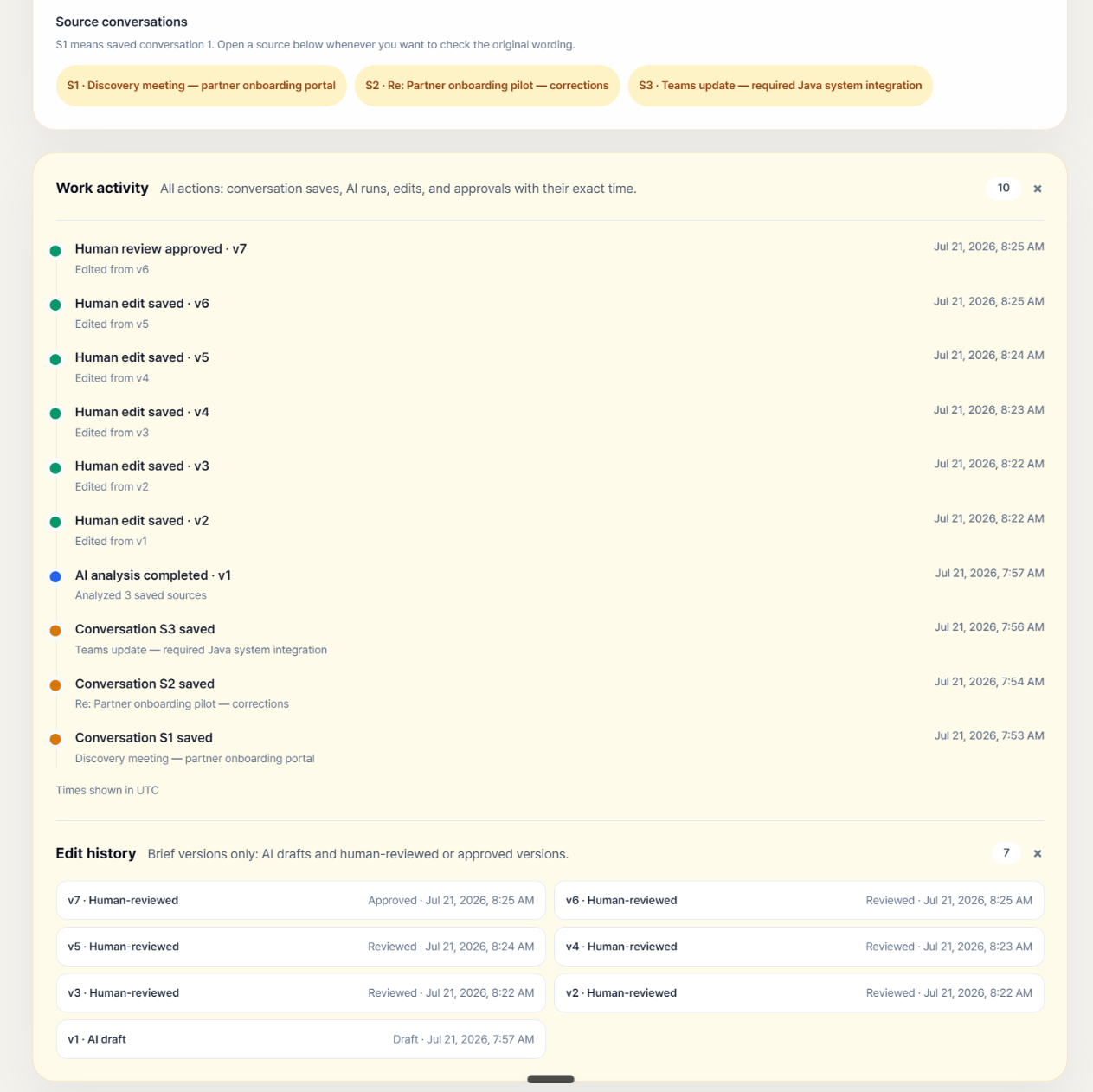
Meeting, email, and Teams updates remain separate evidence sources, preserving corrections, constraints, and newly discovered scope.
-
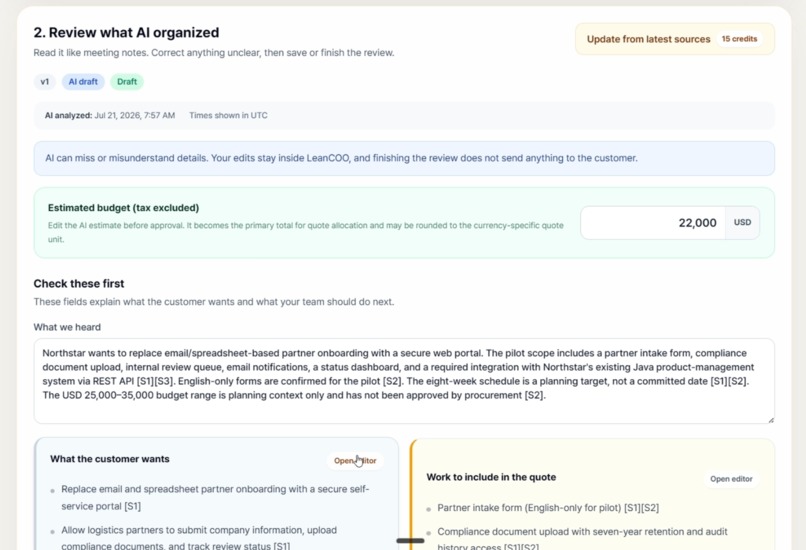
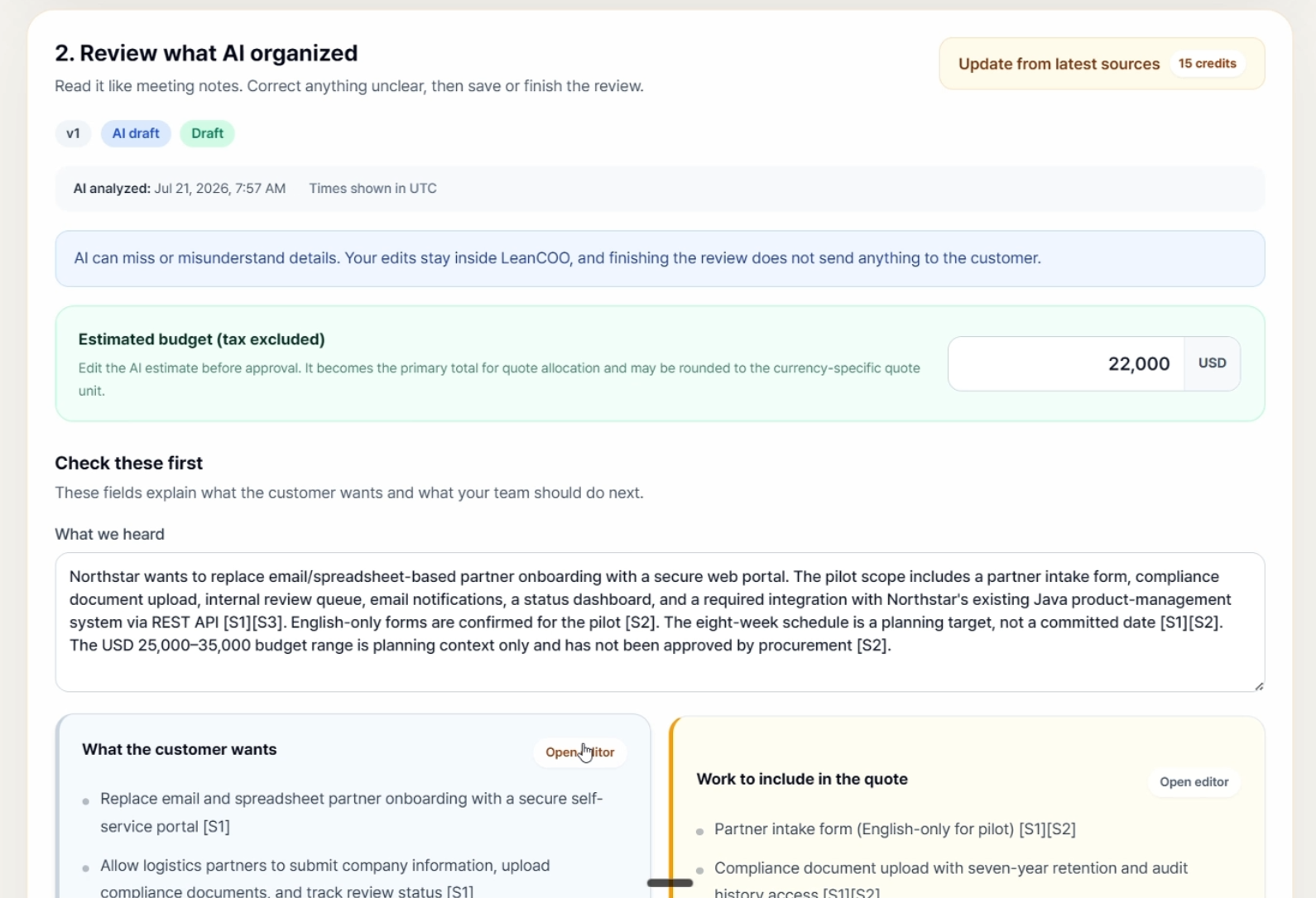
AI organizes three sources into an evidence-linked draft and editable USD 22,000 estimate without sending anything to the customer.
-
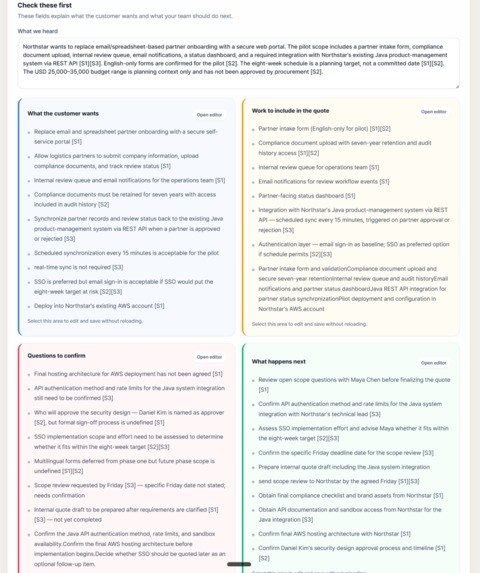
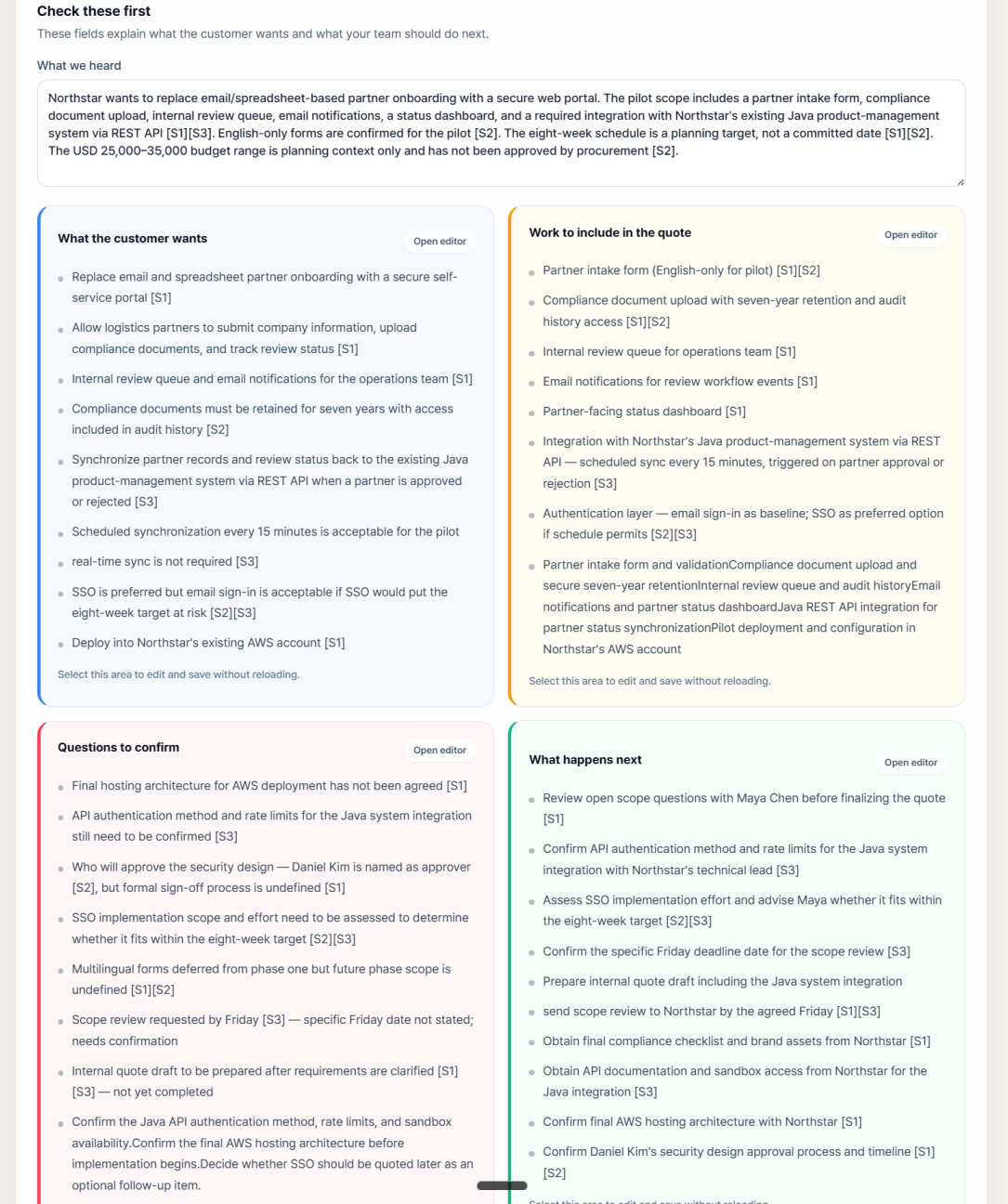
The brief separates customer needs, quote scope, open questions, and next actions, with [S1]-[S3] links to source evidence.
-
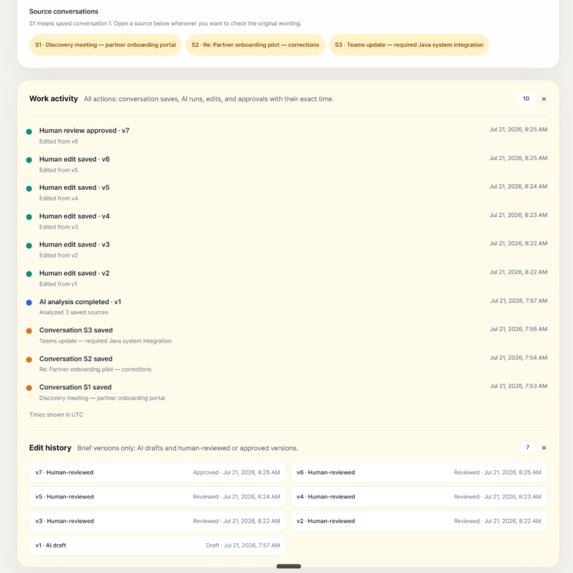
Every source save, AI run, human edit, and approval is timestamped, with an immutable version history from draft to approval.
-
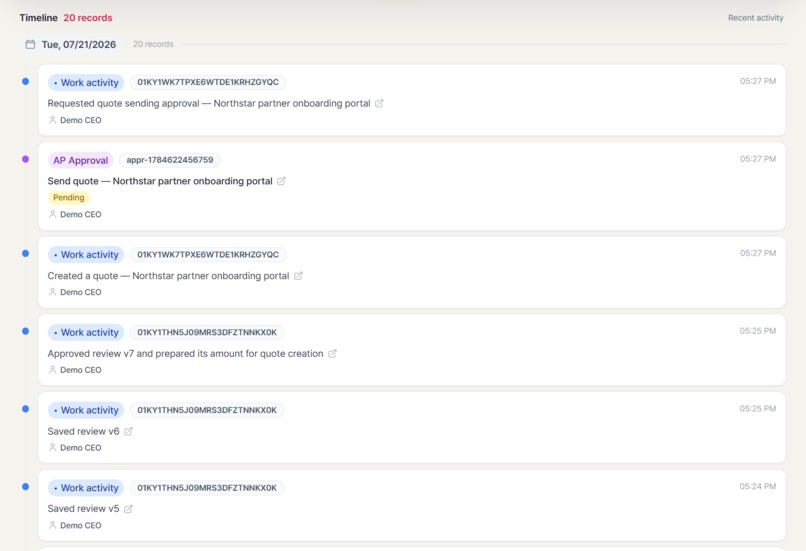
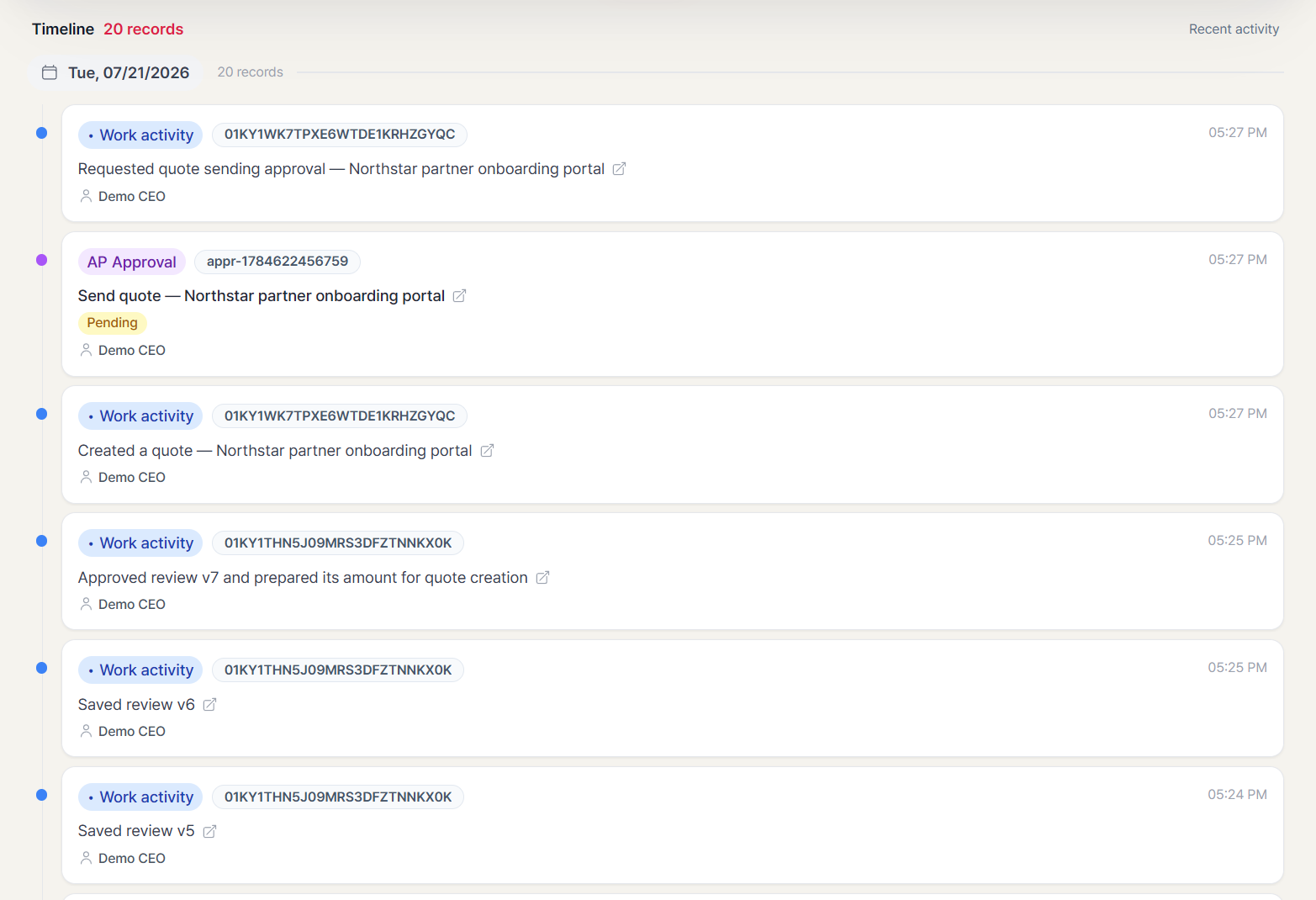
Approved work becomes an editable quote and approval request, with every handoff recorded in LeanCOO's shared timeline.
Inspiration
Most business software starts after a deal is agreed. But some of the most important work happens before that: customer needs, budget signals, risks, decisions, and follow-ups are scattered across calls, meetings, email, chat, and files.
This fragmentation leads to missed actions, unpriced scope, and accidental promises. We built the Pre-contract Workspace after hearing a practical need from a LeanCOO customer: turn pre-contract conversations into reliable operational work without allowing AI to make commitments on behalf of people.
What it does
Built for OpenAI Build Week, the Pre-contract Workspace adds an evidence-linked, human-approved workflow to LeanCOO.
It brings customer conversations and files into one organization-private timeline. AI transforms those sources into a structured work brief containing:
- Customer needs and requested scope
- Confirmed and unconfirmed decisions
- Risks and open questions
- Budget and timeline assumptions
- Decision makers and next actions
Evidence markers such as [S1] connect the draft to the original material. A person can inspect the evidence, edit the draft, and approve a reviewed version.
Only approved content can move into LeanCOO's calendar, client, project, and quote workflows. AI never contacts the customer, sends a quote, or finalizes a commitment automatically.
How we built it
LeanCOO was an existing B2B operations product before Build Week. During OpenAI Build Week, we used GPT-5.6 Codex to design and implement the new Pre-contract Workspace across the existing Remix, TypeScript, SST, and AWS architecture.
Codex helped us:
- Analyze the existing repository and data model
- Build the organization-scoped workspace and source timeline
- Implement AI generation, human editing, approval, and version history
- Connect approved briefs to calendar, client, project, and quote workflows
- Add five-language UI and AI output support
- Write trust-boundary tests and deployment documentation
- Verify the isolated Build Week environment
The runtime AI reuses LeanCOO's existing Amazon Bedrock execution and credit controls. GPT-5.6 Codex was the development partner used to build and verify the Build Week feature.
Challenges
The hardest challenge was not generating a summary. It was making that summary safe enough to use in real business operations.
AI output could contain unsupported assumptions, and an unreviewed estimate could easily become an accidental customer commitment. We addressed this with original-source retention, evidence-reference validation, immutable draft versions, explicit human approval, and a feature-level rollback switch.
We also made quote pricing deterministic: the reviewed estimate is distributed across line items according to difficulty and workload, while preserving the exact approved total. The result remains editable and is never sent automatically.
Accomplishments
- Completed the full source → AI draft → human review → approval → calendar → quote workflow
- Preserved evidence links between generated briefs and original customer material
- Added editable estimates and exact, currency-aware quote allocation
- Supported English, Korean, Japanese, German, and Latin American Spanish
- Added safe failure for malformed AI output and invalid evidence references
- Kept the database change additive and the production feature disabled by default
- Demonstrated the complete workflow in under three minutes
What we learned
The most valuable part of business AI is not the first generated answer. It is the trust boundary around that answer.
Source retention, evidence validation, human review, approval history, and deterministic handoff made the AI output useful for real work. We also learned that Codex is especially effective when it can work across an existing product's data model, UI, tests, localization, deployment, and documentation rather than producing an isolated prototype.
What's next
Next, we plan to add optional inbox and calendar connectors, richer attachment extraction, team review assignments, and conversion analytics while preserving the same principle:
AI creates the draft. People review and approve. Nothing is sent automatically.
Built With
- amazon-web-services
- codex
- gpt-5.6
- remix
- sst
- typescript


Log in or sign up for Devpost to join the conversation.