-
-

LOGIN UI
-
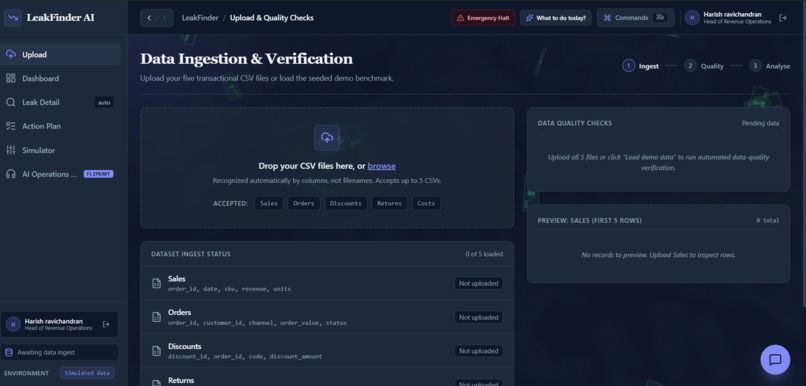
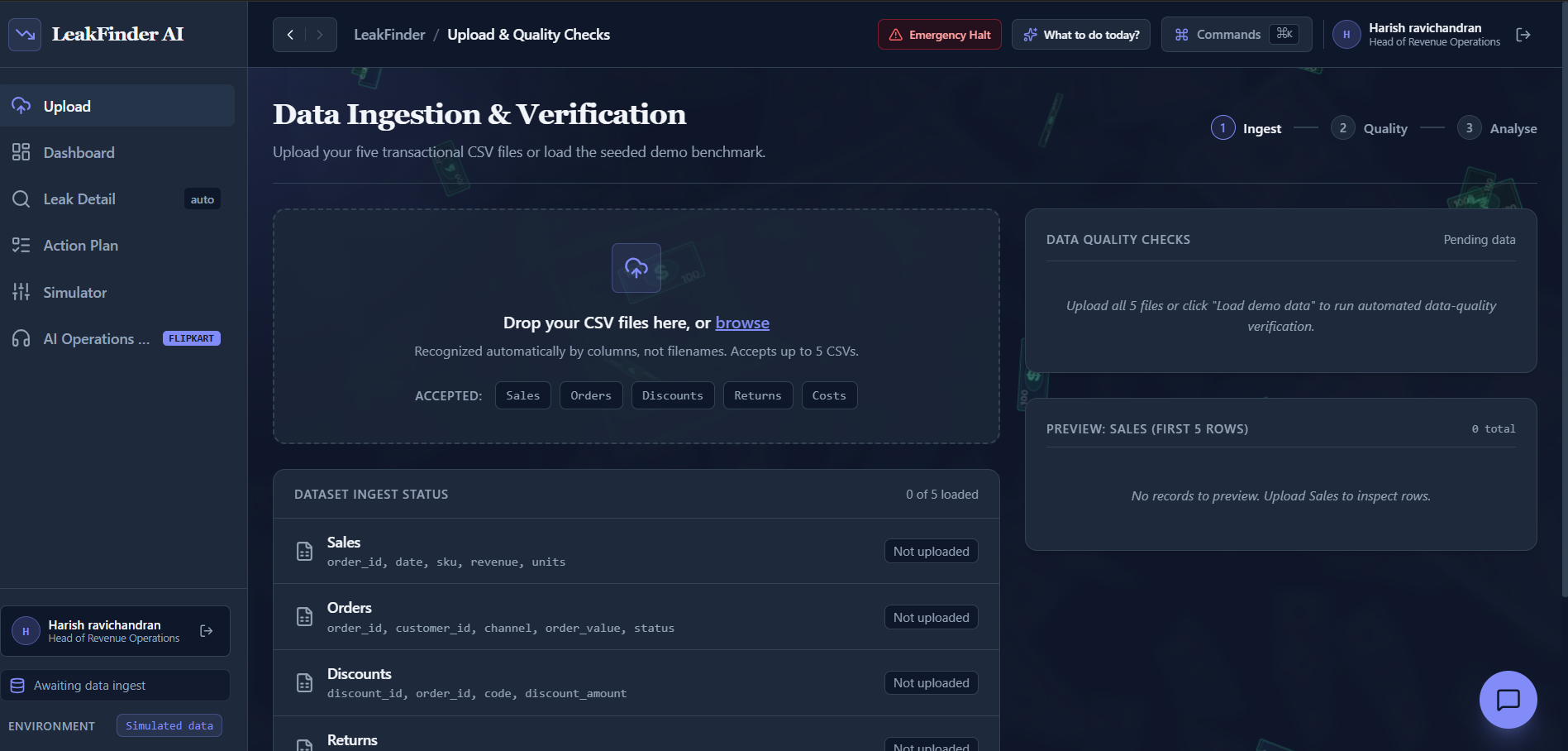
USER PLATFORM

Inspiration
Many small and mid-sized businesses have healthy sales but shrinking profit, and they often don’t know why. The reasons are spread across five separate files: sales, orders, discounts, returns, and costs. Nobody joins them up, so the leaks go unnoticed until the damage shows in the bank balance.
What it does
LeakFinder AI joins those five files, checks the data, and flags where margin is leaking. Five transparent rules check each order: discount caps, low product margins, refunds not covered by restocking fees, shipping overruns, and high refund rates. Each order is counted once, under its largest leak, so totals are not double counted. The NVIDIA Nemotron model explains each flagged leak in plain language and suggests one action. A what-if simulator lets the owner test a discount cap before changing anything.
How we built it
We built the front end in React and TypeScript, with a Node.js and Express server behind it. The server calls the NVIDIA API, so the key never reaches the browser. The detection rules are plain TypeScript functions, and every threshold sits in one file. For explanations, the app sends Nemotron only the evidence for one leak. If the model is unavailable, a rule-based explanation uses the same numbers and says so on screen.
Challenges we faced
The main challenge was stopping the AI from inventing numbers. We limited what it receives to the evidence for one leak, and we made the fallback use only figures from the analysis. The second was avoiding double counting, since one order can trigger several rules. We solved that by counting each order once, under its largest leak.
What we learned
Transparent rules are easier to defend than opaque models when money is involved. Data quality checks matter as much as the analysis, because a wrong join produces confident but false numbers. And a clear fallback is essential, because the demo must still work when an external service fails.
What’s next
We plan to connect real point-of-sale, e-commerce, and accounting data, add a weekly refund-spike check, and let each business set its own thresholds. Each of these is a planned step, not something the current version does.
Limitations
The demo uses generated data, and every money figure is labelled simulated. A flagged leak is a candidate for review, not proof of loss. The thresholds are defaults and should be matched to each business’s own policy.
Built With
- css
- csv
- express.js
- markdown
- node.js
- nvidia-api
- nvidia-nemotron
- react
- typescript
- vite


Log in or sign up for Devpost to join the conversation.