
💡 Inspiration
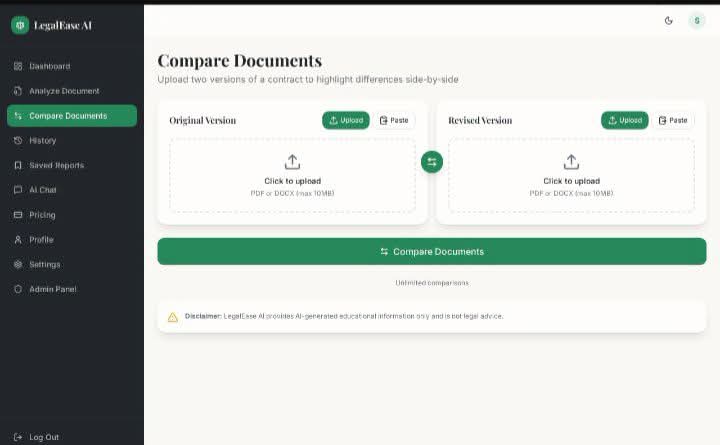
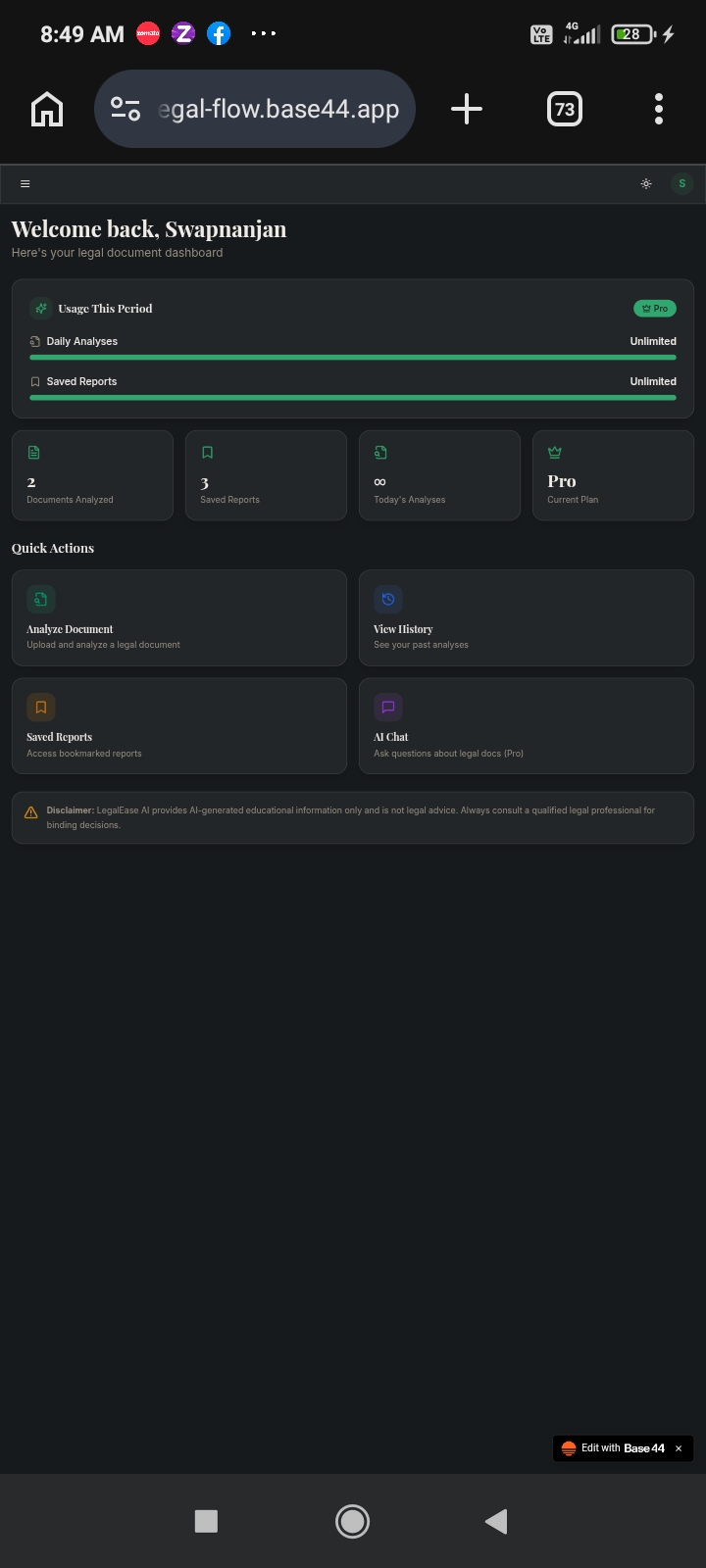
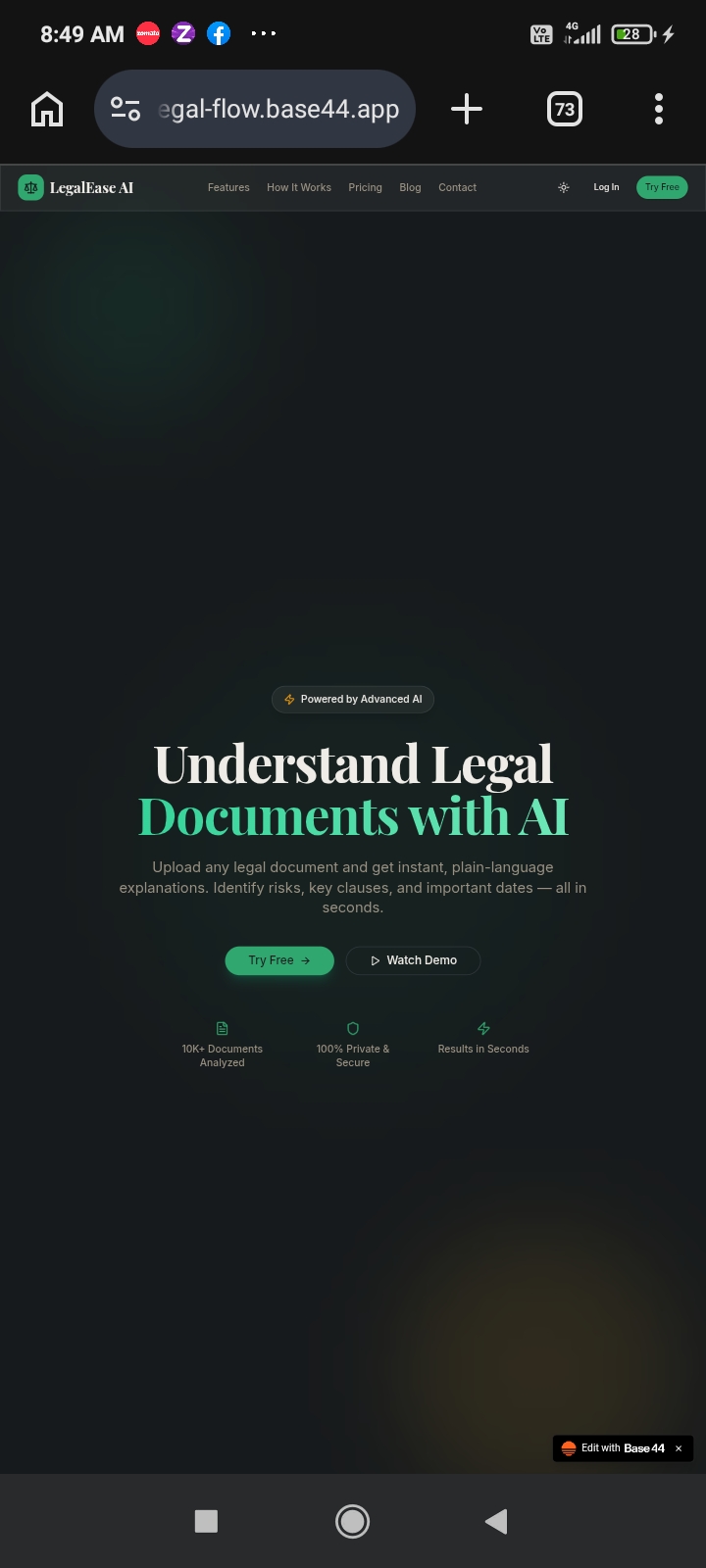
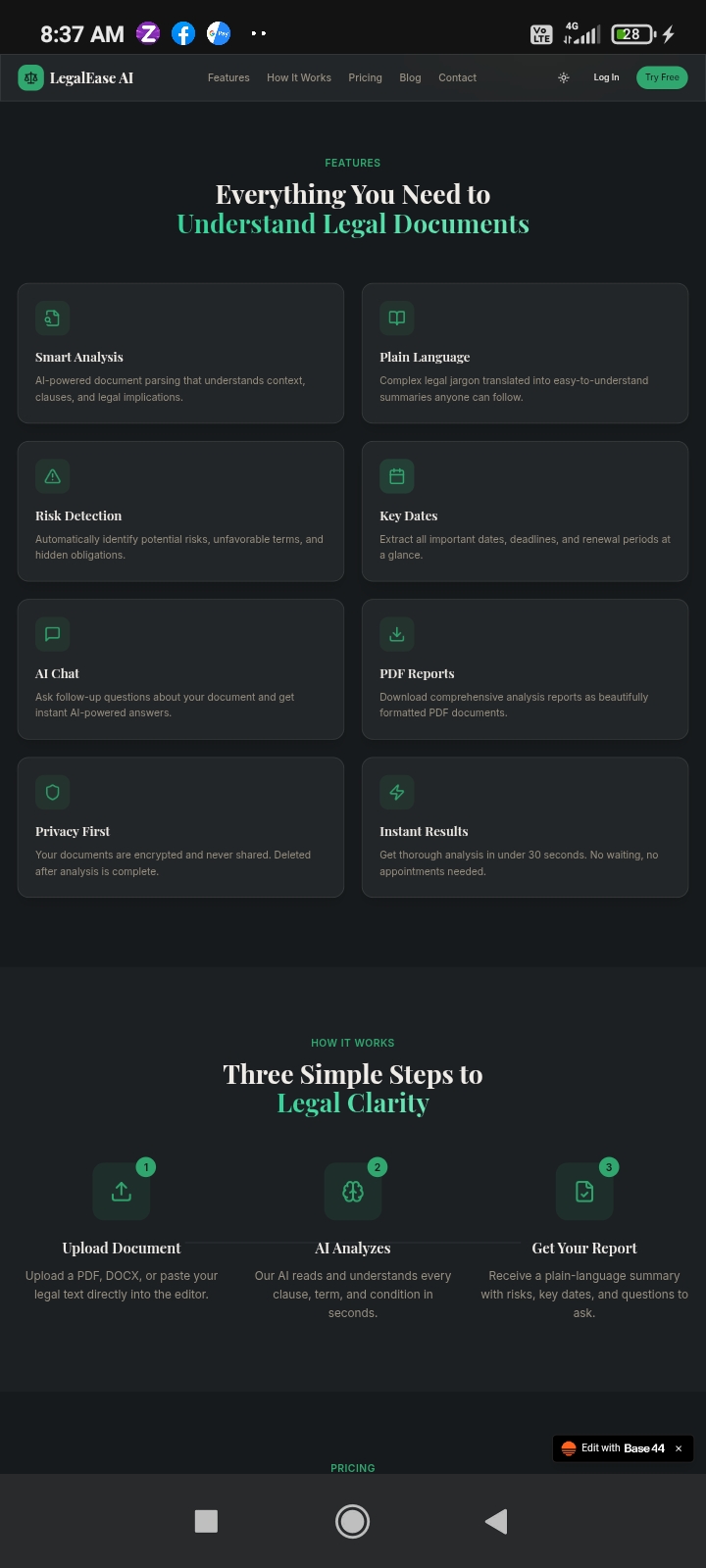
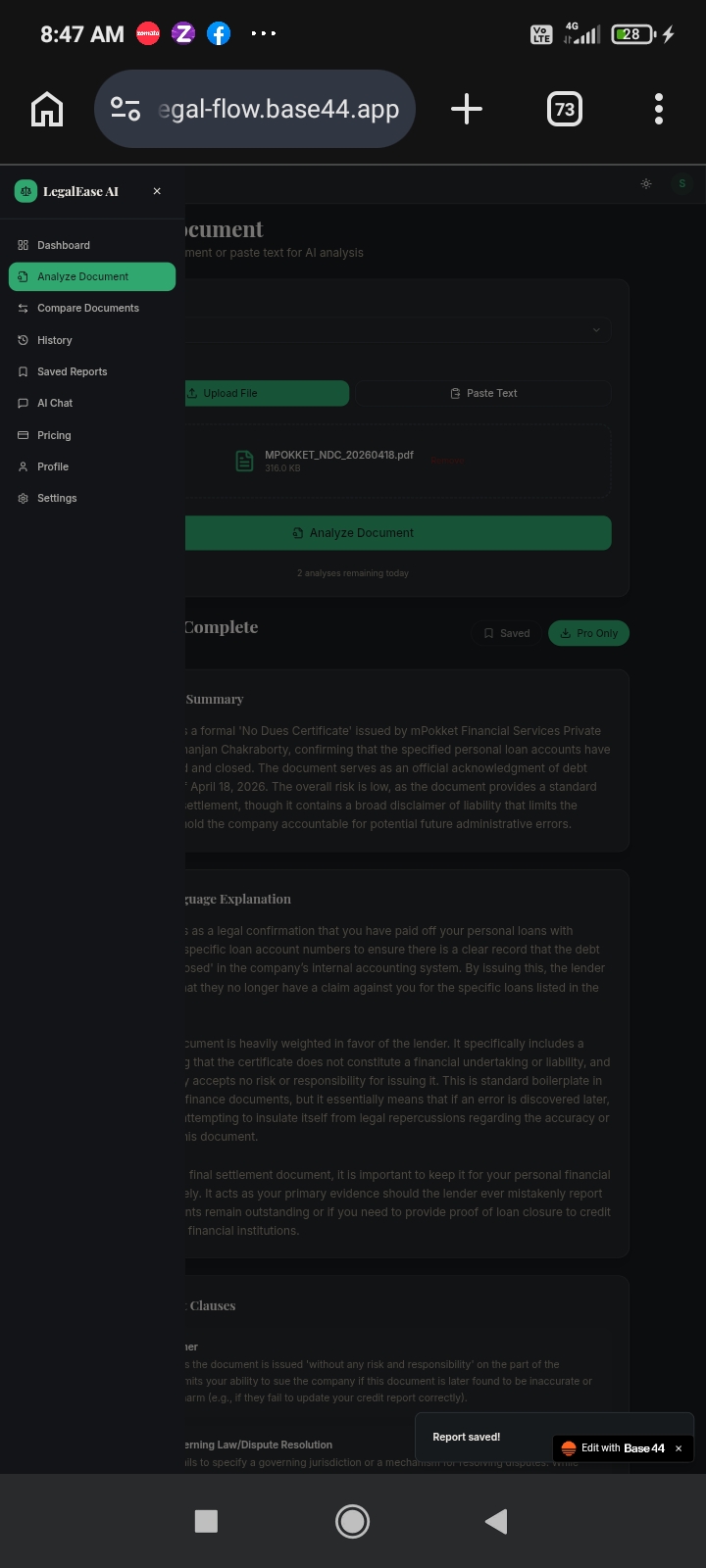
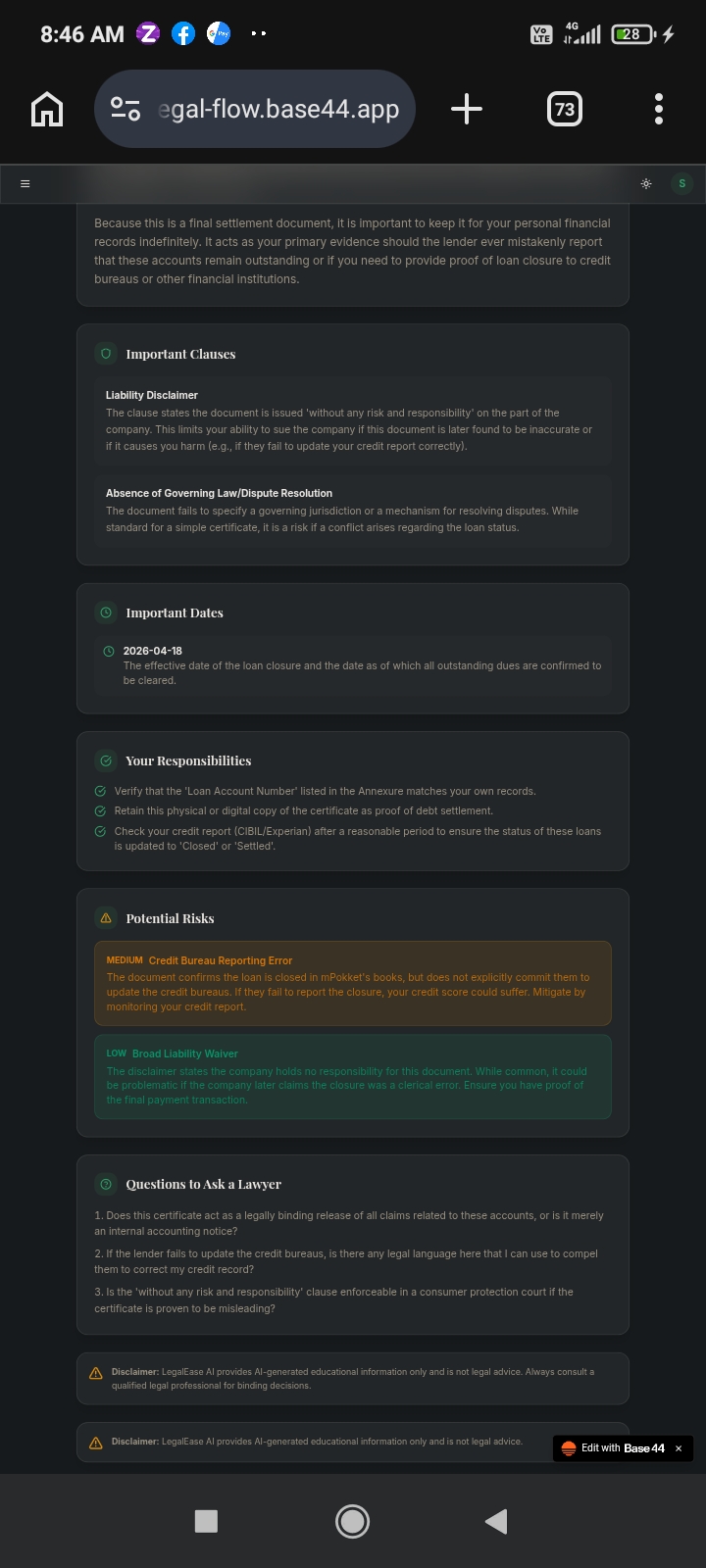
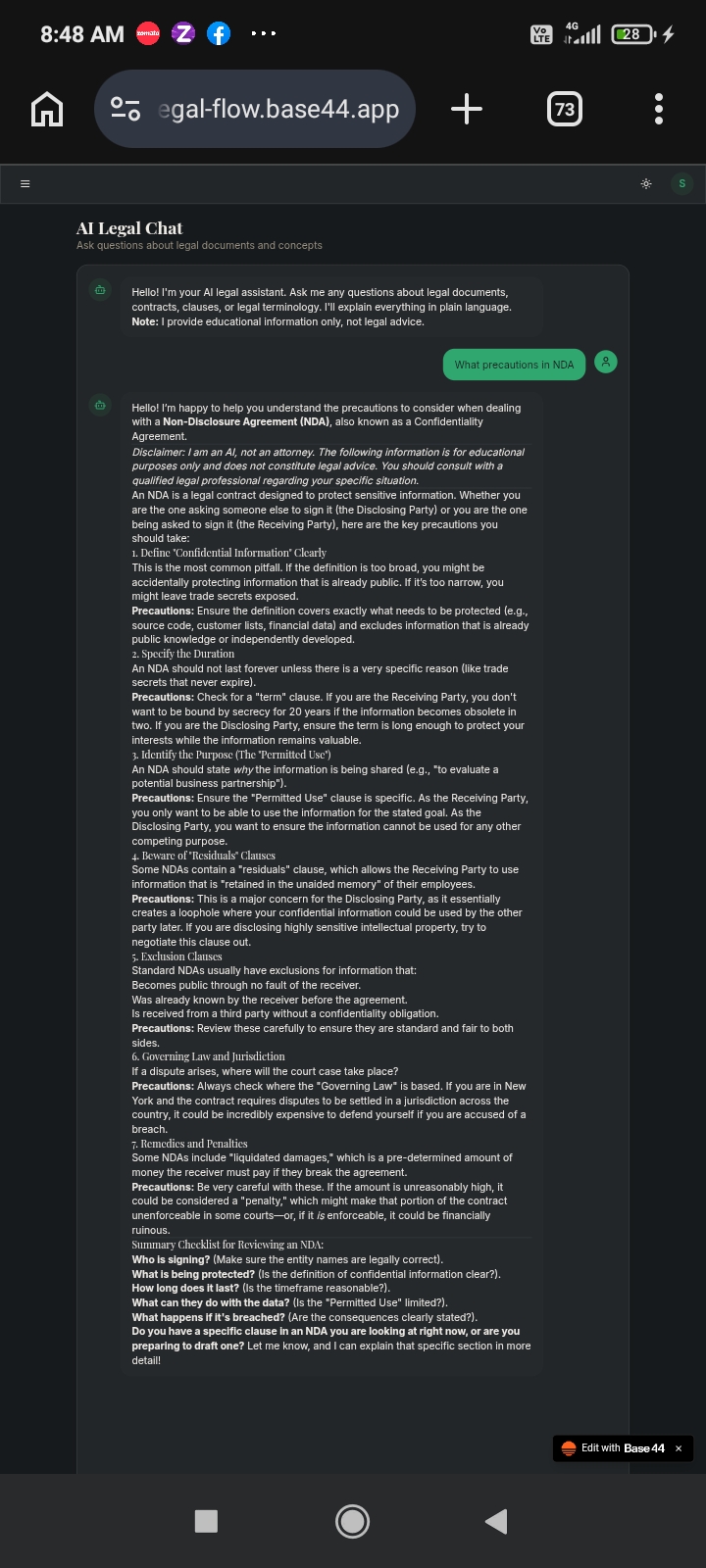
Legal documents, contracts, and compliance policies are dense, exhausting, and filled with hidden liabilities that can devastate small businesses or individuals. Traditional text parsers simply look for keywords, completely missing the broader contextual risks embedded in complex clauses. We built LegalEase-AI to create a highly intelligent, autonomous agent that reads like a real corporate lawyer—analyzing context, indexing metadata, and identifying critical compliance blind spots in seconds.
⚙️ How We Built It
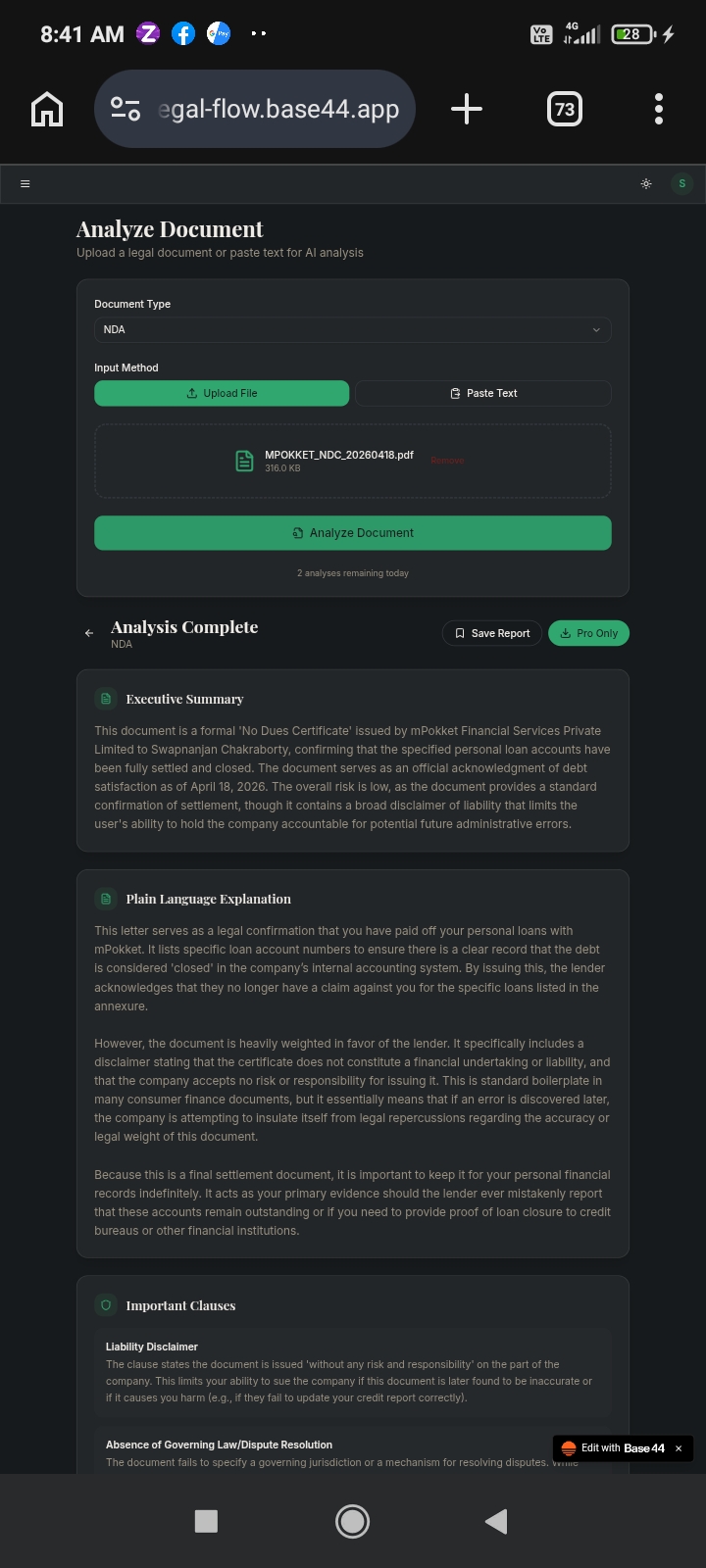
LegalEase-AI is engineered as an autonomous agent that handles end-to-end document processing pipelines. The core system architecture utilizes heavy Natural Language Processing (NLP) models paired with secure vector embeddings to parse unstructured PDF and contract data. We applied real-world machine learning models to ingest dense contract text, leveraging specialized text tokenization and chunking strategies to ensure the AI maintains a deep understanding of multi-page legal parameters without losing contextual accuracy.
🛑 Challenges We Faced
One of our biggest hurdles was navigating the sheer noise within legal nomenclature, where subtle wording changes can entirely alter a liability threshold. We addressed this by fine-tuning contextual search prompts and refining our vector chunking strategy. Another challenge was managing data governance for multi-page documents, which we solved by creating efficient metadata mapping structures to prevent context fragmentation.
🧠 What We Learned
Building this application taught us the immense value of metadata tracing and robust model grounding for enterprise-grade AI models. We discovered that a machine learning agent is only as good as the context it operates in, and optimizing our Retrieval-Augmented Generation (RAG) pipelines prevents hallucinations, making the final risk evaluation significantly more accurate and reliable for non-technical users.
Built With
- ai-agents
- fastapi
- json
- llm
- machine-learning
- natural-language-processing
- python
- vector-database


Log in or sign up for Devpost to join the conversation.