💡 Inspiration
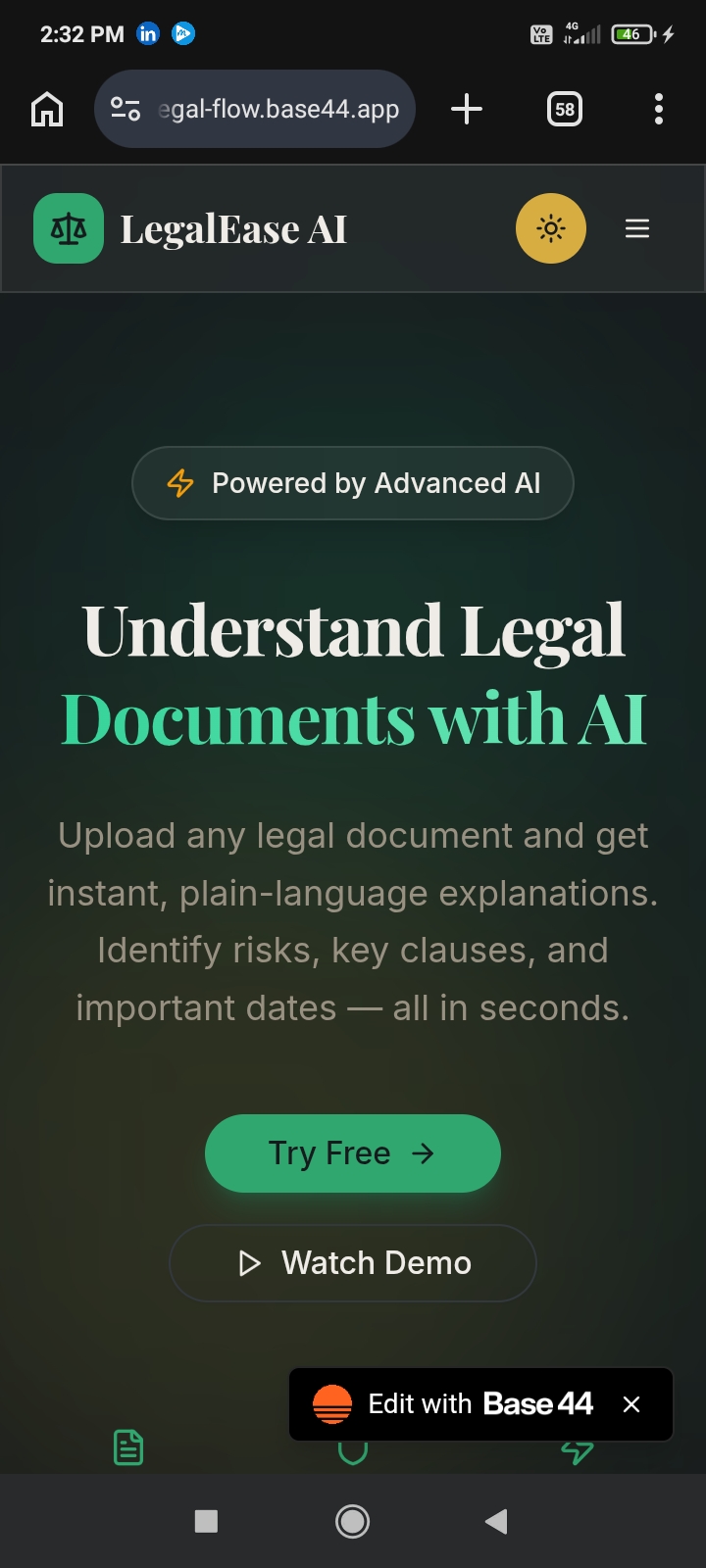
Enterprise productivity is heavily bottlenecked by manual document auditing. Legal and operations teams spend hundreds of hours reviewing dense corporate agreements, NDAs, vendor contracts, and employment forms. This process is prone to human error, leading to overlooked liabilities and compliance slips. Standard AI interfaces operate as passive chat modules confined to isolated web tabs, completely disconnected from active business communication channels. We built LegaLease-AI to transform document compliance from a passive lookup task into a proactive, multi-channel automated defense system.
⚙️ What it does
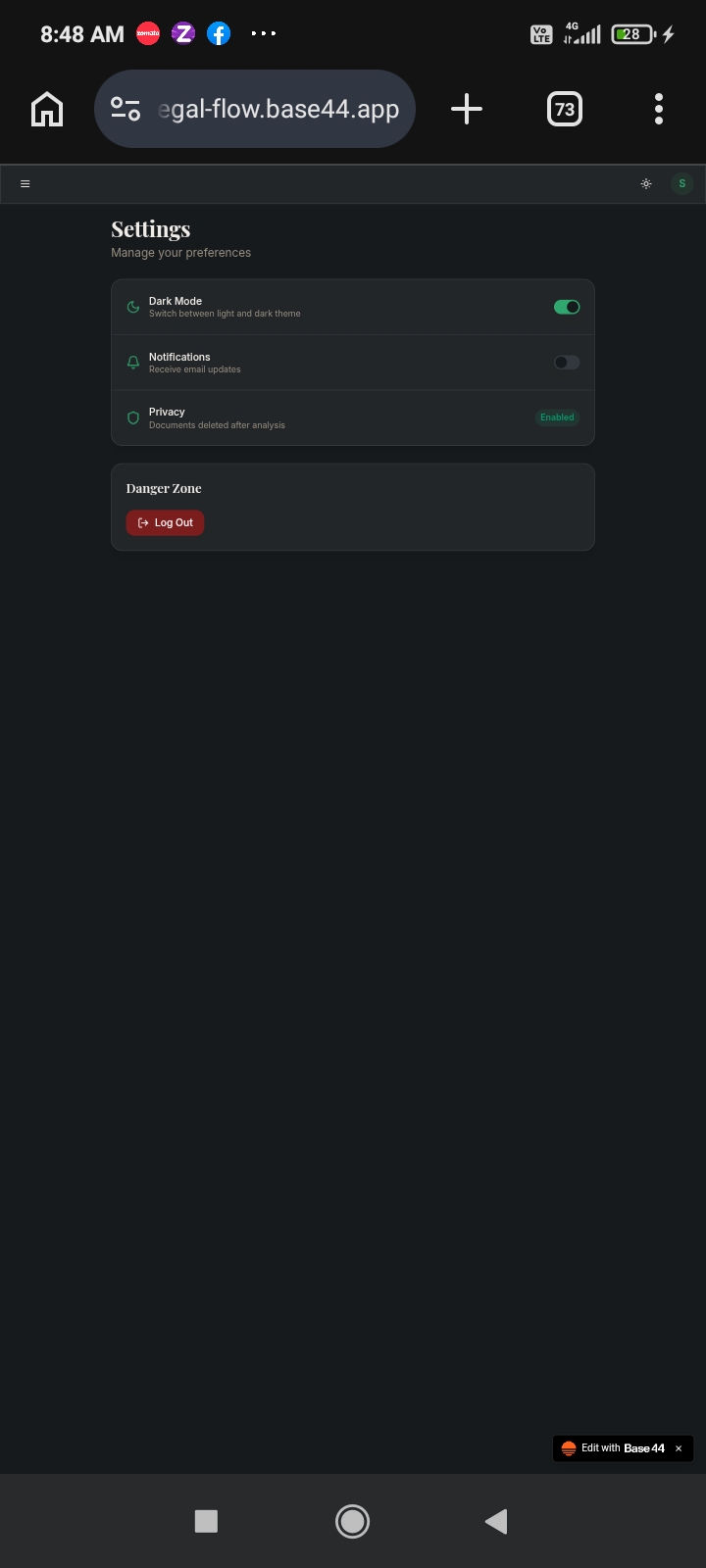
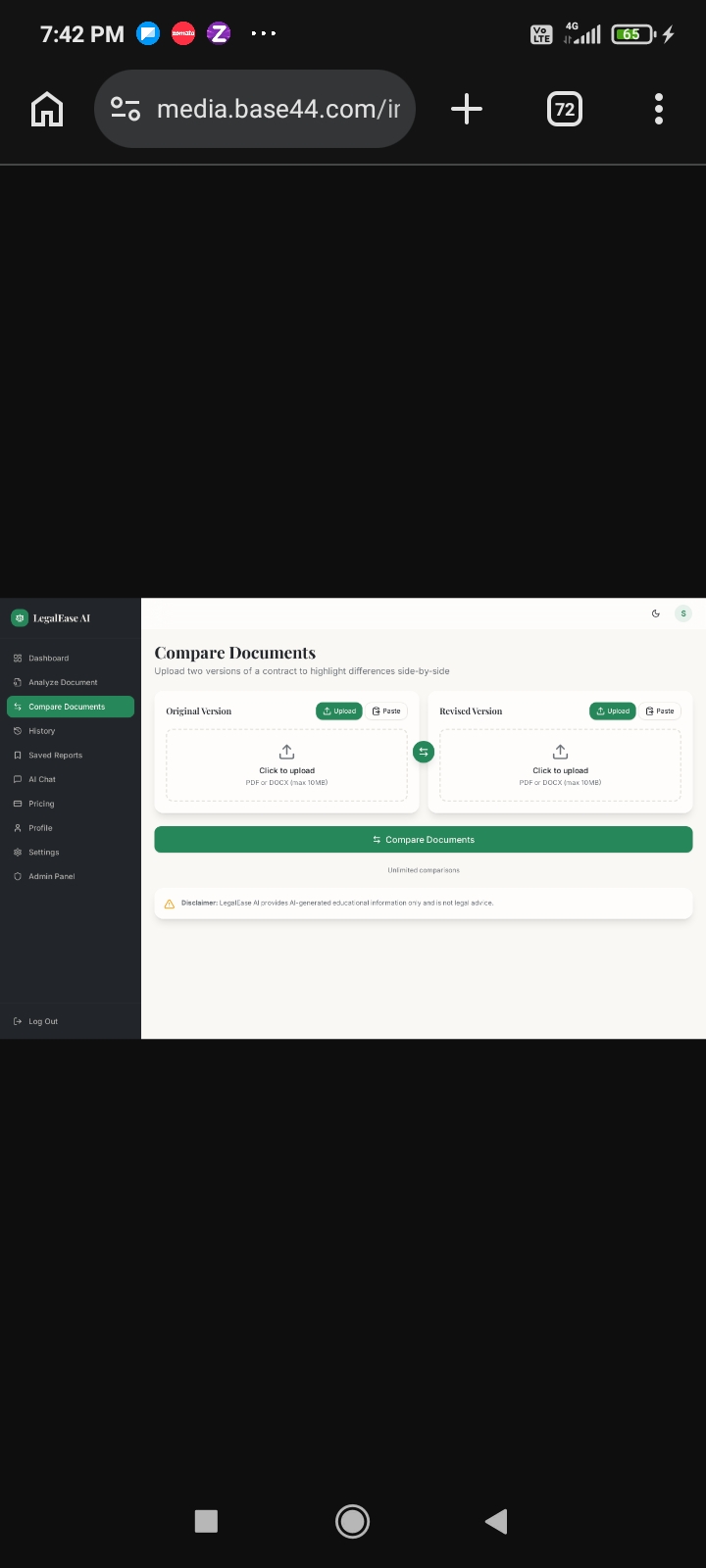
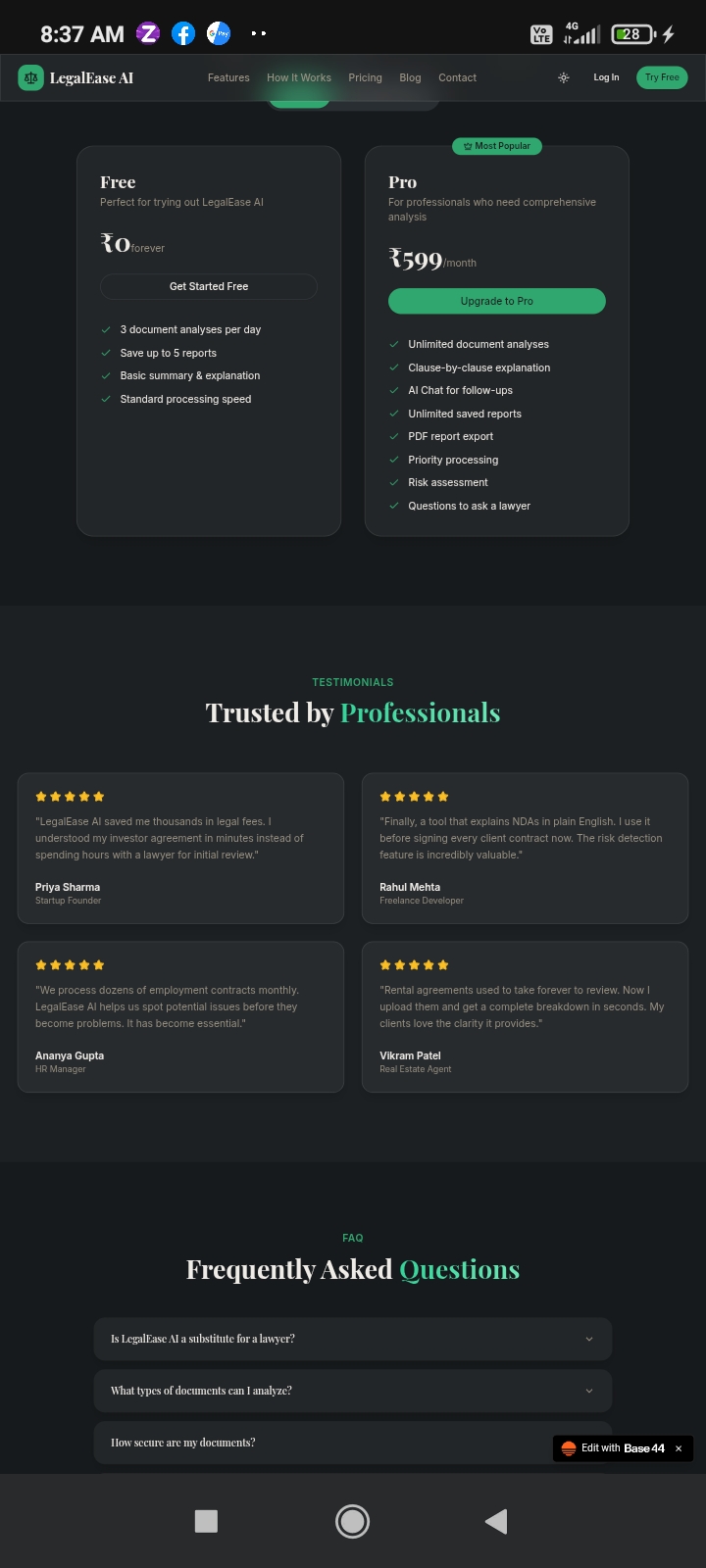
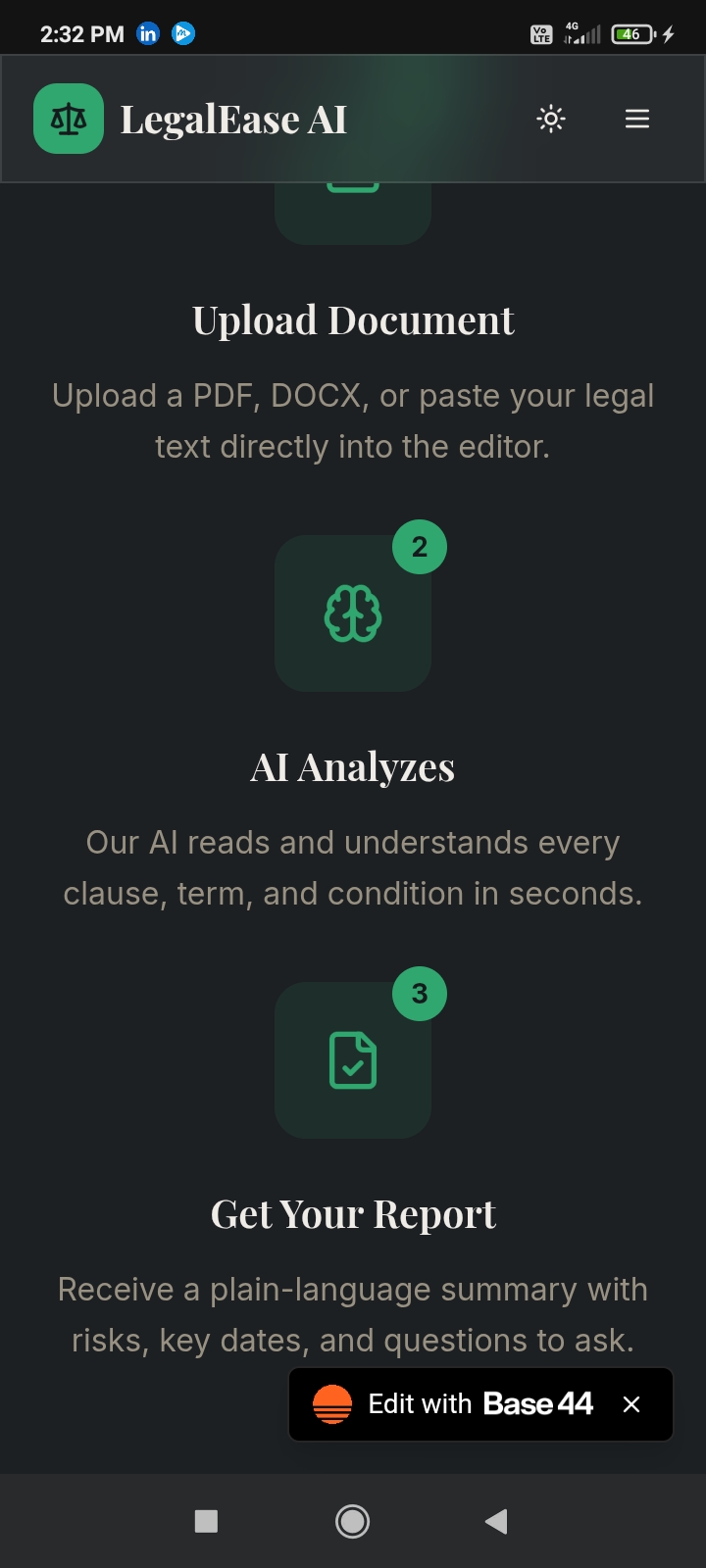
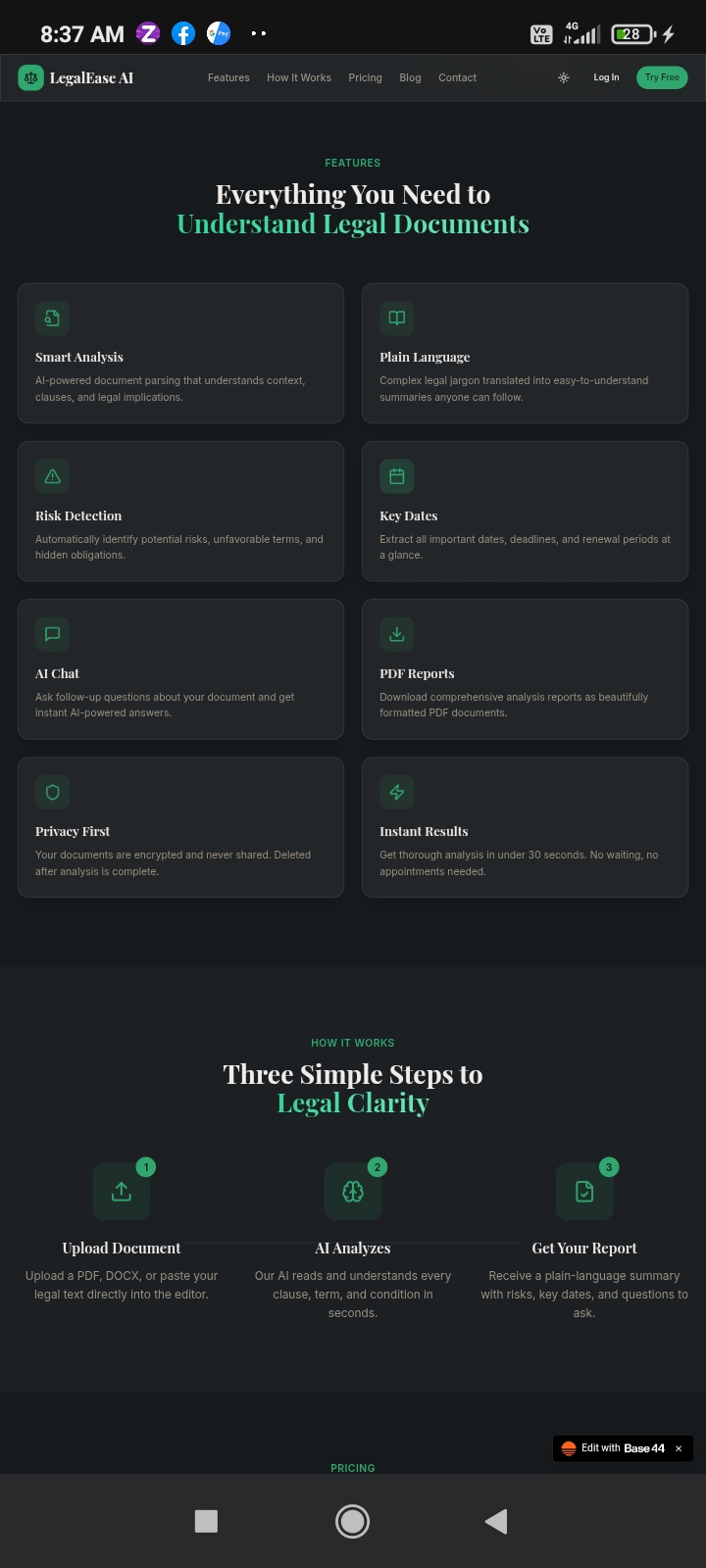
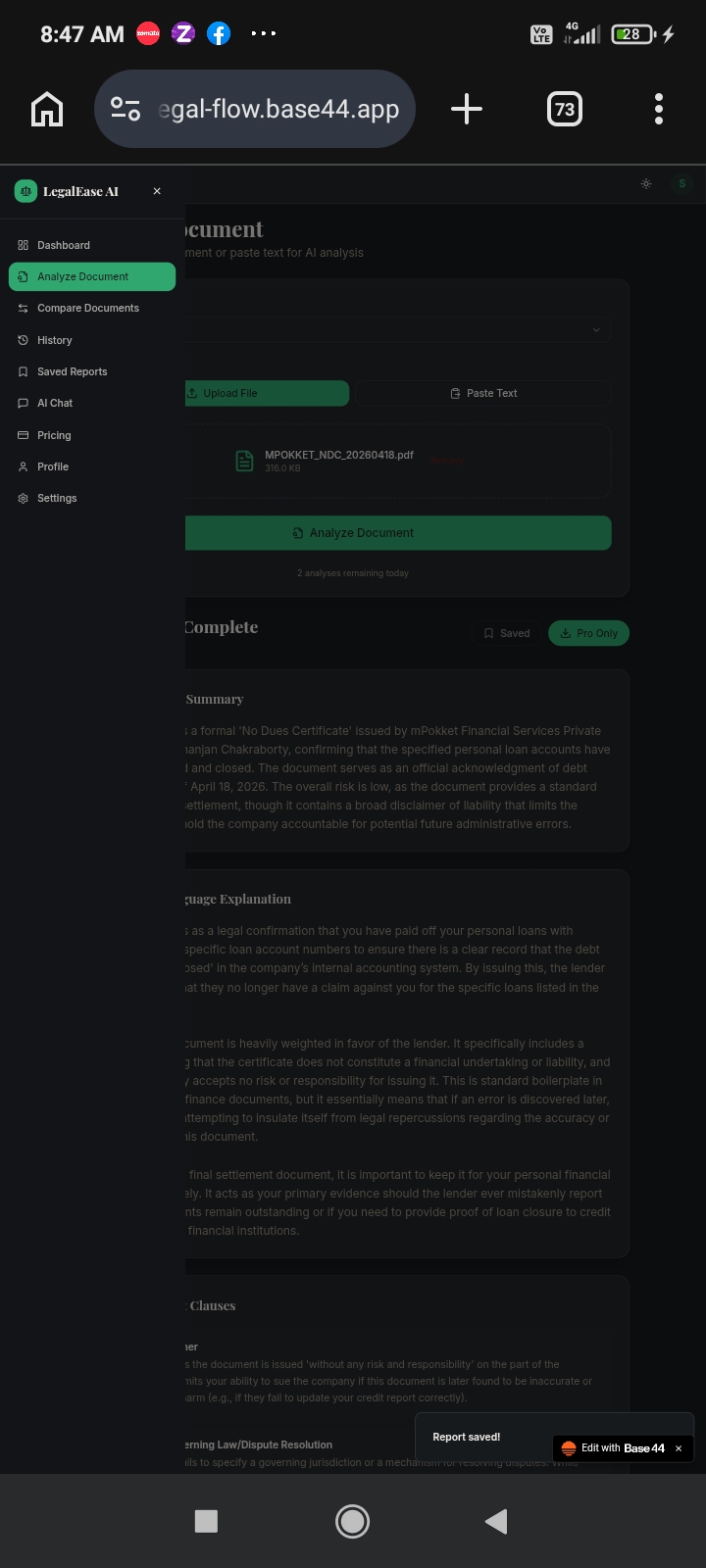
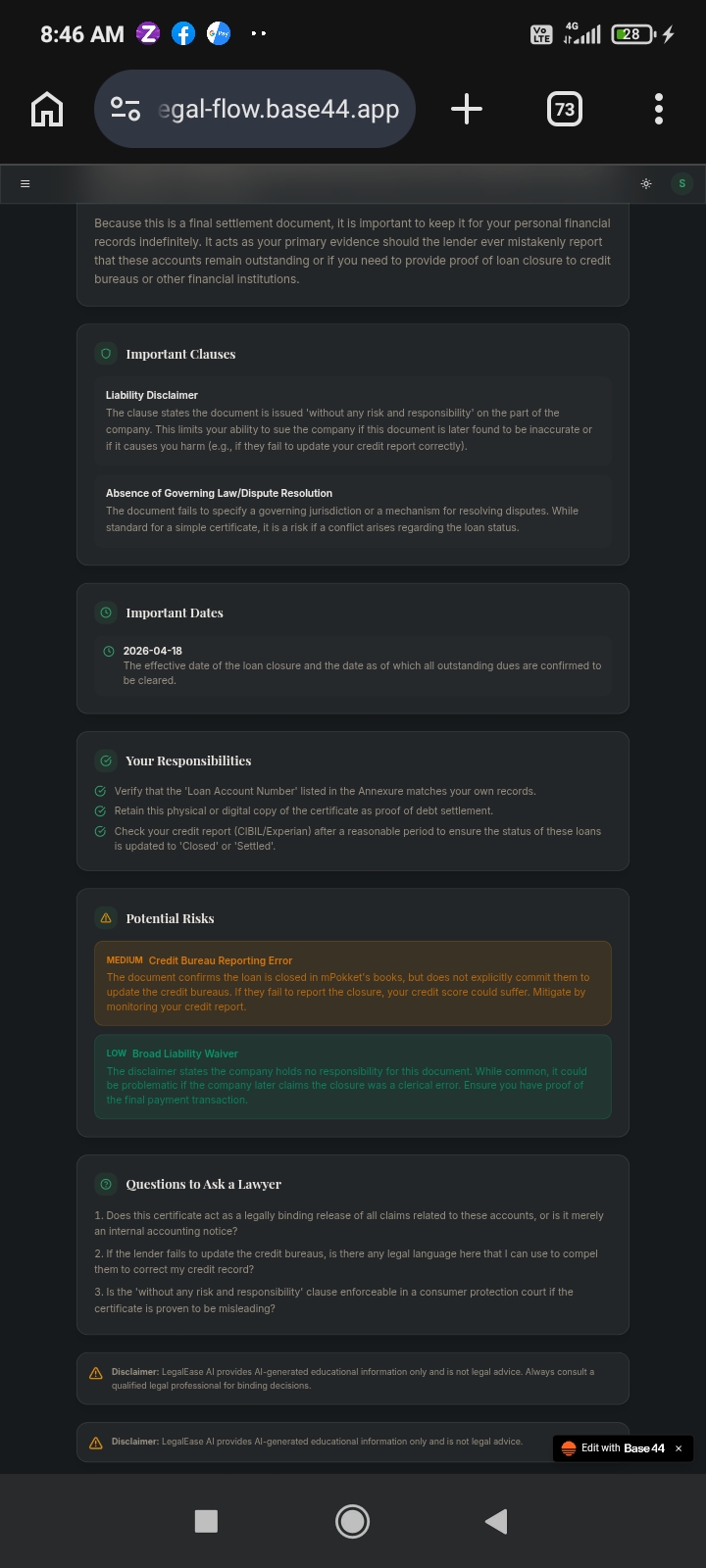
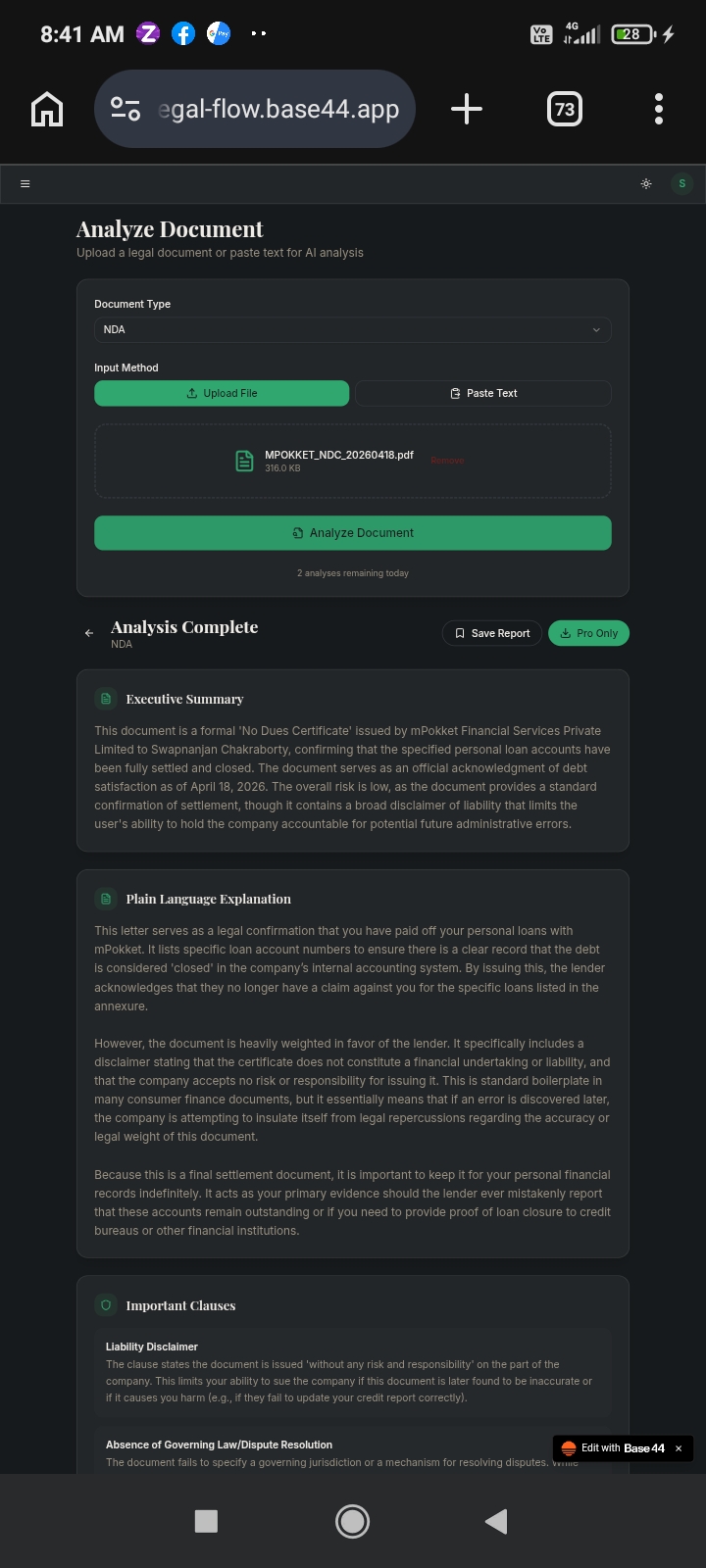
LegaLease-AI is an autonomous legal intelligence framework that ingests, parses, and audits dense enterprise agreements completely hands-free. The system analyzes unstructured text and matches it against strict regulatory frameworks, immediately flagging non-compliant clauses or high-risk legal liabilities.
Instead of forcing users to continually refresh an analytics dashboard, the platform features a dedicated Multi-Channel Delivery Layer. The moment a background agent identifies an unfavorable contract modification or a compliance violation, a custom notification routing script automatically compiles a risk report and pushes it instantly to operational managers via WhatsApp and Email channels simultaneously, ensuring swift corporate awareness.
🛠️ How we built it
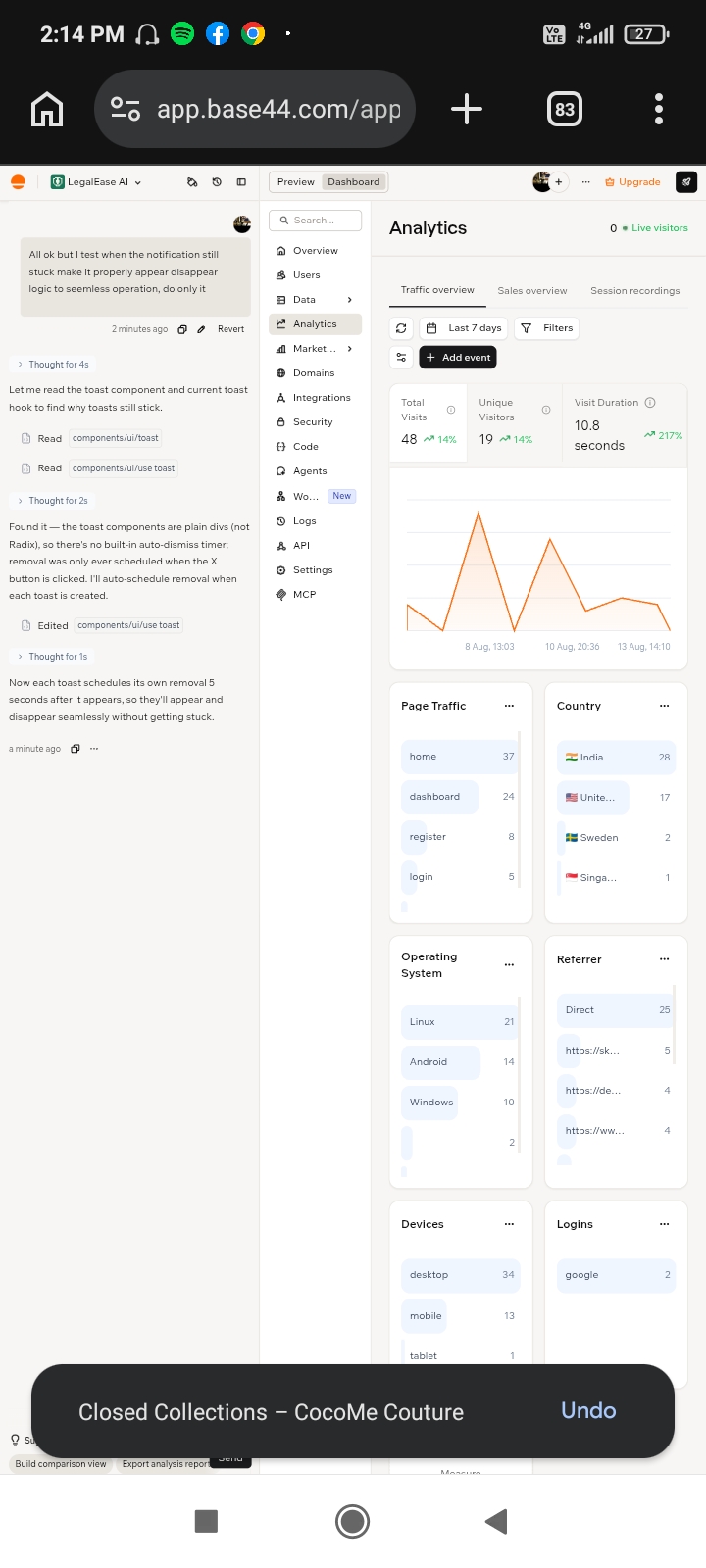
The platform is built on an enterprise-grade backend infrastructure hosted on a robust Base44 Systems sandbox environment. The core parsing engine uses decoupled, asynchronous Python scripts to handle high-throughput file ingestion without resource locks or performance lag.
We engineered custom sentence embedding pipelines and localized vector structures to parse and map legal text patterns accurately while keeping computational overhead incredibly lightweight. The frontend presentation layer is fully optimized as a responsive Next.js wrapper styled with Tailwind CSS, ensuring smooth navigation and fast data synchronization.
🛑 Challenges we faced
A major challenge was optimizing the background pipeline threads to process massive, multi-page corporate agreements concurrently without introducing context fragmentation or crashing server nodes. We overcame this by implementing asynchronous worker scripting within our Base44 testing sandbox, allowing data processing to operate completely independently from the client UI. We also carefully configured specialized API validation layers to seamlessly pass structured metadata parameters from our core parsing engines directly into our multi-channel notification hooks without losing structural telemetry.
🎓 What we learned
Building this application highlighted the immense efficiency gains of moving heavy text processing pipelines entirely server-side. Decoupling core analysis workflows from client interfaces allows us to keep user resource consumption remarkably lean while drastically minimizing application latency. We have proven that proactive, multi-agent communication networks are a highly viable, scalable strategy for automating dense enterprise workflows in real-world production environments.

Log in or sign up for Devpost to join the conversation.