-
-
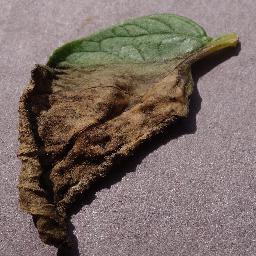
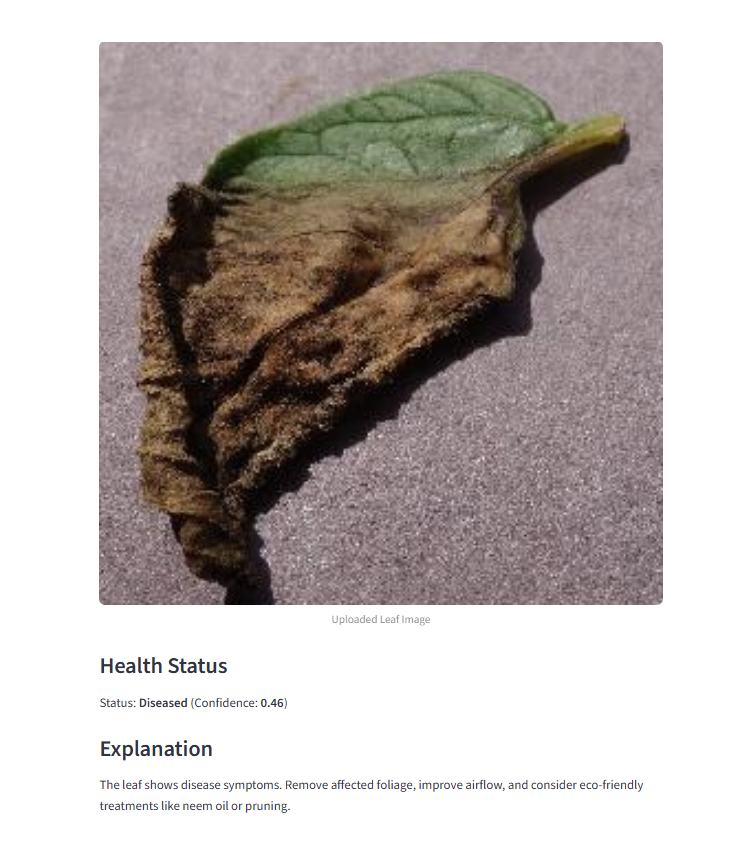
Diseased Leaf (upload to website from DemonstrationImages)
-
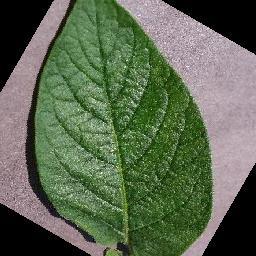
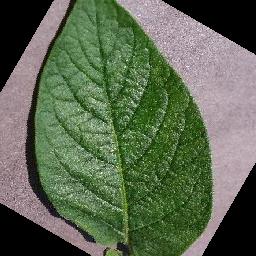
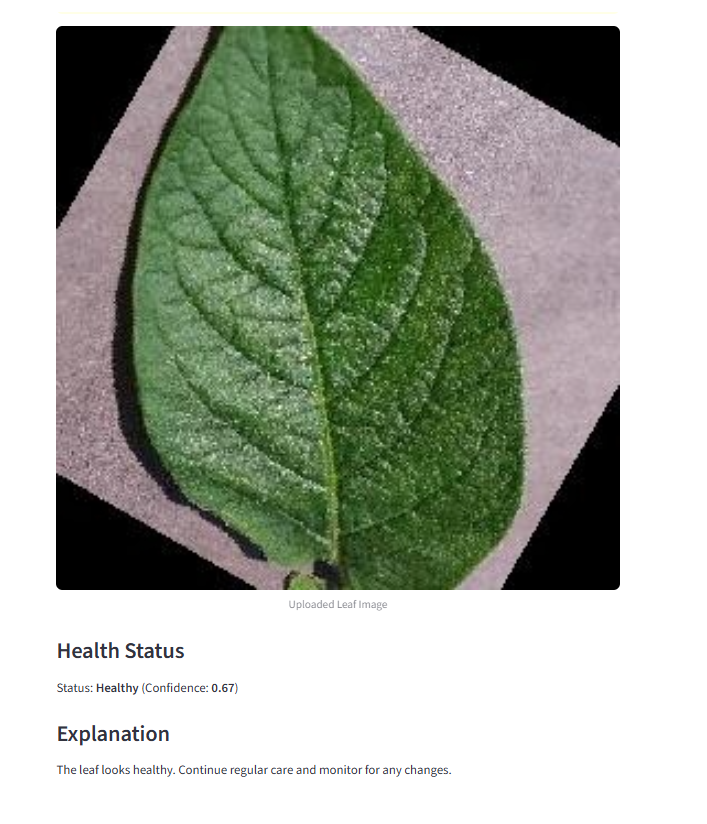
Healthy Leaf (upload to website from DemonstrationImages)
-
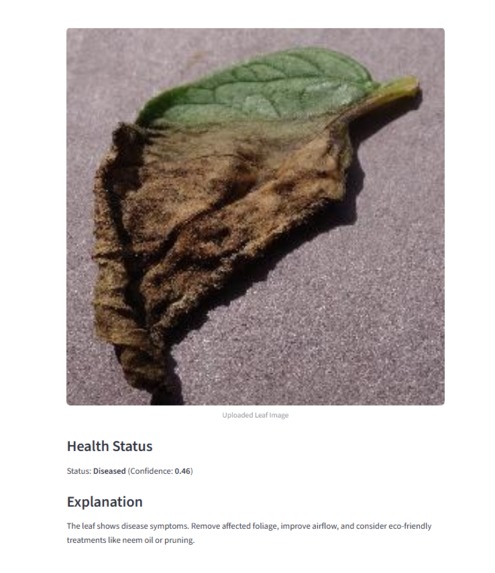
Diseased Leaf Website Results
-
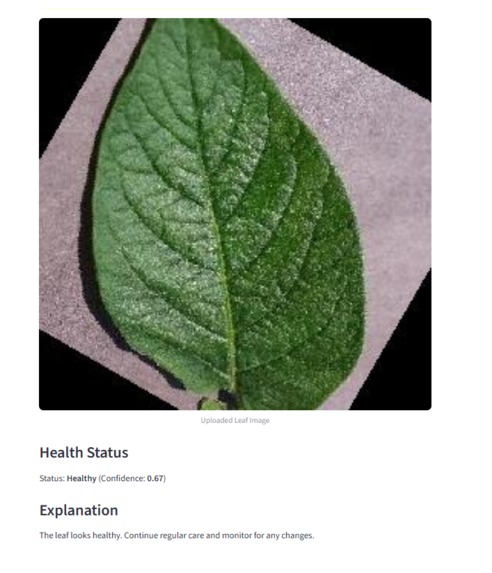
Healthy Leaf Website Results

Inspiration
Looking outside at the variety of colors and shapes of leaves and plants, not knowing whether it's a dead plant or just a sign of fall coming.
What it does
LeafLens, your pocket botanist powered by AI. With just a quick photo of a leaf, LeafLens instantly detects whether the plant has a disease or is healthy, and provides a short explanation of what's going on.
How we built it
We built LeafLens using computer vision and generative AI. A TensorFlow-based CNN model (trained by us on the PlantVillage dataset) classifies plant leaf images as healthy or diseased. The predictions are then passed to OpenAI’s GPT-4o API, which generates simple explanations. The interface was built in Streamlit, allowing users to upload photos and instantly receive results in a clean, interactive dashboard.
Challenges we ran into
- A major challenge that we faced was trying to balance the accuracy of the predictions of the models using a limited dataset.
- Resizing leaf images while trying to maintain quality
- Trying to initiate TensorFlow properly . ## Accomplishments that we're proud of
- We made and trained an AI model without cloud computing
- Having 96% accuracy when training data
What we learned
- How to train and test an AI model
- How to build a website
- How to implement OpenAI
What's next for LeafLens
- Expanding the model to make it more accurate and reliable when interpreting pictures
- Make a mobile app where the user can capture an image of a leaf within the app and receive information.
Built With
- openai
- python
- streamlit
- tensorflow

Log in or sign up for Devpost to join the conversation.