Inspiration
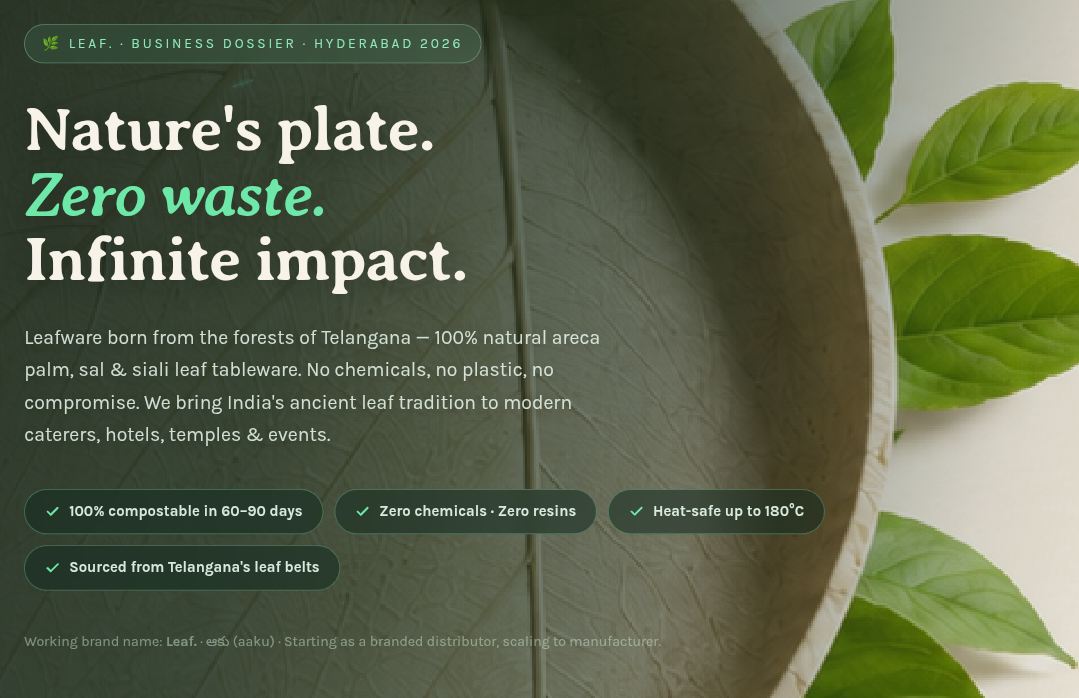
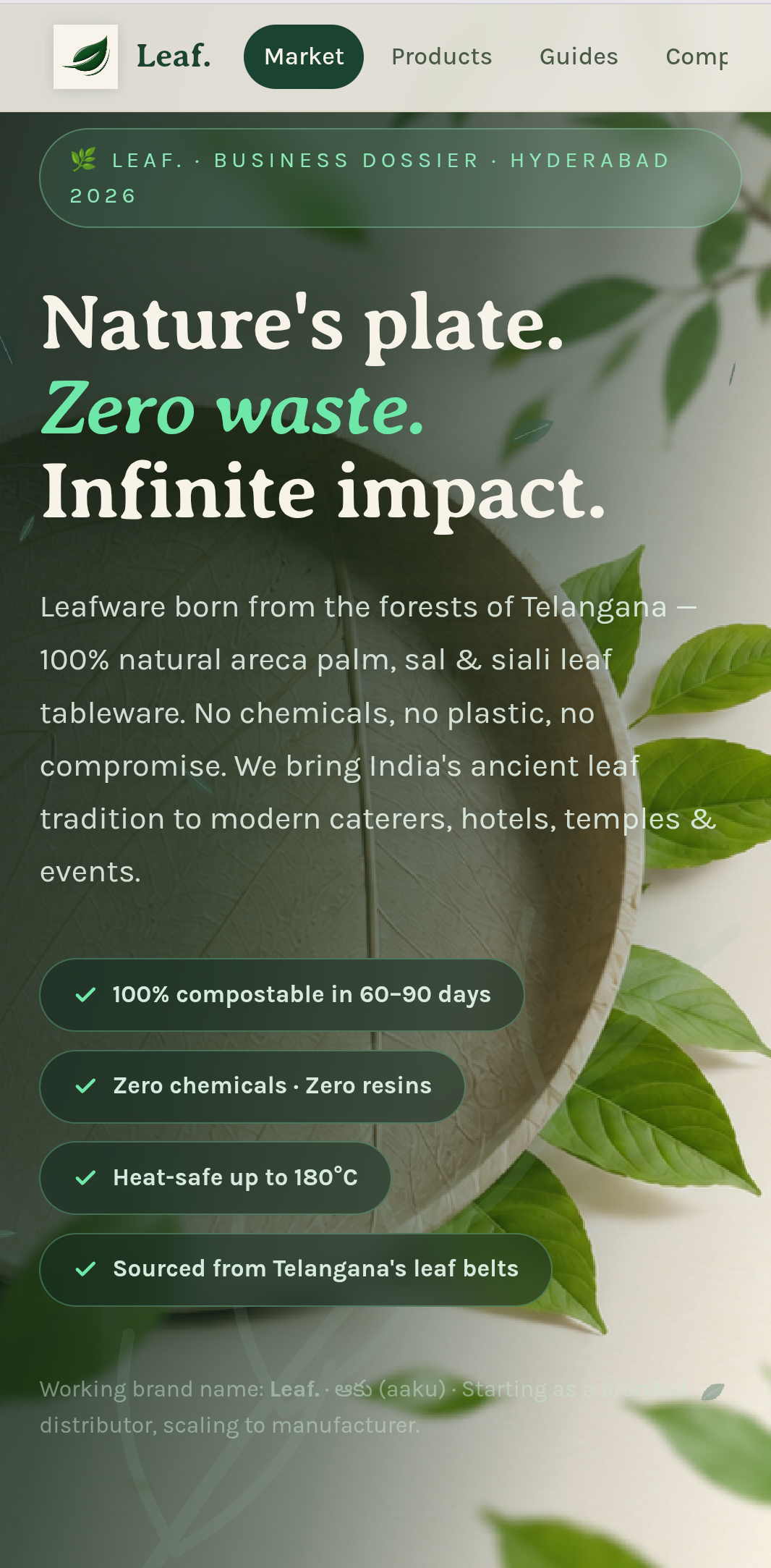
The idea for leaf didn't come from wanting to play with new tech stack features, but from facing a pressing real-world issue: the overwhelming reliance on single-use plastics and non-biodegradable tableware that harms our environment and health. Building a project isn't just about writing code or leveraging trendy tools; it’s about using whatever technology we have available to solve meaningful, everyday problems. We wanted to tap into time-tested, eco-friendly traditions and use modern software to scale a simple, powerful solution—reimagining natural leaves as strong, organic plates for a healthier planet.
What it does
leaf is a digital B2B platform built to bridge the gap between regional manufacturers of organic leaf tableware and commercial clients like restaurants, caterers, and vendors.
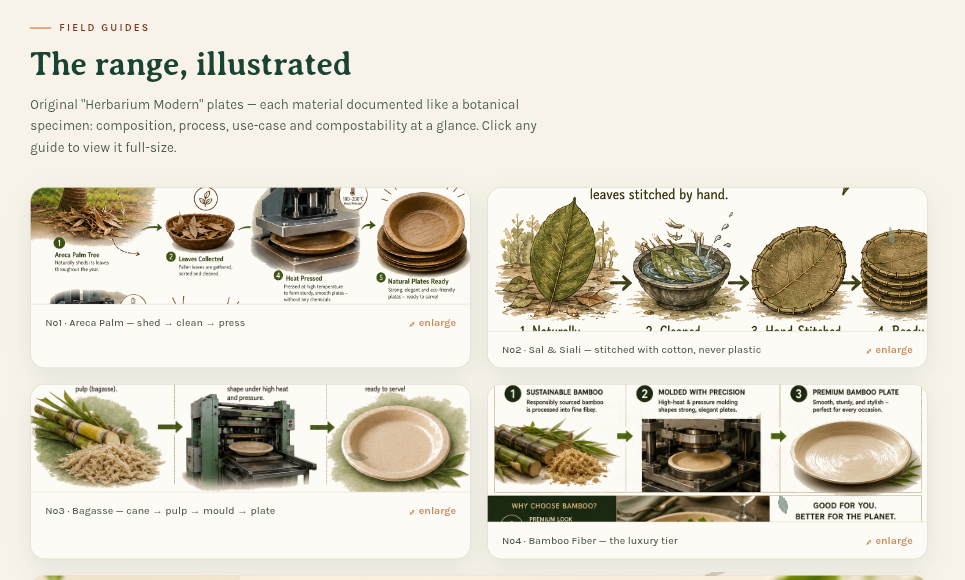
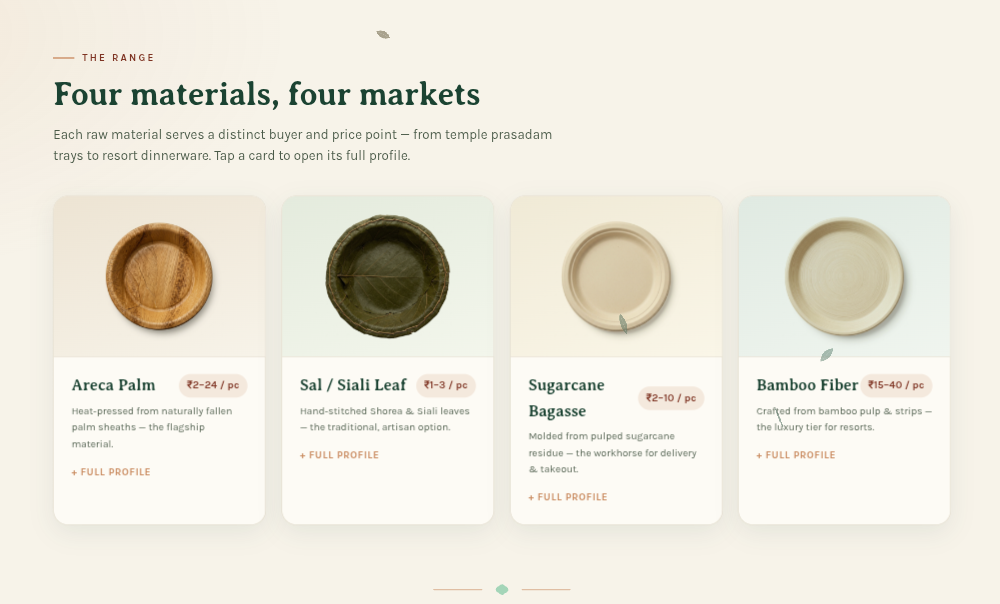
- Organic Product Line: Connects buyers with tableware prepared directly from natural leaves, offering a non-toxic, 100% biodegradable alternative to plastic or paper plates.
- B2B Distribution: Facilitates bulk ordering, vendor sourcing, and supply chain logistics directly from manufacturer to client.
- Impact-Driven Digital Hub: Uses technology purposefully to deliver product data, track environmental metrics, and make sustainable procurement straightforward for businesses.
How I built it
- Purposeful Tech Stack: Focused on creating a clean, high-performance interface that prioritizes seamless navigation and user utility over unnecessary complexity.
- B2B Workflow Design: Structured the platform to handle catalog management, commercial inquiry routing, and distribution logistics effectively.
- Digital Storytelling & Data: Integrated transparent content modules to showcase product durability standards, health benefits, and environmental impact metrics directly to decision-makers. Challenges I ran into
- Balancing Tech with Real-World Physical Constraints: Software is easy to iterate on, but physical leaf plates must meet strict real-world standards—handling hot, oily, or liquid foods without leaking or losing integrity.
- Supply Chain Connection: Using digital tools to streamline an inherently offline, regional manufacturing process into a reliable B2B supply network.
- Communicating Value: Framing technology not as the core product, but as the enabler that makes sustainable physical tableware accessible at scale.
Accomplishments that I'm proud of
- Problem-First Innovation: Successfully built a platform where technology serves a direct, real-world human purpose: eliminating plastic waste.
- Empowering Eco-Manufacturers: Created a digital bridge that helps small-scale, traditional leaf plate makers connect with larger commercial markets.
- Pragmatic Design: Proved that meaningful innovation comes from applying accessible digital tools to real physical challenges.
What I learned
- Tech as an Enabler: Deepened my conviction that software development is most impactful when it acts as a tool to solve physical, human-centric problems rather than existing for its own sake.
- Circular Economy Dynamics: Learned how traditional, natural practices can be scaled effectively using modern B2B platform design.
- Practical Product Building: Gained valuable experience in identifying real-world friction points—like supply chains and material standards—and building targeted digital solutions to address them.
