Inspiration
In cities like New York, millions of people can live just a few feet apart without ever really getting to know one another. At the same time, the trees lining our streets are shared pieces of living infrastructure that depend on long-term care from the communities around them.
NYC is actively working toward 30% tree canopy coverage, while also encouraging residents to participate in tree stewardship. We saw an opportunity to connect these two challenges.
What if a tree could bring a neighborhood together?
Leaf on Read was inspired by the idea that technology shouldn't always pull us further into our screens. Sometimes, it can give us a reason to look up, go outside, and meet the people around us.
What it does
Leaf on Read turns neighborhood trees into community hubs.
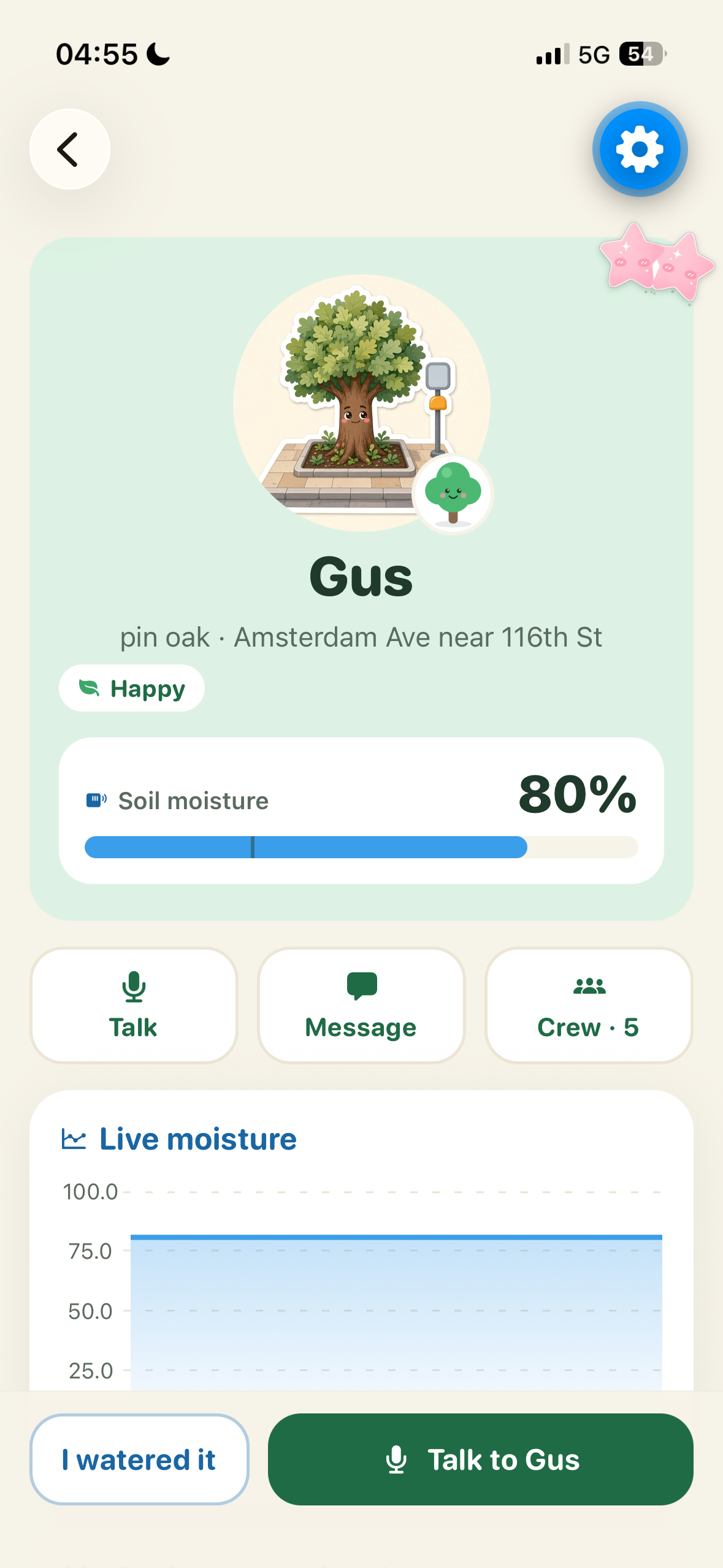
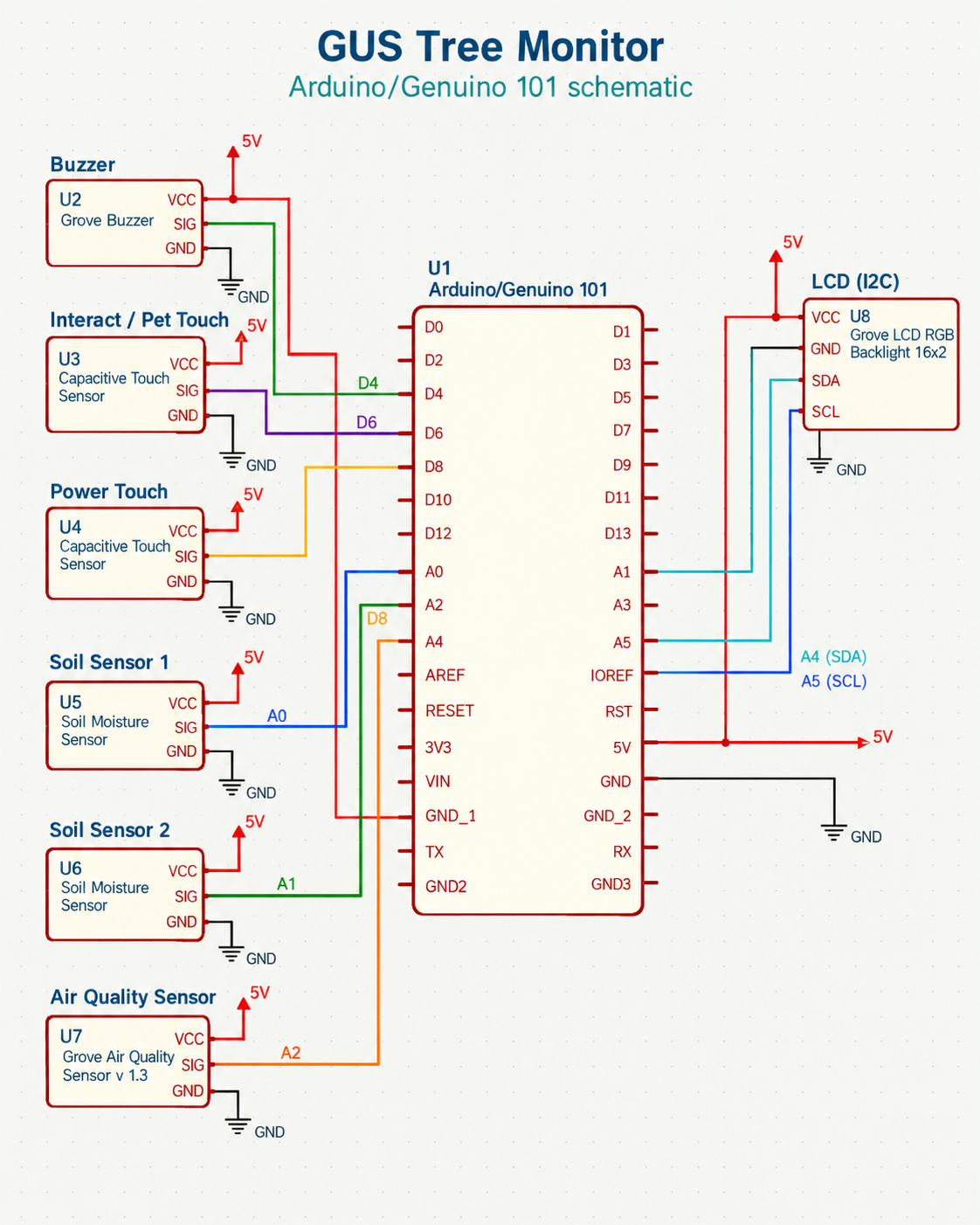
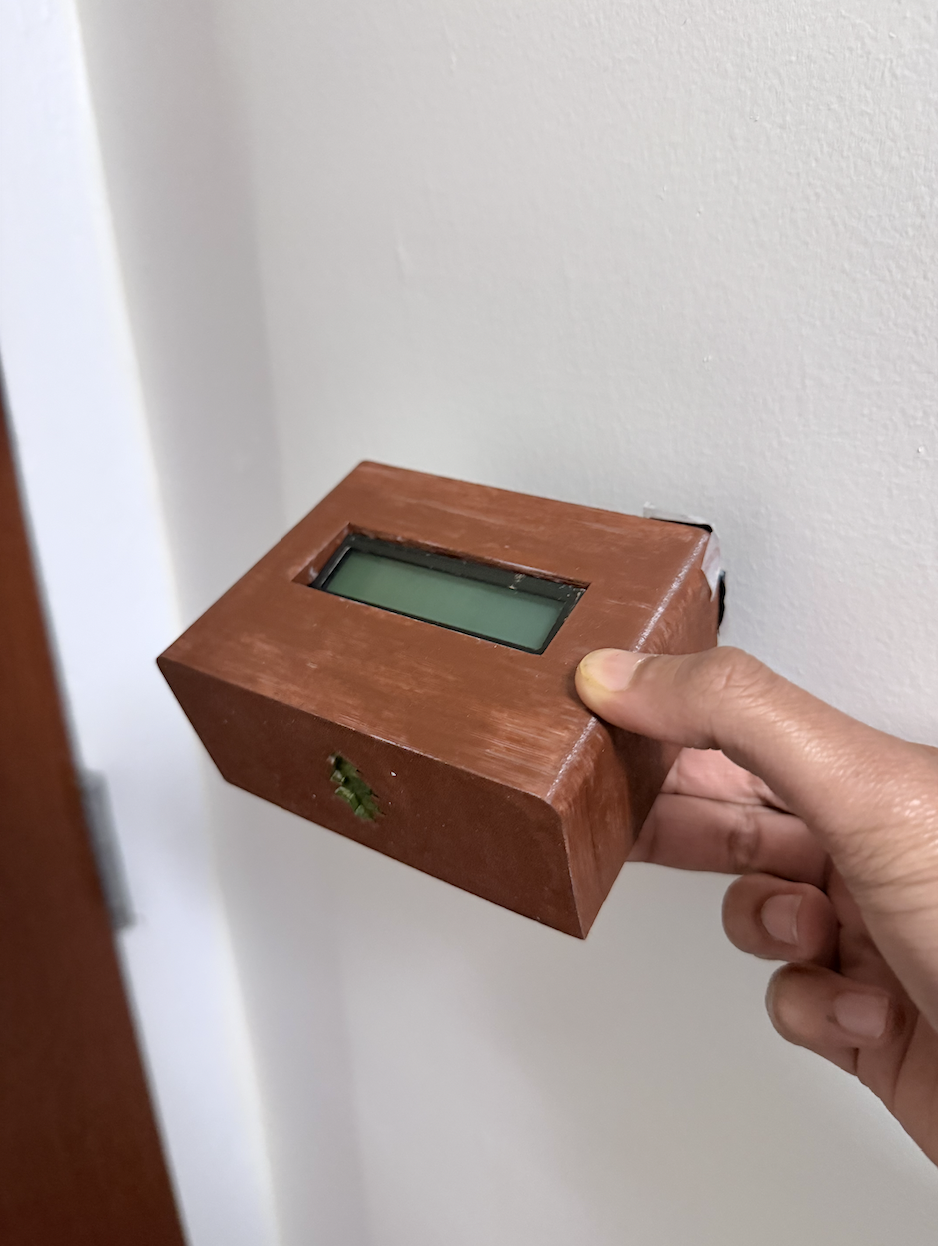
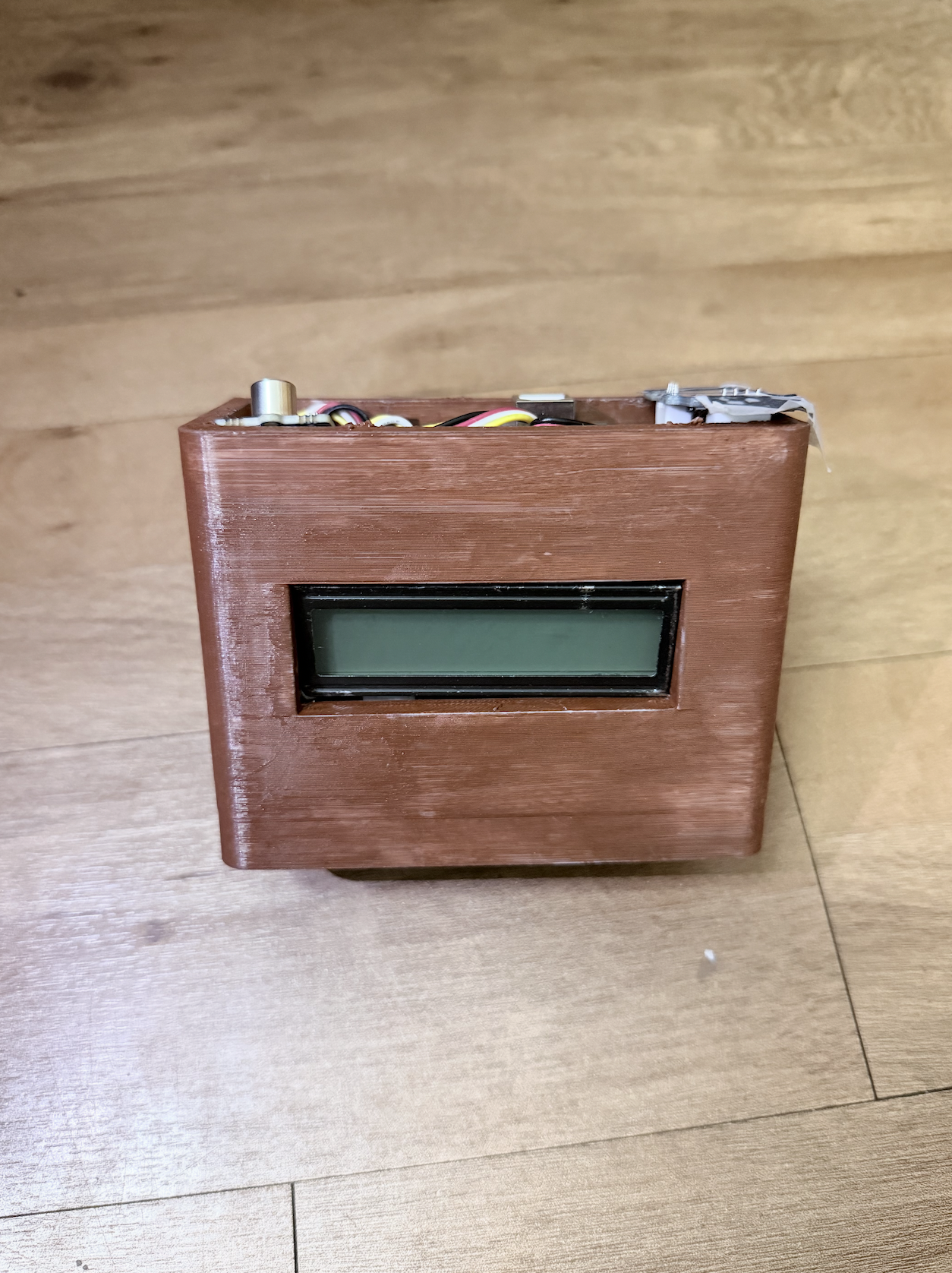
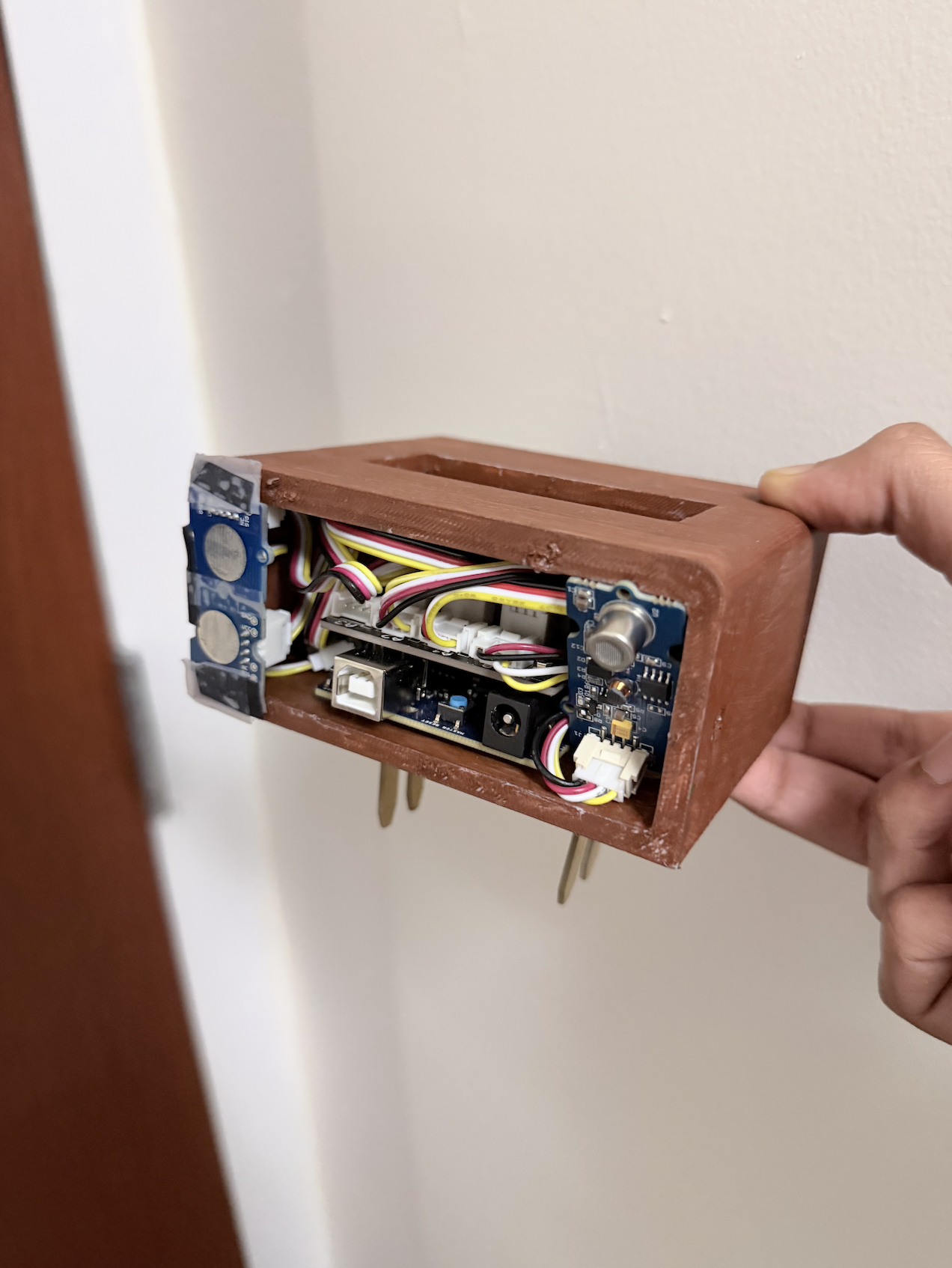
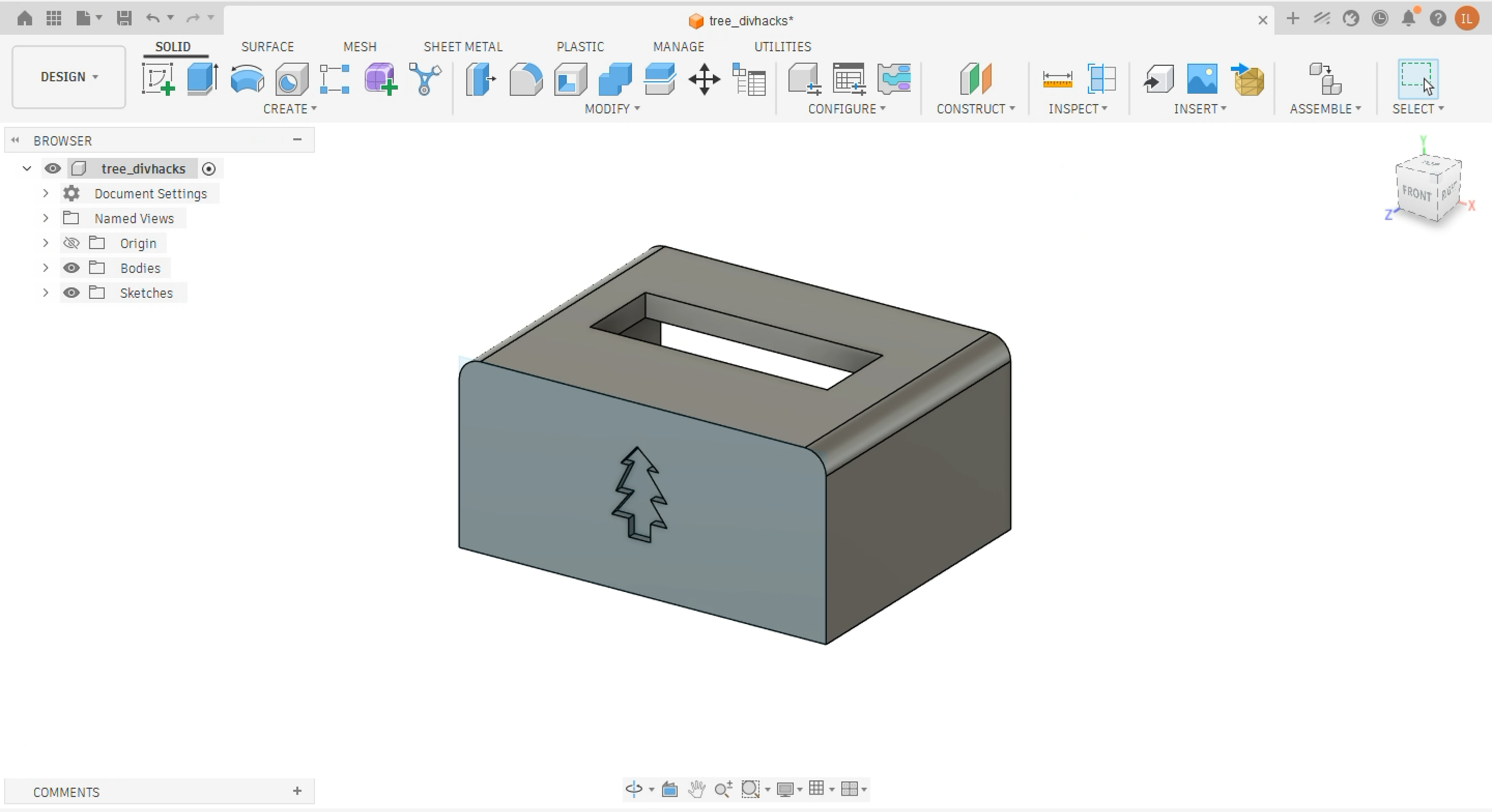
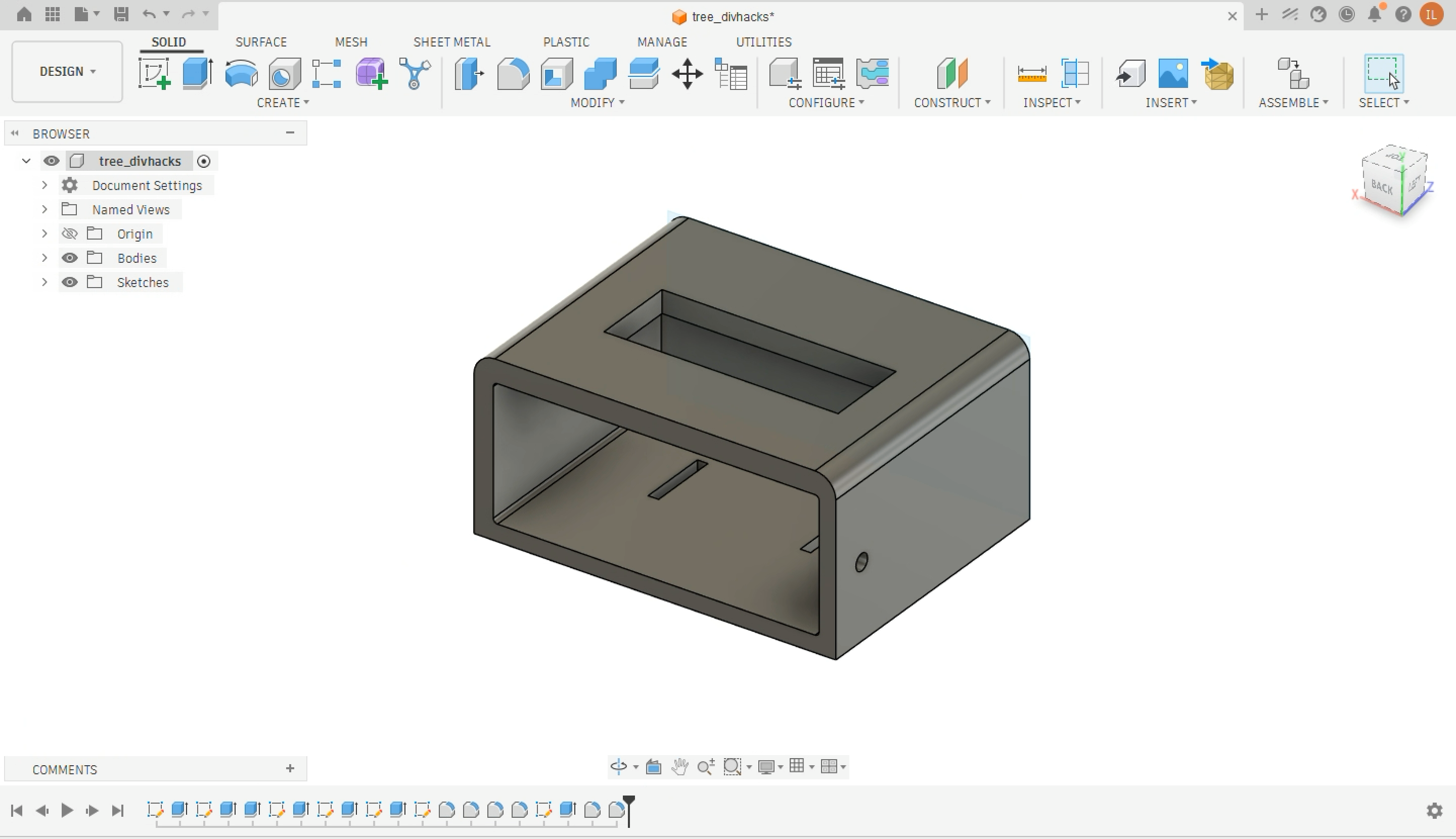
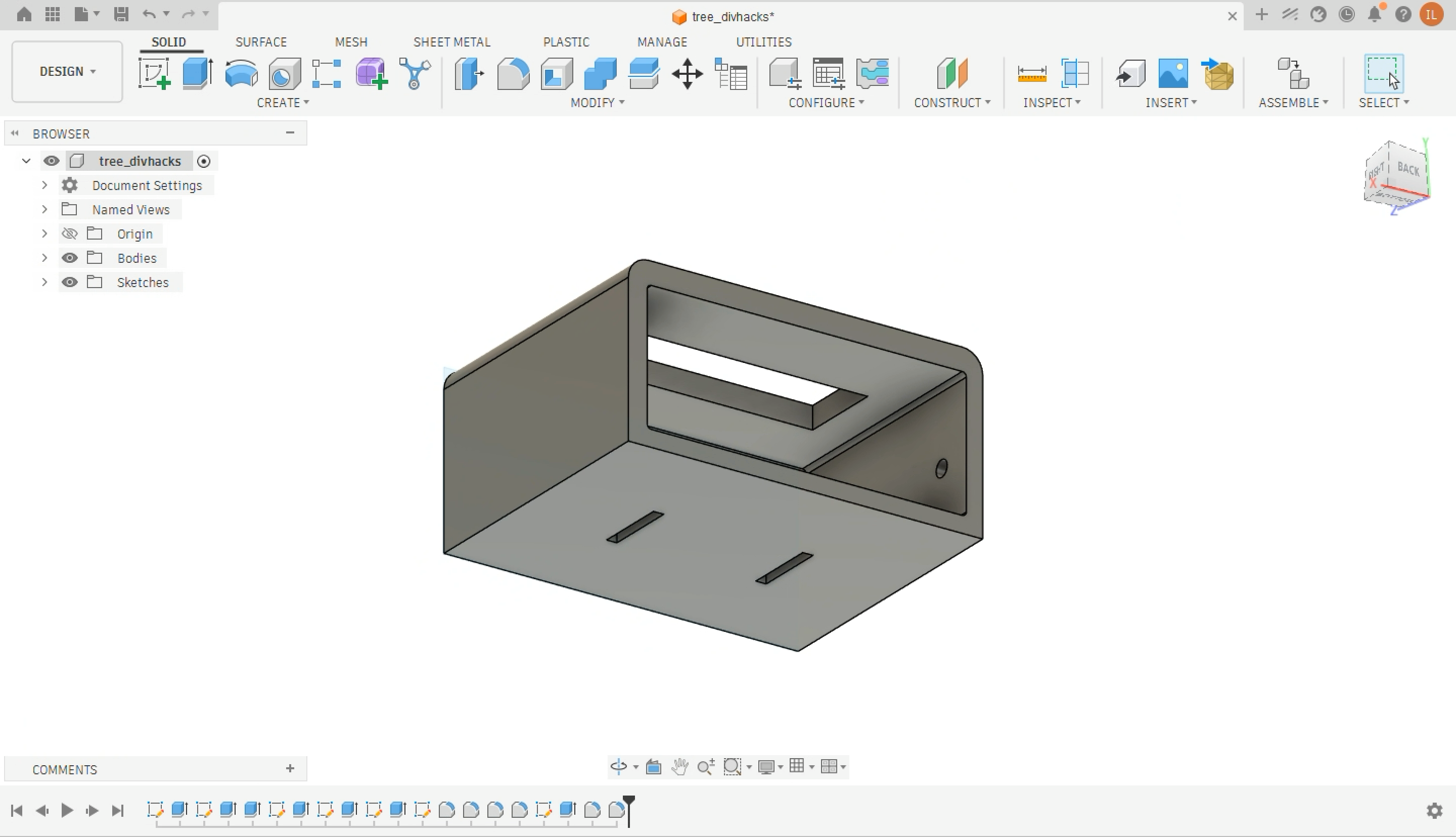
Each participating tree is connected to moisture and temperature sensors that provide information about its condition. When a tree needs attention, it can communicate with the people caring for it.
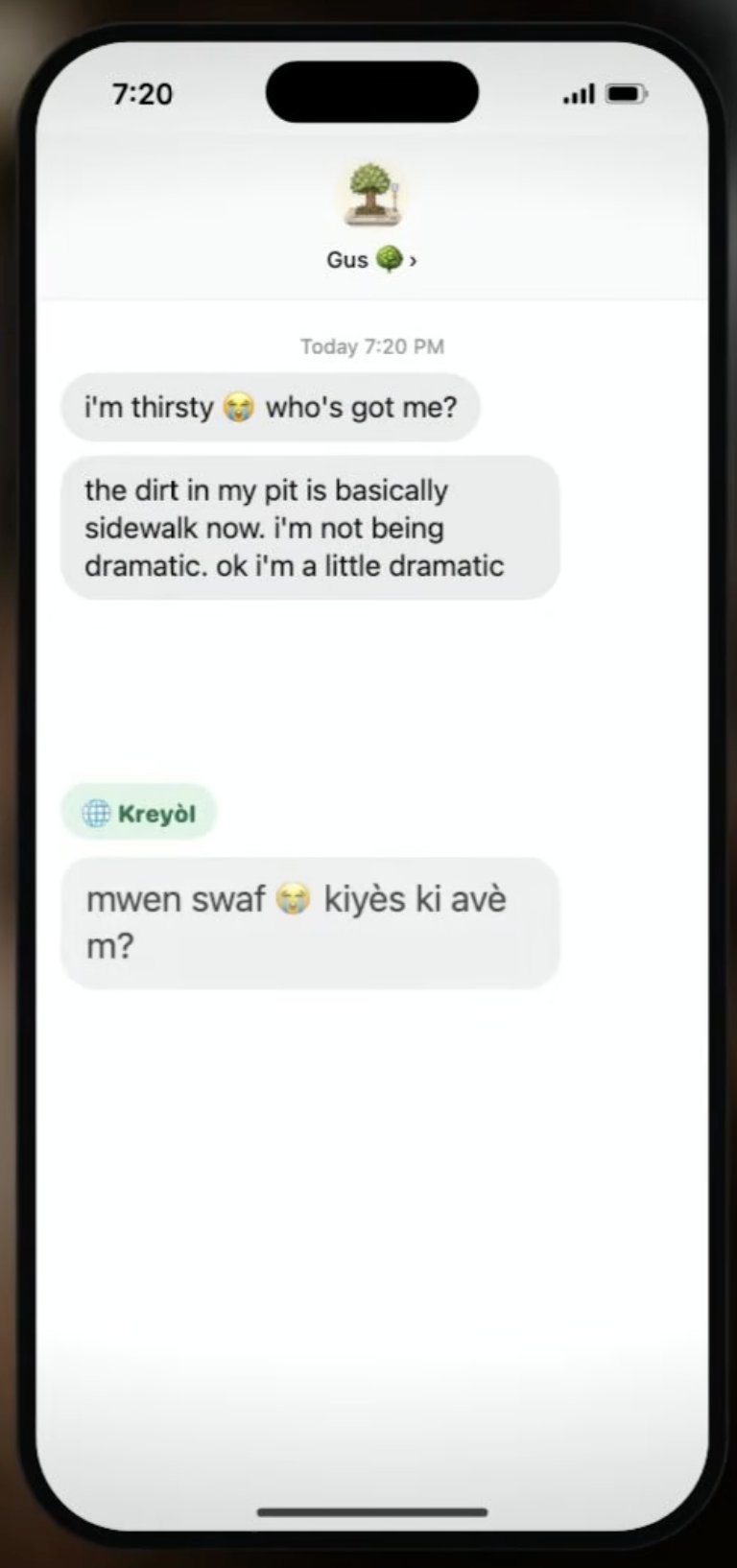
If the soil becomes too dry, for example, the tree might say:
“Hey, I'm getting thirsty! Could someone bring me some water?”
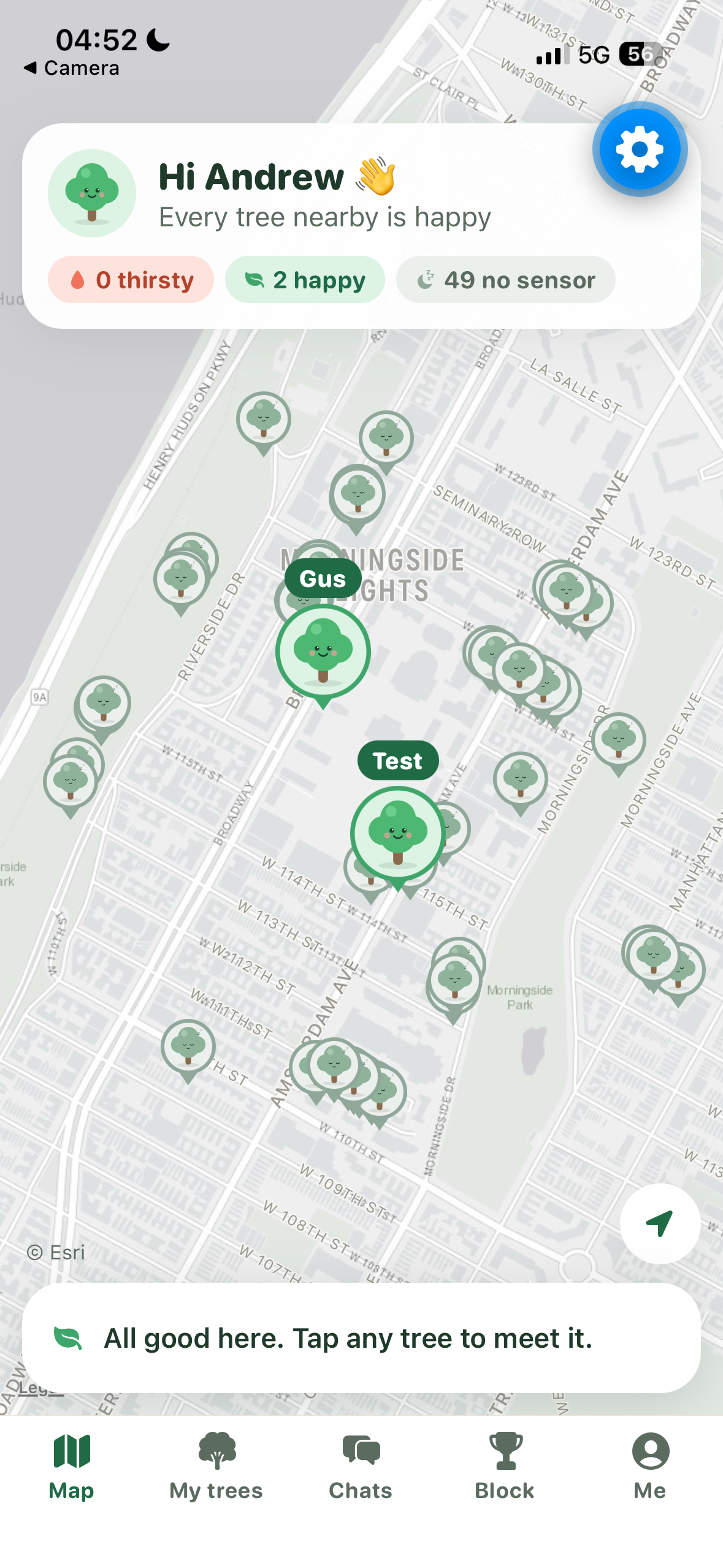
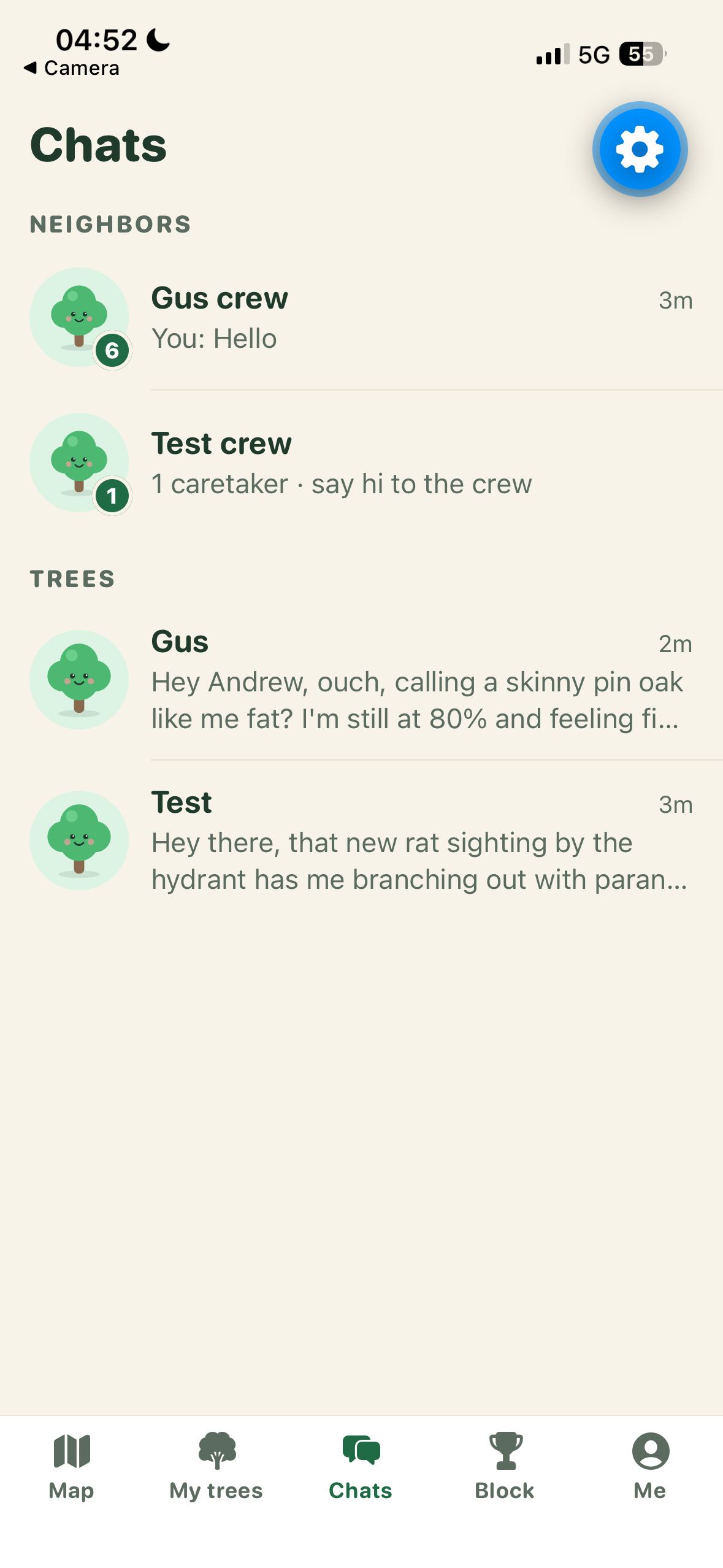
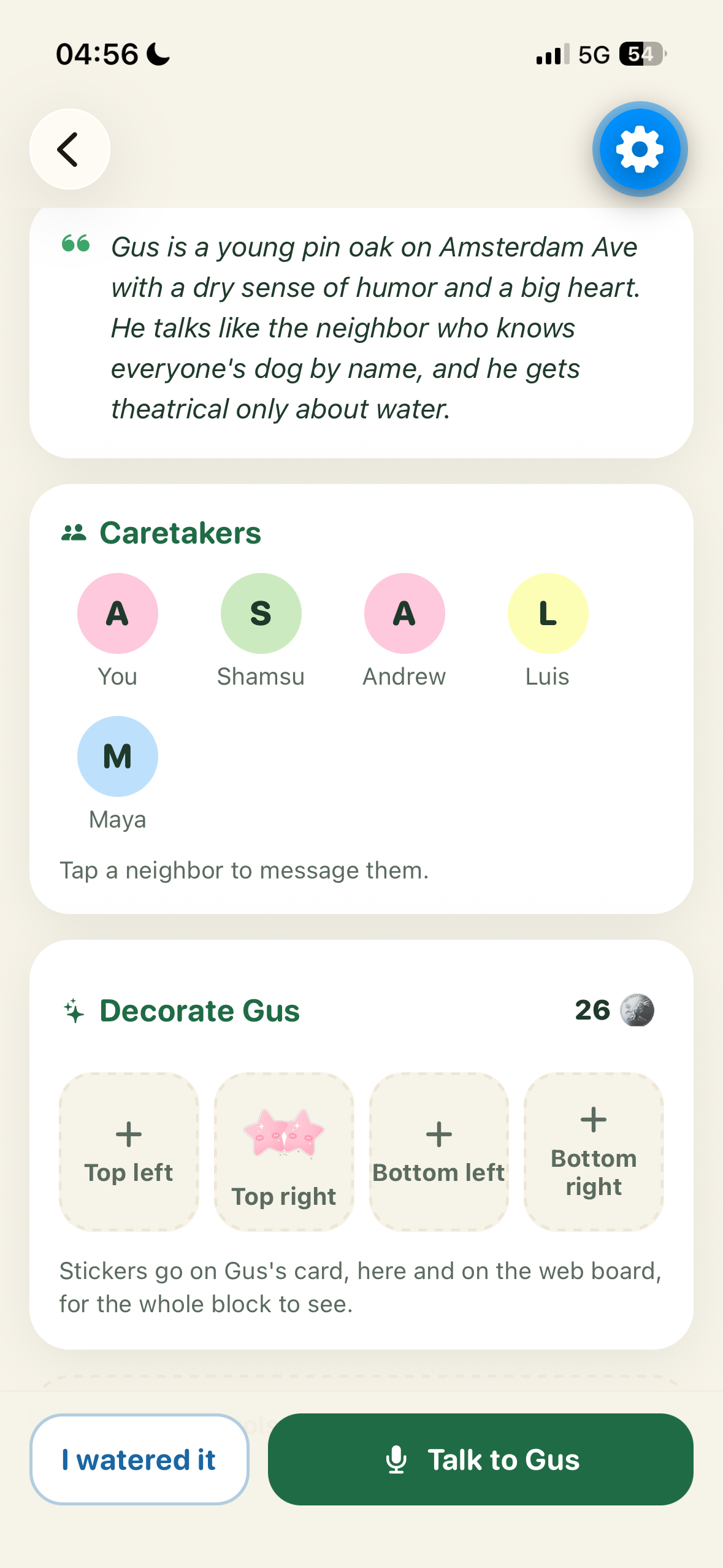
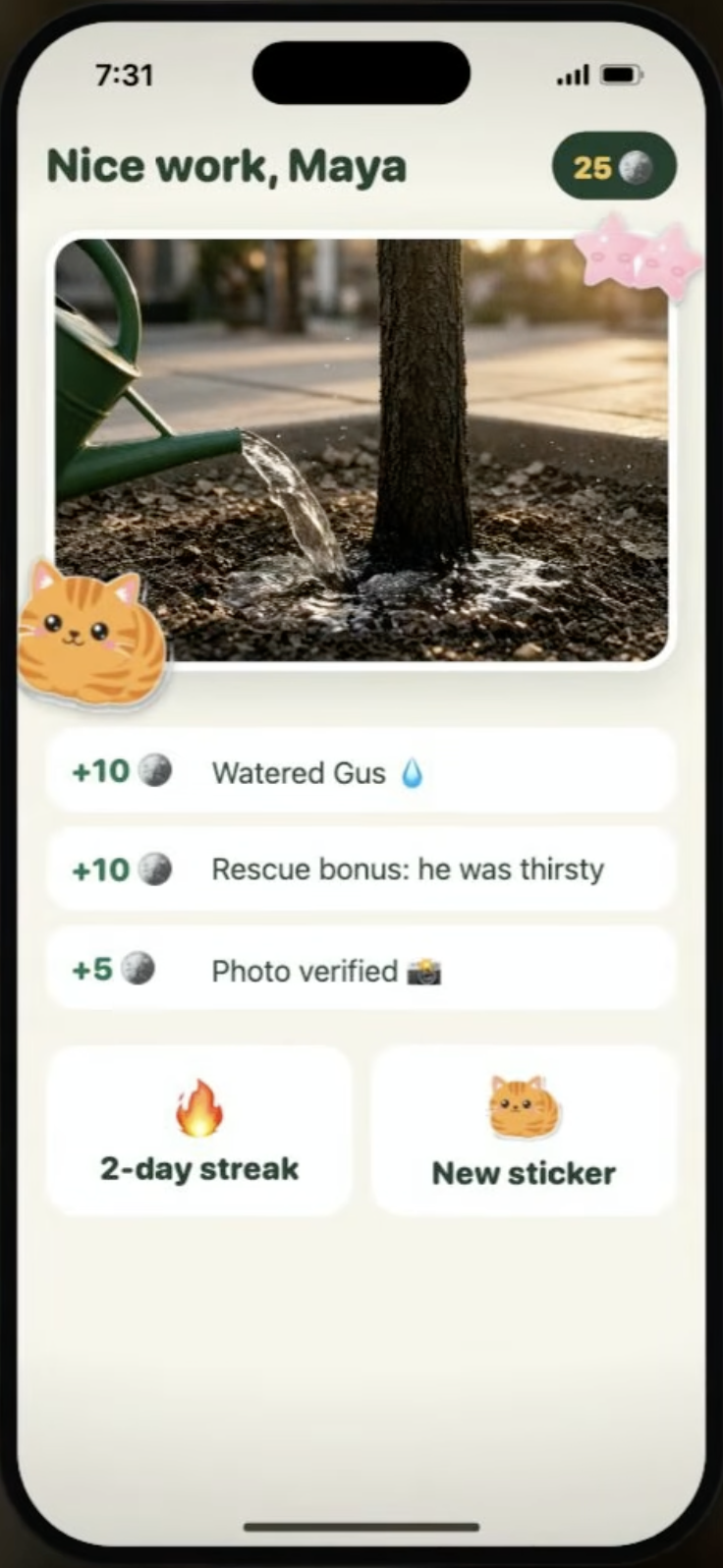
Neighbors can tap or scan a tree to discover it, hear it speak, and join its group of caregivers. From there, they can communicate with other neighbors caring for the same tree, receive updates about its condition.
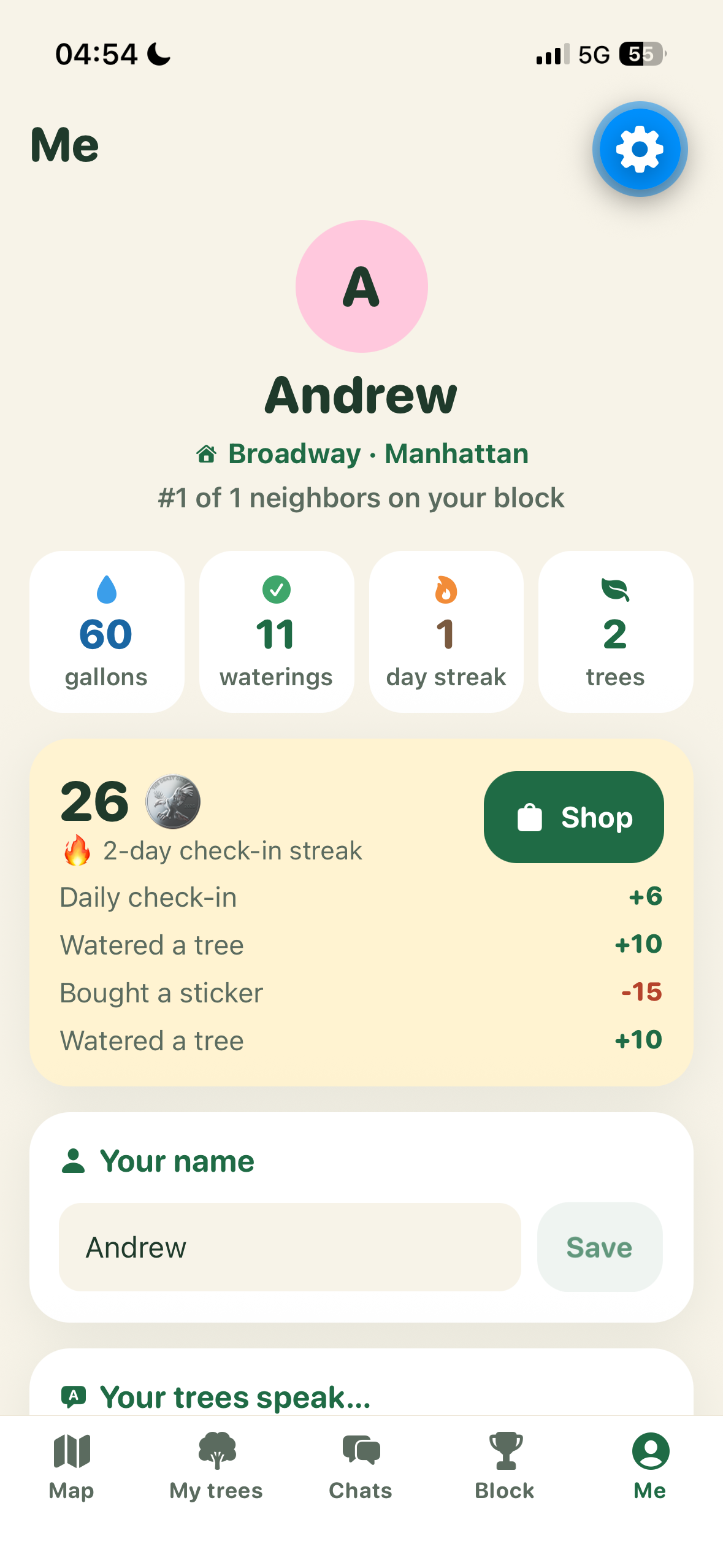
The mobile experience includes a map for discovering trees, individual tree profiles, caregiver group chats, and community events.
How we built it
Leaf on Read combines physical sensors, AI, voice, messaging, and cloud infrastructure to give each tree its own interactive presence.
Our hardware monitors environmental conditions such as soil moisture and temperature. Sensor information is sent to our backend, where it can be stored and used to determine when a tree needs attention.
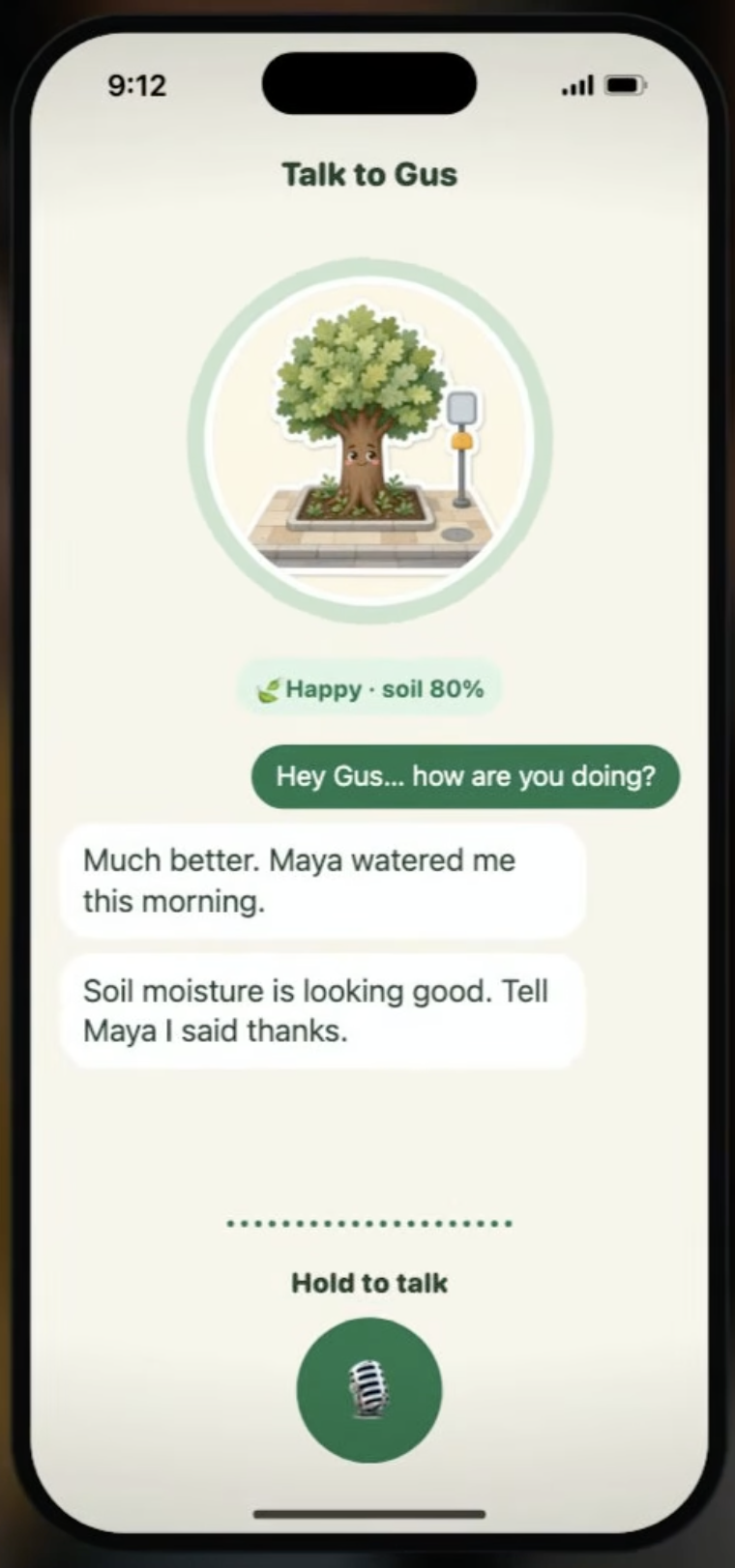
We integrated Gemini to help interpret tree data and generate contextual conversations, while ElevenLabs gives the tree a voice and enables speech interaction. Backboard provides persistent AI memory so a tree can remember previous interactions and caregivers.
We also explored Tiger Data for time-series sensor information, Photon/Spectrum for communication between caregivers, and cloud infrastructure including DigitalOcean. Our application connects these services with the physical tree experience to create a bridge between the digital and real world.
Challenges we ran into
One of our biggest challenges was connecting so many different parts of the project into one cohesive experience. Leaf on Read brings together physical sensors, real-time data, AI conversations, voice and messaging, and community features into one connected experience.
We also had to think carefully about how to make the technology feel meaningful rather than adding AI for the sake of AI. The tree's personality, memory, and voice all needed to serve the larger goal of encouraging people to actually interact with their environment and one another.
Working within the limited time of a hackathon also meant prioritizing the features that best demonstrated that vision while designing the system so it could grow beyond the prototype.
Accomplishments that we're proud of
We're proud that Leaf on Read connects a physical object in the city to a digital community experience.
Rather than creating another application that exists entirely on a screen, we built an experience designed to encourage people to put their phones down, interact with their surroundings, and participate in their neighborhood.
We're especially proud of combining real world sensor information with AI personality and voice. A moisture reading isn't simply displayed as a number, the tree can turn that information into something human and actionable, like asking its caregivers for water.
Most importantly, we created a concept where caring for the environment can become a reason for people to care for their community too.
What we learned
We learned that technology can be most powerful when it becomes almost invisible.
A moisture sensor, database, language model, and voice API might be technically complex behind the scenes, but the user shouldn't have to think about any of that. They should simply be able to walk up to a tree, interact with it, and discover a community around it.
We also learned how challenging and exciting it is to connect hardware, AI, cloud infrastructure, and real-time communication into one product.
What's next for Leaf on Read
Our next step is to expand Leaf on Read from a hackathon prototype into a network of connected community trees.
We envision neighborhoods where residents can discover trees around them, become caregivers, monitor their health, organize watering and stewardship events, and watch the history of their tree community grow over time.
Longer term, aggregated sensor information could help identify trees that consistently need attention and give communities better insight into the health of their local urban forest.
As NYC works to expand its urban tree canopy, we believe Leaf on Read could help make stewardship more accessible, social, and engaging.
Our goal isn't just to connect trees to the internet. It's to use trees to connect people to each other.
Built With
- backboard
- cursor
- deepspace
- digitalocean
- elevenlabs
- gemini
- grok
- mongodb
- photon
- soilmoisturesensor
- spacexai
- temperaturesensor
- tigerdata


Log in or sign up for Devpost to join the conversation.