-
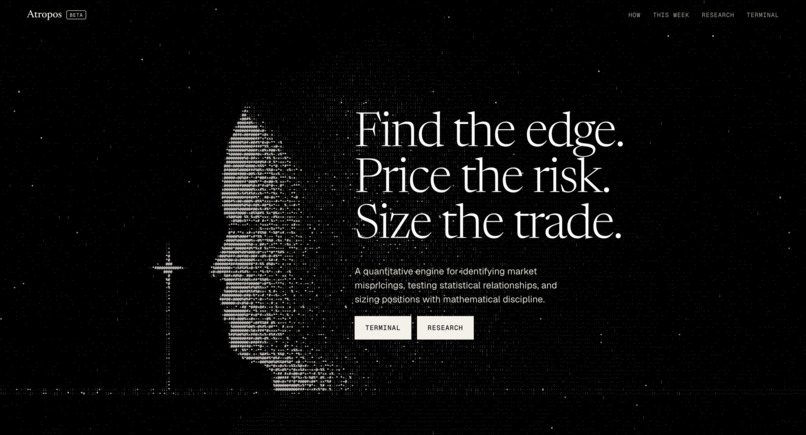
Landing Page
-
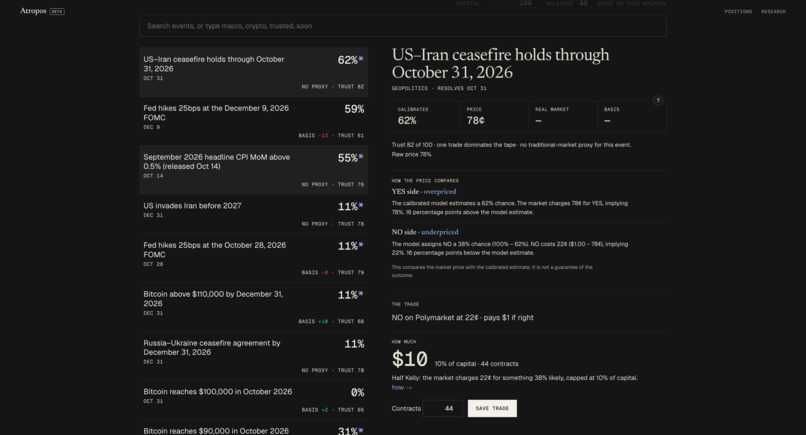
Terminal
-
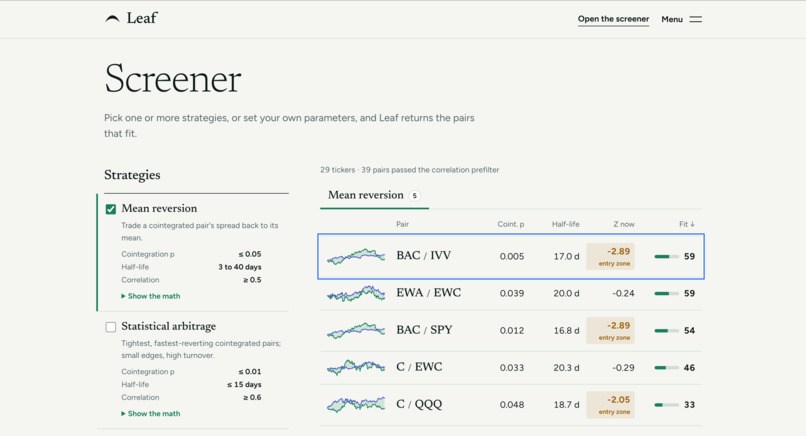
Research page
-

News
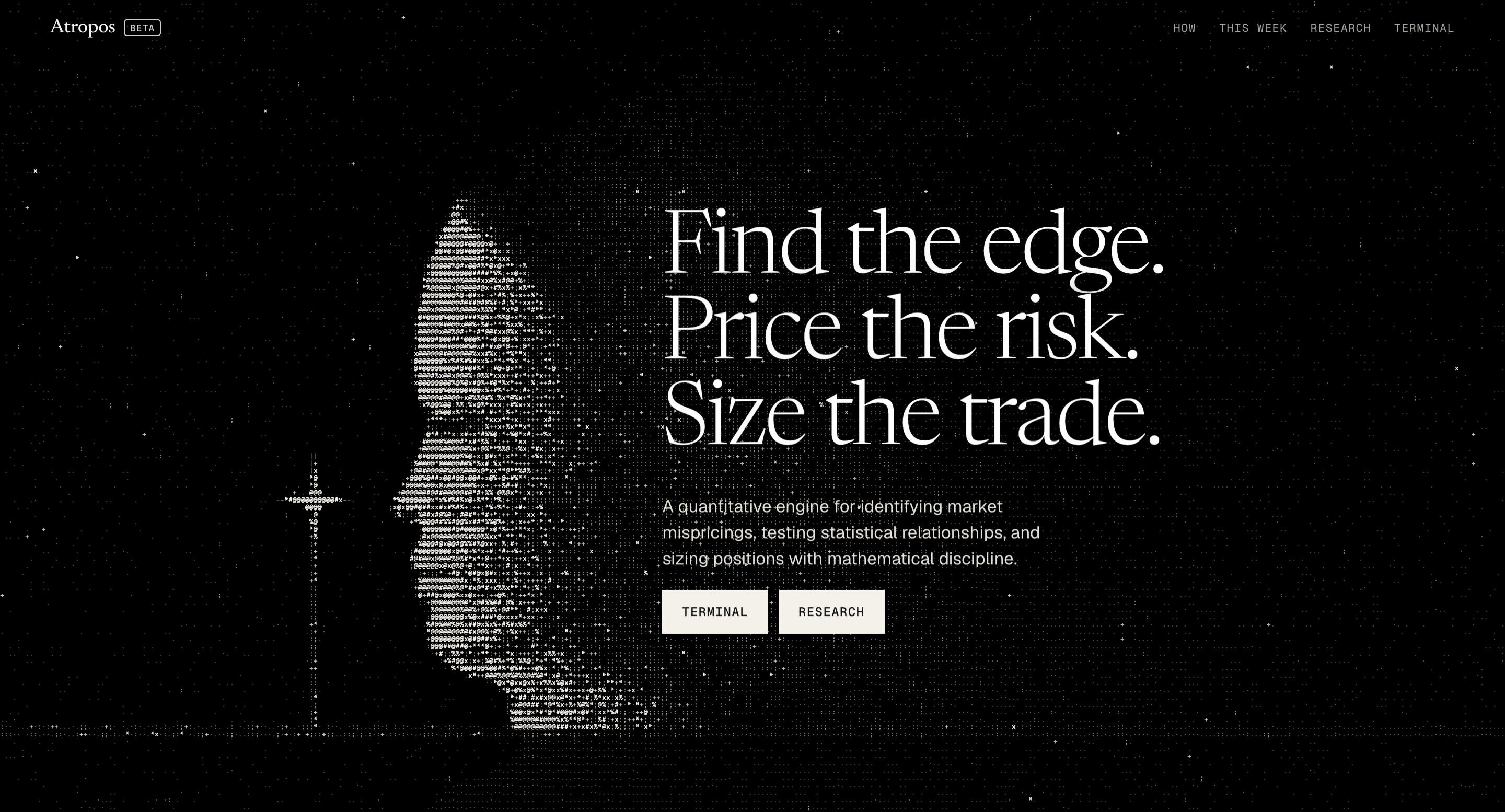

Inspiration
We wanted to make it easier for people to find trading opportunities without having to spend hours analyzing market data or writing their own code. We noticed that traders often have to use different tools to research trading strategies, find relationships between assets, and analyze prediction markets. We wanted to bring these things together into one platform.
What it does
Leaf is a web app that helps people research the market and find potential trading opportunities.
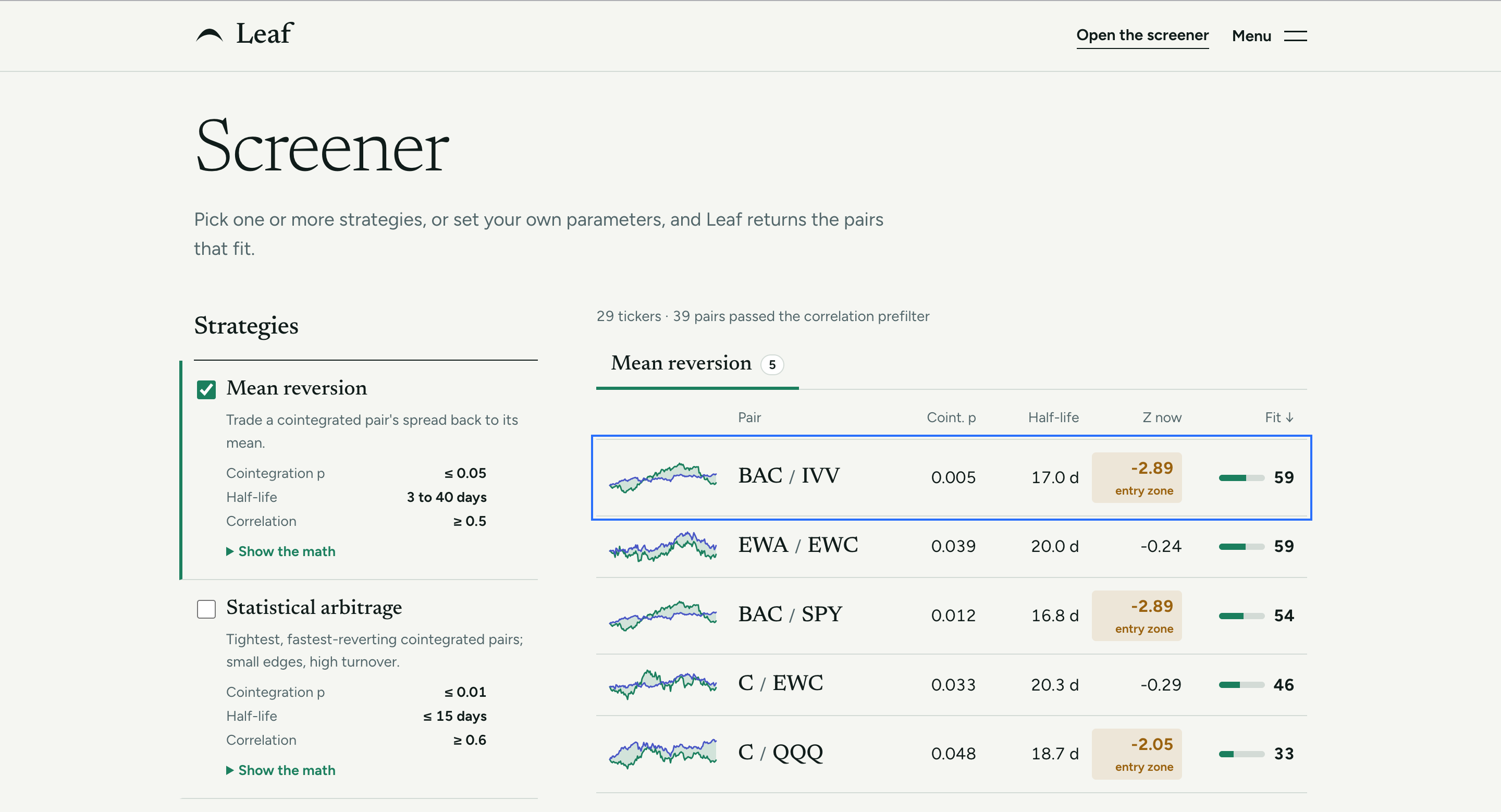
Users can choose statistical metrics like correlation, standard deviation, and cointegration to find relationships between different assets and discover potential trading pairs. They can also explore different trading strategies based on what they're interested in.
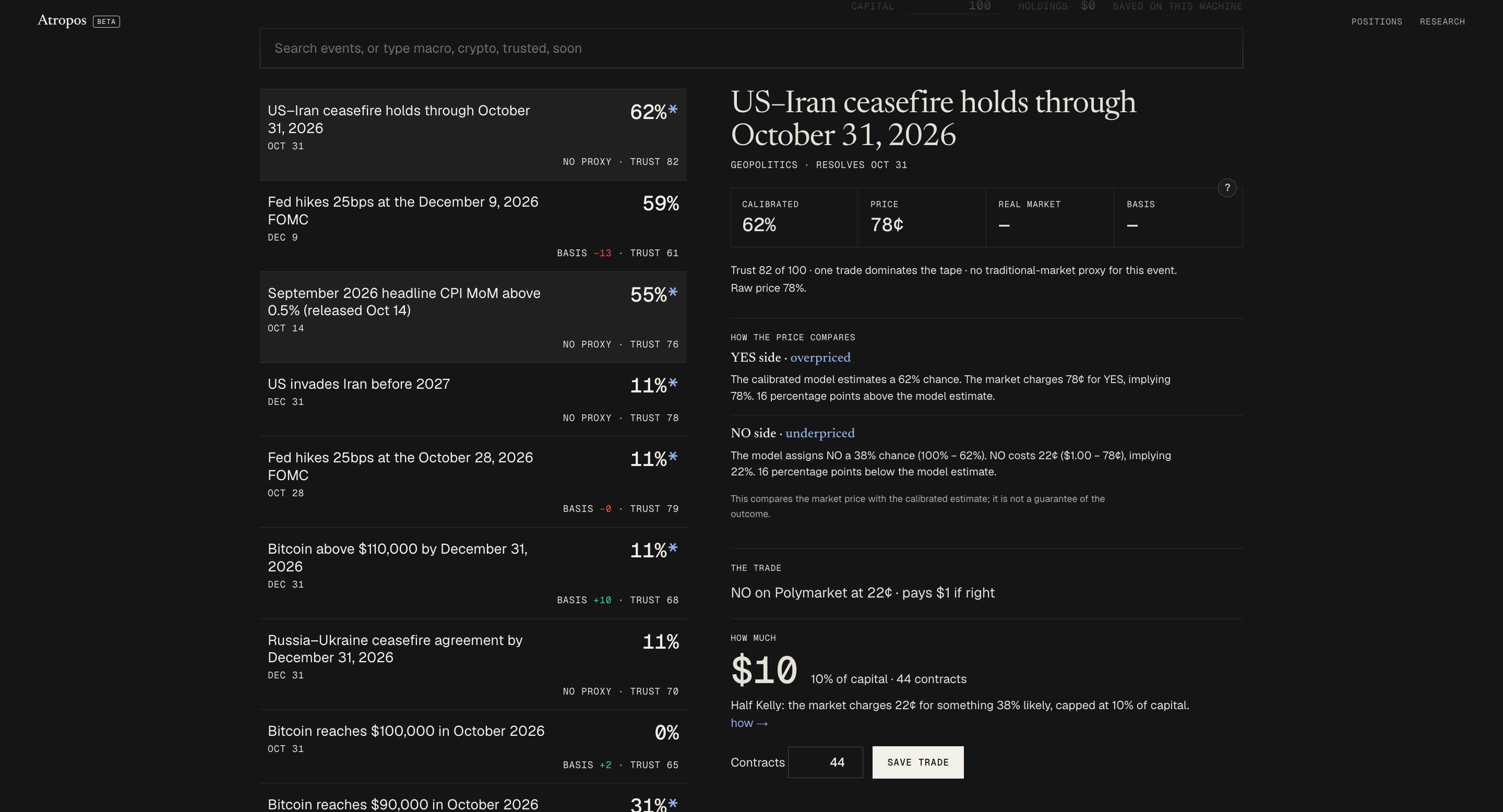
Leaf also uses Polymarket order book data to analyze prediction markets and provide signals about the likelihood of certain events happening. These signals help users spot potential opportunities and decide whether they want to investigate a trade further.
Leaf doesn't execute trades. It gives users research, potential trading pairs, and signals to help them make their own decisions.
How we built it
We built Leaf as a web application with two main parts: quantitative research and prediction-market analysis.
For the research side, we use statistical methods to analyze assets and find potential trading pairs based on the criteria users select. For the prediction market side, we use Polymarkets order book data to look at market prices, liquidity and to generate signals.
We wanted to make these tools easier to use by putting them together in one place instead of making people switch between different platforms.
Challenges we ran into
One challenge was figuring out how to bring different types of market analysis together in one application. Each statistical metric tells us something different, and understanding what the results actually mean is not always straightforward.
Another challenge was working with prediction market data. Prices don't always tell the full story, and a market's implied probability isn't necessarily the actual probability of an event happening. We also had to think about how to present all this information without making the platform too complicated for users.
Accomplishments that we're proud of
We're proud of building a platform that combines quantitative research, trading pair discovery, and prediction market signals in one place.
Instead of requiring users to build their own analysis from scratch, Leaf lets them choose what they want to research and explore potential opportunities. We're excited about creating something that makes these types of tools more accessible to people who are interested in trading and financial markets.
What we learned
We learned that finding a relationship between two assets doesn't automatically mean there's a good trading opportunity. Correlation can change over time, and even statistically significant results don't guarantee that a strategy will make money.
We also learned that prediction markets can provide useful information, but their prices don't always reflect the true likelihood of an event. Building Leaf helped us better understand the difference between finding a potential signal and proving that it actually works.
What's next for Leaf
We want to improve Leaf's ability to find potential trading pairs across different markets, including currencies, stocks, commodities, and cryptocurrencies. We also want to explore using AI to help discover relationships between assets that might be difficult to find manually.
For the prediction market side, we plan to improve our signals by analyzing more order book data and finding better ways to estimate probabilities.
Our goal is to keep building Leaf into a platform where people can research markets, discover potential opportunities, and make more informed trading decisions.
