-
-
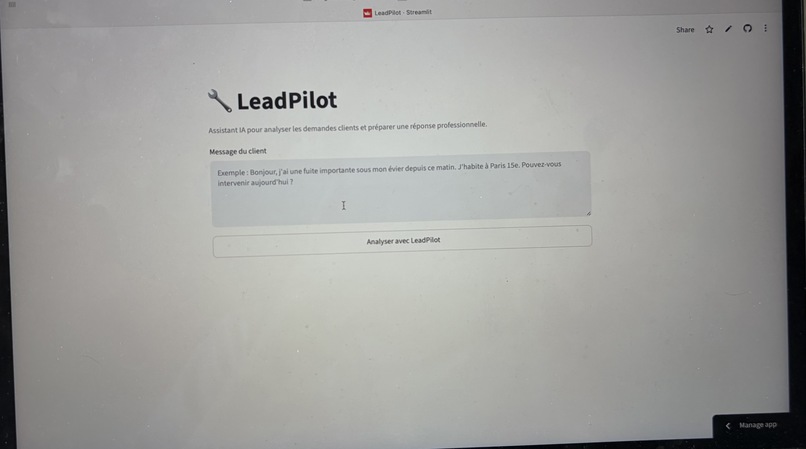
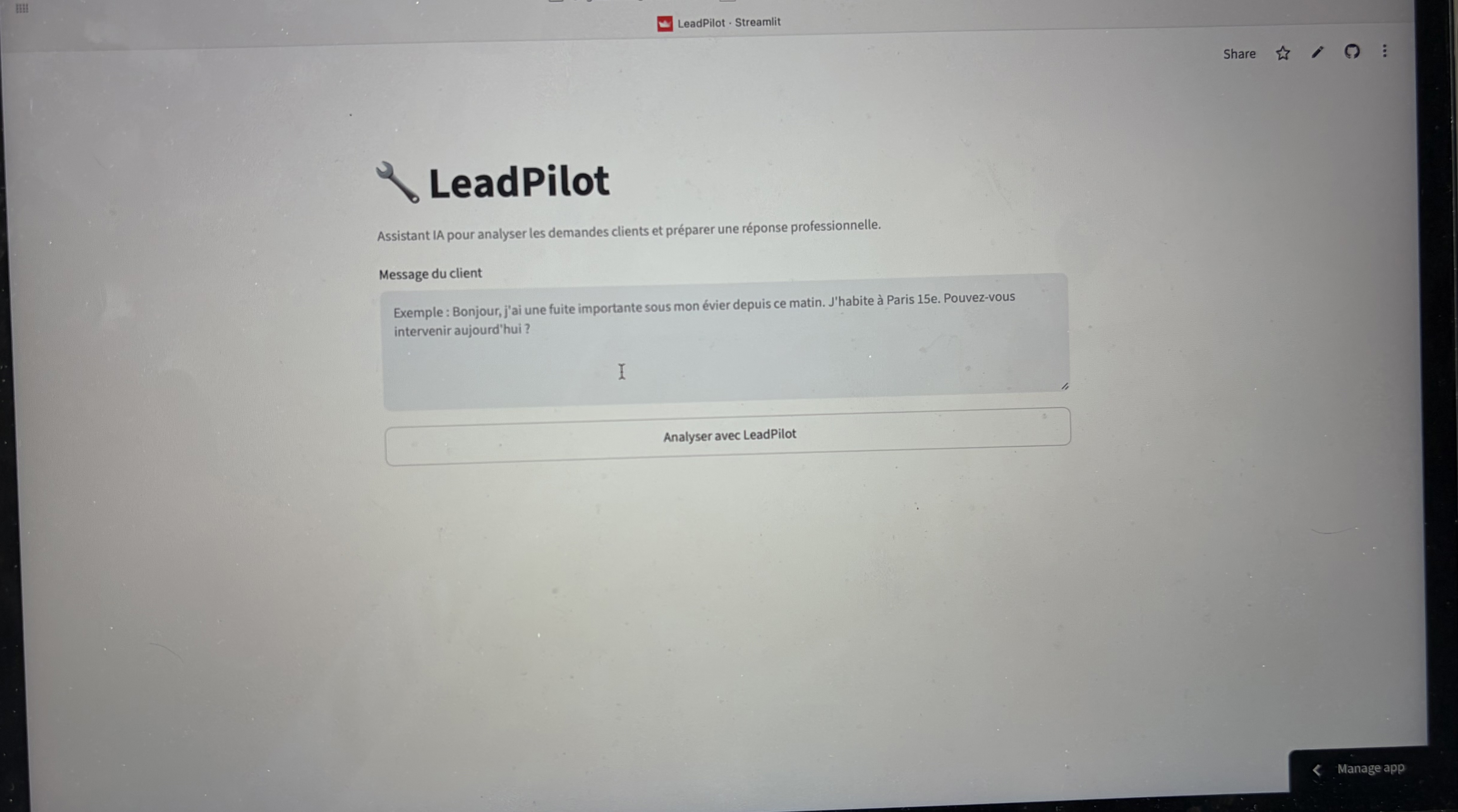
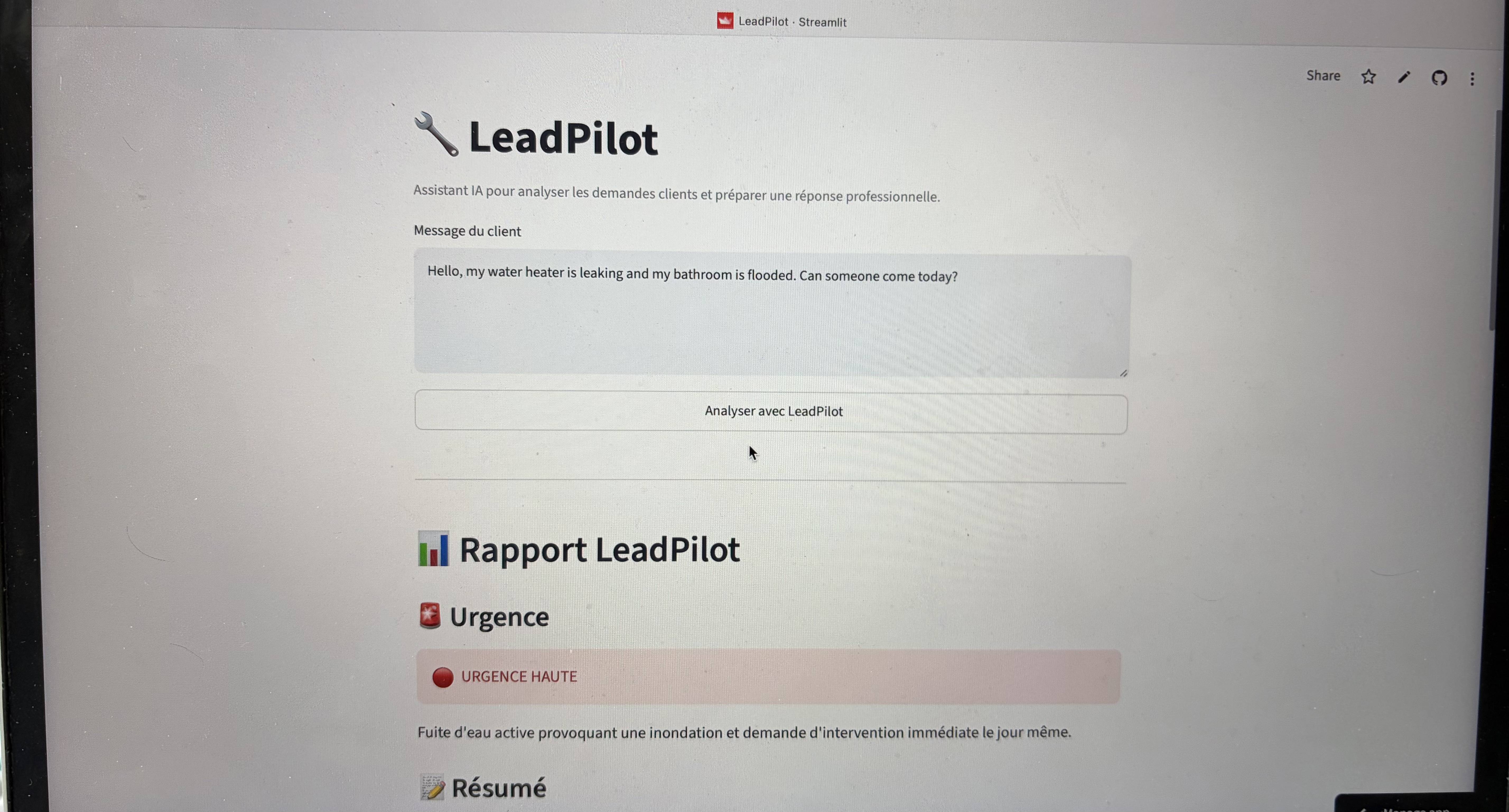
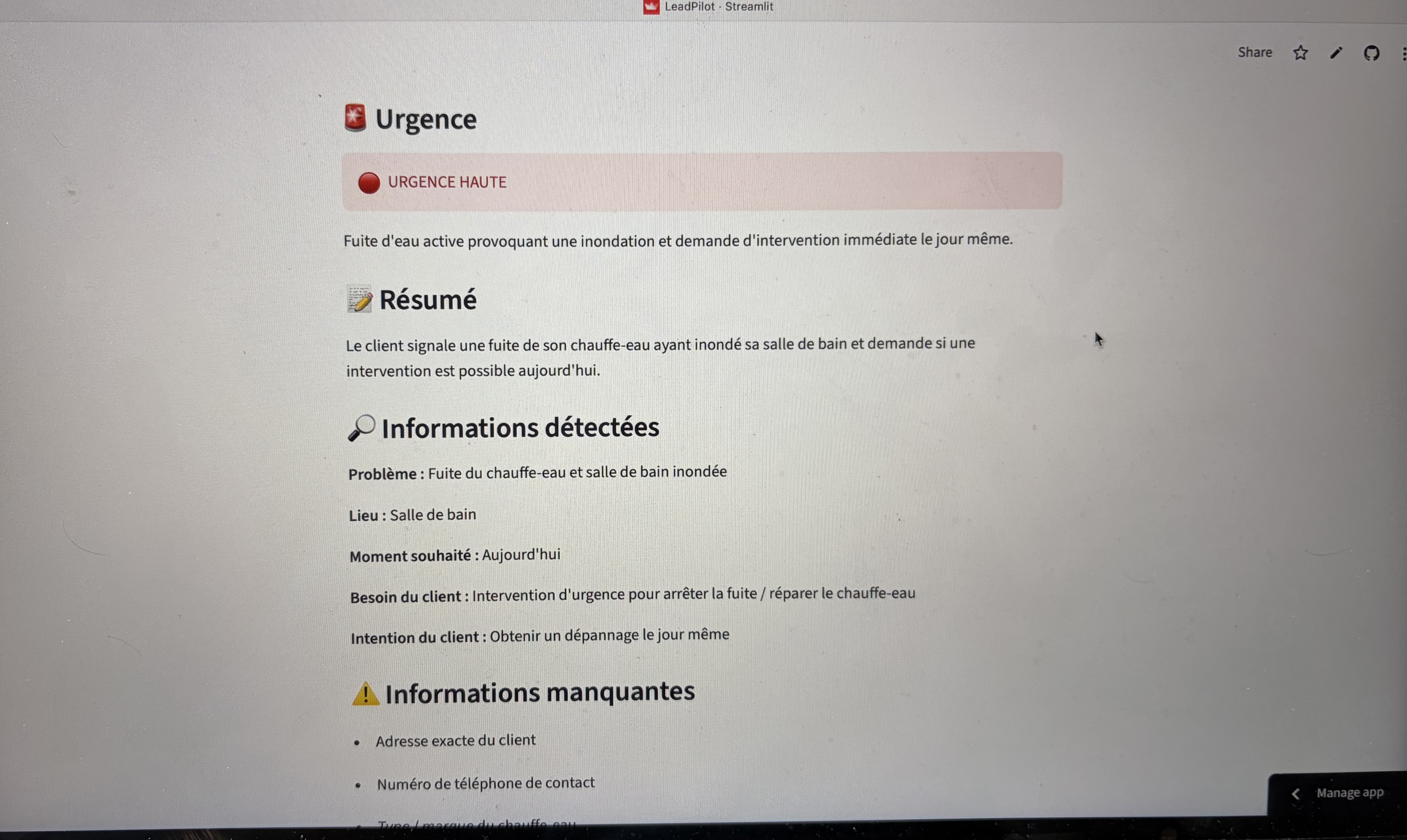
customer message
-
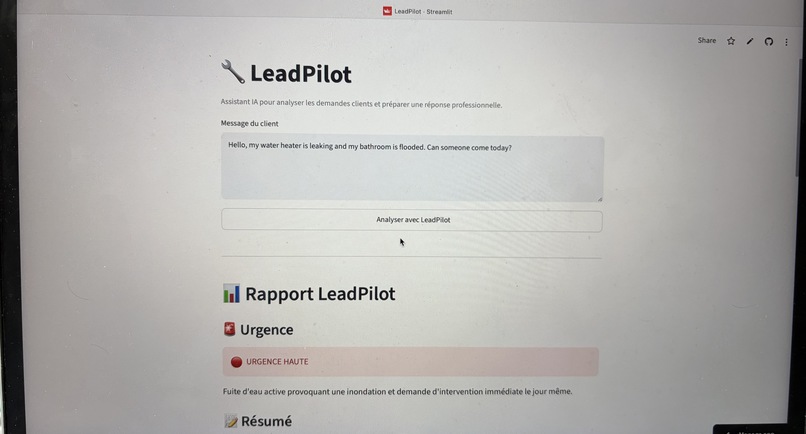
AI analysis
-
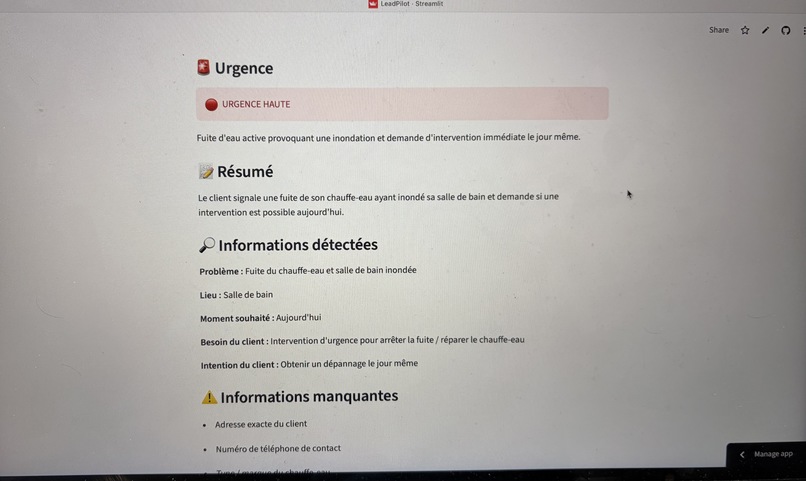
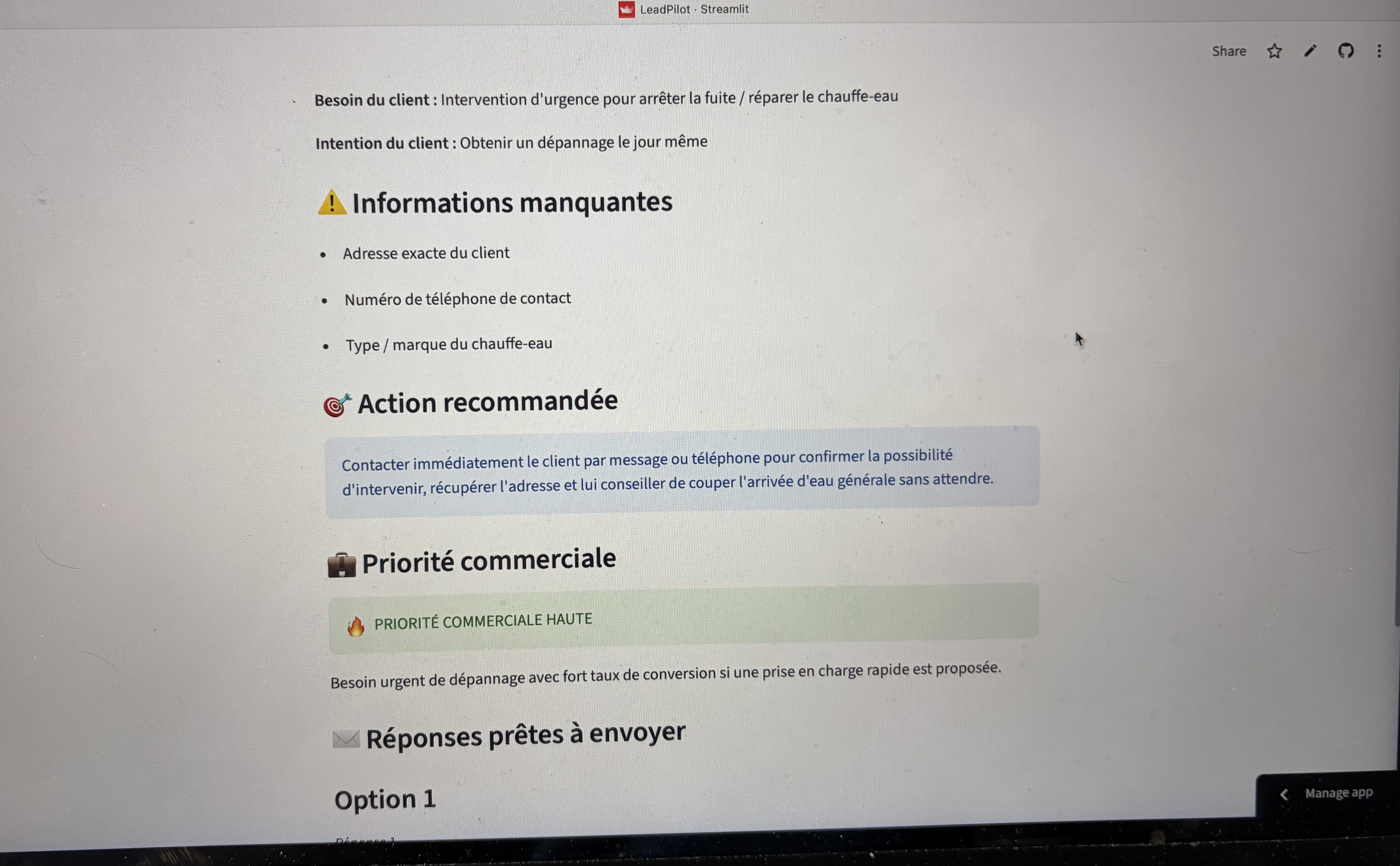
Detected information
-
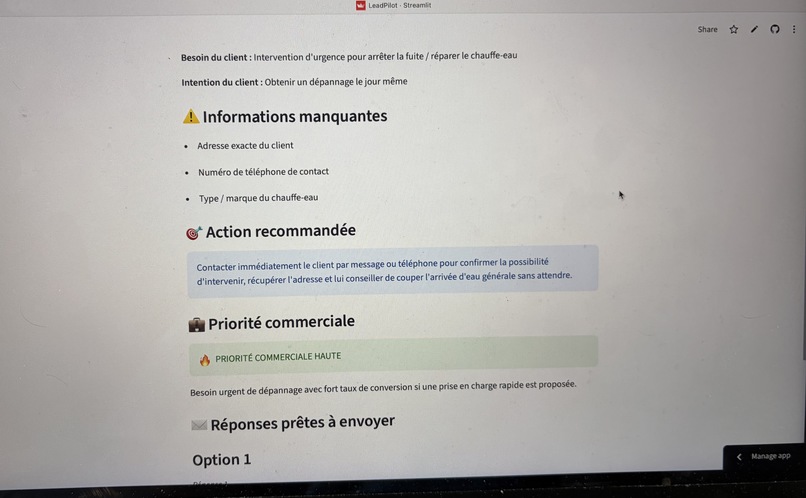
Recommended action
-
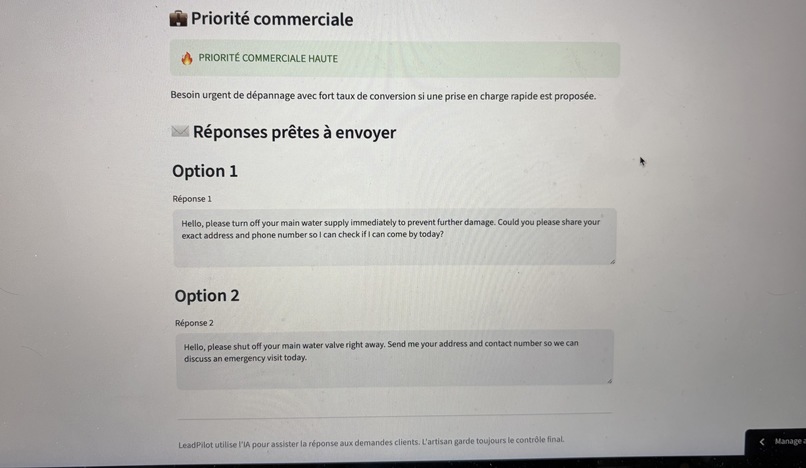
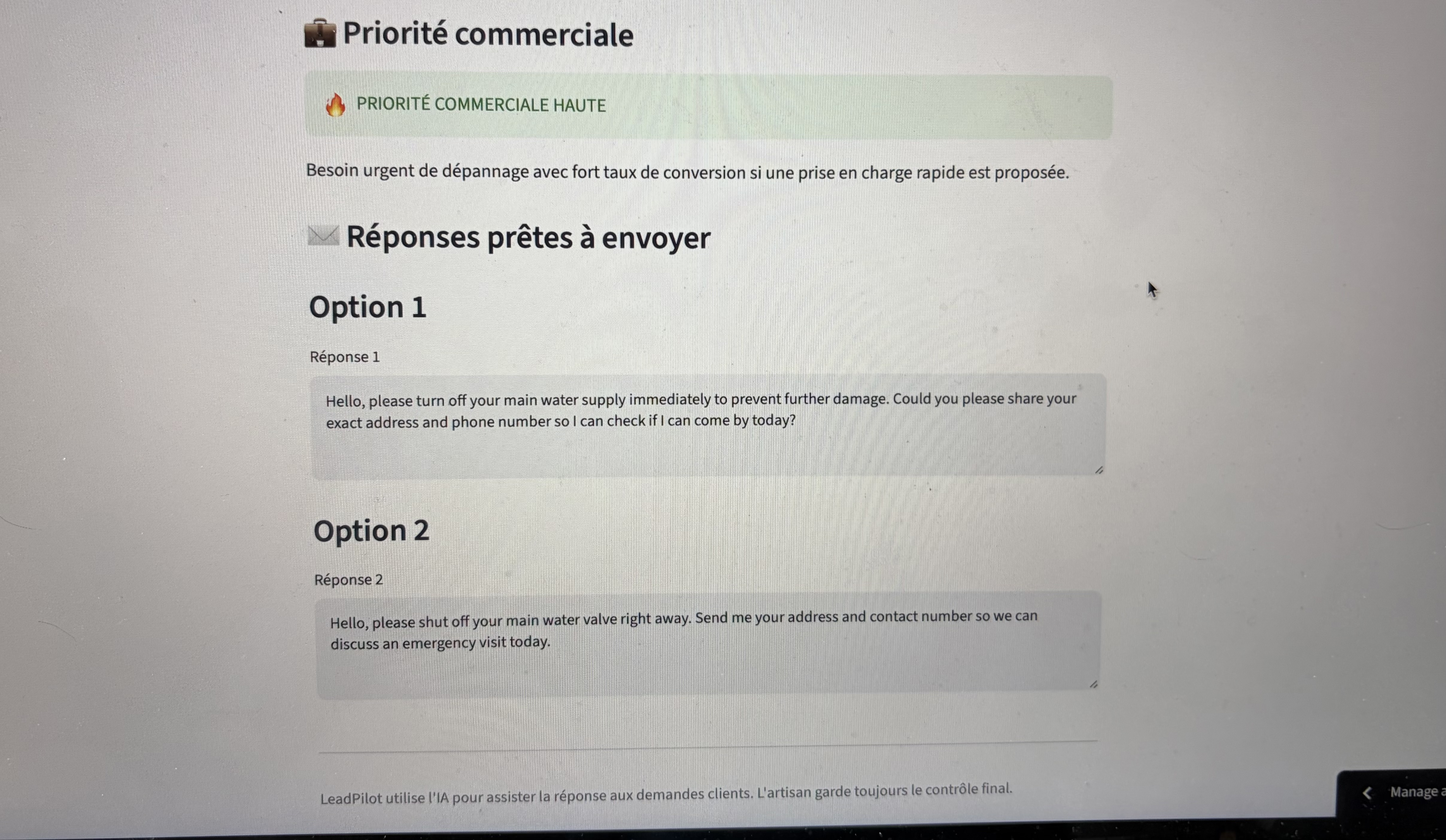
Ready - to - send responses
-
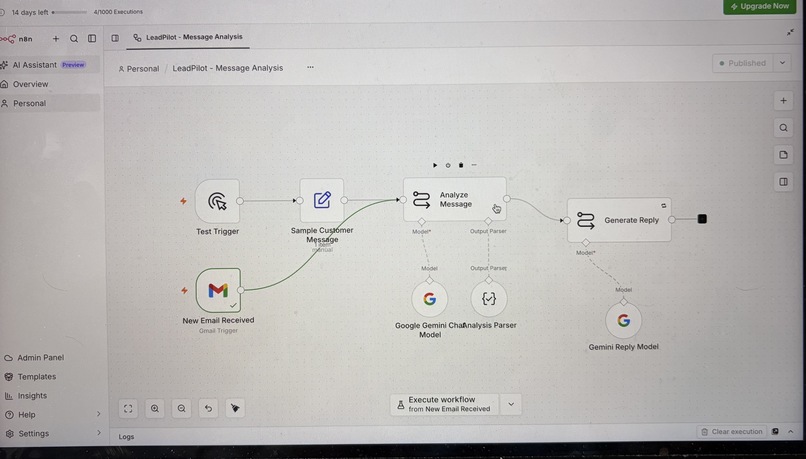
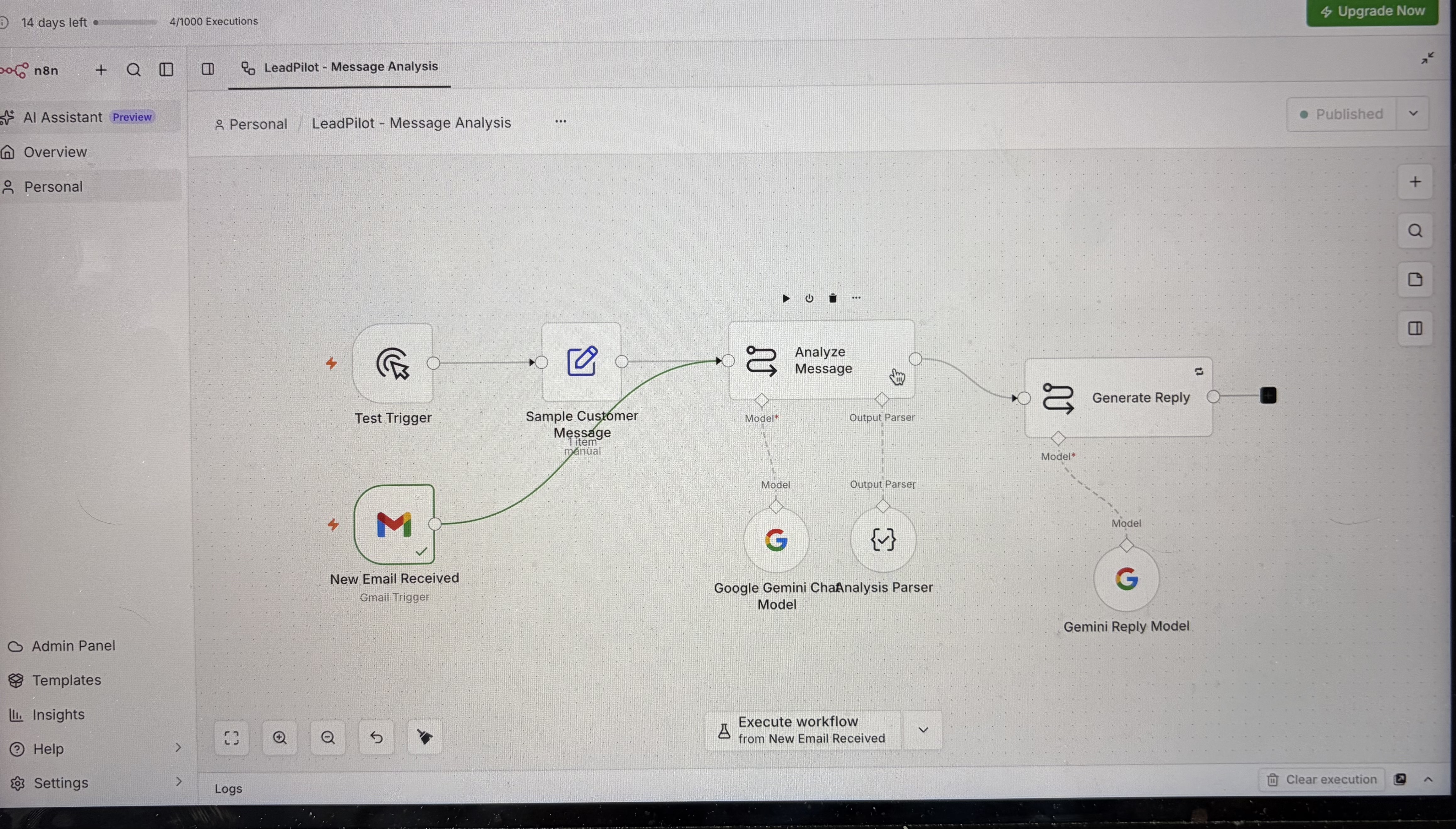
n8n automation workflow
Inspiration
Small businesses and independent artisans often receive customer requests while they are busy working on-site. Responding quickly can be difficult, especially when a message is incomplete, urgent, or requires follow-up questions.
I created LeadPilot to explore how an AI agent could help these professionals understand incoming customer requests faster and prepare useful, professional responses.
What it does
LeadPilot is an AI-powered assistant designed for artisans and small service businesses.
A user can submit a customer message, and LeadPilot analyzes it to:
- understand the customer’s request
- detect the level of urgency
- identify important missing information
- summarize the request
- suggest the next action
- generate multiple professional responses that the business can send to the customer
The goal is not simply to generate text, but to help small businesses understand, prioritize, and respond to customer requests more efficiently.
How I built it
I built LeadPilot as a working web application using Python and Streamlit, with Google’s Gemini AI used to analyze customer requests and generate structured recommendations.
The application was developed iteratively. I first built the basic message analysis, then improved the agent so that it could distinguish urgency, identify missing information, recommend actions, and generate multiple response options.
I also deployed the application online, created a GitHub repository for the project, and integrated an n8n workflow to automate the processing of incoming Gmail messages. This allows customer emails to be automatically analyzed by the AI agent as part of a real automation workflow.
Challenges
One of the main challenges was turning a general-purpose AI model into an assistant that produces consistent and useful information for real business situations.
I also had to work through deployment, API integration, prompt design, workflow automation with n8n, and application errors while keeping the interface simple enough for a small business owner to use quickly.
What I learned
Building LeadPilot taught me how an AI model can become part of a real application rather than simply being used as a chatbot.
I learned how to integrate AI APIs into a web application, design effective prompts, deploy an application, manage a GitHub repository, and build AI-powered automation workflows using n8n.
What’s next
The next step is to complete the automation by allowing LeadPilot to automatically analyze customer emails, notify business owners, and eventually support additional communication channels such as SMS and WhatsApp.
I also plan to test LeadPilot with more small businesses, collect feedback, improve the agent’s recommendations, and continue transforming the prototype into a complete AI assistant for service professionals.

Log in or sign up for Devpost to join the conversation.