-
-
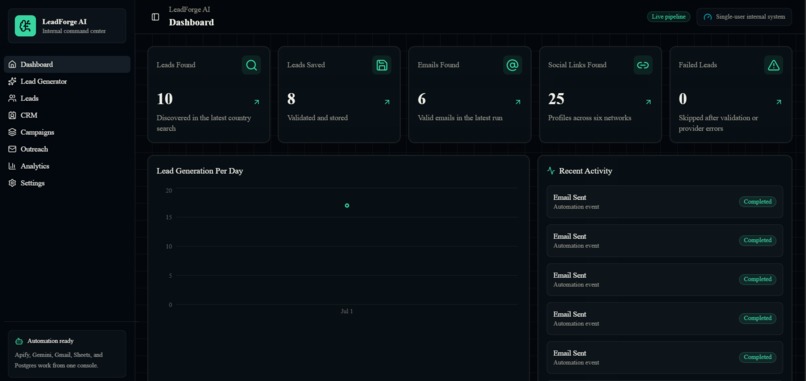
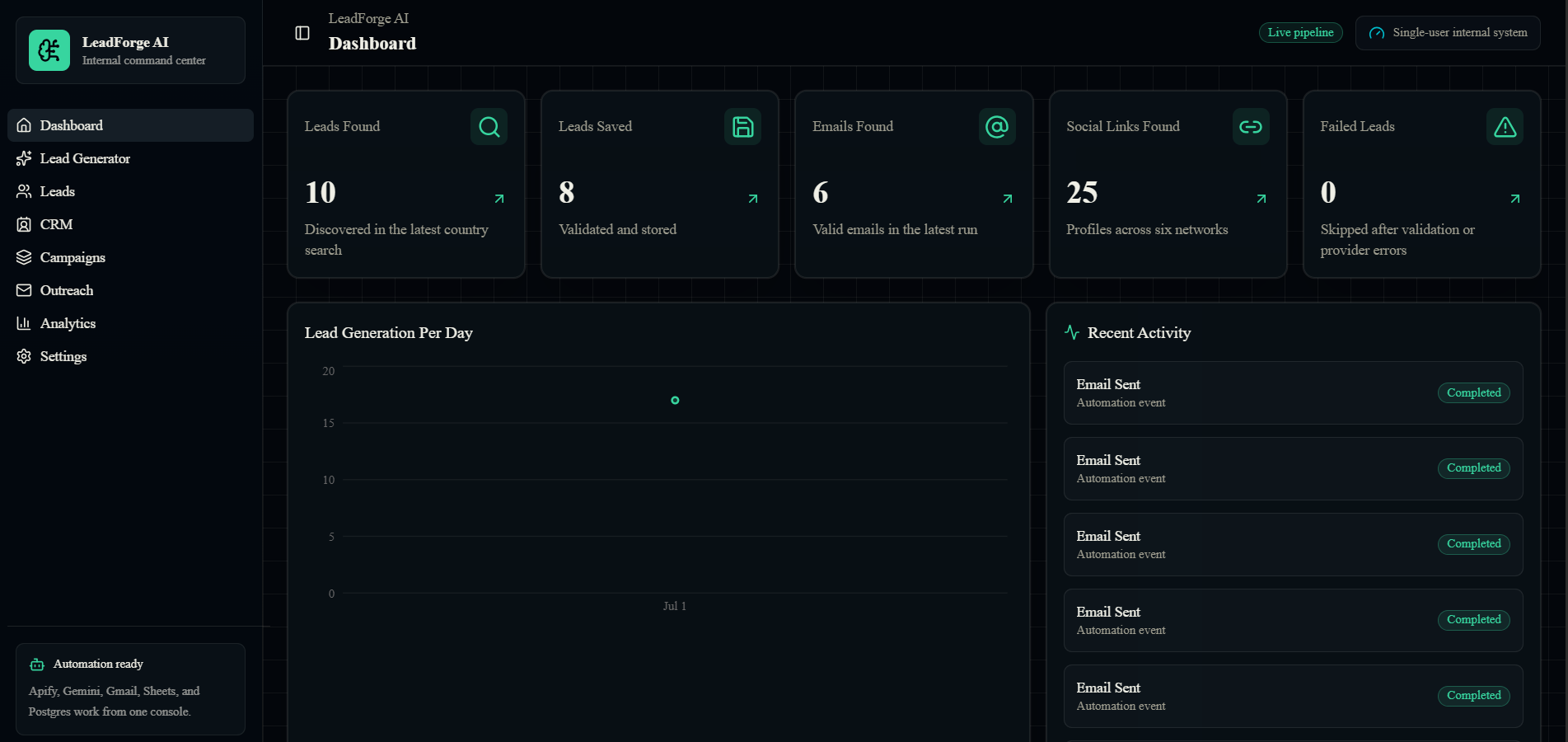
Dashboard
-
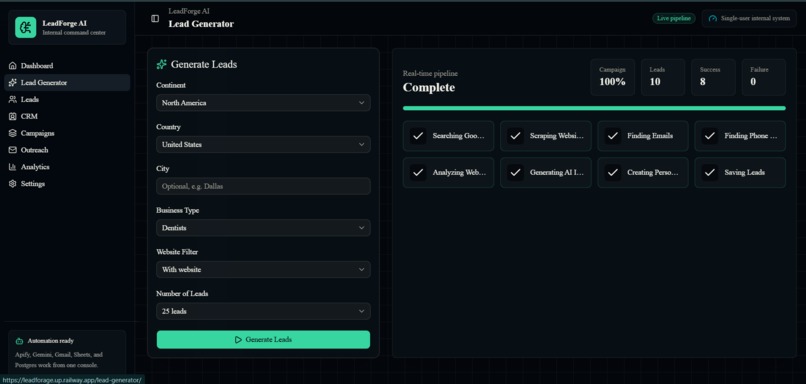
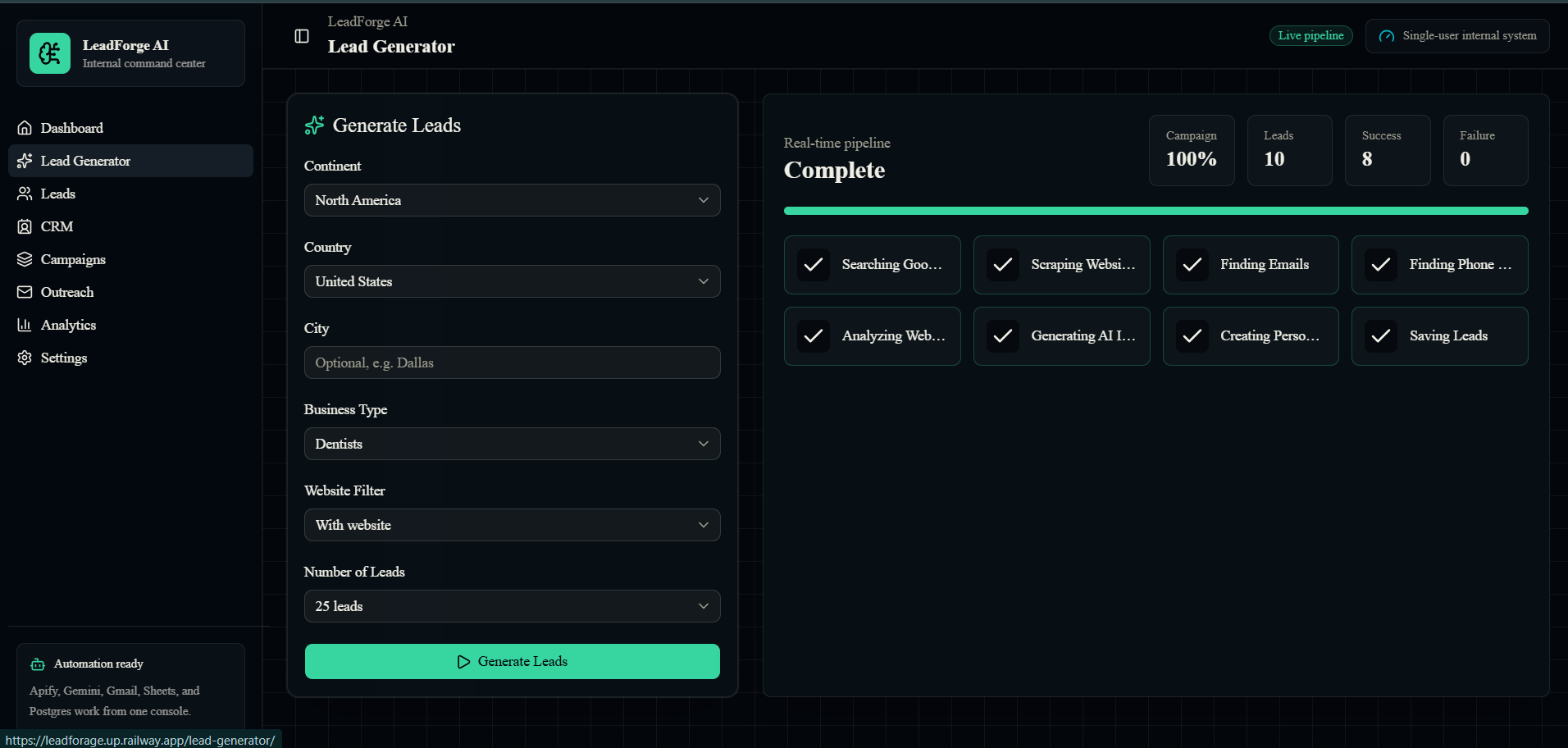
lead Generatin
-
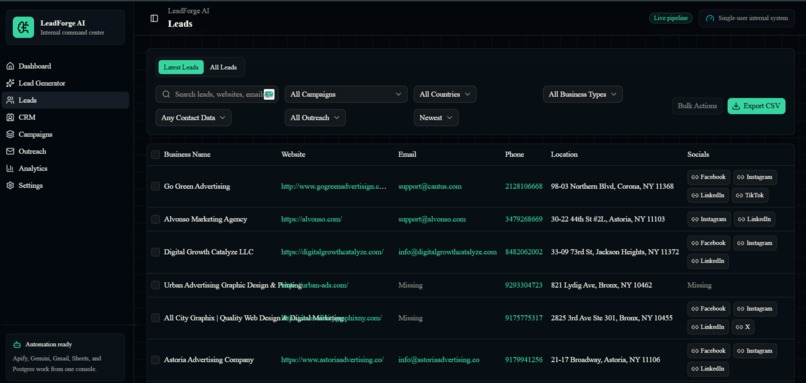
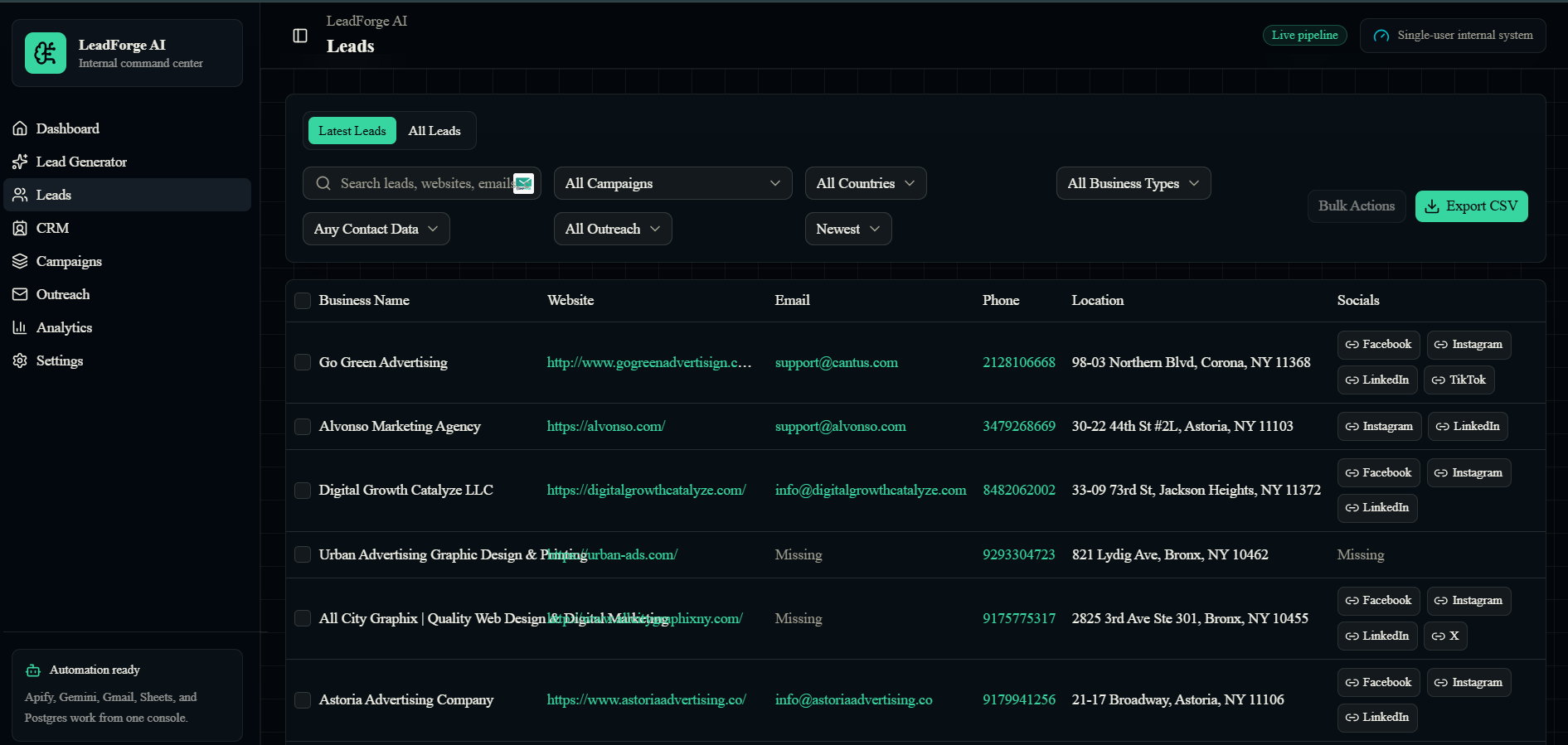
Extracted Leads
-
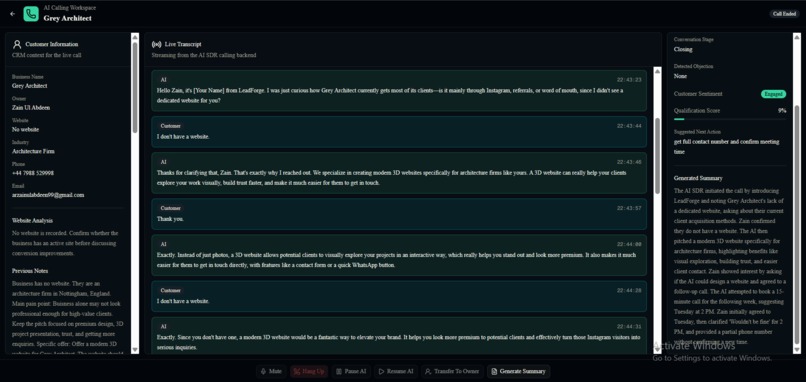
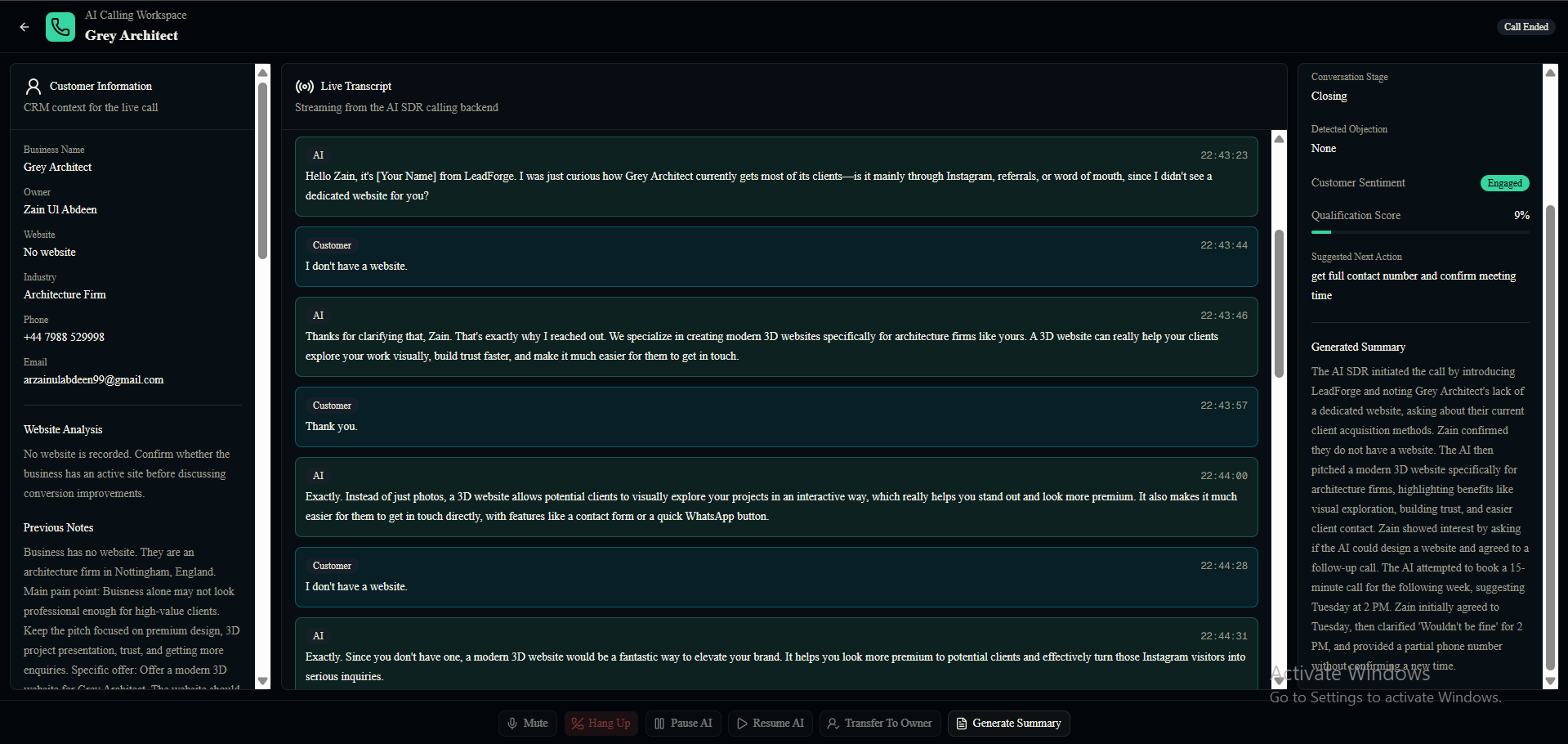
AI SDR Agent For Outreach
-
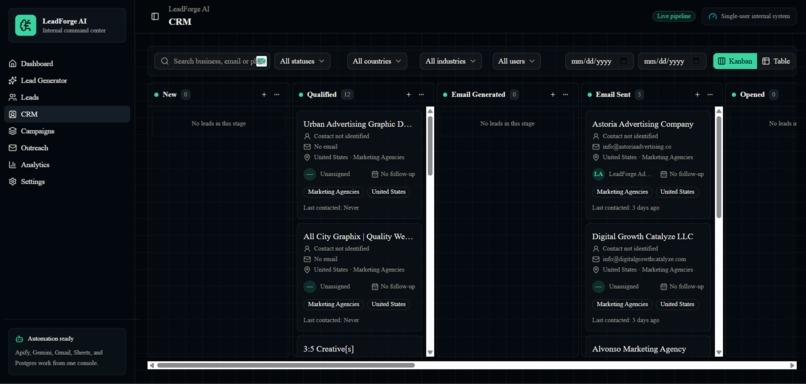
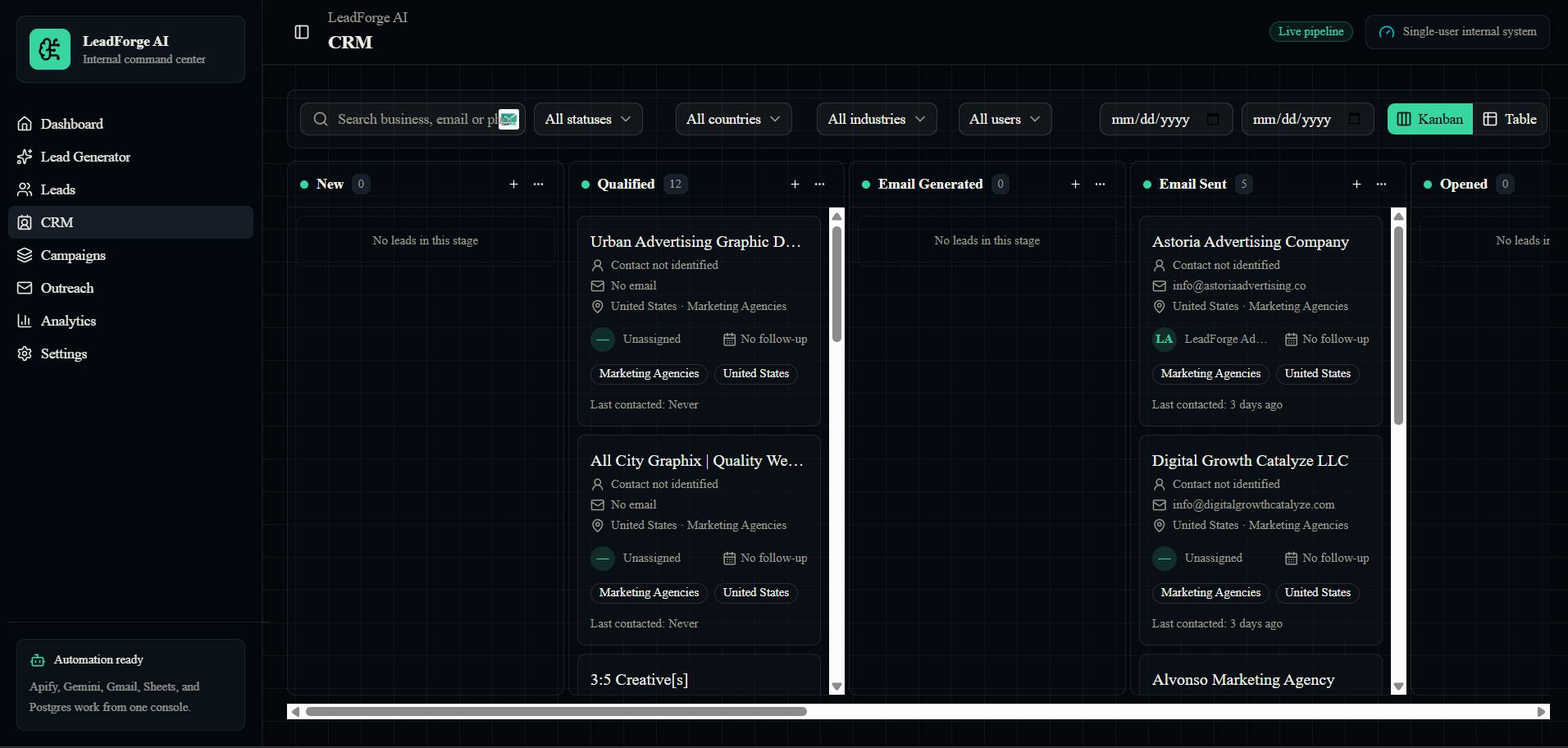
Custome CRM
-
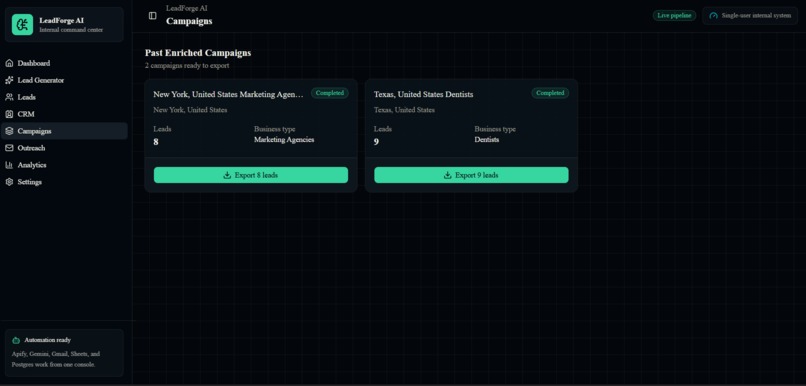
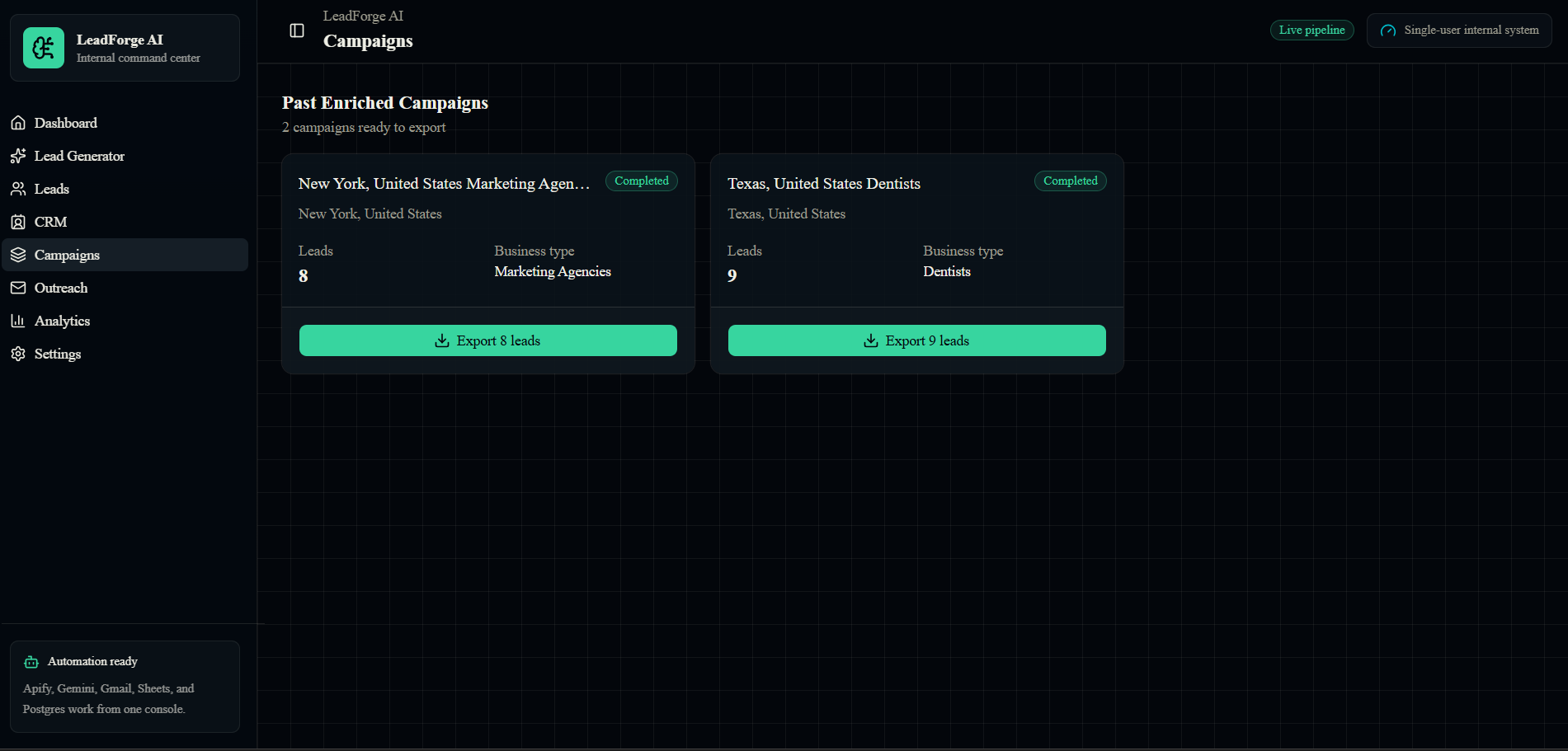
Comapign
-
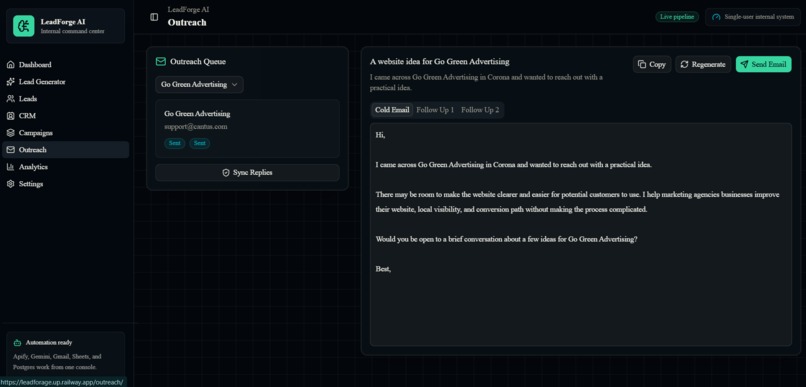
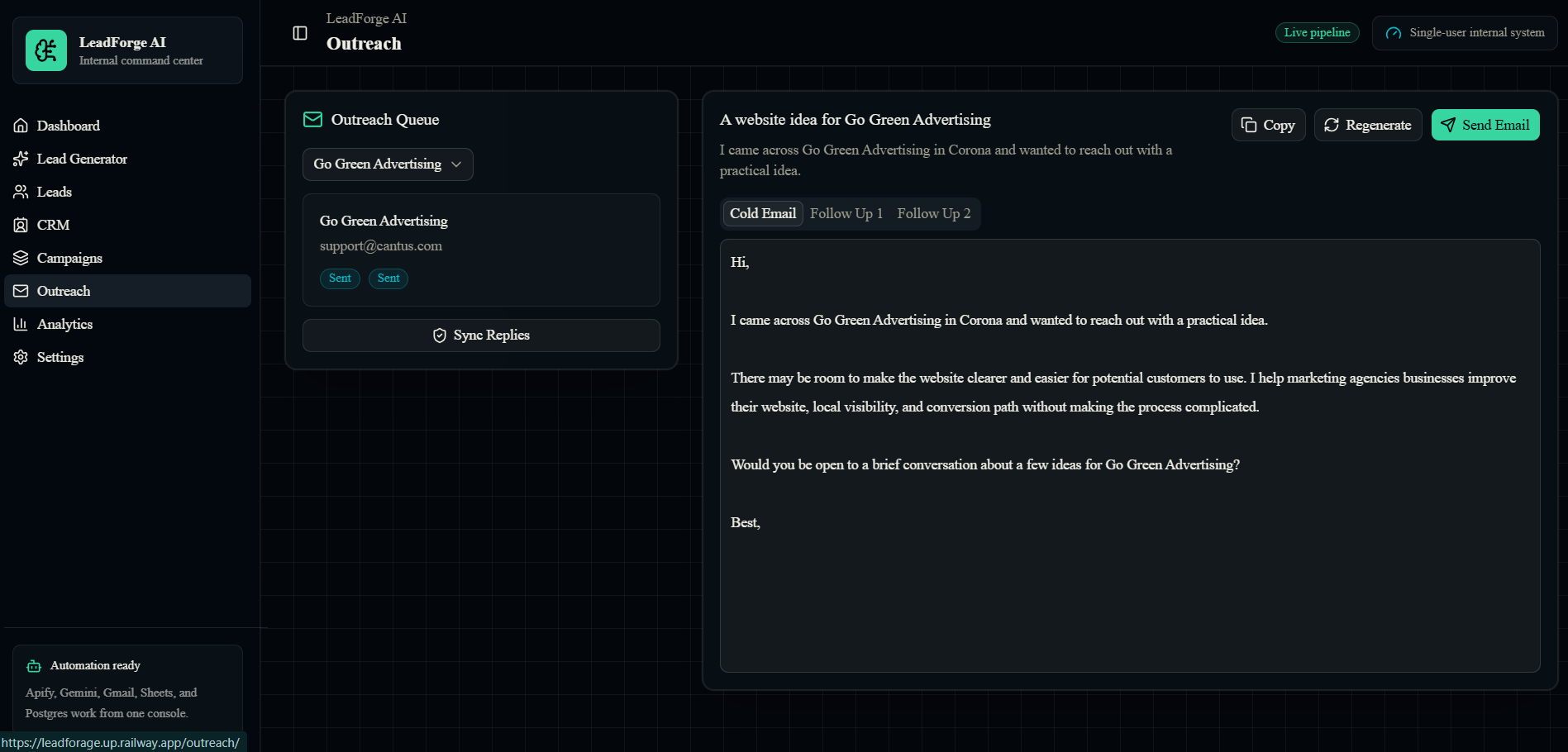
Email Outreach
-
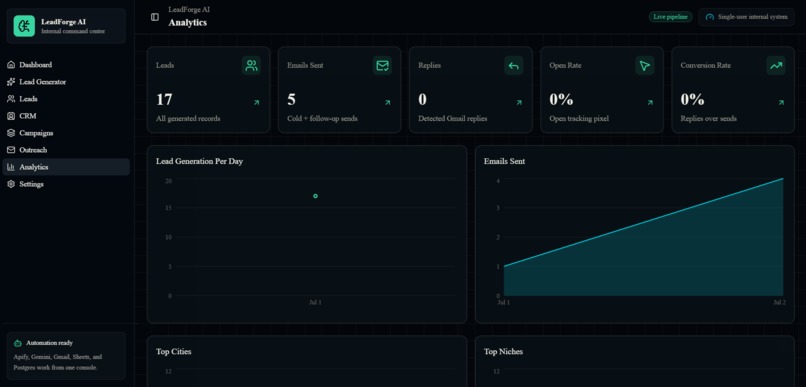
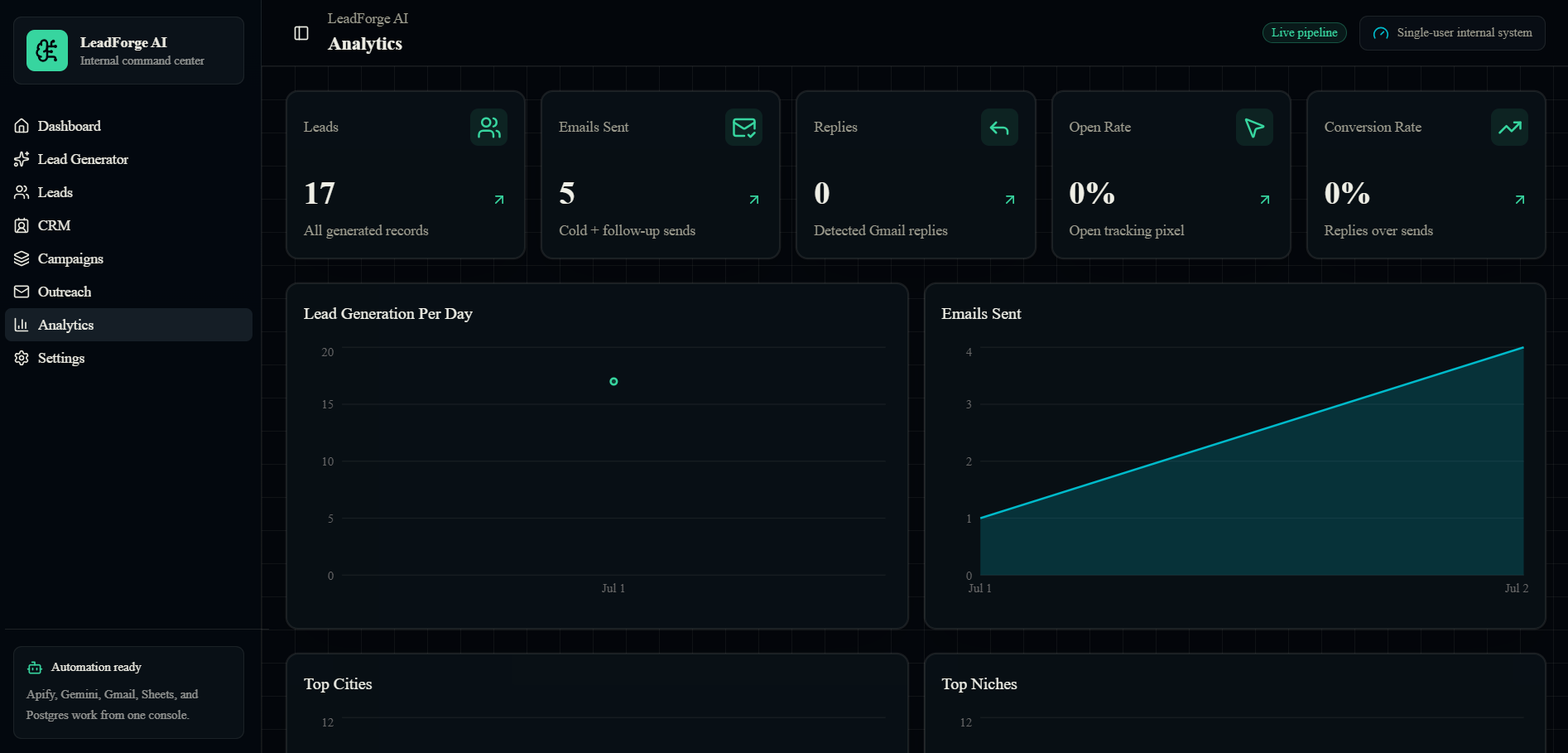
Analytics
LeadForge AI — An Autonomous AI Sales Platform for Small Businesses
Inspiration
Small businesses often struggle to find new customers because sales is expensive, repetitive, and time-consuming. Hiring dedicated sales teams or SDRs (Sales Development Representatives) is beyond the budget of many startups and local businesses.
I wanted to build an AI-native platform that could automate the entire customer acquisition workflow—from discovering potential customers to qualifying them and managing sales interactions. My goal was not to create another chatbot, but an autonomous AI employee capable of performing real sales operations.
This project was inspired by the belief that AI should help small businesses compete with larger companies by providing enterprise-level sales automation at an affordable cost.
What It Does
LeadForge AI is an autonomous sales platform that combines AI-powered lead generation, customer relationship management (CRM), outreach automation, and AI Sales Development Representatives (AI SDRs) into a single system.
The platform enables businesses to:
- Discover potential customers from public business sources.
- Enrich lead information with contact details.
- Organize leads inside an integrated CRM.
- Generate personalized outreach using Google Gemini.
- Automate email campaigns.
- Qualify prospects through an AI SDR.
- Maintain conversation history and sales pipelines.
- Track analytics and campaign performance.
Instead of replacing business owners, LeadForge AI works as an intelligent sales employee that performs repetitive tasks while allowing owners to focus on closing qualified opportunities.
How We Built It
The platform follows a modular SaaS architecture.
Core Modules
- AI Lead Generation
- CRM
- Email Outreach
- AI SDR
- Analytics Dashboard
Backend
- FastAPI
- PostgreSQL
- SQLAlchemy
- Alembic
- Docker
- Railway
Frontend
- React
- TypeScript
- Tailwind CSS
- Vite
AI Stack
- Google Gemini 2.5 Flash for reasoning and content generation.
- Gmail API for email delivery and synchronization.
- Twilio Voice for telephony infrastructure.
- Cartesia for natural speech synthesis.
- Google Sheets integration for business workflows.
LeadForge AI was designed with modularity in mind so that each component can operate independently while sharing a common CRM and authentication system.
Challenges We Faced
Building a production-ready AI platform required solving several engineering challenges.
Some of the most significant challenges included:
- Designing a scalable CRM architecture.
- Building independent AI modules without tight coupling.
- Handling production deployments with Docker and Railway.
- Managing API integrations across multiple services.
- Creating AI prompts capable of generating personalized sales outreach.
- Designing a future-proof AI SDR architecture capable of supporting live conversations.
- Maintaining modularity so each component can be sold independently.
Throughout development, we continuously refined both the system architecture and deployment process to create a reliable SaaS foundation.
What We Learned
This project demonstrated that AI is most valuable when it automates complete business workflows rather than isolated tasks.
We learned how to:
- Build AI-native SaaS products.
- Design scalable backend architectures.
- Integrate multiple AI services into a unified platform.
- Deploy production applications using modern cloud infrastructure.
- Balance automation with human oversight in sales operations.
The experience also reinforced the importance of clean architecture, documentation, modularity, and production readiness.
Future Roadmap
LeadForge AI is designed to evolve into a fully autonomous business growth platform.
Future capabilities include:
- Fully autonomous AI SDR voice conversations.
- Multi-language support.
- Real-time conversation intelligence.
- Meeting booking.
- Multi-user organizations.
- Team collaboration.
- HubSpot and Salesforce integrations.
- AI call analytics.
- AI revenue forecasting.
- Autonomous follow-up workflows.
- Marketplace integrations.
- Enterprise security and compliance.
Our long-term vision is to build an AI platform that enables small businesses anywhere in the world to acquire customers as efficiently as much larger organizations.
Built With
- alembic
- cartesia
- docker
- fastapi
- gemini
- github
- google-ai-studio
- google-sheet-api
- jwt
- postgresql
- pydantic
- python
- railway
- react
- rest-api
- sqlalchemy
- twilio
- typesscript
- vite


Log in or sign up for Devpost to join the conversation.