-
-
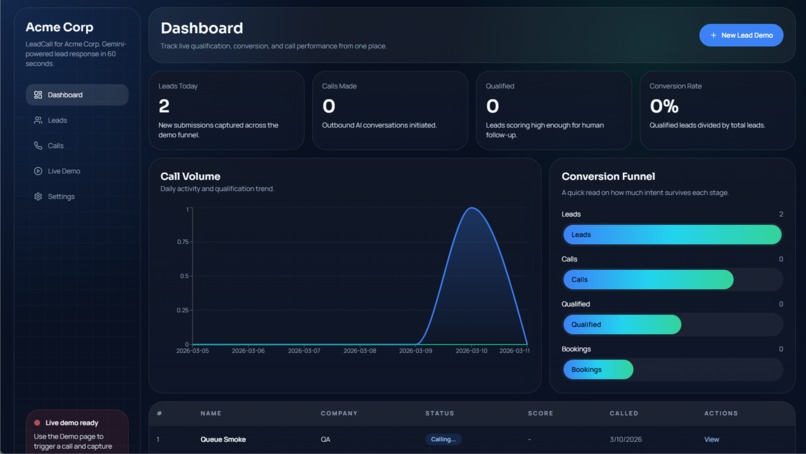
Dashboard
-
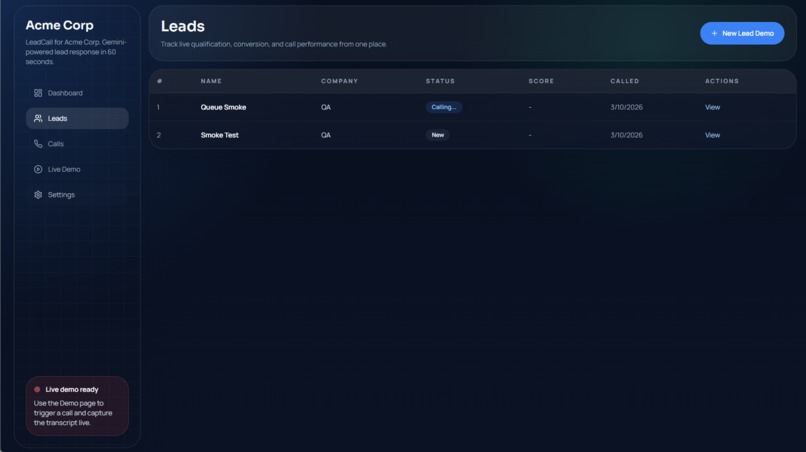
Leads
-
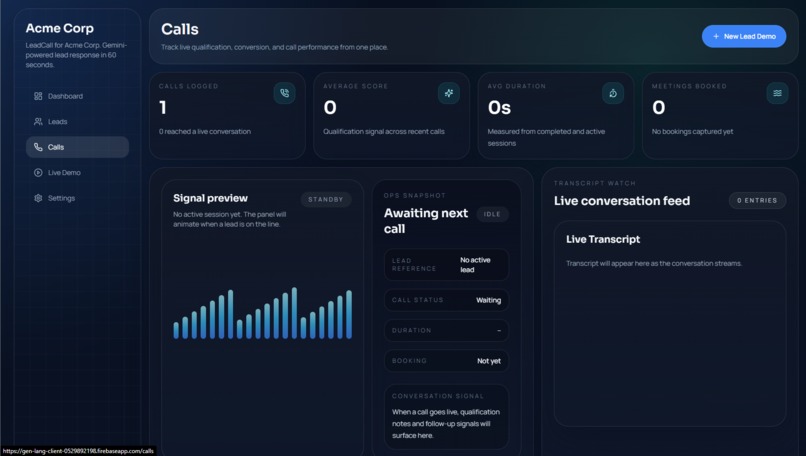
Calls
-
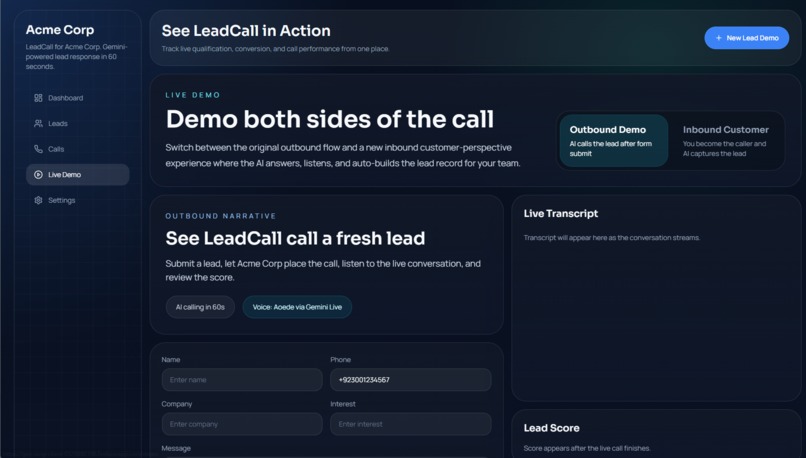
Live Demo


Inspiration
Speed matters in sales, but most inbound leads wait hours or even days before anyone follows up. That delay kills momentum, especially for small teams that cannot afford a dedicated SDR operation.
I built LeadCall to solve that problem: an AI voice agent that can call a new lead within 60 seconds of form submission, qualify them in a natural real-time conversation, score the opportunity, and help book the next meeting. I wanted to show that voice AI can move beyond demos and become a real business workflow tool.
As a solo builder from Pakistan working on a hackathon timeline, I focused on one thing above all: making the live voice experience feel fast, useful, and impressive.
What it does
LeadCall is an AI-powered lead qualification platform built for businesses that want instant follow-up on inbound leads.
When someone submits a form, LeadCall:
- creates the lead record
- triggers an AI call workflow
- starts a real-time voice conversation powered by the Gemini Live API
- asks qualification questions naturally
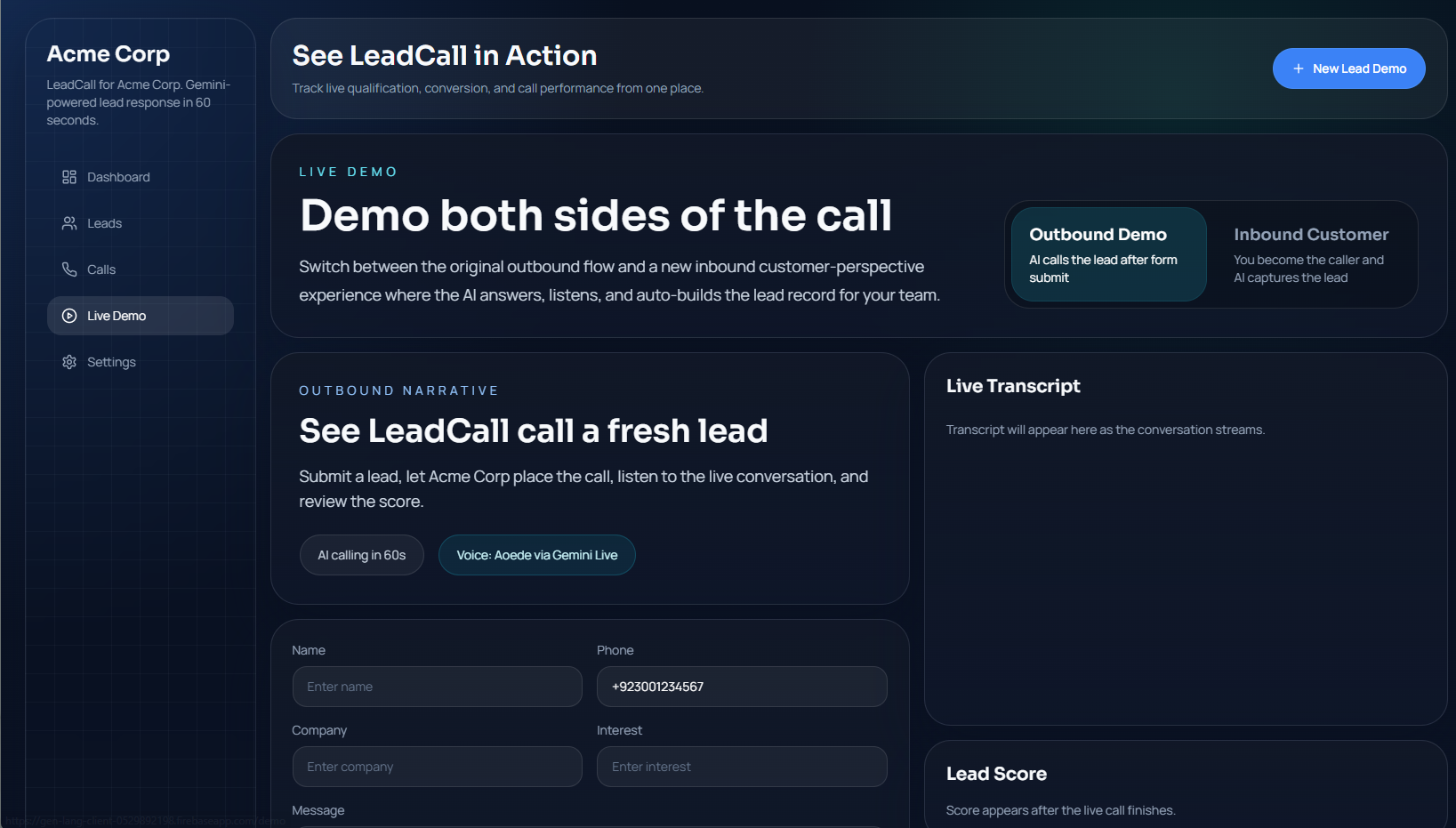
- captures a live transcript
- scores the lead based on intent, budget, timeline, and decision-making authority
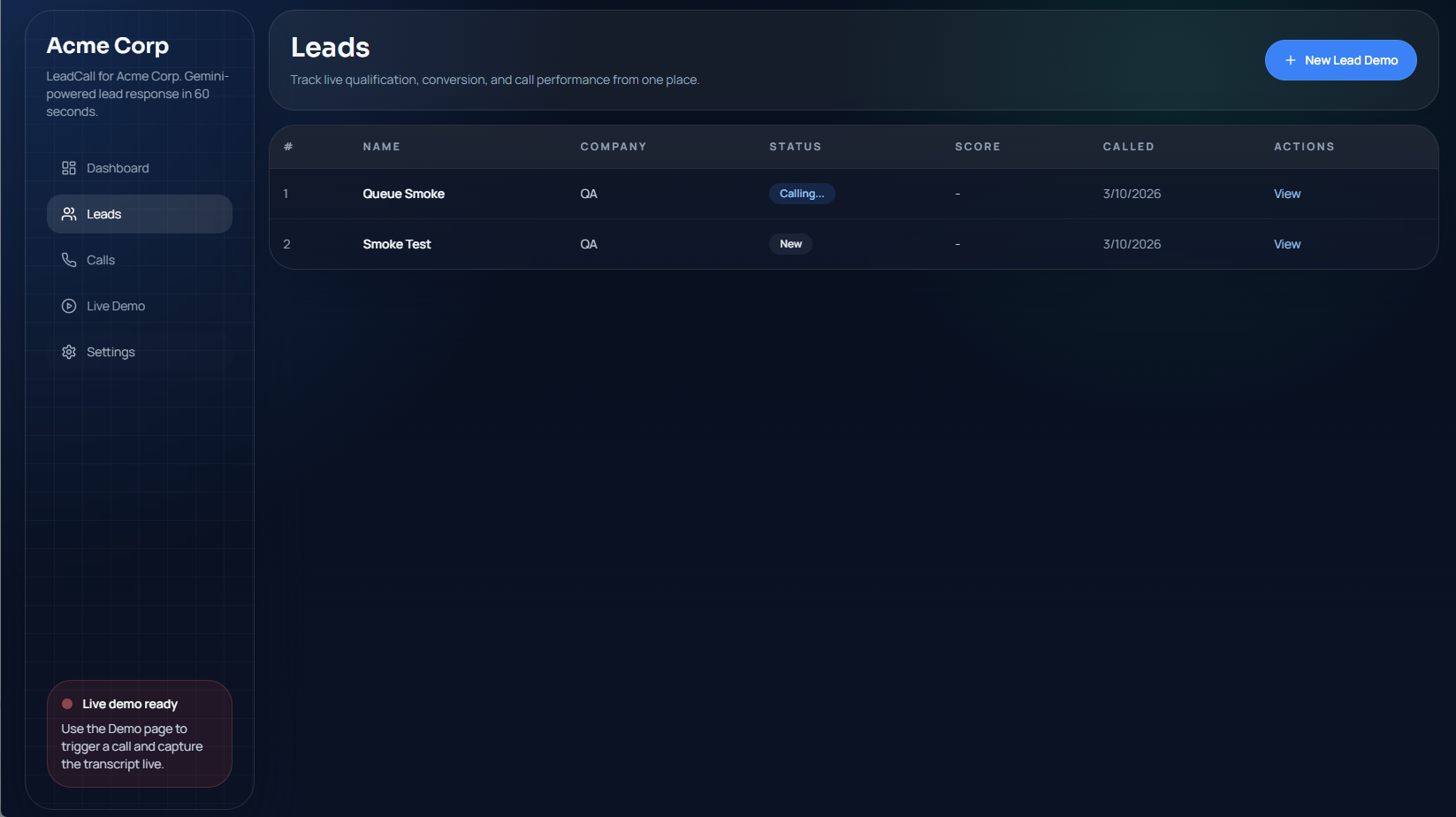
- surfaces the result in a clean dashboard
- supports booking the next meeting for qualified leads
The product is designed to feel like a modern sales operations assistant: fast, conversational, and actionable.
How we built it
I built LeadCall as a full-stack MVP with a strong focus on real-time audio and demo readiness.
Frontend
- React + Vite for a fast, lightweight interface
- Tailwind CSS for the dashboard and live demo flow
- Zustand for global state
- WebSocket-based streaming for live call status and transcript updates
Backend
- FastAPI for APIs and WebSocket handling
- Gemini Live API for real-time voice interaction
- Gemini text models for post-call lead scoring and reasoning
- Firestore for leads, calls, settings, and transcript storage
- Cloud Tasks to schedule the outbound call trigger
- Google Calendar integration for meeting booking
- Google Cloud / Cloud Run as the deployment target
The core challenge and core innovation is the live audio pipeline: capturing audio, streaming it to Gemini, receiving audio + transcription events back in real time, and keeping the UI synchronized throughout the call.
Challenges we ran into
The hardest part was real-time voice orchestration.
A polished voice agent is not just "speech in, speech out." It requires:
- low-latency bidirectional audio streaming
- consistent audio formatting
- interruption handling
- transcript synchronization
- session lifecycle management
- graceful fallback when connections drop or a call ends unexpectedly
Another challenge was balancing ambition with hackathon scope. It is easy to overbuild CRM features, but the real judging value here is the live agent itself. I had to stay disciplined and prioritize the Gemini Live experience, a clean dashboard, and a strong demo story.
Accomplishments that we're proud of
The biggest win is turning a complex idea into a focused, demo-friendly MVP.
I am proud that LeadCall:
- centers the Gemini Live API as the heart of the product
- connects form submission to an almost immediate AI follow-up flow
- makes live voice interactions visible through transcripts, statuses, and scoring
- packages everything in a polished SaaS-style dashboard
- is designed around Google Cloud deployment, which keeps it aligned with real-world scalability
As a solo builder, I am especially proud of building something that feels like a real startup product instead of just an isolated model demo.
What we learned
This project taught me that real-time AI products live or die on systems design, not just prompting.
I learned a lot about:
- designing natural voice-first conversation flows
- handling streaming events reliably over WebSockets
- structuring lead qualification logic around business outcomes
- connecting AI outputs to operational workflows like scoring and booking
- building an MVP that is technically strong and easy for judges to understand quickly
I also learned that a hackathon project becomes much stronger when the UX clearly tells the story of the technology underneath it.
What's next for LeadCall
This MVP proves the core concept, but there is a lot of room to grow.
Next, I want to add:
- direct phone network integration for real outbound calling
- multi-language support for broader markets
- smarter scheduling and retry logic based on working hours
- CRM integrations for tools like HubSpot and Salesforce
- richer analytics for conversion trends and call quality
- customizable agent personas and qualification playbooks by industry
The long-term vision for LeadCall is simple: every new lead should get an instant, intelligent, and human-like first response, without a sales team needing to be online 24/7.
Built With
- docker
- fastapi
- firestore
- geminiliveapi
- google-calendar
- google-cloud
- javascript
- python
- react
- tailwindcs
- tasks
- terraform
- vite
- websockets
- zustand

Log in or sign up for Devpost to join the conversation.