-
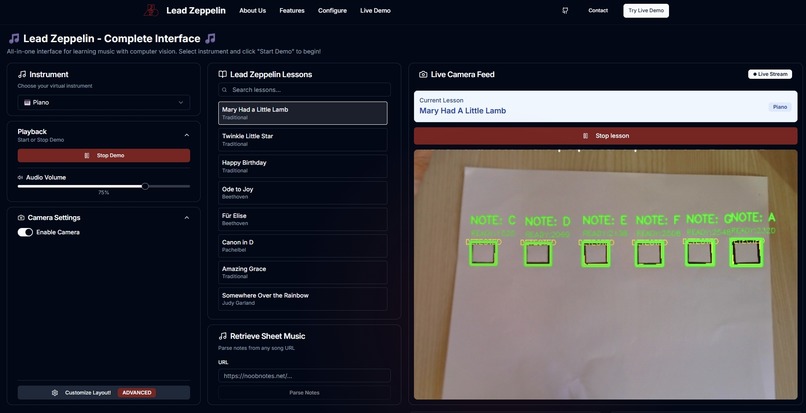
demo
-
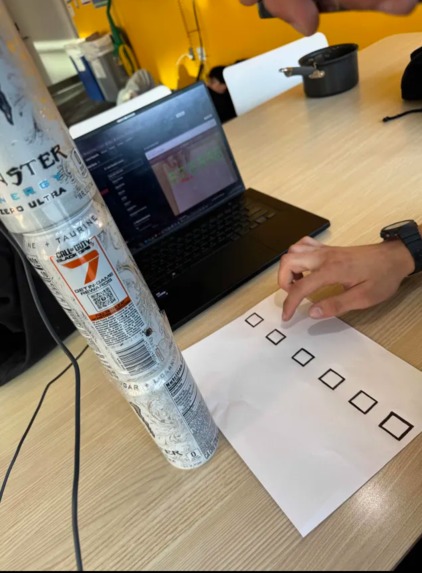
live testing
-
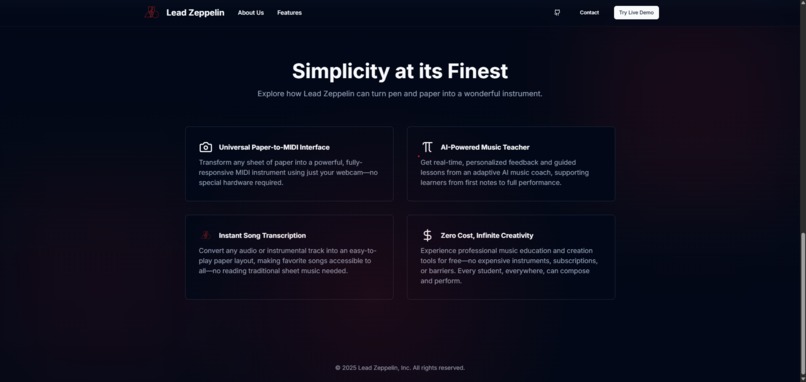
features
-
landing
-
about us
Inspiration
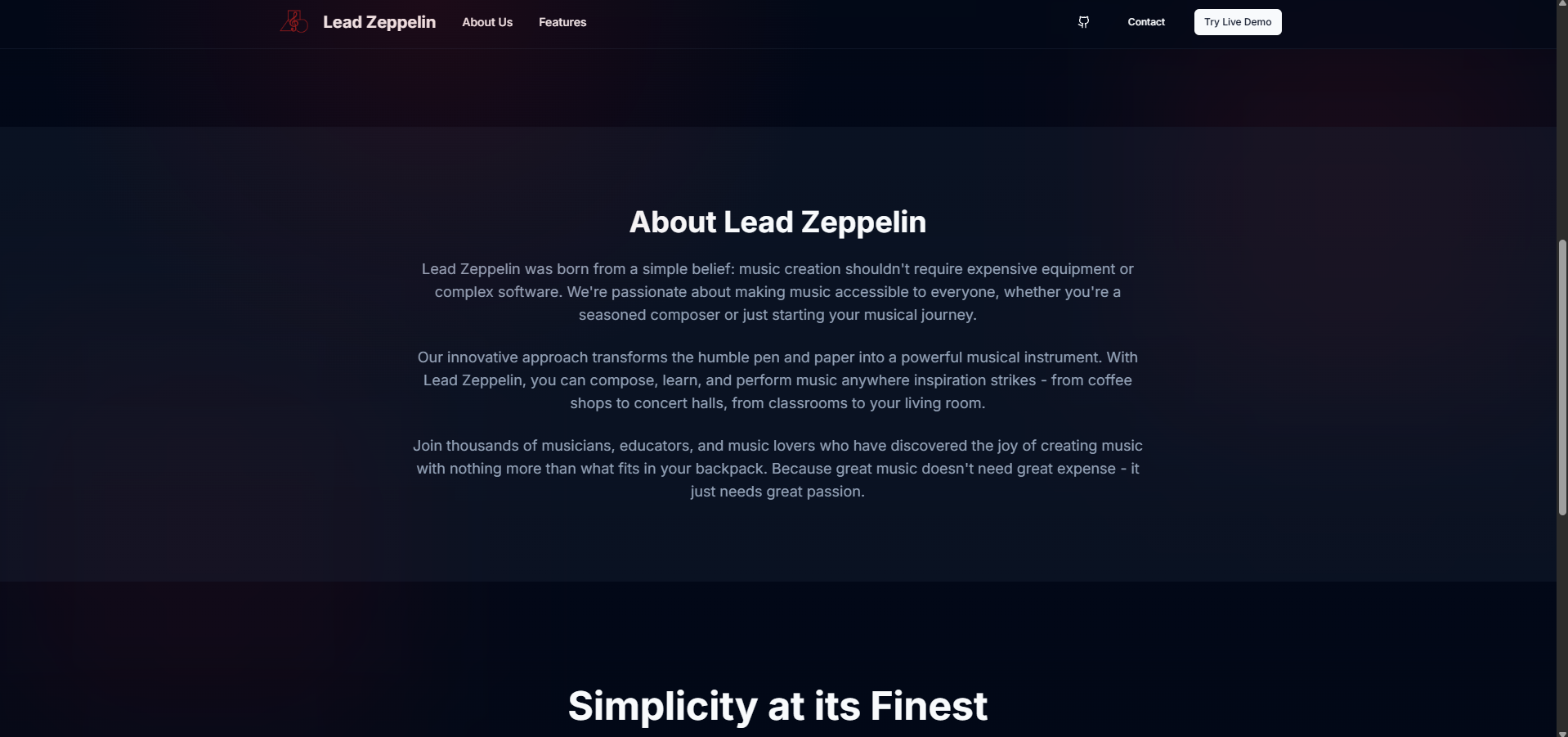
The idea for this project came to us because growing up, we were unable to learn musical instruments until later in life due to financial constraints. We know musical instruments are expensive, and learning them is hard. This project was not made to completely replace formal music education or traditional instruments. It’s to provide a starting point for anyone to experiment with musical ideas without worrying about the cost or pressure.
What it does
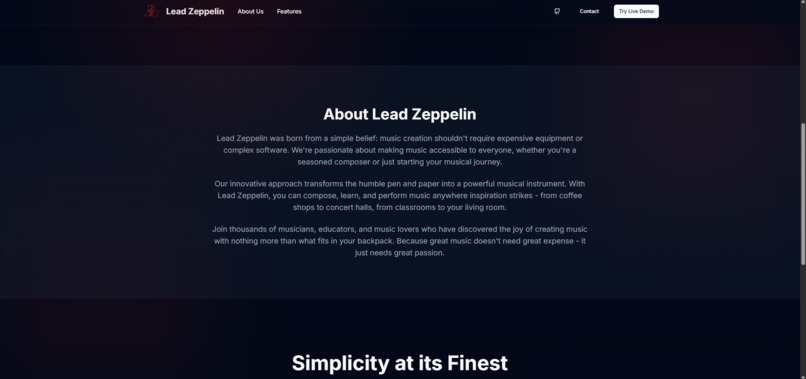
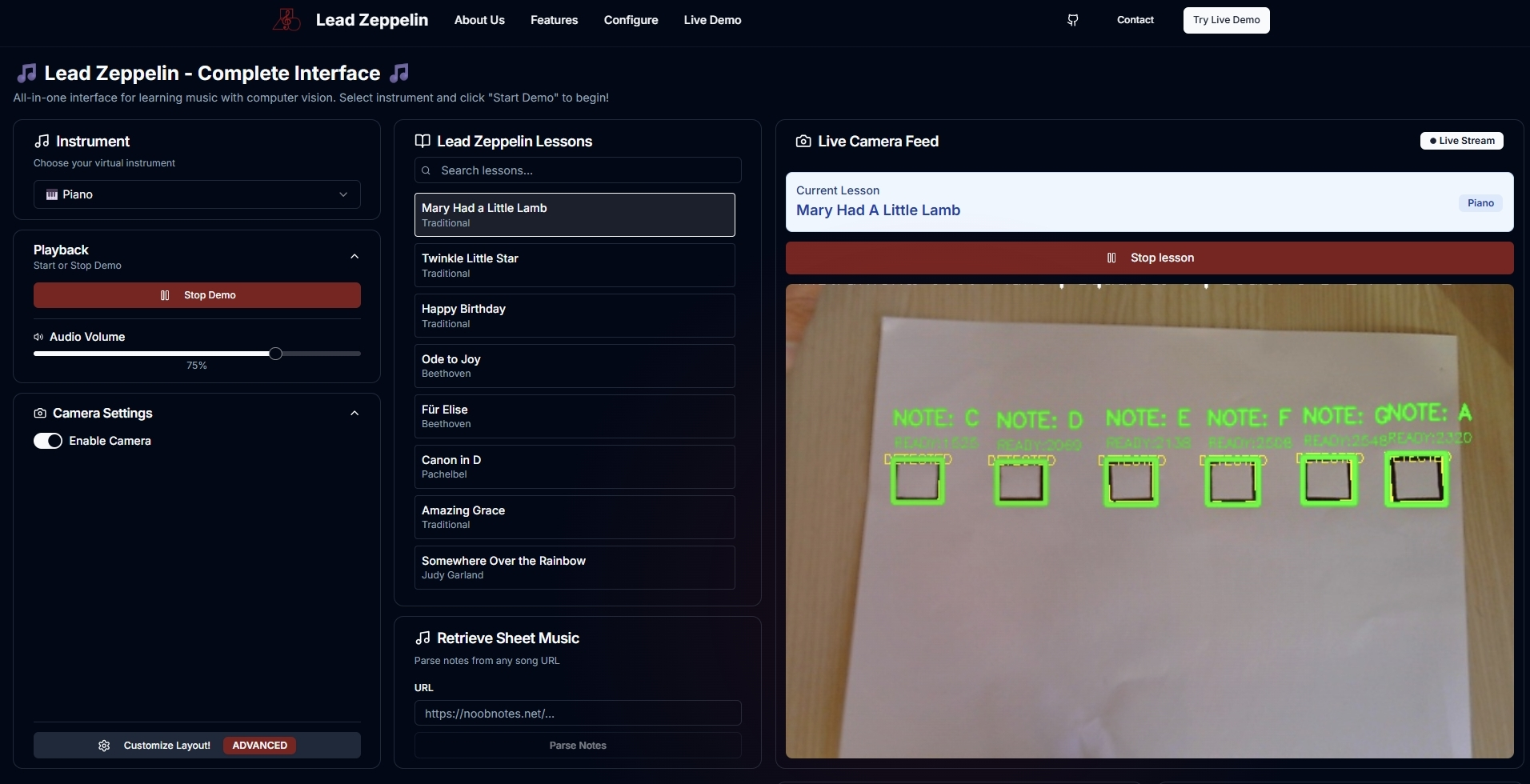
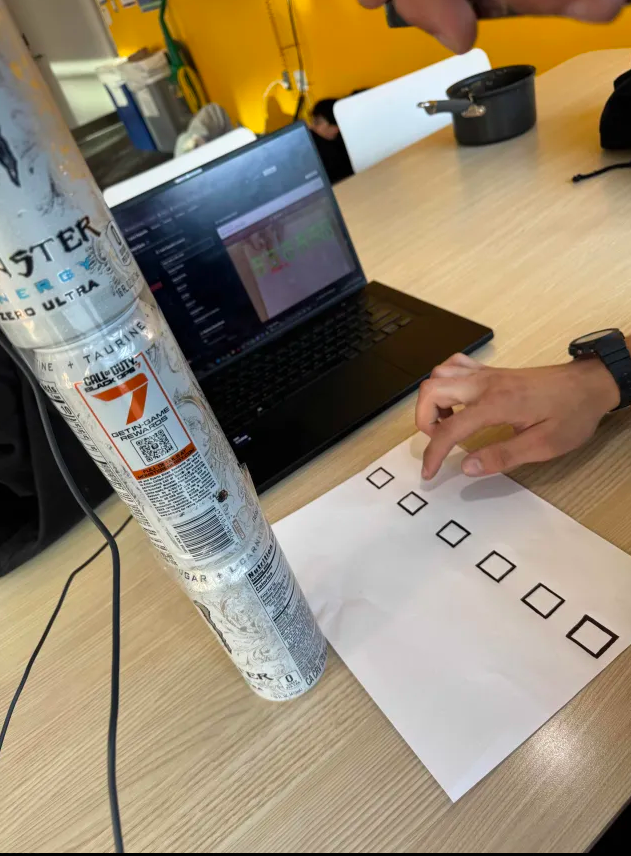
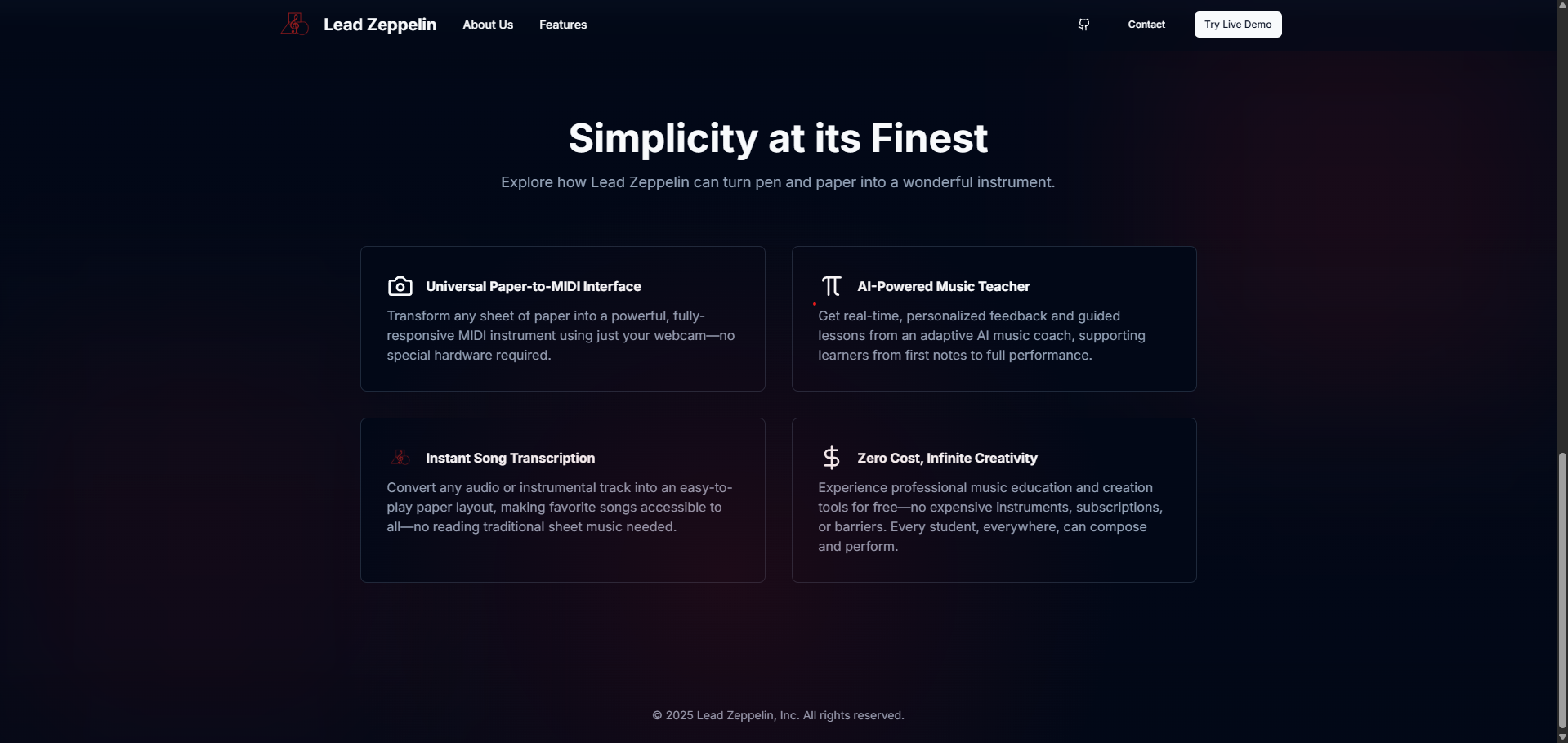
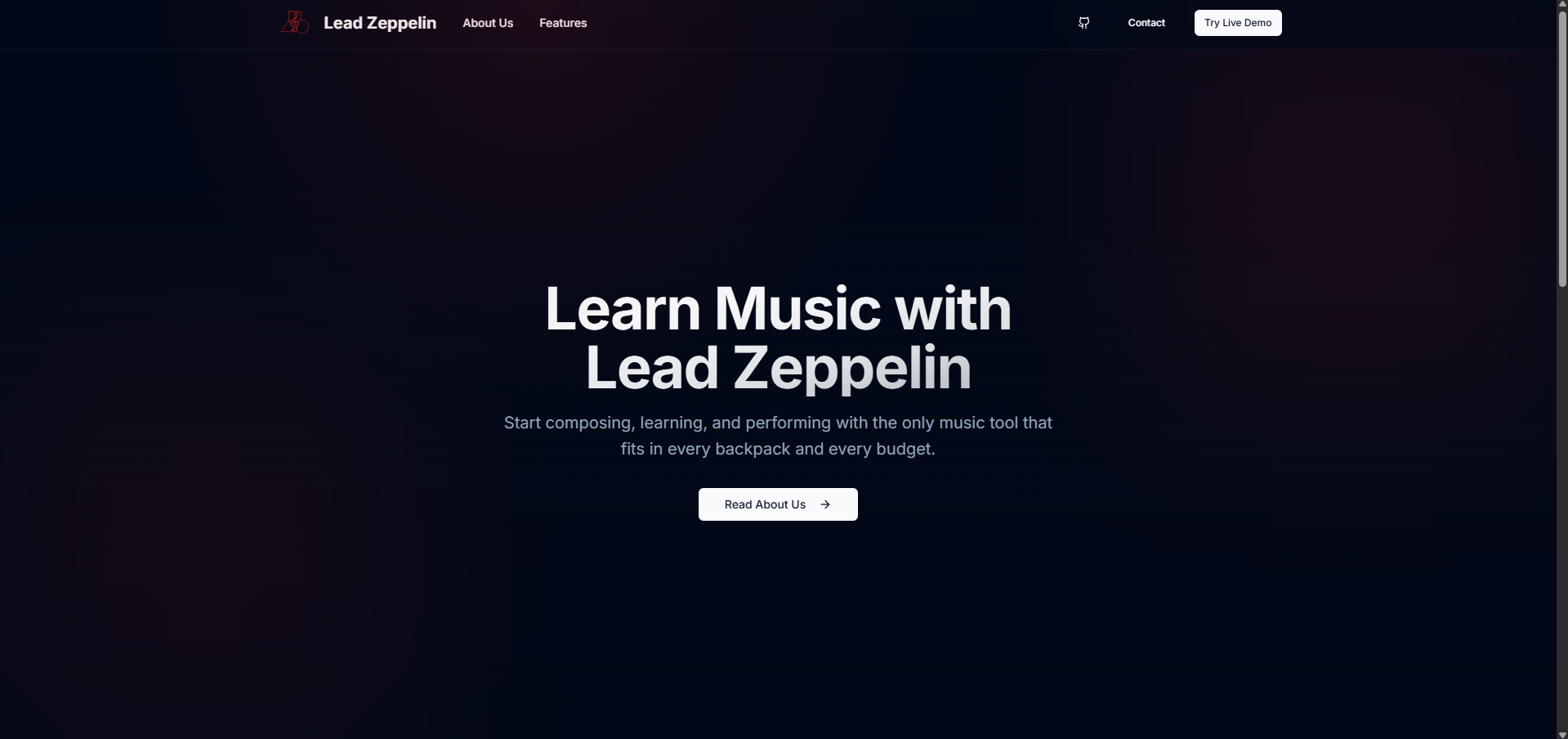
Lead Zeppelin uses computer vision to allow learners to draw shapes onto a piece of paper and leverages Gemini to create music lessons. We implemented a function to allow users to import any song from sheet notes for learning.
How we built it
We leveraged OpenCV and TensorFlow to create the computer vision model. For the backend, we used BeautifulSoup to parse song music note data and Gemini to create lessons with positive reinforcement to support learning growth.
Challenges we ran into
Getting a computer to recognize hand-drawn shapes was way more difficult than we thought it would be. It was also very difficult for us to integrate our backend into our front end for functionality.
Accomplishments that we're proud of
We are very proud of having our computer vision model working. For two of us, this is our first time doing computer vision.
What we learned
We learned how to interface machine learning and computer vision.
What's next for Lead Zeppelin
We want to fine-tune our computer vision model, create a more kid-friendly layout, and make a mobile version. Once we have achieved those things, we want to launch pilot programs for the underserved schools, expand for therapeutic applications for music therapy and cognitive rehabilitation


Log in or sign up for Devpost to join the conversation.