-
-
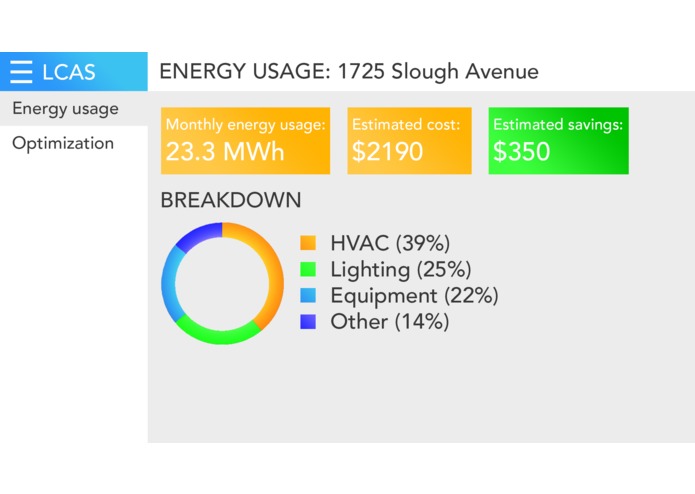
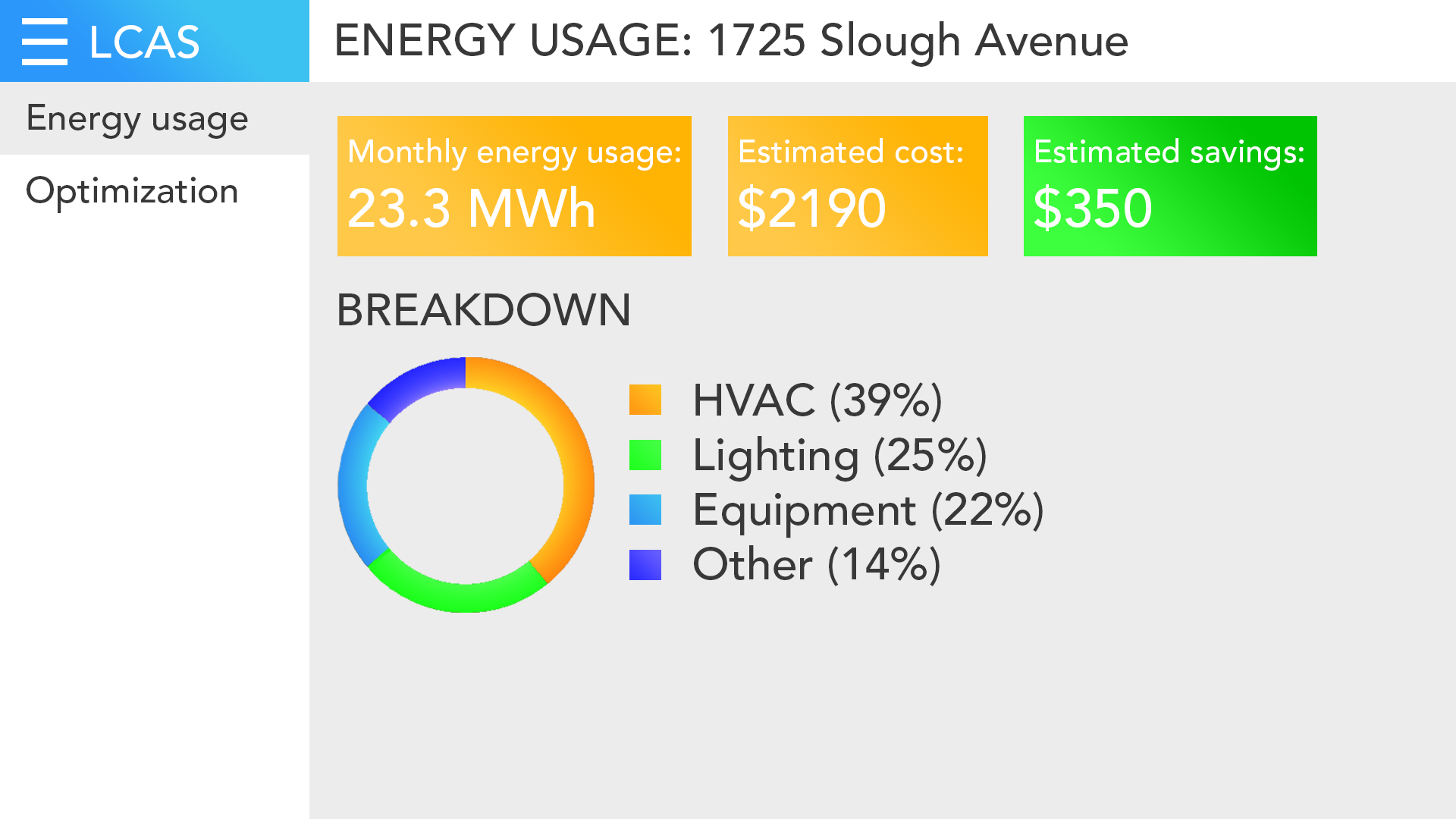
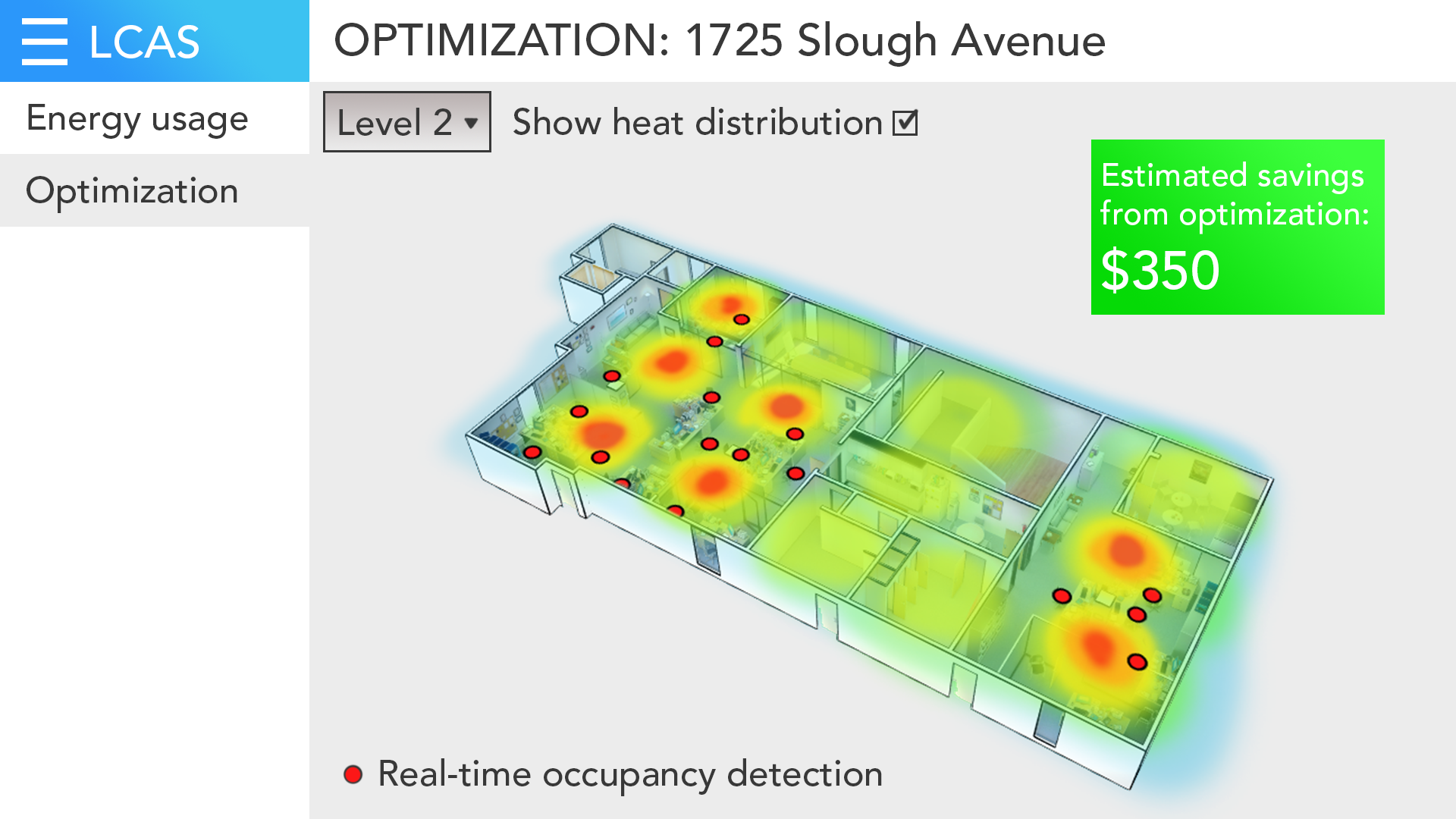
UI/UX design for web app
-
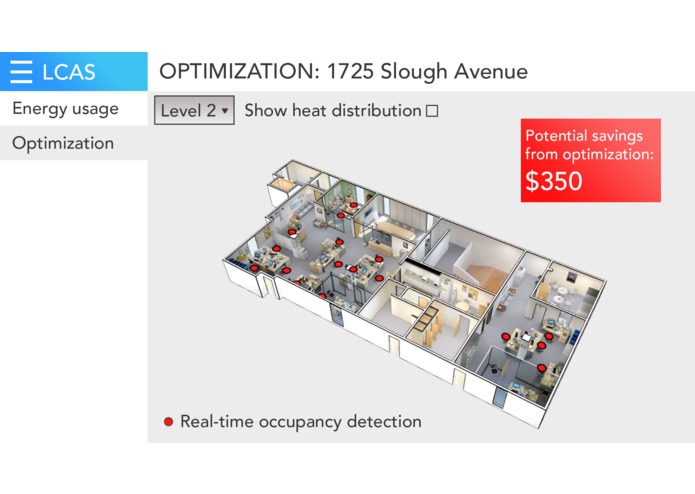
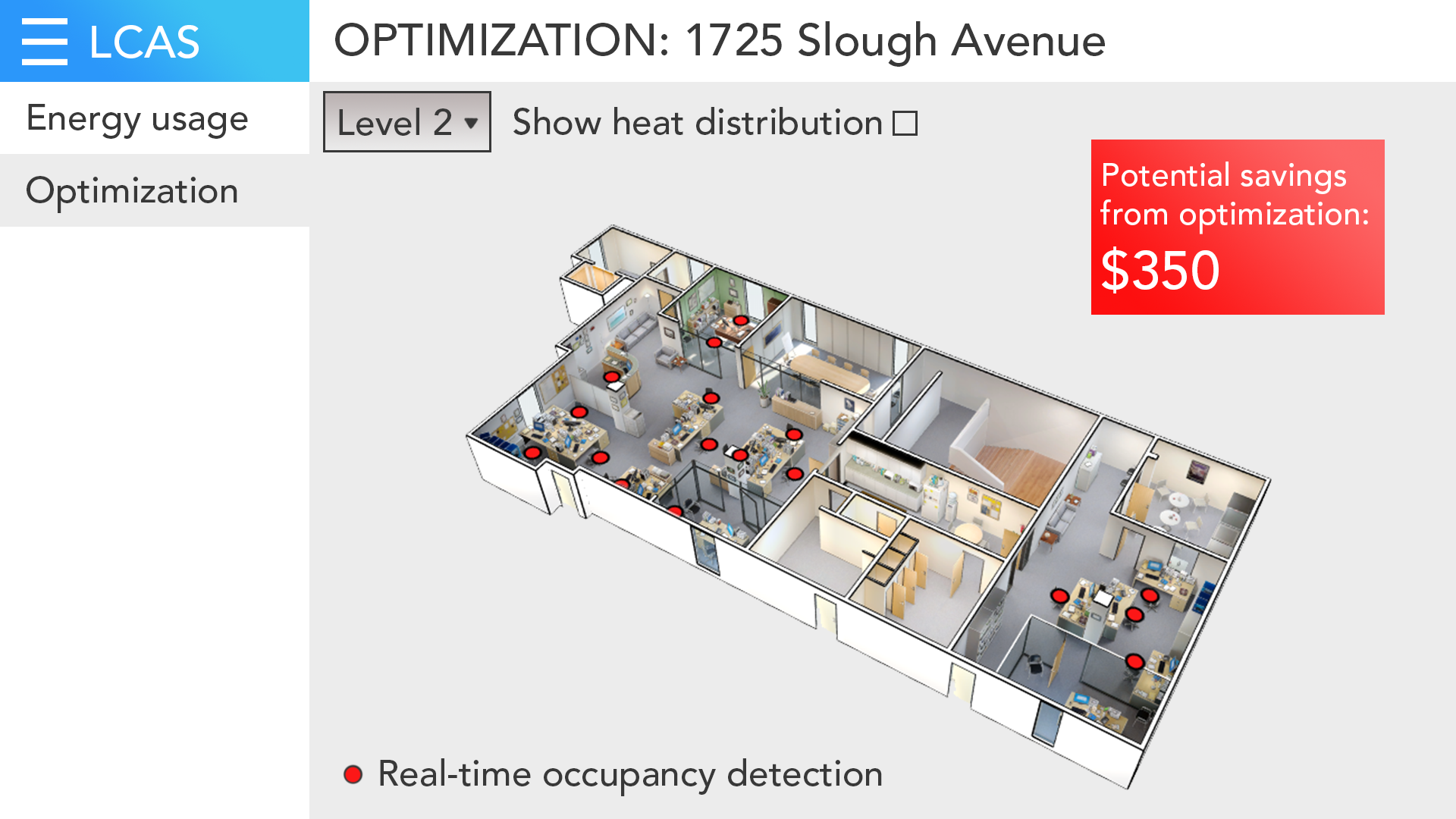
3D view of floor with occupant location
-
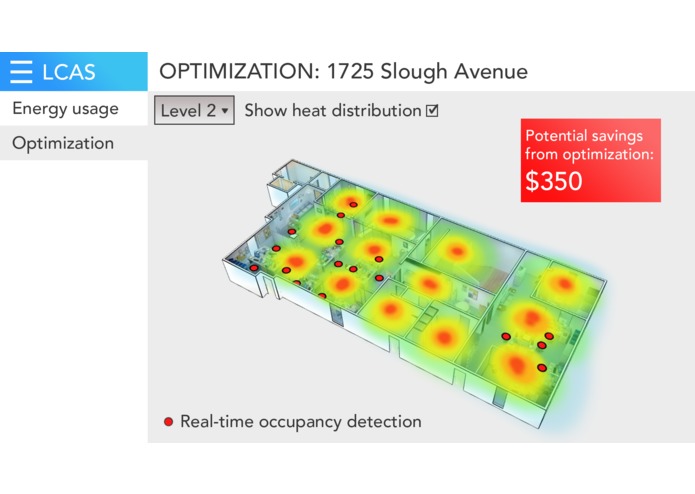
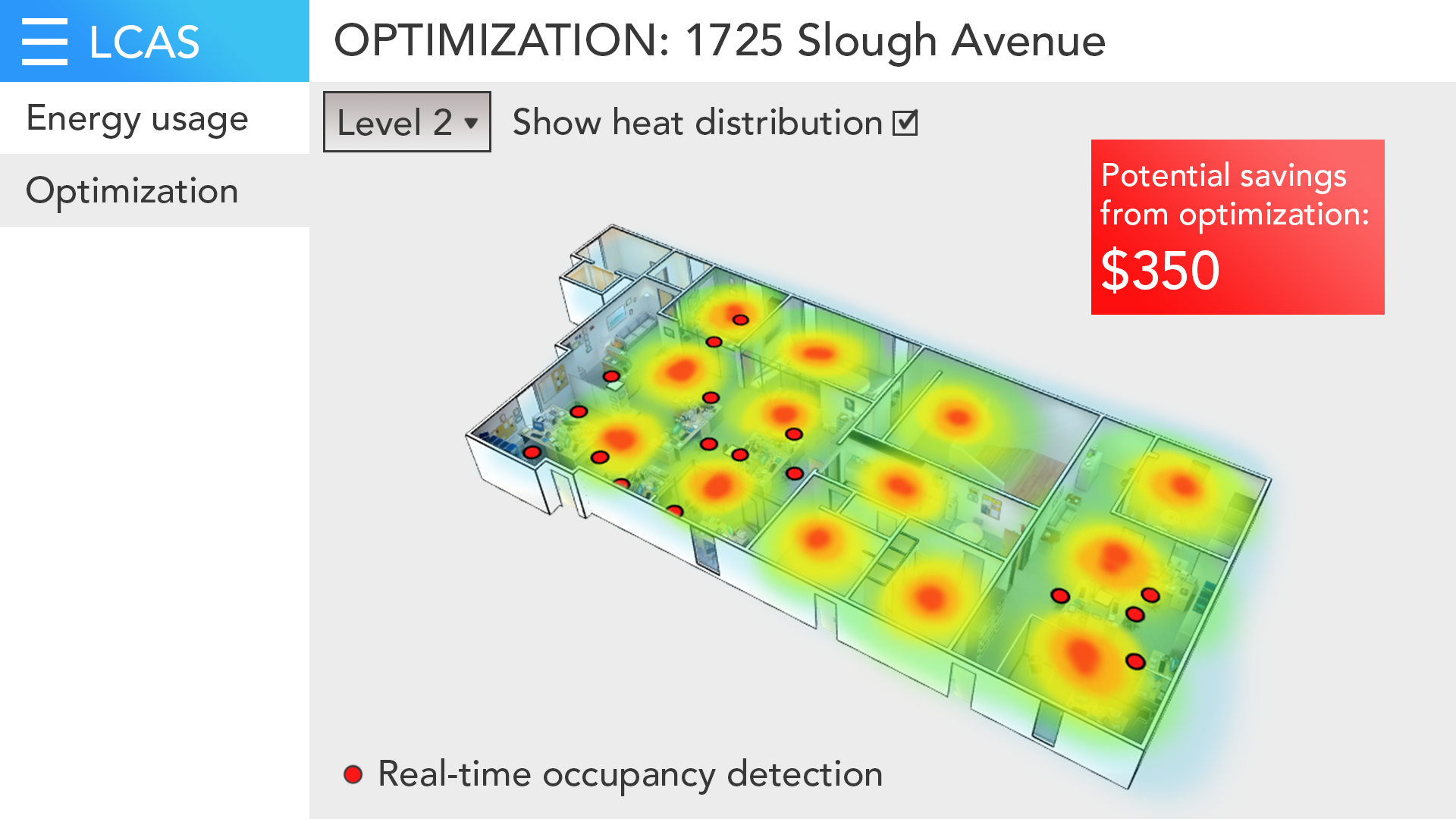
3D view of floor with occupant location (with thermal maps)
-
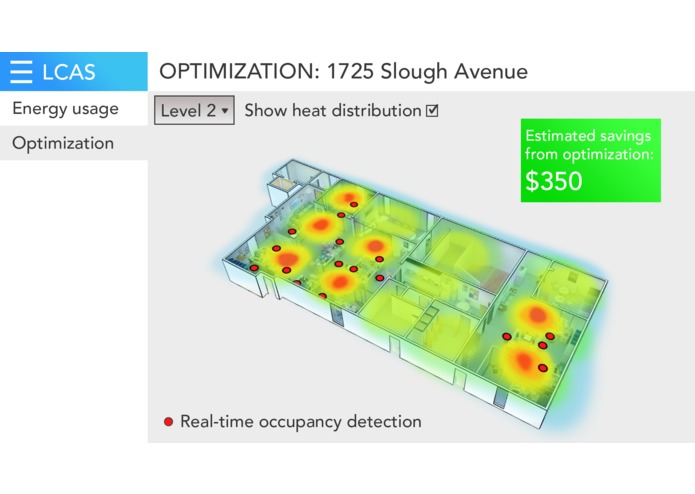
3D view of floor with occupant location (with HVAC optimization)
-
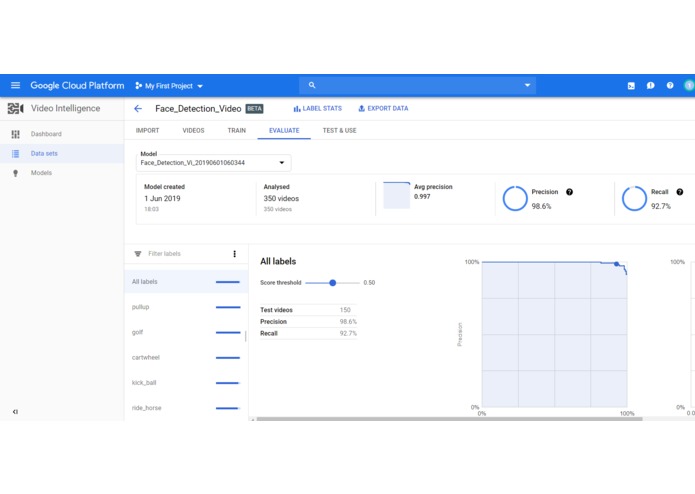
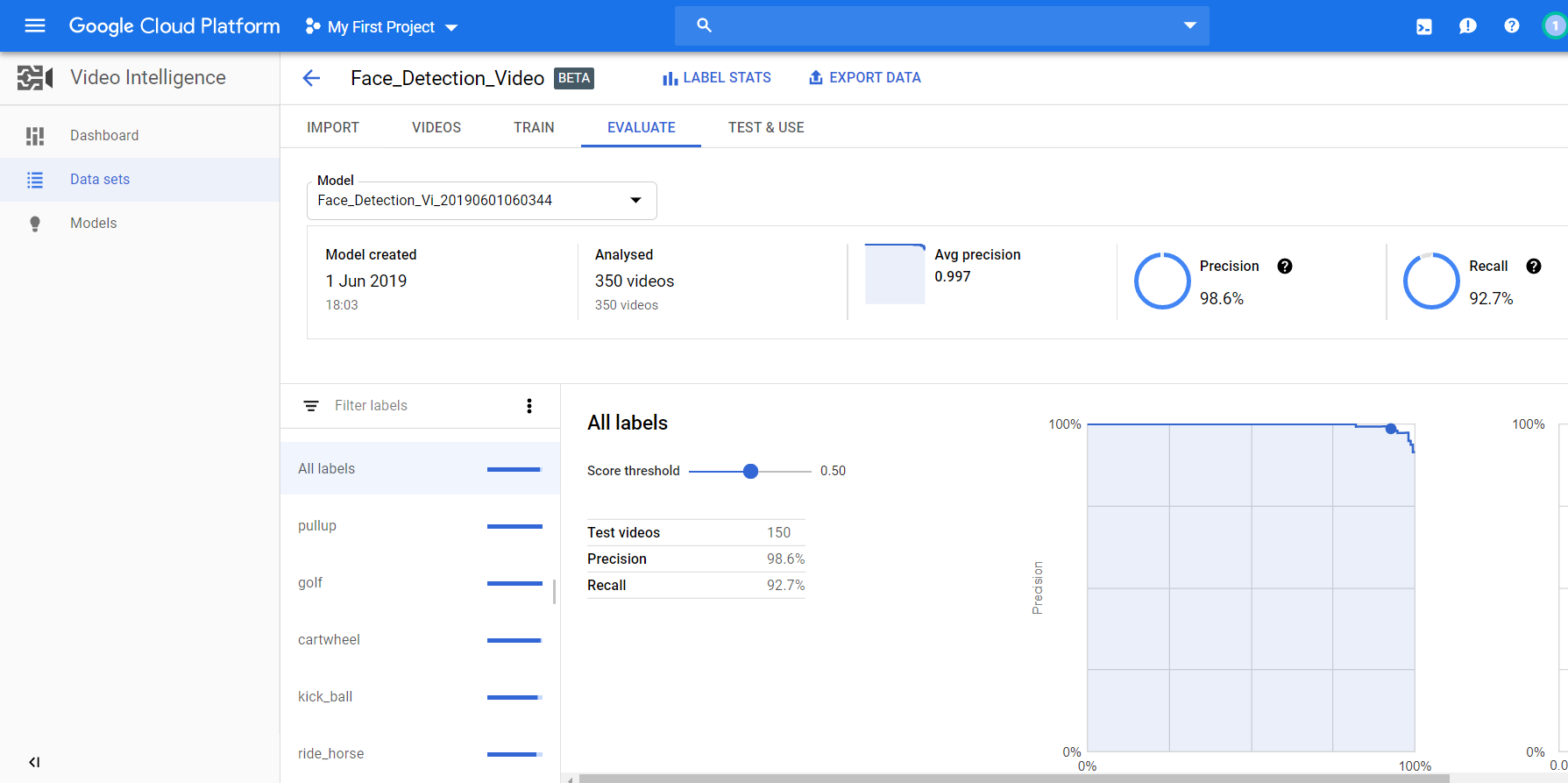
statistics of the google cloud AI model after testing it through 500+ videos
Inspiration
In ninth grade, I remembered going to my mother's office for take your child to work day. Despite being in an office room I noticed that the temperature inside my mother's room was the same as empty office rooms. It then dawned upon me: Why waste valuable energy within areas of commercial buildings that don't need them?
What it does
LCAS is a localized climate automation system which uses surveillance footage to identify, track and map the migration pattern of people in a specific building to optimally distribute HVAC.
In most buildings, no additional infrastructure is needed as this system makes use of pre-existing security cameras and dampers to adjust energy usage.
Pitch Deck : https://docs.google.com/presentation/d/1lphZuM8kTv3CgQvkbKkab2rc4_V_GJF_GFy3JeBTLts/edit?usp=sharing
How we built it
We decided to present LCAS by building its UI/UX and a proof of concept for the facial recognition system which is used to detect the location and number of people. Photoshop was used to create visuals for the UI/UX. The facial recognition system was built by training a convolutional neural network using Google Cloud's Video Intelligence API which contains many pre-trained machine learning models that automatically recognize a vast number of objects, places, and actions in stored and streaming video. In the case the Google Cloud API took too long, we also created our own OpenCV face recognition algorithm.
Challenges we ran into
While deciding what type of sensors to use to detect the people we ran into a dilemma of whether to use thermal sensors or another sensor.
Thermal sensing was appealing as it would have been easier to create heat maps which could easily be fed into a neural network; however, thermal sensors are rather expensive and they are not good at differentiating between humans and other warm objects.
We decided to switch to camera footage because it was proved to be a more financially feasible alternative for a business and a facial recognition system would be able to provide a much more accurate modelling of an environment which would decrease the overall inefficiency of the system.
Furthermore, there were a few technical issues that hindered the productivity of the operation. Mainly, the Google Cloud API was taking a very long time to train the model which delayed our testing of the system and wasted time as we had to come up with an alternative method had the model been not been trained on time.
Accomplishments that we're proud of
We are proud of the technical hurdles that we overcame to create the final product. We were all worried that the facial recognition system would not work properly because this was our first time implementing an AI into a solution. We are also happy with the way the UX/UI designs look as we feel it accurately conveys the idea that we had in mind when designing a solution.
What we learned
We learned that it is important to take some time before executing a plan to consider alternatives to some ideas or implementations. When we drafted a plan to tackle the problem, we dove straight into creating the solution.
However, while speaking to some of the mentors, we realized that there are many feasible approaches that could have been taken to improve the overall solution. This made us step back and re-evaluate all possibilities which allowed us to gain an alternative perspective, ultimately improving our final product.
What's next for LCAS (Localized Climate Automation System)
-Front End UI, preferably a web app with an admin dashboard system (to view energy usage stats and money being saved)
- Improve AI by giving it capabilities to map and decide where to distribute air from the HVAC from large and practical datasets. -Backend to store this data for different commercial buildings


Log in or sign up for Devpost to join the conversation.