-
-
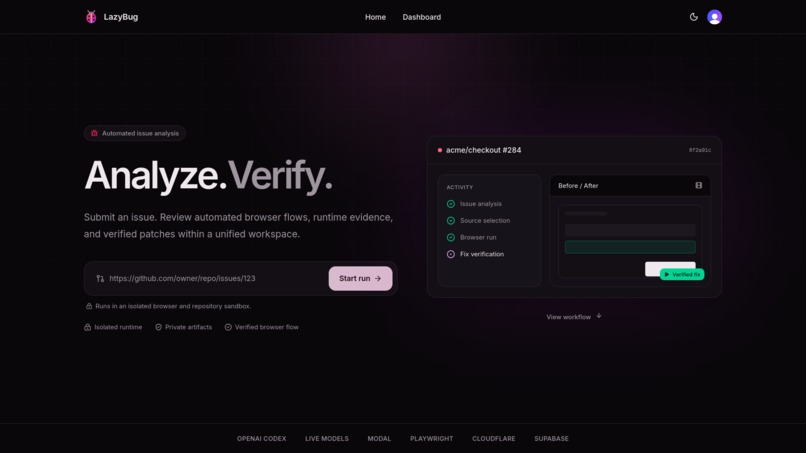
Landing Home Page
-
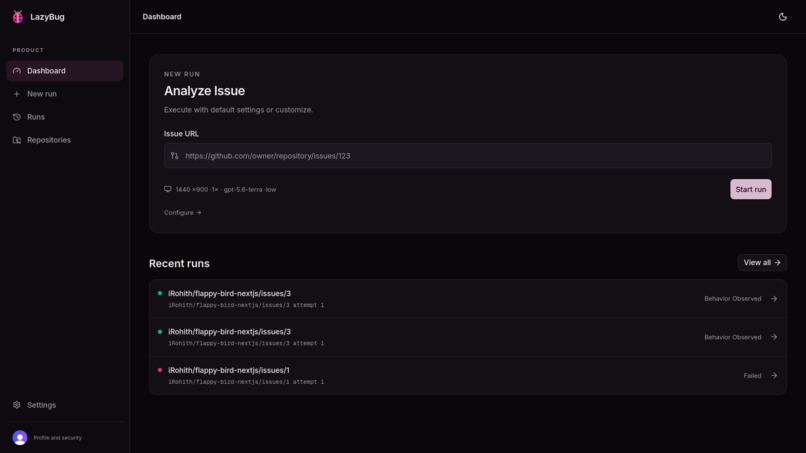
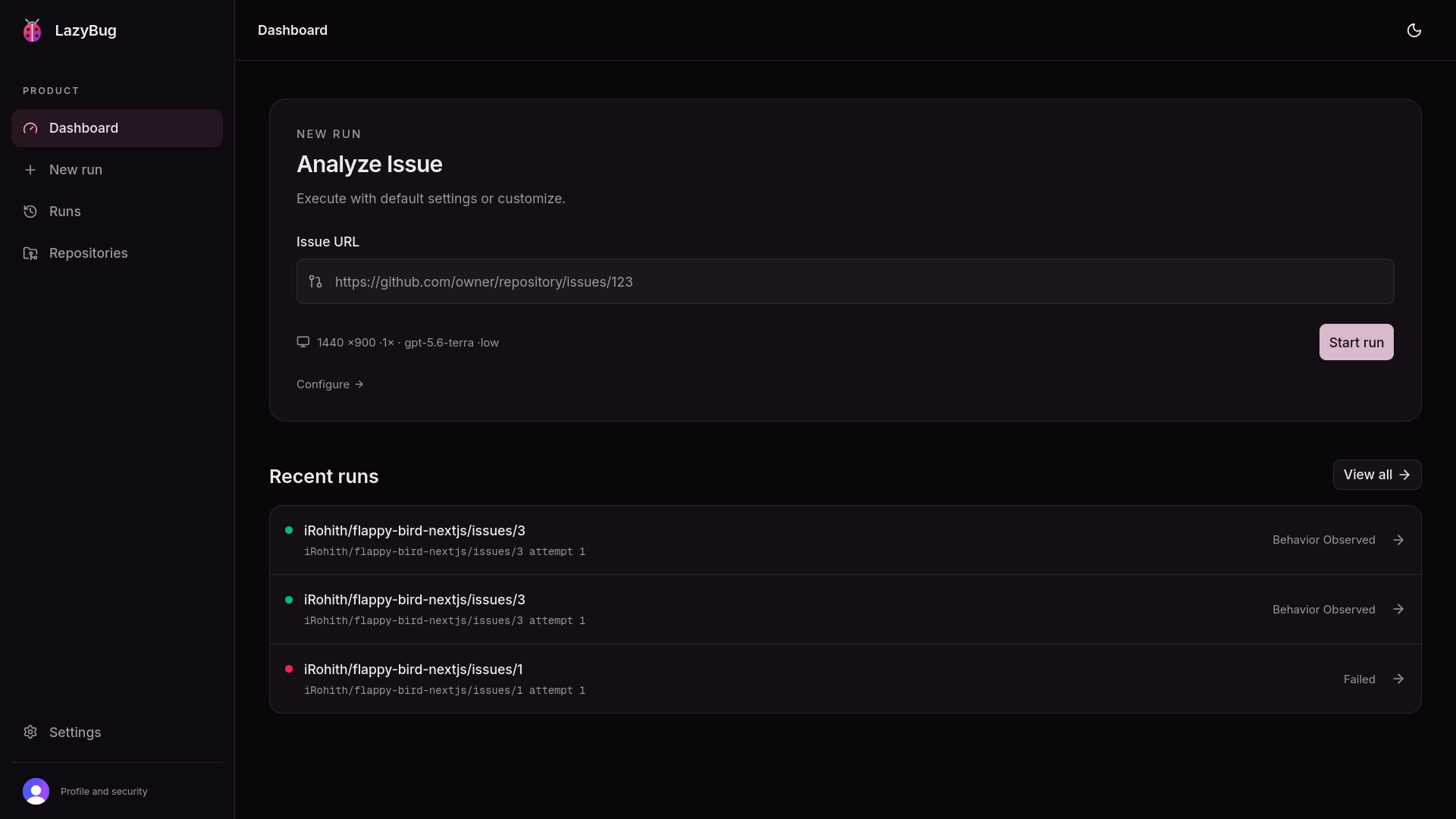
Dashboard
-
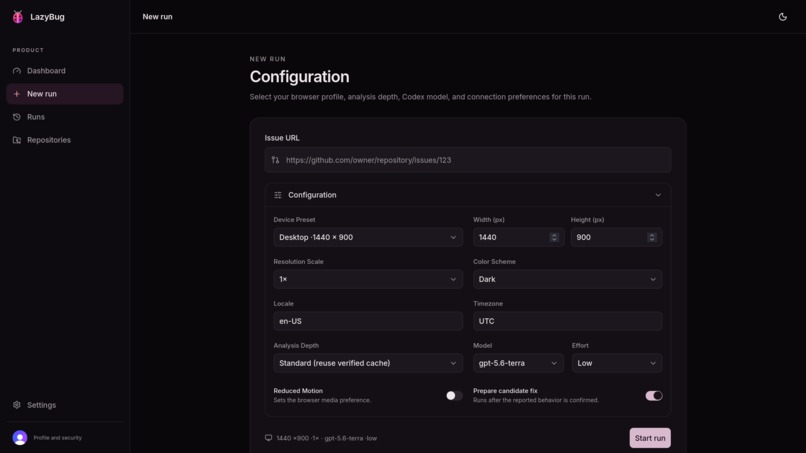
Create New Run with an Issue
-
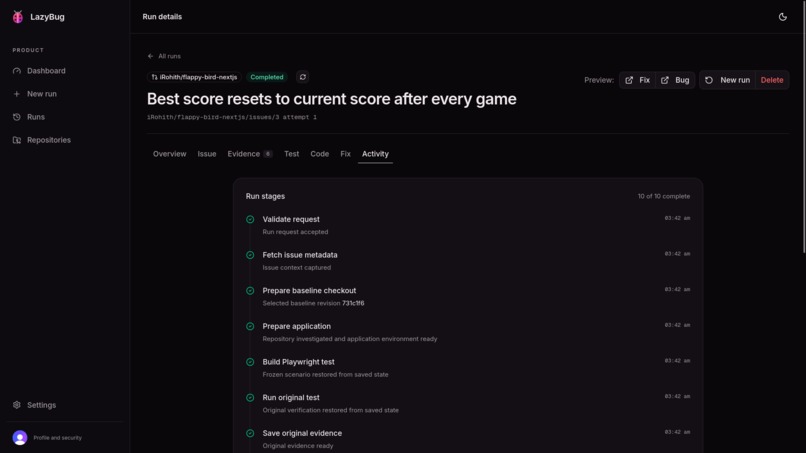
Activity Pipeline
-
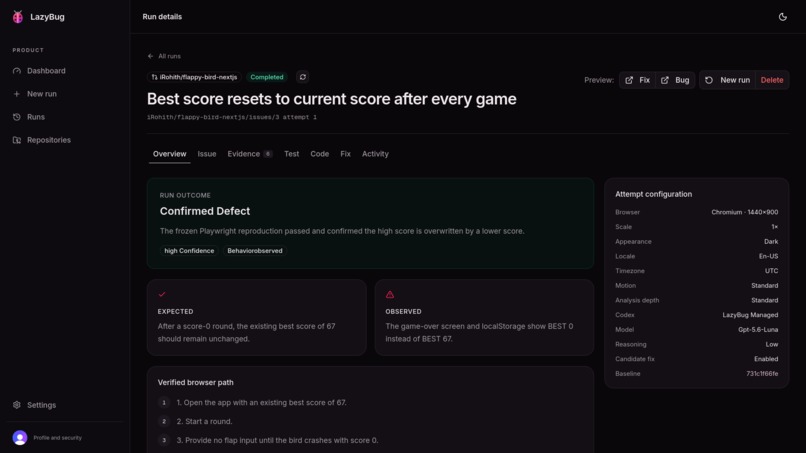
Analysis Overview
-
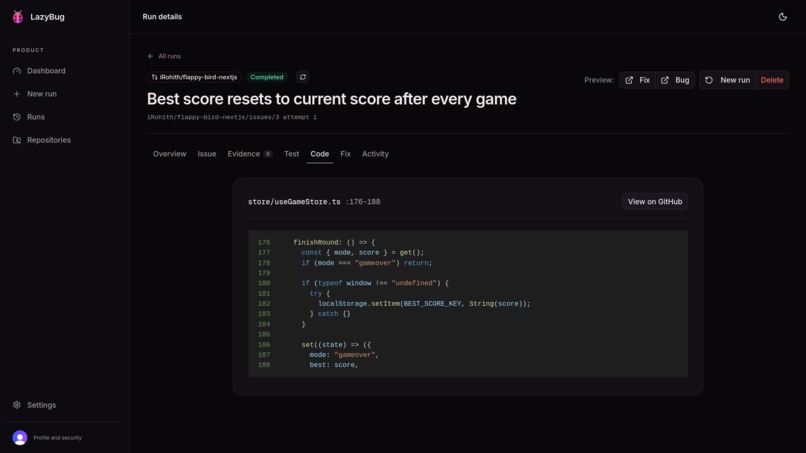
Exact Location of Bug
-
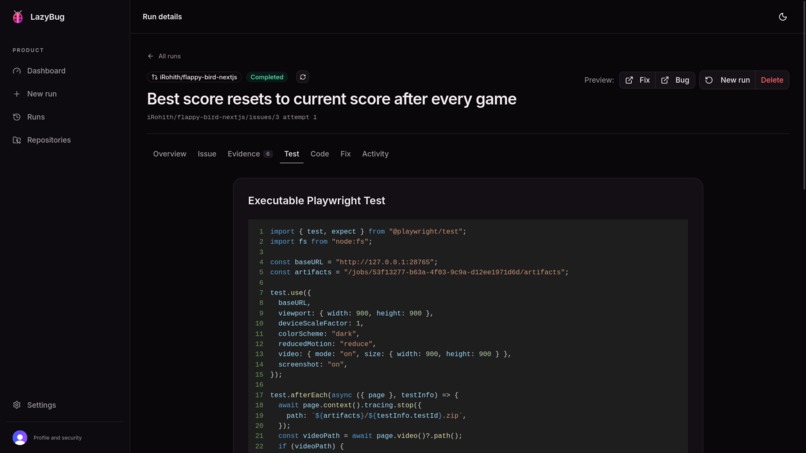
Playwright script to replicate the bug
-
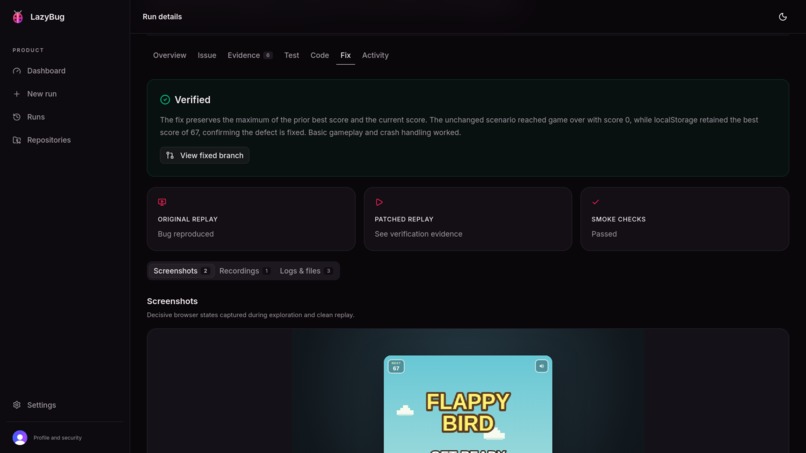
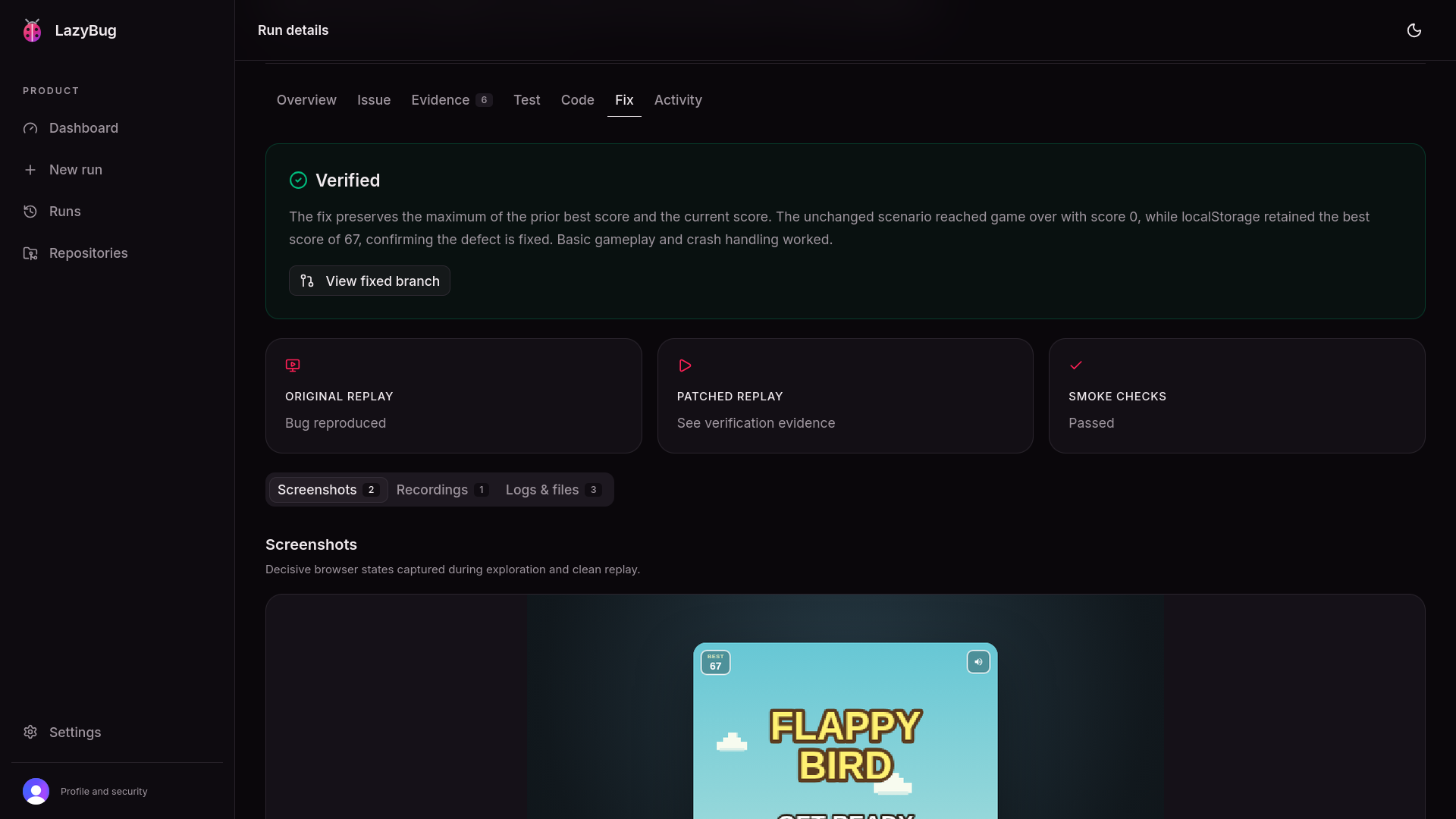
Generated Bug fix
-
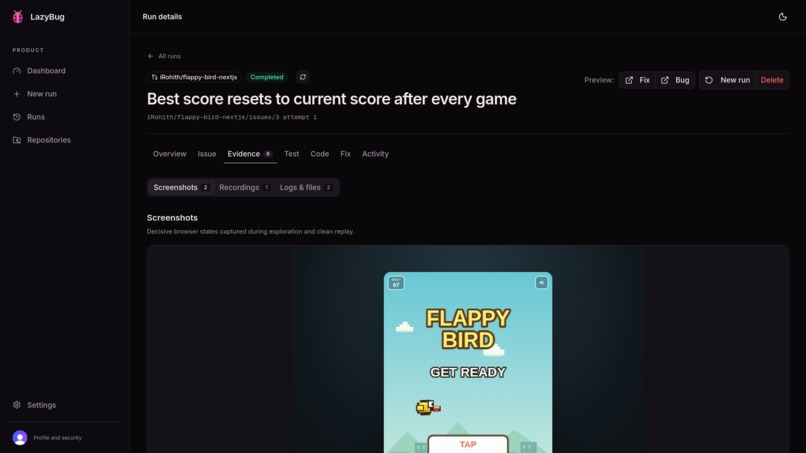
Evidence of Reproduced Bug
-
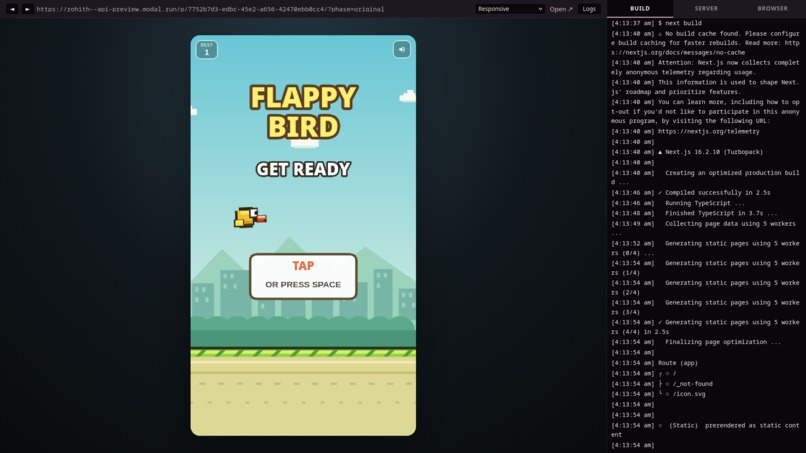
Live Sandbox





Inspiration
GitHub issues usually describe symptoms, not executable reproductions. Maintainers still have to rebuild the environment, find the failing interaction, collect evidence, locate the responsible code, and prove a patch works.
Tools such as CodeRabbit inspired us by making AI-assisted code review more useful and visible. LazyBug applies a similar reviewable, evidence-first mindset one step earlier: it begins with an issue, reproduces the behavior, investigates the source, and verifies a fix before presenting it for human review.
LazyBug turns that manual debugging loop into an evidence-backed agentic workflow.
What it does
Submit a browser-visible issue from a public GitHub repository. LazyBug produces:
- a deterministic Playwright reproduction;
- screenshots, video, trace, test source, and code context;
- an optional candidate patch;
- verification using the same unchanged test;
- original and fixed live previews;
- reviewable reproduction and fix branches.
The result appears in a Next.js dashboard with Issue, Evidence, Test, Code, Fix, and Activity views.
Pipeline
Public GitHub issue
        |
        v
Baseline checkout + LazyBugAI organization fork
        |
        v
Codex + GPT-5.6
  setup -> reproduce -> analyze -> locate -> fix -> verify
        |
        v
Playwright evidence + source context + patch
        |
        +--> reproduction and fix branches
        +--> original and fixed previews
        |
        v
LazyBug investigation dashboard
Codex and GPT-5.6
The initial prototype was built with Codex and GPT-5.6 Sol. Codex is also central to the running product:
- It understands the repository, issue context, framework, and startup process.
- It converts the issue into a frozen Playwright scenario.
- It investigates the reproduced behavior using browser evidence and source code.
- It creates a focused candidate patch.
- It replays the unchanged scenario and publishes the verified fix to a dedicated branch in the LazyBugAI GitHub organization.
As a small example of how capable GPT-5.6 Sol was during the build, it also helped us turn our raw screen recording into the final demo video.
Tech stack
- Frontend: Next.js 16, React 19, TypeScript, OpenNext, Cloudflare Workers
- Agent pipeline: Python, Modal, OpenAI Codex, GPT-5.6
- Verification: Playwright
- Data and artifacts: Supabase Postgres and Storage
- Authentication: Clerk
- Source workflow: GitHub
Why it is trustworthy
A plausible patch is not enough. LazyBug captures evidence before accepting a conclusion, freezes the reproduction before generating a fix, and evaluates both versions with the same scenario. Tests, source context, patches, artifacts, and inconclusive outcomes remain visible for human review.
Challenges and lessons
The hardest part was coordinating arbitrary application startup, browser automation, agent reasoning, source editing, preview routing, artifact publication, and clear progress reporting as one coherent workflow.
We learned that agentic debugging becomes far more useful when reasoning is paired with executable tests and inspectable evidence.
What's next
The next step is creating a pull request directly from a verified fix branch. Future versions can also support private repositories, broader application environments, collaboration around evidence, and verification beyond browser automation.
Try LazyBug
Open the hosted application, sign in, submit a browser-visible public GitHub issue, and inspect the generated evidence, test, source context, fix, verification result, and branch.
Built With
- clerk
- cloudflare-workers
- github
- gpt-5.6
- modal
- next.js
- openai-codex
- opennext
- playwright
- python
- react
- supabase
- typescript

Log in or sign up for Devpost to join the conversation.