-
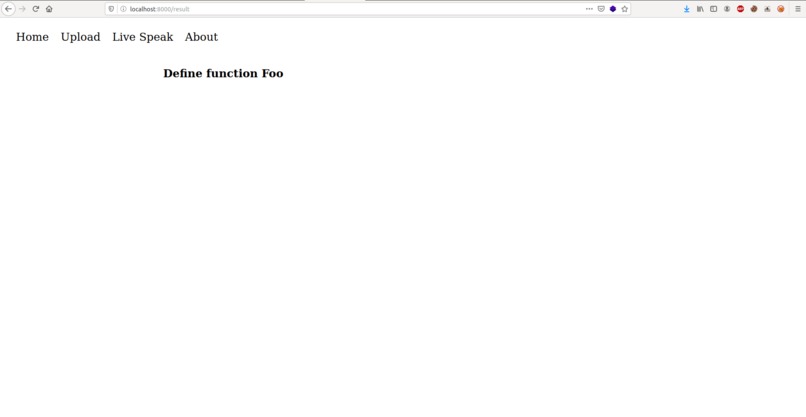
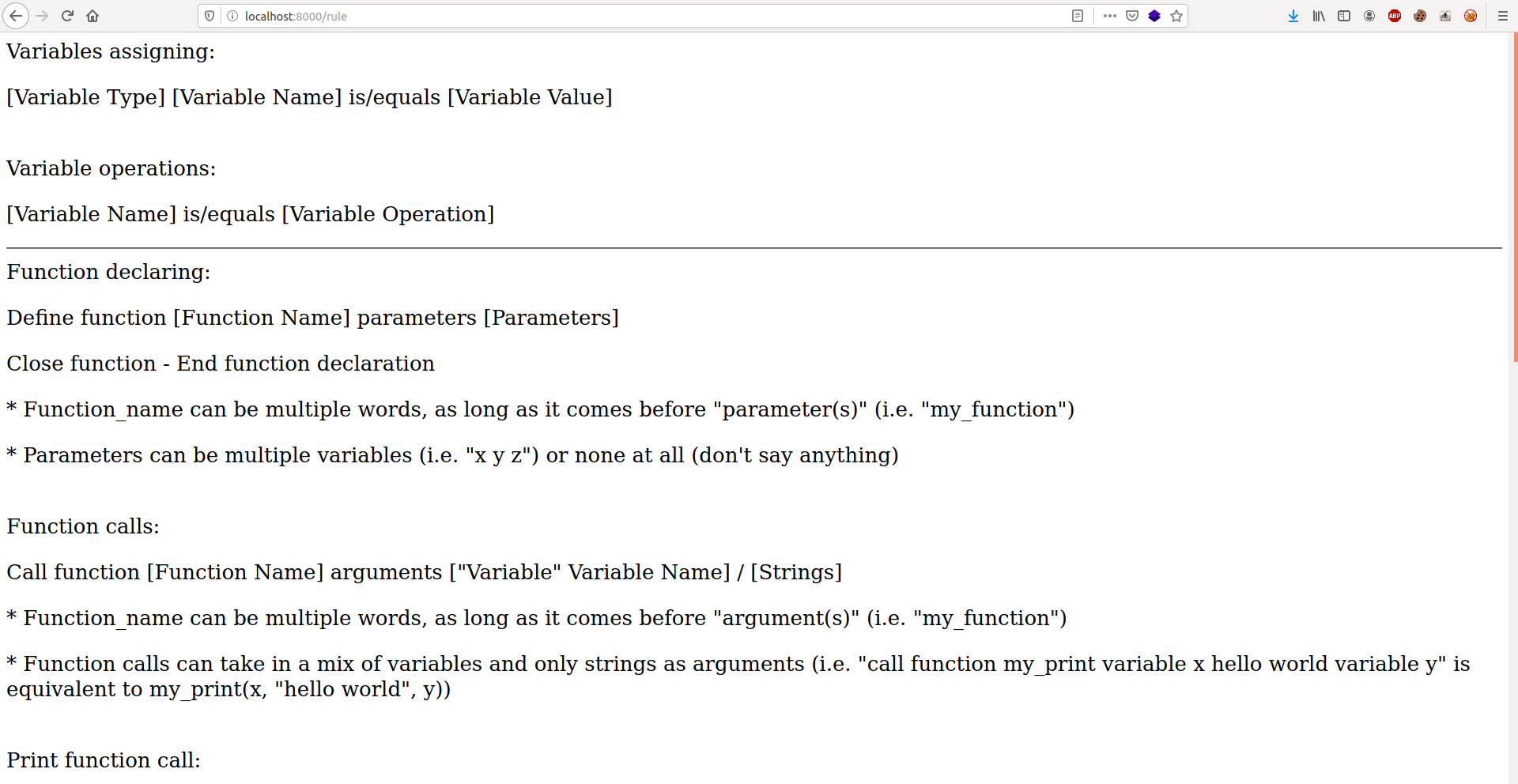
The page that displays the Python syntax
-
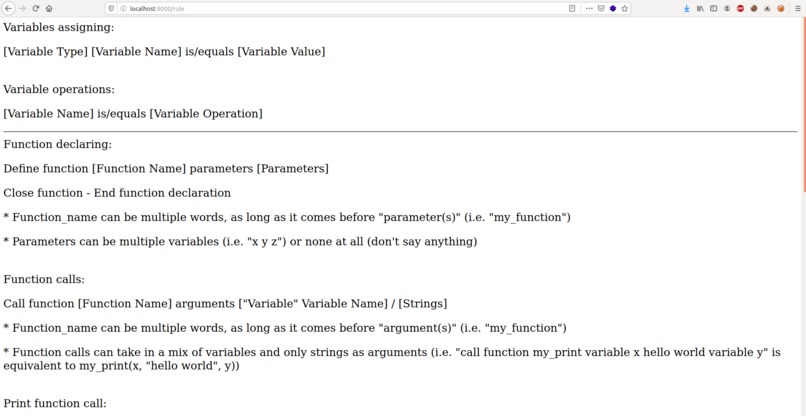
The page that displays the command list
-
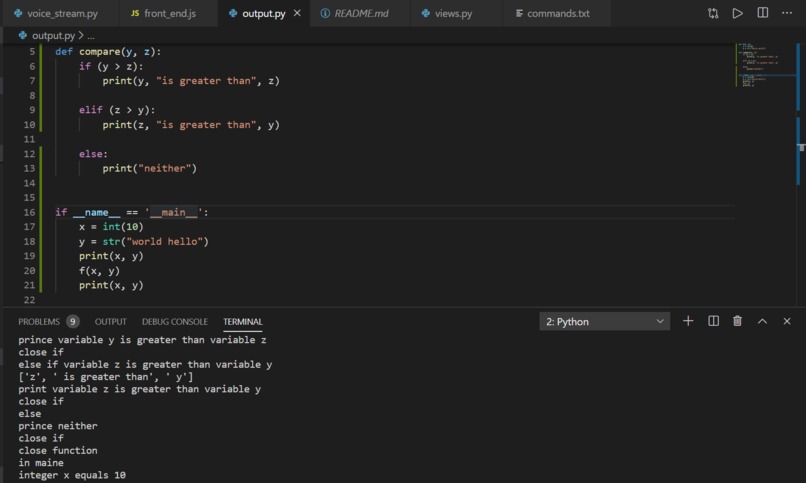
Test run of speech-to-code in real time

Inspiration
We all knew we wanted to do something related to voice recognition for this hackathon, but we didn't know what specifically to do. We started talking about what languages we wanted to work in when suddenly we put both ideas together and thought about making a speech-to-code program. We chose Python because syntactically it was the easiest to work with and most flexible.
What it does
The basic idea is speech-to-code. By taking in speech commands, users are able to write and format proper Python code. We wanted to create another and more interesting way to code.
How we built it
We used Python to build the entire backend using Django as our framework. The program uses PyAudio's library to take in user speech input and Google Cloud's speech-to-text API to format the input into words. From there, we created individual functions for commands that the user can say so that proper Python syntax is written into a .py file. For our website we used html, css, and javascript.
Challenges we ran into
Getting the Google Cloud API key to be functional for everyone in the group was the first big hurdle that we had to overcome. The inaccuracy of Google Cloud's speech-to-text translation made certain keywords very difficult and we had to accommodate in many ways. Setting up web servers was also a challenge.
Accomplishments that we're proud of
Even though we ran into many challenges along the way, we overcame them and our program is able to run basic Python using user audio input. It really opens our eyes to the potential that our program actually has.
What we learned
We learned how to use the Google Cloud API, how to work on things that we don't have any background knowledge on, and how to connect the backend and frontend.


Log in or sign up for Devpost to join the conversation.