-
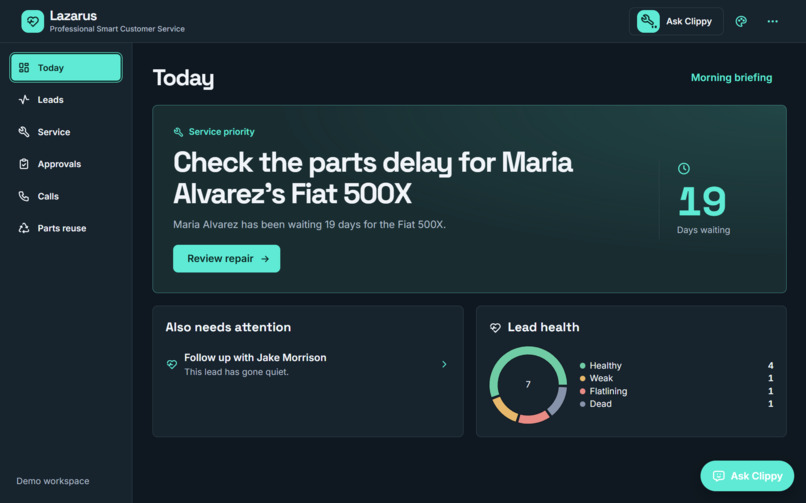
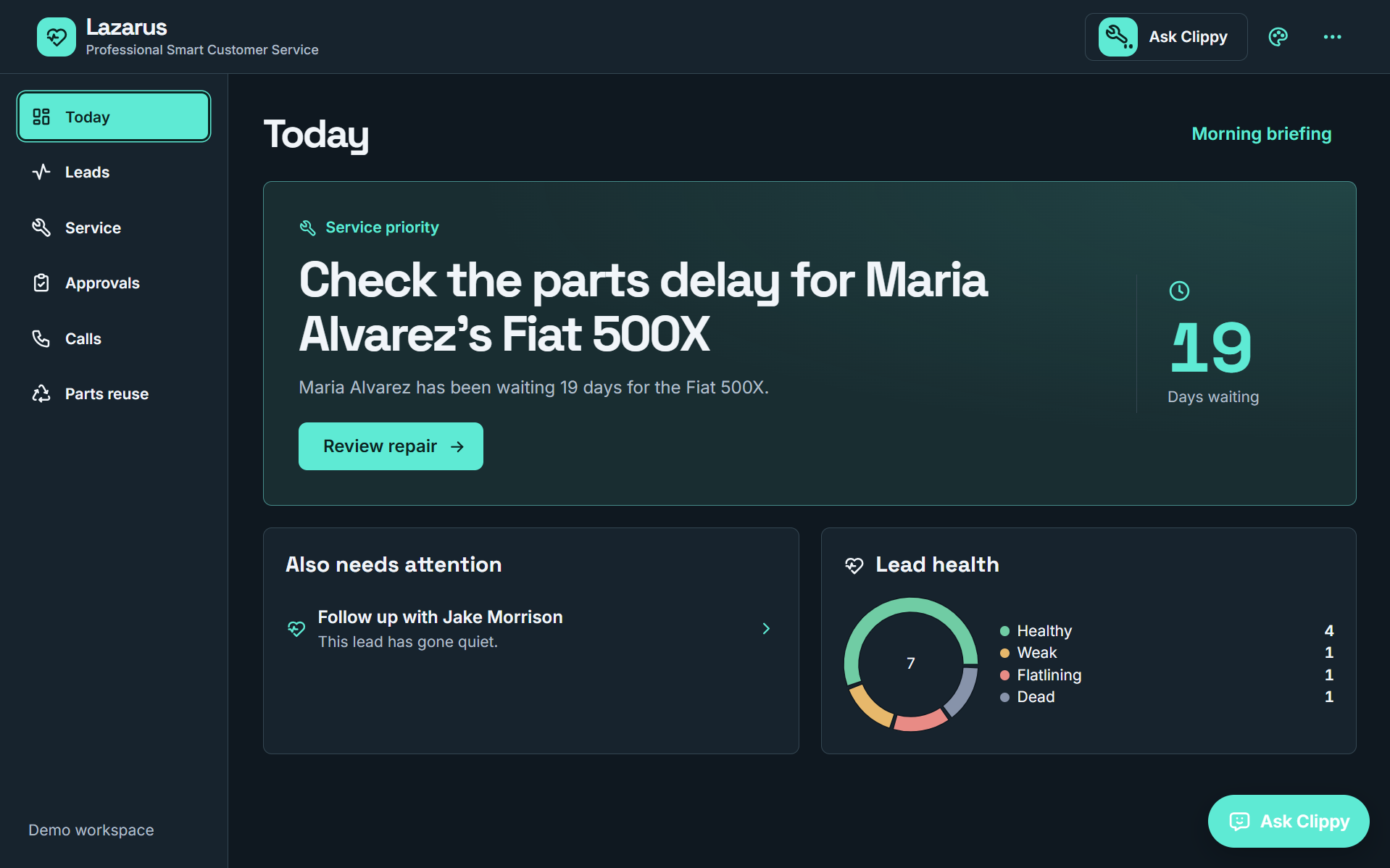
A morning briefing that surfaces urgent repairs, pending approvals, and lead health
-
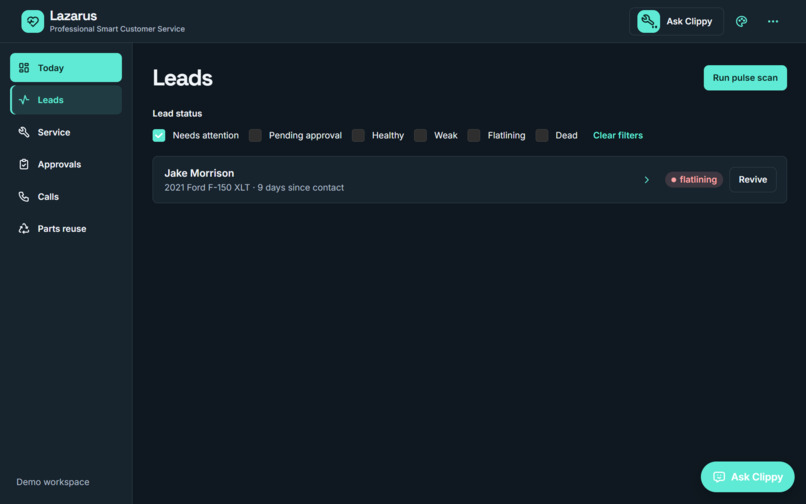
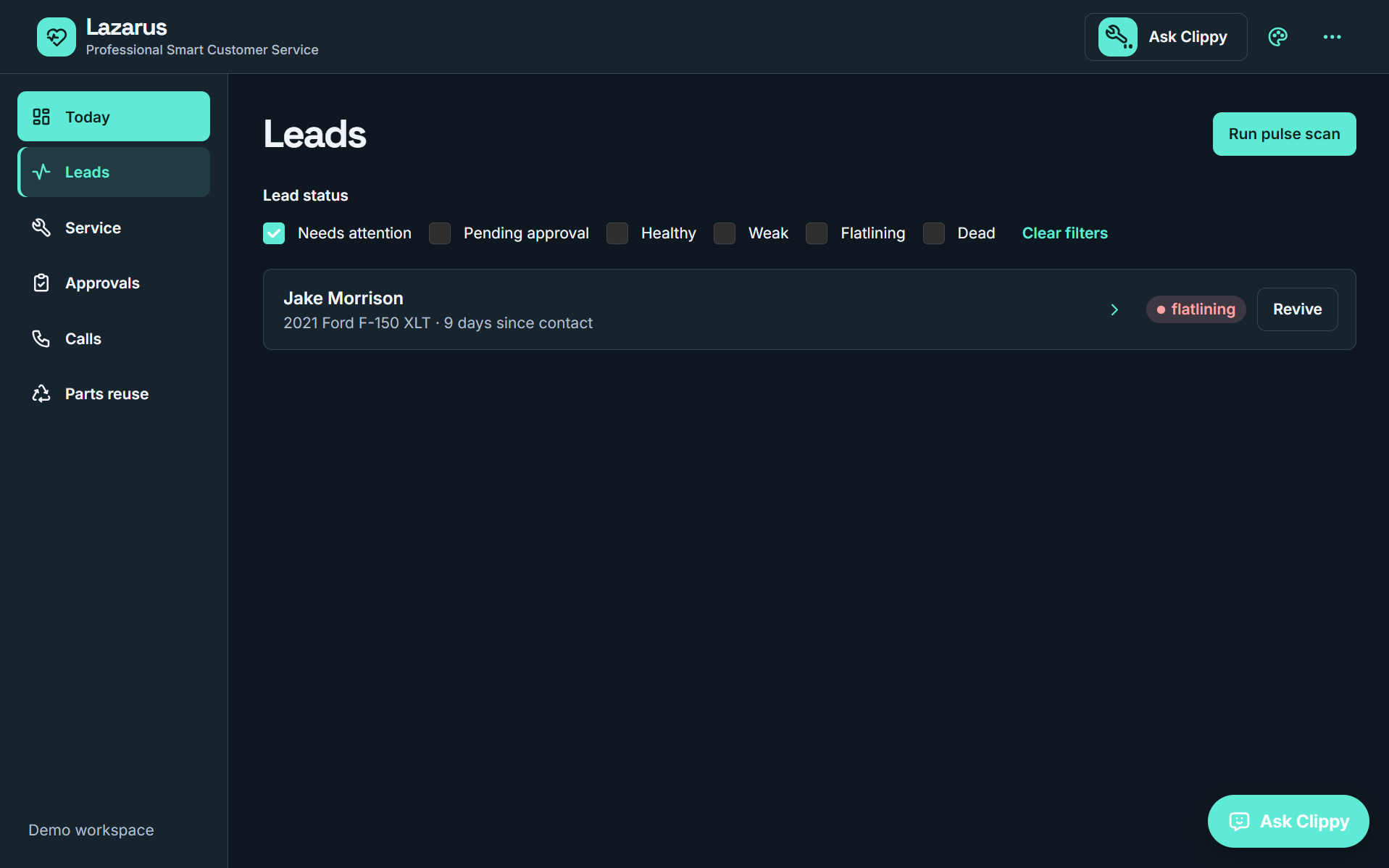
Review lead activity, filter by status, and request follow-ups for eligible customers
-
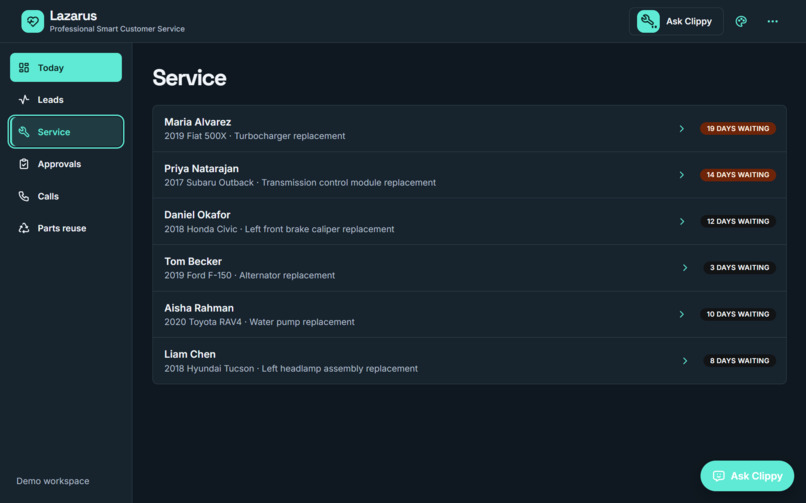
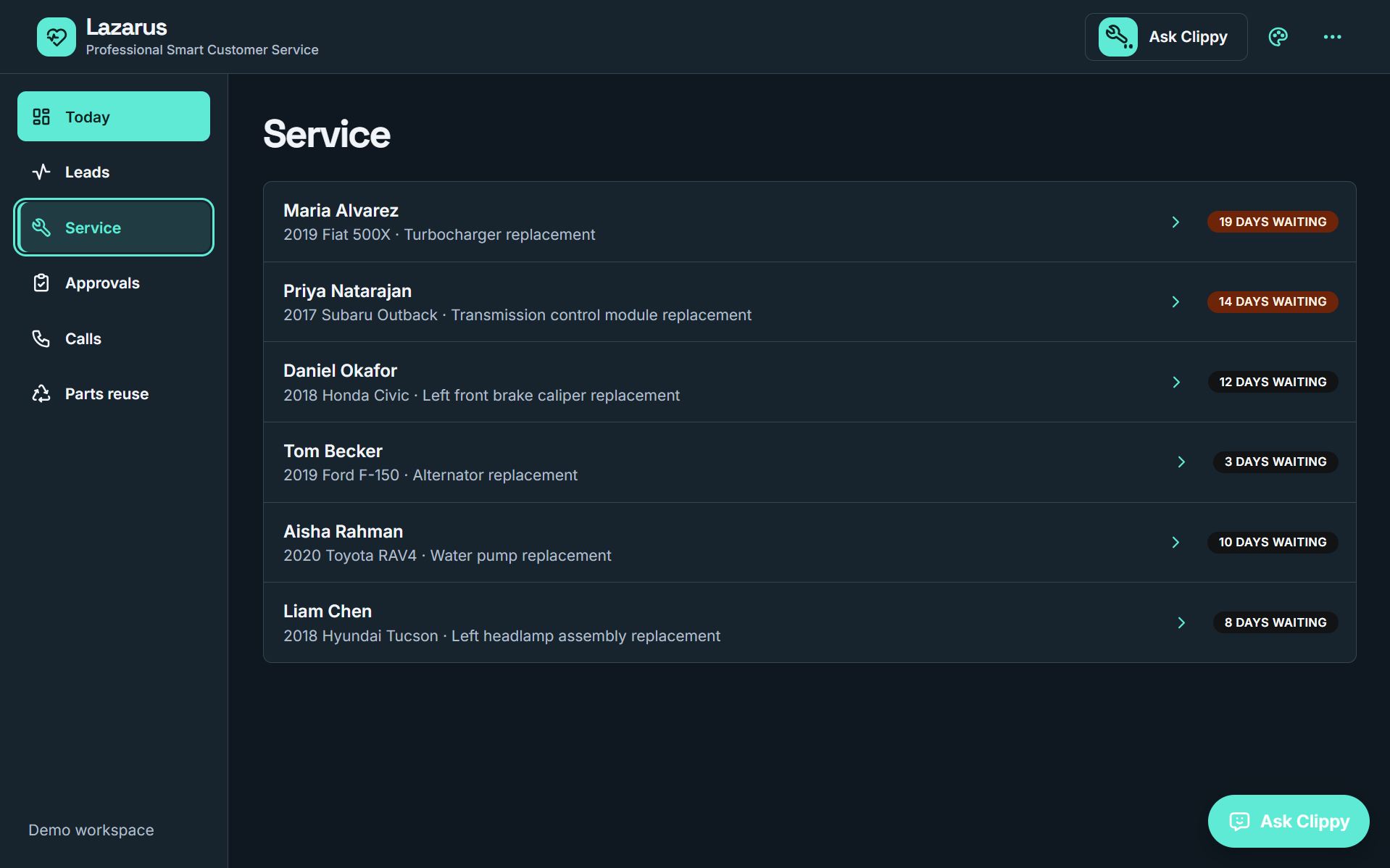
Track repair requests, check delays, and prepare customer updates or parts-recovery actions
-
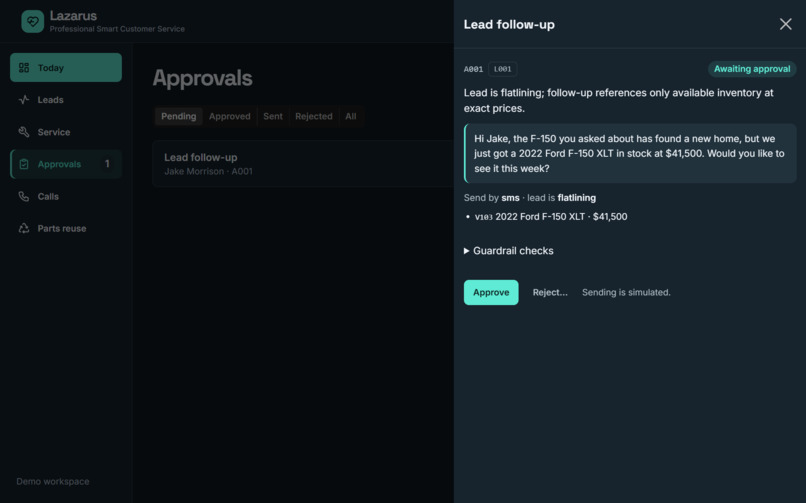
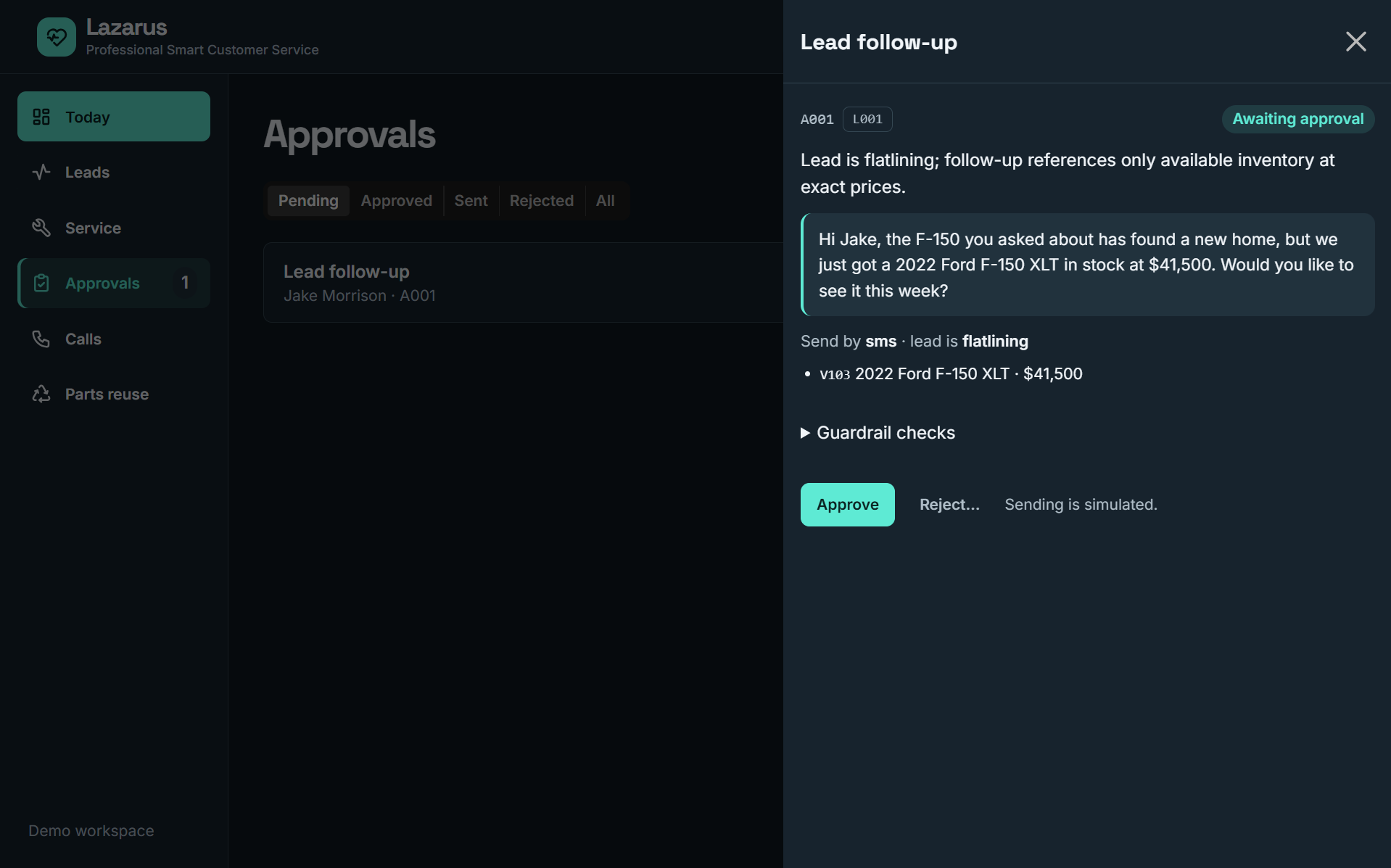
Review, edit, approve, or reject AI-generated drafts before simulated sending
-
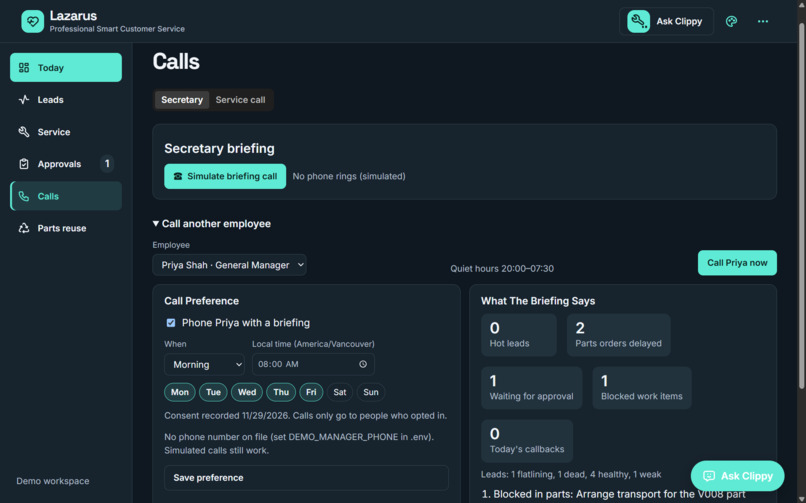
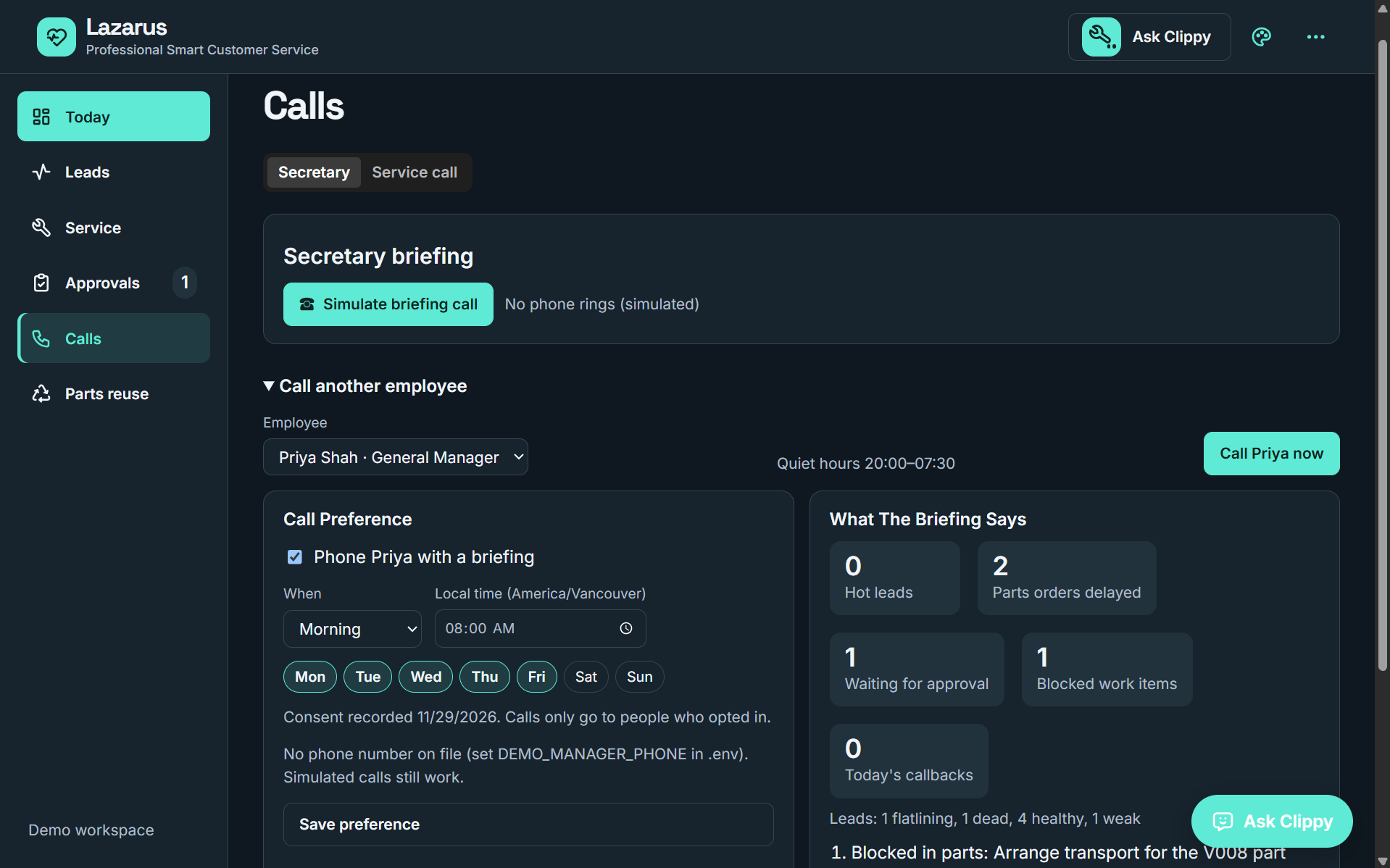
View employee briefings and try simulated secretary or customer service calls
-
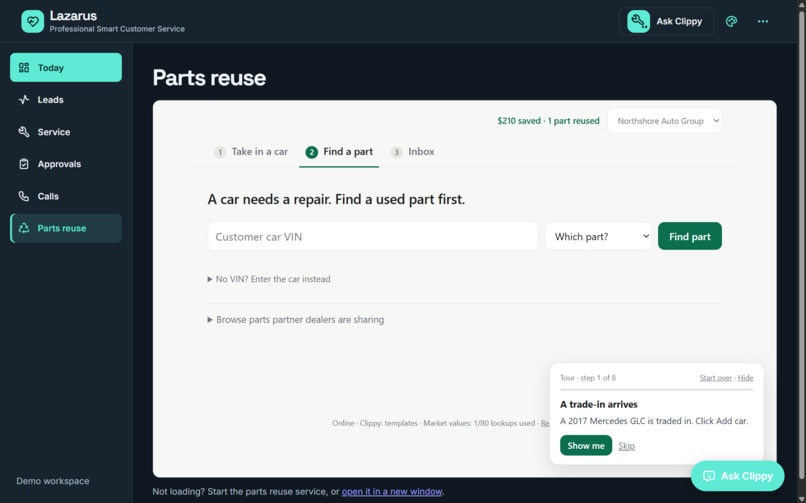
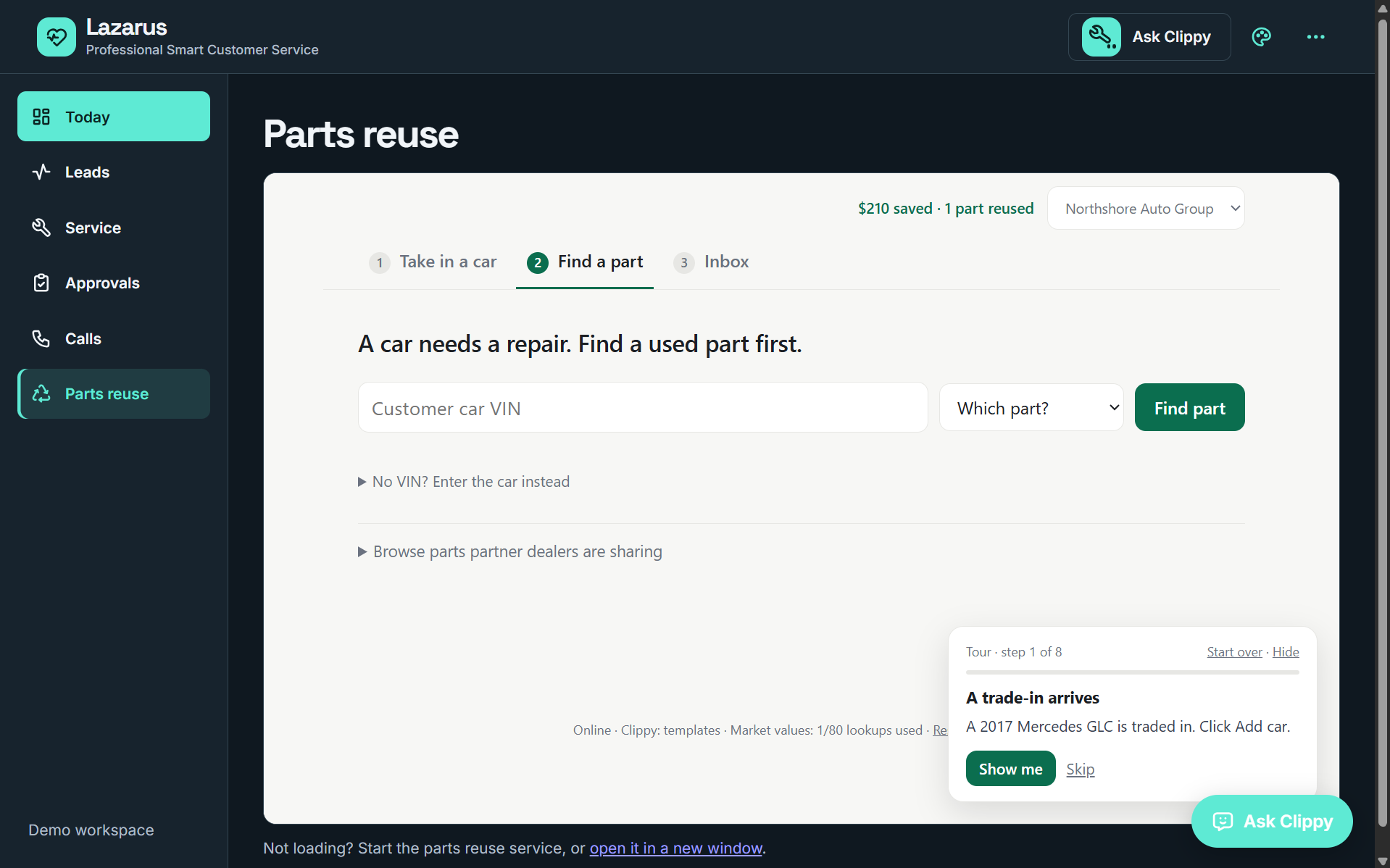
Register donor cars, find compatible used parts, and manage requests across partner dealerships
Inspiration
Dealership teams juggle leads, service delays, parts sourcing, and customer follow-ups across separate workflows. We wanted to give staff one place to spot what needs attention and help customers get a faster, clearer response with the assistance of AI.
What it does
Lazarus is an application built for employees at dealerships to keep leads alive, keep waiting customer informed, and turn service frustrations into sales.
Lazarus is a dealership service workspace with six areas:
- Today: A morning briefing highlights urgent work, pending approvals, and lead health.
- Leads: Staff can filter leads, review contact history, log simulated replies, and request follow-up drafts for eligible leads.
- Service: Staff can review repair requests, draft customer updates, and ask the parts agent to look for faster options.
- Approvals: Employees can review, edit, approve, reject, and simulate sending AI-prepared drafts.
- Calls: Staff can explore a secretary briefing and a simulated service-call experience.
- Parts reuse: A separate app supports registering donor cars, finding compatible used parts, and handling dealer-network requests.
Ask Clippy is available throughout the workspace for parts questions and message-drafting workflows. Customer communications remain drafts until a person approves them; sending is simulated in this demo.
How we built it
We built the frontend with React, Vite, and Mantine, and the backend with Python. A FastAPI backend connects it to an event-driven Python orchestrator, which runs lead, service, and call workflows. The orchestrator can use AI backends and tools, including a read-only Parts MCP server.
The parts-reuse app runs as a separate service and uses SQLite. The development stack is containerized with Docker Compose. Demo mode uses deterministic fake AI backends, so the workflows can be explored without model credentials. Twilio handles the manager’s briefing call and SMS.
Challenges we ran into
Getting the briefing to work over a real phone line took several iterations. We worked through Twilio account verification, sender configuration, and the public connection for the call. We simplified the demo call so it reads the briefing aloud and hangs up. We also added an SMS preview and a character counter so staff can see exactly what will be sent and confirm it fits in one text.
Parts fitment was another challenge. Two vehicles can look like a match while still needing a technician to check the part number or condition. We turned those checks into an explicit approval step in the workflow.
Accomplishments that we're proud of
We connected the parts search, repair record, and customer update in one workflow. In our demo, Lazarus found a used headlight priced at $170 versus $480 new, an estimated $310 difference. Staff can see the recommendation, verify the required checks, approve the part, and track where it went. We also brought the briefing, chat, and manager phone controls into the same Console.
What we learned
The most useful automation gives staff a clear next step and the facts behind it. A service advisor needs to see which part was found, what it could save, and what still needs checking. We learned to use the model for interpreting requests and drafting language while keeping decisions about fitment, consent, and approval tied to records and staff review.
What's next for Lazarus
We’d like to pilot Lazarus with one dealership group. We would connect it to their inventory and repair systems, add a licensed fitment data source, and measure whether it reduces repair wait times and helps staff follow up faster. A pilot would also show which recovered parts are worth sharing across dealerships in the group.
