-
-
LAYON — Enterprise Context Layer for operational memory and contextual governance.
-
LAYON — Enterprise Context Layer for operational memory and contextual governance.
-
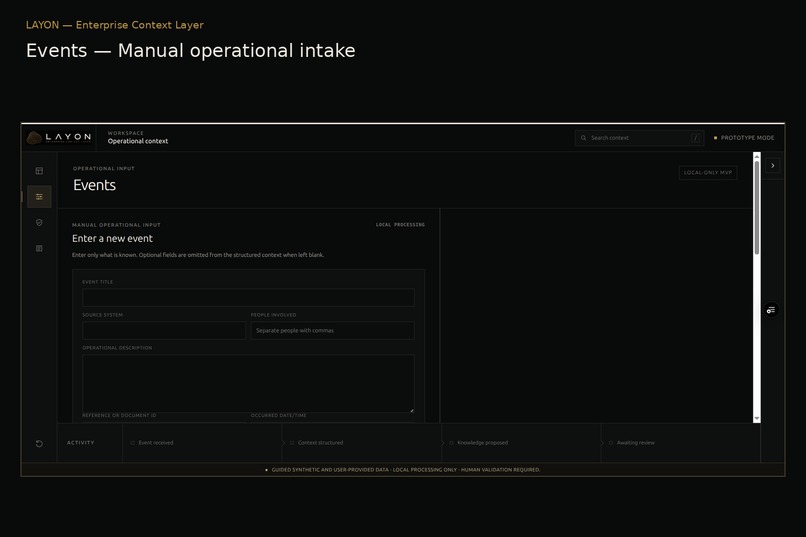
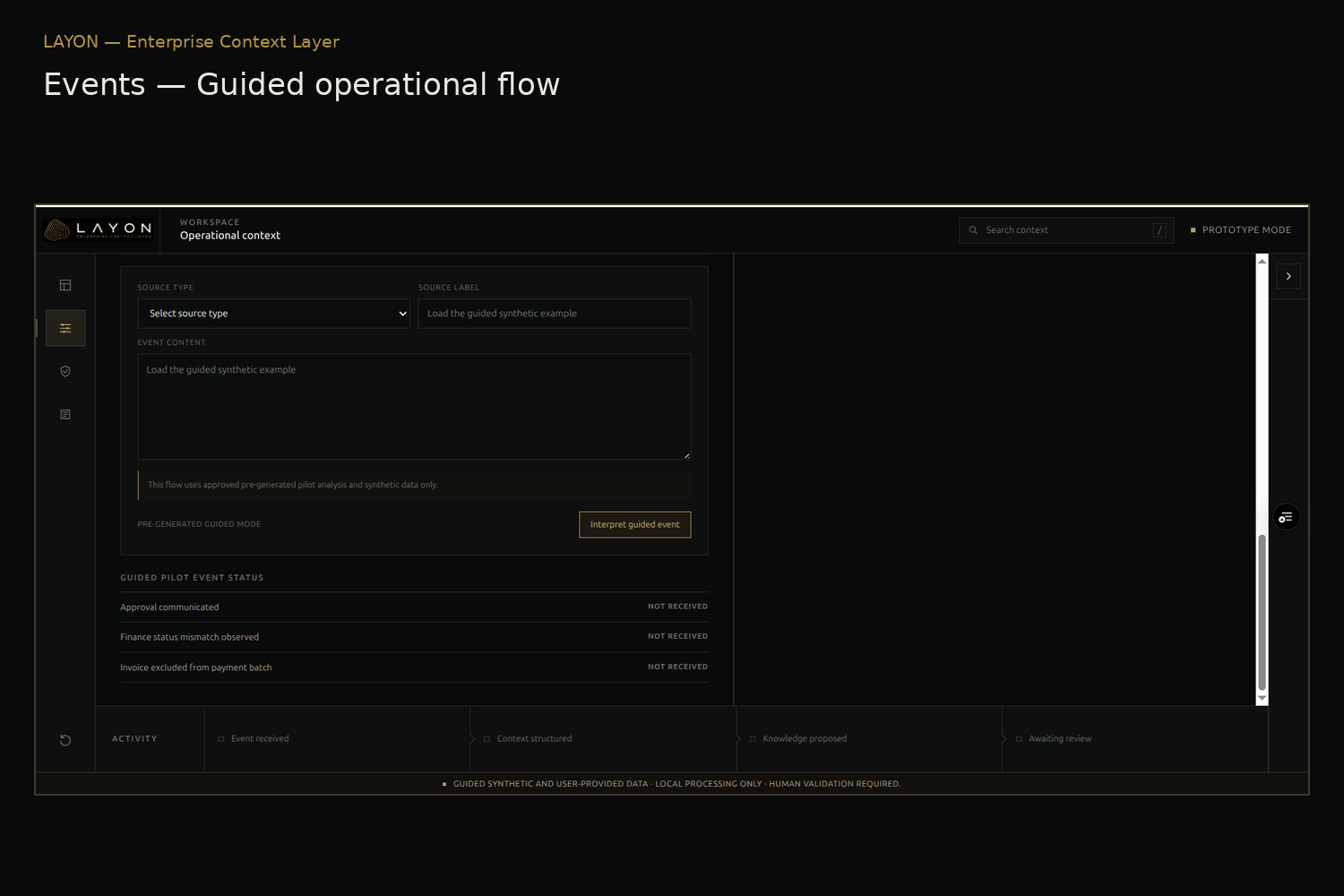
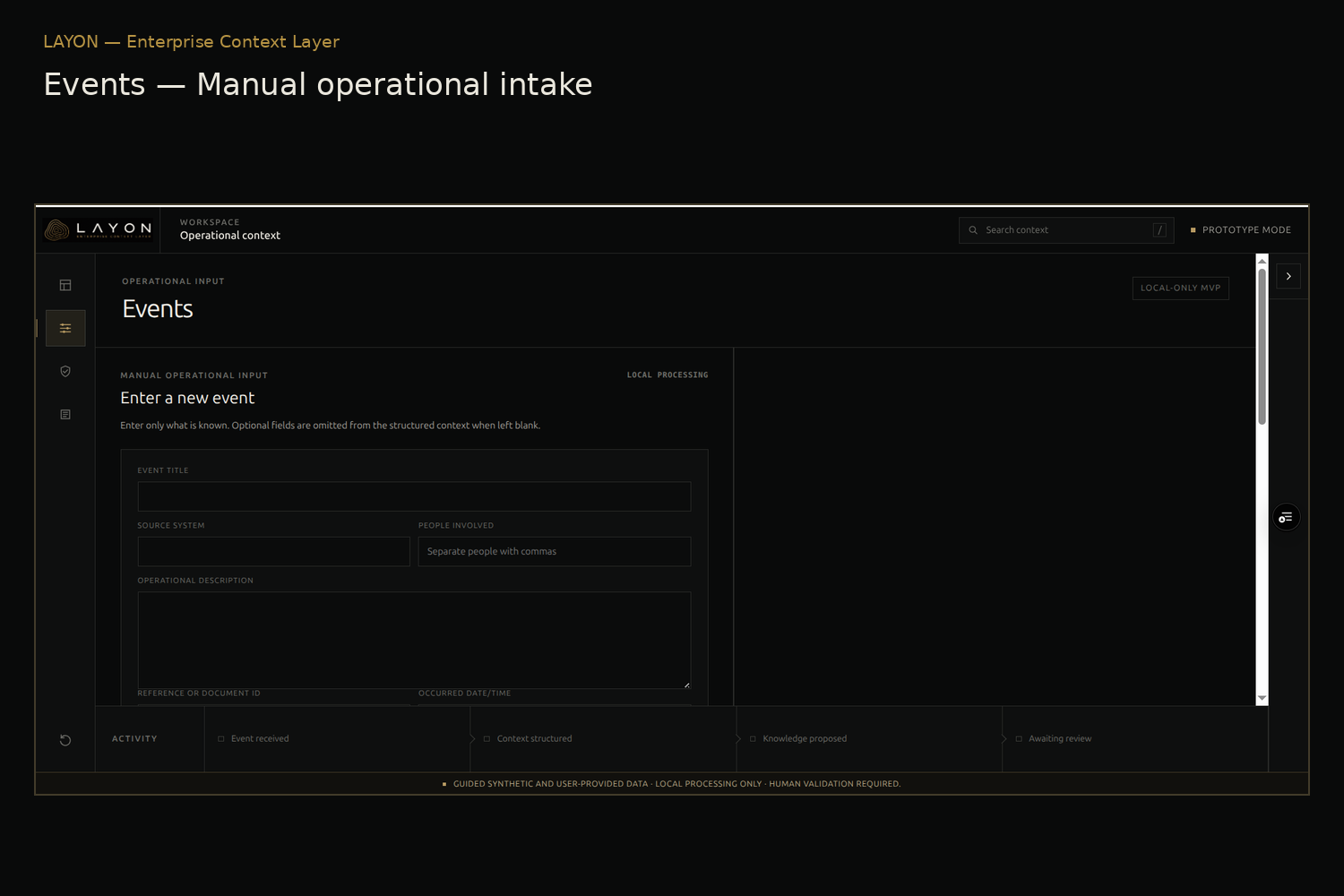
Operational events are converted into structured organizational context.
-
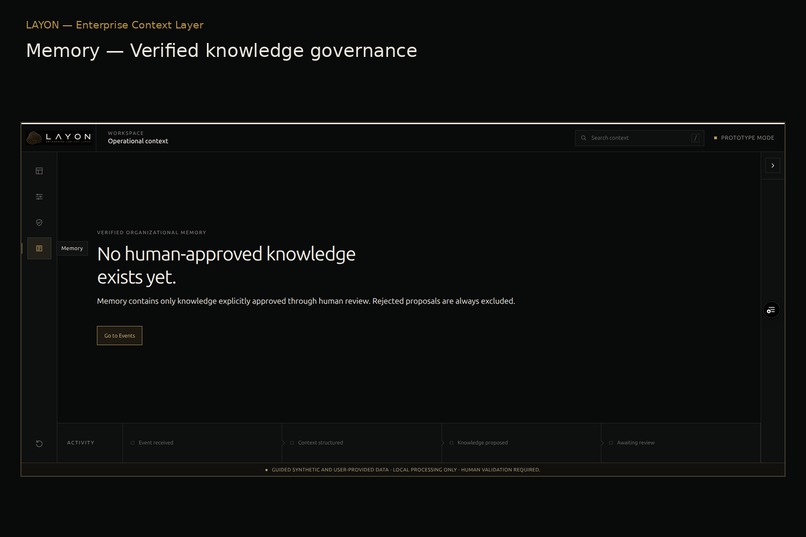
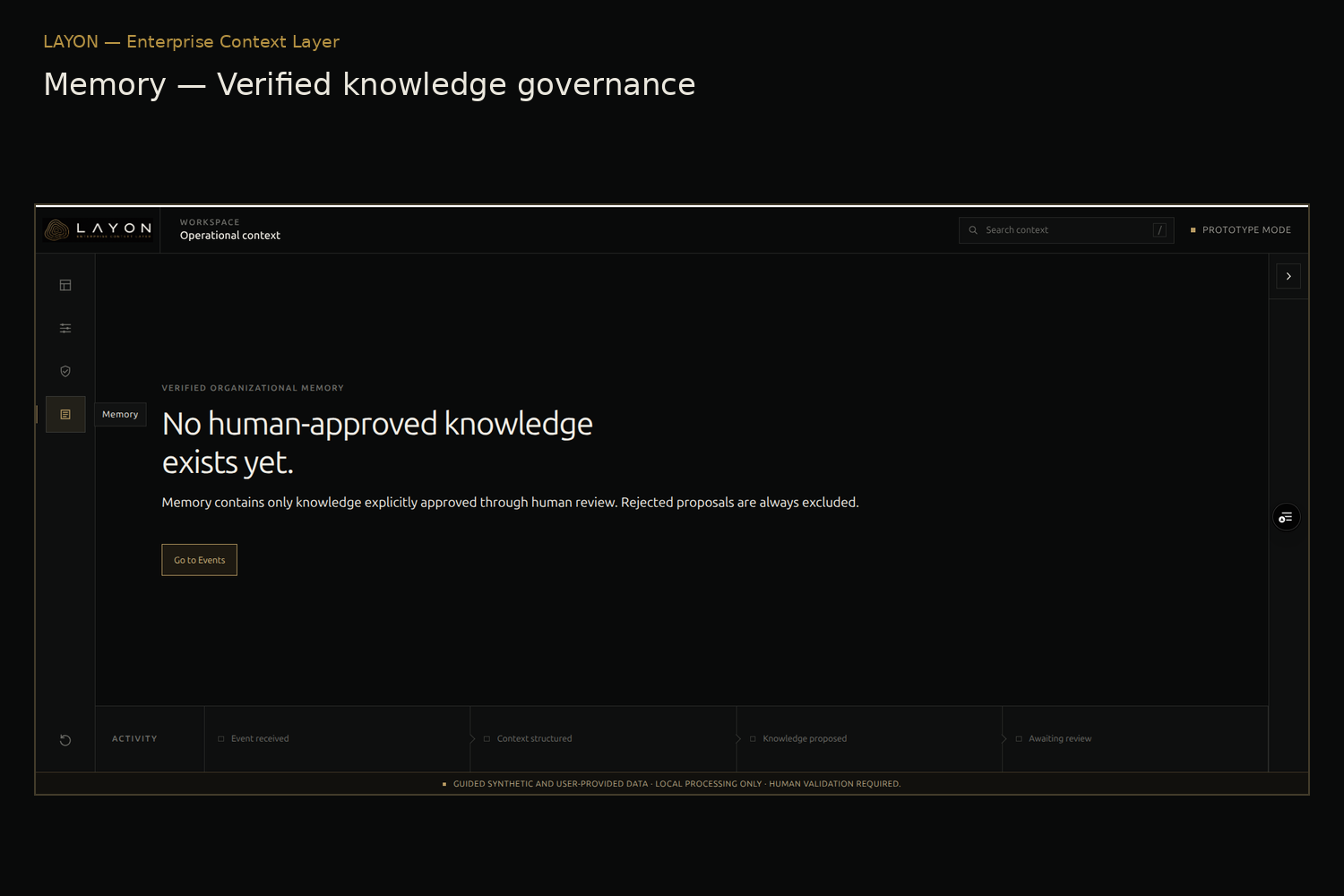
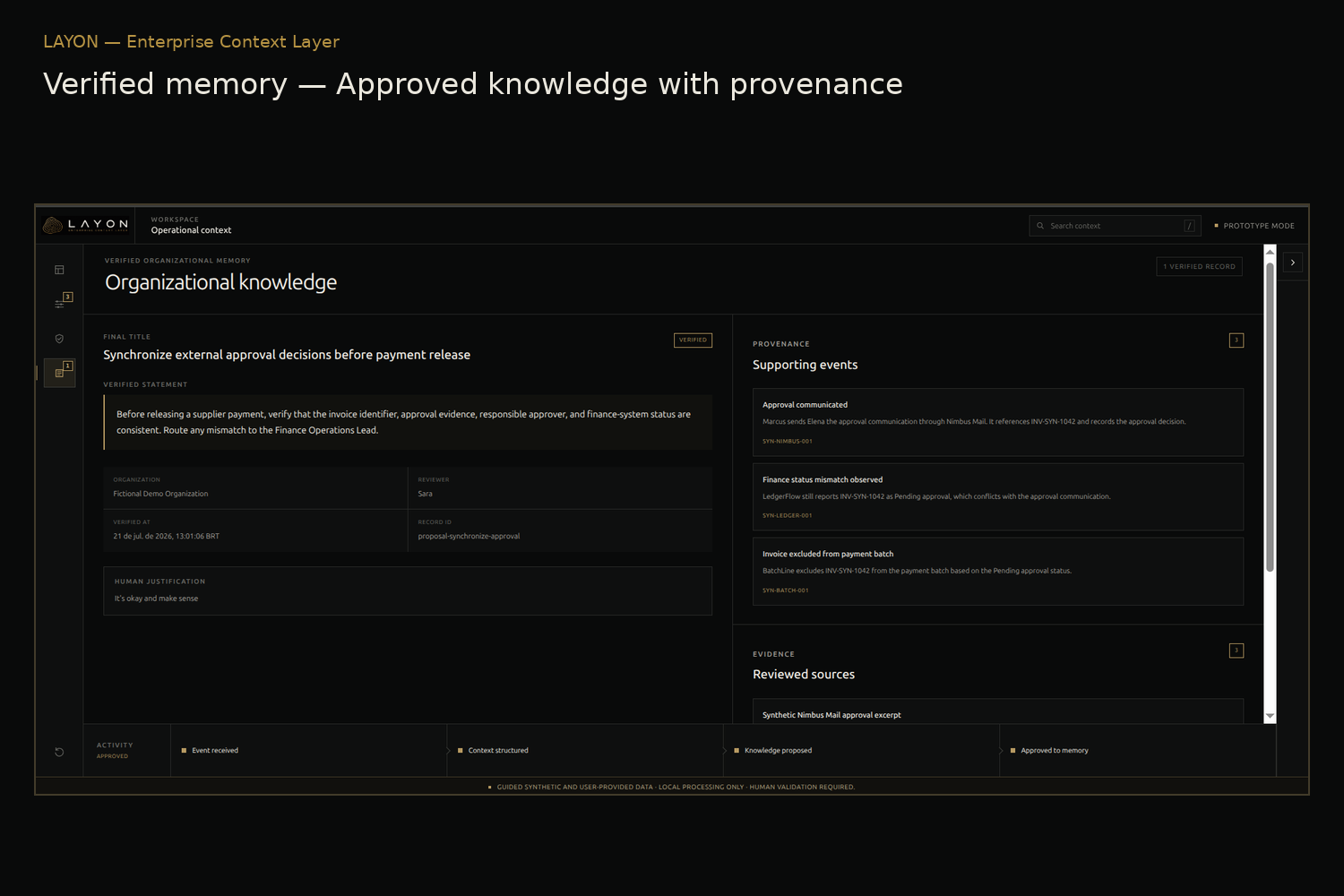
Approved knowledge becomes traceable institutional memory with provenance and evidence.
-
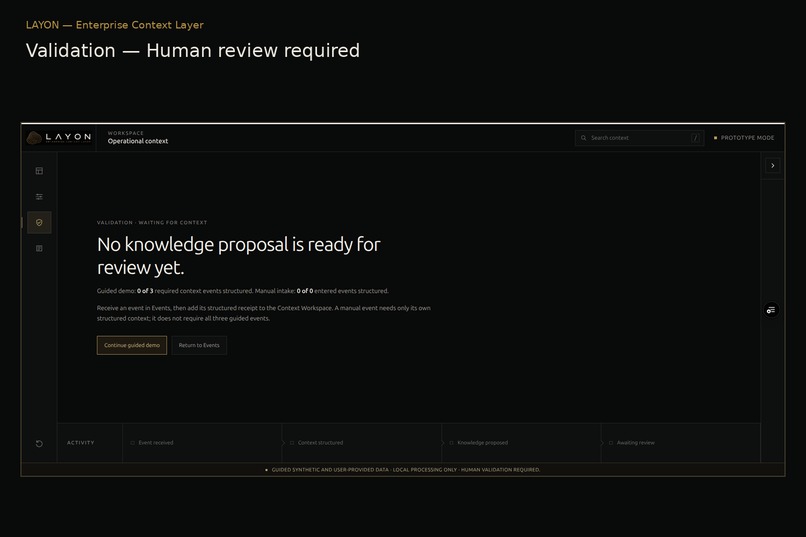
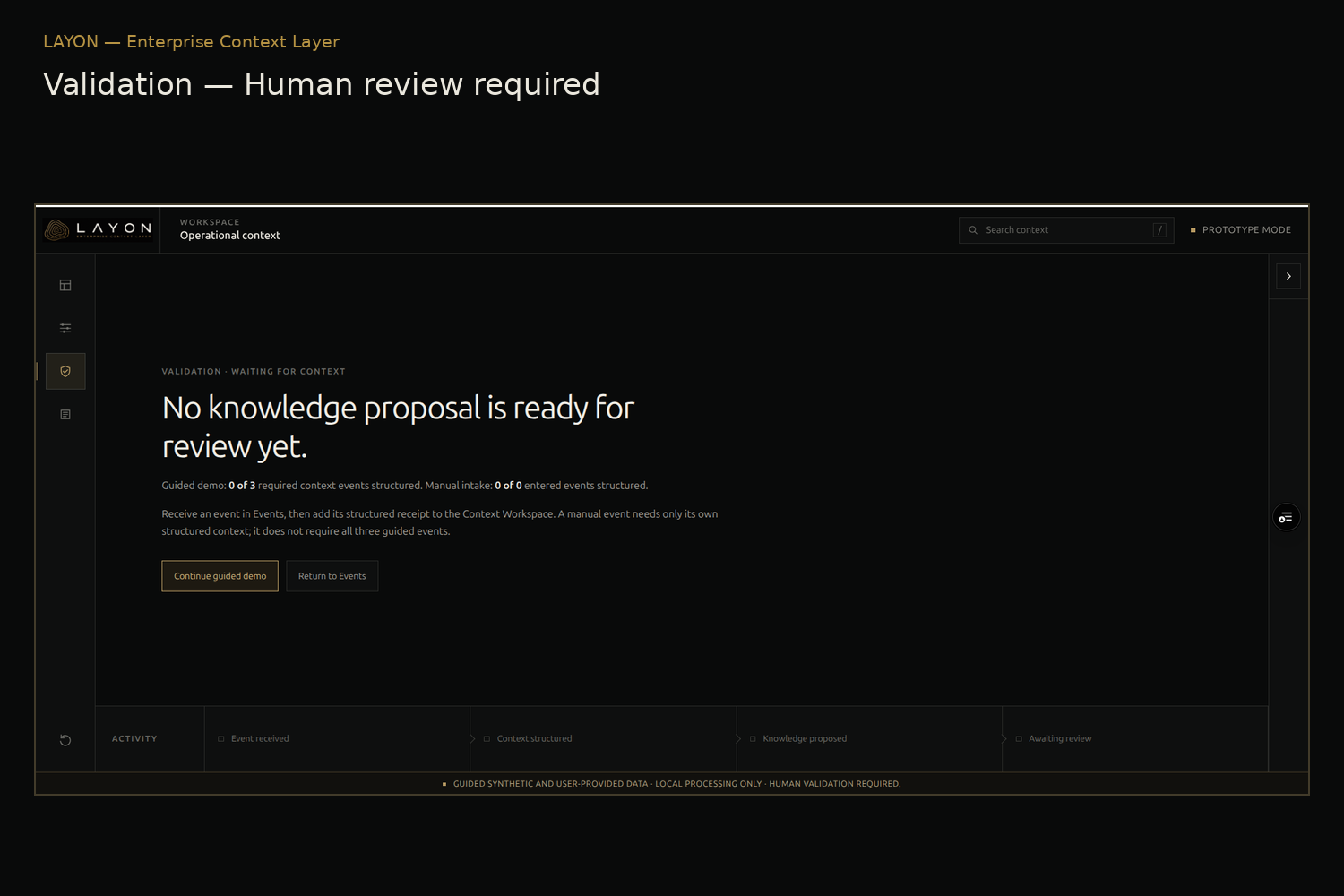
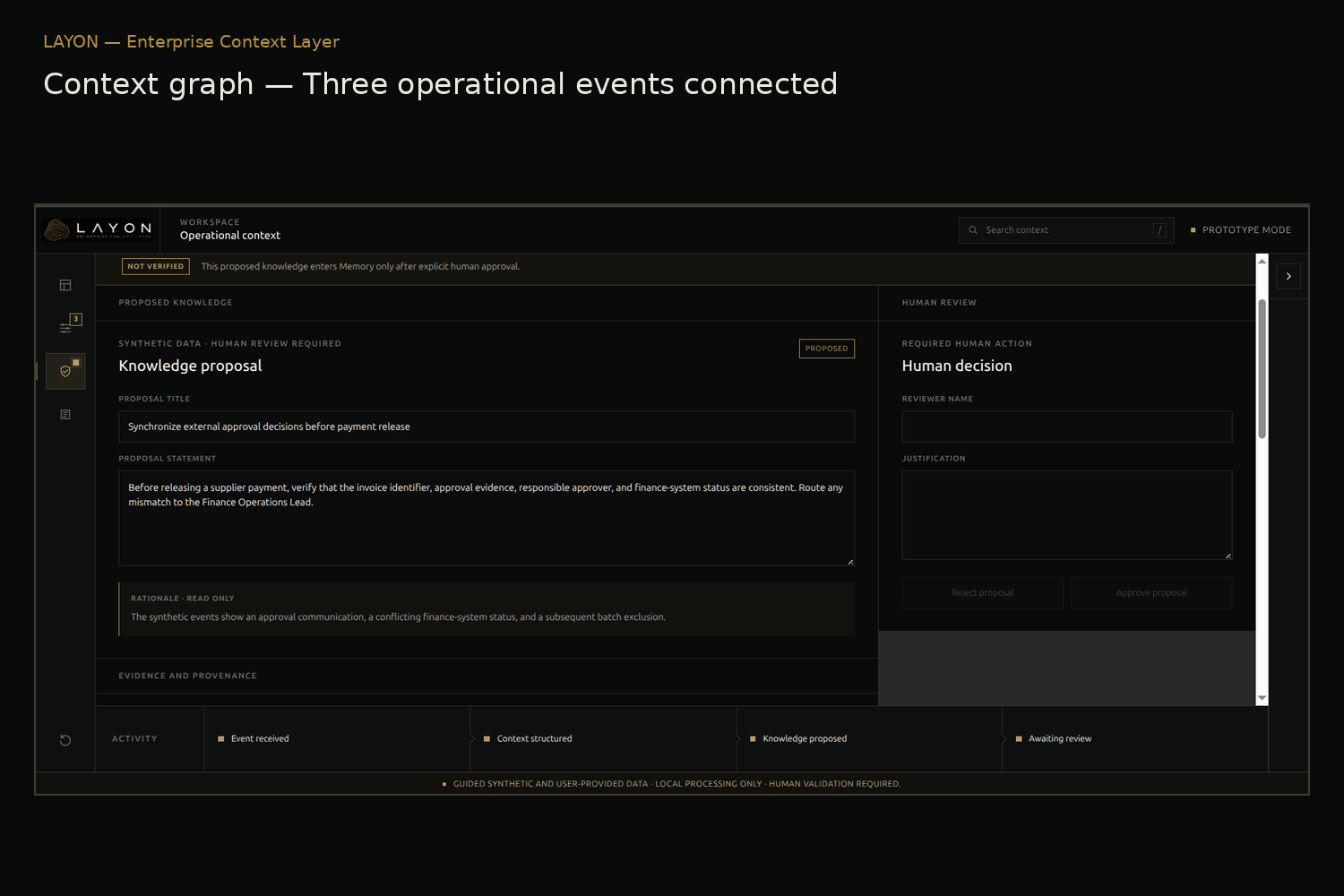
Knowledge proposals require human validation before becoming organizational truth.
-
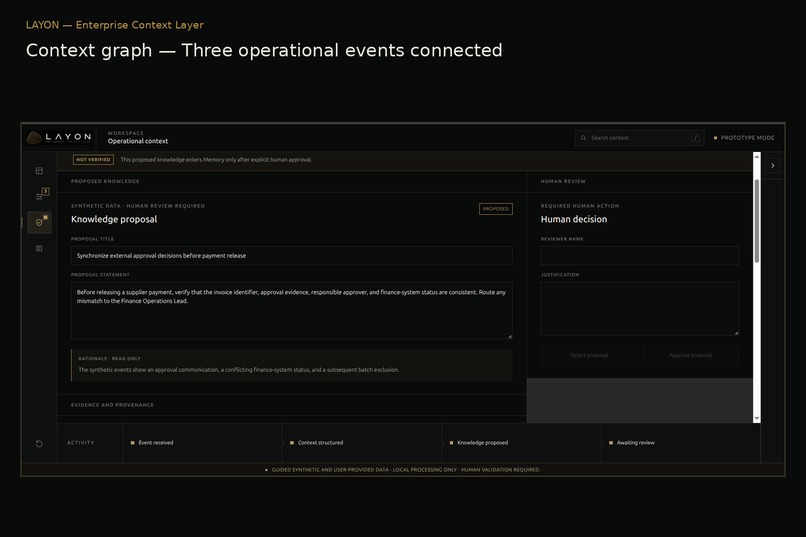
Three operational events are connected into a structured context graph.
-
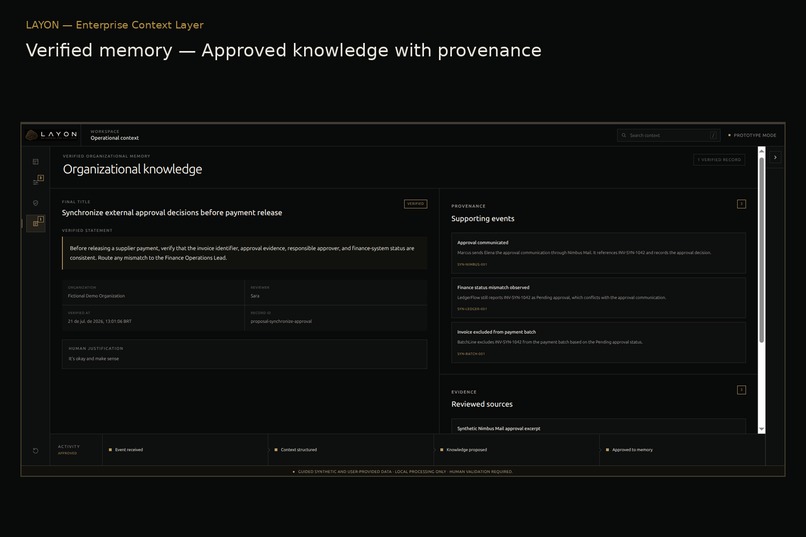
Approved knowledge enters verified organizational memory with provenance and supporting evidence.
-
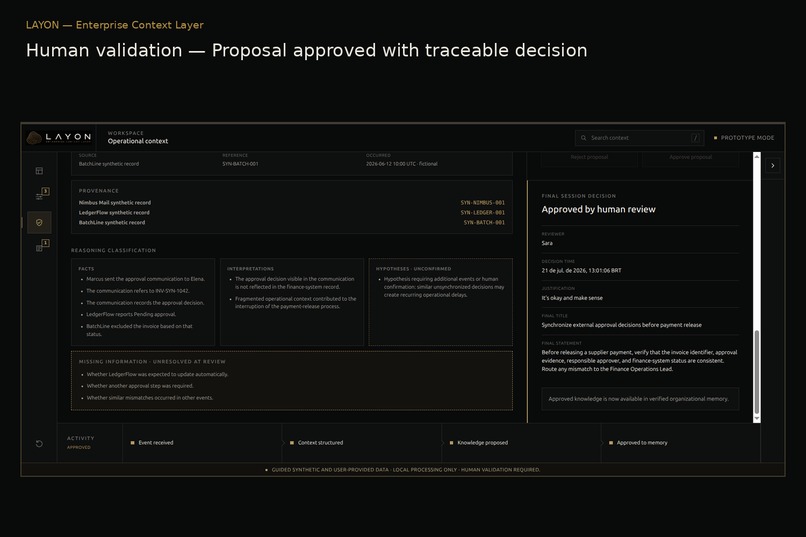
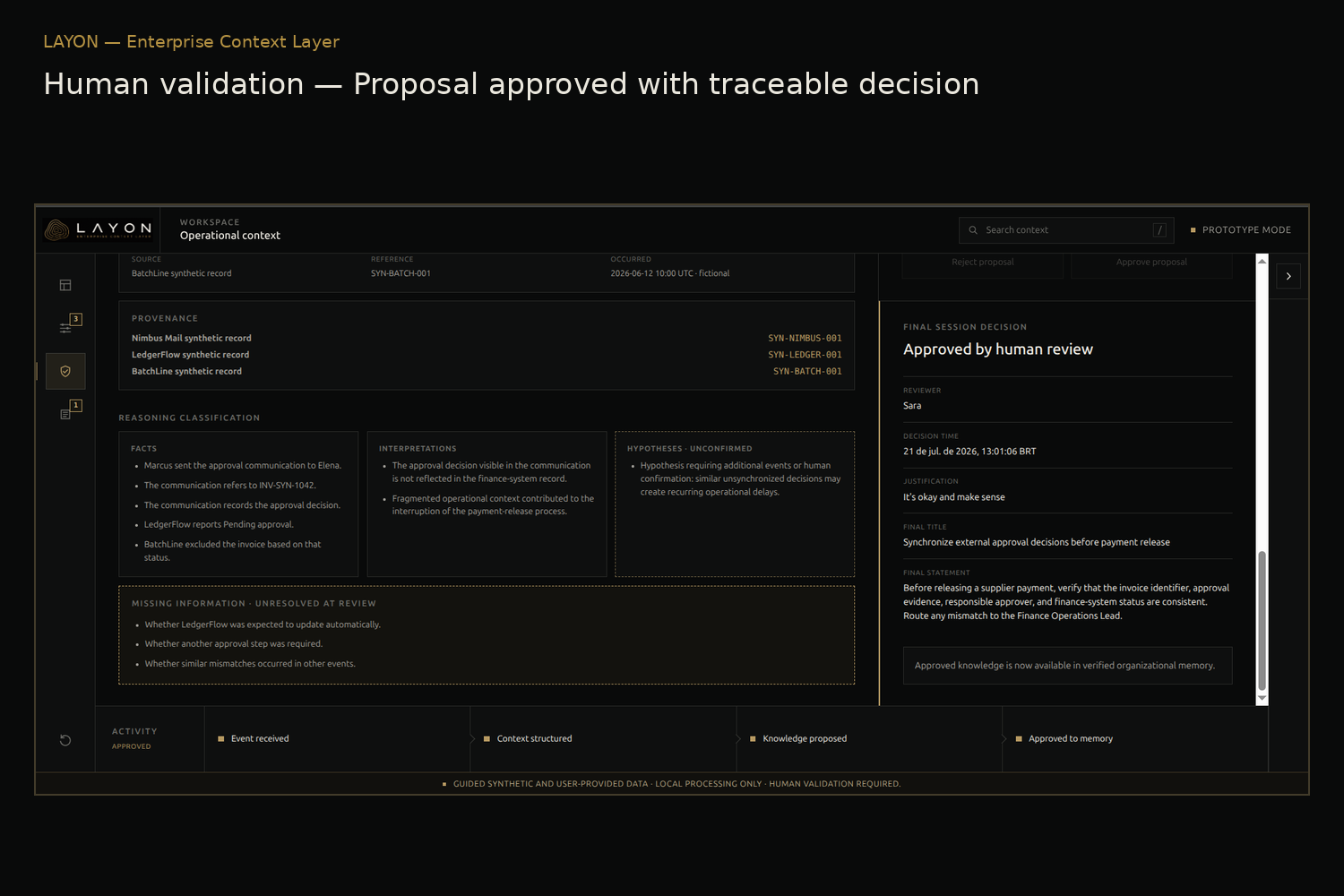
A knowledge proposal is approved only after explicit human review.
Inspiration
I created LAYON after observing how important decisions, responsibilities, documents, and operational updates become fragmented across meetings, messages, systems, and files. The information exists, but the context connecting it is often lost.
What it does
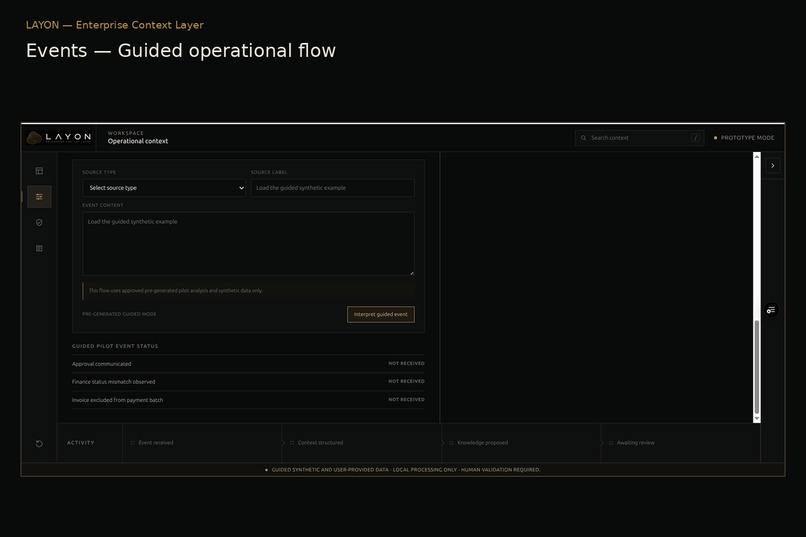
LAYON transforms operational events into structured context, connects people, systems, documents, and relationships, and creates reviewable knowledge proposals. Only proposals approved through human validation become verified organizational memory.
How we built it
LAYON was built with React, TypeScript, and Vite, and deployed on Vercel. The prototype includes manual event intake, a guided synthetic scenario, structured event receipts, a context graph, evidence review, approval and rejection, and verified memory.
Codex supported repository development, component implementation, state logic, interface construction, debugging, and iterative prototyping. GPT-5.6 was used during development to design the interpretation pipeline and its structured output contract.
The public prototype uses deterministic local processing and synthetic data so the complete workflow can be tested without external credentials. State is stored in-session and resets when the page is refreshed.
Challenges we ran into
The main challenge was reducing a broad enterprise architecture into a focused MVP while preserving the distinction between raw information, interpretation, proposed knowledge, and verified knowledge.
Accomplishments that we're proud of
The prototype demonstrates the complete governance lifecycle:
operational event - structured context - knowledge proposal - human validation - verified memory
It also preserves evidence, provenance, reviewer information, approval timestamps, and rejection paths.
What we learned
The difficult part of organizational AI is not only extracting information. It is controlling how interpreted information becomes trusted knowledge while preserving evidence, uncertainty, and human responsibility.
What's next for LAYON — Enterprise Context Layer
The next stage includes live interpretation of unstructured events, enterprise integrations, persistent and versioned memory, entity resolution across multiple sources, searchable institutional context, and audit controls.
Built With
- codex
- gpt-5.6
- node.js
- react
- typescript
- vercel
- vite

Log in or sign up for Devpost to join the conversation.