-
-
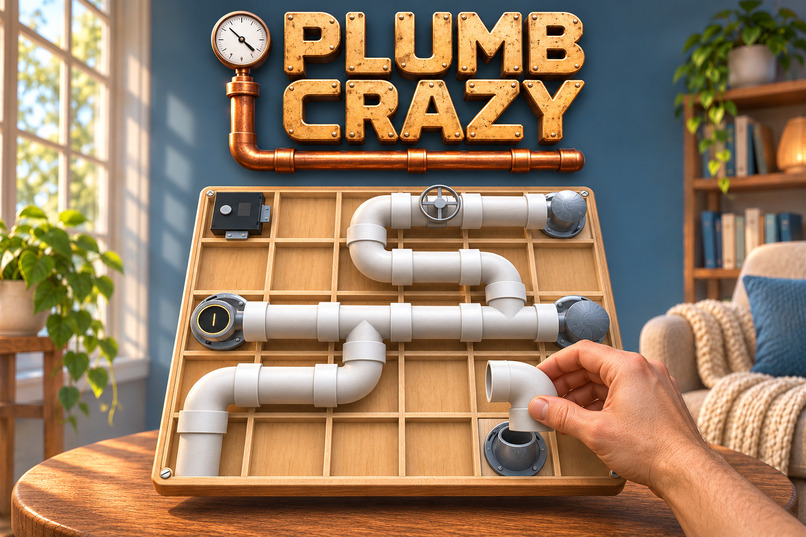
-
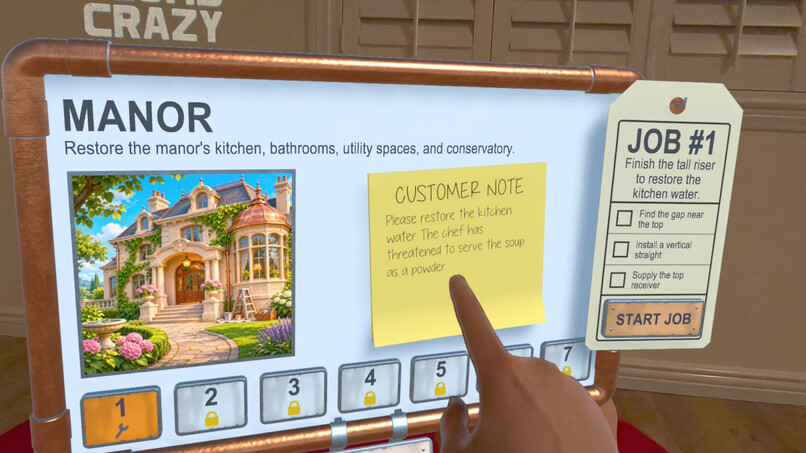
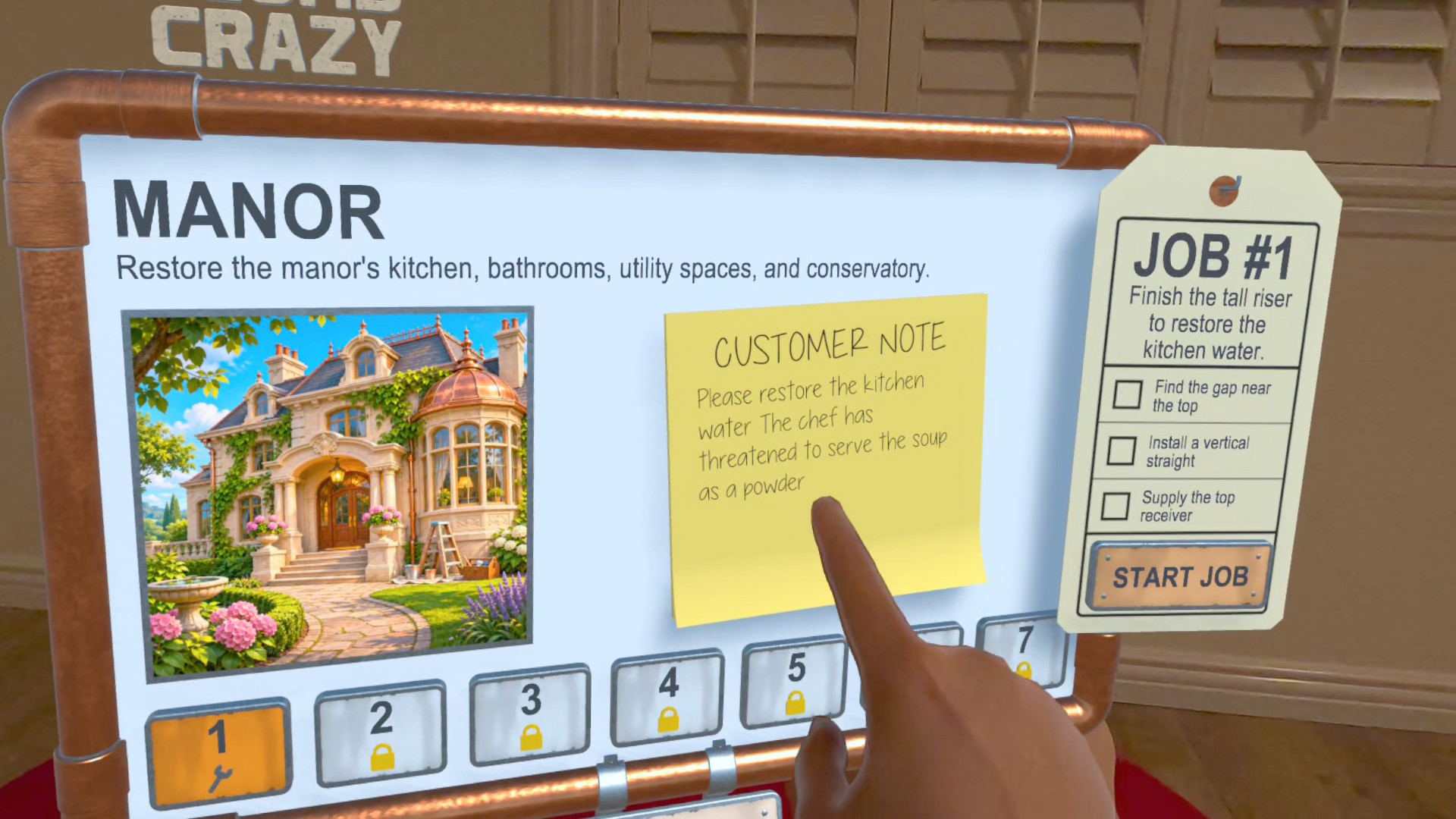
Pick from different job sites and jobs
-
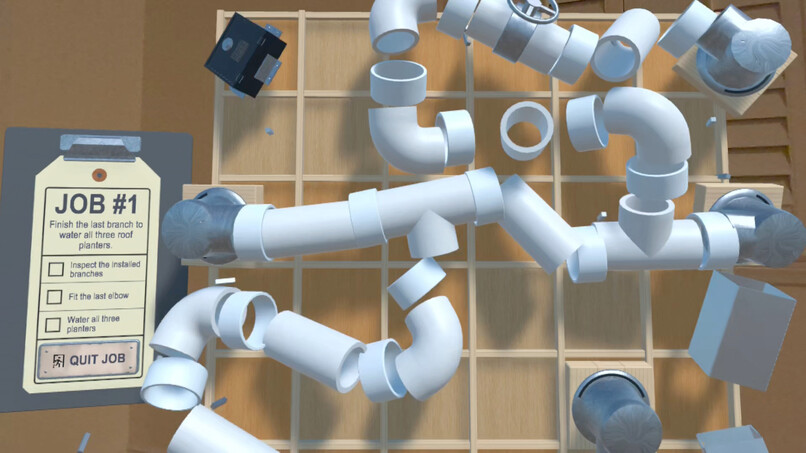
If you quit, the entire workspace collapses
-
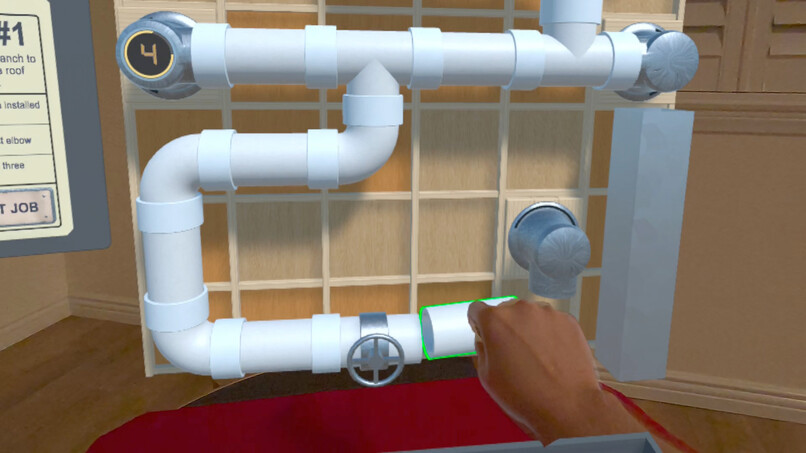
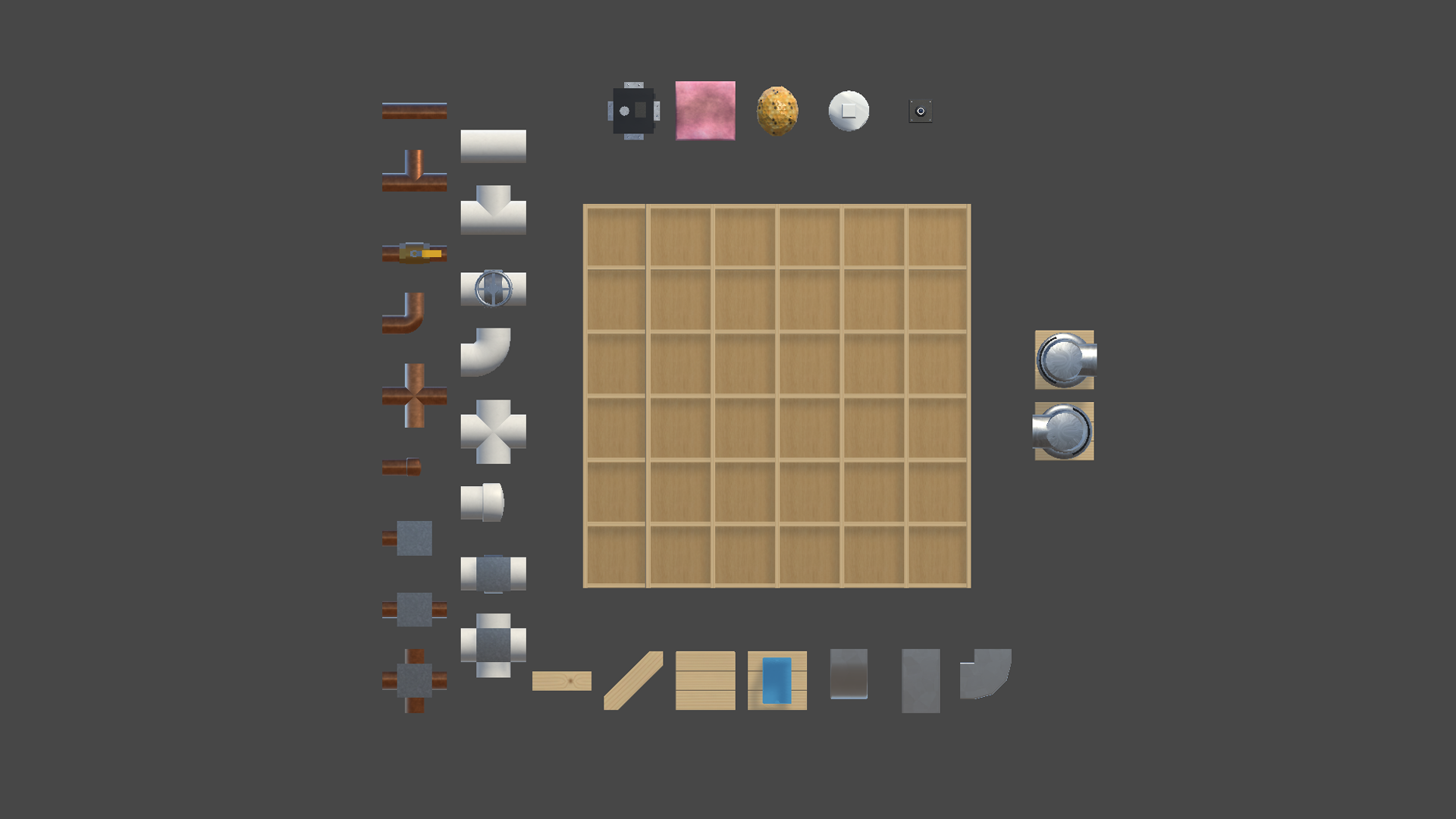
Place parts onto the plumbing wall
-
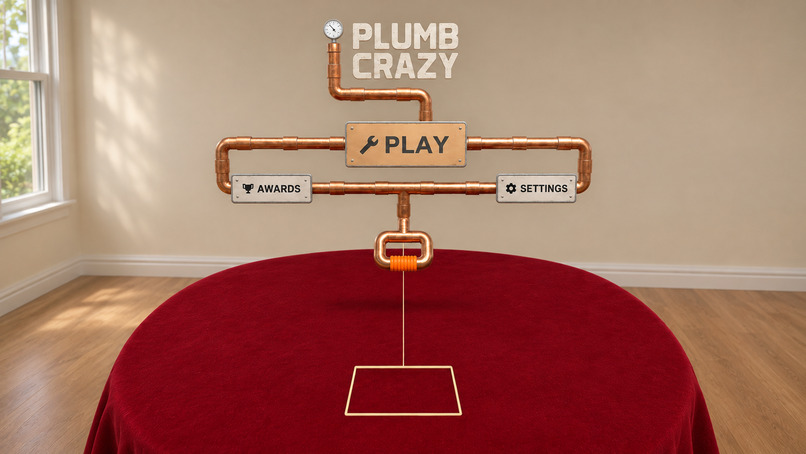
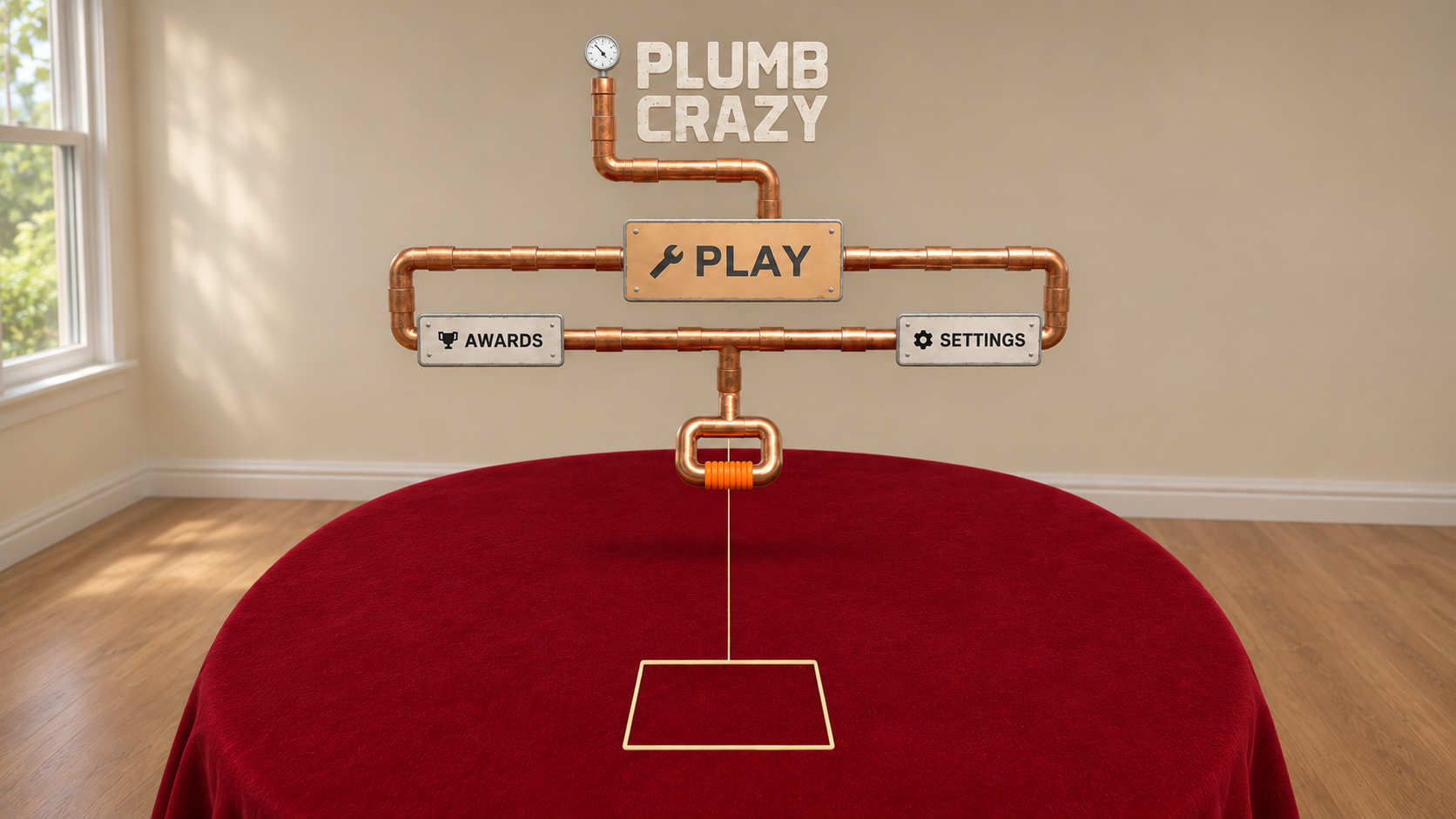
Main menu allows you to adjust settings and realign
-
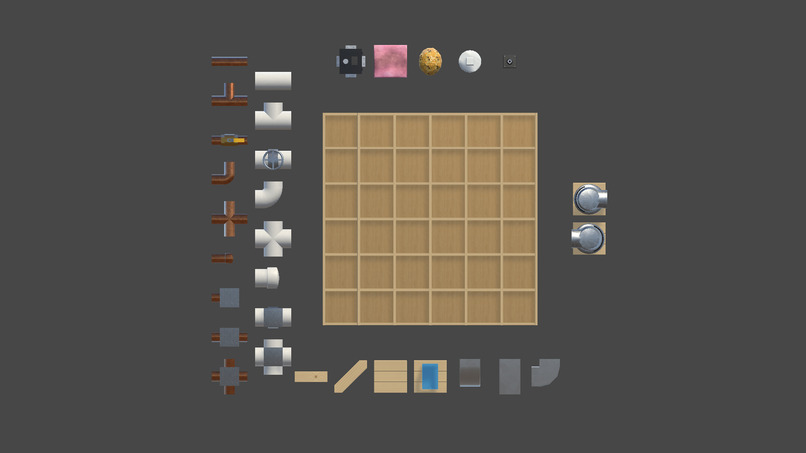
Level editor coming soon
Inspiration
When Suzanne, our game designer, dropped something valuable down her clogged sink on a busy holiday, she ended up watching hours of plumbing videos to learn how to make the repair. Somewhere in that detour, she wondered if there was a a way to make taking if taking apart the pipes under your sink into actual fun. She decided to turn that everyday headache into a mixed-reality puzzle you could reach into, look at from different angles, and solve with your hands (but without getting them dirty).
What it does
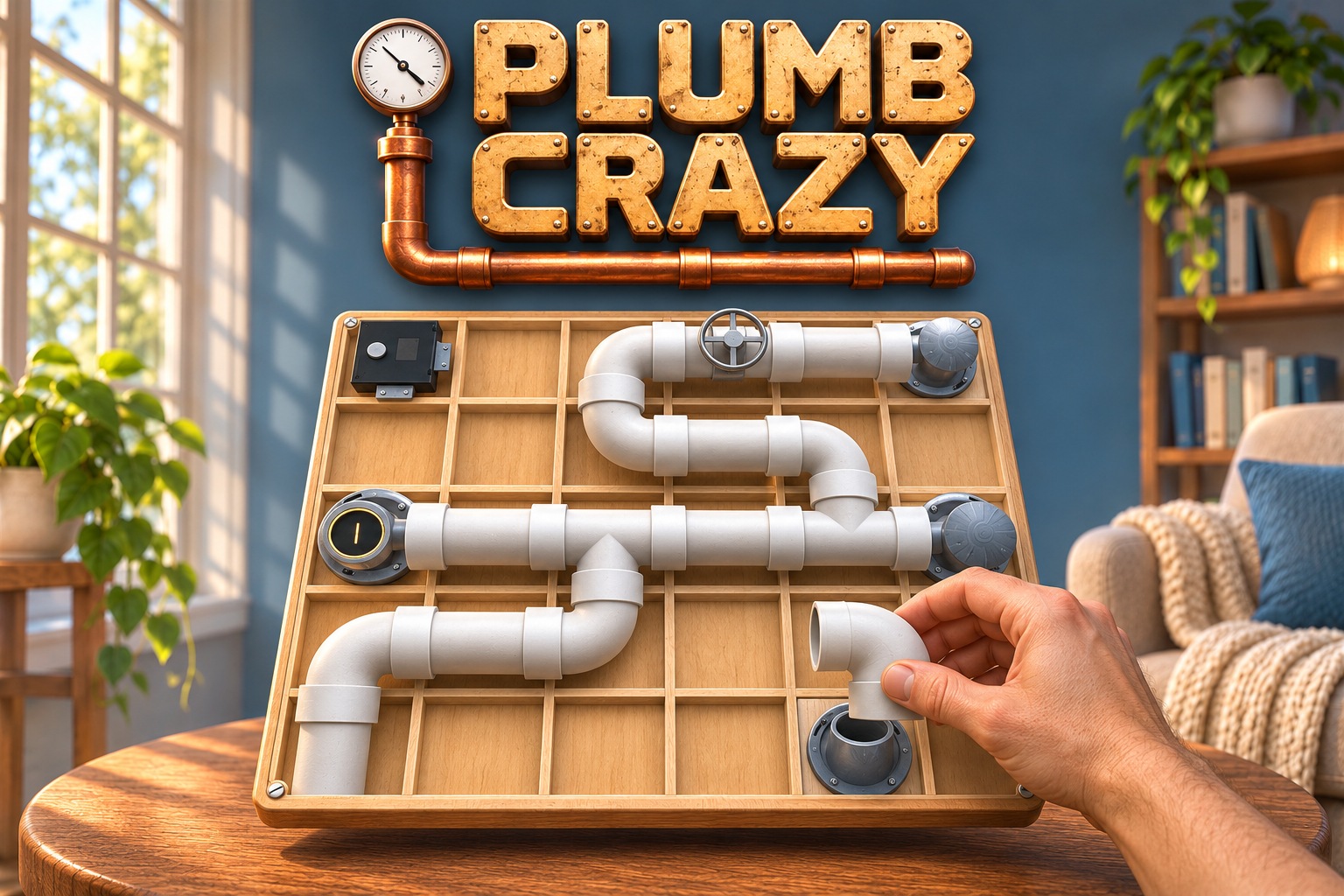
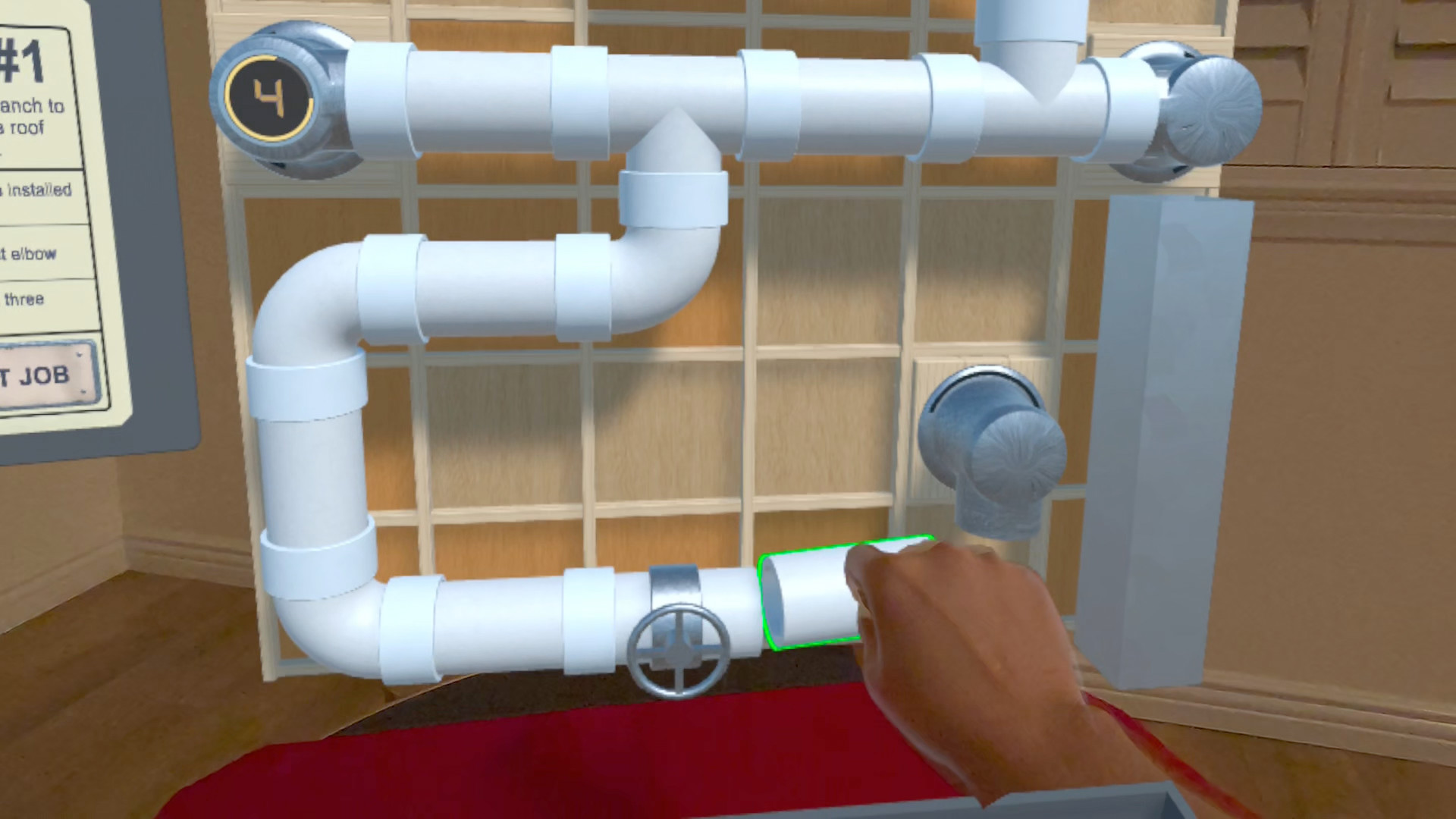
Plumb Crazy puts a plumbing workspace in your room. Pick from multiple sites or locations, and each sequental job builds a piece of the storyline. Some jobs provide customer notes and hints, a partially built pipe network that might need to be reworked, and also a bin of spare fittings. Pinch a part, twist your wrist, and let go to snap it into place on the board.
Once the water starts, you have to think a few fittings ahead. Every pipe takes time to fill, so adding a section can buy you a few seconds. Dry pieces can still be moved, and water spilling from an open pipe can sometimes be caught farther down the board. Get water to every destination before you lose too much down the drain.
How we built it
We built Plumb Crazy in Unity with OpenXR and the Meta XR Core SDK. Tracked finger joints and pinch data drive pipe handling, and finger colliders let players press virtual buttons directly. Our custom socketing system checks whether a fitting can go into a socket, snaps it into an allowed orientation on release, and updates the pipe connections used by our C# water simulation. Unity Physics handles loose fittings in the parts bin.
Meta Passthrough keeps the room visible, the Depth API lets real objects occlude supported virtual surfaces, and MRUK World Lock helps keep the workstation steady in the room. The game also runs at 90Hz.
Challenges we ran into
The biggest challenge, beside the hand interaction, was designing plumbing puzzles that were easy to understand and still made you stop and think. A good job gives you a clear goal, then makes you weigh where to route the water, which fittings to use, and what to do when the flow catches up. There may also be multiple solutions to any given puzzle.
We also wanted each job to feel like a call from an actual customer. The customer notes gave us just enough room for a bit of personality, a funny reason the plumbing went wrong, or a clue about where to start. Getting that balance right meant giving players something to smile at before they reached for the first pipe.
Accomplishments that we're proud of
We’re proud of how well the core puzzle works and how the game performs smoothly on the Quest. Snapping a fitting into place and watching water follow the route you built is satisfying, especially when you spot a fix just in time. The game runs smoothly, the workshop has a playful style, and everything is within easy reach while seated.
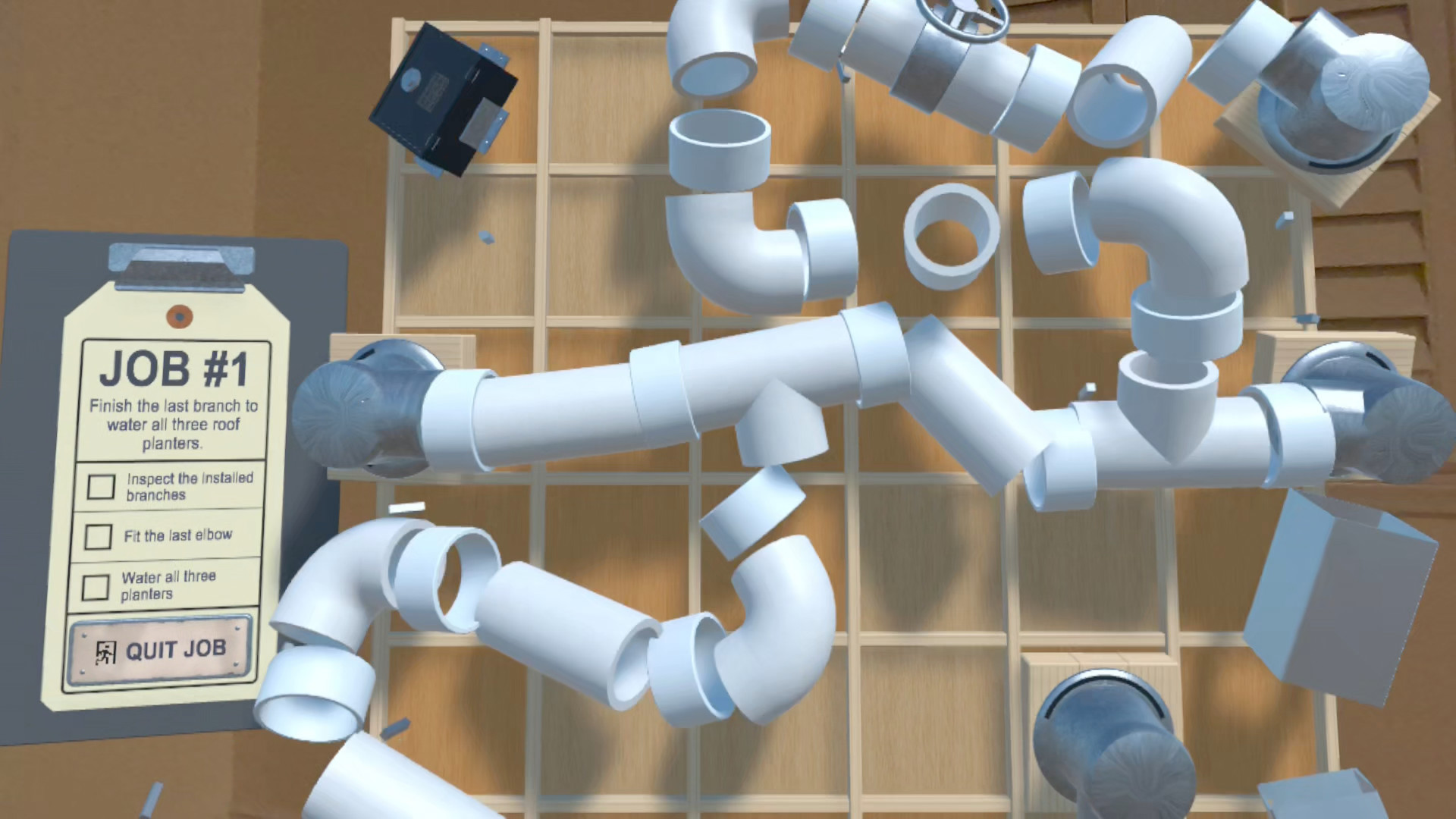
We also love the “board exploder.” It cuts every fitting loose at once and lets physics take over. Watching the pipes clatter and tumble is a show of its own.
What we learned
Hand interaction gets tricky when an object looks solid but gives your fingers nothing to press against. We initially built an elaborate grip system that let players pinch opposite sides of a pipe, the way they might pick up a real fitting. Without the feel of the pipe between their fingers, that gesture was surprisingly awkward.
We went back to a simpler approach. When your hand gets close to a fitting, an outline shows which piece you can pick up. Pinch nearby and it’s yours. Seeing which pipe would respond made the interaction feel more natural.
What's next for Plumb Crazy
We’re finishing the levels, fine-tuning how it feels to pick up and place fittings with a pinch, and adding scoring and achievements so players have new reasons to revisit jobs they’ve already solved.
We’re also building colocated multiplayer so friends in the same room can work on the same puzzle at once. We want to see what happens when one person yells “I need an elbow!” while someone else tries to catch a leak on the other side of the board.
Built With
- mixed-reality
- notepad++
- unity
- visual-studio
- xr


