-
-

-

-

-
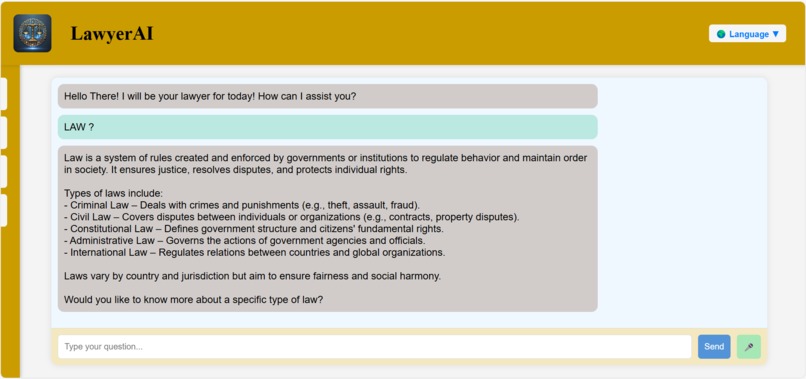
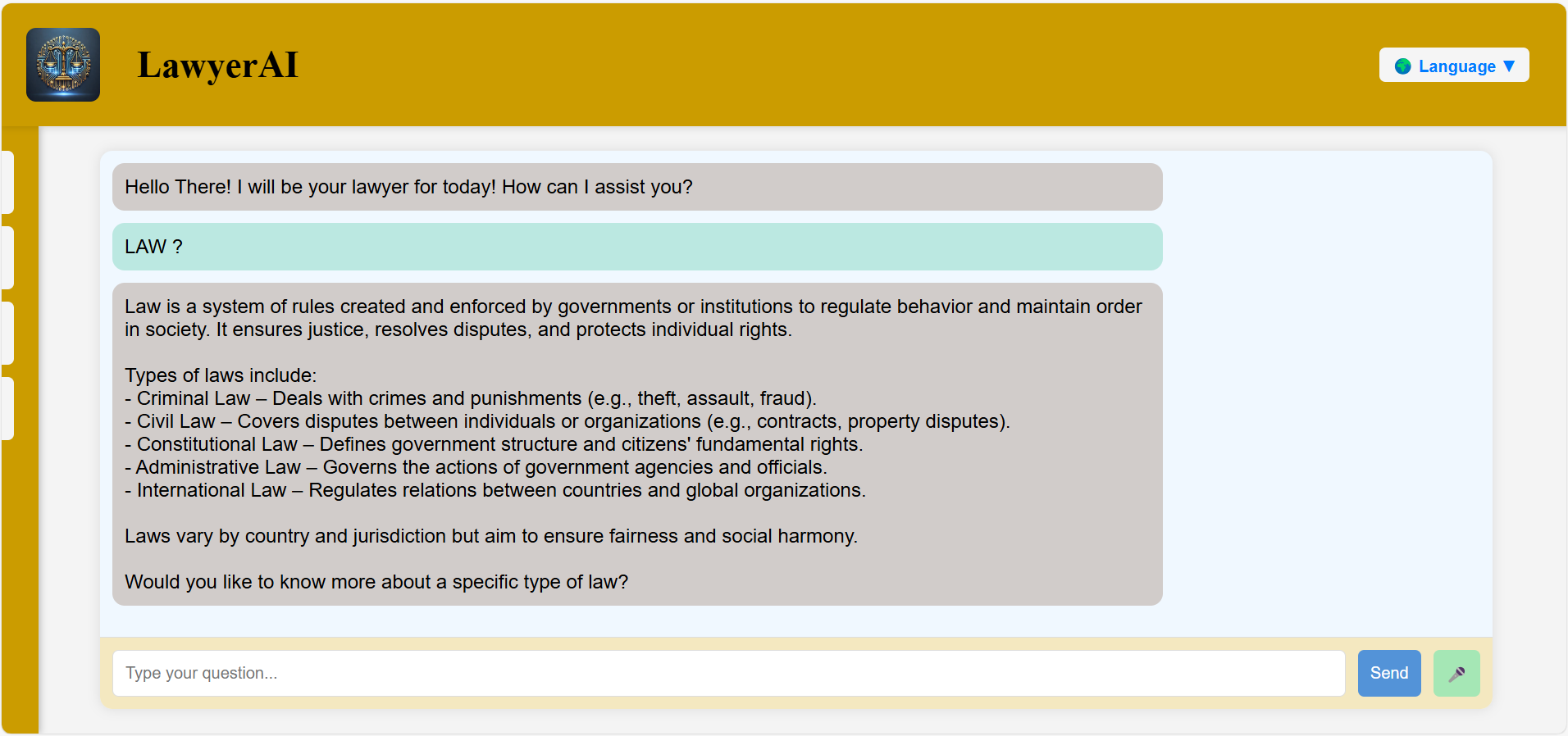
ChatBot
-
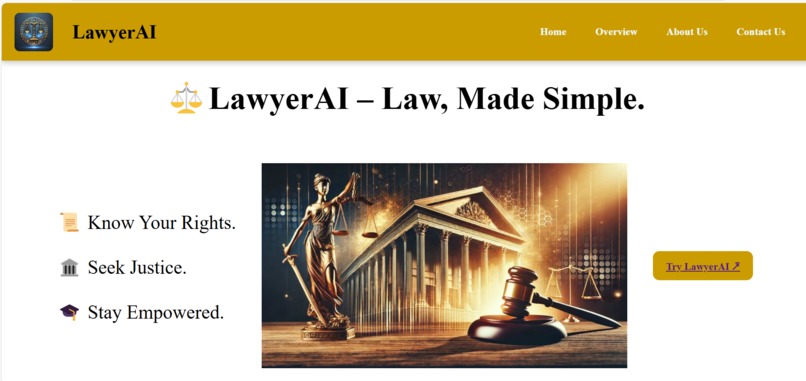
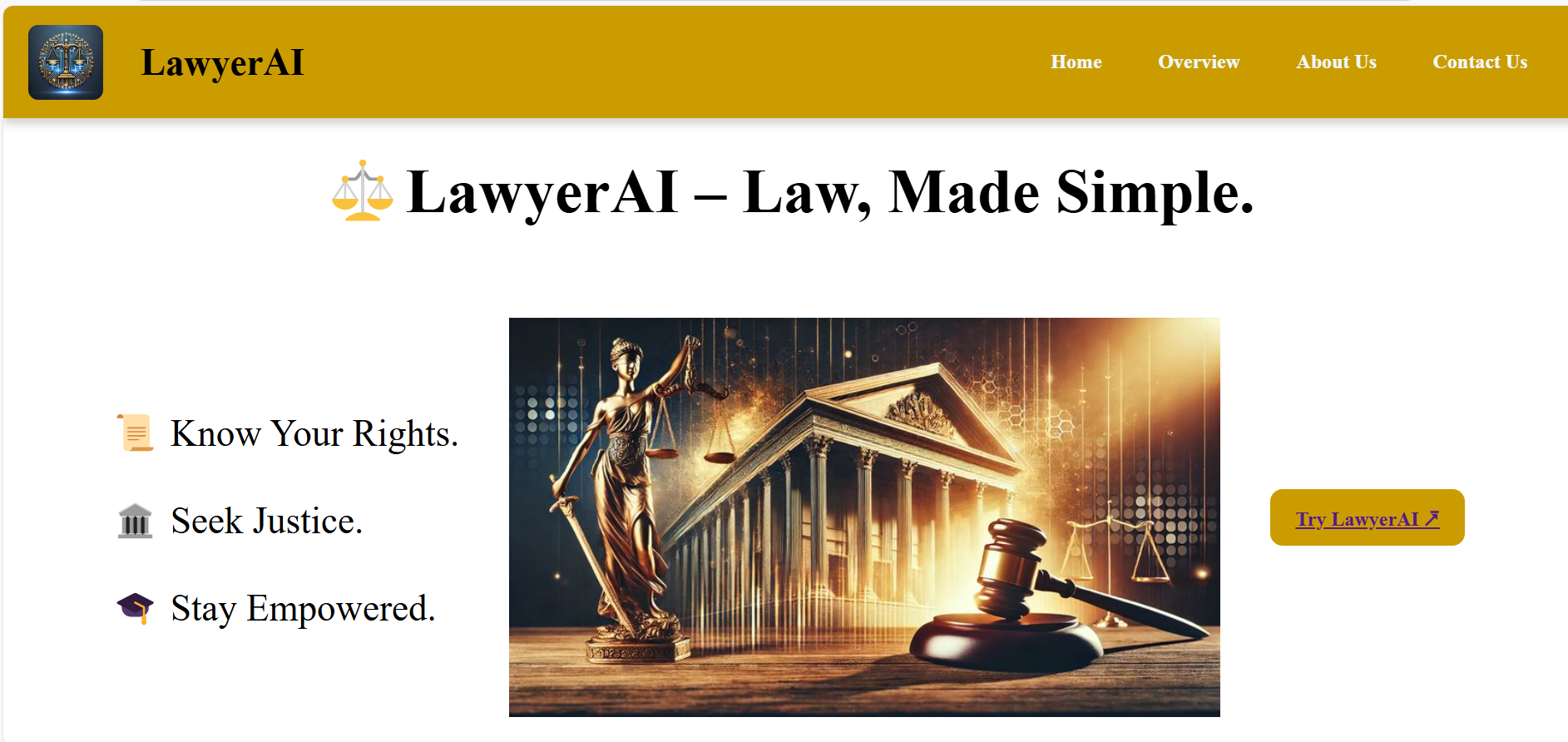
LawerAI Home



Inspiration
I was watching a series, where someone was being forced to sign some legal documents related to healthcare concerning the life of a family member, not fully understanding that they were not at all obligated to sign that and it was basically a scam that will result in their own loss. Made me think how general public aren't fully aware of what all they are entitled too and that the law is there to protect them from such exploitations, but being oblivious to such rights, they often get trapped in burdensome situations. In a country as diverse as India, legal awareness remains a significant challenge, especially for those who are unaware of their rights or lack access to legal assistance. Many people struggle with legal jargon, slow legal processes, and misinformation, which prevents them from taking the right legal steps.
What it does
To address these challenges, LawyerAI serves as an AI-powered legal assistant that helps users: 🔹 Understand their legal rights based on Indian laws. 🔹 Find relevant legal information in a simple, easy-to-digest format. 🔹 Receive guided assistance on legal actions, including information on government authorities and legal aid services. 🔹 Use voice-based interaction for users who may struggle with text input. By making legal knowledge more accessible, LawyerAI ensures that people can make informed decisions and protect themselves from legal exploitation.
How we built it
🔹 Backend Development (Python - FastAPI/Flask): Used Flask to build a lightweight and scalable backend. Integrated LLM-based processing (OpenAI API, Llama, or local models) for intelligent legal query responses. Implemented LangChain & LlamaIndex for document-based legal search, allowing users to retrieve legal information from Indian laws, acts, and case documents. Used NLTK & SpaCy for legal text preprocessing, ensuring accurate understanding of user queries. 🔹 Legal Knowledge Base & Retrieval: Collected and structured Indian legal texts from public government websites, legal documents, and books. Converted PDFs and legal texts into searchable formats using PyMuPDF & pdfplumber. Built a vector database (ChromaDB) to enable fast and accurate retrieval of relevant legal sections. 🔹 Frontend Development (HTML, CSS, JavaScript): Designed a clean, responsive UI for easy interaction, with a dark mode toggle for better accessibility. Integrated voice input (Web Speech API) to allow users to ask legal questions without typing. Built multilingual support to assist users in multiple Indian languages.
Challenges ran into
🔹As a beginner in tech and first time making such project, it was quite challenging to integrate all the APIs and manage and connect all the different pages and codes. 🔹Legal text is often complex, and simplifying it while maintaining accuracy was a big challenge. 🔹Legal information must be 100% accurate, so continuously had to test and refine responses using real-world legal cases. 🔹Many legal resources were not available in structured APIs. Legal content had to be extract from government websites, legal books, and public databases.
Accomplishments that we're proud of
🔹 Implementing multilingual and voice-based support to make legal help accessible to non-tech-savvy users. 🔹 Successfully integrating legal text search using AI-powered retrieval from Indian legal documents. 🔹 Creating a user-friendly interface that ensures seamless interaction with legal resources. 🔹 Building the chatbot without relying on paid APIs, making it a cost-effective and open-access solution. 🔹Building this from scratch as a beginner with only knowledge of few programming and WebDev languages, and successfully connecting everything. 🔹Not giving up after continuous errors and debugging.
What we learned
🔹 Legal AI requires precision—small misinterpretations can have serious consequences, so refining AI responses was crucial. 🔹 User-friendly design is key—many users are unfamiliar with legal jargon, so simplifying responses made a big impact. 🔹 Legal resources are often unstructured, requiring creative data extraction and processing techniques. 🔹 Trust is essential—users need confidence in AI-generated legal guidance, making transparency and accuracy top priorities. 🔹 Voice and multilingual support enhance accessibility, making the chatbot more inclusive. 🔹Use of various new tech tools. 🔹Exploring new methods and techniques of the tech world. 🔹Utilization of hosting services and different modules in python. 🔹Learning about API- it's working and components.
What's next for LawyerAI
🔹Expand language support to cover more Indian languages. 🔹Integrate with legal aid services and helplines for real-time support. 🔹 Develop a mobile app version for easier access. 🔹 Improve AI accuracy with legal experts to ensure the best advice.


Log in or sign up for Devpost to join the conversation.