-
-
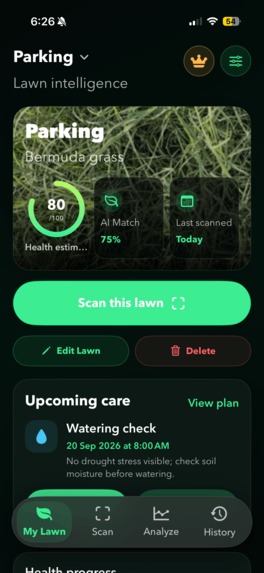
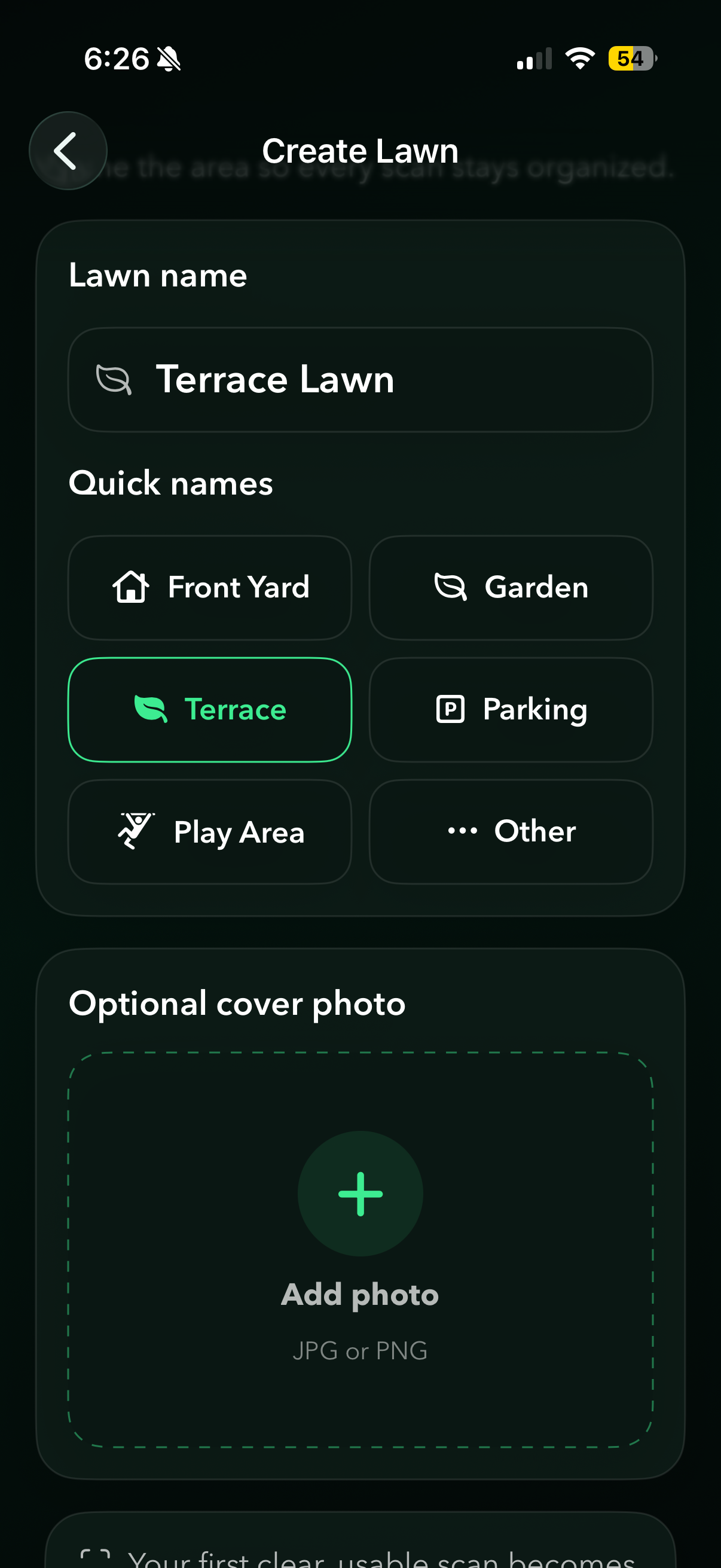
Home Screen
-
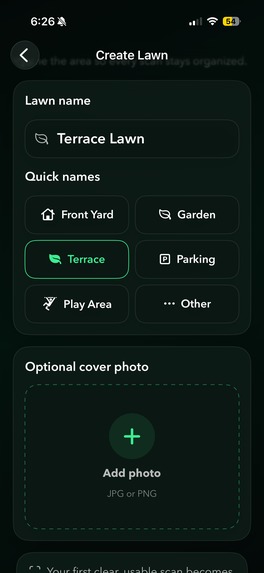
Add lawn Image from Camera or Gallery
-
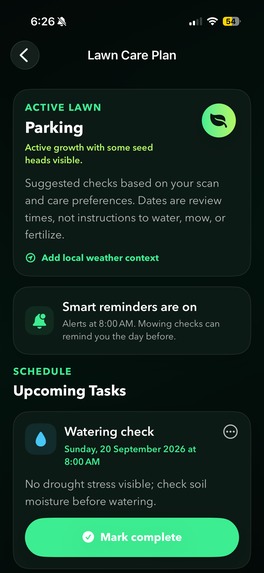
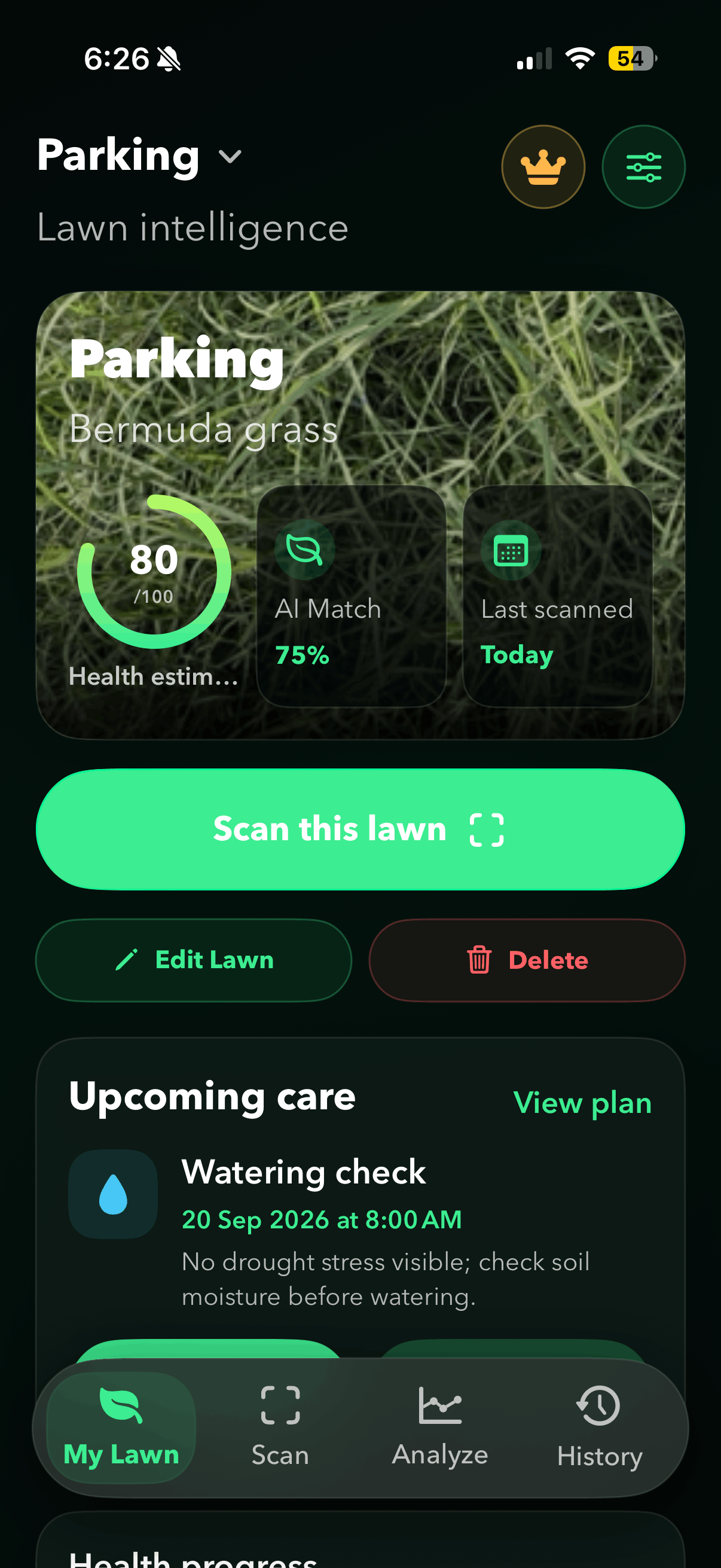
About the grass after analyzing
-
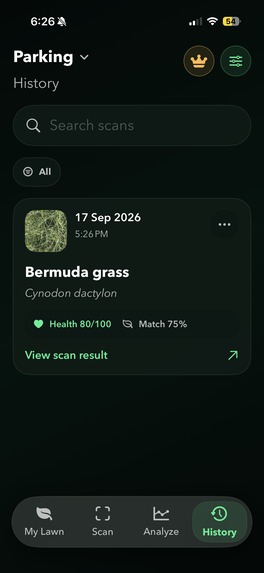
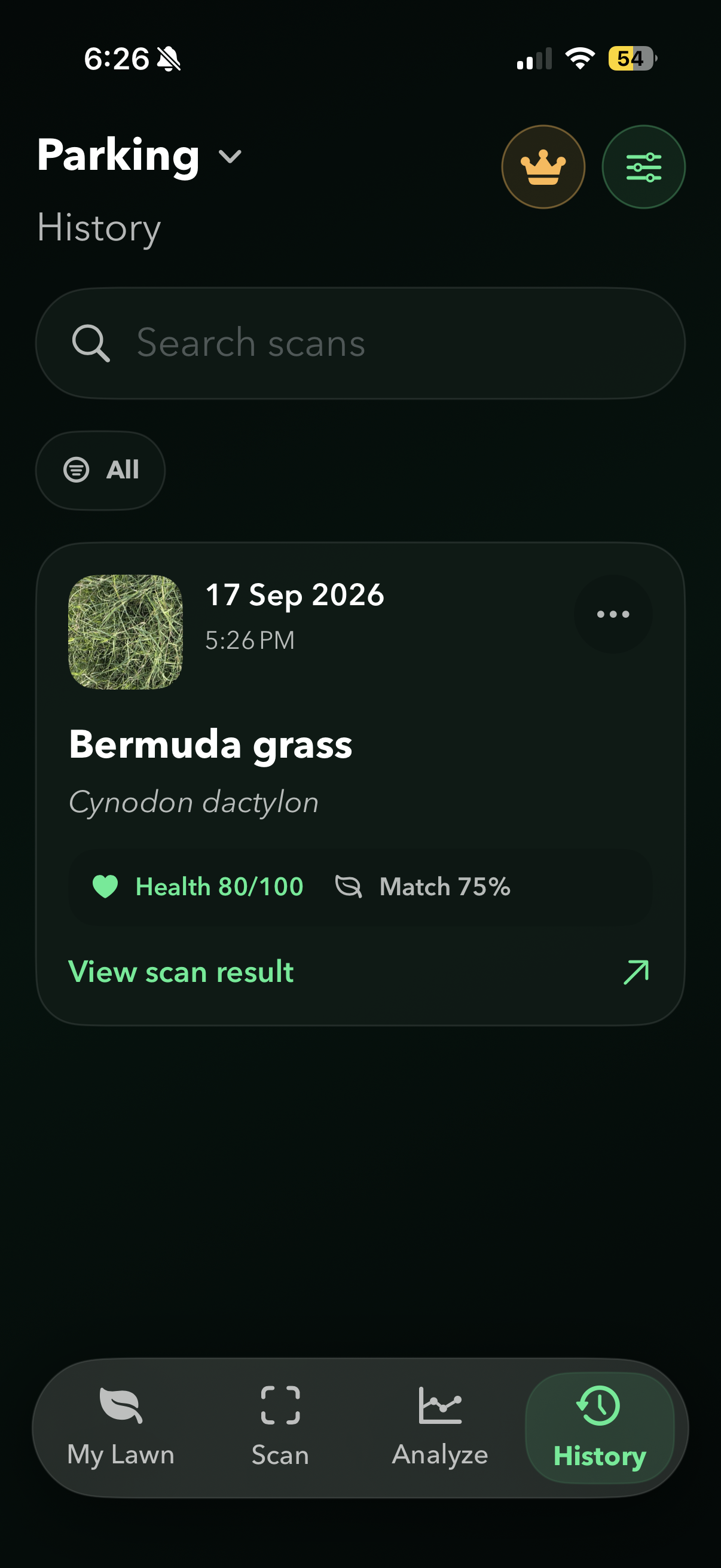
History of last scanned
-
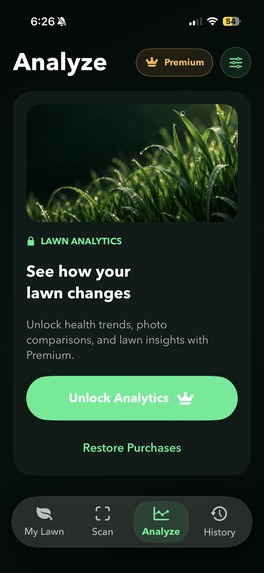
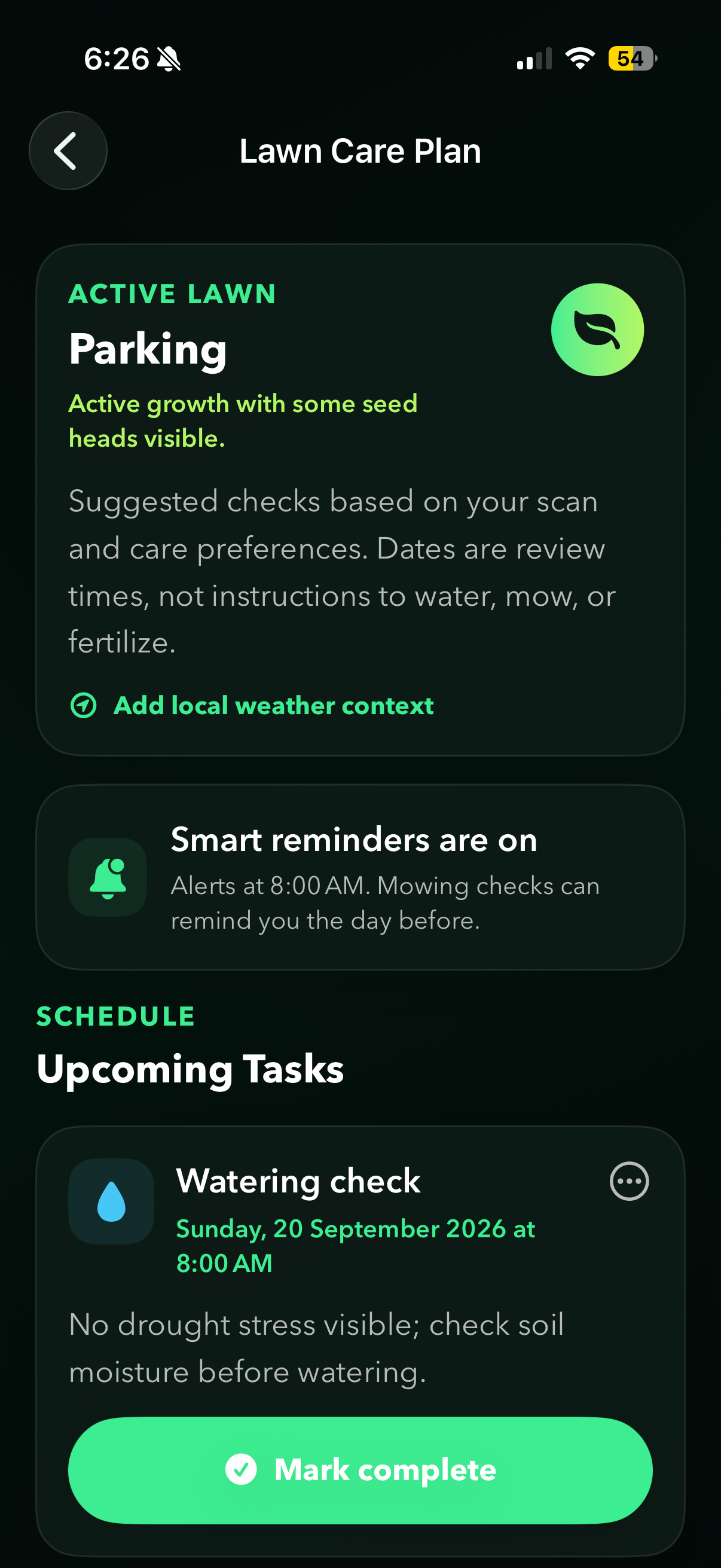
Users can analyze the grass and take care of them
-
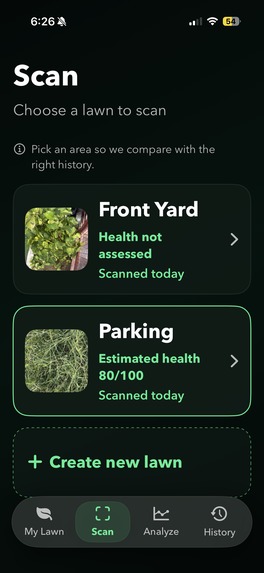
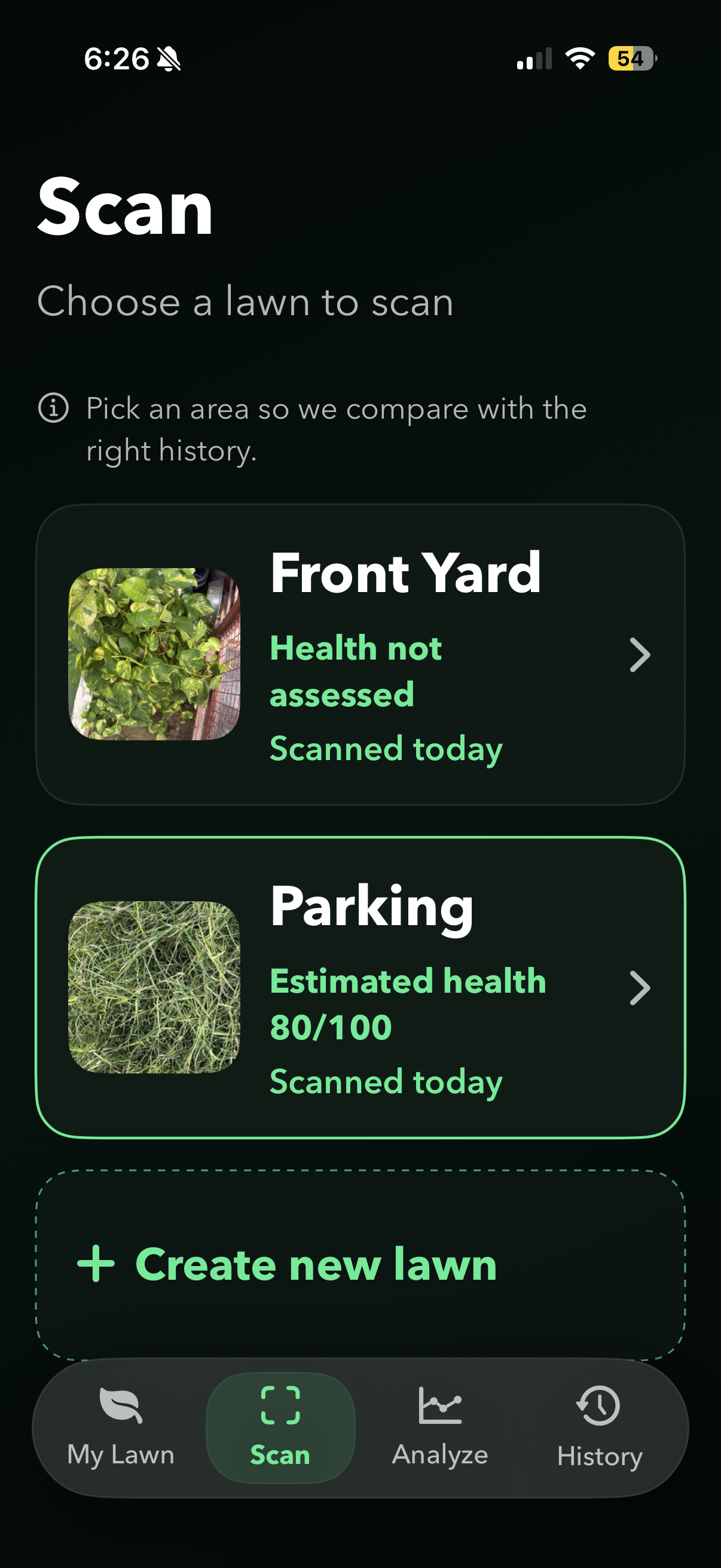
Scanner screen
-
App Icon
Inspiration
LawnLens started with a simple question: “What is growing here—and What should I do next?”
For someone looking after a lawn, identifying an unfamiliar patch of Grass or a new weed is often the first obstacle. We wanted to make that first step easier without asking people to learn botanical terminology or turn a small gardening question into a lengthy research project.
Our goal was to build a focused tool: take a photo, understand what you are looking at, and keep useful information about your lawn in one place.
What it does
LawnLens helps users identify grass and weeds from a new camera photo or an existing image. It presents the result in an approachable format, with a short summary and additional details for users who want to explore further.
The experience extends beyond a single identification. Users can organize observations by lawn, revisit saved scans, compare visible changes, and follow practical care guidance. Scheduled reminders support activities such as watering, mowing, and checking progress.
The idea is to connect three useful moments: understanding the lawn today, deciding what to do next, and returning later to see what has changed.
Photo-based identification is an estimate, not a guaranteed diagnosis. LawnLens is intended to support learning and informed decisions, rather than replace professional advice.
How we built it
We built LawnLens as a native Apple-platform app using Swift and SwiftUI, developed in Xcode.
The core workflow connects photo capture or selection, AI-assisted image analysis, readable result presentation, and saved lawn information. We organized the experience around the user's tasks rather than exposing the complexity of the underlying analysis.
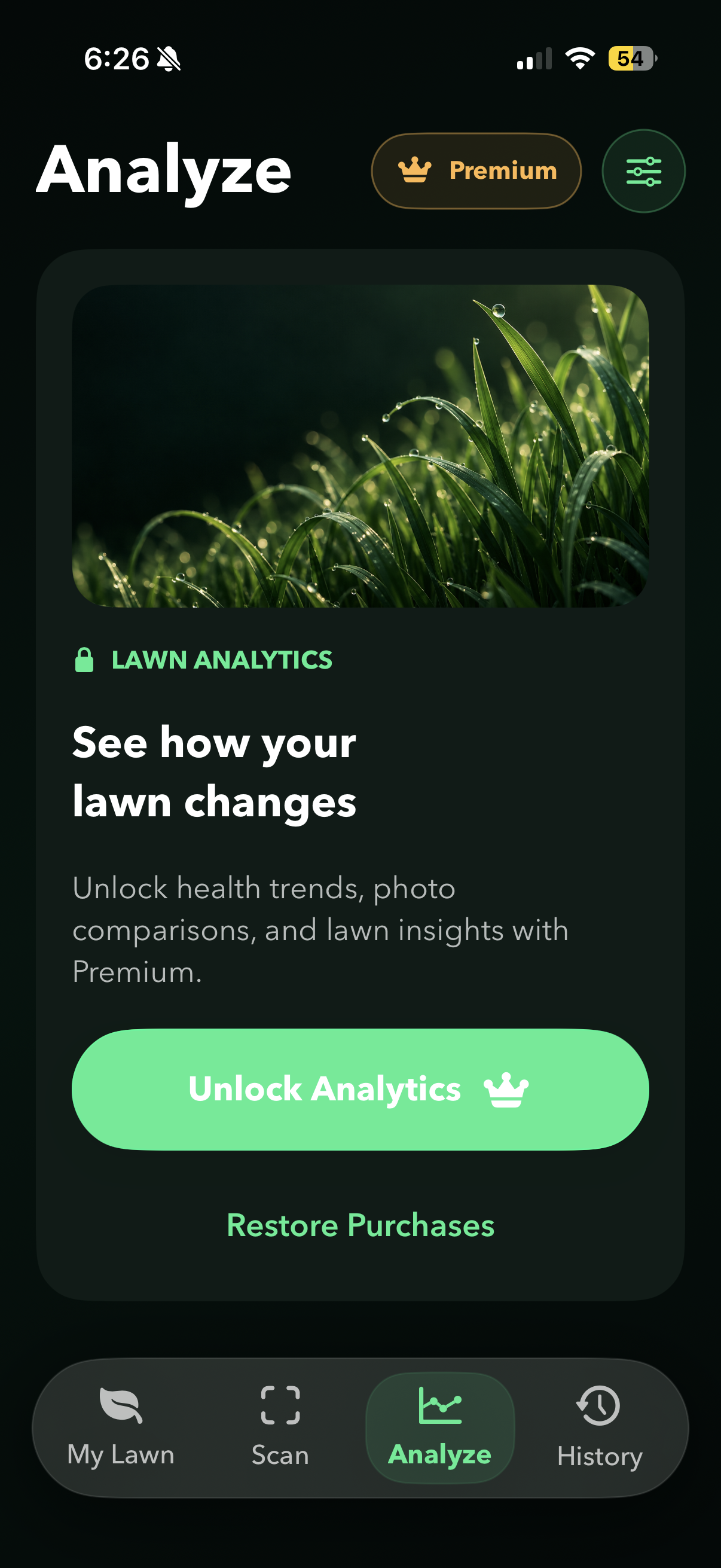
RevenueCat supports the purchase and premium-access experience alongside Apple's in-app purchase system. The monetization options include weekly and yearly subscriptions, together with a one-time lifetime purchase.
We also worked on localization, permission handling, optional local weather context, and the supporting states that make an app usable beyond its ideal demonstration path.
Challenges we faced
One challenge was turning an AI response into something useful on a phone screen. A long answer is not necessarily a helpful answer, so we worked on separating the immediate takeaway from the supporting details.
Another challenge was connecting identification with ongoing lawn care. Saved observations, comparisons, and reminders needed to feel like parts of one product rather than unrelated features.
The development work also involved camera permissions, interrupted analysis, purchase restoration, and keeping the interface consistent across different screen sizes and languages.
Weather integration required attention to both location permission and attribution. These details reinforced that shipping an app involves much more than completing its main feature.
Accomplishments we are proud of
We brought LawnLens from a product idea to a published app with a clear, real-world purpose.
We are especially proud of keeping the experience focused on lawn owners: photo-led interactions, approachable explanations, and a way to build a useful record of a lawn over time.
We also established a monetization foundation without treating the purchase screen as a separate product. The long-term goal is for premium access to earn its place through continued usefulness.
What we learned
We learned that the quality of an AI app depends on much more than the model response. Photo guidance, readable results, recovery from errors, and a useful next step all shape the experience.
We also learned to distinguish between a feature that looks complete in a design and a feature that works reliably through permissions, loading, failures, purchases, and repeat visits.
Most importantly, we learned that launch is the beginning of product development, not the end. The next decisions should come from how people actually use LawnLens.
What's next for LawnLens
Our next priorities are to test a wider variety of lawn photos, improve how results communicate uncertainty, and make care guidance and progress tracking more useful.
On the growth side, we plan to demonstrate the app through short, real-world videos and measure whether that attention leads to downloads and meaningful use.
We want LawnLens to become a practical companion people return to because it helps them understand their lawn—not simply another scanner they use once.


Log in or sign up for Devpost to join the conversation.