Inspiration
We were inspired by the stories of immigrants in our own communities — people who received legal documents they couldn’t understand, missed deadlines, or signed things they didn’t fully comprehend. Access to legal support is expensive and often unavailable, especially for newcomers facing language barriers. We wanted to build something that gave clarity, confidence, and control back to them.
What it does
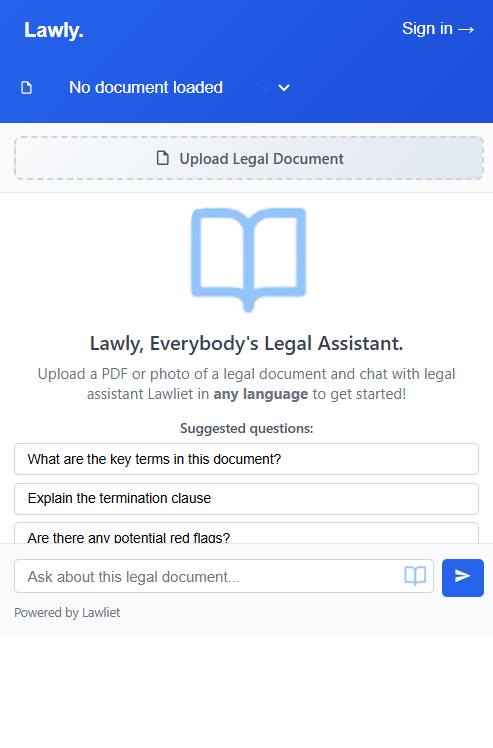
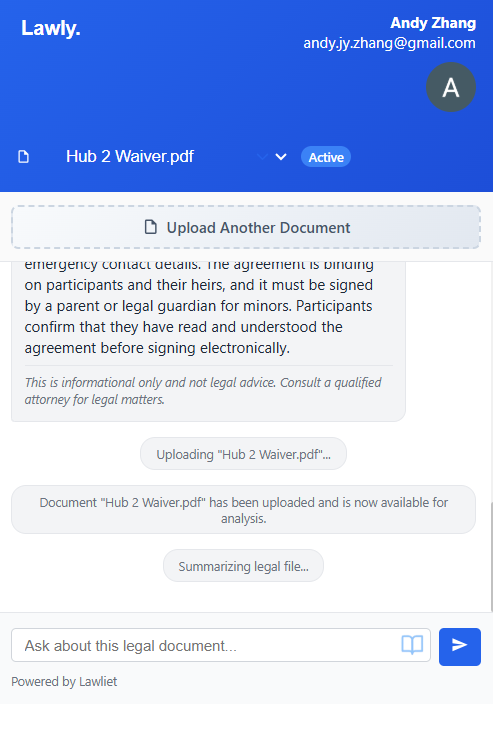
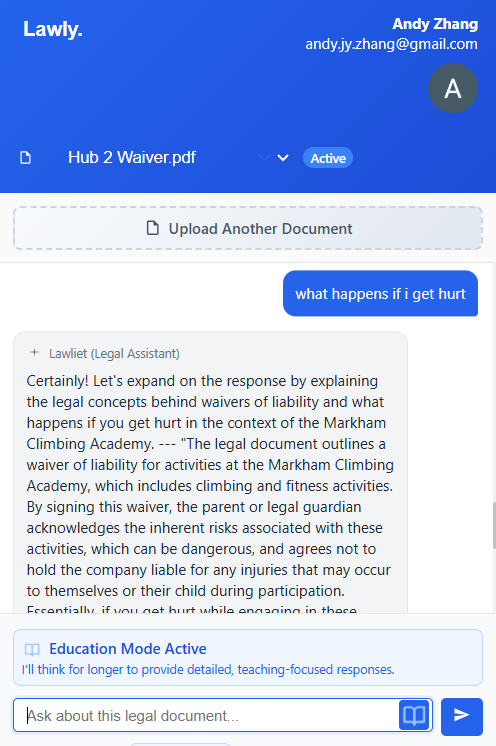
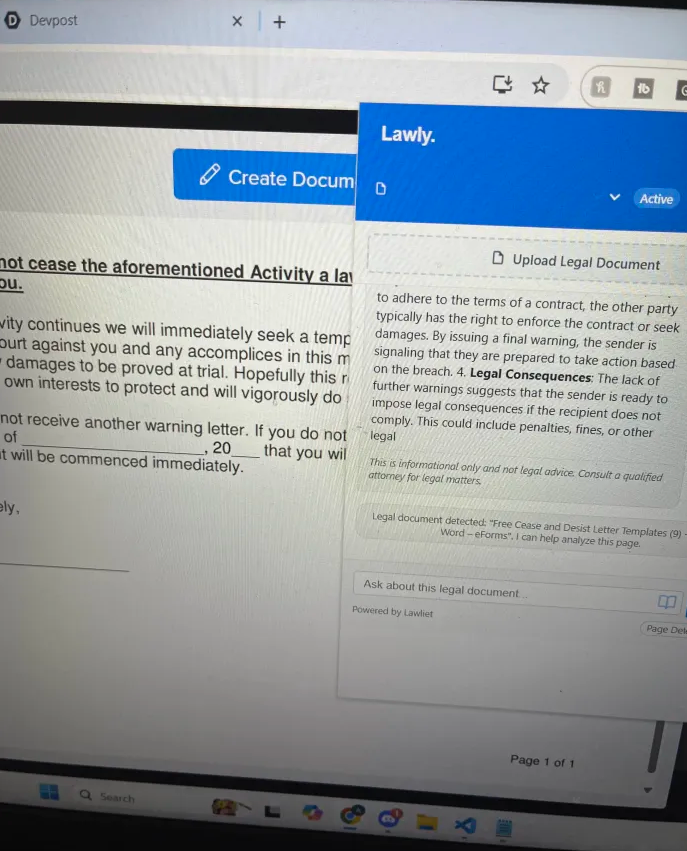
Lawly is a Chrome extension that helps immigrants understand complex legal documents. Users can upload PDFs or photos of documents — like leases, visa forms, or government letters — and Lawly instantly generates clear, friendly summaries using AI. It also includes a built-in chatbot, allowing users to ask follow-up questions and receive real-time explanations, making legal understanding more accessible than ever.
How we built it
The frontend is a Chrome extension built with HTML, CSS, and vanilla JavaScript. The backend is a Flask server that handles file uploads, uses Tesseract OCR to extract text from images, and OpenAI’s GPT-4o to generate document summaries and power the chatbot. We used PDF parsing libraries for PDFs, set up secure file handling and logging, and focused on clean, user-friendly design.
Challenges we ran into
Getting OCR to work reliably across different photo types and lighting conditions Handling PDFs with non-standard encoding or malformed structure Avoiding OpenAI API rate limits and token overflows Designing a clean, intuitive interface within Chrome extension constraints Making the tool multilingual and accessible within the hackathon timeframe
Accomplishments that we're proud of
Built a fully functional Chrome extension in 36 hours Integrated PDF, image, OCR, and AI summarization pipelines Interviewed real immigrants to inform our product decisions Created an experience that works instantly and intuitively Turned a complex legal tech challenge into something simple, elegant, and impactful
What we learned
How to build and package a Chrome extension from scratch How to integrate OCR and GPT models for real-world text processing How to simplify legal jargon using prompt engineering That accessibility and trust are just as important as technical features How powerful AI can be when used with empathy and purpose
What's next for Lawly
Add multilingual support for both summaries and chatbot answers Expand beyond Chrome to mobile and desktop apps Incorporate voice-to-text and text-to-speech for greater accessibility Partner with immigrant support organizations for real-world testing Ensure privacy by processing documents locally or offering a "no-upload" mode Provide smart templates and example walkthroughs for common documents

Log in or sign up for Devpost to join the conversation.