-
-
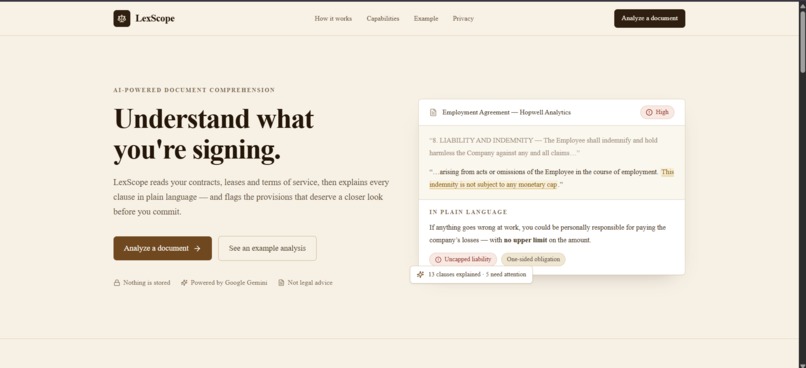
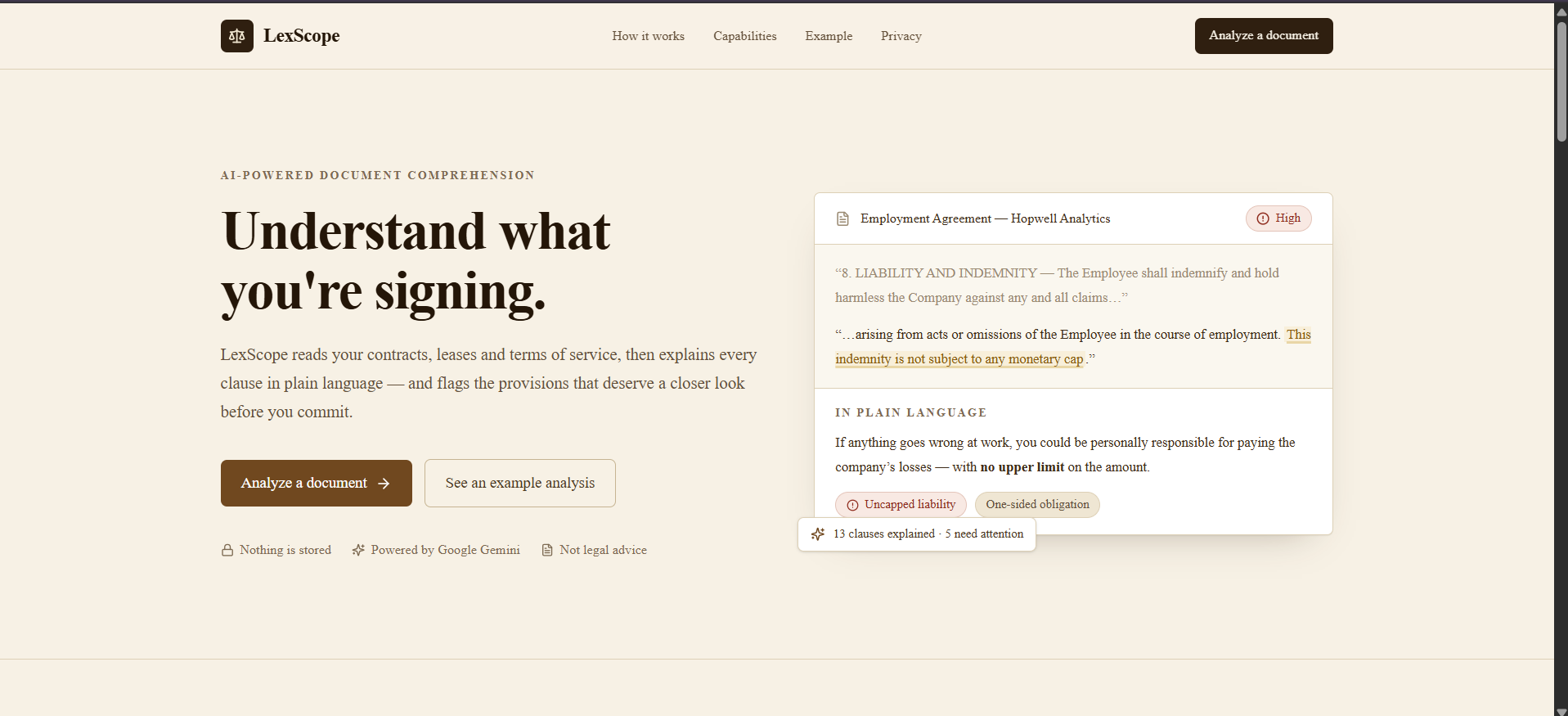
Landing Page
-
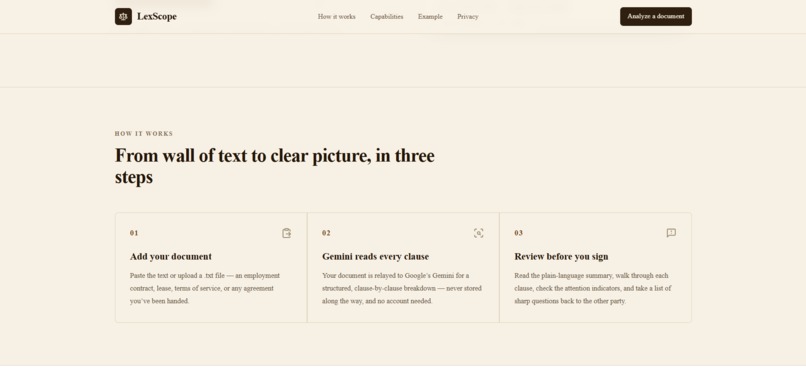
Overview
-
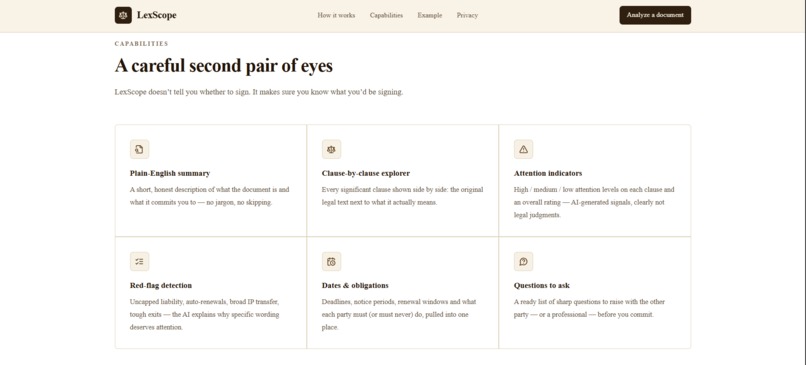
Features
-
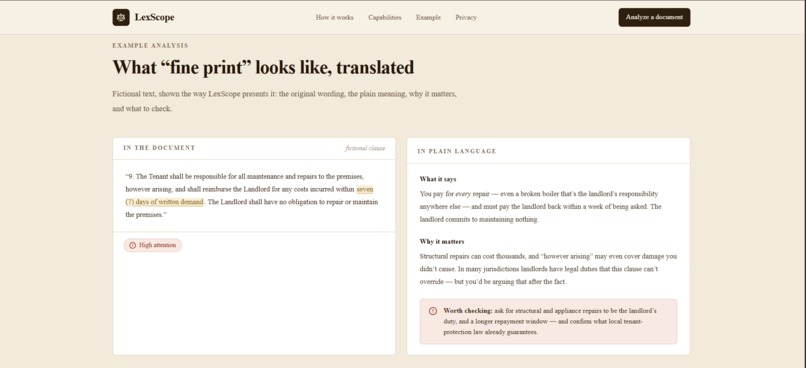
Example
-
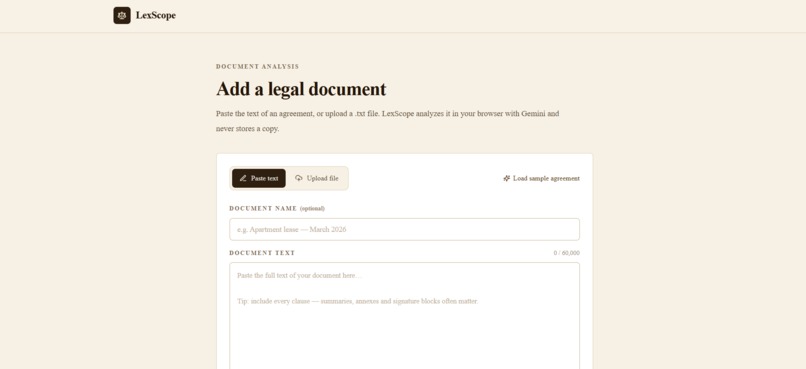
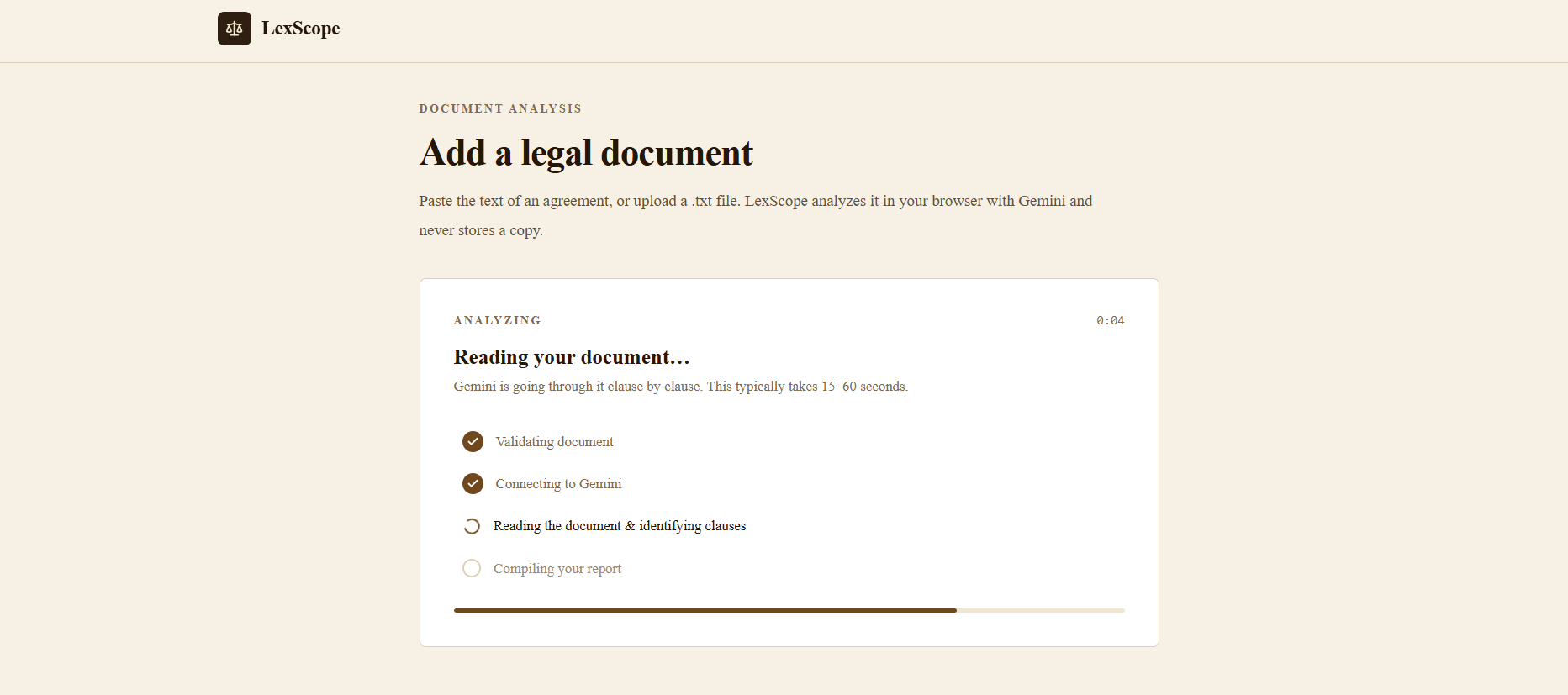
Actual Analysis page
-
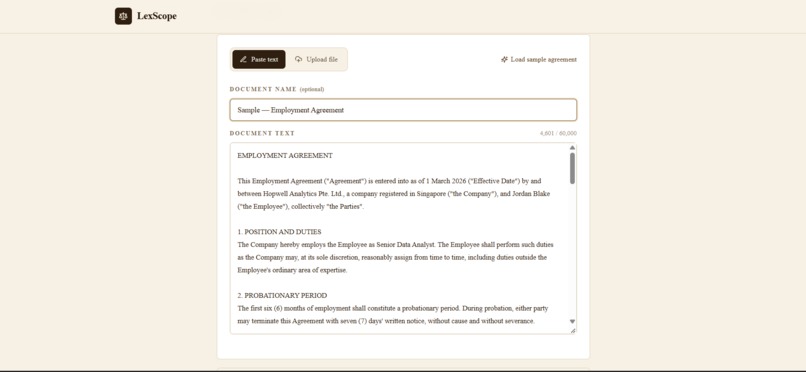
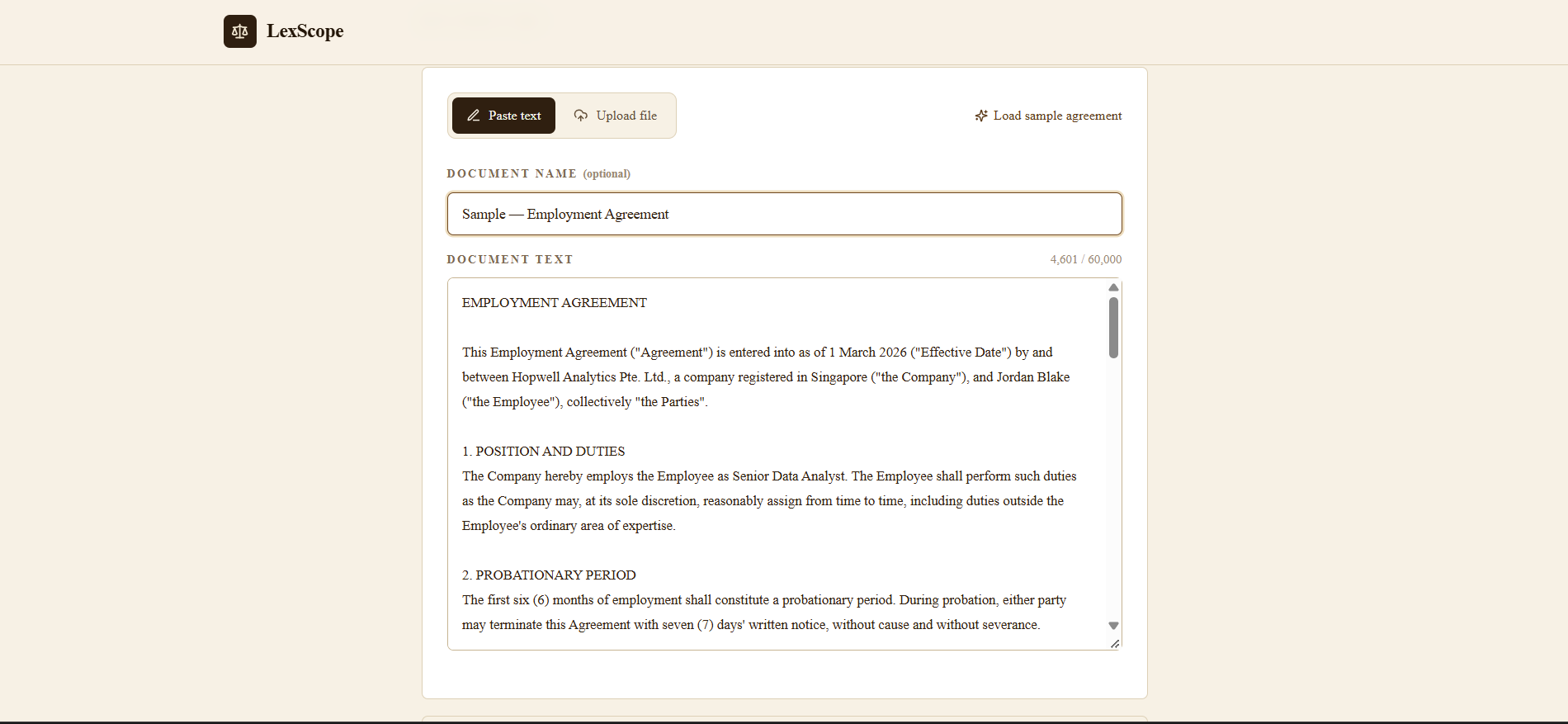
Sample legal text
-
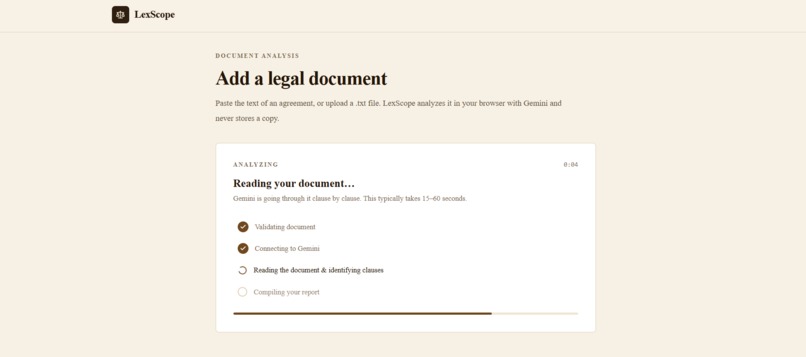
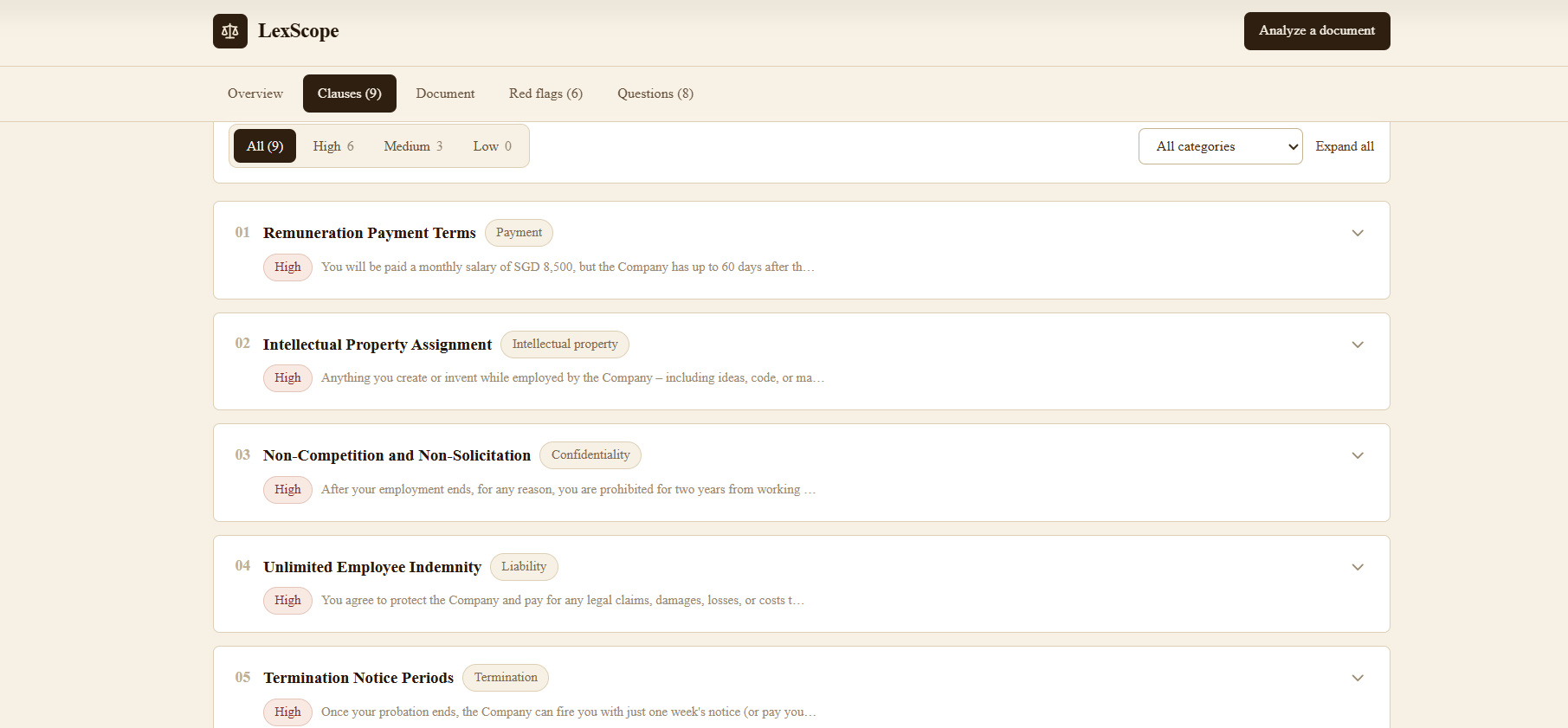
Analysis of legal text
-
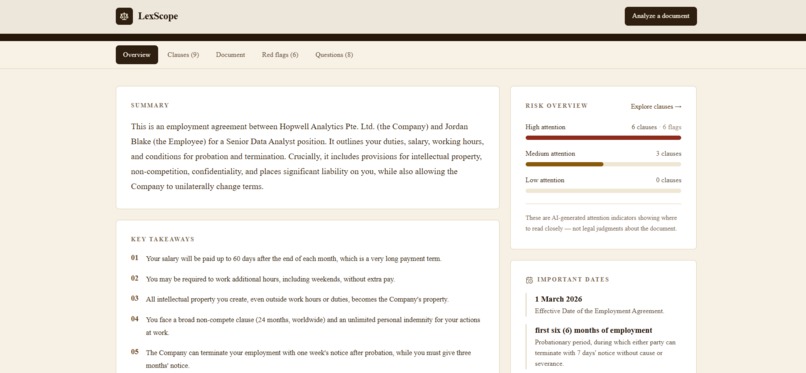
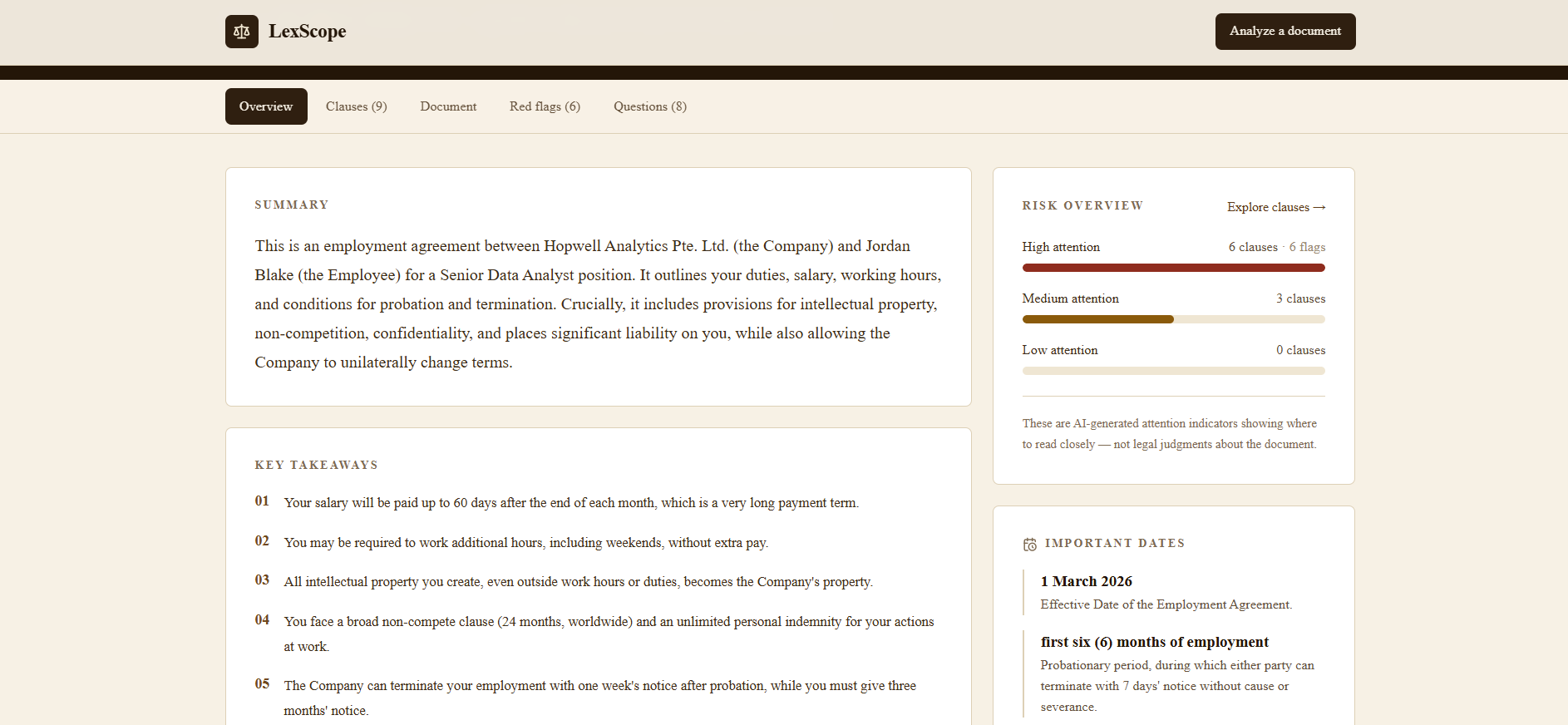
A report - Summary
-
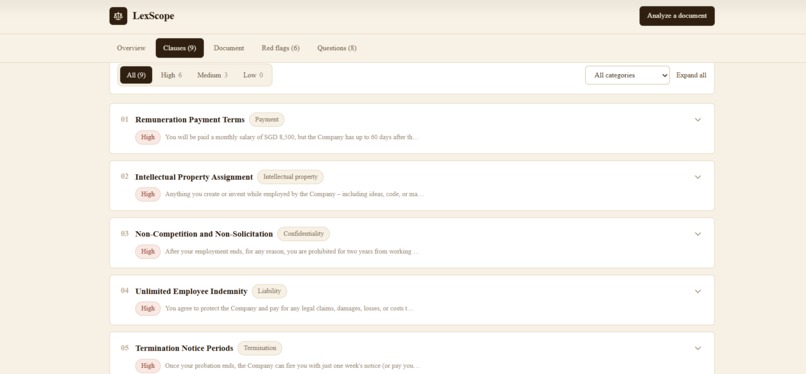
Criticality of the Clauses
-
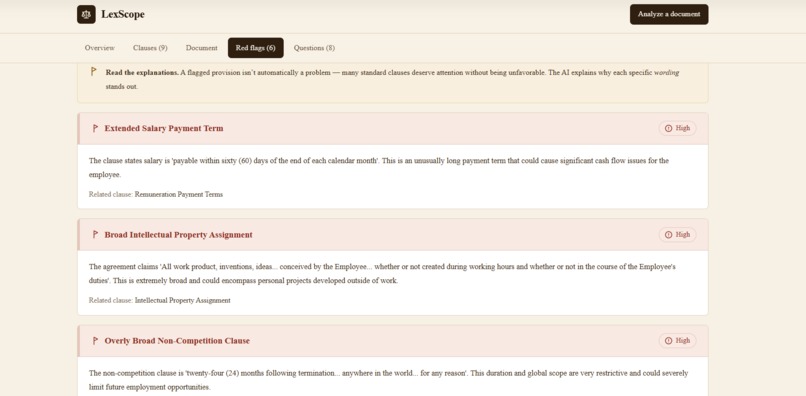
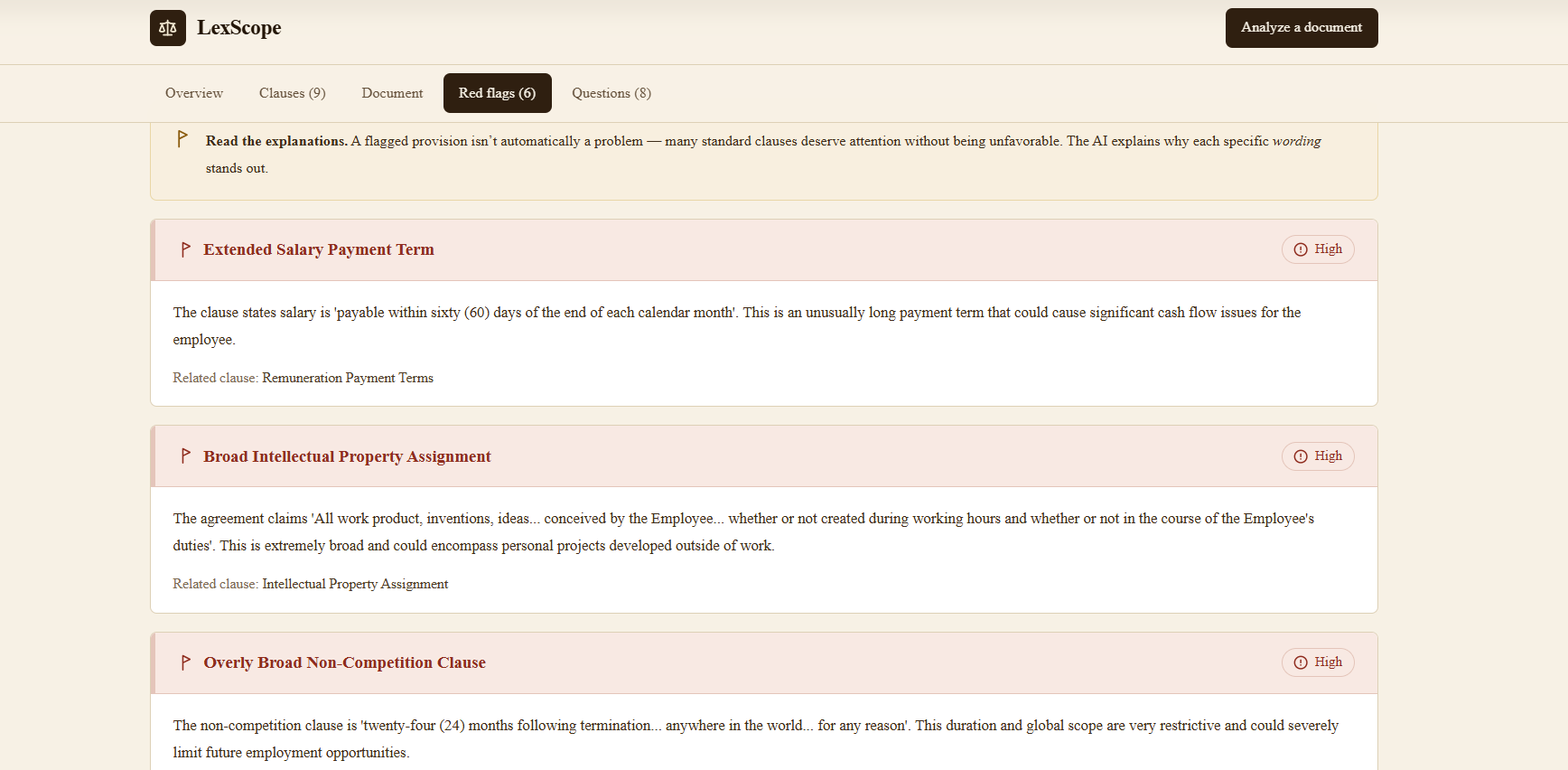
Red Flags
-
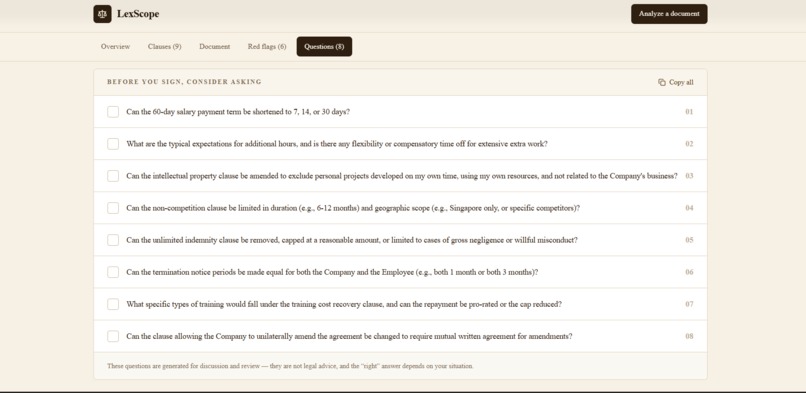
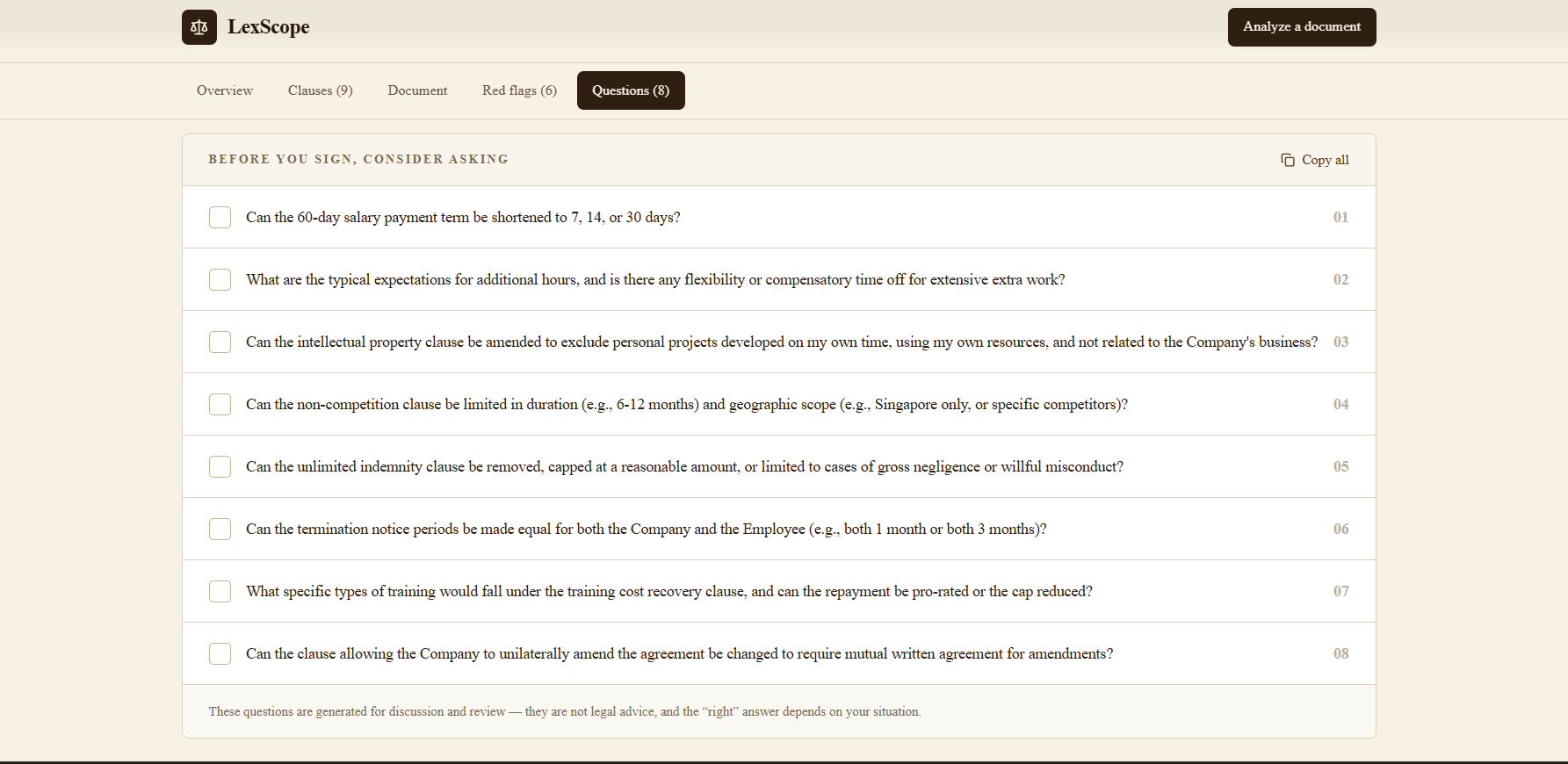
Questions to be asked before signing
Inspiration
Legal documents are often difficult to understand without a legal background. Important clauses can be buried under complex terminology, long sentences, and unfamiliar conditions. I wanted to build something that makes contracts easier to understand without pretending to replace a lawyer. That idea became LexScope, an AI-powered tool that helps people understand what a document says, identify clauses worth paying attention to, and prepare better questions before signing.
What it does
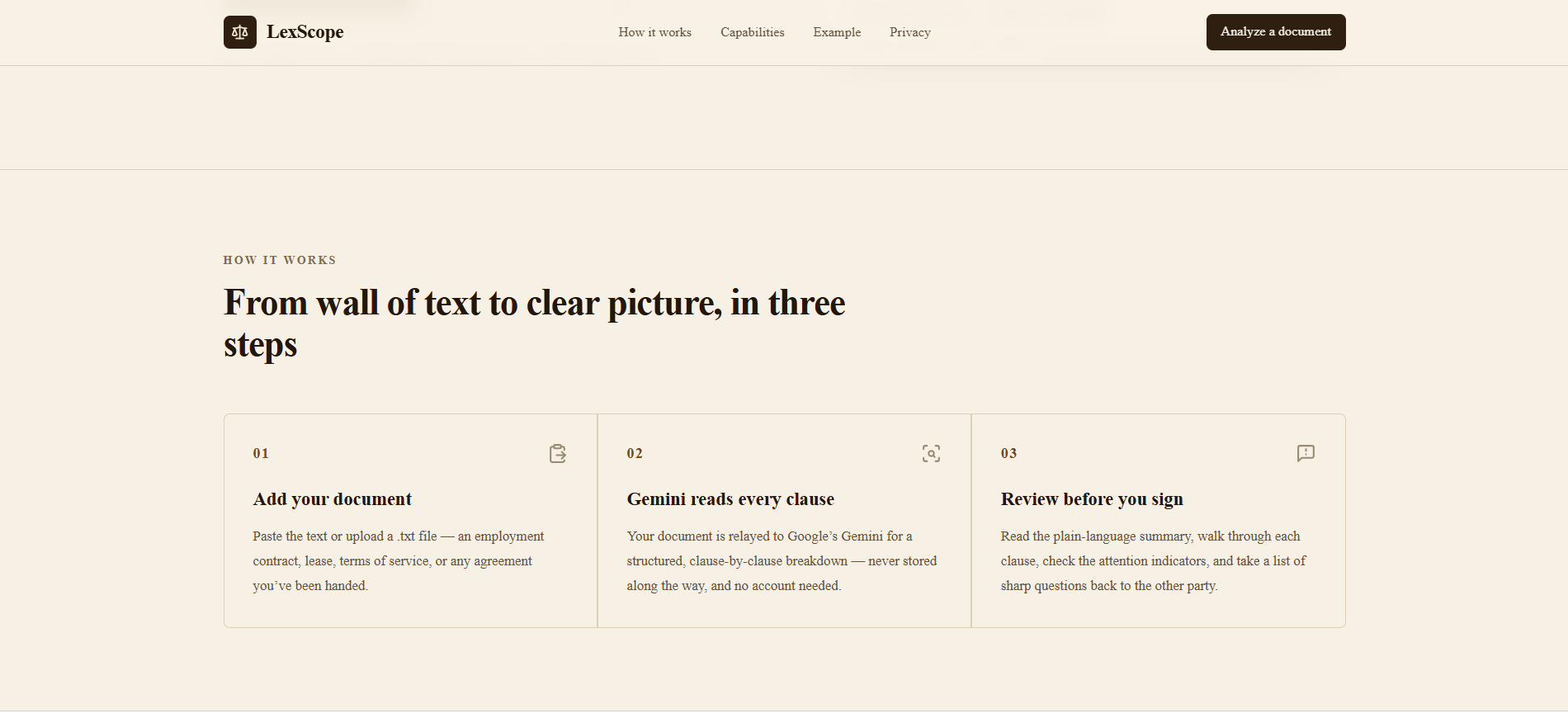
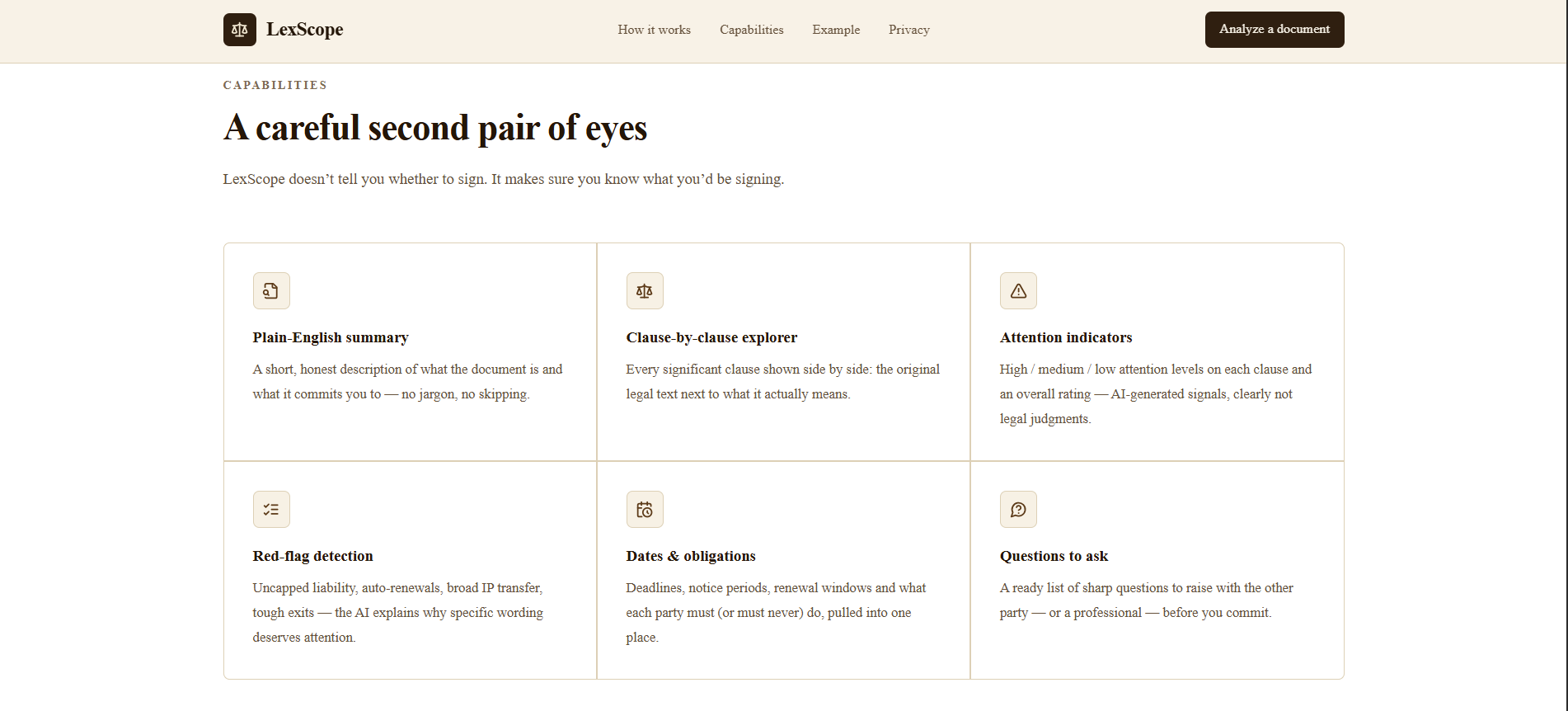
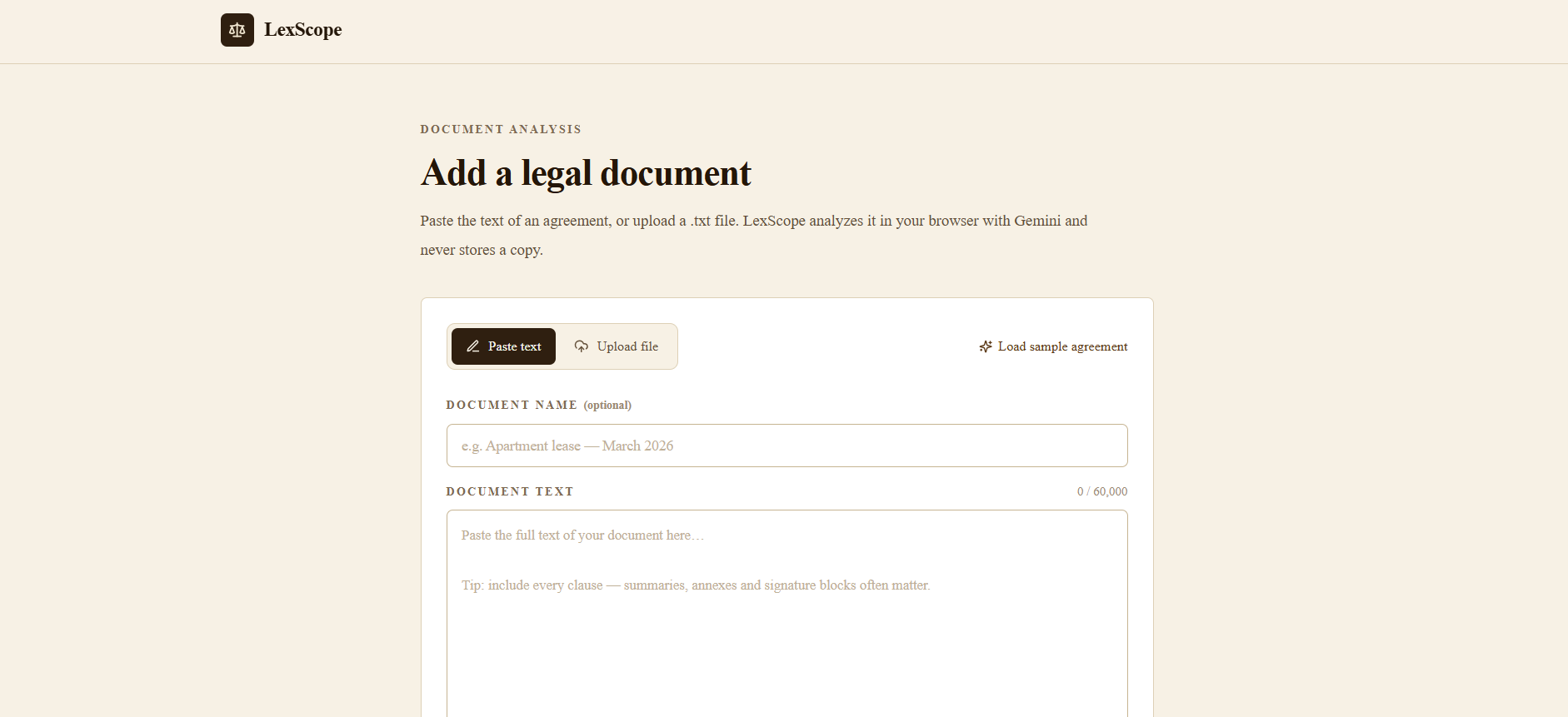
LexScope turns legal documents into a structured, plain-language report. A user can paste a document or upload a supported file and receive:
- A plain-English summary
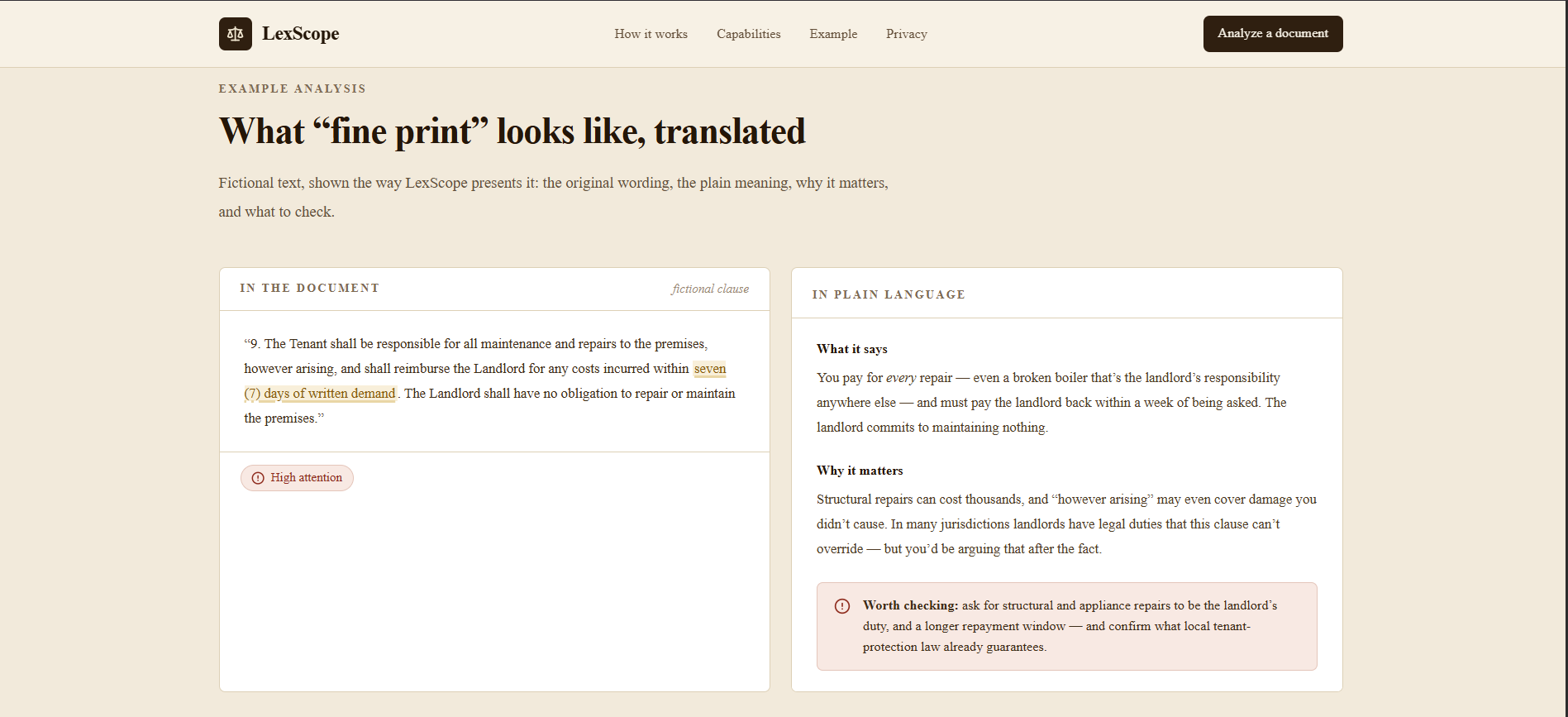
- Clause-by-clause explanations
- AI-generated attention indicators and red flags
- Key obligations and important dates
- Original clause text alongside its explanation
- Highlighted sections in the original document
- Practical questions to consider before signing
LexScope deliberately distinguishes document facts from AI interpretation and presents attention indicators as informational insights, not legal judgments.
How I built it
I built LexScope as a full-stack application using React, Vite, Tailwind CSS, FastAPI, and Google Gemini.
The React frontend handles document input, the analysis interface, interactive results, clause exploration, and document highlighting. The FastAPI backend validates and processes document content and acts as a secure AI proxy, keeping the Gemini API key on the server instead of exposing it to the browser.
I designed the Gemini integration to return a strict structured JSON schema containing summaries, clauses, attention indicators, obligations, dates, and questions. The response is then validated and normalized before reaching the UI, making the application more reliable even when AI output is imperfect.
I also built the application around a privacy-first approach. Documents are processed in memory, document content is not logged or permanently stored, and the application does not require users to create an account.
Challenges I ran into
One of the biggest challenges was making AI-generated legal analysis reliable enough for a user-facing application. An LLM can misunderstand wording, invent details, or make overly confident claims. I addressed this by designing strict prompts, requiring structured output, validating the response against a schema, quoting only actual document text, and explicitly separating facts from interpretation.
Another challenge was accurately connecting AI-generated clauses back to the original document. I implemented conservative text matching with normalization and fuzzy fallback so that paraphrased AI explanations would not incorrectly highlight unrelated text.
I also designed the application so that sensitive API credentials never reached the frontend, while keeping the user experience simple and requiring no user login.
Accomplishments that I'm proud of
- Built LexScope as a complete working full-stack application rather than just an AI prompt or prototype.
- Implemented structured Gemini analysis with validation and fallback model handling.
- Created an interactive clause explorer with original text and plain-language explanations side by side.
- Built document-level highlighting that connects analyzed clauses back to their original wording.
- Added wording-based red-flag analysis instead of treating the presence of a clause category as automatically problematic.
- Implemented a privacy-focused architecture with no permanent document storage and no document-content logging.
- Added clear safeguards throughout the product so that AI-generated insights are not presented as legal advice.
What I learned
Building LexScope taught me that using an LLM in a real application involves much more than sending a prompt and displaying the response. I learned how important structured outputs, schema validation, fallback handling, prompt design, error handling, and conservative UI behavior are when AI is used for a sensitive domain.
I also learned how frontend and backend architecture can work together to protect API credentials and user data while still keeping the application simple for users.
Most importantly, I learned to design around the limitations of AI rather than hiding them. LexScope is built to help users understand and question a document, not to make legal decisions for them.
What's next for LexScope
The next step is expanding LexScope beyond document analysis into jurisdiction-aware legal guidance. For example, a future version could incorporate U.S. federal and state laws to help users understand which laws, rights, or legal protections may be relevant to a situation they describe, including cases where they believe they have been wrongly accused.
LexScope could explain the relevant legal concepts in plain language, show the sources behind them, and guide users toward the questions and information they should discuss with a qualified lawyer. It would not determine guilt, innocence, or provide legal representation. Instead, it would serve as an accessible first layer of legal understanding before professional advice.
I also plan to:
- Expand support for PDF and DOCX documents
- Improve multilingual analysis
- Strengthen clause matching
- Develop more specialized legal-document analysis
- Improve the accuracy and transparency of AI-generated insights
The long-term goal is to make LexScope a trusted first layer between complex legal information and the people who need to understand it, while keeping qualified legal professionals at the center of important legal decisions.
Built With
- ai
- cors
- fastapi
- fetch-api
- google-gemini
- html
- httpx
- javascript
- json
- lucide-react
- pytest
- python
- react
- react-context-api
- react-router
- rest-api
- tailwindcss
- uvicorn
- vite


Log in or sign up for Devpost to join the conversation.