-
-
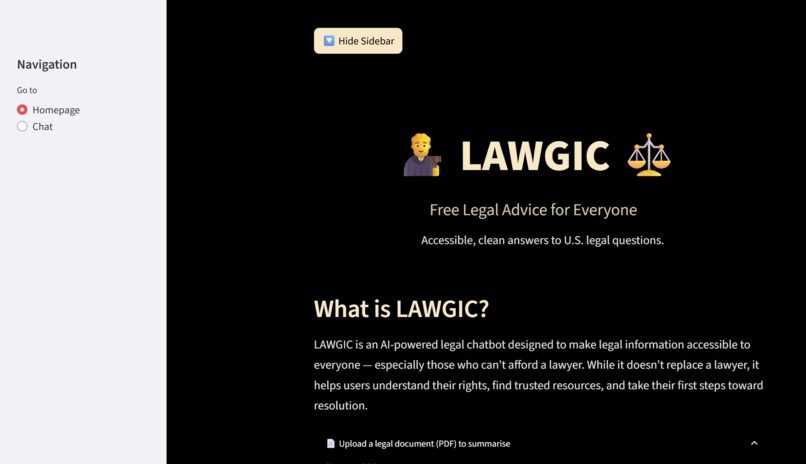
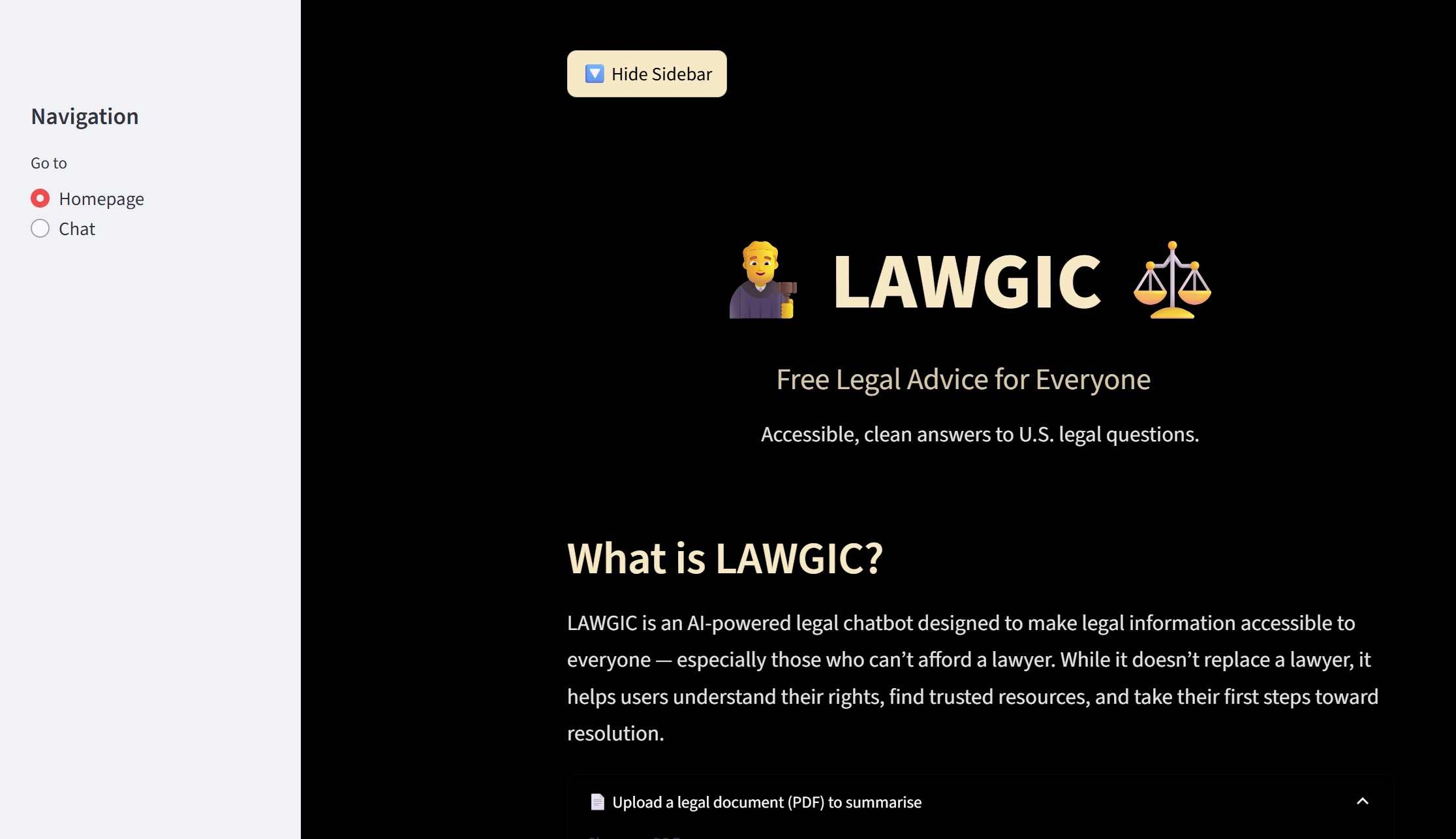
Home Screen
-
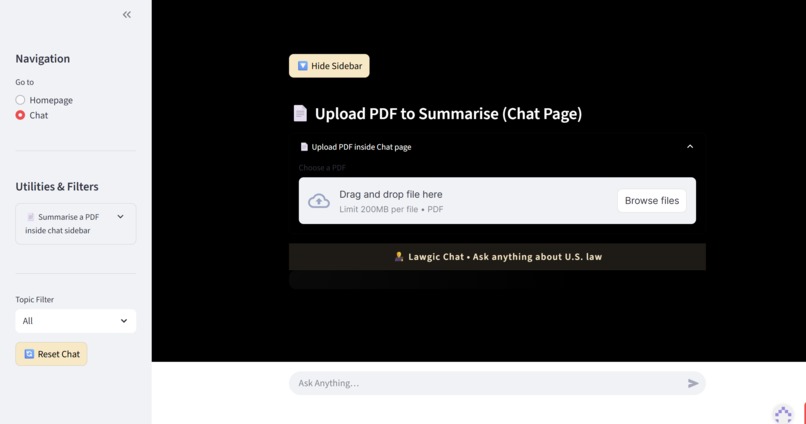
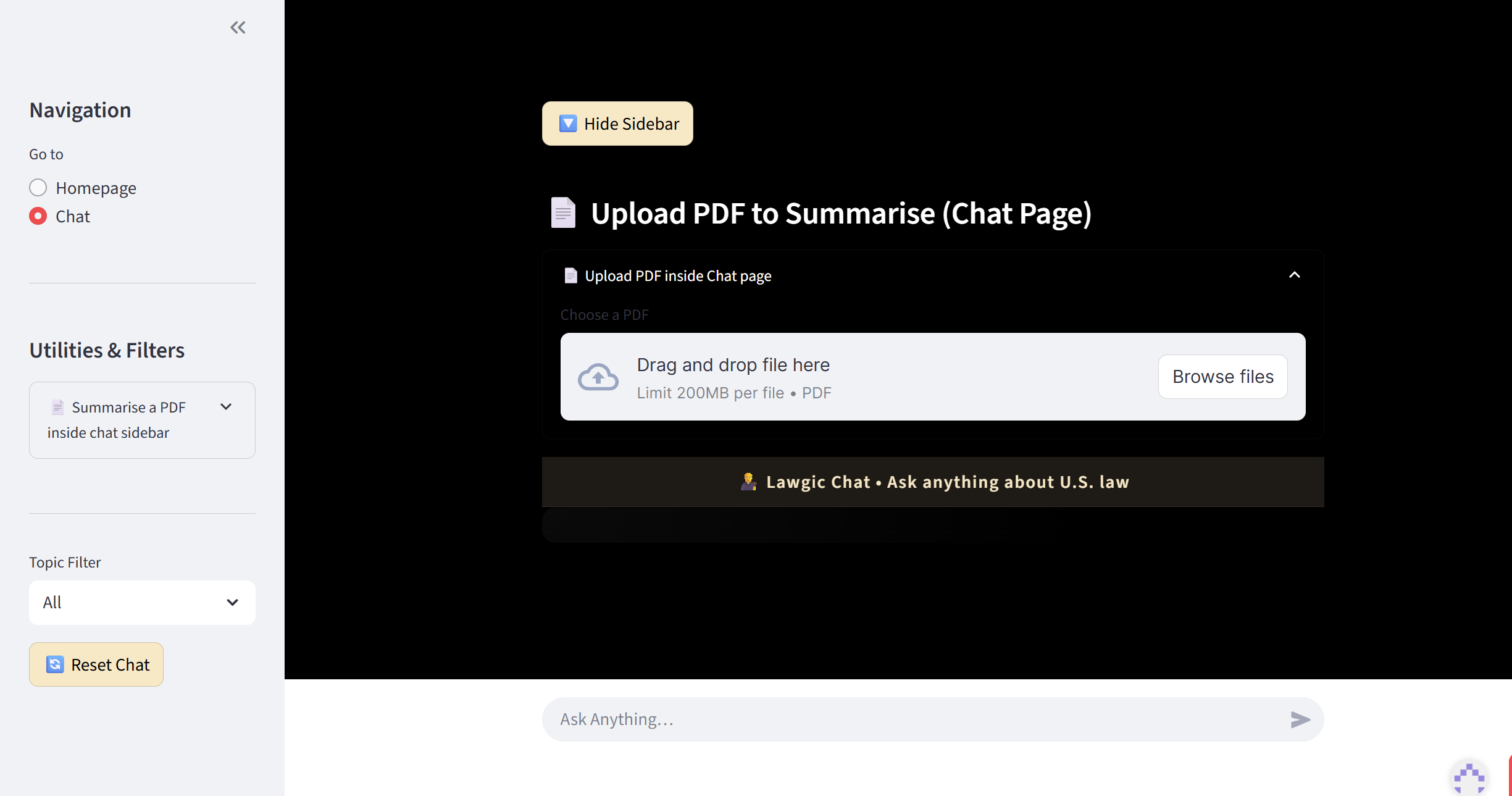
Chat Screen
-
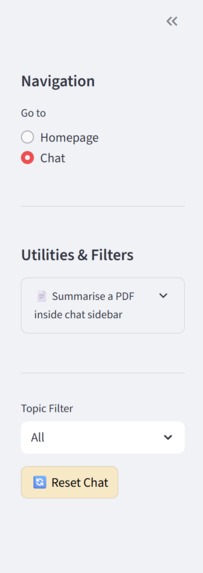
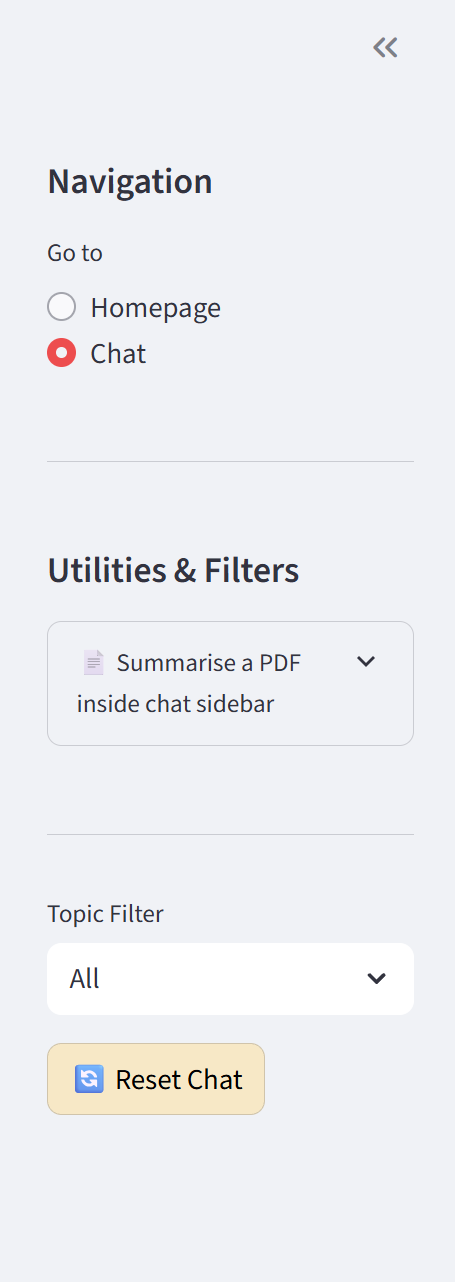
Navigation Bar
-
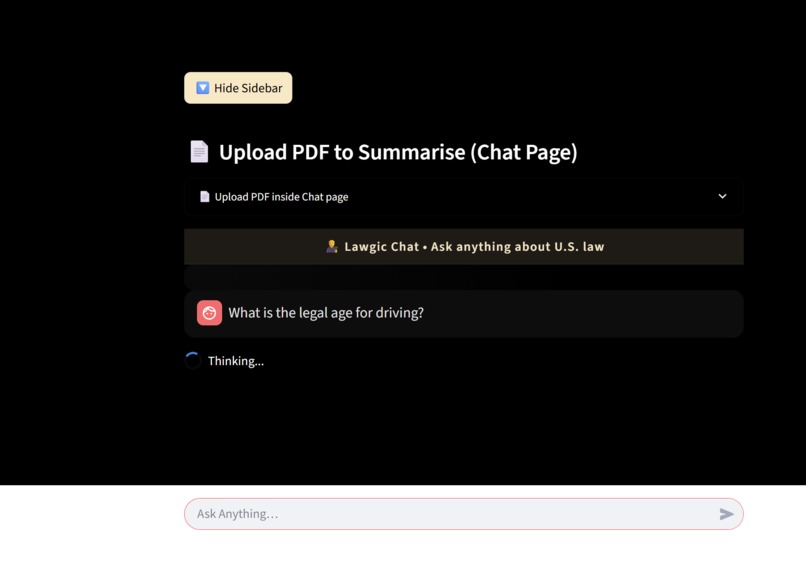
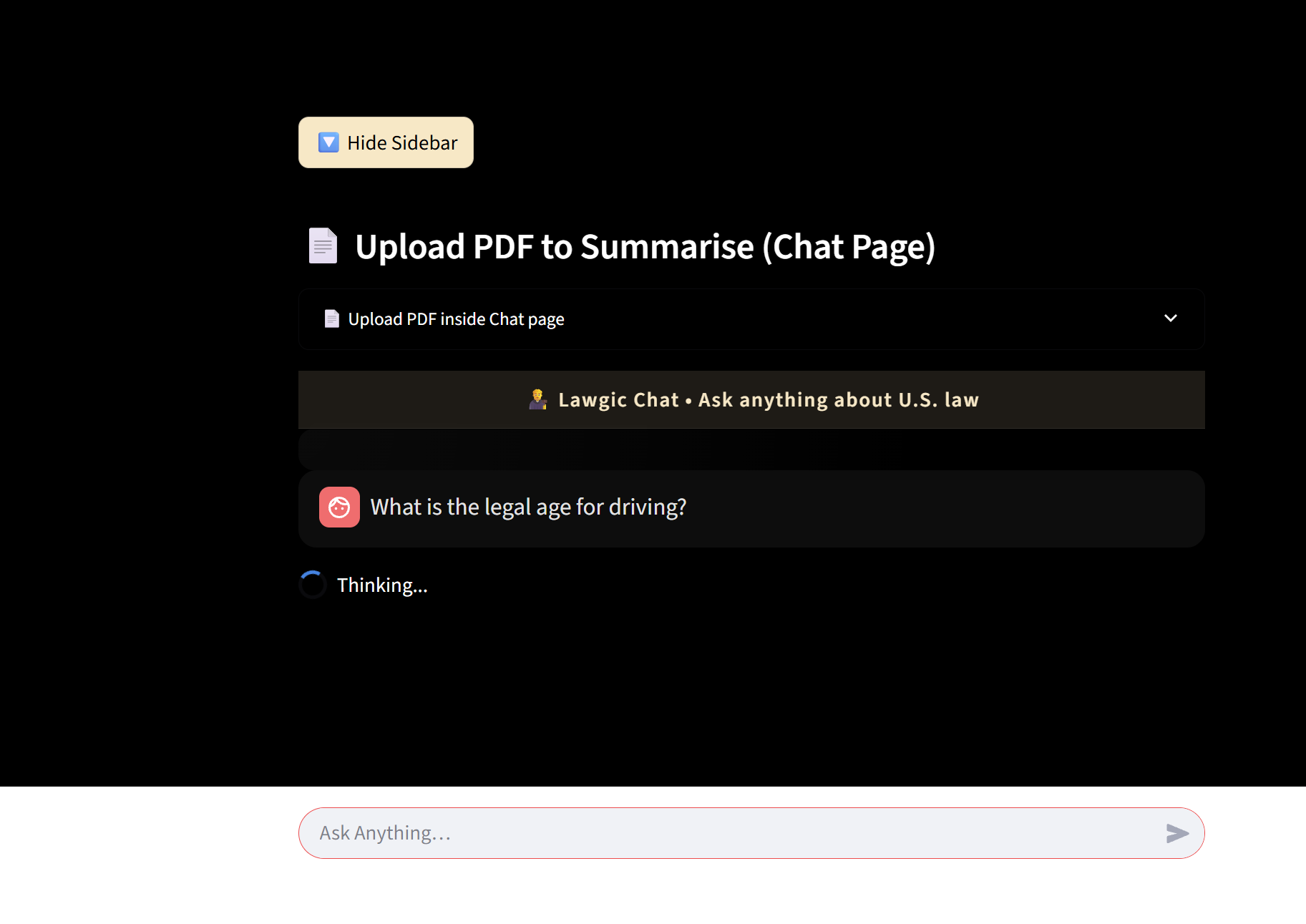
AI Working
-
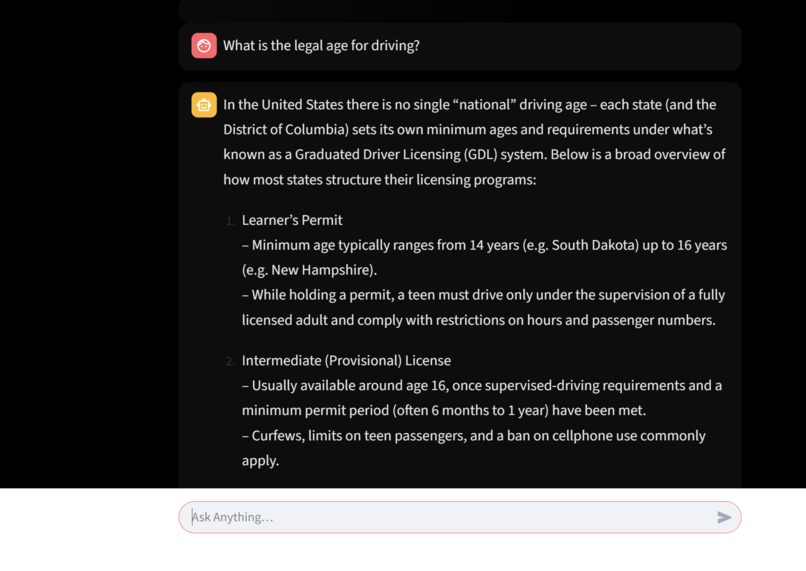
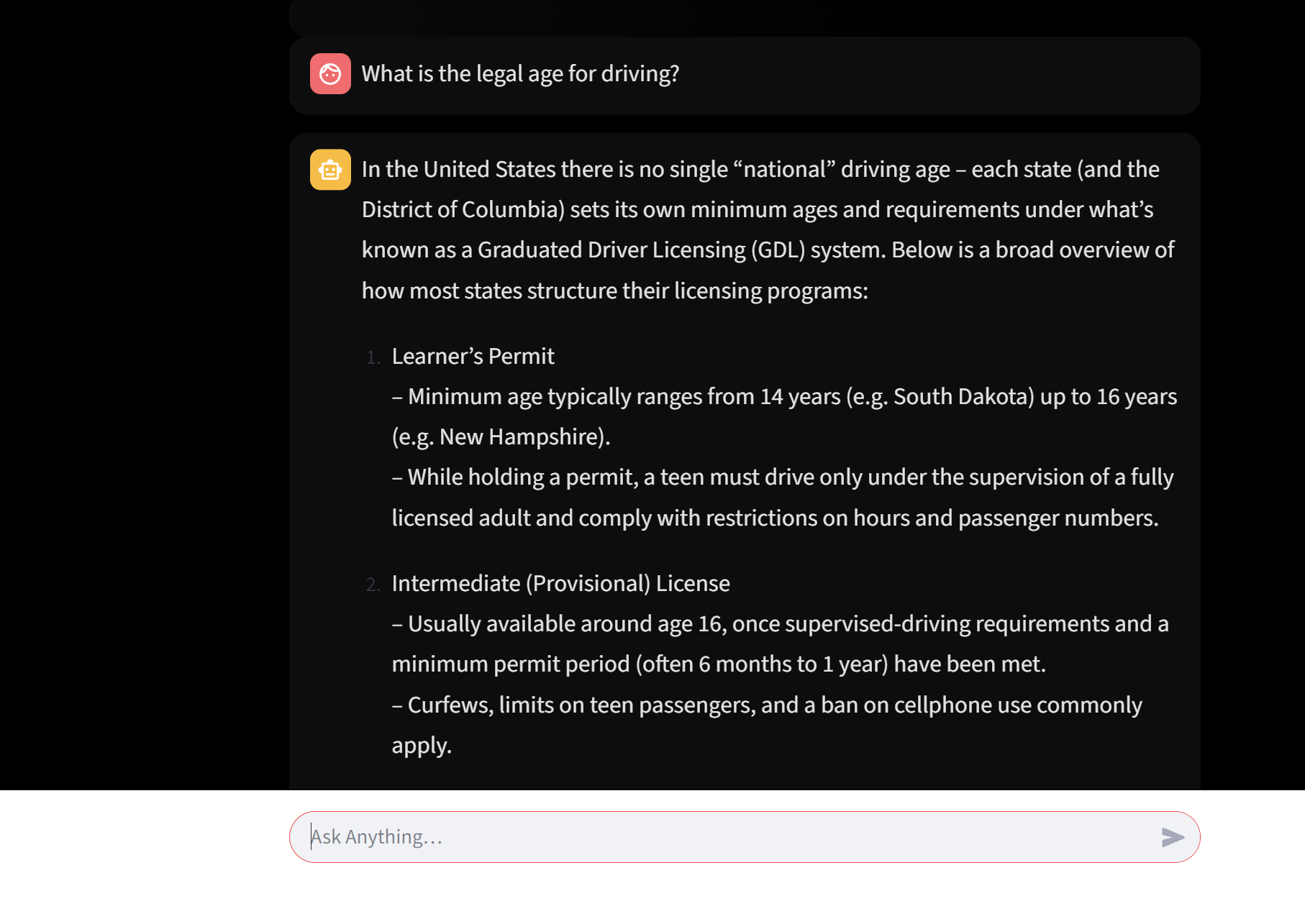
Answer to the above question asked
Inspiration We’ve all heard that “justice is for everyone,” but growing up, we saw too many people in our own communities who didn’t get that chance. We’ve met families evicted without warning, immigrants too scared to ask for help, and people who ended up in jail—not because they were guilty, but because they didn’t have a lawyer or even knew their rights. One of us had a relative sign away their future because they didn’t understand the legal document in front of them. It broke something inside us. That experience made us ask: What if they had someone to guide them? What if they just had something to explain it all in simple words?
That’s how LAWGIC was born.
What it does? LAWGIC is a free AI-powered legal chatbot, on web, designed for people who can’t afford lawyers or don't know where to turn. It explains legal rights in plain, easy-to-understand English and helps users take their first steps when facing issues in areas like housing, employment, or immigration. You can ask it legal questions, or even upload a legal document like a notice or lease—and LAWGIC will summarize and explain it, all without needing legal jargon or expensive consultations. It’s not meant to replace a lawyer, but to make legal knowledge less scary and more accessible for everyone.
How we built it? We built LAWGIC using:
- Streamlit for the front-end interface
- OpenAI API (o4-mini) to power our chatbot and document analysis
- PyMuPDF (fitz) for parsing uploaded PDF legal documents
- Python as the core engine
- Custom CSS for a clean, accessible, professional feel We focused heavily on user experience, making sure that everything—from the colors to the fonts—felt friendly, calm, and trustworthy. The chatbot is grounded with a system prompt that reminds it to stay clear, factual, and ethical.
Challenges we ran into: We faced two big challenges:
- Making legal language understandable. Legal terms are complicated, and we had to keep tweaking prompts and logic to make sure LAWGIC stayed helpful without overstepping or giving false confidence.
- Creating a safe user experience. We were constantly thinking about how to protect users—making sure LAWGIC never pretends to be a lawyer, and always points users to trusted resources when needed.
Also... we’re high schoolers. Balancing school, sleep, and code wasn’t easy—but our motivation kept us going.
Accomplishments that we're proud of:
- We created a fully working, clean legal chatbot in a weekend
- We built an interface where people can upload legal PDFs and get easy summaries
- We took something complex and turned it into something anyone can use
- We stayed true to our mission: helping real people who often get left behind
What we learned? We learned how powerful AI can be—but also how important it is to use it responsibly. We learned how to balance empathy with technology, how to design for humans first, and how to work together even when we were tired and stressed.
We also learned that change starts small—with an idea, some code, and a lot of heart.
What's next for LAWGIC? This is just the beginning. We want to:
- Add multilingual support so more communities can use LAWGIC
- Partner with legal nonprofits to build in verified legal info
- Launch mobile and offline versions for people without regular internet
- Make LAWGIC smarter—especially with court forms and housing rights
- Bring this to schools, shelters, and community centers
- Train our own bot instead of relying on API's
- Make this bot an actual lawyer is the FINAL GOAL, we need this bot to be able to debate in court
Because in the end, LAWGIC isn’t about us. It’s about the people who need it most. And we’re not stopping until everyone has access to justice.


Log in or sign up for Devpost to join the conversation.