-
-
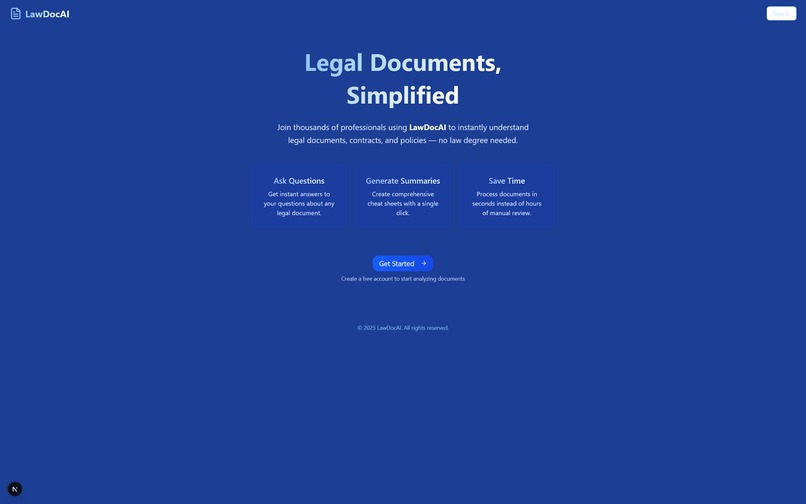
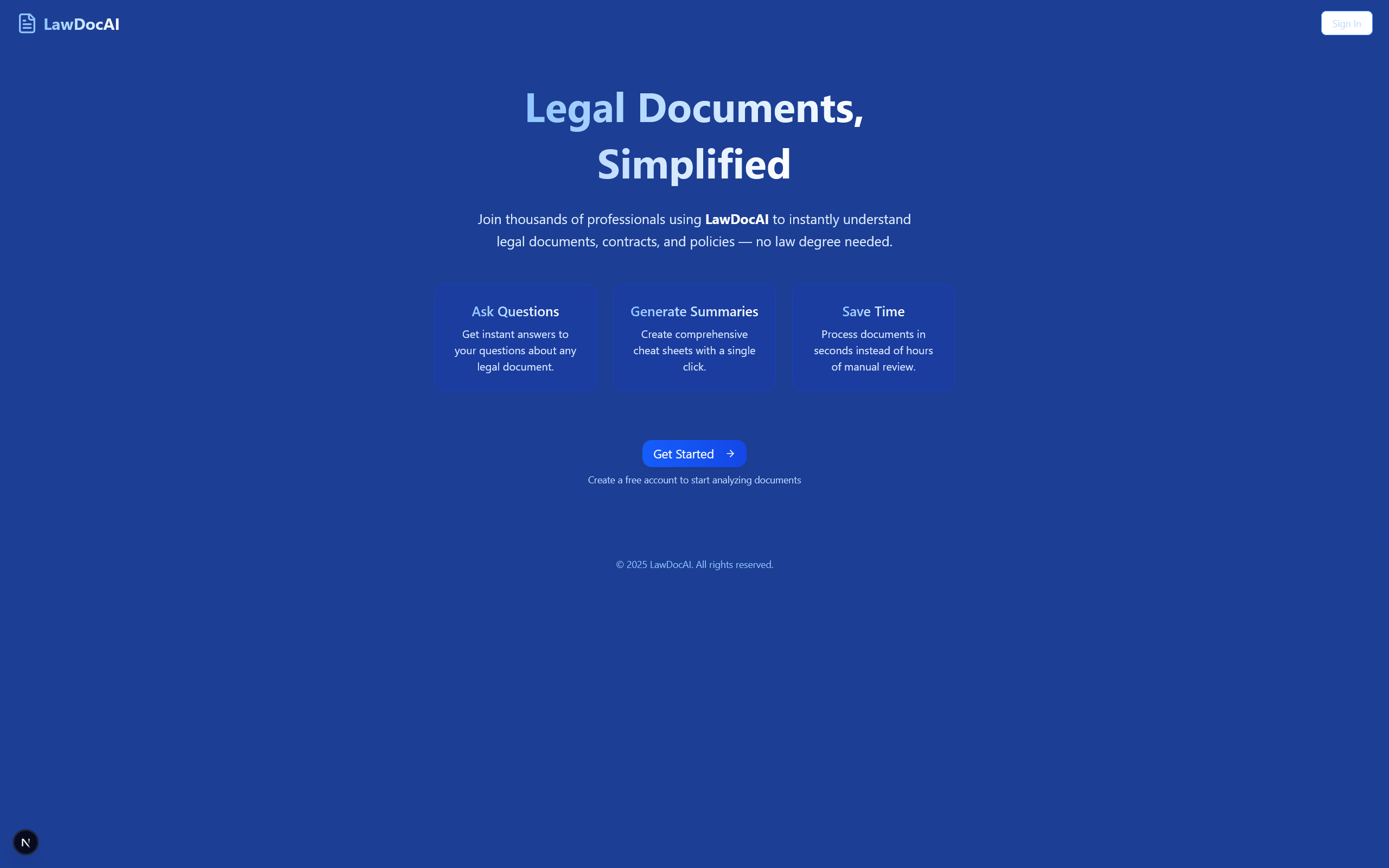
Welcome Screen
-
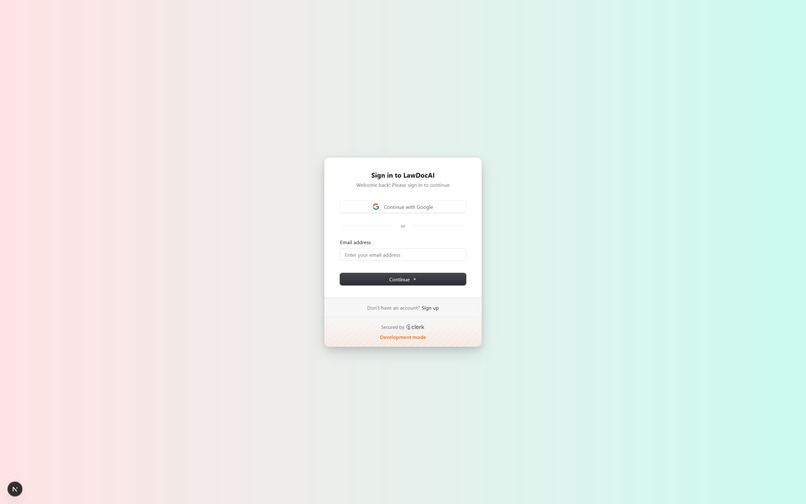
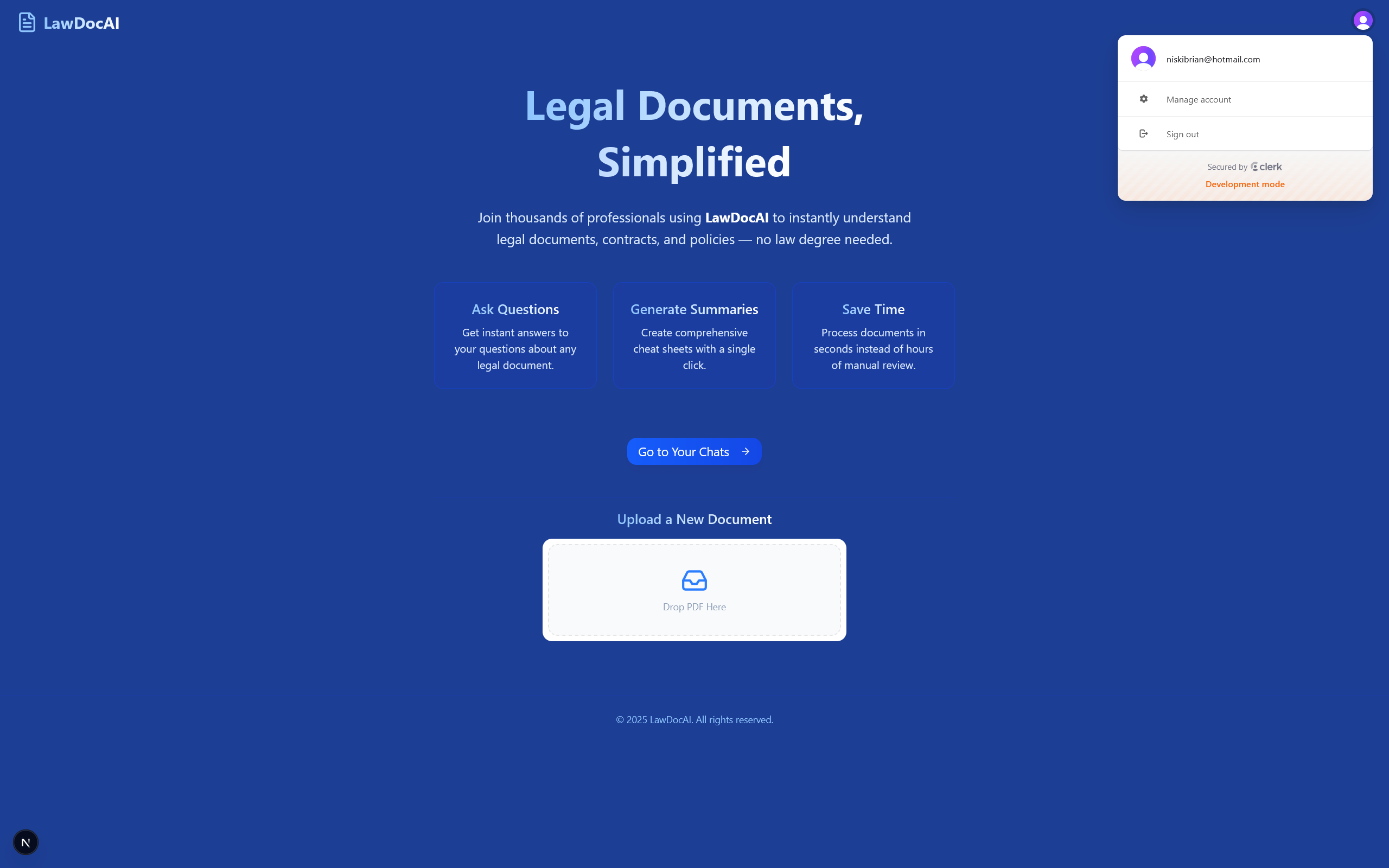
Clerk Authentication
-
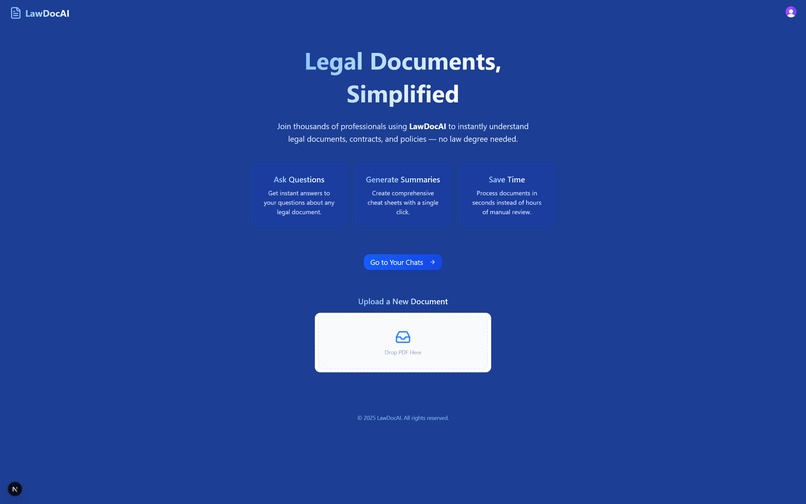
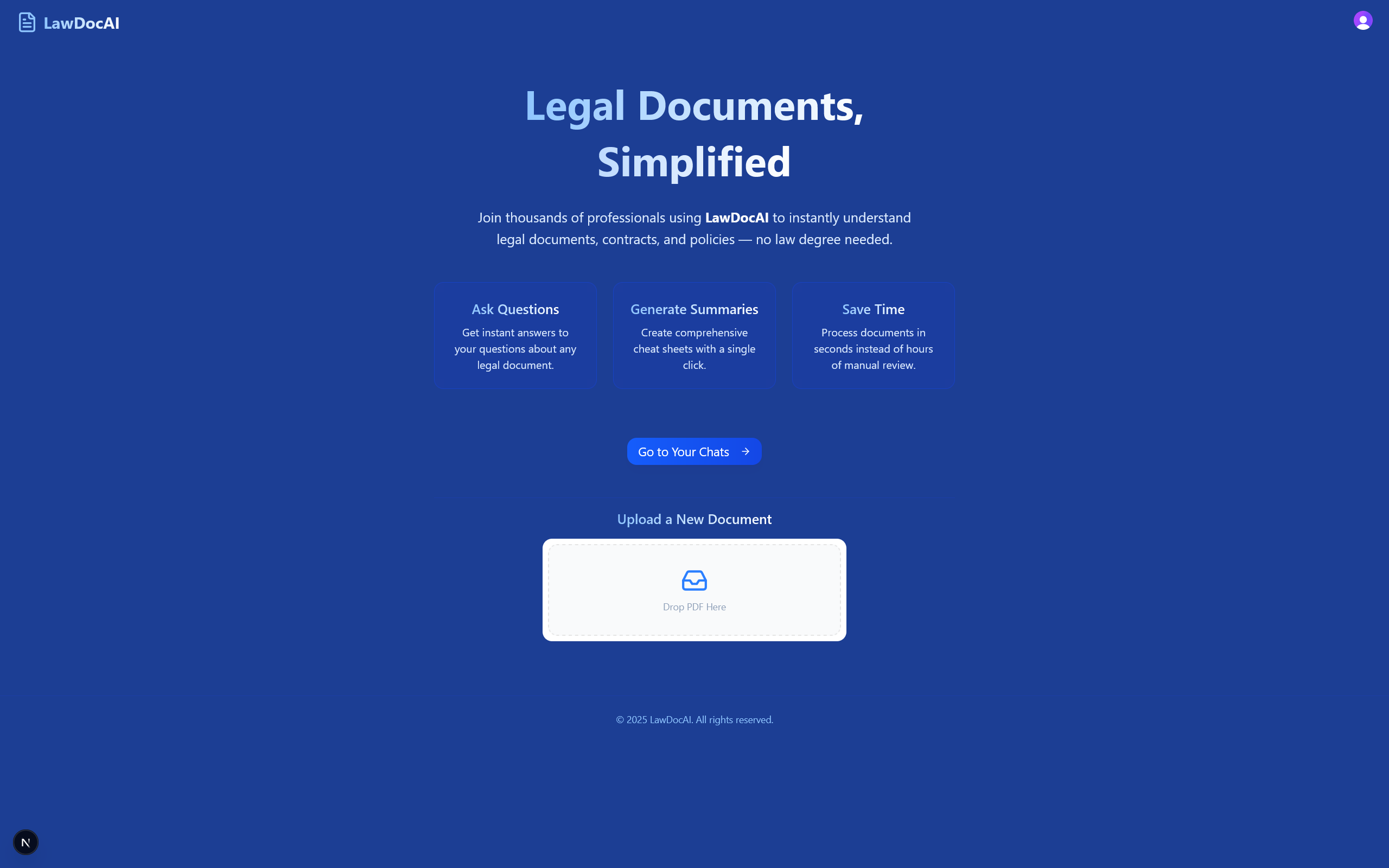
Home Screen (Logged In)
-
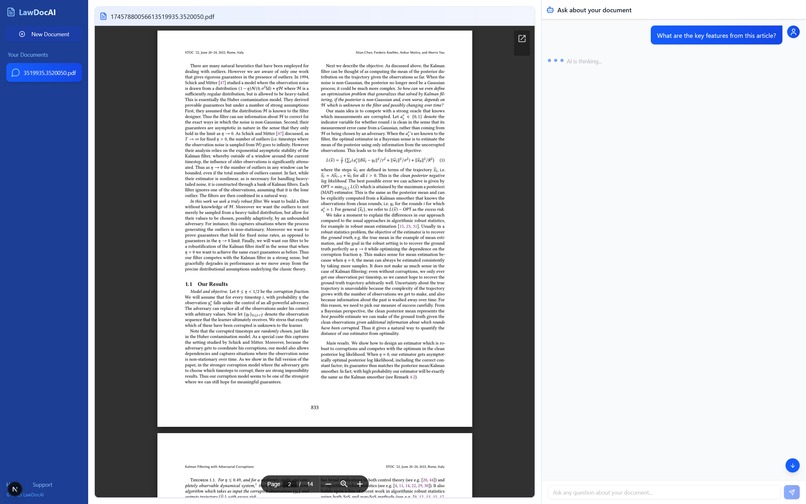
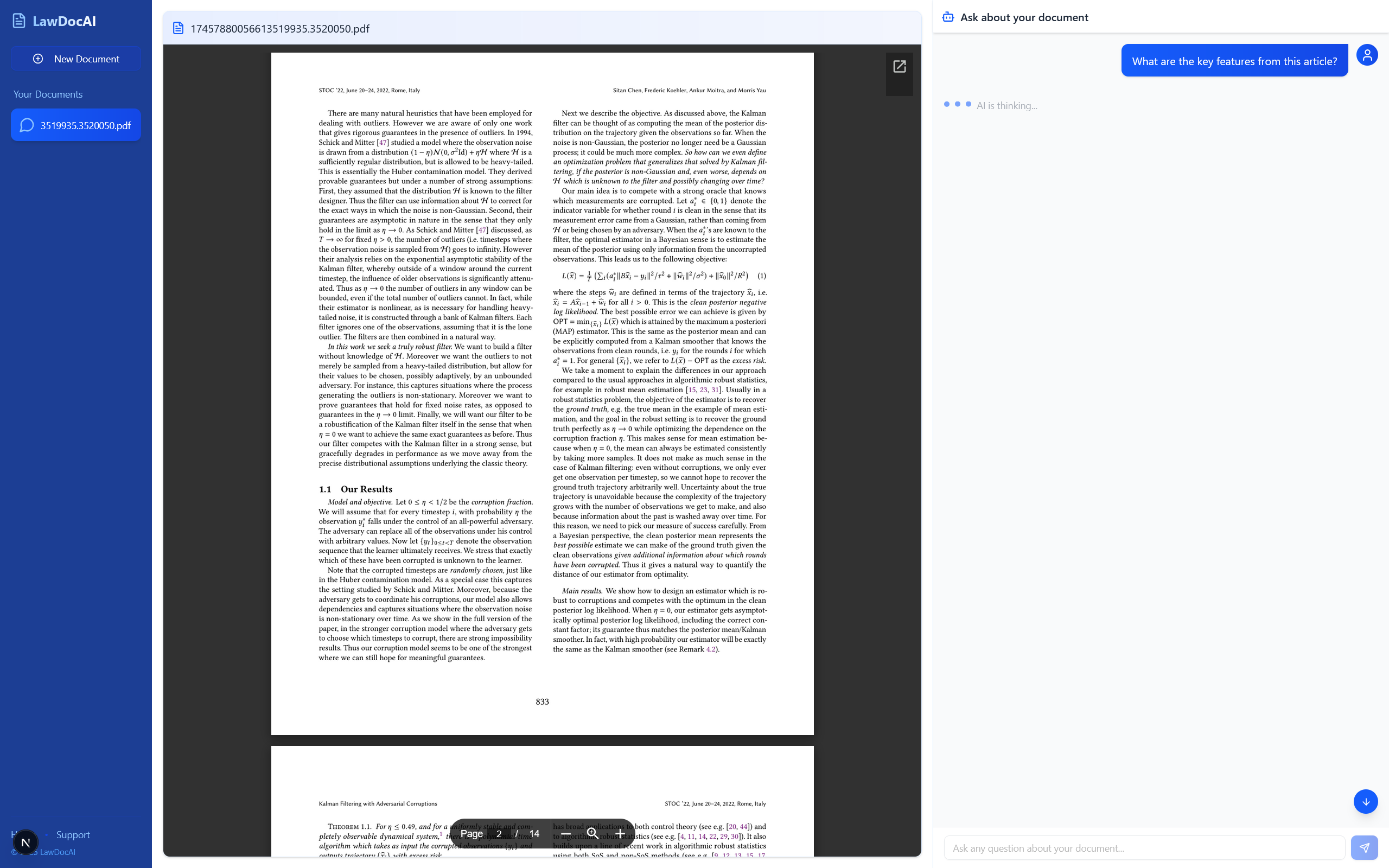
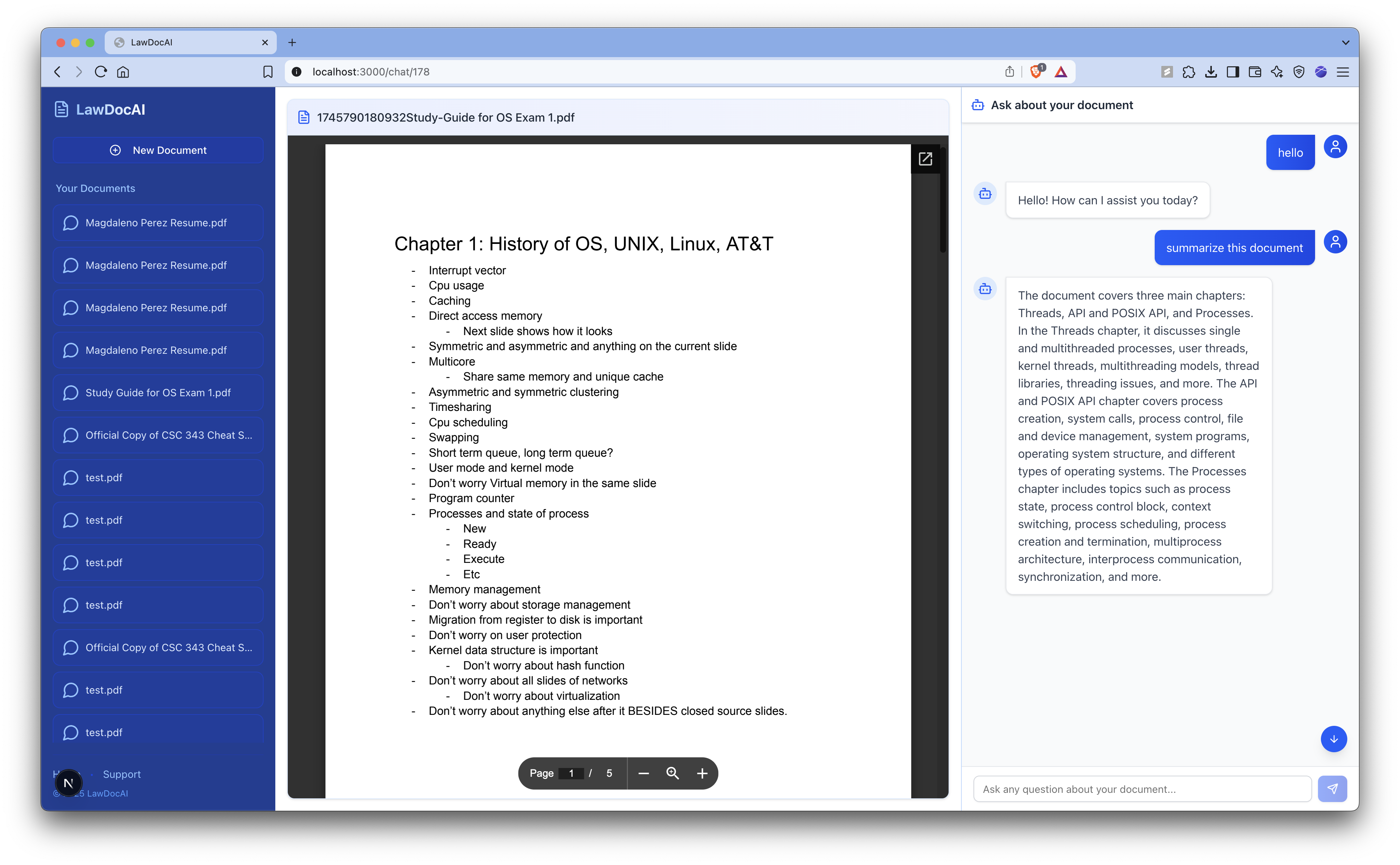
AI Chat
-
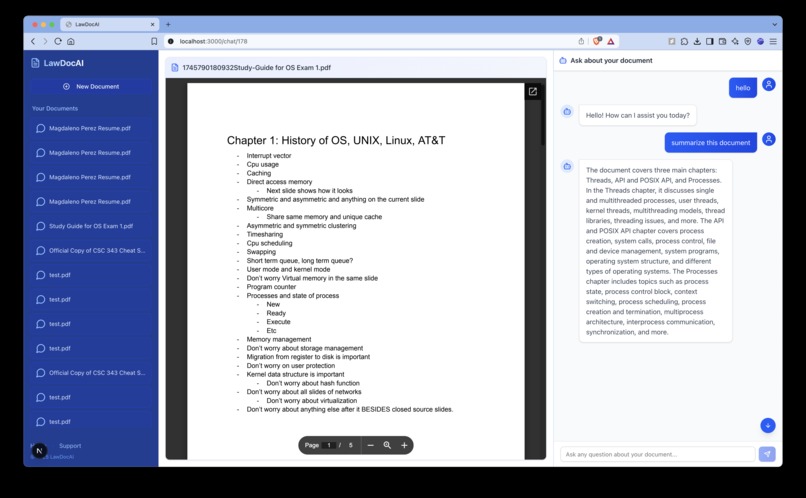
AI Chat Response
-
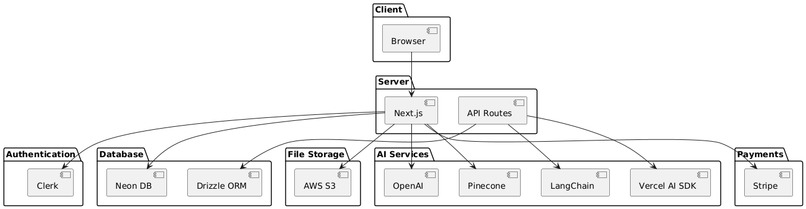
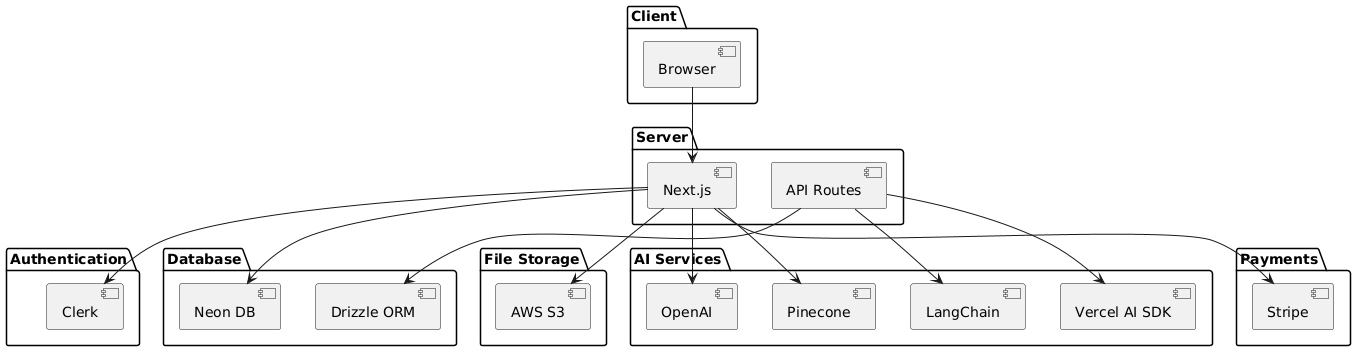
Component Diagram
-
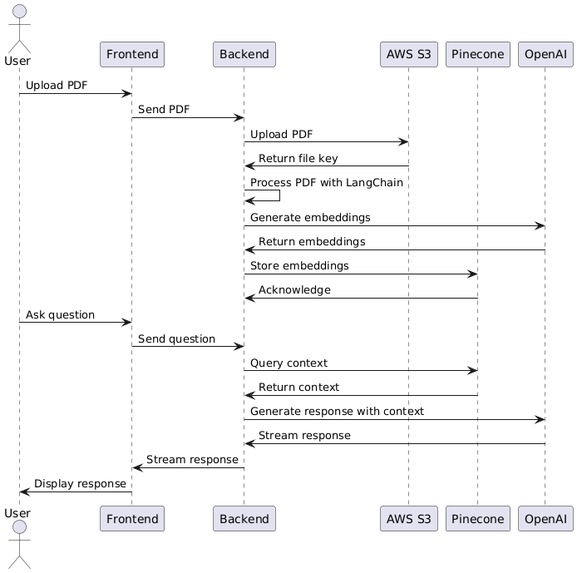
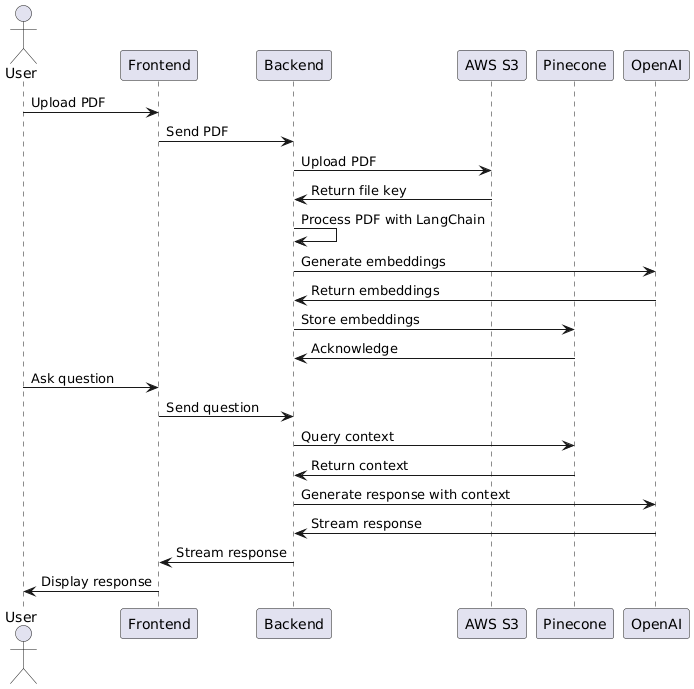
Sequence Diagram
-
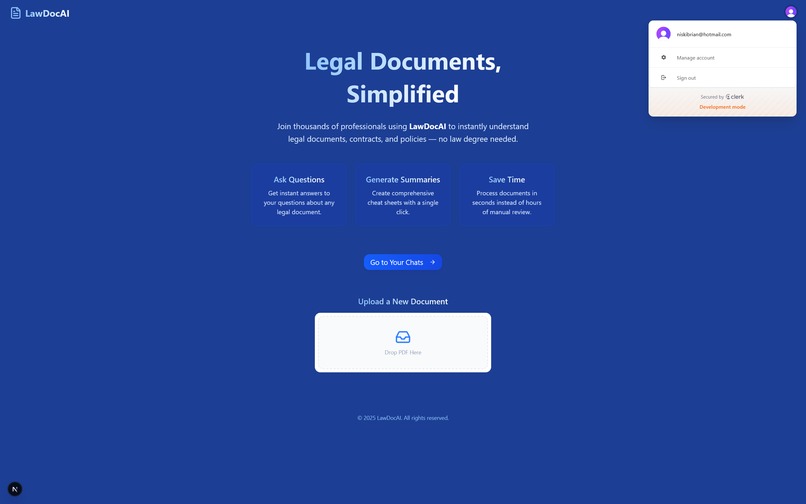
Logging Out
-
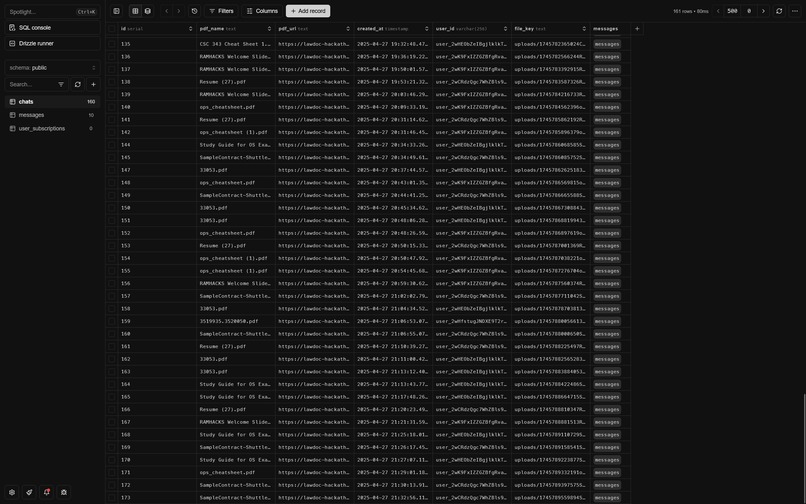
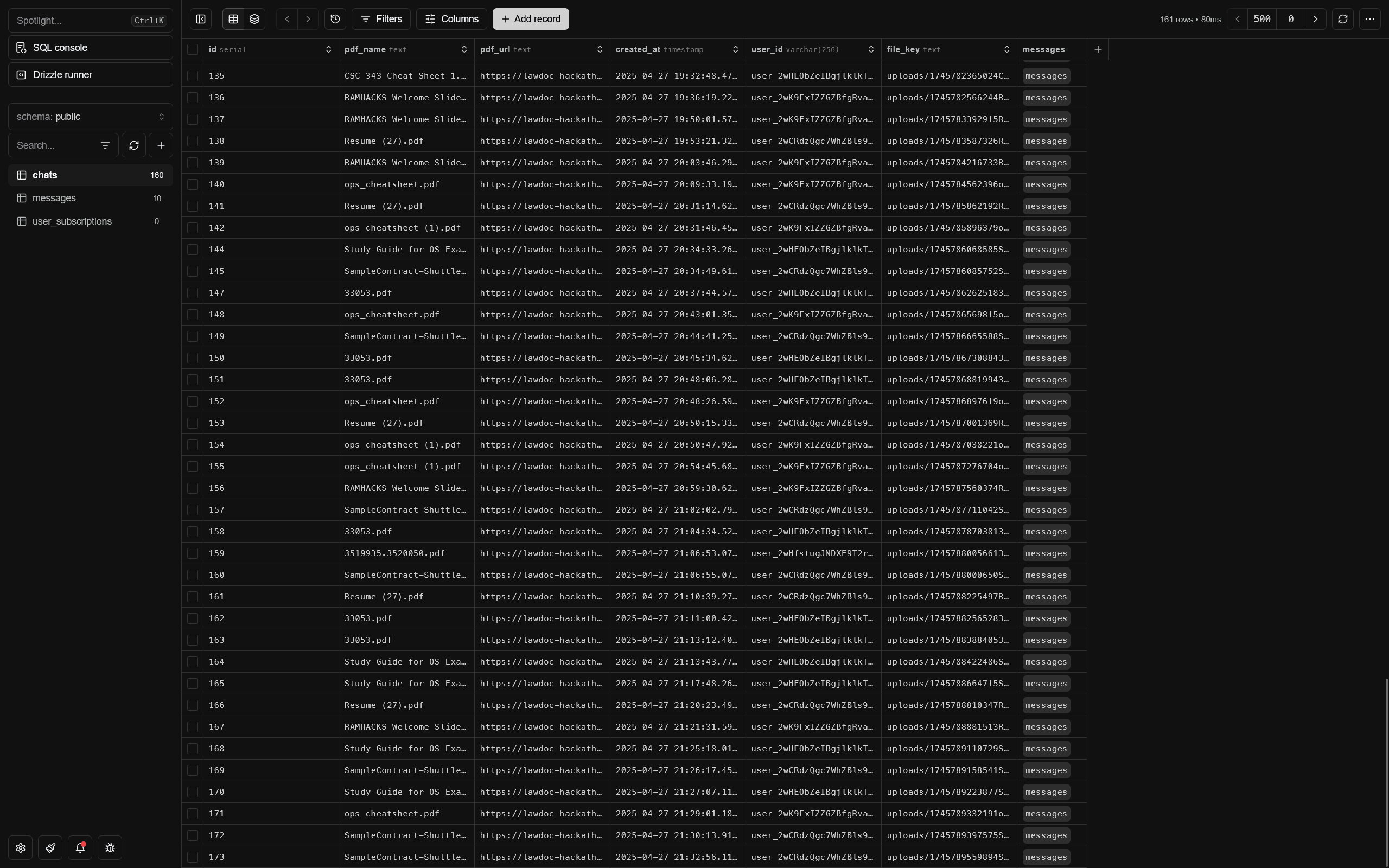
Drizzle Studio (Database)

Inspiration
The Law Document AI Assistant was inspired by the need to streamline legal document analysis for professionals and individuals navigating complex legal texts. Our goal was to create an accessible, AI-powered tool to simplify comprehension and interaction with legal documents, drawing inspiration from SaaS products like "Tab PDF" and educational initiatives to democratize legal knowledge.
What it does
The Law Document AI Assistant enables users to upload legal documents (e.g., contracts, statutes, or case law) in PDF format and interact with them through a conversational AI interface. Users can:
- Ask questions about document content.
- Receive summarized insights.
- Extract key clauses and terms.
Powered by retrieval-augmented generation (RAG), the tool delivers accurate, context-aware responses.
How we built it
We developed the project using a full-stack approach:
- Frontend & Backend: Next.js with TypeScript, styled with Tailwind CSS and Shadcn UI components.
- Authentication: Clerk for secure user logins via Google or GitHub.
- Database: Drizzle ORM with Neon DB (serverless PostgreSQL) for storing chat logs and user data.
- File Storage: AWS S3 for PDF uploads.
- AI Pipeline: Pinecone DB for vector storage, Langchain for document processing, and OpenAI's "text-embedding-ada-002" for embeddings and language model interactions.
- Payments: Stripe for subscription-based access.
- Chat Interface: Vercel AI SDK for a streaming chat experience.
- Deployment: Vercel's edge runtime for optimal performance.
Challenges we ran into
- Reading PDF Files: Extracting text from scanned PDFs was challenging, prompting plans for an OCR function to enhance text recognition.
- Page Function Issues: Unexpected page refreshes after PDF processing, likely due to React state mismanagement, were resolved by refining state handling.
- Database Size Limits: Neon DB's storage constraints required data optimization and pagination for chat logs.
- Rate-Limited APIs: OpenAI and Pinecone API rate limits necessitated careful request management and caching strategies.
- npm Install Vulnerabilities: Dependency vulnerabilities during
npm installwere addressed by auditing and updating packages. - Next.js Errors: Routing and build errors, such as misconfigured API routes, were fixed by correcting file placement.
- Merge Conflicts: Collaborative development caused Git merge conflicts, resolved through improved branch management and communication.
Accomplishments that we're proud of
- Built and deployed a fully functional AI SaaS application with high-accuracy legal document processing.
- Successfully integrated RAG for contextual AI responses.
- Implemented a seamless payment system with Stripe.
- Achieved edge runtime deployment on Vercel for enhanced performance.
- Designed an intuitive UI with robust authentication, improving accessibility for legal document analysis.
What we learned
- Full-Stack Development: Gained expertise in Next.js routing, TypeScript, and edge runtime deployment.
- AI Integration: Mastered Pinecone DB, Langchain, and OpenAI for RAG-based applications.
- Technical Skills: Learned to configure Stripe webhooks, debug memory issues, and optimize database queries with Drizzle ORM.
- Product Development: Developed insights into building user-centric SaaS products.
What's next for Law Document AI Assistant
- Enhancements: Improve UI/UX for accessibility and optimize performance for larger documents.
- AI Features: Add clause comparison and multi-language support.
- Business Model: Expand subscription tiers and explore partnerships with legal firms.
- Technical Improvements: Implement OCR for scanned PDFs and optimize API usage to handle rate limits. Our vision is to further democratize legal document analysis, making it a go-to tool for professionals and individuals alike.
Built With
- amazon-web-services
- axios
- clerk
- clsx
- css
- drizzle
- neon
- next.js
- openai
- pinecone
- postgresql
- react
- stripe
- tailwind
- tailwind-merge
- tanstack
- typescript


Log in or sign up for Devpost to join the conversation.