-
-
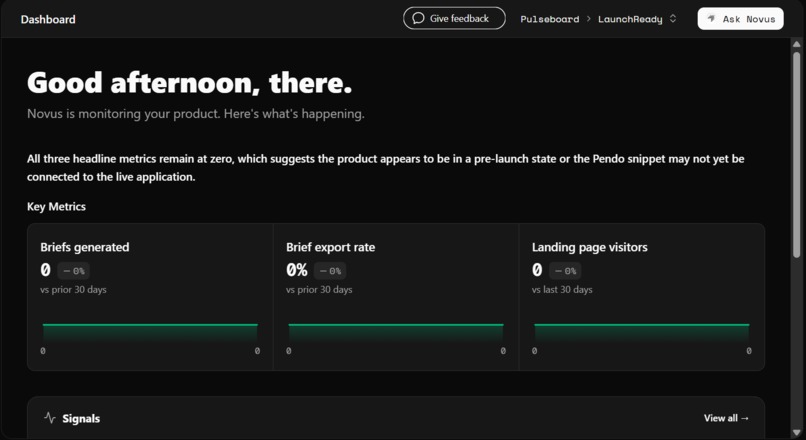
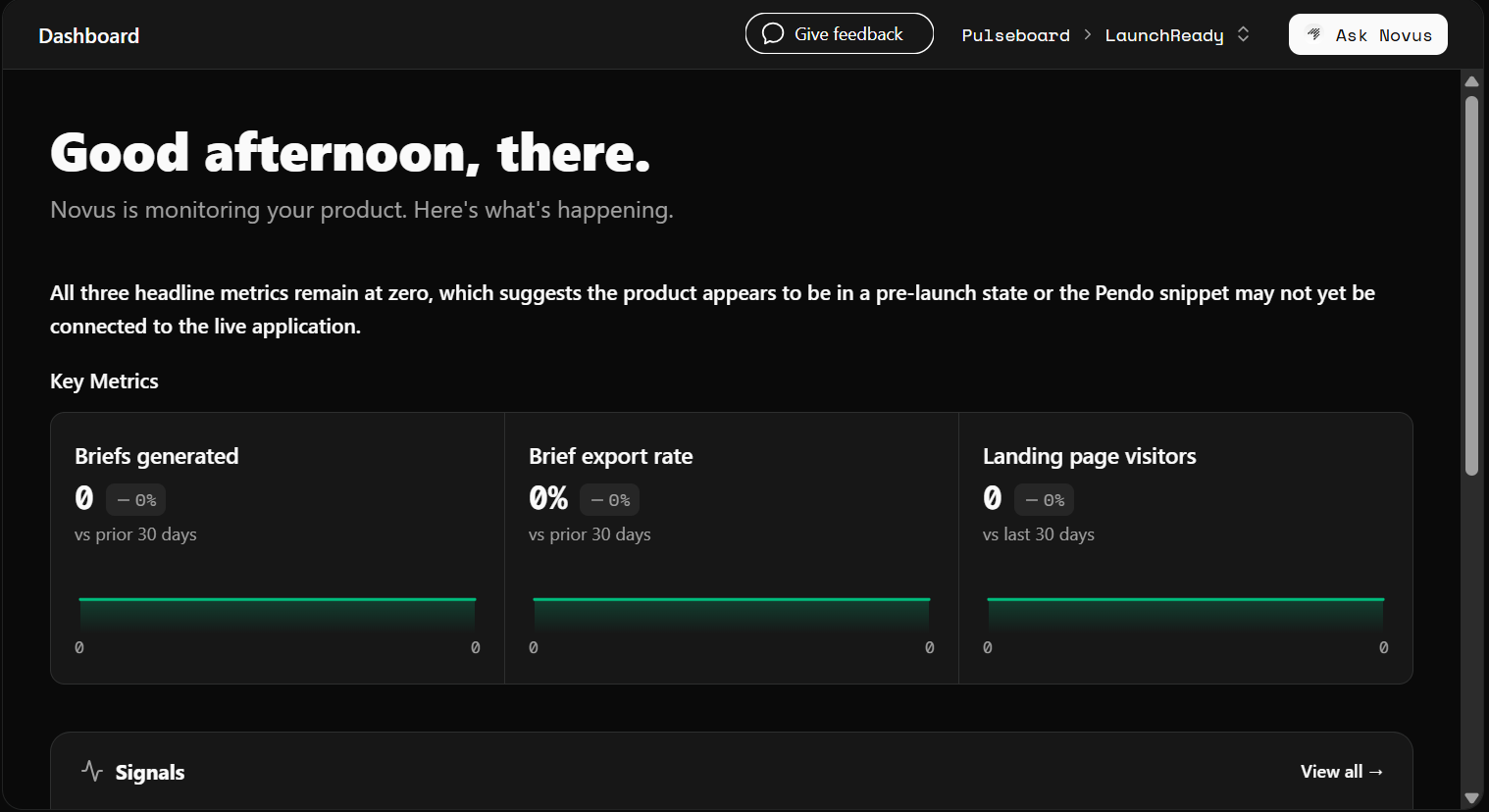
Novus Dashboard for LaunchReady
-
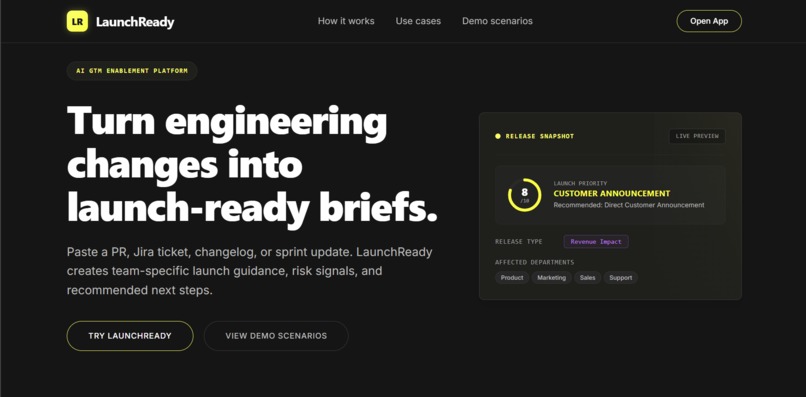
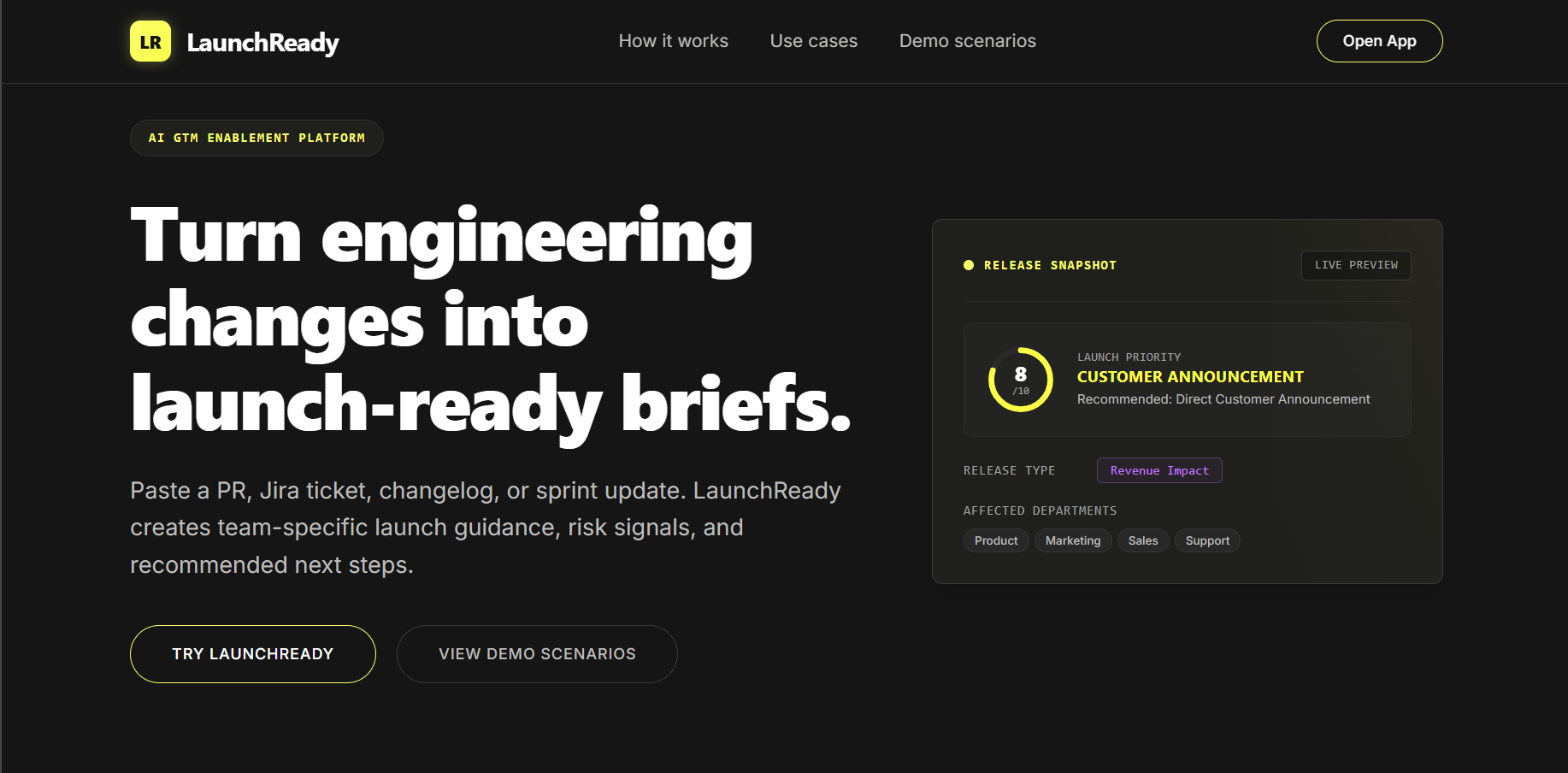
LaunchReady UI
Every product team ships software.
Far fewer teams ship understanding.
A feature gets merged. A Jira ticket gets closed. A sprint ends.
Then the real work starts.
Marketing needs to know what changed.
Support needs to know what customers might ask.
Sales wants to know if it helps close deals.
Leadership wants the business impact.
And the PM ends up translating the same release five different times.
That translation work is surprisingly manual.
A technical update that makes perfect sense to engineering often means very little to everyone else.
The Problem
Imagine an engineer writes:
Added SAML SSO support with domain verification and fallback authentication.
Engineering understands it immediately.
But everyone else has different questions:
- Does this matter to customers?
- Should support prepare documentation?
- Is this launch-worthy?
- Does sales need enablement material?
- Are there risks we should communicate?
Most release tools stop at changelogs.
Most AI tools stop at summaries.
Neither answers the question product teams actually care about:
"What should happen next?"
The Idea
LaunchReady turns technical updates into cross-functional launch guidance.
Paste:
- GitHub PRs
- Jira tickets
- Changelogs
- Sprint summaries
- Release notes
LaunchReady analyzes the change and generates:
- Plain-English summaries
- Product briefs
- Marketing guidance
- Sales enablement notes
- Support preparation notes
- Customer impact assessments
- Risk signals
- Launch recommendations
- Actionable launch checklists
Instead of asking teams to interpret engineering language, LaunchReady translates the release into the language each team already speaks.
What Makes It Different
The goal wasn't to build another release note generator.
The goal was to help teams decide:
- How important is this release?
- Who needs to know?
- What could go wrong?
- What actions should happen before launch?
For example:
A performance optimization may only need a changelog entry.
A breaking API change may require:
- Customer communication
- Migration documentation
- Support preparation
- Monitoring after rollout
LaunchReady tries to identify those differences automatically.
How It Works
The workflow is intentionally simple.
Step 1
Paste a technical update.
This can be anything from a GitHub pull request to a sprint summary.
Step 2
LaunchReady analyzes:
- customer impact
- affected teams
- launch risks
- release type
- launch priority
Step 3
Generate audience-specific guidance.
Product, Marketing, Sales, Support, and Leadership each receive a version tailored to their needs.
Step 4
Review launch recommendations and checklist items before shipping.
Risk Signals
One of the most useful parts of the project ended up being risk detection.
A release isn't just a feature.
It's also an opportunity for confusion, support tickets, migration issues, documentation gaps, and rollout mistakes.
LaunchReady attempts to surface those risks early and suggest mitigation steps before launch.
Building It
The product was designed around a simple principle:
Keep the workflow frictionless.
No integrations were required for the MVP.
Users can paste a release update and immediately receive launch guidance.
The interface focuses on readability rather than dashboards, making the generated recommendations easy to scan and share.
What I Learned
The biggest insight wasn't technical.
It was realizing how much product work is actually communication work.
Engineering teams already know what they built.
The challenge is helping everyone else understand:
- why it matters
- who it affects
- what should happen next
LaunchReady started as a release translation tool.
It evolved into a launch readiness assistant.
Because shipping software is only half the job.
Making sure the entire organization understands the release is the other half.

Log in or sign up for Devpost to join the conversation.