-
-
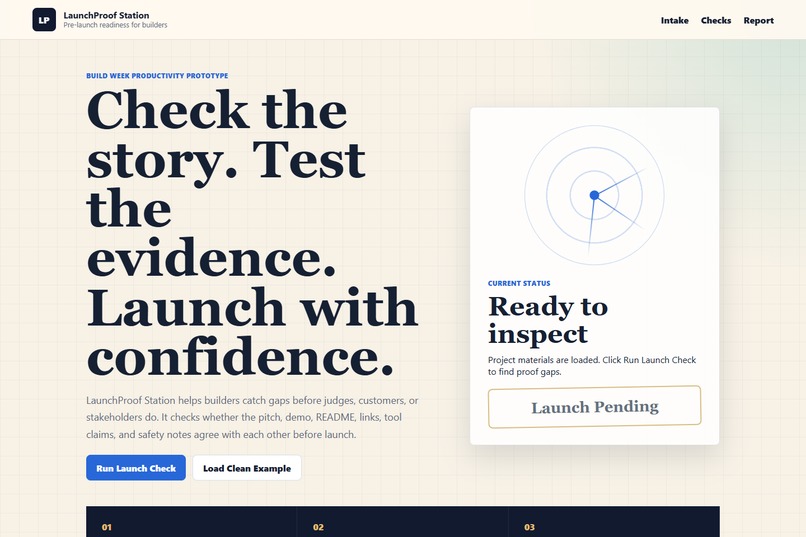
01-hero-opening
-
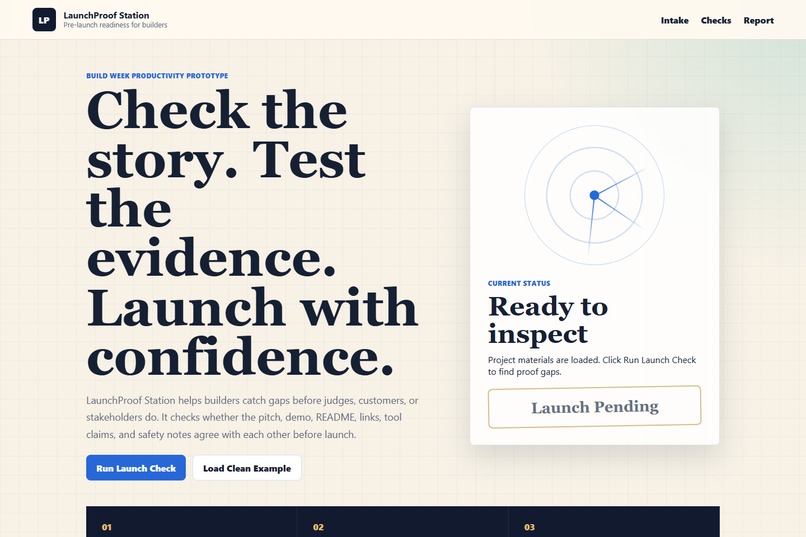
02-project-snapshot-intake
-
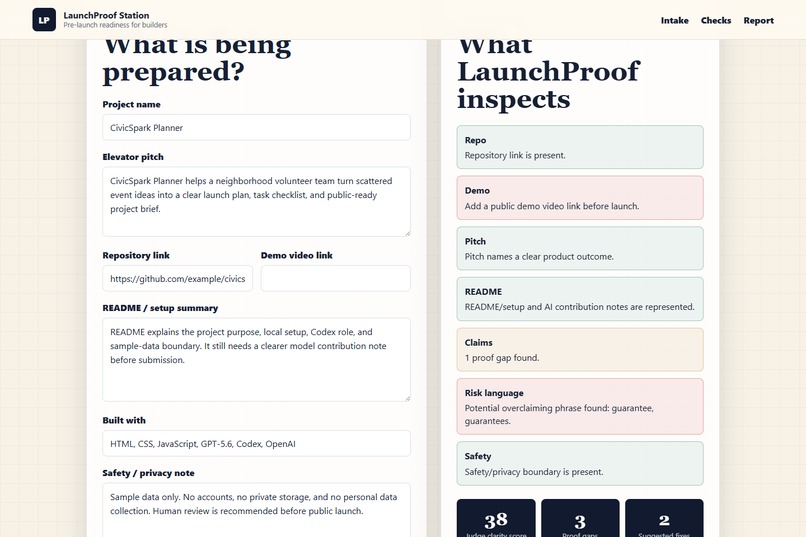
03-proof-gap-checks
-
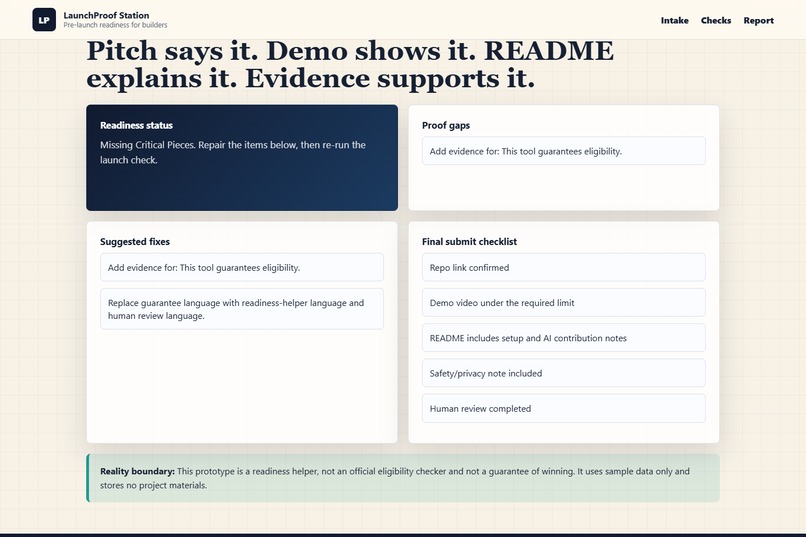
04-launchproof-report-gaps
-
05-launch-ready-report
Inspiration
Builders often finish a project before their launch materials are truly ready. The demo may work, but the story, README, tool attribution, safety notes, and evidence can still be out of alignment.
LaunchProof Station was built around a simple question:
Can a builder check the story, test the evidence, and catch proof gaps before a project goes public?
What it does
LaunchProof Station is a pre-launch readiness helper for builders.
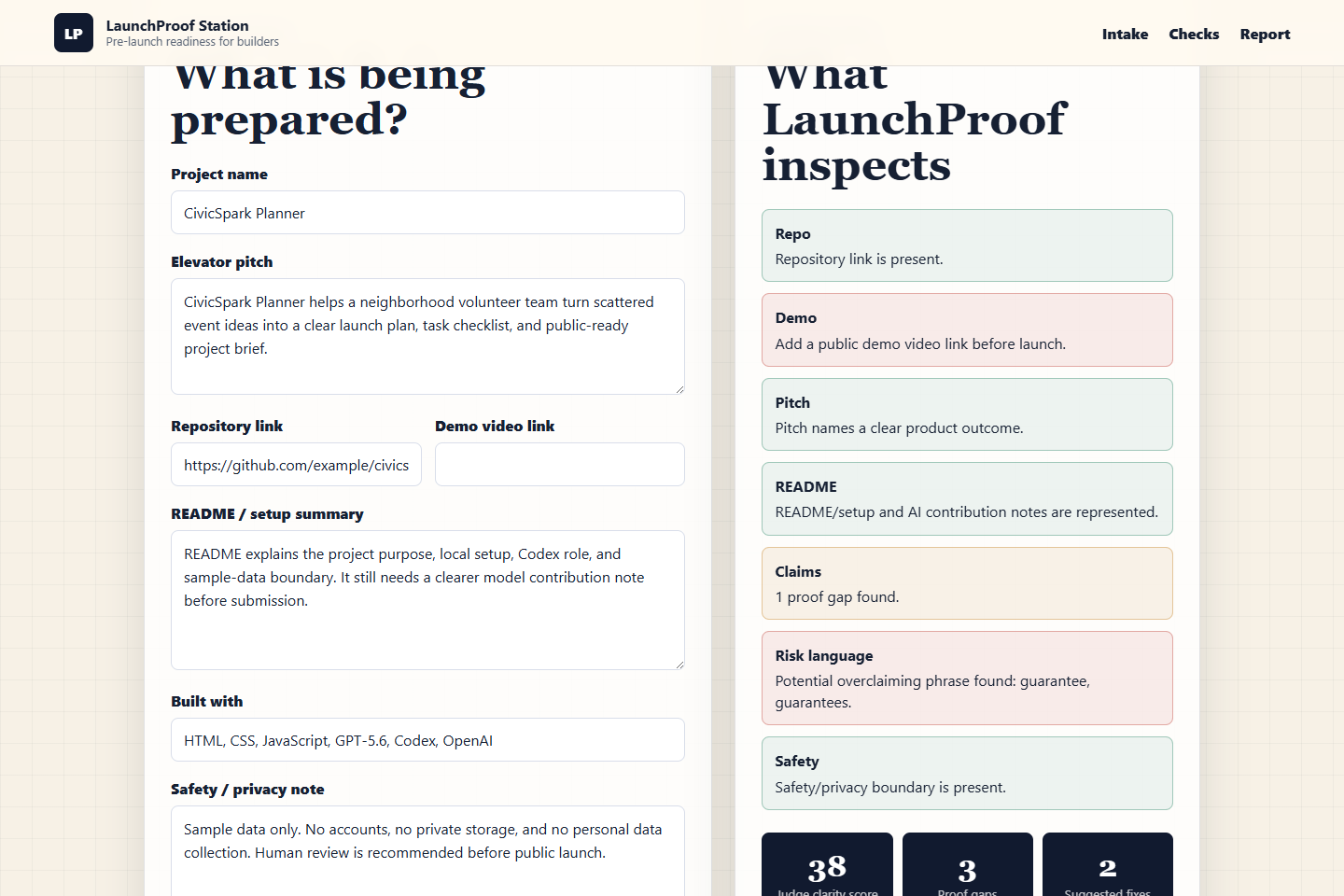
A user enters a project snapshot: project name, pitch, repo link, demo link, README summary, built-with tools, safety notes, and claim-evidence notes.
The system checks whether the launch materials line up across several areas:
- Repository and demo links
- Pitch clarity
- README and setup notes
- Codex and GPT-5.6 attribution
- Safety and privacy boundaries
- Claim/evidence alignment
- Risky overclaiming language
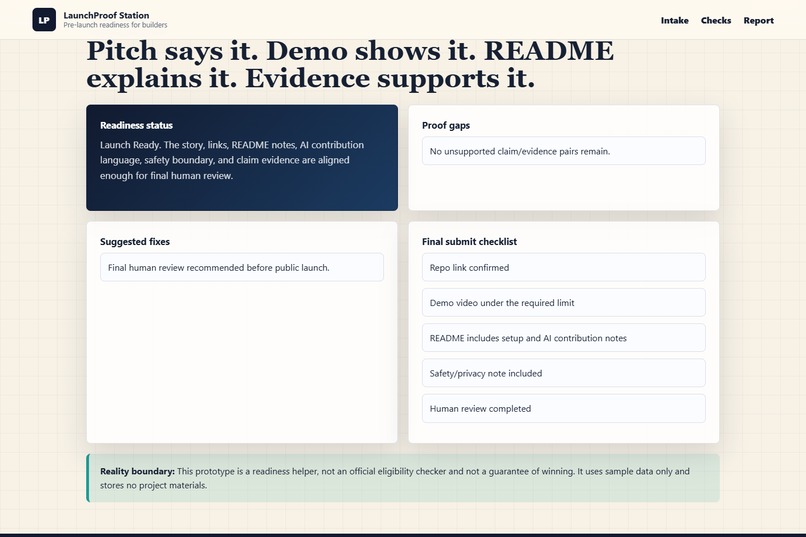
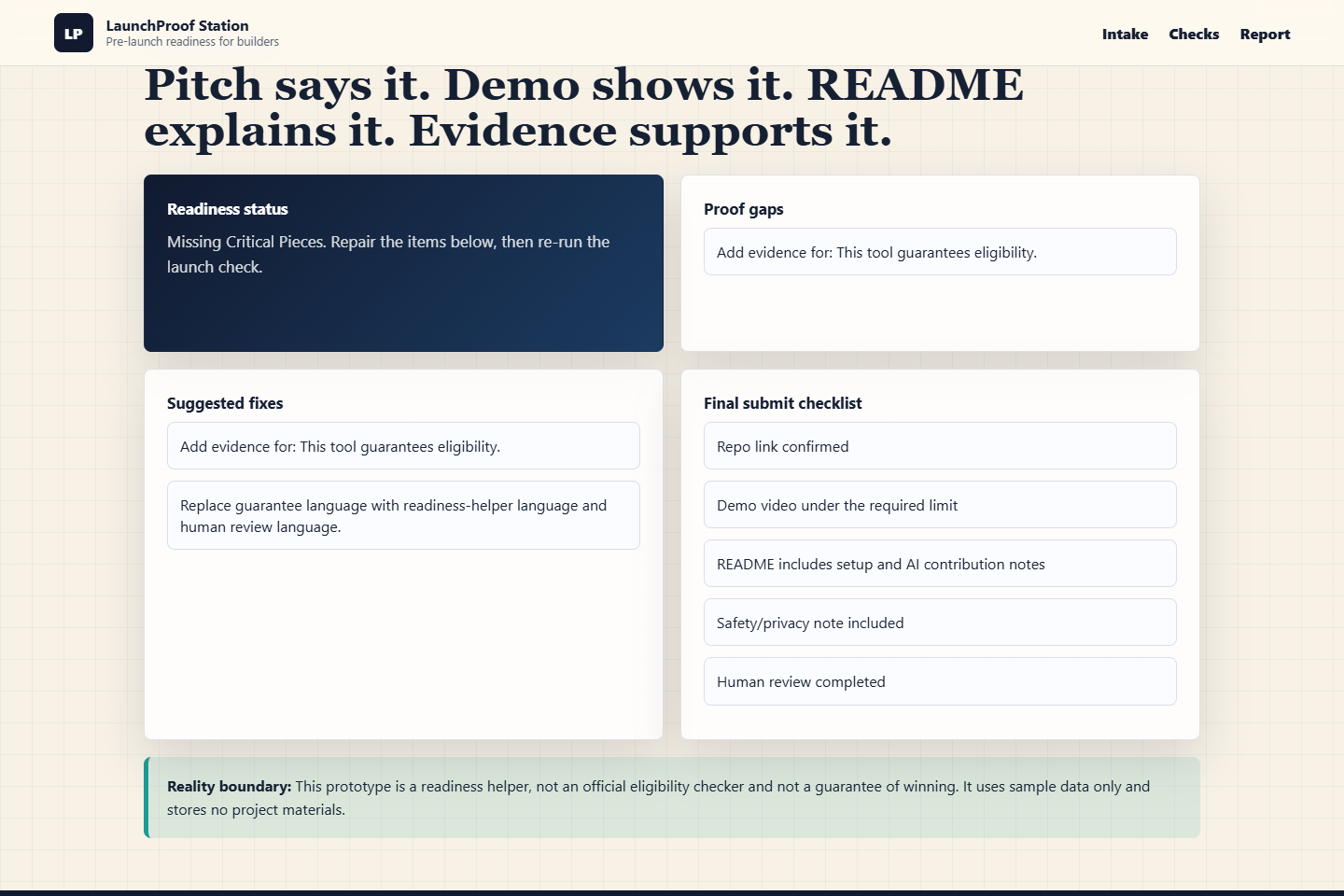
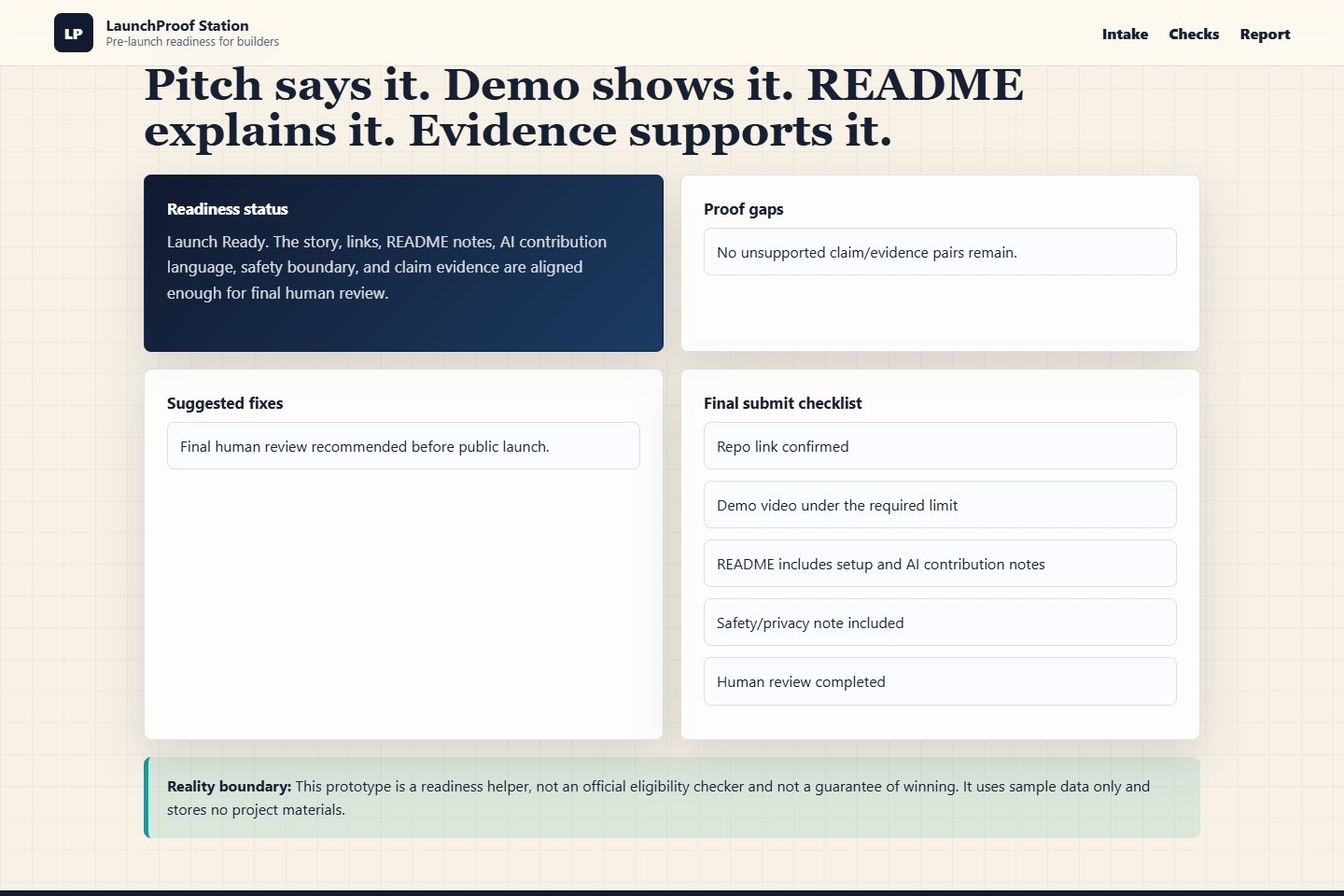
If a claim is unsupported, LaunchProof flags a Proof Gap. If the materials are aligned, the system marks the project Launch Ready and creates a LaunchProof Report.
The report shows readiness status, judge clarity score, proof gaps, suggested fixes, and a final checklist.
How I built it
LaunchProof Station was built as a standalone front-end prototype using HTML, CSS, and JavaScript.
GPT-5.6 helped define and refine the product concept, readiness criteria, claim-evidence framing, safety boundaries, and submission positioning.
Codex materially helped build, debug, test, polish, document, and package the working prototype.
The app uses sample data only. It has no login, no backend, no database, no project storage, and no personal data collection.
Challenges I ran into
The biggest challenge was keeping the project useful without overclaiming what it can do.
LaunchProof Station is not an official eligibility checker. It does not guarantee judging results, compliance, acceptance, or launch success. It is a readiness helper that makes gaps easier to see before a human makes the final decision.
Another challenge was making the tool broader than a hackathon checklist. The demo scenario is a builder preparing a Build Week-style submission, but the core idea applies to many launches: projects, product pages, demos, stakeholder presentations, creator releases, and public prototypes.
Accomplishments that I'm proud of
I am proud that LaunchProof Station focuses on alignment instead of just completion.
A project can be finished and still be hard to judge if the story, demo, README, and evidence do not agree. LaunchProof makes that mismatch visible.
The strongest idea is:
Pitch says it. Demo shows it. README explains it. Evidence supports it.
What I learned
I learned that launch readiness is not only about whether something works. It is also about whether the materials around the work tell the truth clearly.
The Build Week process also reinforced the importance of being transparent about AI contribution. GPT-5.6 and Codex supported different parts of the work, and LaunchProof Station makes that kind of attribution part of the readiness check.
What's next for LaunchProof Station
Future versions could support custom launch templates, stronger claim/evidence scoring, screenshot review, README analysis, demo transcript checks, and configurable human approval gates.
For this v1 prototype, the goal is simple:
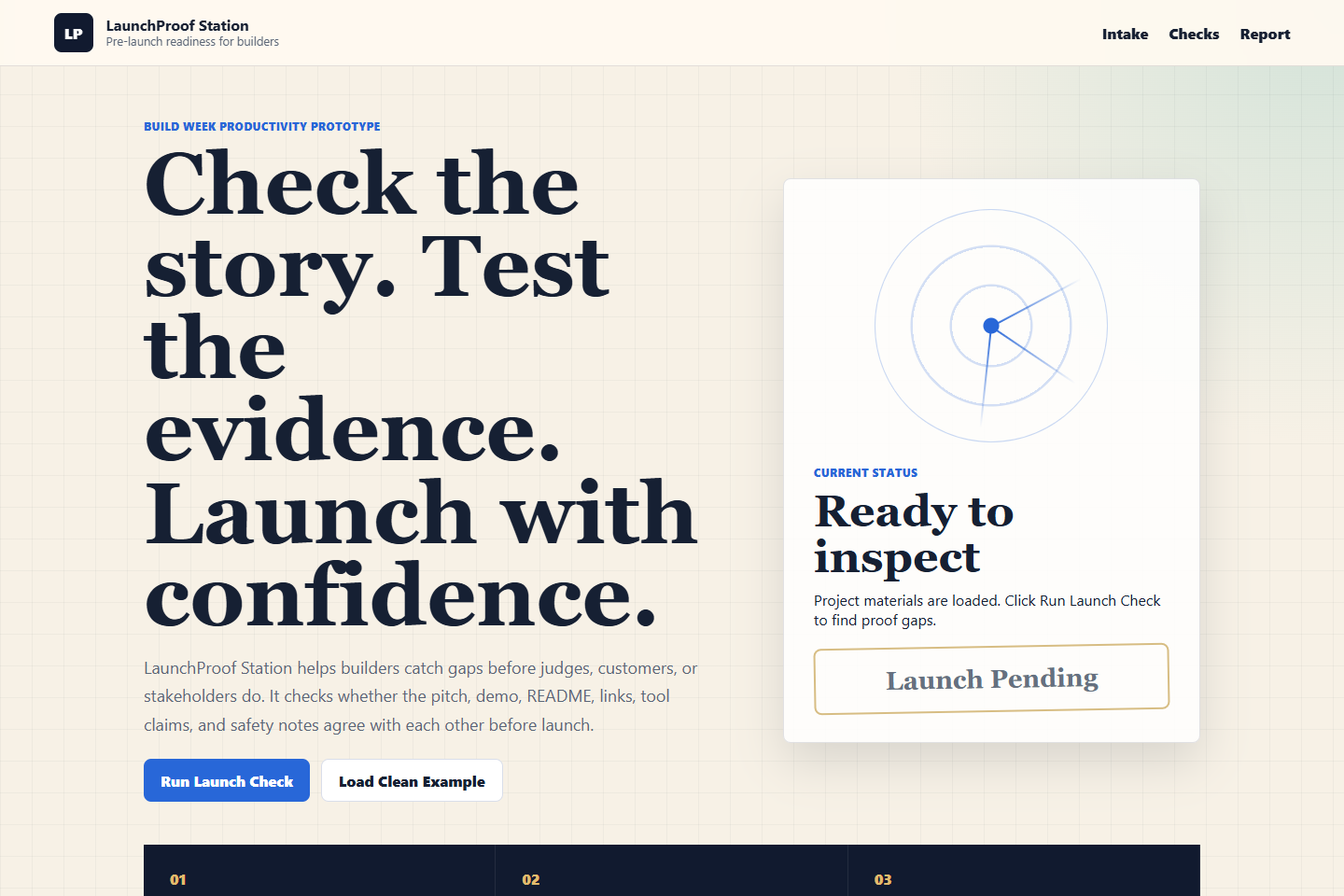
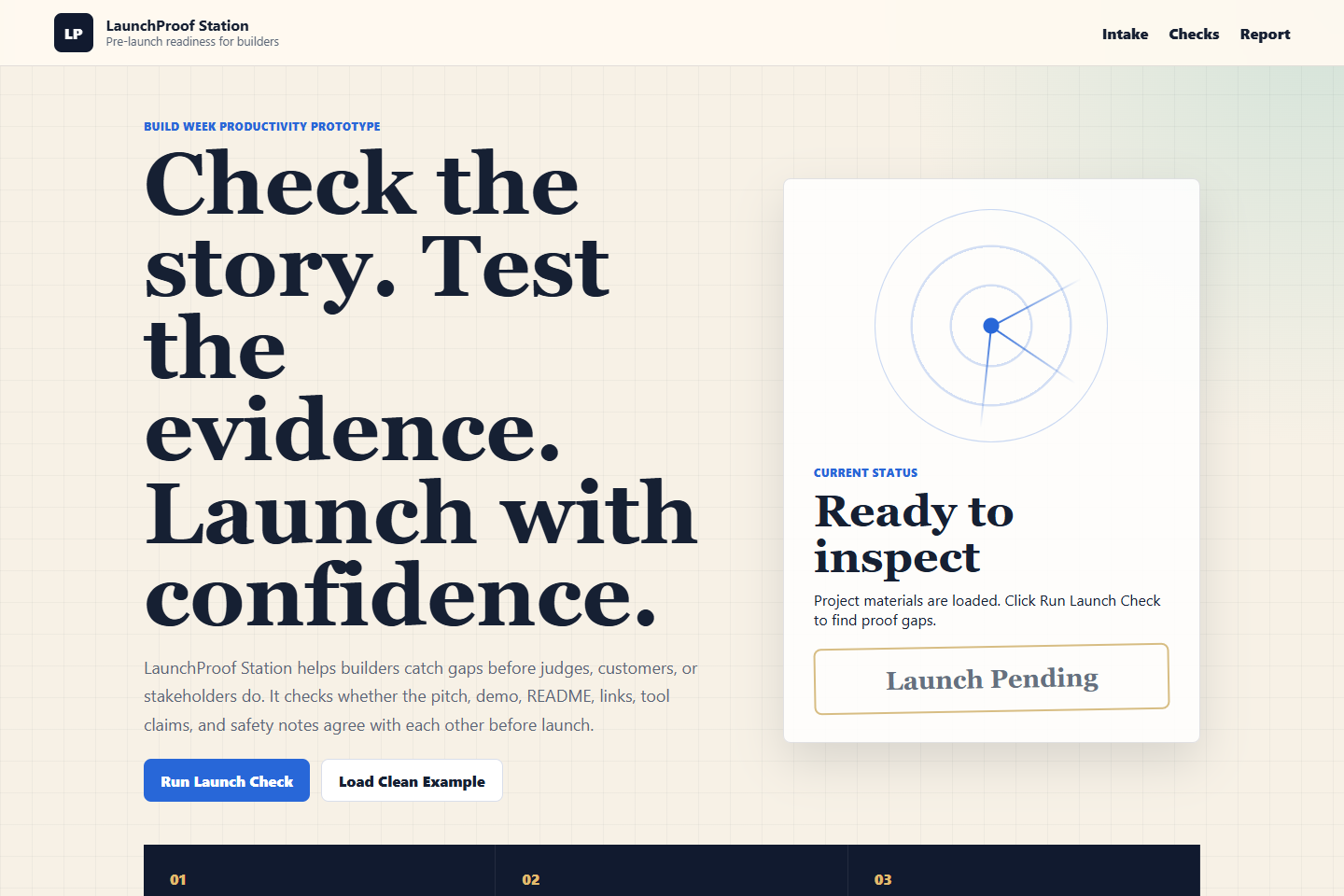
Check the story. Test the evidence. Launch with confidence.
Built With
- codex
- css
- design
- gpt-5.6
- html
- javascript
- openai
- product
- productivity
- prototype
- ux

Log in or sign up for Devpost to join the conversation.