-
-
2
-
1
Inspiration
Every hackathon is full of incredible builders who can ship impressive products in a short time. But once judging ends, most of these projects never reach real users. The gap isn’t technical ability — it’s launching and finding an audience.
We built LaunchPilot to solve this problem by helping builders turn hackathon projects and early-stage repositories into real product launches with clear positioning, outreach, and growth strategies.
What it does
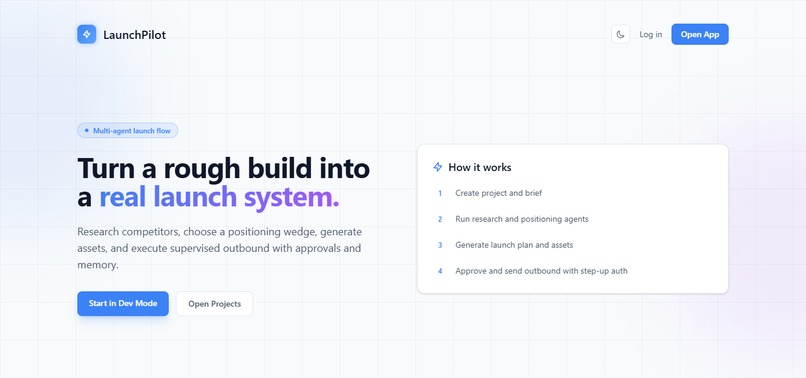
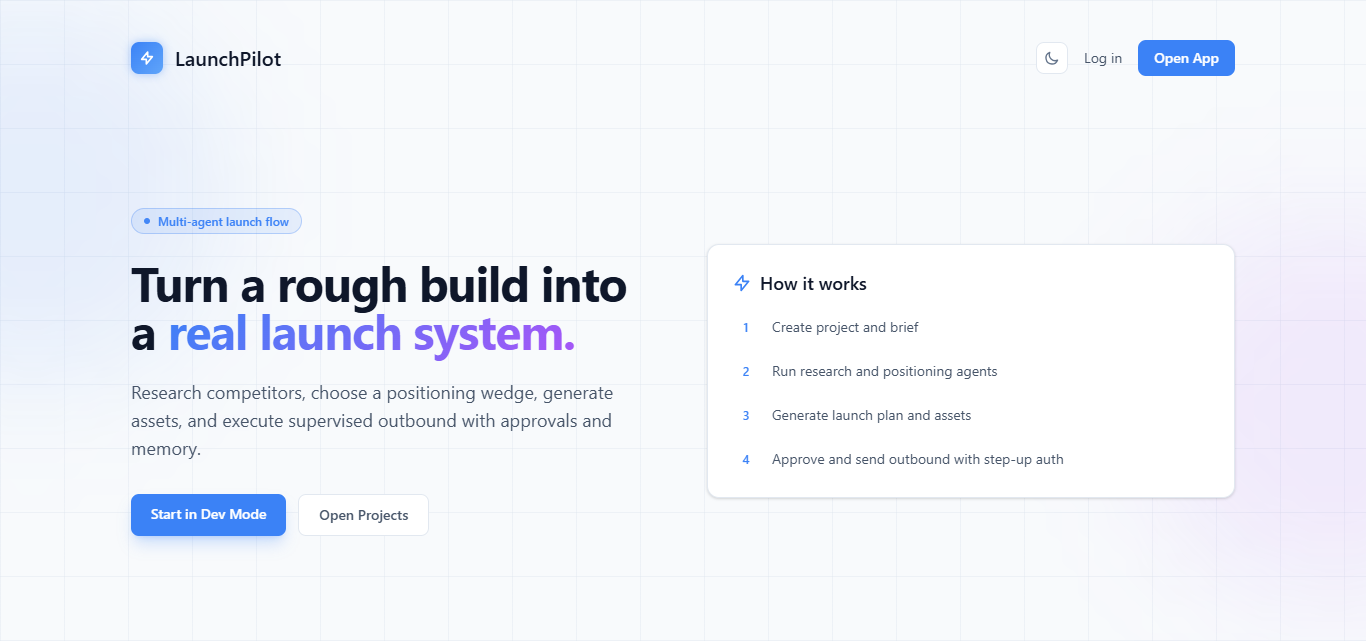
LaunchPilot takes a project from idea to launch in a single workflow.
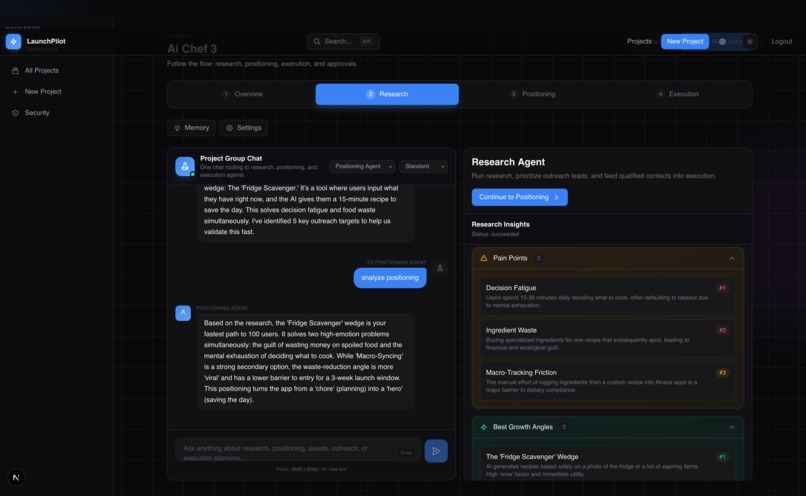
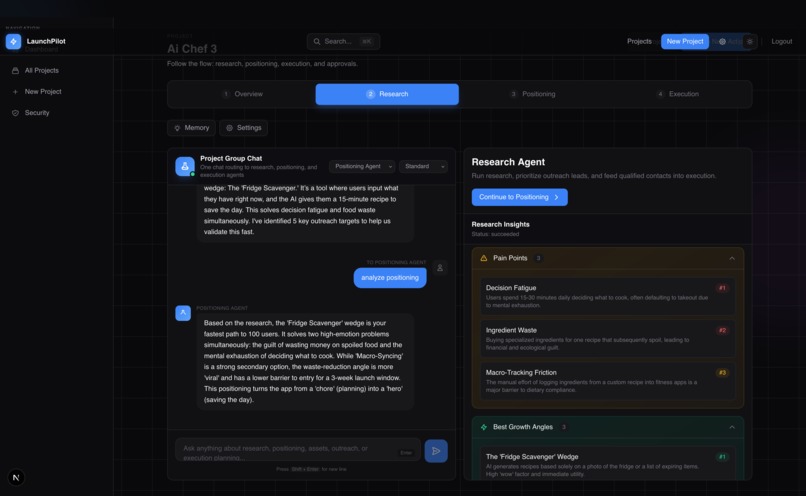
It analyzes a project’s description and GitHub repository to understand the product, then performs automated market research to identify competitors, customer pain points, and potential differentiation opportunities.
Using these insights, LaunchPilot generates:
- Ideal Customer Profiles (ICP)
- Product positioning and messaging
- A structured 7-day launch execution plan
- Distribution assets such as cold emails, DMs, ad prompts, and video scripts
- Qualified outreach leads for early user acquisition
All project insights, agent activity, and generated assets are stored as persistent project memory, allowing teams to resume and refine their launch strategy anytime.
How we built it
Frontend
- Next.js (App Router)
- TypeScript
- Tailwind UI
Backend
- FastAPI
- SQLAlchemy
- Alembic
- PostgreSQL
Agent System
- Multi-stage AI agents powered by Google Gemini
- Agents specialized for research, positioning, and execution
- Persistent memory snapshots to maintain project context
Integrations
- GitHub repository context ingestion
- Google Drive export
- Auth0-powered authentication and secure AI agent actions
This architecture allows LaunchPilot to coordinate multiple AI agents that progressively transform a project from code to launch-ready strategy.
Challenges we ran into
One major challenge was enabling AI agents to securely interact with external services like GitHub and Google APIs while maintaining proper authentication and permissions.
Another challenge was designing useful agent memory that captures important insights without bloating the context or introducing inconsistencies.
We also spent significant time reducing hallucinations and ensuring agents generate structured, actionable outputs rather than generic advice.
Finally, rapid development during the hackathon meant dealing with several frontend UI bugs while building new features simultaneously.
Accomplishments that we're proud of
We built a true end-to-end launch pipeline, not just a chat interface.
LaunchPilot performs real market research, generates positioning strategies, builds execution plans, and prepares outreach assets — all connected through persistent project memory.
We’re especially proud of creating cross-stage agent memory, allowing insights from research to directly influence positioning and execution strategies.
What we learned
Building agent-based systems requires strong structure and guardrails. Clear schemas, normalized data, and controlled workflows are just as important as prompt engineering.
We also learned that persistent memory must be synchronized carefully at key workflow stages to remain useful.
Most importantly, in launch tooling actionable outputs (plans, leads, assets) are far more valuable than general strategic advice.
What's next for LaunchPilot
Next, we want to expand LaunchPilot into a full launch platform by:
- Supporting more outbound channels beyond email and DMs
- Allowing users to generate and run ads directly
- Integrating with CRM platforms to manage early user pipelines
- Adding experiment tracking and analytics to identify which assets and campaigns perform best
Built With
- auth0
- typescript

Log in or sign up for Devpost to join the conversation.