-
-
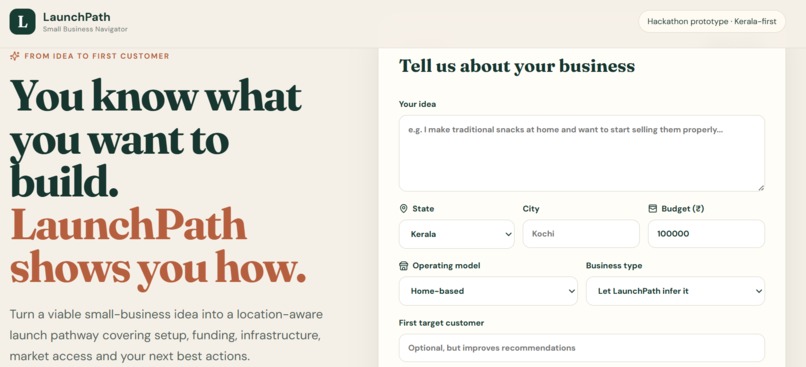
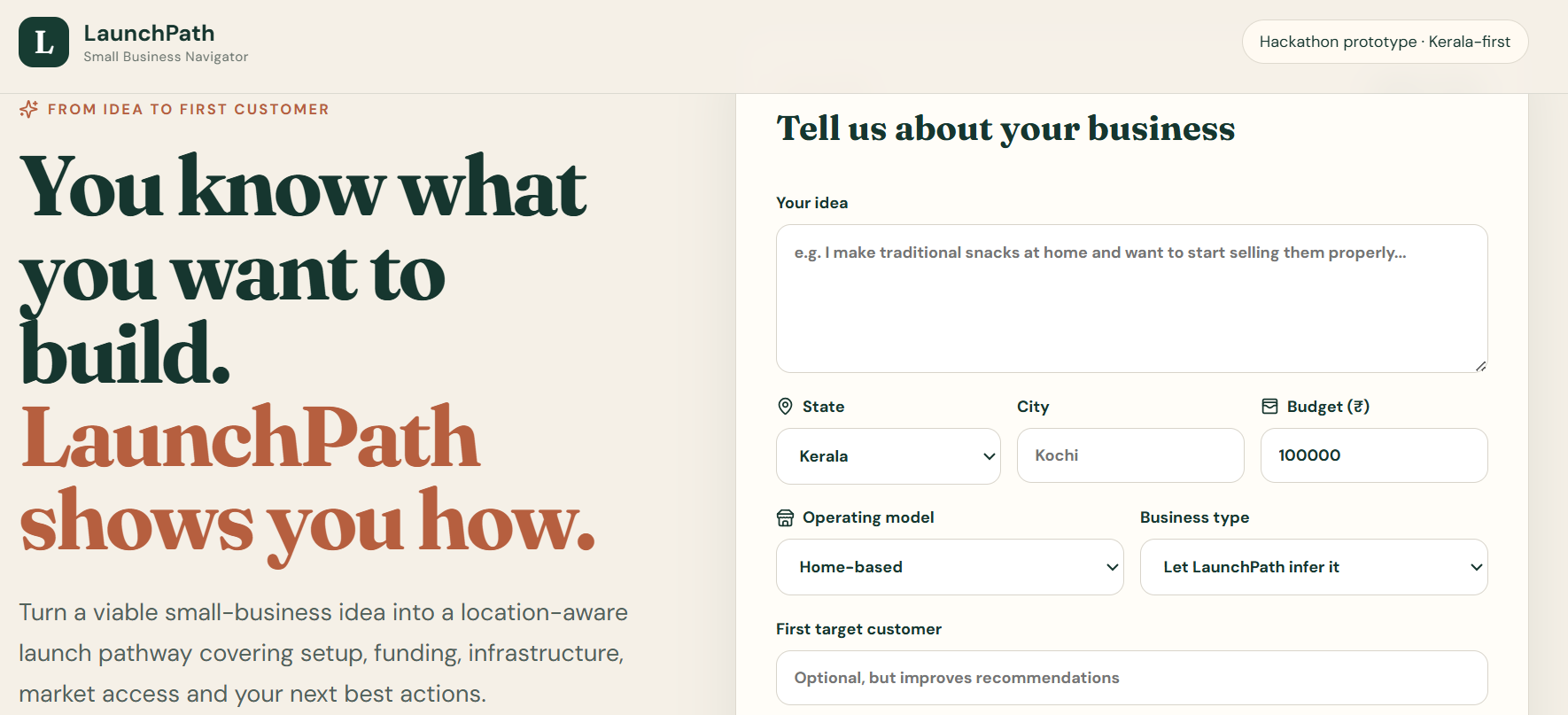
LaunchPath allows you to complete your business profile here so that it can recommend an actionable path based on this profile.
-
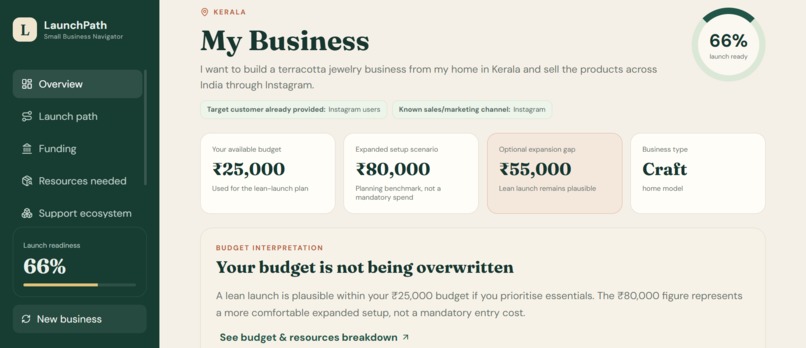
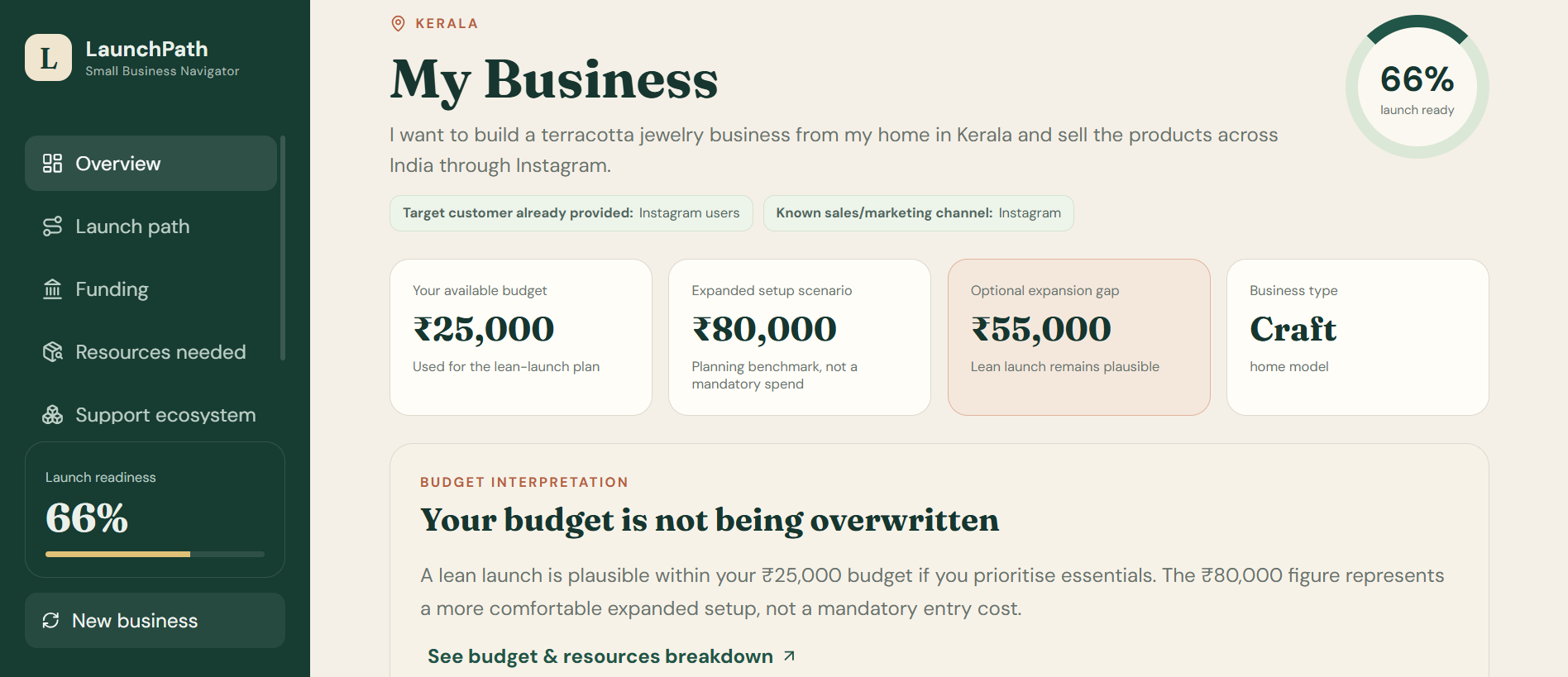
The dashboard page provides a personalised assessment of where the user currently stands.
-
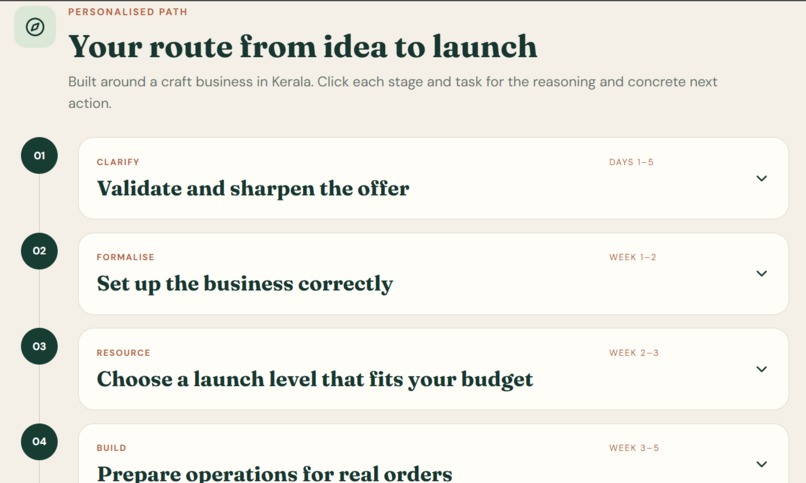
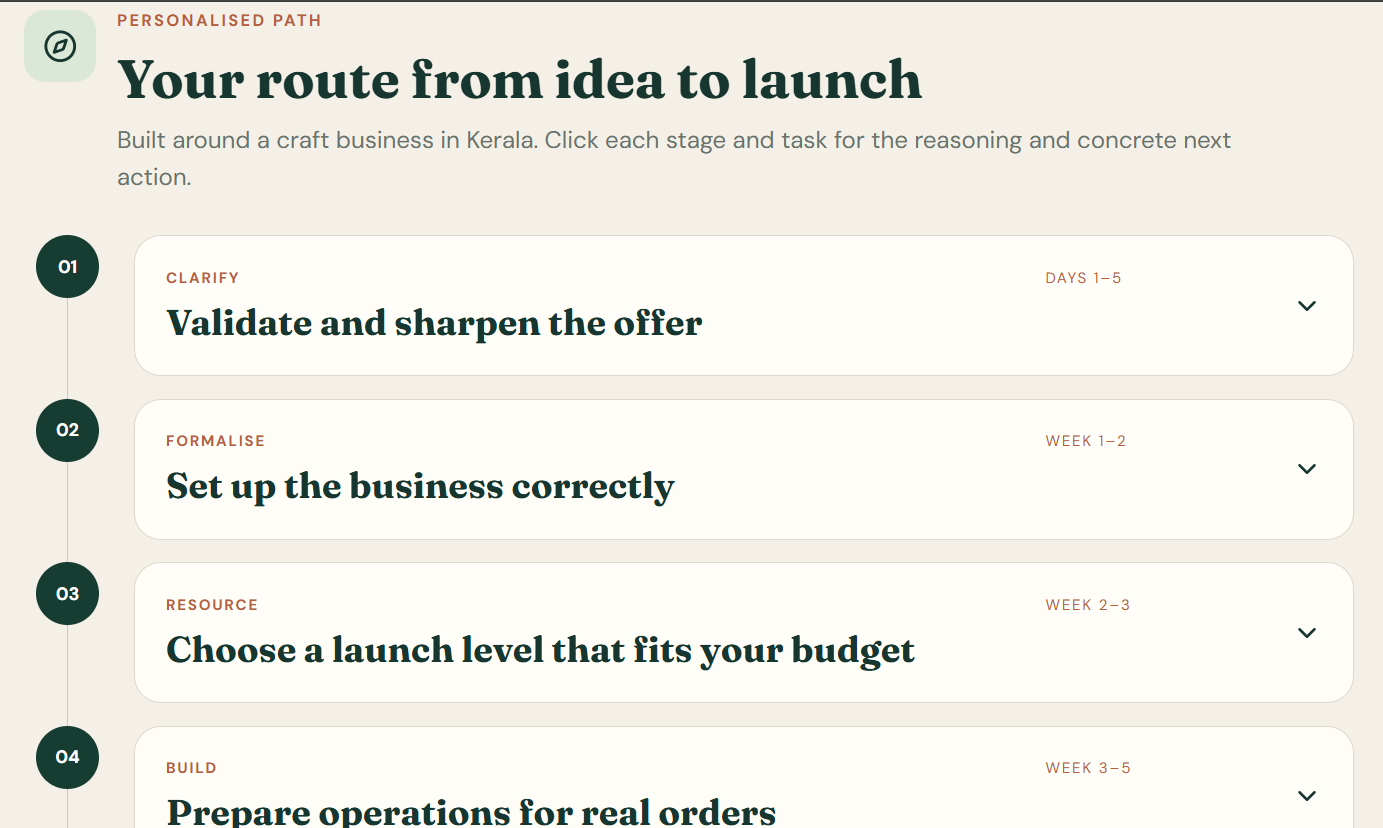
The personalised launch path is divided into six stages of development of your business.
-
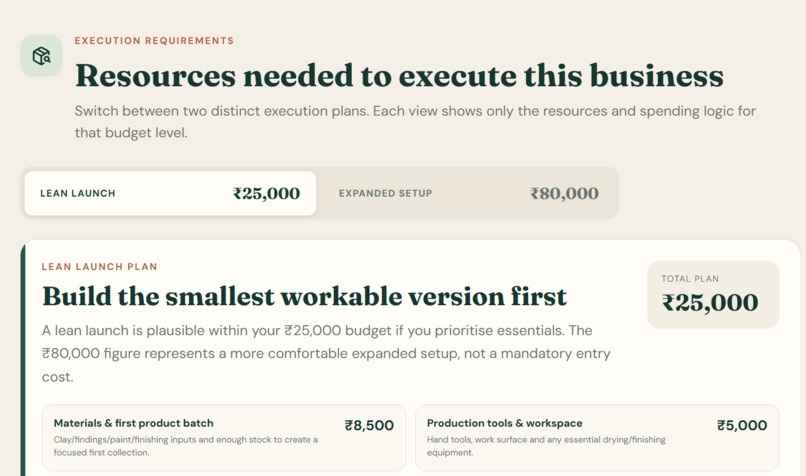
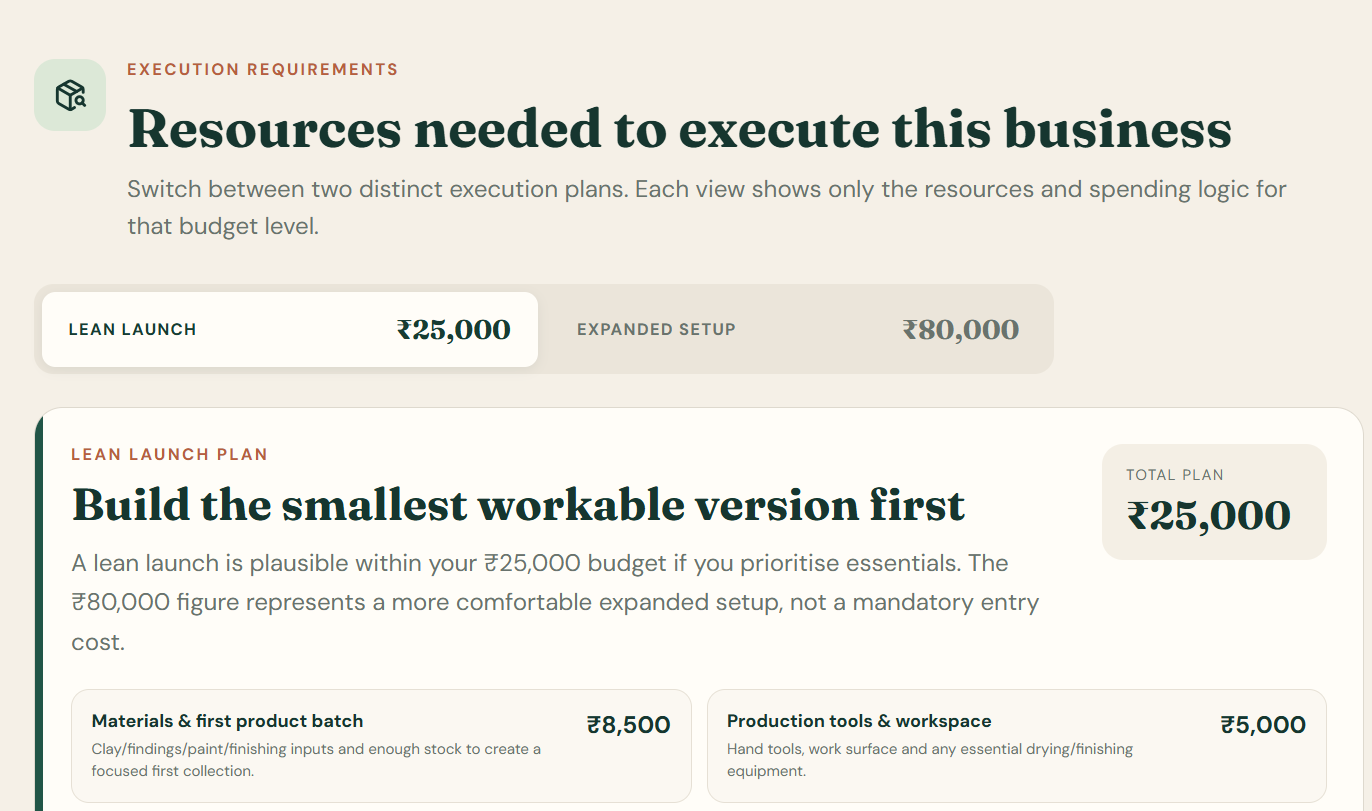
The budget planning page provides information on what can be accomplished with your preferred budget and with an ideal budget.
-
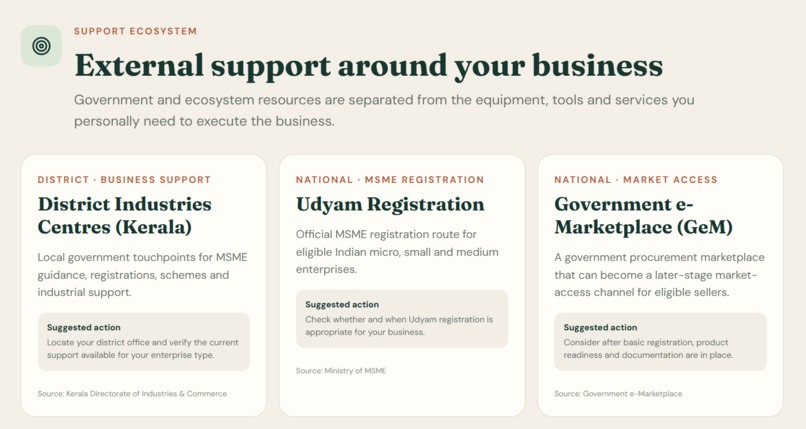
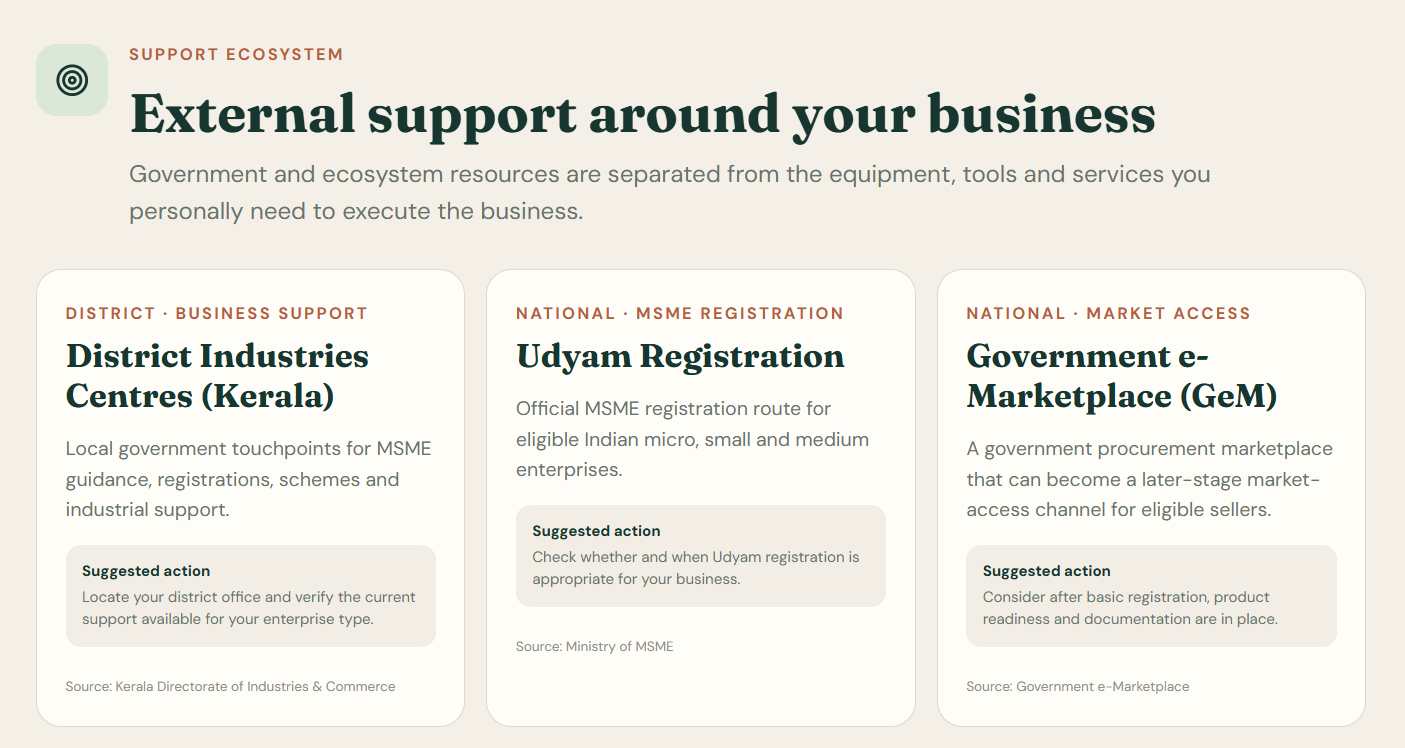
The support ecosystem page brings together programmes and services that can aid the user in setting up their business.
-
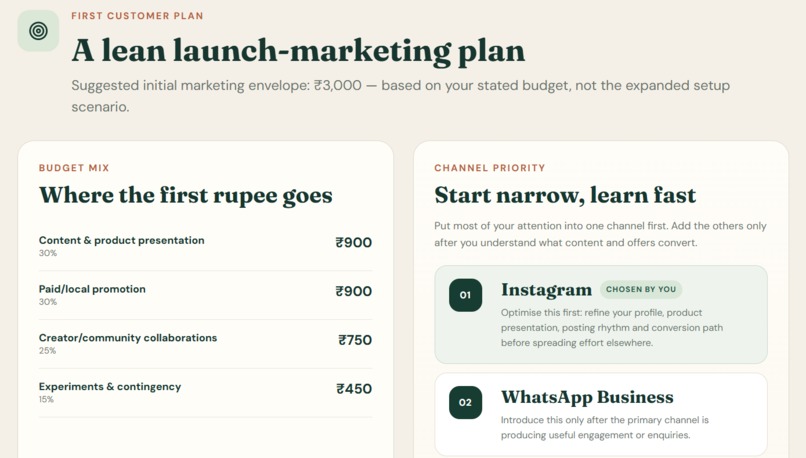
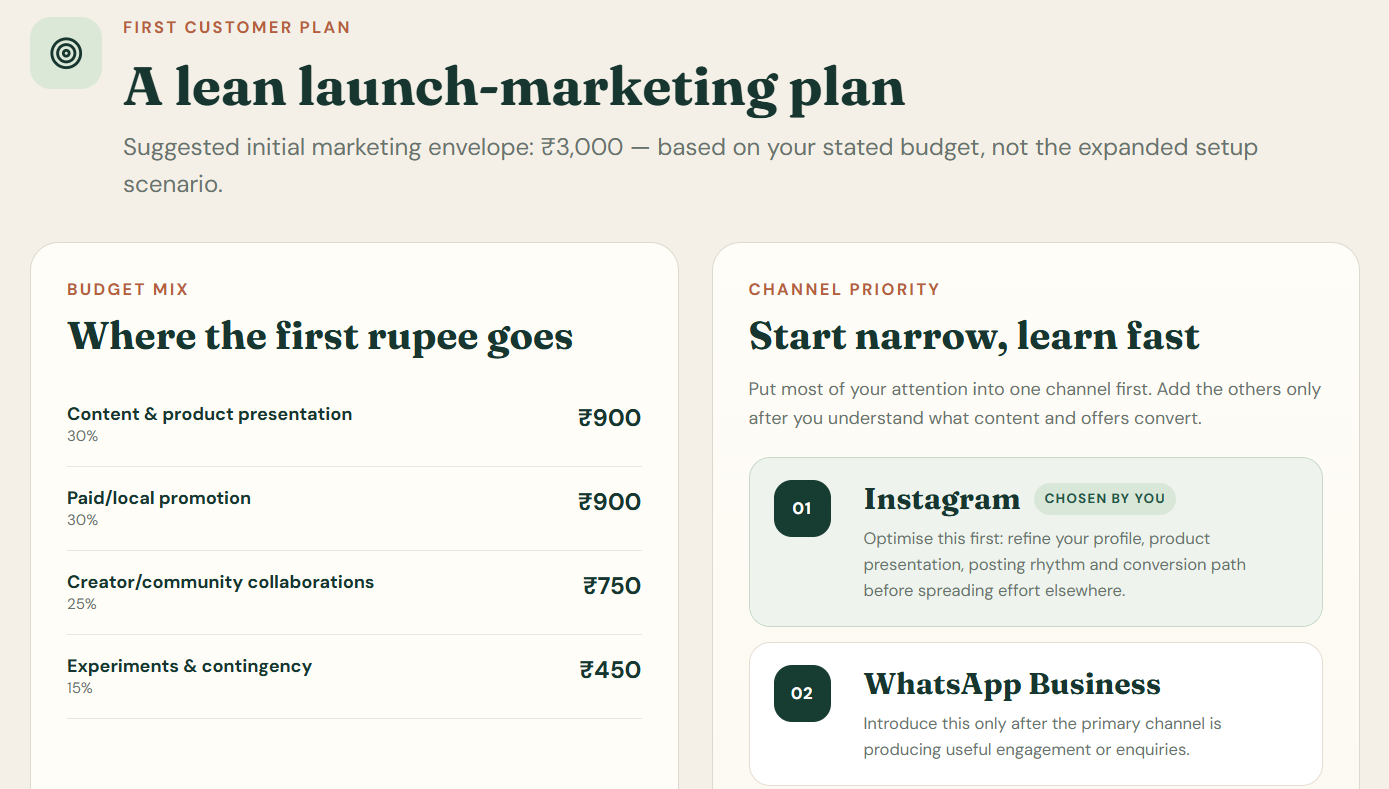
The Marketing page shows the user how they can reach their customers.
Inspiration
A good business idea does not automatically come with a roadmap for turning it into a real business.
Someone may know that they want to start a home bakery, jewellery brand, tailoring business or another small enterprise, yet still be unsure about fundamental questions: What should I do first? What registrations should I investigate? How much money do I actually need? What equipment and infrastructure are necessary? Which government programmes might be relevant? How should I reach my first customers?
The resources to answer these questions often exist, but they are fragmented across government portals, financial institutions, business-support organisations and other sources.
That inspired LaunchPath: a small-business launch navigator for people who have a viable idea but do not know how to navigate the ecosystem required to turn it into a functioning business.
Rather than creating another directory of business resources, I wanted LaunchPath to answer a more useful question:
What does this particular entrepreneur need to do next to launch this particular business?
What it does
LaunchPath takes information about an entrepreneur's proposed business—including the idea, location, available budget, operating model, target customers and intended sales channels—and converts it into a personalised pathway from idea to launch.
The journey is organised into six stages:
Clarify → Formalise → Resource → Build → Reach → Launch
The platform provides:
- A personalised business assessment
- An explainable launch-readiness score
- Priority blockers and next actions
- An expandable step-by-step launch roadmap
- Budget-aware resource planning
- A dedicated breakdown of equipment, materials, infrastructure and services needed
- Explainable funding and business-support matches
- Location-aware support resources
- Marketing-channel prioritisation
- A structured 30-day marketing plan
One important feature is the distinction between starting with the entrepreneur's actual budget and exploring an expanded setup.
For example, if an entrepreneur has ₹25,000 available, LaunchPath does not simply calculate an ₹80,000 ideal setup and tell them that they have a ₹55,000 funding gap. Instead, it shows what can realistically be achieved with ₹25,000 and separately demonstrates what additional investment could enable.
The aim is to make entrepreneurship feel actionable rather than overwhelming.
How I built it
LaunchPath is a full-stack web application built with React, Vite, JavaScript and CSS on the frontend, with Node.js and Express supporting the application logic.
The core flow is:
Business idea → Entrepreneur profile → Business assessment → Readiness analysis → Resource matching → Personalised roadmap → Budget and resource planning → Marketing strategy → Launch
The recommendation system uses structured business information and deterministic matching logic so that important recommendations—particularly resource and funding matches—are explainable rather than arbitrary.
A resource can be evaluated using factors such as geographic scope, business category, business stage and other eligibility characteristics. The platform can then explain why that resource may be relevant.
The prototype currently focuses on India, with enhanced regional coverage for Kerala. Location is built into the resource architecture so that additional states and countries can be added later without redesigning the overall application.
The core hackathon experience was also designed to work without depending on a paid external AI API. This makes the demonstration more reliable and prevents critical recommendations from being generated as unsupported claims by an LLM.
Challenges I faced
One of the biggest challenges was personalisation without repetition.
An early roadmap could tell an entrepreneur to “define the target customer” even when they had already supplied that information during onboarding. Similarly, if someone had already selected Instagram as their primary sales channel, telling them simply to “set up Instagram” was not useful.
I therefore refined the logic so that LaunchPath recognises information already provided and builds on it. Instead of asking the entrepreneur to define their customer again, for example, it can help them refine that audience.
Another challenge was making financial recommendations useful rather than intimidating. An estimated ideal startup cost can easily be mistaken for the minimum amount required to launch. This led to the two-scenario budget system: one showing how to launch with the entrepreneur's available capital, and another showing what an expanded investment could enable.
A third challenge was determining how to handle location-dependent information. Government schemes, regulations and business-support programmes vary significantly by geography. Rather than pretending to provide comprehensive global coverage, I designed the prototype around India with deeper Kerala coverage while making geography part of the underlying resource model.
Finally, there was the broader UX challenge of presenting a large amount of business information without recreating the complexity LaunchPath was intended to solve. Expandable roadmap stages, readiness indicators, prioritised actions, separate resource categories and clearer marketing recommendations were introduced to make the information easier to navigate.
What I learned
Building LaunchPath reinforced that personalisation is not simply about generating different text for different users. A genuinely personalised system needs to remember what the user has already told it, reason from those constraints and avoid recommending actions that contradict or duplicate existing decisions.
I also learned the importance of explainability in recommendation systems. A match percentage is much more useful when the entrepreneur can understand why a programme or resource was recommended.
Most importantly, the project changed how I thought about the underlying problem. The challenge is not necessarily that entrepreneurial resources do not exist. In many cases, the real challenge is navigation: identifying which resources are relevant, understanding how they relate to an individual business and knowing what to do first.
What's next
LaunchPath currently demonstrates the concept through India and enhanced Kerala coverage, but the architecture could be expanded to support additional states and eventually other countries.
Future development could include live government-programme ingestion, programme-update monitoring, supplier discovery, verified professional-service and mentor matching, application and deadline tracking, persistent entrepreneur accounts, deeper financial modelling and post-launch growth guidance.
The longer-term vision is for LaunchPath to become a navigation layer for entrepreneurship—connecting aspiring small-business owners with the knowledge, resources and support ecosystem required to move from:
“I have a business idea, but I don't know where to start.”
to:
“I know what I need, what I can afford and what I should do next.”
Built With
- api
- css3
- express.js
- github
- html5
- javascript
- node.js
- react
- rest
- vercel
- vite


Log in or sign up for Devpost to join the conversation.