Inspiration
Engineering teams move fast. New hires don't — not because they're slow, but because nobody gives them a real starting point.
It doesn't matter if you're a 40-person startup or a 4,000-person enterprise. The moment a new engineer joins a team, the same broken process plays out: the team lead scrambles to pull together a loose collection of Slack messages, stale wiki pages, and tribal knowledge. The new hire spends their first two weeks pinging people for access, context, and direction. Senior engineers lose focus. Sprint velocity drops.
The company might have Workday, BambooHR, or Rippling handling HR admin at the org level. None of that touches what actually happens inside the team. That gap — between the company's onboarding infrastructure and the team's day-to-day reality — is exactly where LaunchPath lives.
We built LaunchPath because the problem isn't company size. It's that every individual team lead is rebuilding onboarding from scratch, every single time, no matter how big the org around them is.
What it does
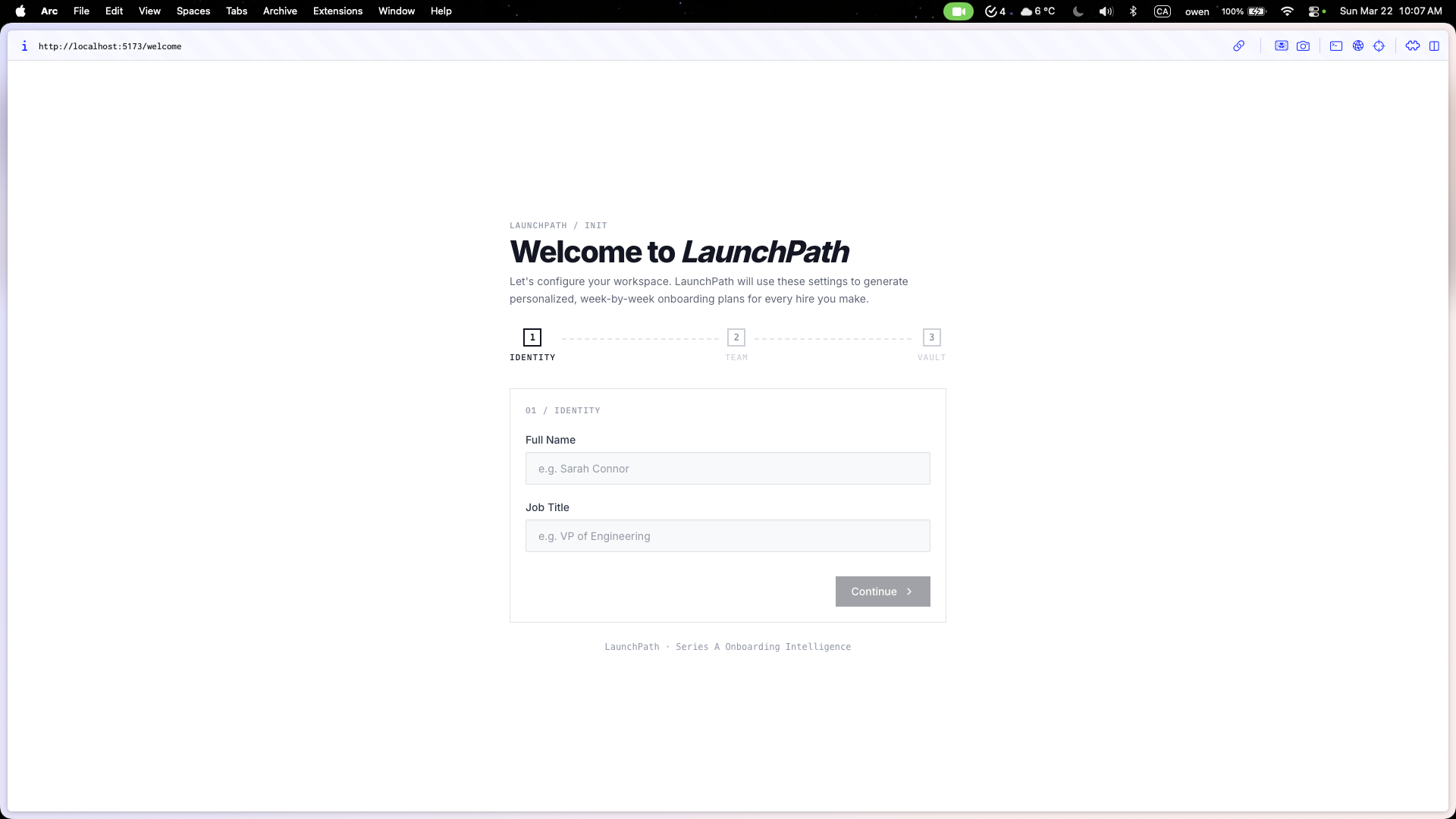
LaunchPath is a team-level onboarding platform that helps engineering leads ramp new hires faster, without rebuilding the process from scratch every hire.
A manager inputs their new hire's role, team, and start date. LaunchPath generates a structured, week-by-week onboarding roadmap pre-loaded with engineering-specific tasks: repo access, environment setup, architecture walkthroughs, first PR assignment, and team introductions — all sequenced and time-boxed.
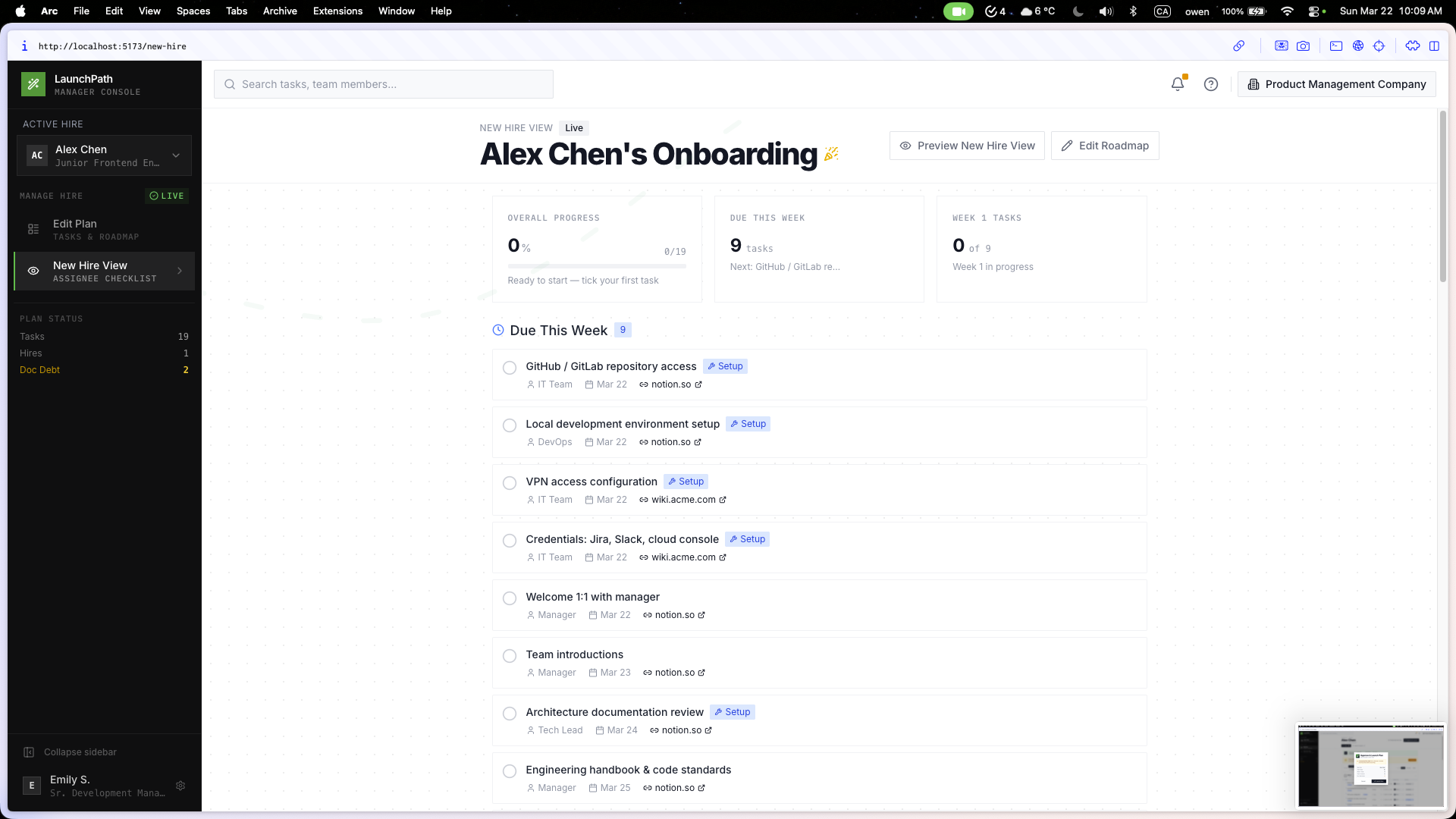
Every task links to a real document or resource. Where documentation doesn't exist, LaunchPath flags it as doc debt, prompting the manager to fill the gap before the new hire's first day, not after. This flips a reactive problem into a proactive one.
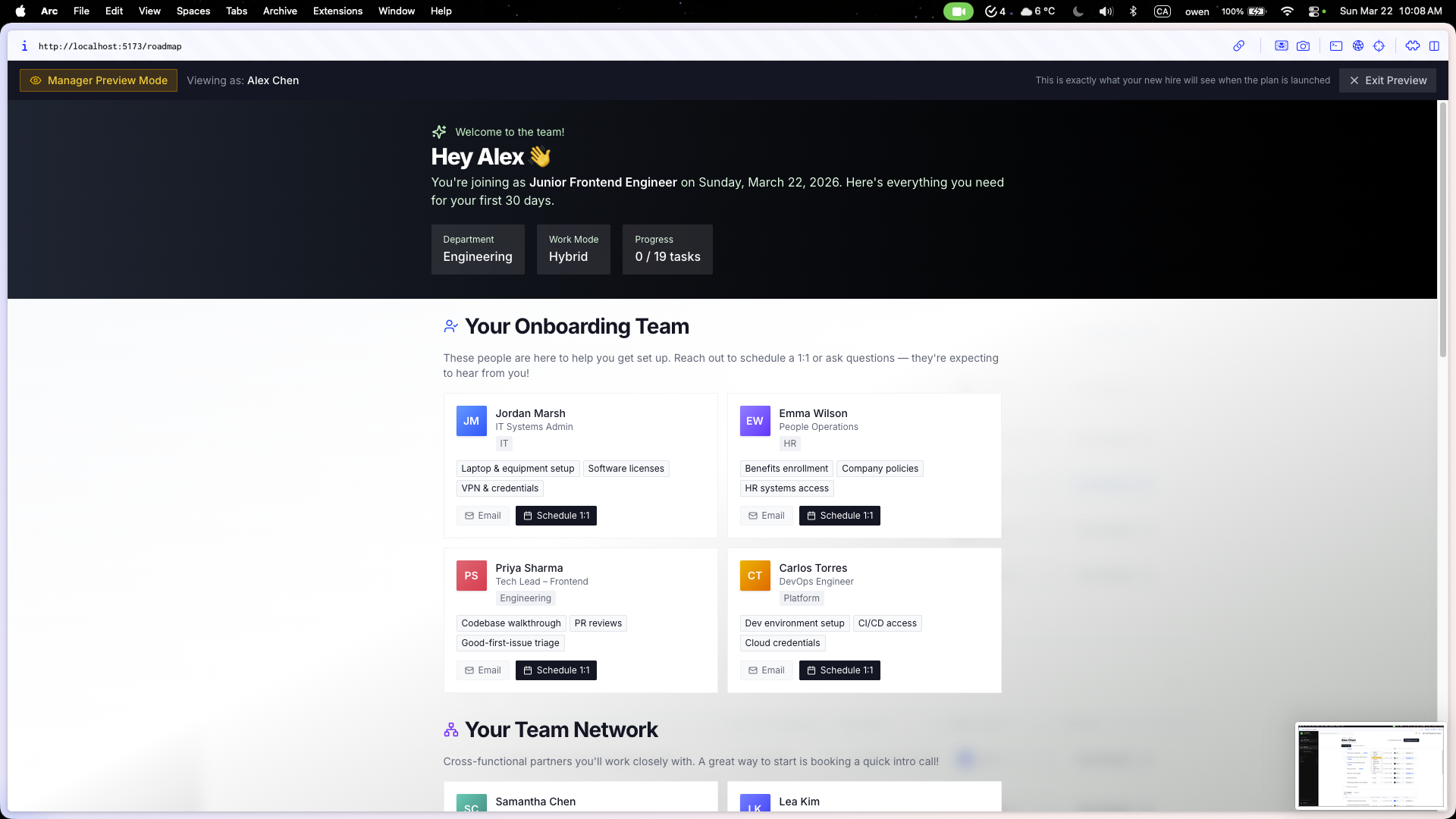
New hires get a clean, focused checklist. Managers get a real-time progress dashboard. The goal? To get every engineer to their first meaningful contribution as fast as possible — whether they're joining a seed-stage startup or a fast-moving team inside a Fortune 500.
Core features shipped:
- Onboarding wizard with role-based roadmap generation
- Doc debt flag system — surfaces missing documentation before day one
- New hire checklist view with progress tracking
- Manager dashboard with active onboarding status
How we built it
We created the codebase using Google Antigravity and Gemini, and the design using Figma and Figma Make. HTML, CSS, and Tailwind was used to create the frontend of our MVP prototype.
Challenges we ran into
The hardest design problem was the doc debt flag system. Making it visible enough that managers feel compelled to act on missing documentation — without making it so aggressive that they dismiss it to move faster — required careful UX thinking. We landed on a friction-to-launch model: you can override any flag, but you have to acknowledge it explicitly before launching the plan.
The other challenge was positioning. Early on we framed LaunchPath as a startup tool. The sharper insight came later: the real problem was team-level chaos. Even enterprise engineering teams have broken onboarding. Reframing around velocity and team leads (rather than HR departments) made the product story much more compelling and the target user much more specific.
What we learned
The best product insight came from reframing who the user actually is. We started by thinking "startup HR" and ended up at "any engineering team lead who cares about velocity." That shift helped us reframe a lot of our project from the problem statement to the feature priorities, the pitch narrative to the design language.


Log in or sign up for Devpost to join the conversation.