-
-
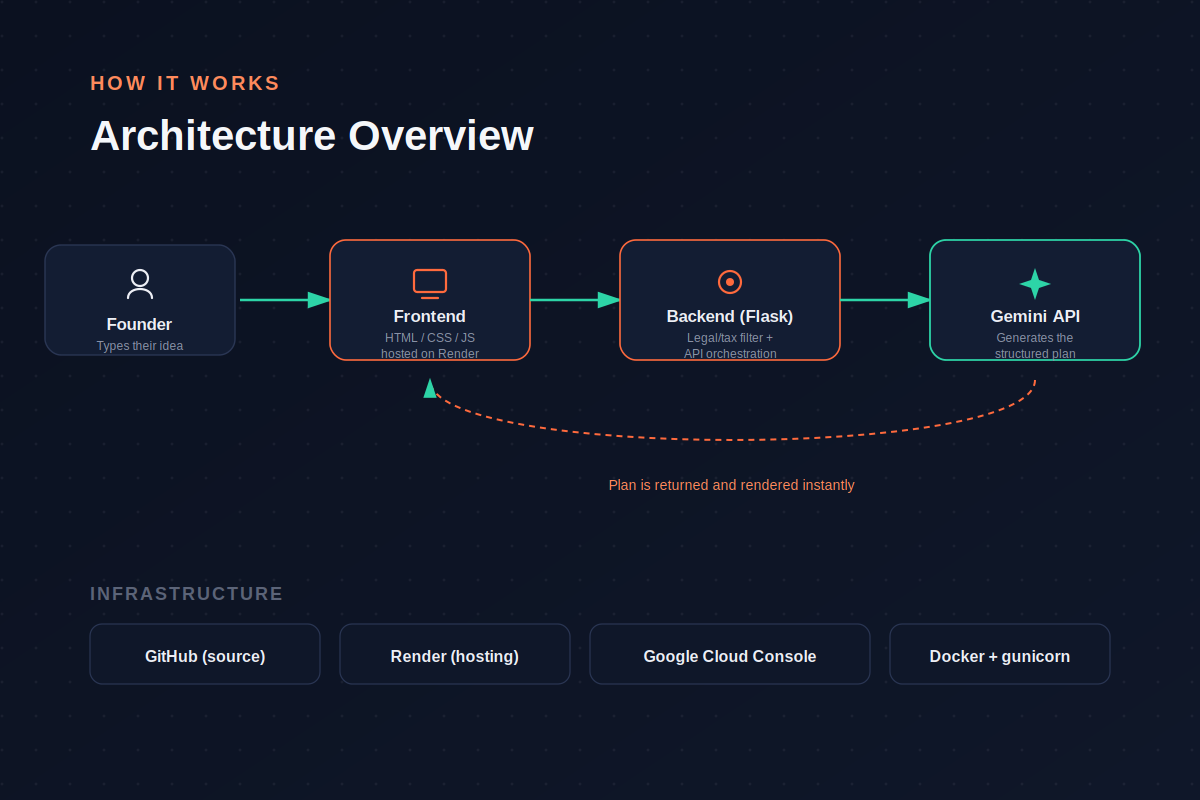
ARCHITECTURE OVERVIEW
-
WHAT IT DOES
-
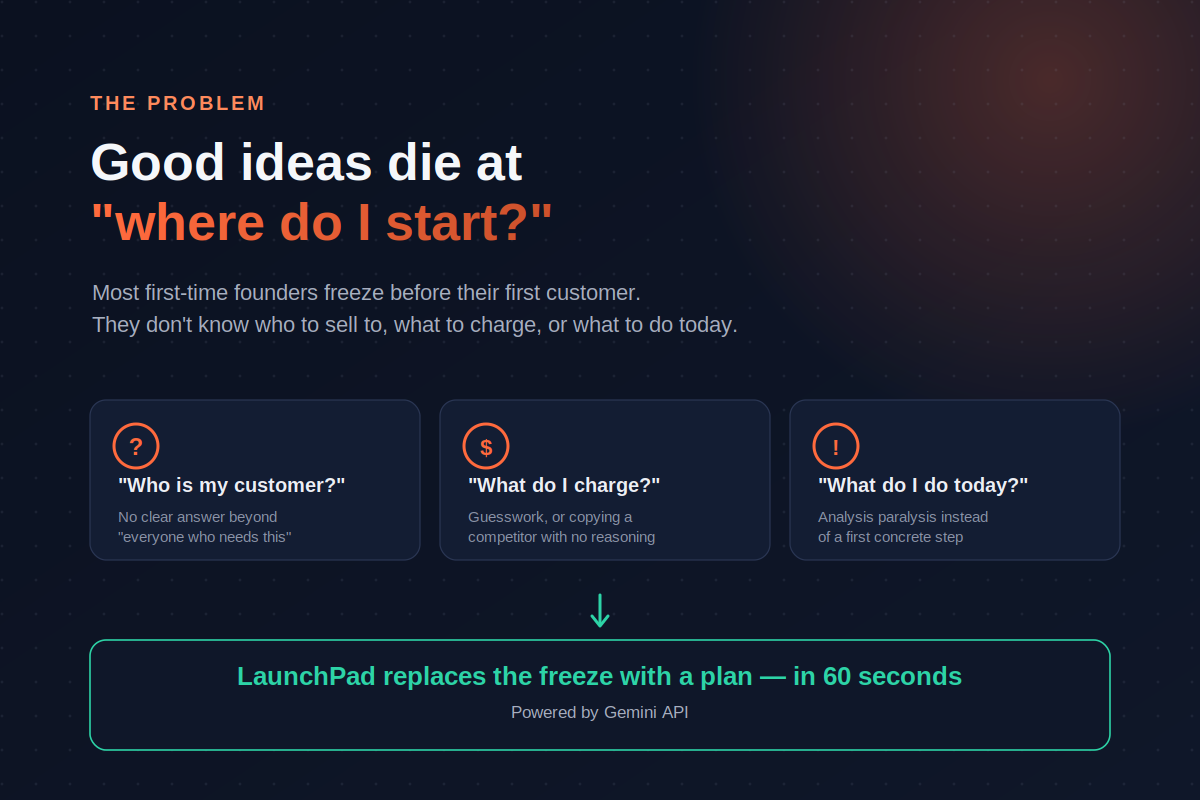
THE PROBLEM
-
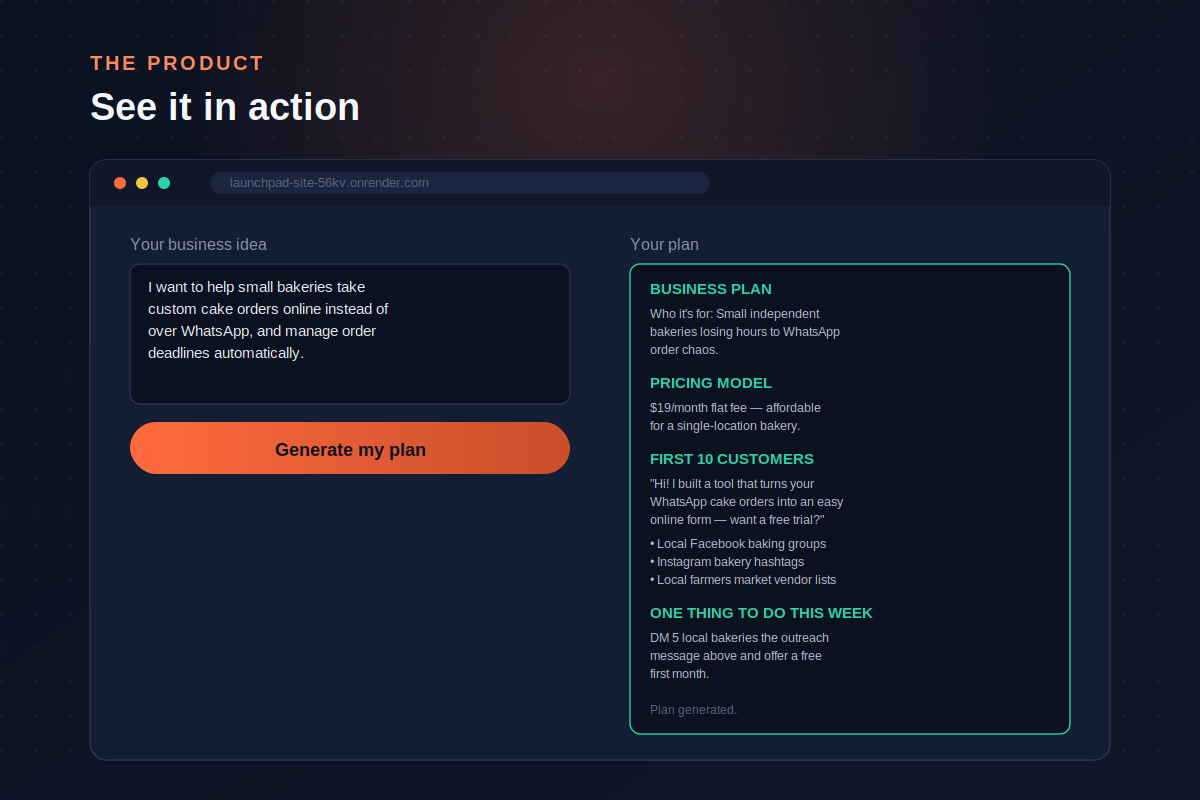
PRODUCT SCREENSHOT
-
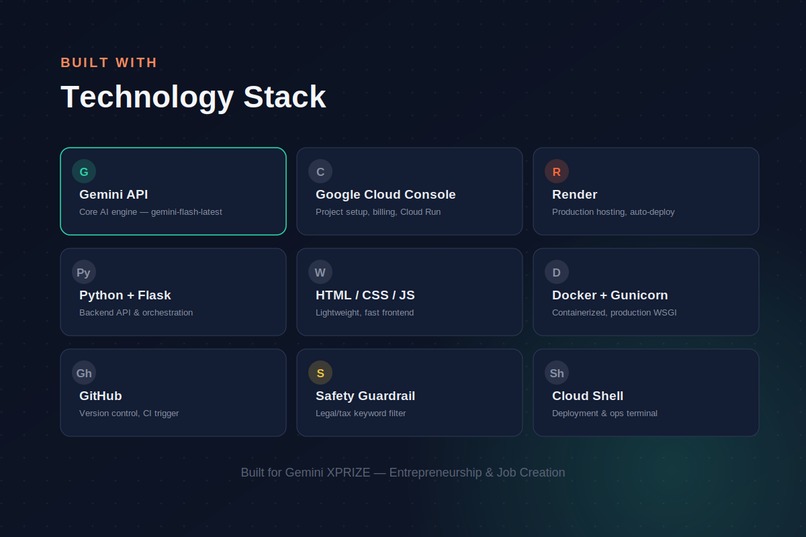
TECH STACK
Inspiration
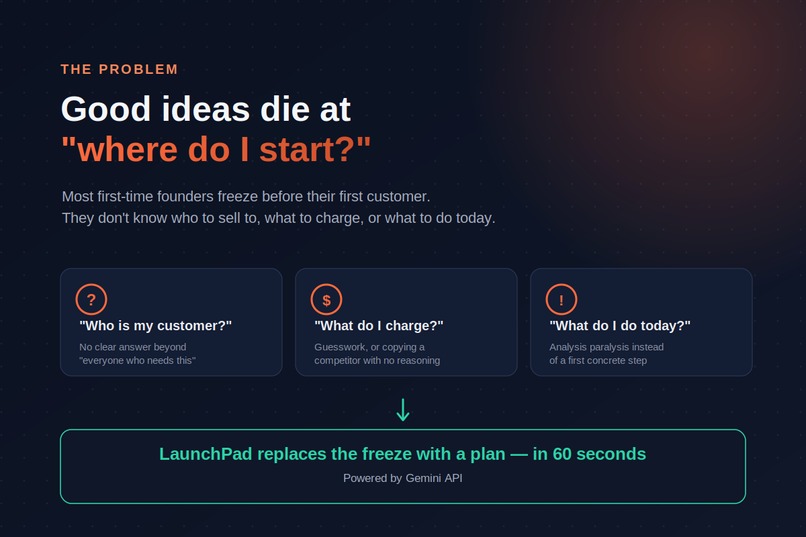
Every year, millions of people have a business idea and never act on it — not because the idea is bad, but because the first step is invisible. Most first-time founders don't know who their first customer is, what to charge, or what to do today versus next month. We've watched good ideas die in notes apps because founders got stuck at "where do I even start?" We wanted to build something that replaces that paralysis with a plan — instantly.
What it does
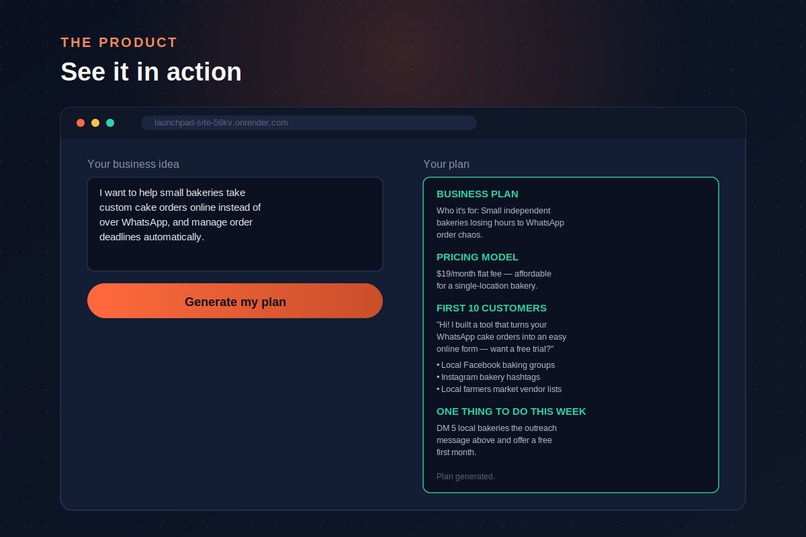
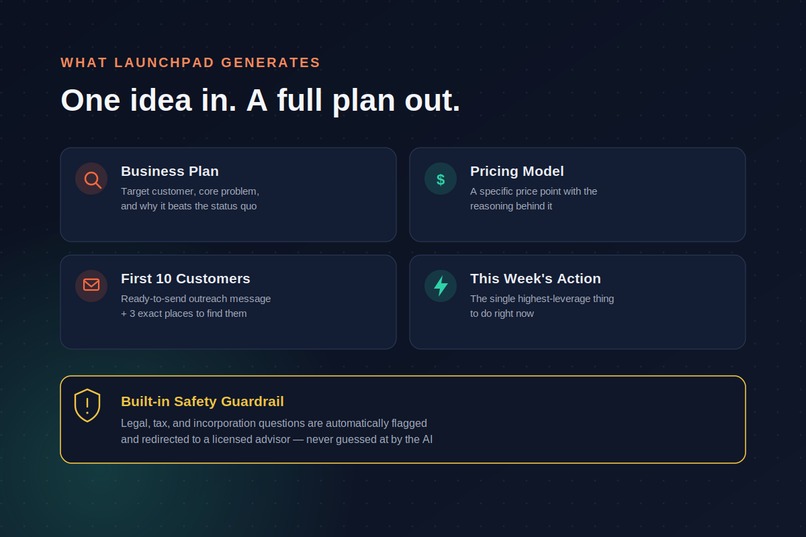
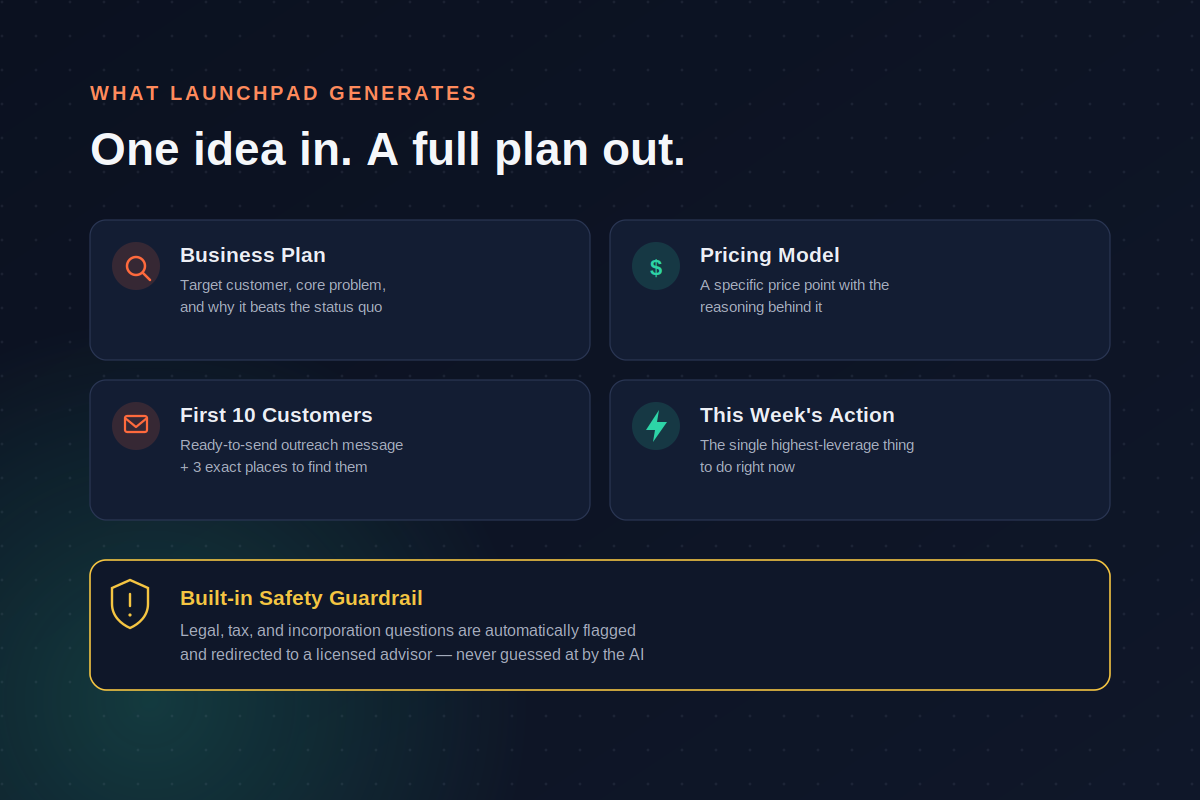
LaunchPad is an AI co-founder. A founder types their business idea in plain language, and within seconds Gemini generates a concrete, founder-ready plan: who the product is really for, the core problem it solves, a suggested pricing model with reasoning, a ready-to-send outreach message, three specific places to find the first 10 customers, and one highest-leverage action to take that same week. If an idea touches legal registration, tax structure, or contracts, LaunchPad automatically flags it and redirects the founder to a licensed advisor instead of generating unqualified advice — a built-in human-oversight guardrail.
How we built it
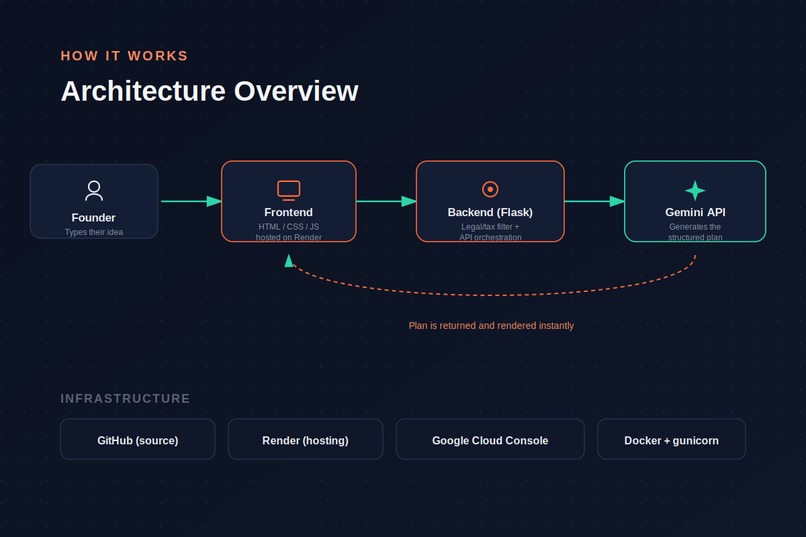
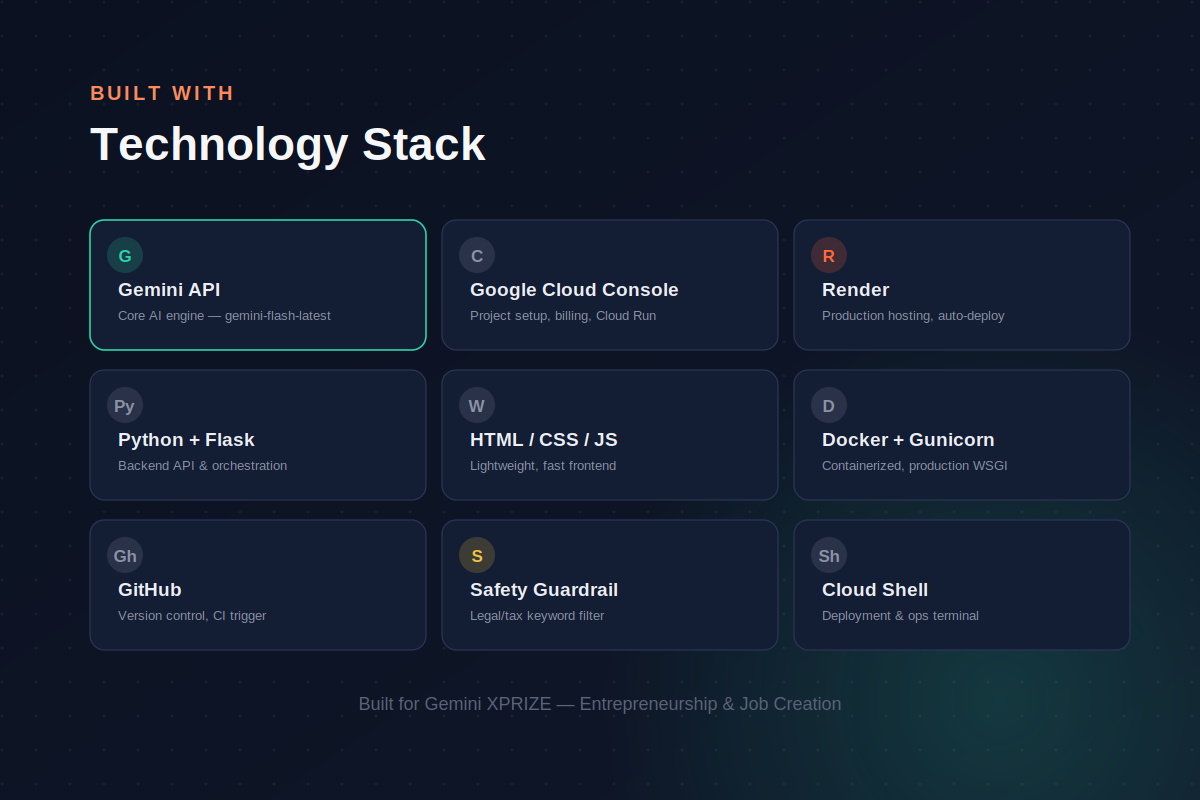
The frontend is a lightweight HTML/CSS/JS interface — a single idea box and a "Generate my plan" button, designed to feel like a founder's whiteboard, not a corporate form. The backend is a Python Flask API that receives the idea, runs it through a legal/tax keyword filter first, then sends it to the Gemini API with a structured prompt that forces a consistent, scannable output format. We initially set up infrastructure on Google Cloud Console — creating a GCP project, linking billing, and deploying via Cloud Run — before moving final hosting to Render (GitHub-connected, auto-deploy) to keep iteration fast. The Gemini API remains the core AI engine throughout.
Challenges we ran into
Cloud billing verification was our biggest blocker — a new Google Cloud billing account got stuck in a 48-hour "not open" state, which we eventually traced to a required one-time activation payment. We also hit a CDN caching issue where our updated frontend kept serving a stale cached version even after a successful redeploy, a environment-variable mixup where the Key and Value fields got swapped in our hosting dashboard, a broken JavaScript block from an overly aggressive find-and-replace that silently orphaned a closing brace, and a deprecated Gemini model name that returned a 404 until we updated it. Each one taught us to verify with raw HTTP requests instead of trusting what the browser showed us.
Accomplishments that we're proud of
We shipped a fully working, end-to-end product — real AI generation, not a mockup — despite every infrastructure layer throwing a different problem at us. We're proud that we never gave up on getting a genuinely live, testable URL, and that we built in a safety guardrail (the legal/tax filter) without being asked to, because we believe responsible AI products should know their limits.
What we learned
Infrastructure friction, not the AI itself, is usually the real bottleneck in shipping fast. We learned to verify every layer independently (DNS, cache, environment variables, API responses) rather than assuming a "successful deploy" message means the product actually works end-to-end. We also learned the value of picking the fastest reliable path over the most "official" one when a deadline is real.
What's next for LaunchPad
Next, we want to let founders save and revisit their plans over time, track which of the suggested actions they actually completed, and add a lightweight "customer discovery" mode that helps founders validate the plan with real outreach before building anything. Longer-term, we'd like to expand the legal/tax guardrail into a directory of vetted, affordable advisors founders can connect with directly.
Built With
- cloud-shell
- css
- docker
- flask
- gemini-api
- gemini-flash
- generative-ai
- git
- github
- google-ai-studio
- google-cloud
- google-cloud-console
- google-cloud-run
- gunicorn
- html
- javascript
- json
- llm
- prompt-engineering
- python
- render
- rest-api
- saas
- web-app

Log in or sign up for Devpost to join the conversation.