Inspiration
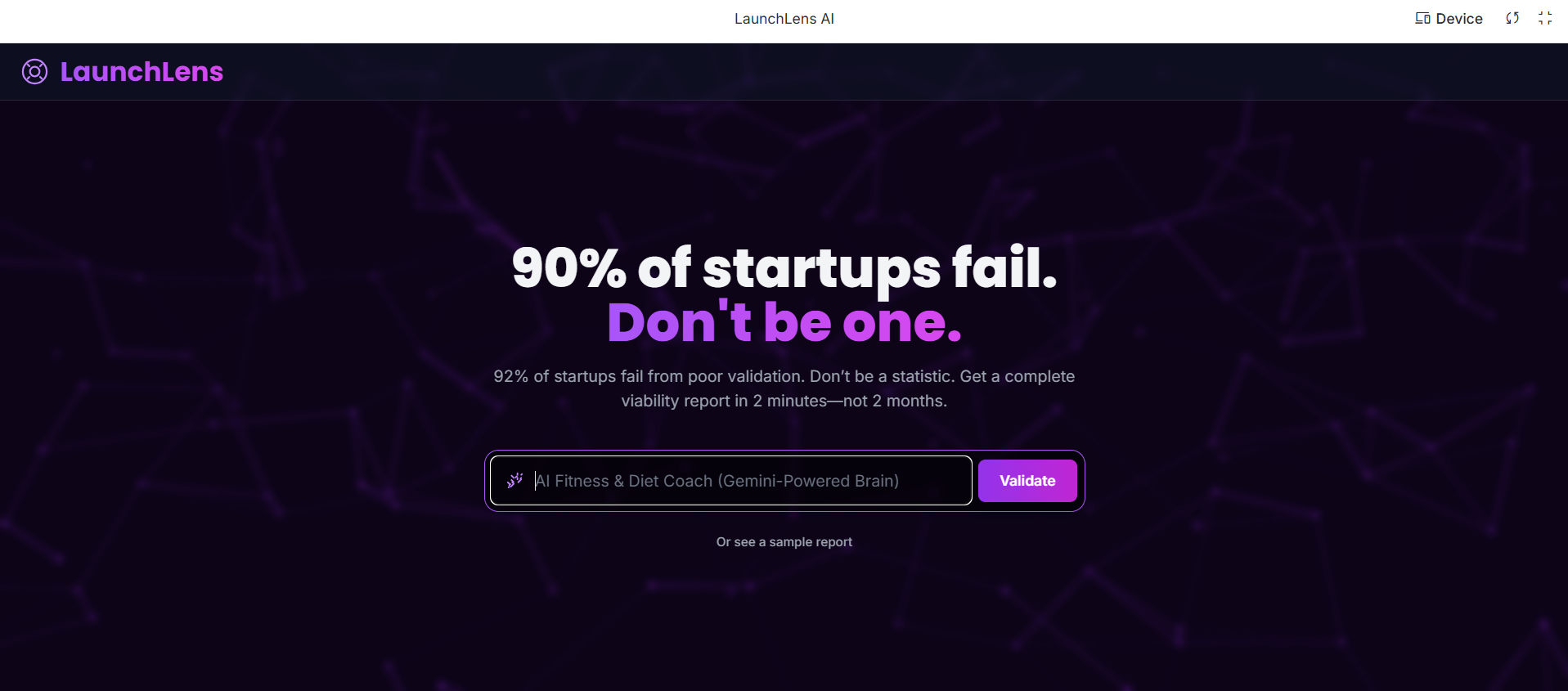
Many early-stage founders and student builders jump directly into development without validating whether their idea solves a real problem, who their competitors are, or how they should position themselves. The process of validation is fragmented across research, documentation, design, marketing, and pitching. This friction often leads to wasted effort and poorly positioned products.
The inspiration behind this project was to simplify that entire pre-building phase into a single intelligent workflow where a user can describe an idea and receive structured, practical outputs that normally require hours of research and multiple tools.
What it does
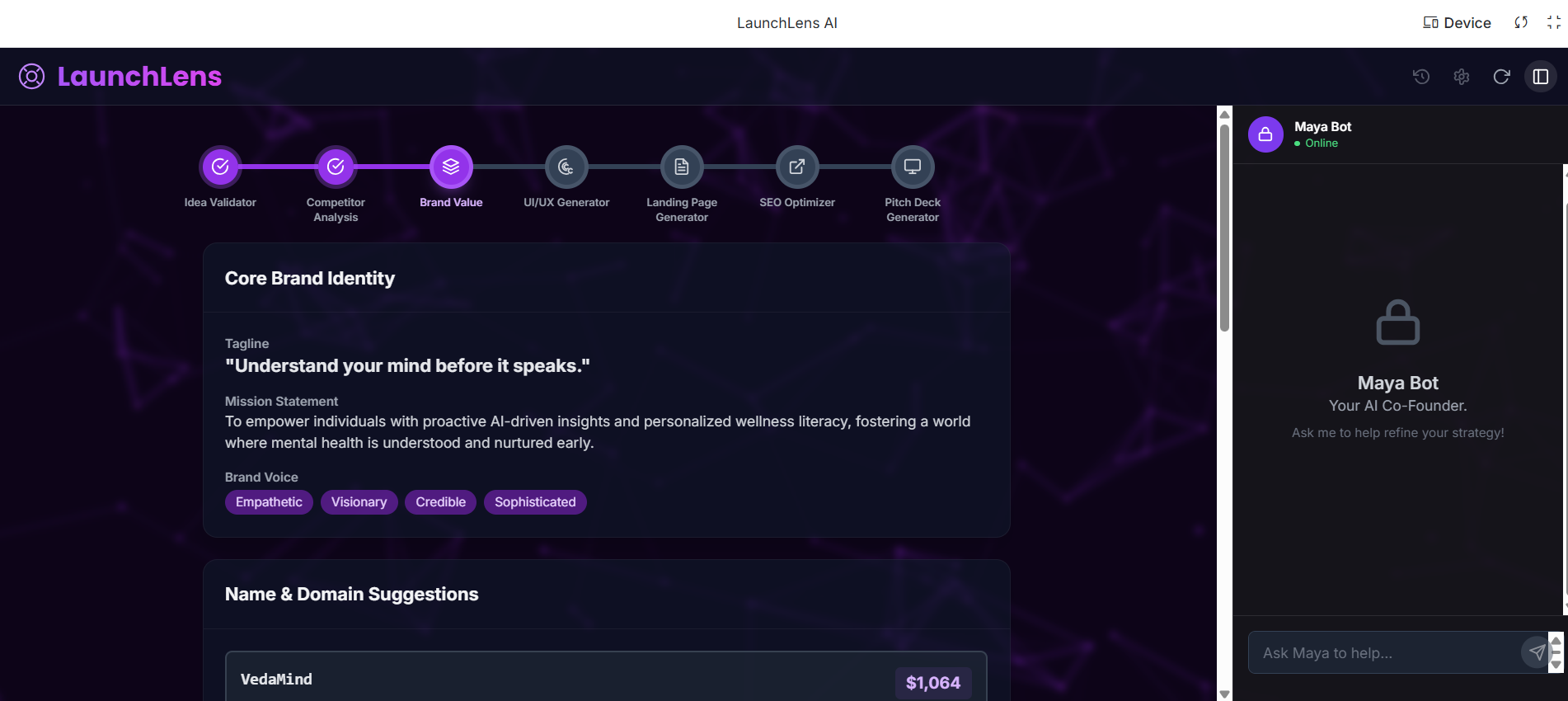
LaunchLens AI acts as an AI co-founder that guides users from idea to launch readiness.
Given a startup idea, the system:
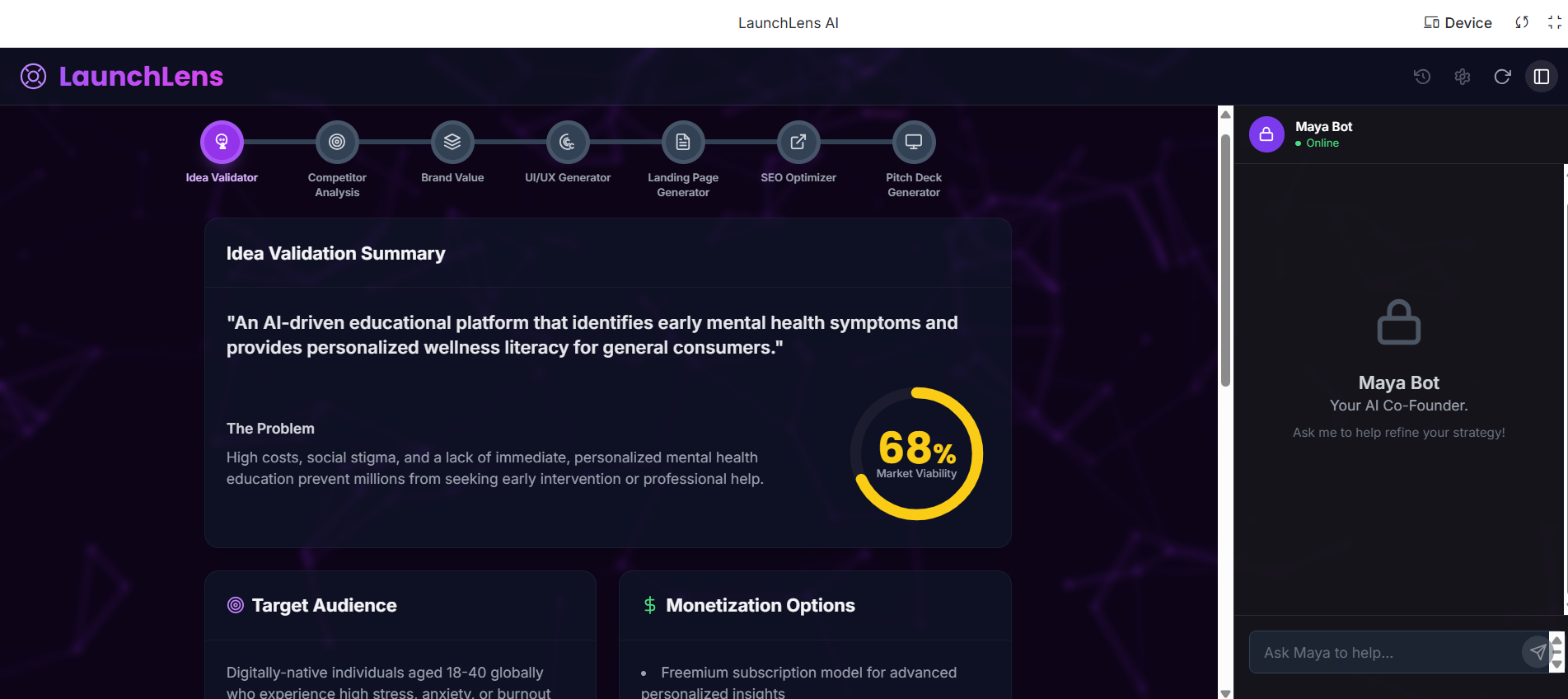
Evaluates the idea’s feasibility and market fit
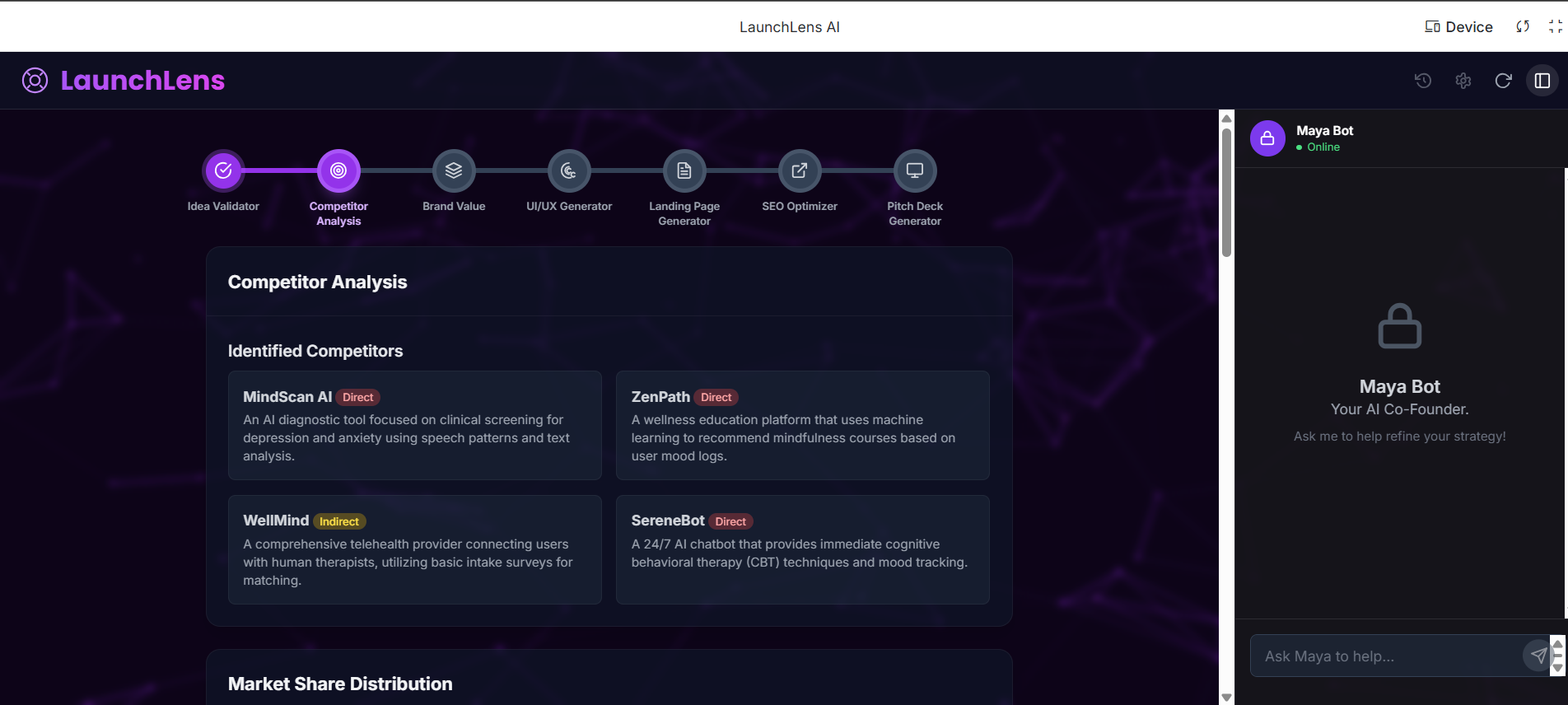
Identifies and analyzes competitors
Generates production-ready landing page copy and structure
Suggests brandable domain names
Optimizes content for SEO
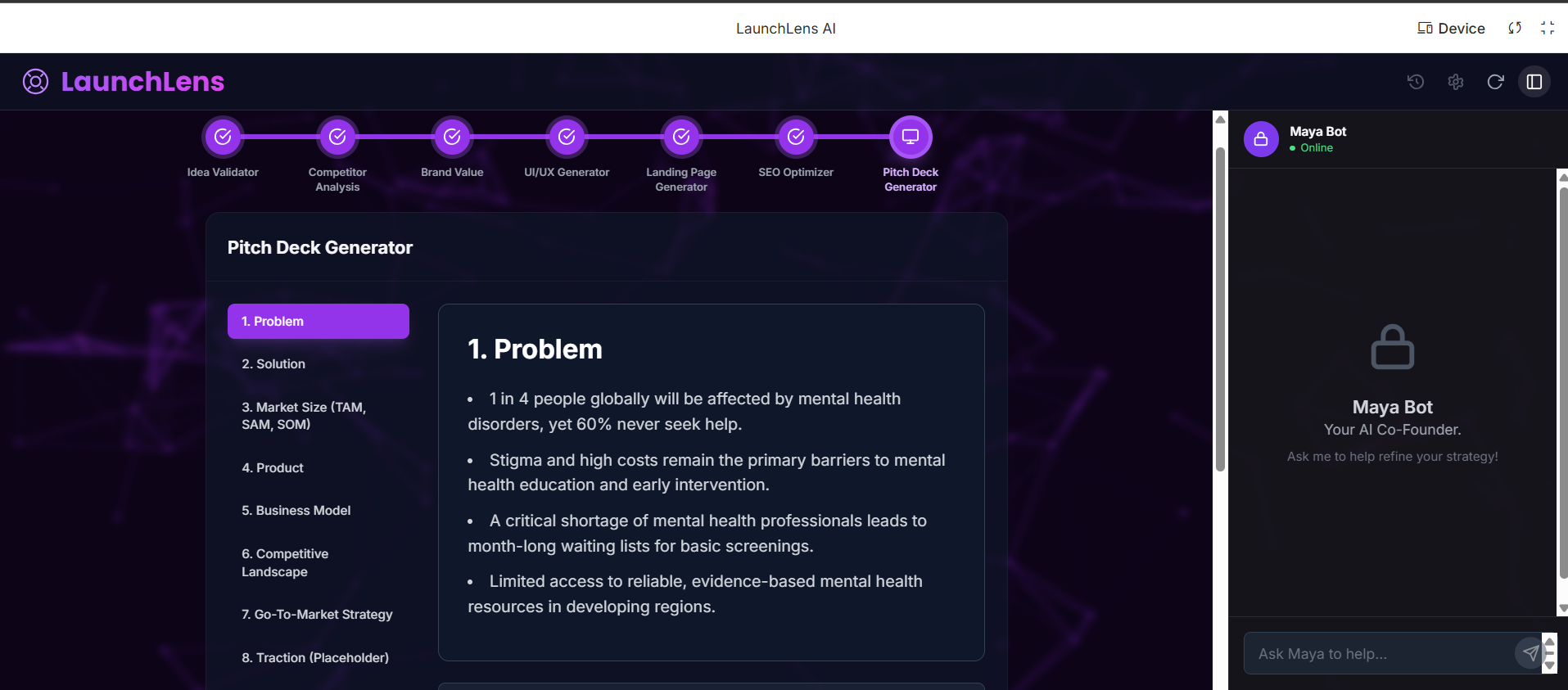
Creates a complete pitch deck structure with speaker notes
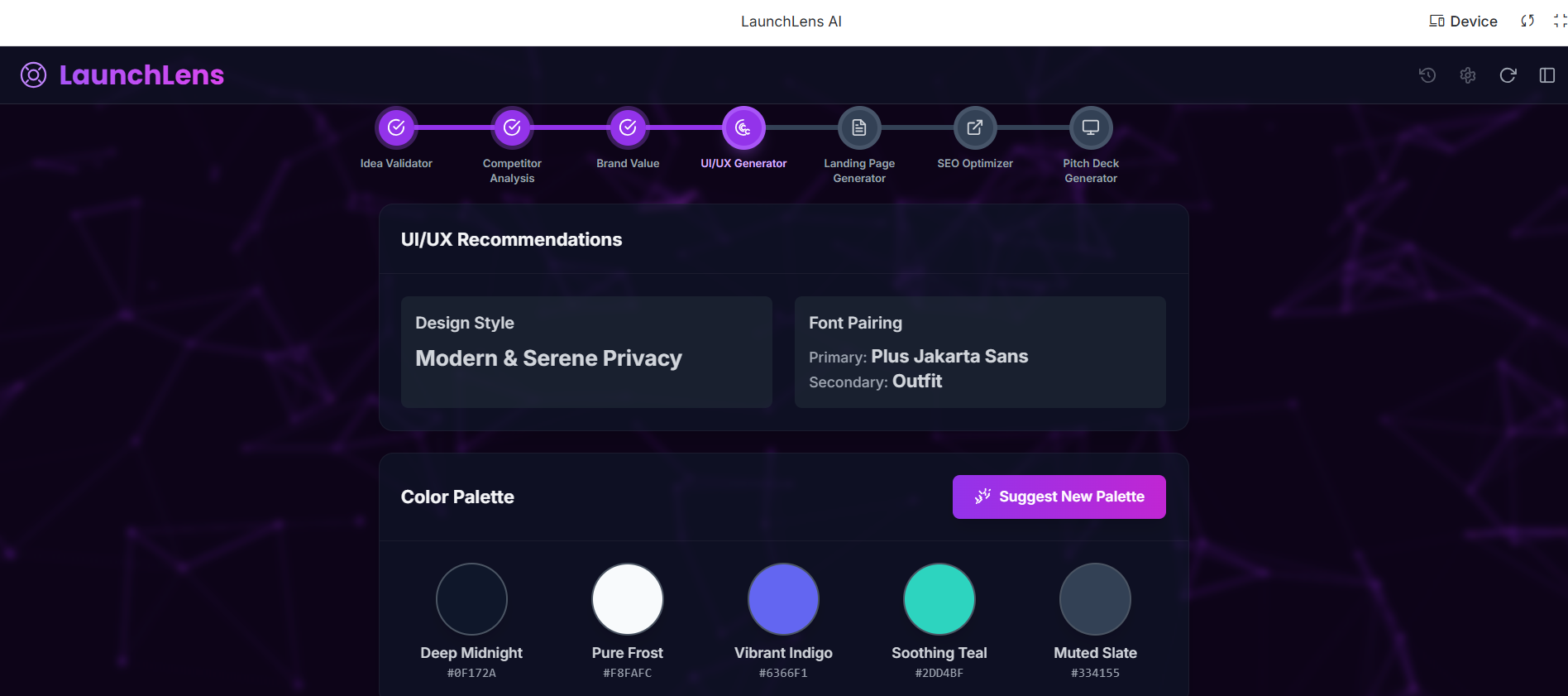
Recommends UI/UX layout, design style, and components
All outputs are interconnected and derived from the same initial idea, ensuring consistency across business, design, and presentation.
How we built it
The project is built as a modular pipeline powered by Gemini.
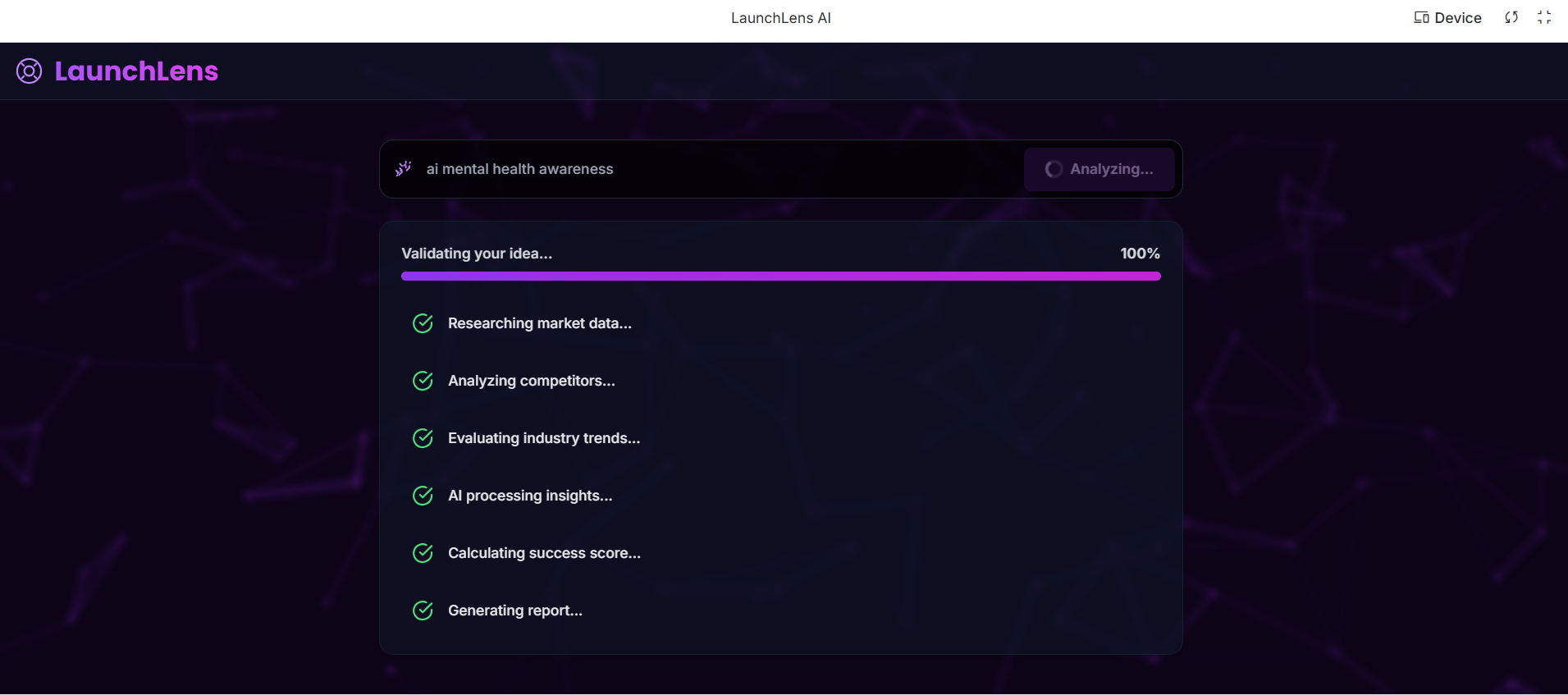
A simple frontend collects the startup idea and context. The backend orchestrates a sequence of Gemini calls across modules:
- Idea validation and improvement
- Competitor analysis
- Landing page generation
- Domain and SEO planning
- Pitch deck creation
- UI/UX recommendations Each module uses the same contextual data, allowing the system to maintain continuity throughout the workflow. The focus was on designing structured prompts and response formats so that outputs are directly usable rather than descriptive. ## Challenges we ran into One major challenge was preventing generic AI responses. We had to iteratively refine prompts to produce structured, actionable outputs instead of high-level suggestions.
Maintaining context across multiple modules was another difficulty. Each stage had to understand the same idea without reintroducing it manually, which required careful session design.
We also had to ensure that the outputs felt like real product artifacts, not AI-generated text, which required balancing specificity with clarity.
Accomplishments that we're proud of
- Converting a single natural language idea into multiple launch-ready assets
- Designing a system where Gemini reasons across business, marketing, design, and product domains
- Creating outputs that can be directly used in real startup workflows
- Building a cohesive experience that feels like interacting with an AI co-founder rather than a chatbot
What we learned
We learned that the true value of large language models lies in structured reasoning and context retention, not just text generation. Prompt design, output formatting, and module sequencing are critical to transforming AI responses into practical tools.
We also learned how to map real-world startup processes into an AI-driven pipeline
What's next for Untitled
The next step is to turn LaunchLens AI into a fully deployable platform where users can export landing pages, pitch decks, and design assets directly into tools like Framer, Figma, and presentation software.
We also plan to integrate real-time data sources for more accurate competitor and SEO insights, and introduce collaboration features so teams can use the platform together while refining their ideas.


Log in or sign up for Devpost to join the conversation.