Inspiration
Most projects do not fail because teams lack ideas. They fail because the biggest assumptions stay invisible until too much time, money, and energy have already been spent.
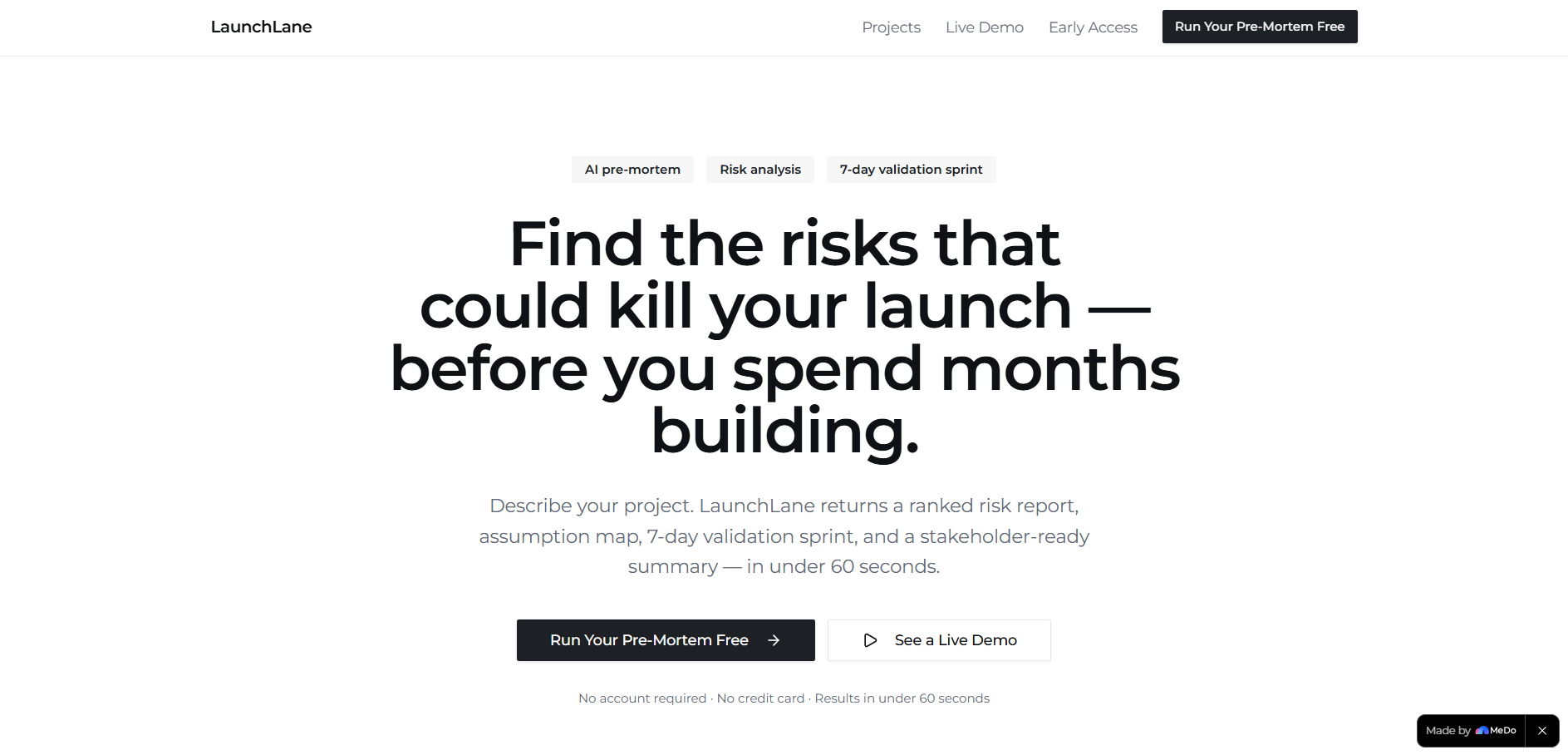
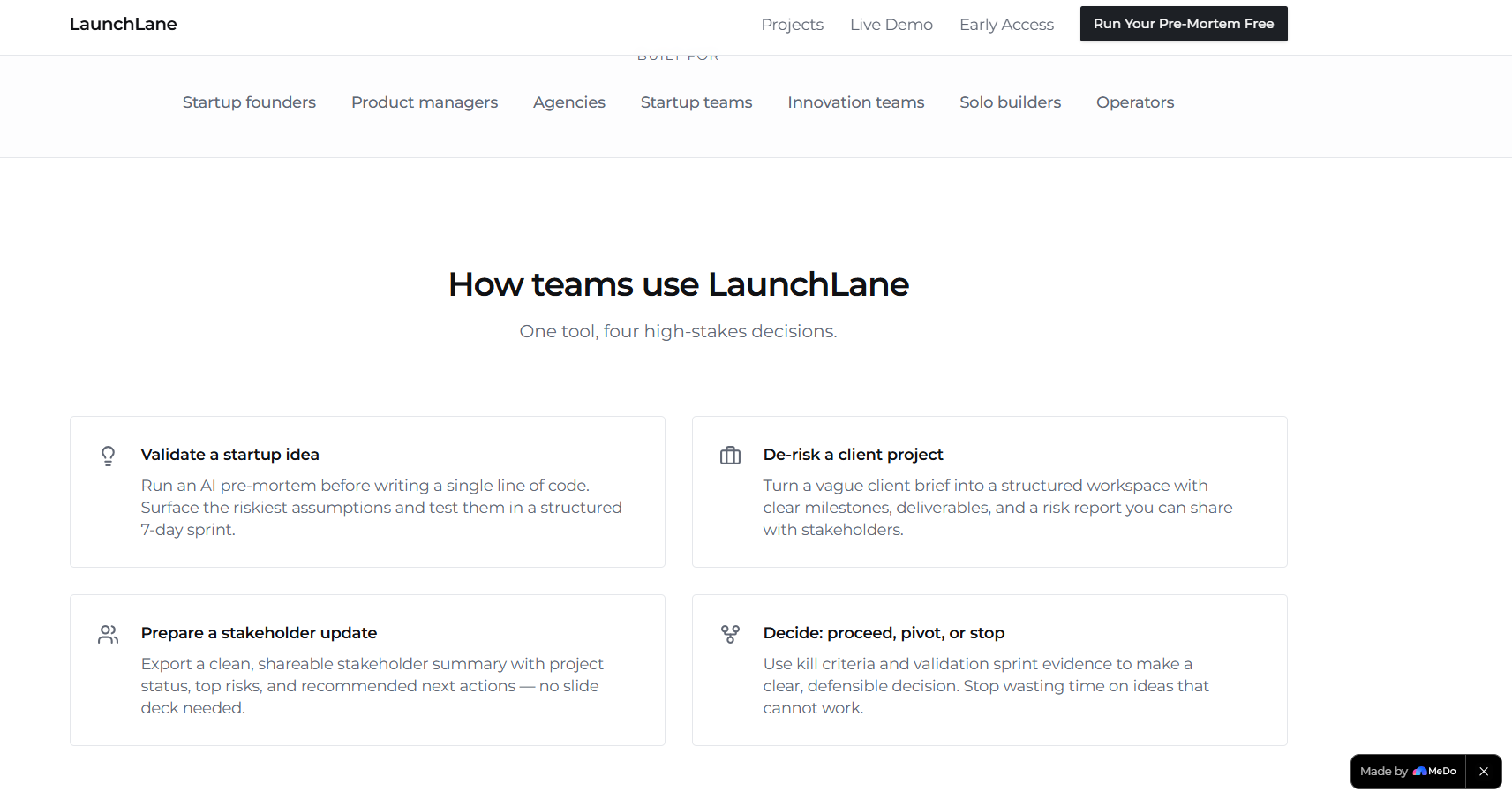
LaunchLane was inspired by the idea of giving founders, builders, agencies, and product teams a fast “pre-mortem” before they commit to a build. I wanted a tool that could take a rough project brief and immediately ask: what could kill this launch, what should we test first, and how do we make a clear proceed, pivot, or stop decision?
What it does
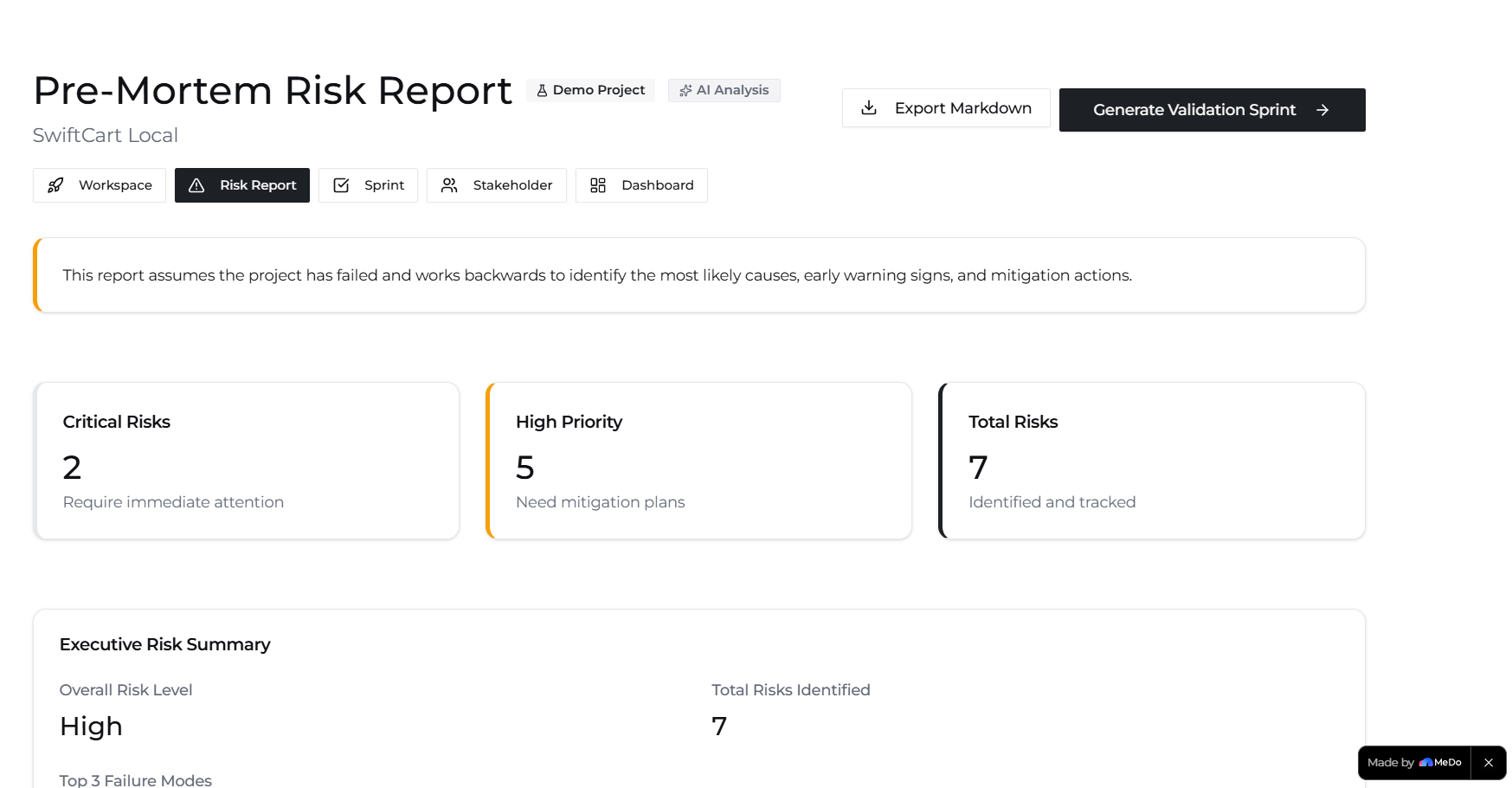
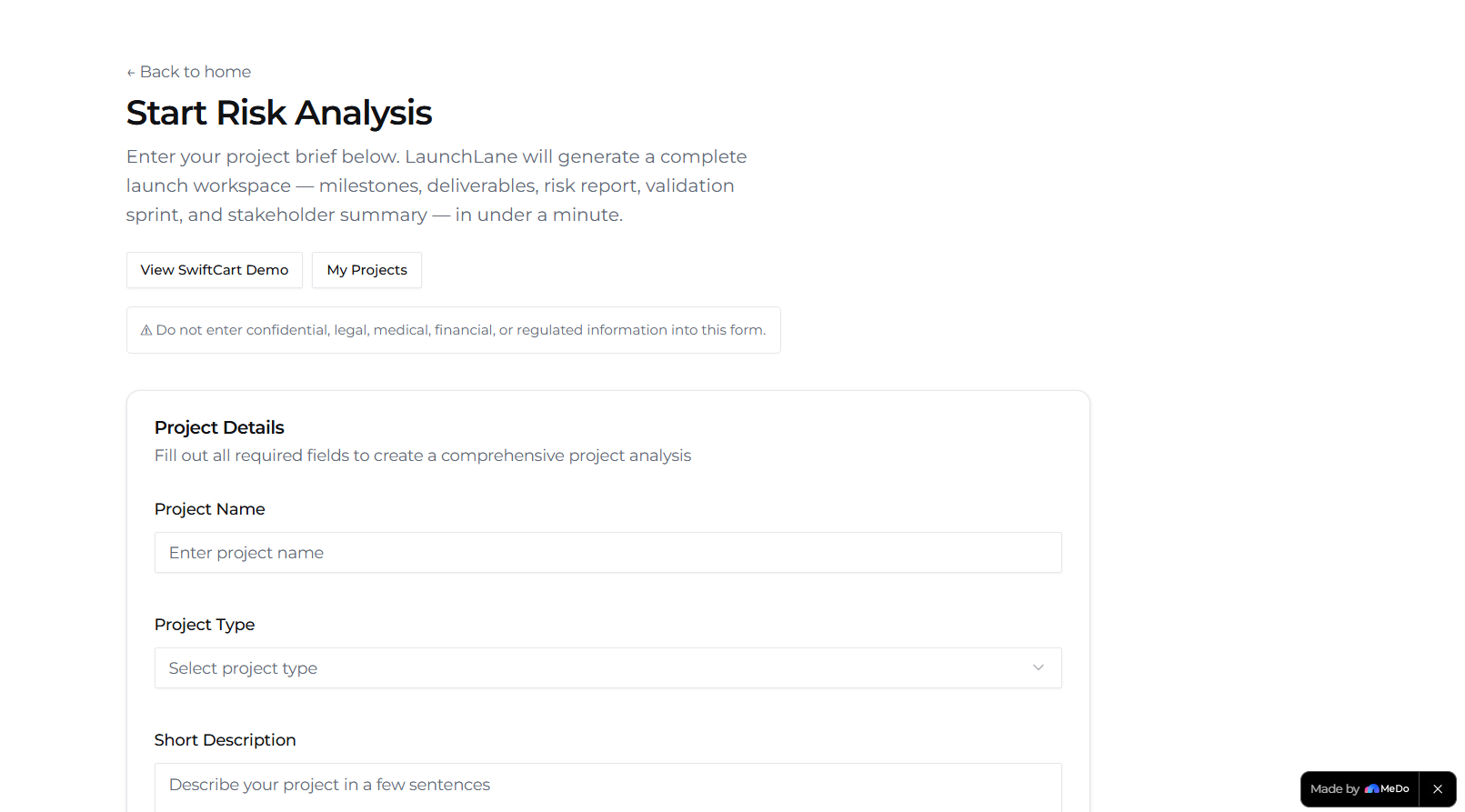
LaunchLane Risk Engine turns a project brief into a structured launch-risk workspace in under 60 seconds.
It generates:
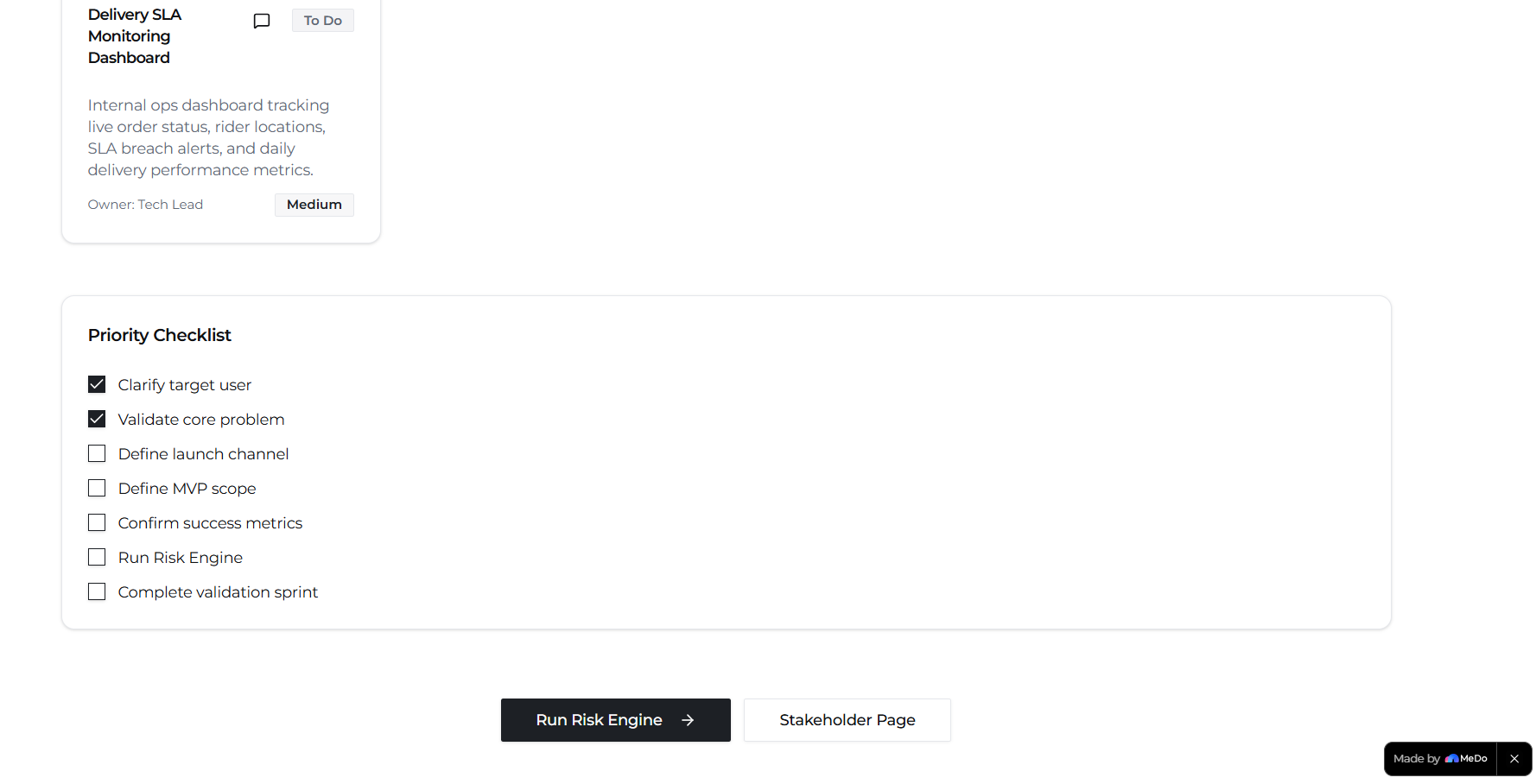
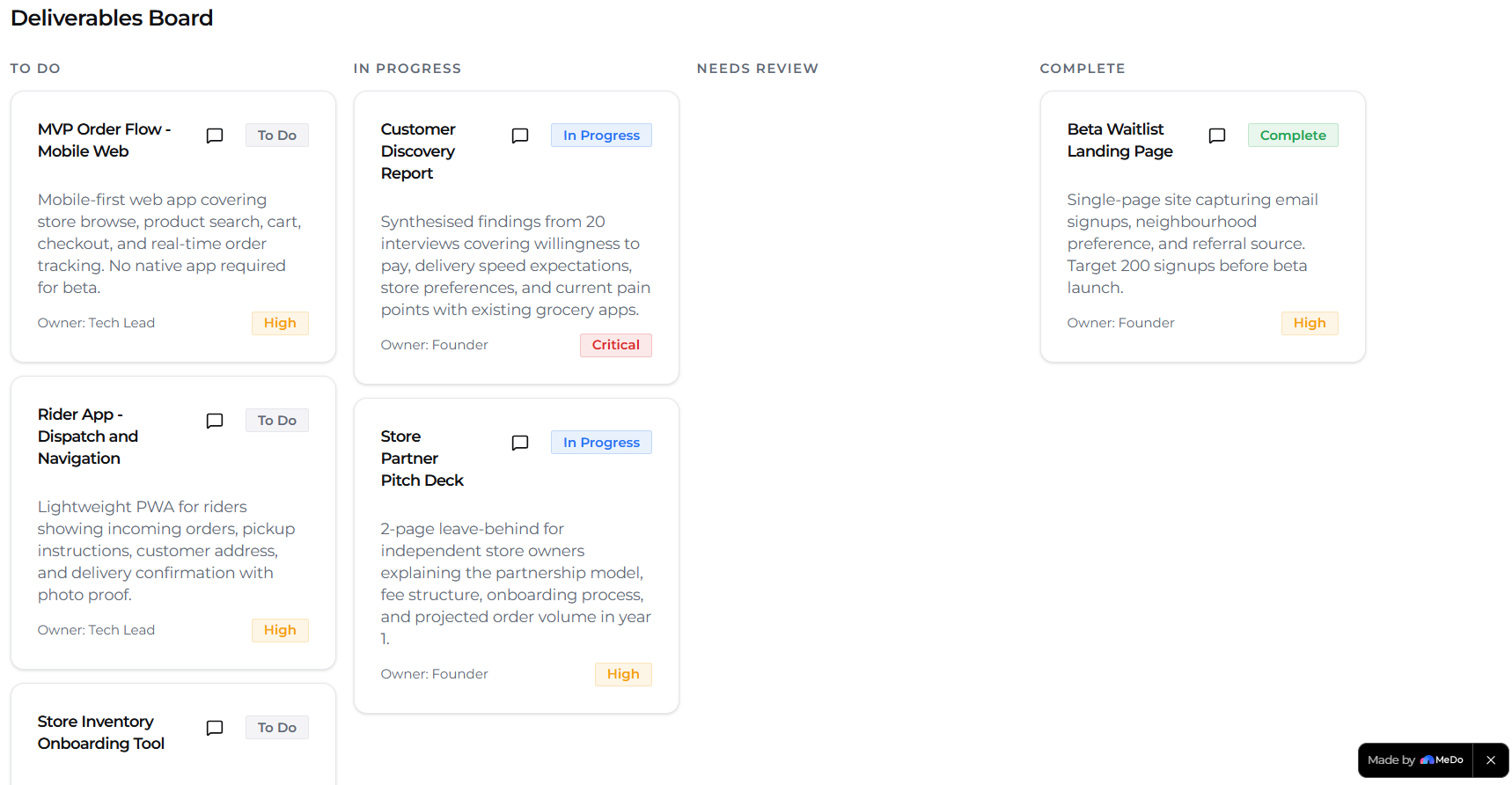
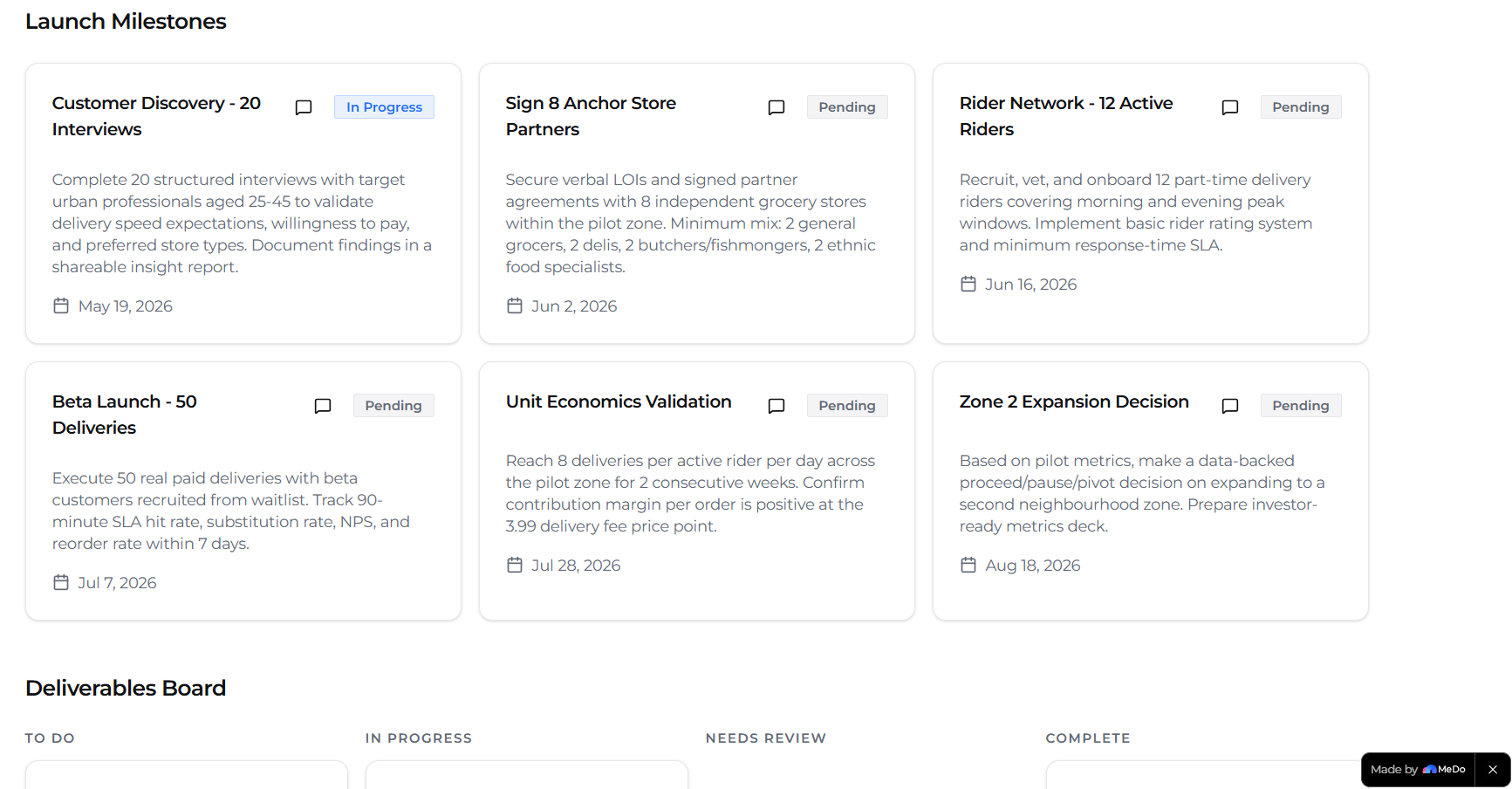
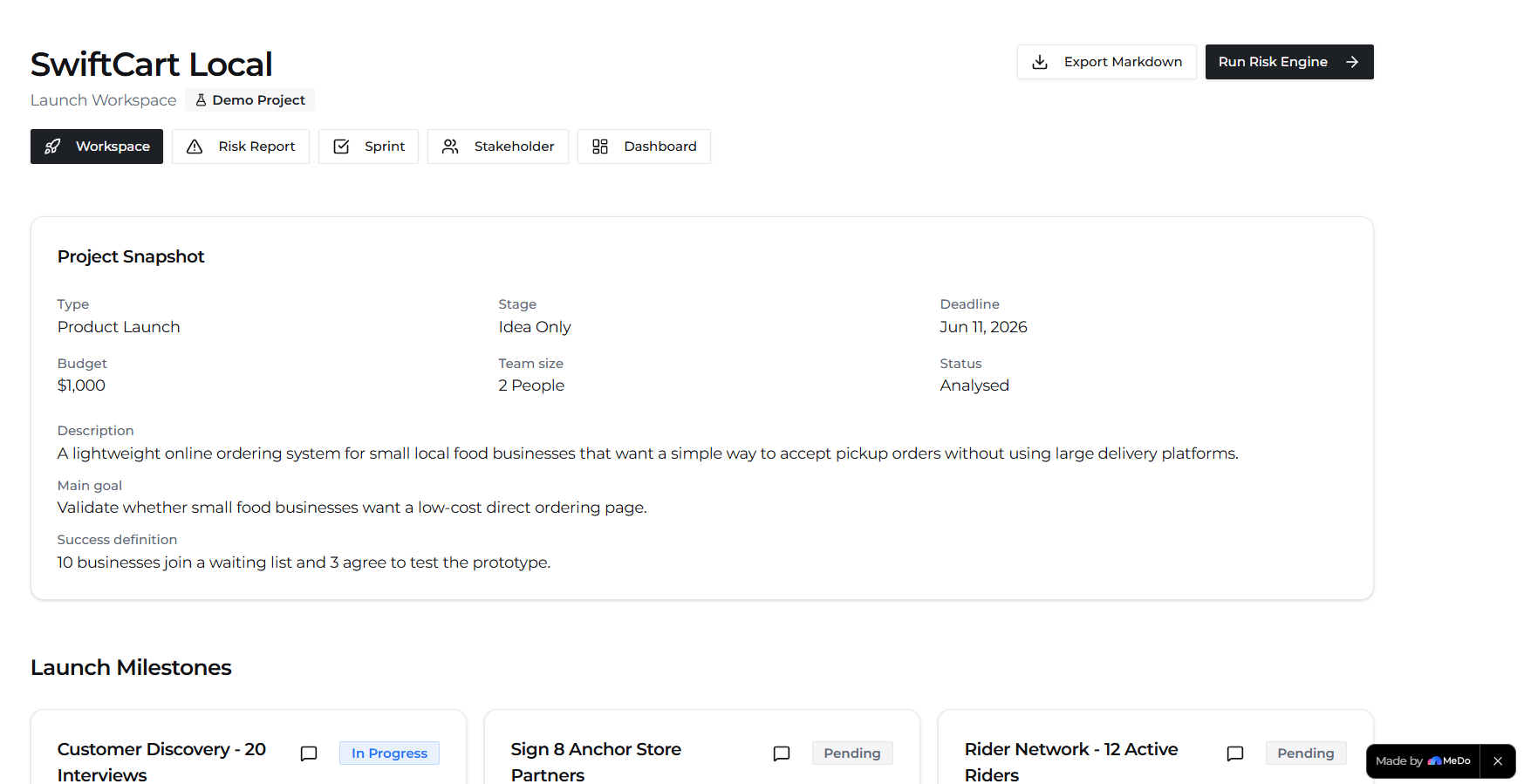
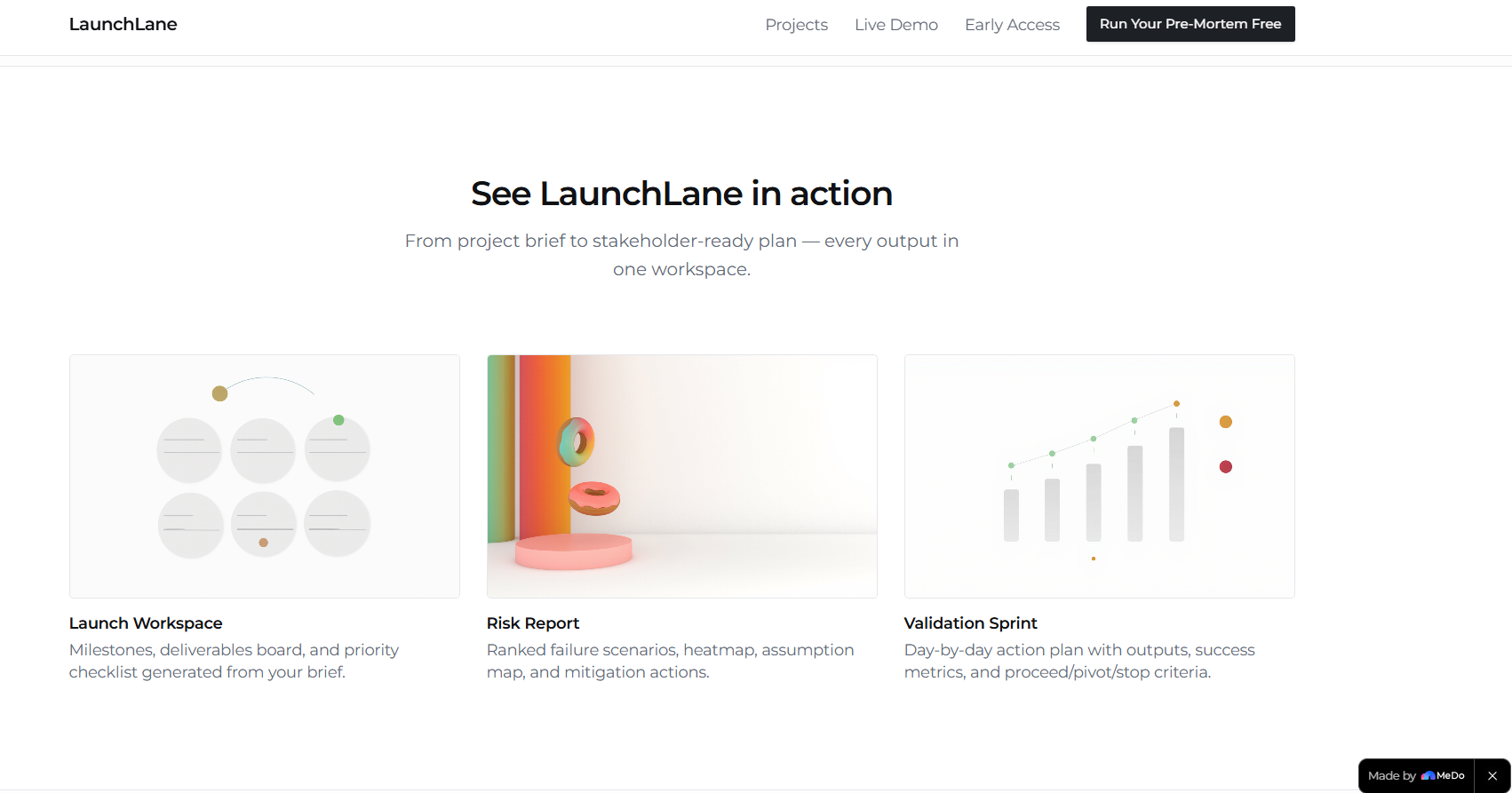
- A project workspace with milestones, deliverables, and priorities
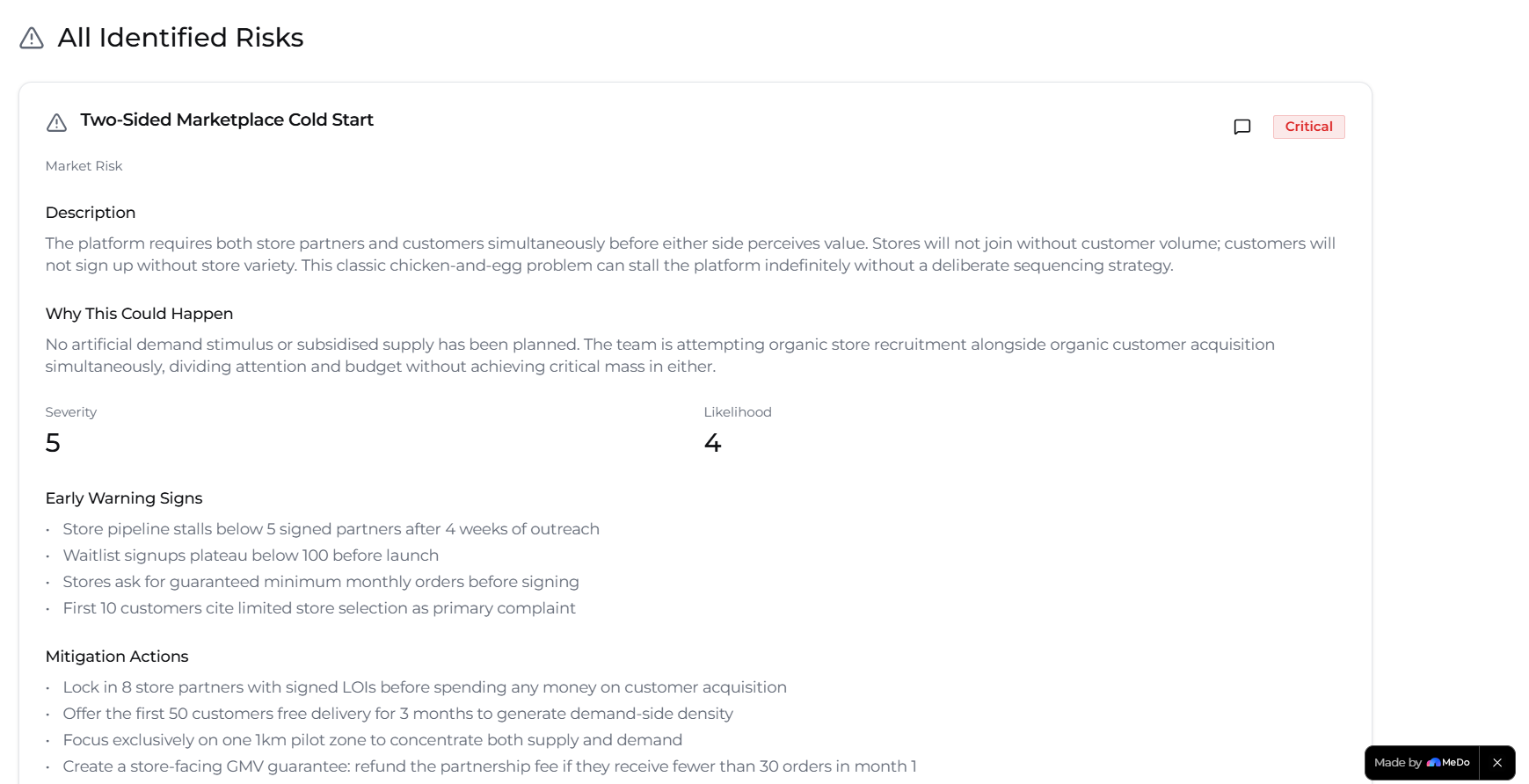
- A ranked risk report with failure scenarios
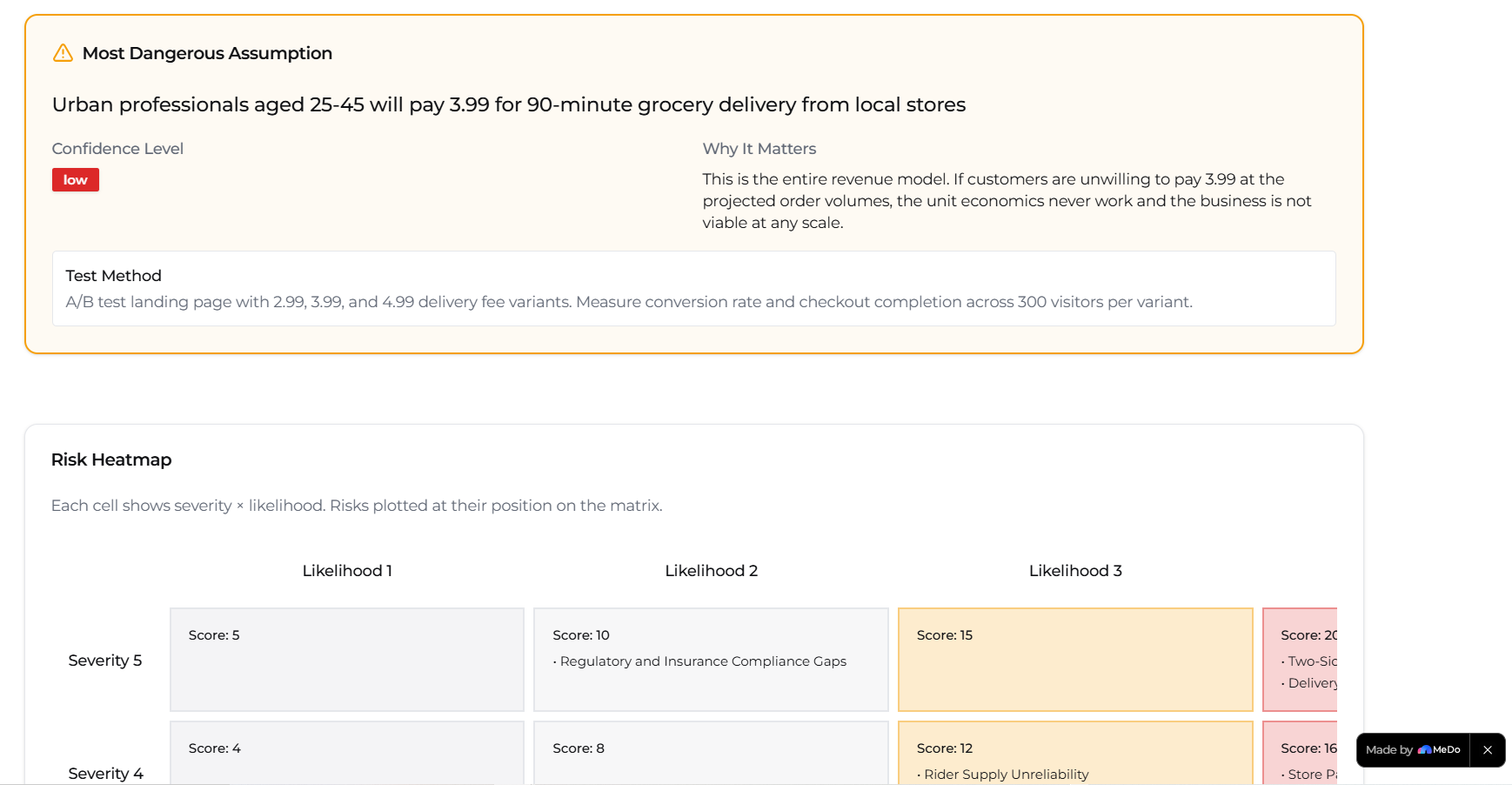
- A risk heatmap based on severity and likelihood
- A testable assumption map
- A 7-day validation sprint
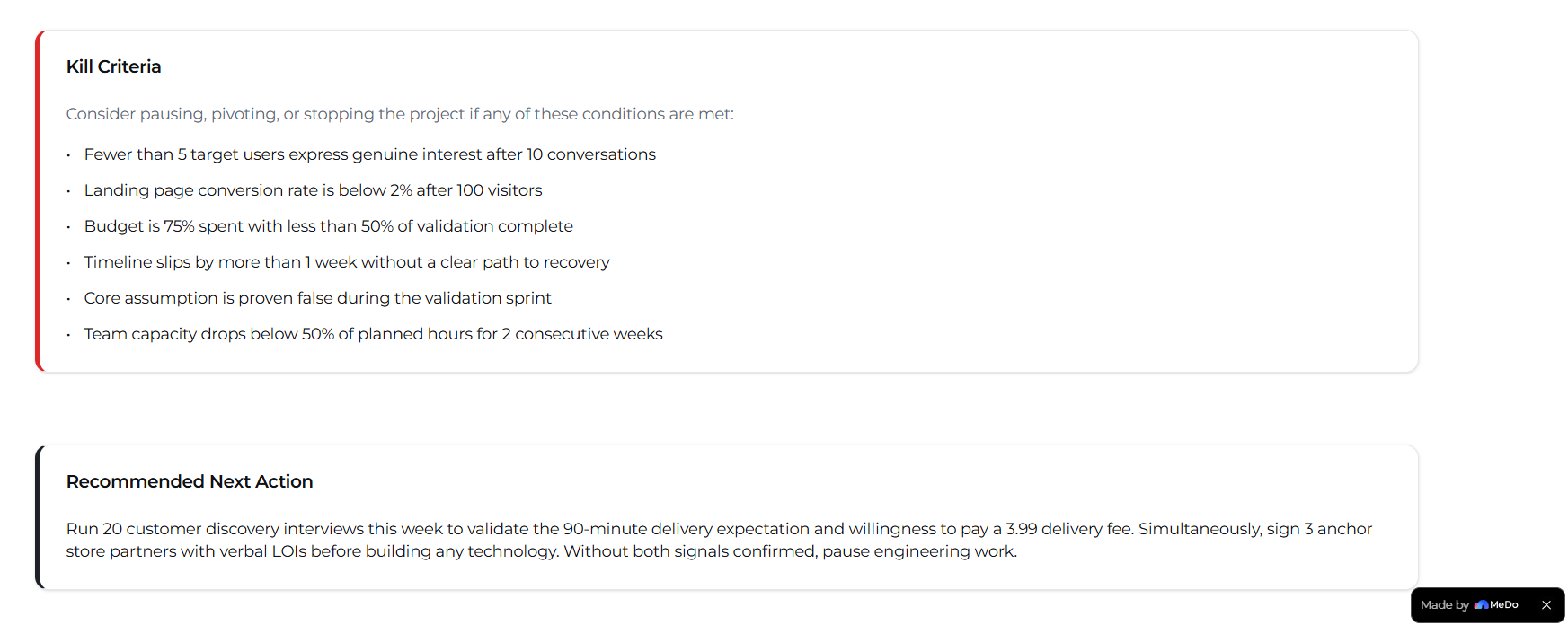
- Clear kill criteria for proceed, pivot, or stop decisions
- A stakeholder-ready summary that can be shared or exported
The core idea is simple:
\[ Risk Score = Severity \times Likelihood \]
LaunchLane helps teams focus on the riskiest assumptions first, before they waste time building the wrong thing.
How we built it
I built LaunchLane using MeDo as the main app-building platform. The product was developed through iterative prompting, testing, and publishing cycles.
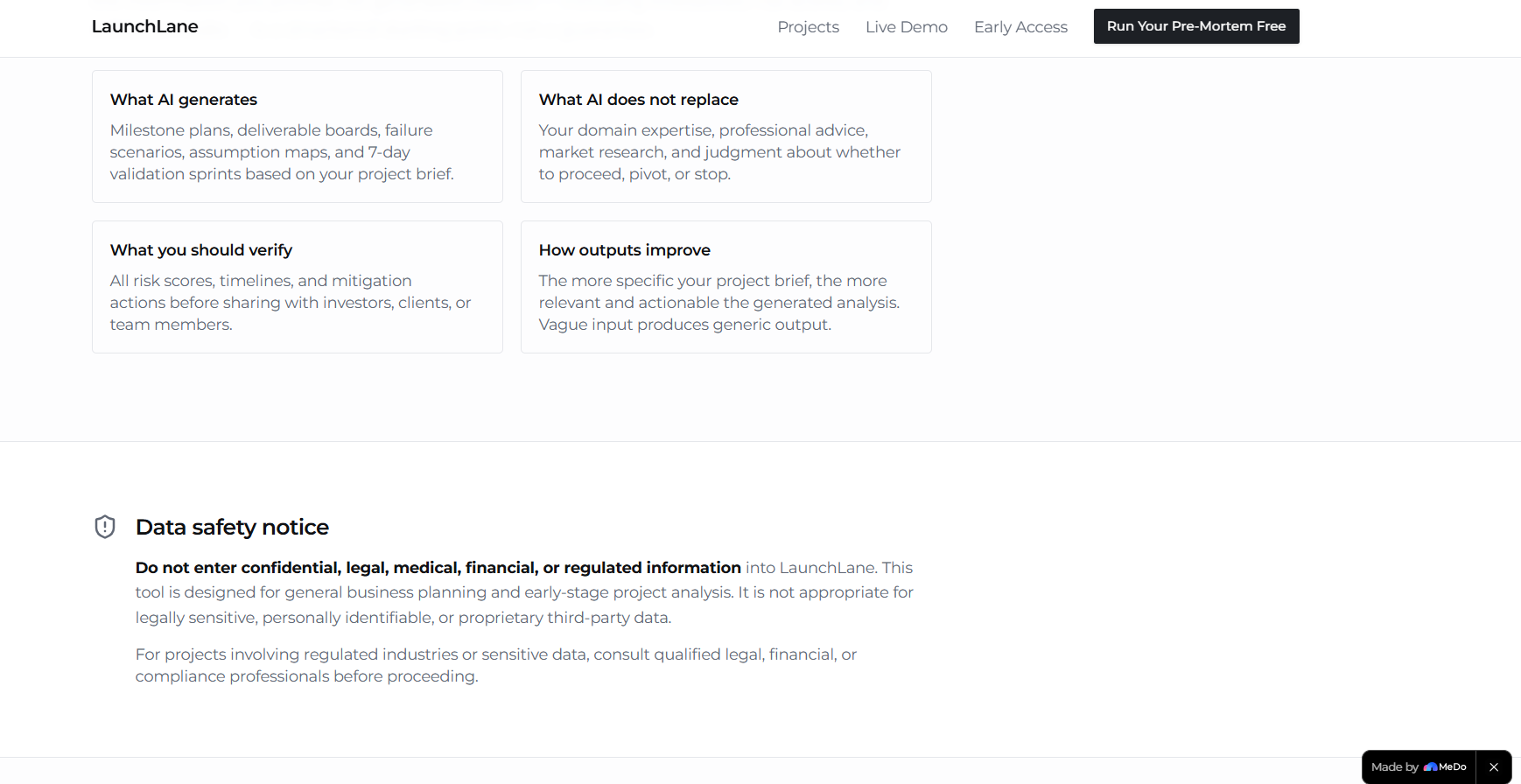
The app combines a polished landing page, public demo workspace, project dashboard, AI-generated risk analysis, validation planning, and stakeholder summaries. I used AI generation to create structured outputs from user briefs, then refined the interface and demo data so the product felt clear, credible, and ready to present.
The final version includes a complete SwiftCart demo project so judges can immediately understand the value without needing to create an account.
Challenges we ran into
The biggest challenge was turning a broad concept into something demo-ready and commercially believable within the hackathon timeframe.
Some of the hardest parts were:
- Making the AI outputs specific enough to feel useful, not generic
- Keeping the user flow simple while still showing depth
- Creating demo data that felt realistic and consistent
- Improving the visual polish without distracting from the product
- Replacing AI-generated images that contained garbled text
- Balancing hackathon speed with commercial-readiness expectations
Accomplishments that we're proud of
I am proud that LaunchLane feels like more than a prototype. It has a clear audience, a strong use case, a polished public demo, and a workflow that could realistically become a commercial product.
The biggest accomplishment is that the app does not just generate text. It turns an idea into a decision-making system: risks, assumptions, validation steps, and stakeholder communication all in one place.
What we learned
This project reinforced how important structured thinking is when using AI. The best results came from giving the AI a clear product framework, not just asking it to “analyze a project.”
I also learned that demo quality matters enormously. Small details like consistent sample data, clean visuals, good calls-to-action, and a working public demo make the product much easier to trust.
What's next for LaunchLane Risk Engine
Next, I would turn LaunchLane into a full commercial product.
The next steps are:
- Add user accounts and saved workspaces
- Add Stripe subscriptions
- Improve project collaboration and sharing
- Add industry-specific risk templates
- Support richer exports for founders, agencies, and product teams
- Add version history for project analyses
- Improve scoring models and validation recommendations
- Build a stronger onboarding flow for first-time users
The long-term vision is for LaunchLane to become the fastest way to stress-test any project before building it.
Built With
- medo


Log in or sign up for Devpost to join the conversation.