-
-
Launch lab AI
Inspiration
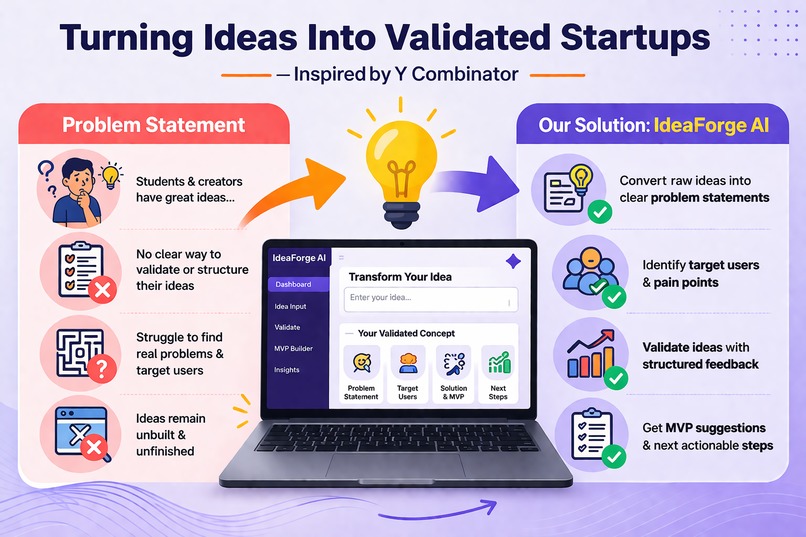
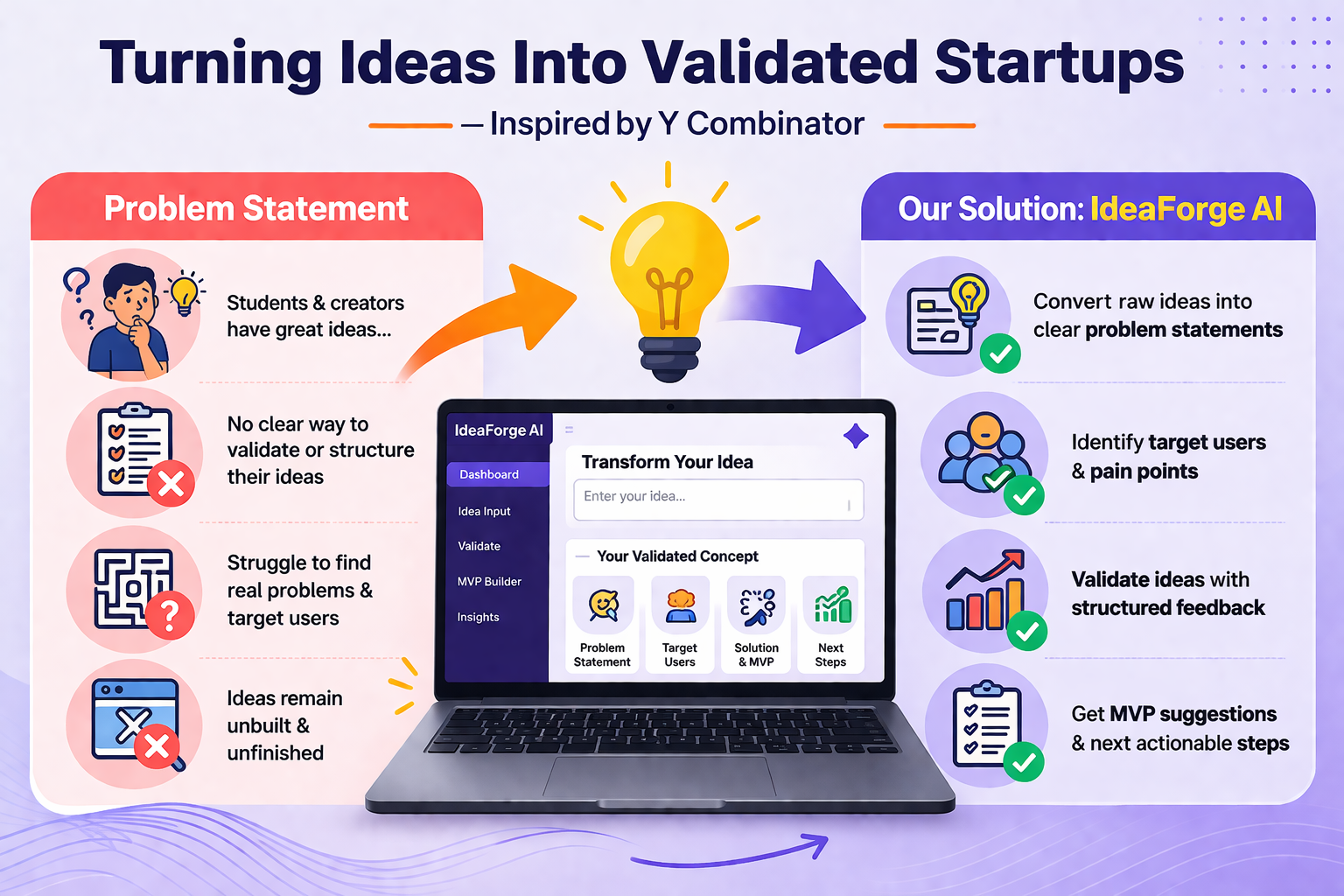
Many students have innovative ideas but struggle to turn them into real-world solutions. Inspired by how Y Combinator helps startups refine ideas, validate problems, and build impactful products, I wanted to bring the same approach to students.
The idea was to simplify the startup-building process so that anyone can go from just an idea to a validated solution.
What it does
IdeaForge AI acts like a mini version of the YC process:
Helps users define a clear problem statement Identifies target users and pain points Suggests practical solutions and MVP ideas Enables early-stage validation, just like YC startups do before scaling
How I built it
Designed the interface using HTML and basic UI principles Structured features based on the Y Combinator startup model (Problem → Solution → MVP → Validation) Created logic to transform raw ideas into structured outputs Built interactive sections for user input and guided idea development
Challenges I ran into
Translating the YC startup process into a simple student-friendly tool Keeping the platform easy to use while still meaningful Designing a system that feels like “real startup thinking” Avoiding overcomplication of features
Accomplishments that I am proud of
How successful startups (especially YC-backed ones) focus on problem-solving first The importance of early validation before building How to think like a founder, not just a developer Structuring ideas into actionable steps
What's next for LaunchLab AI
Integrate real AI models for smarter suggestions Add peer validation (like early YC feedback loops) Expand into a full startup simulation platform Include real case studies from YC startups

Log in or sign up for Devpost to join the conversation.