-
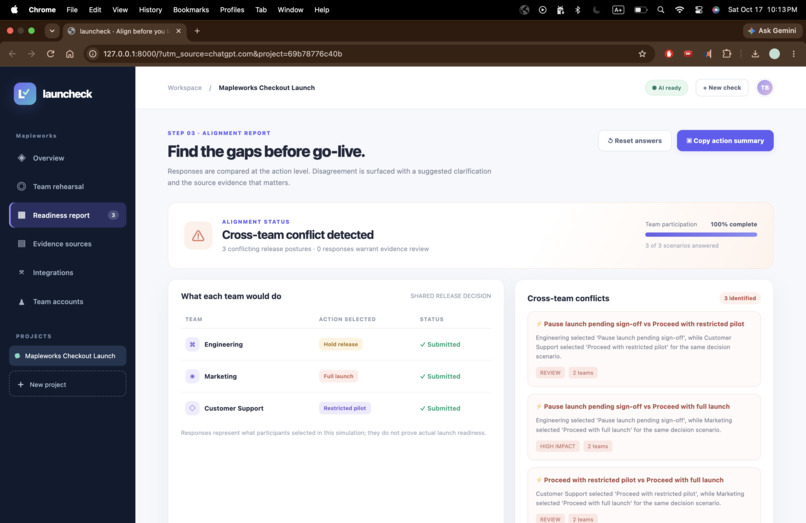
LaunchCheck catches conflicting launch decisions before they become real problems.
-
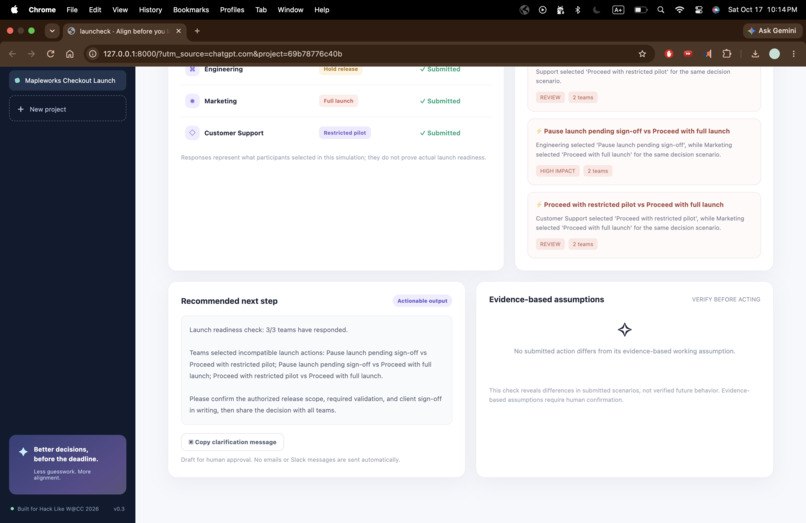
Engineering wants to delay, Marketing wants to launch, and Support expects a pilot.
-
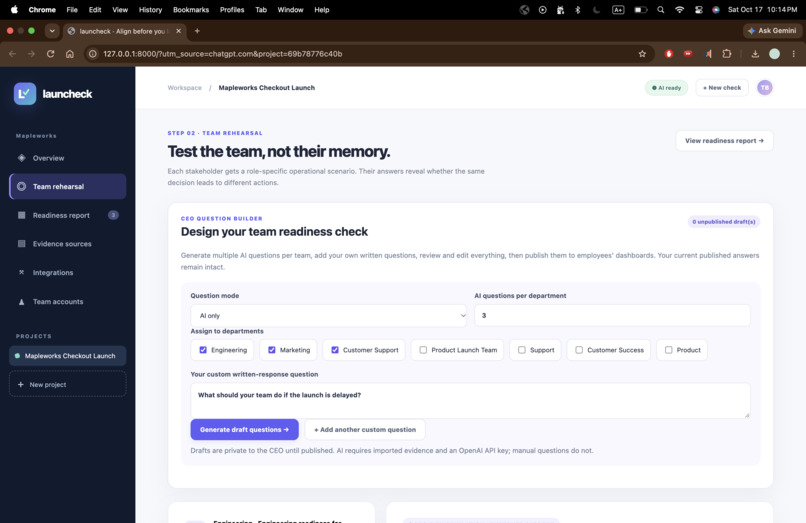
GPT-4.1 mini turns company context into role-specific decision scenarios.
-
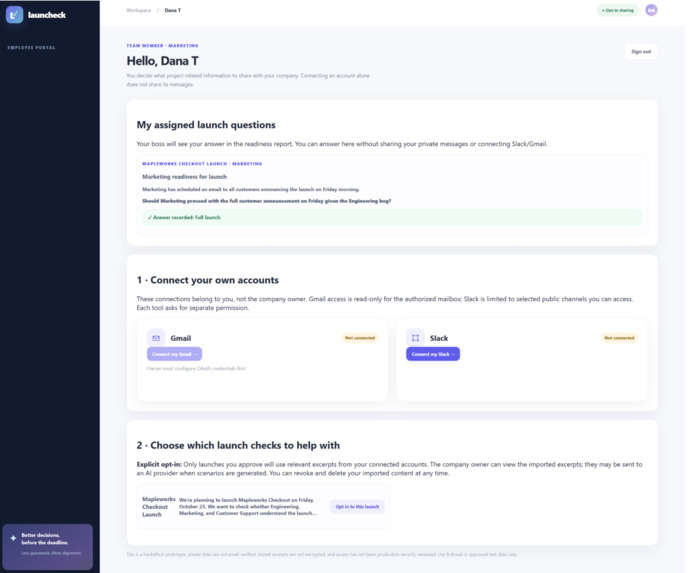
Employees independently choose how their team would respond.
-
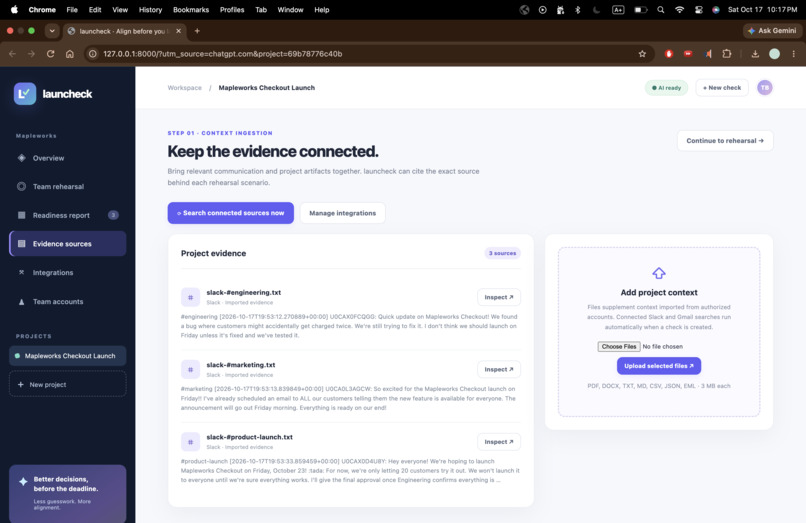
Rehearsals are grounded in the conversations teams are already having (e.g. Slack, Gmail)
-
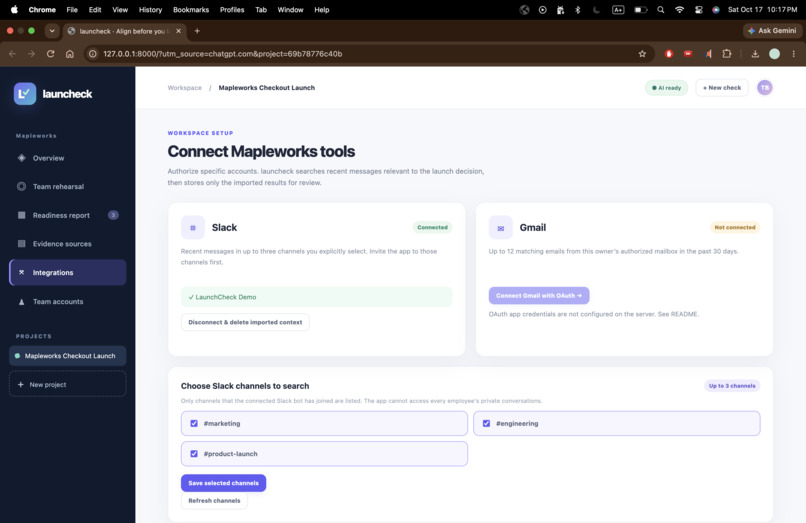
Connect authorized workplace sources to give AI the context behind decisions.
-
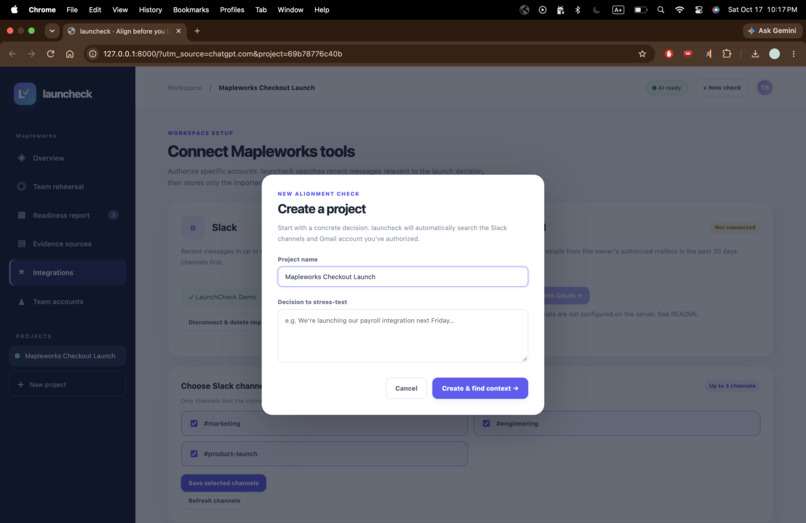
The CEO chooses an important decision and what the team should stress-test.
-
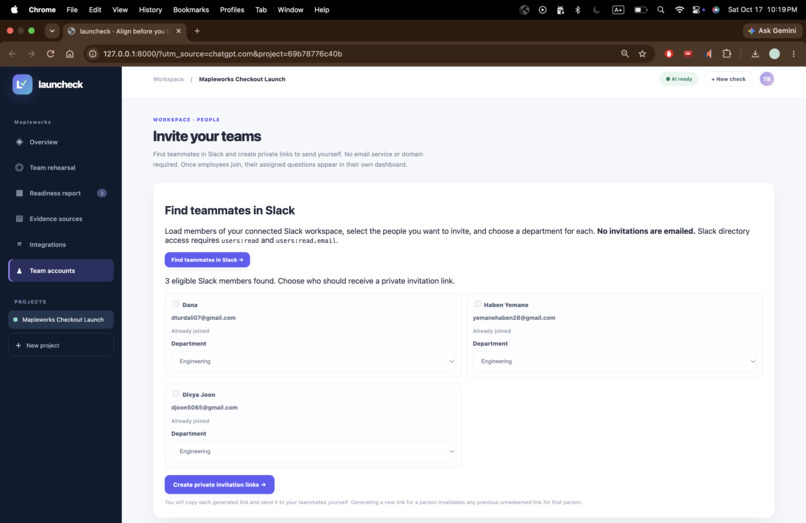
Different departments participate in the same company decision.
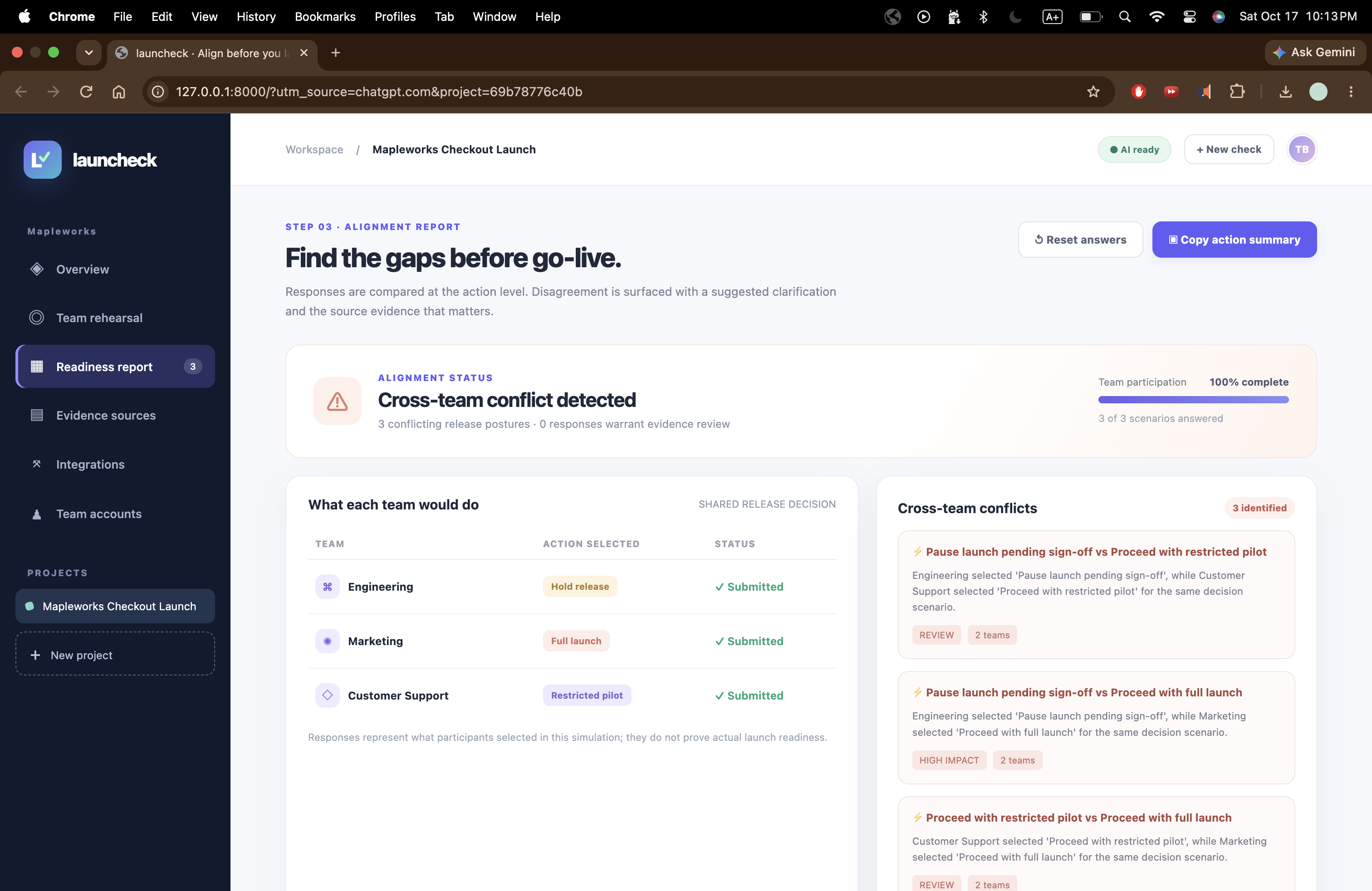
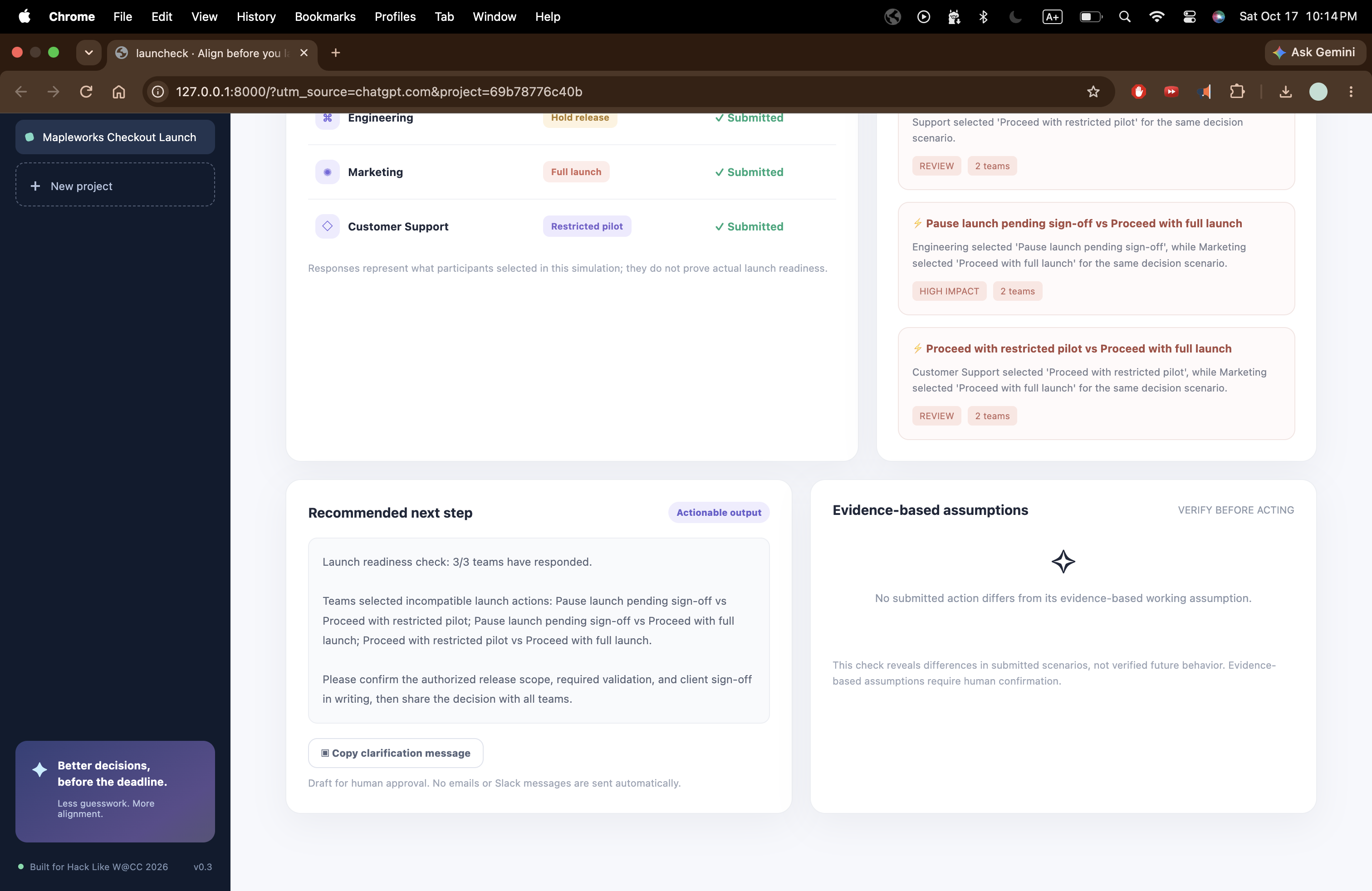
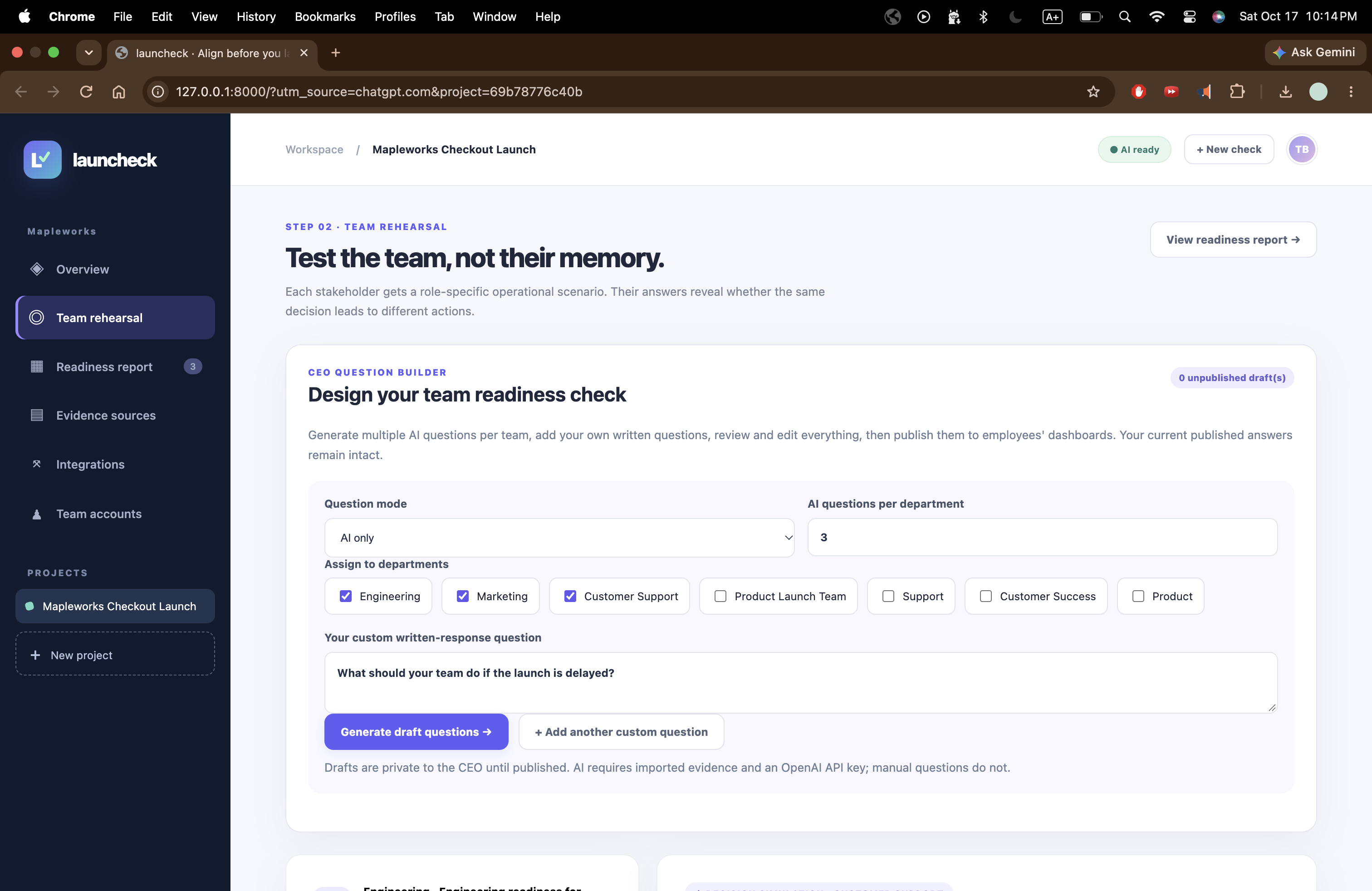
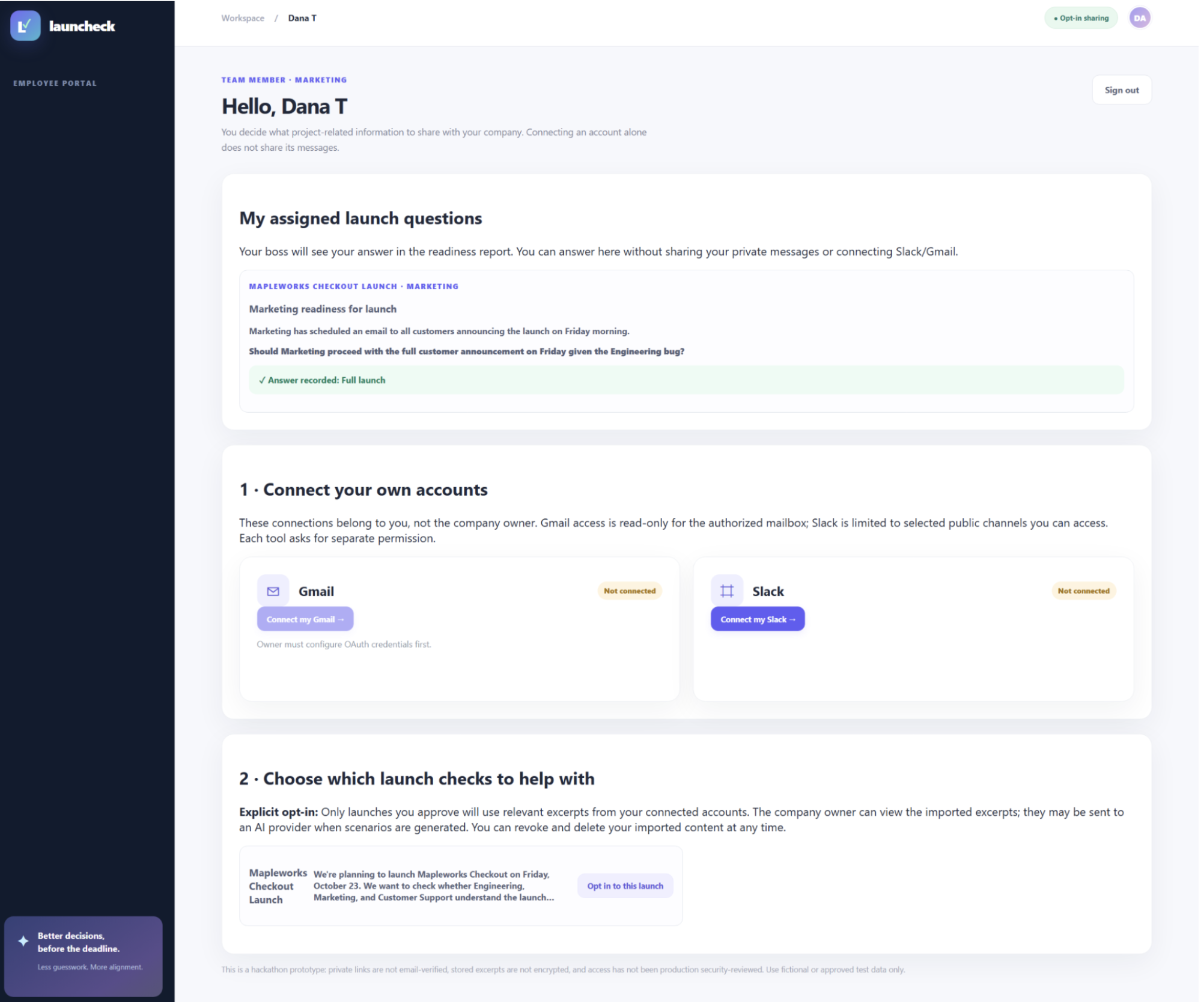
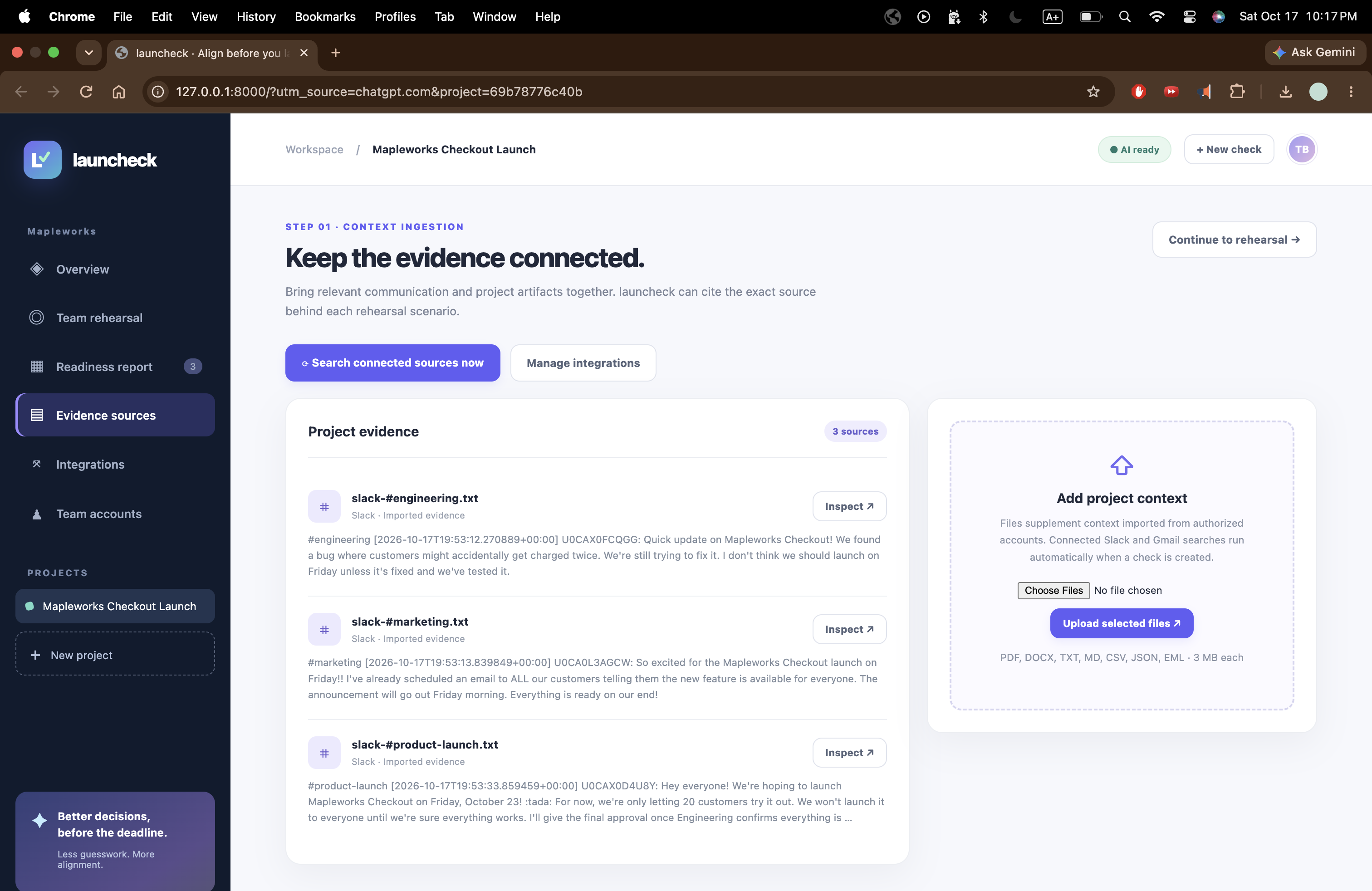
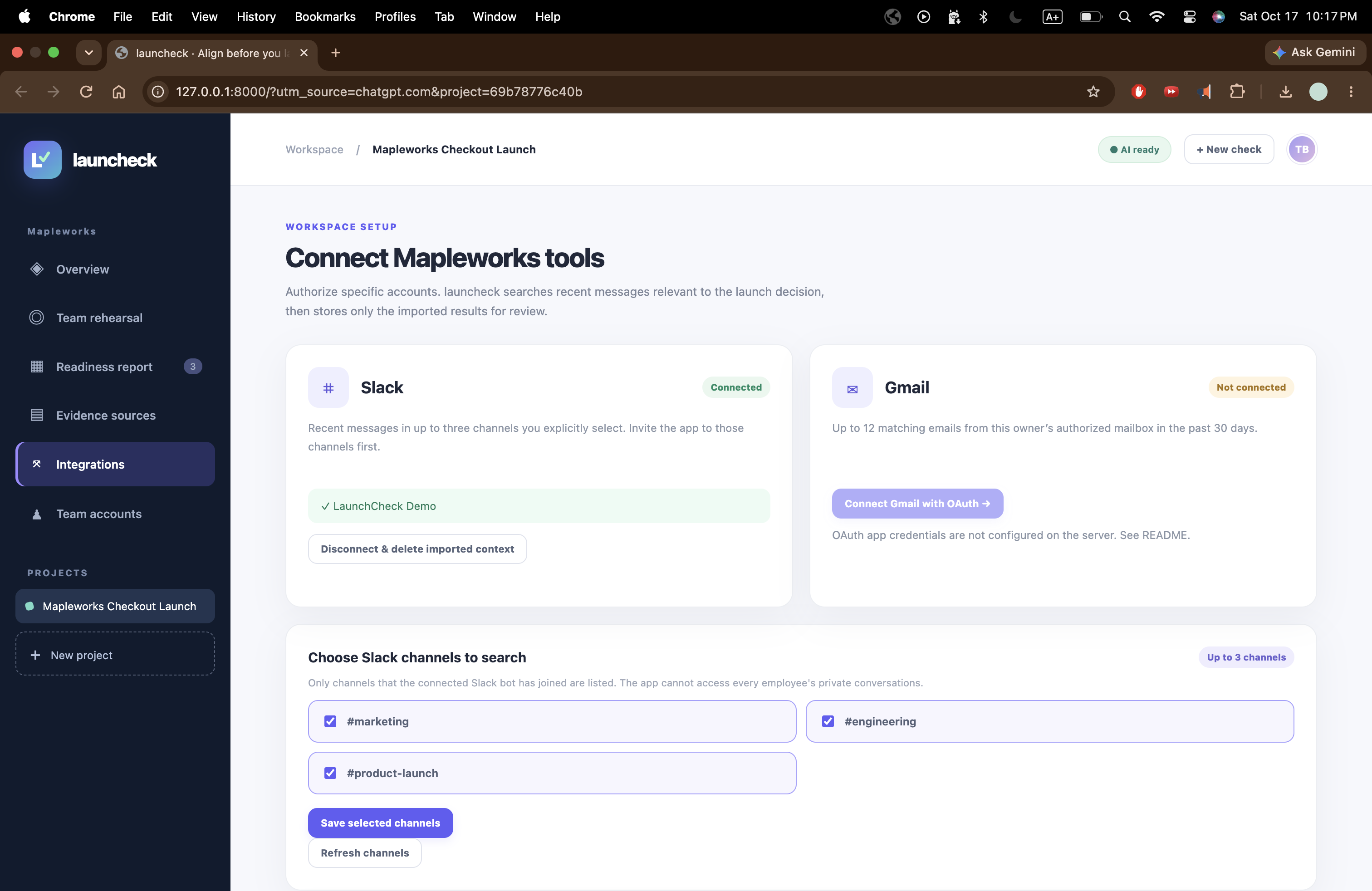
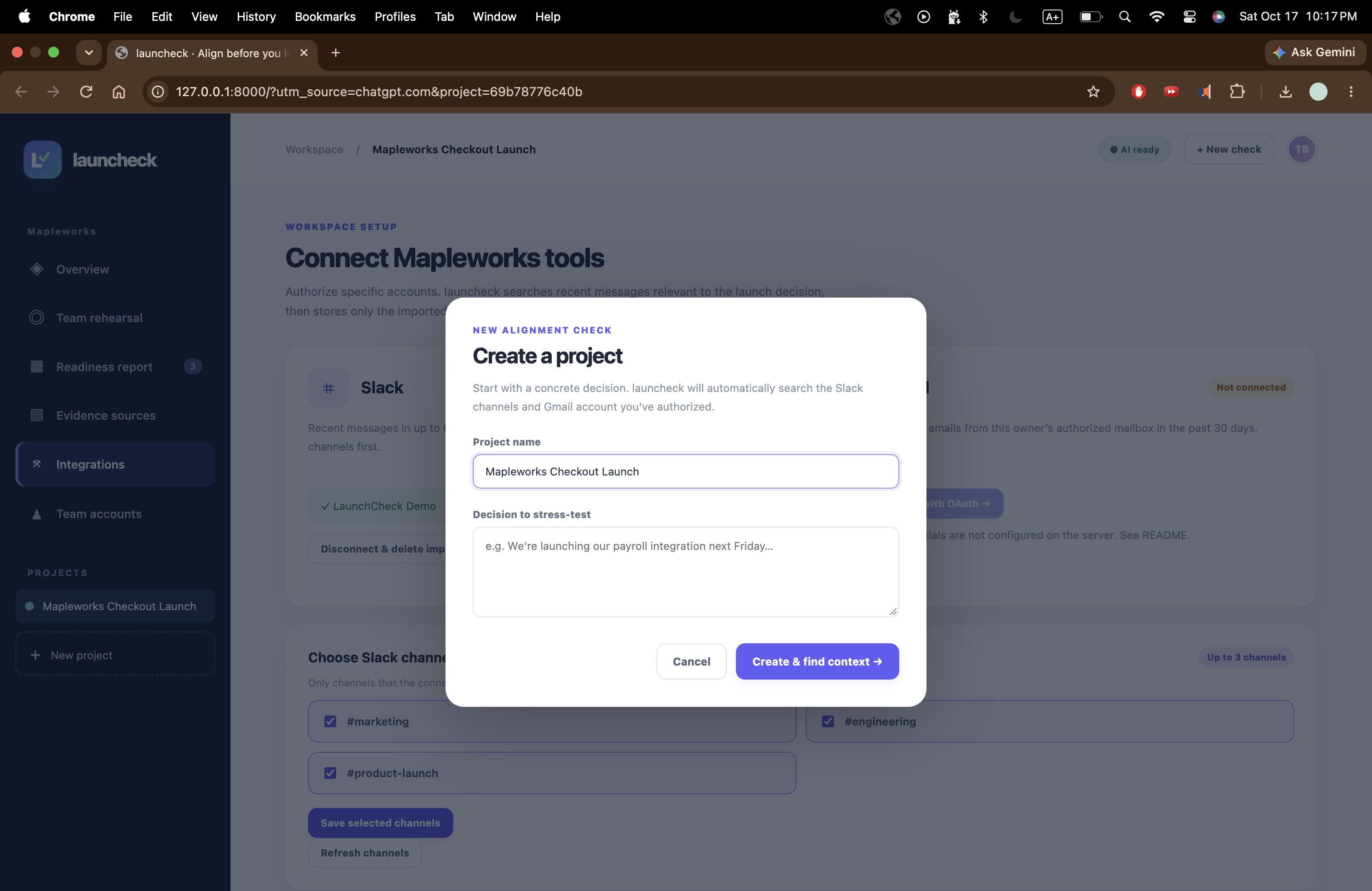
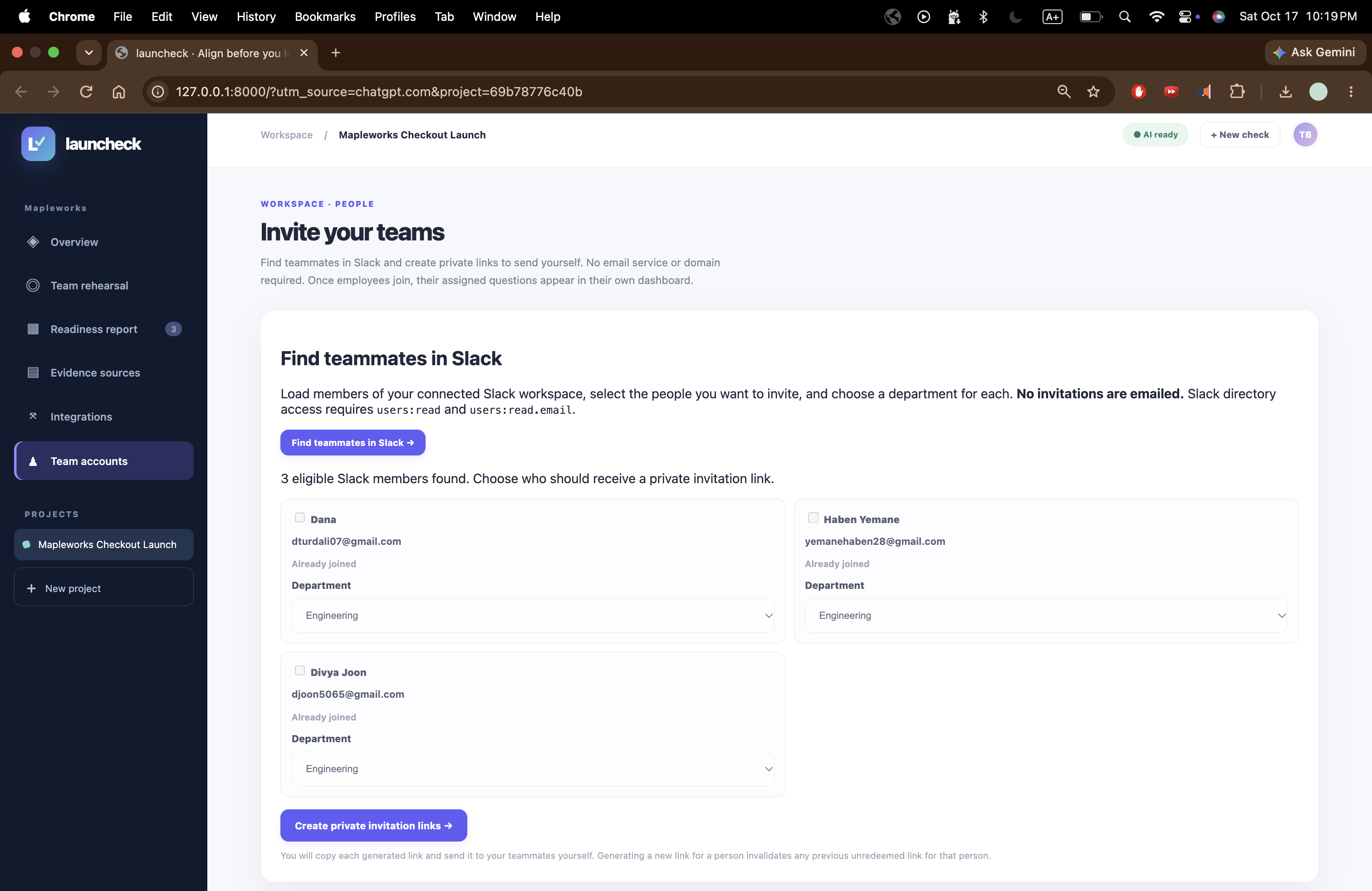
Inspiration Big mistakes often come from departments interpreting the same decision differently, not from making the wrong decision. Before a launch, engineering knows about an unfixed bug, marketing has scheduled the press release, and support is planning a pilot. Each team thinks it’s aligned, but together they fail. We built Launcheck to catch this before it happens, inspired by ADP’s challenge of turning workplace communication into useful insight. What it does Leaders connect authorized Slack and Gmail accounts and start a launch check. GPT-4.1 mini uses that context to create scenarios tailored to each department. Employees answer independently on their own dashboards. Launcheck compares the answers and produces a readiness report showing where teams conflict and where clarification is needed. Traditional AI tools summarize what was said, but Launcheck tests whether teams’ planned actions are compatible. How we built it Python, FastAPI, SQLite, and vanilla JavaScript, with Slack and Gmail connected through OAuth. The LLM writes the scenarios, and plain backend logic compares the structured answers to find conflicts. We added validation and automatic retries to handle inconsistent AI output. Challenges Making alignment measurable, since we wanted to test how people would act, not what they remember. Early AI questions read like quizzes, and inconsistent output formats caused validation failures. OAuth and multi-employee accounts took significant debugging. We also had to prioritize a reliable end-to-end experience over every planned feature. Accomplishments We built real Slack and Gmail integrations, personalized employee dashboards, a customizable question builder, and a readiness report. Our fictional “Mapleworks Checkout” demo shows Engineering, Marketing, and Support preparing for incompatible launches, which leaders can catch in advance. What we learned AI can do more than summarize. It can generate realistic scenarios that reveal misunderstandings people wouldn’t say out loud. Pairing an LLM with deterministic logic makes the results consistent. Finding disagreements is only the first step, and the real goal is a shared plan. What’s next A stronger behavioral simulation engine, conflict detection from Slack, email, and meeting transcripts before rehearsals even start, adaptive follow-up questions, and testing how proposed fixes affect alignment. Longer term, we want to support client onboarding, system migrations, and policy changes.

Log in or sign up for Devpost to join the conversation.