-
-
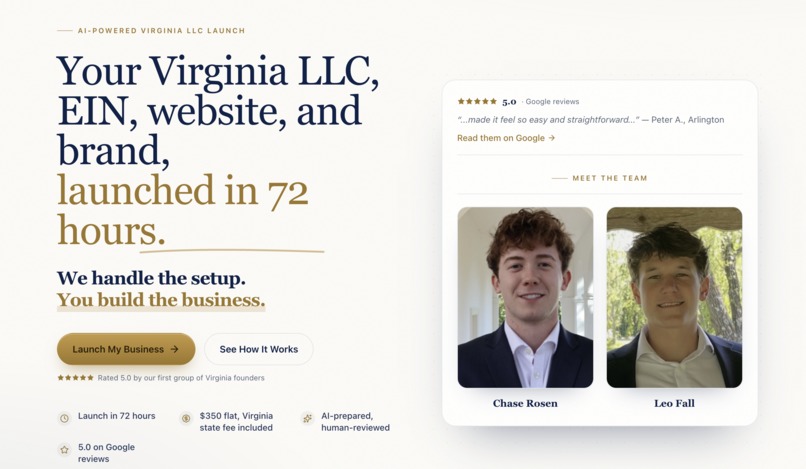
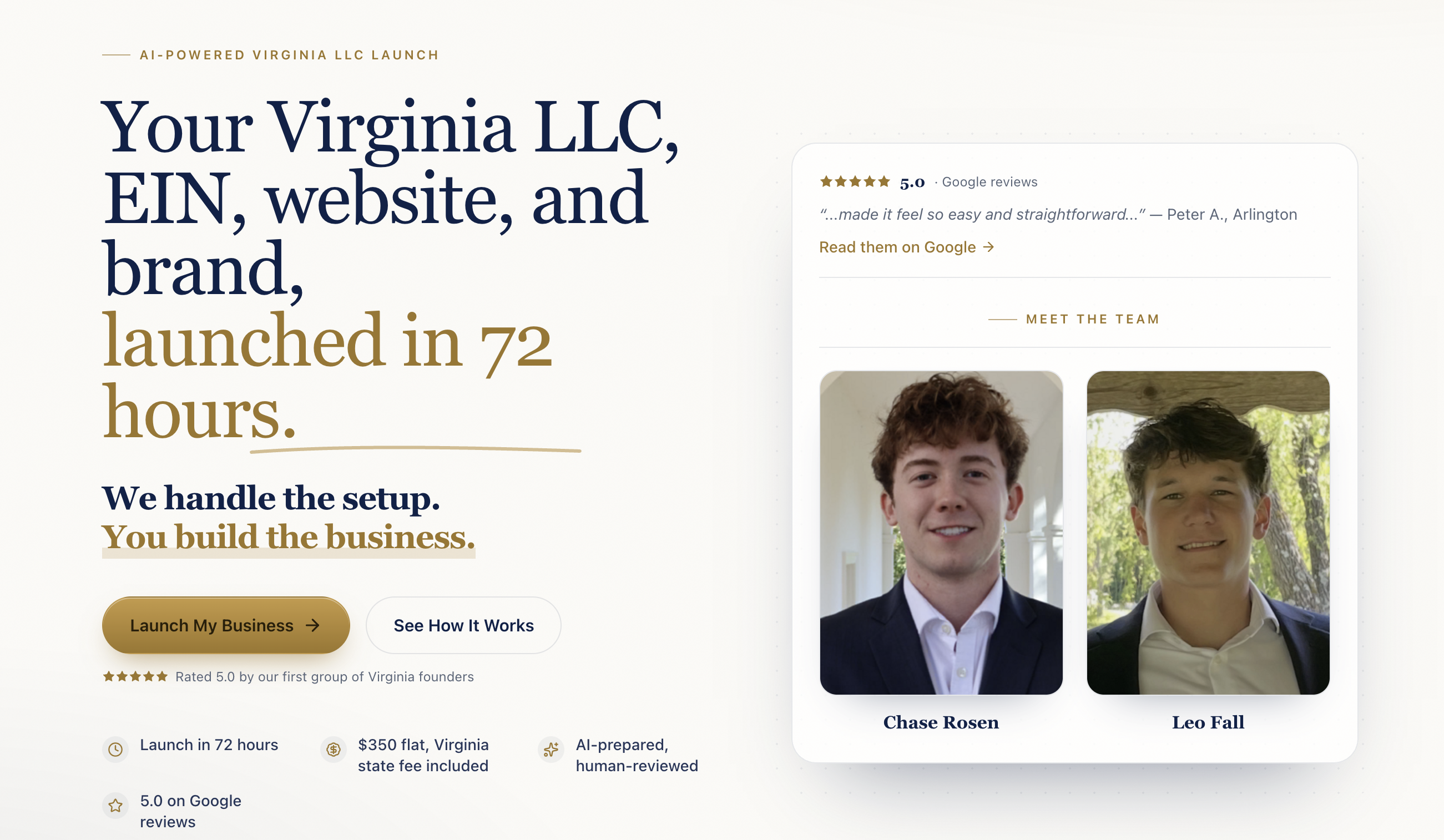
Website- Front Page (https://launchbridge.ai/)
-
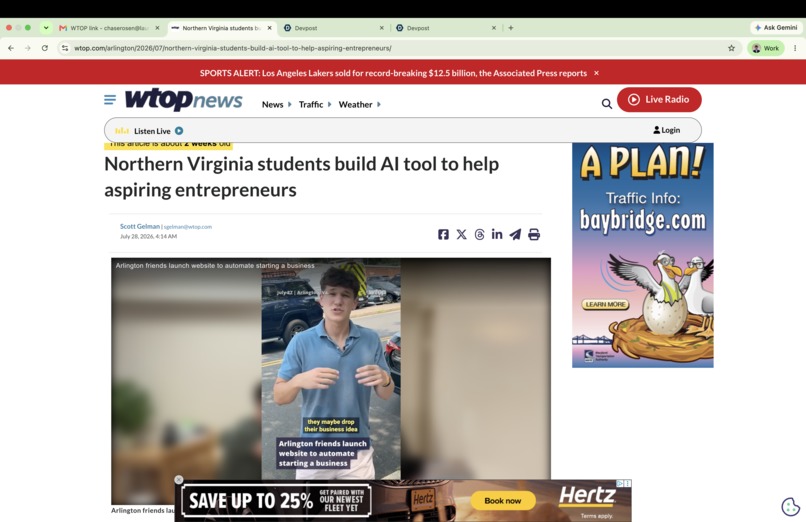
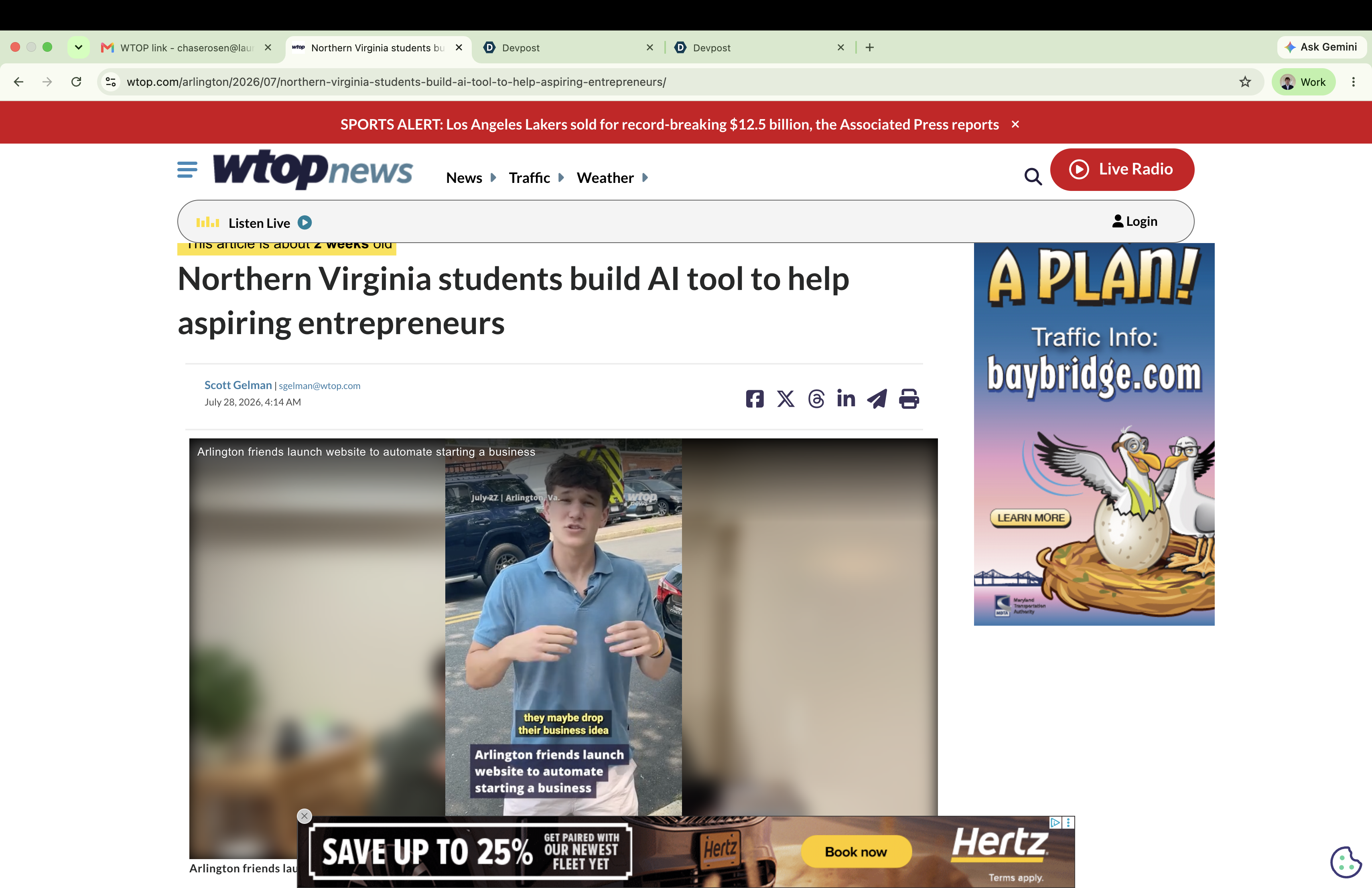
WTOP news interview (https://wtop.com/arlington/2026/07/northern-virginia-students-build-ai-tool-to-help-aspiring-entrepreneurs/)
-
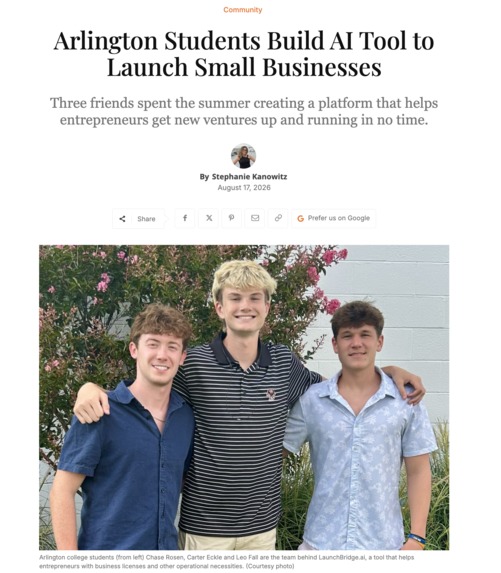
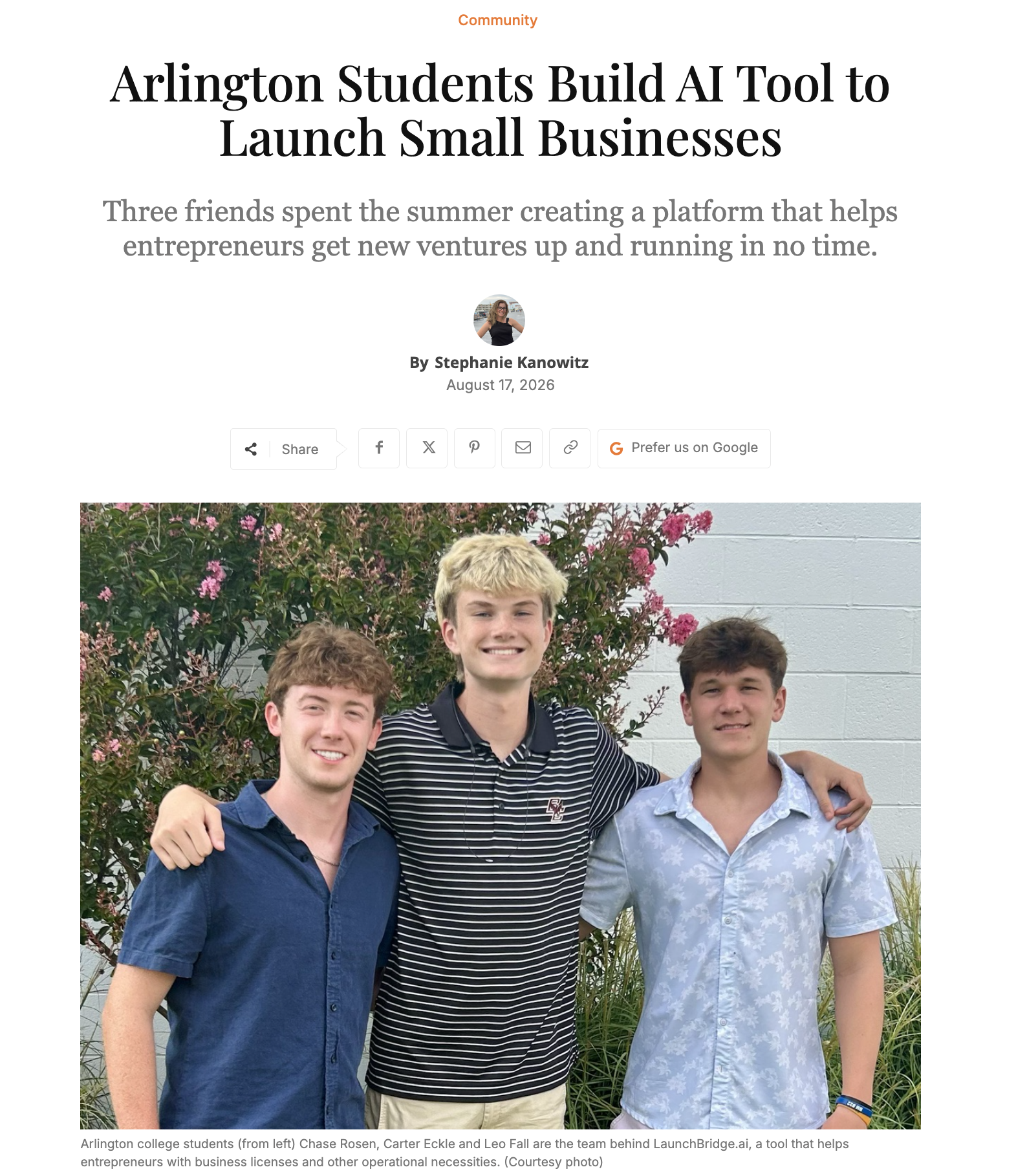
Arlington Magazine Feature (https://tinyurl.com/ye2626r4)
-

Company logo
-
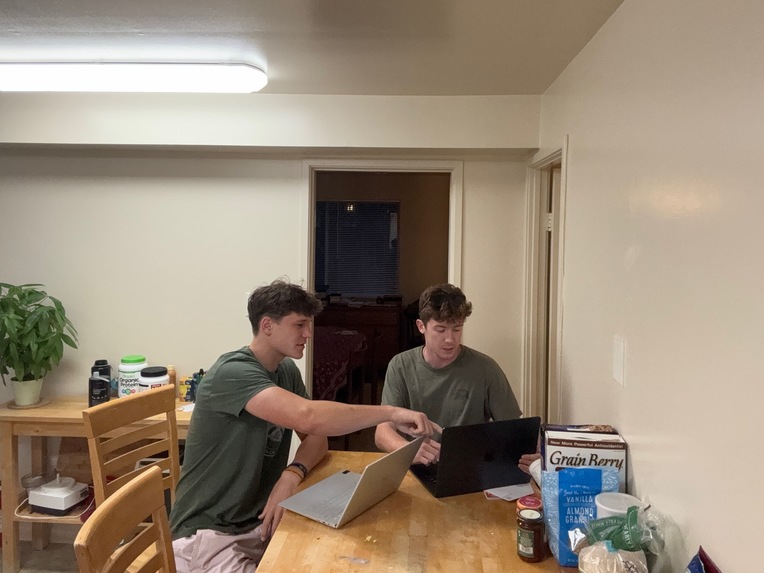
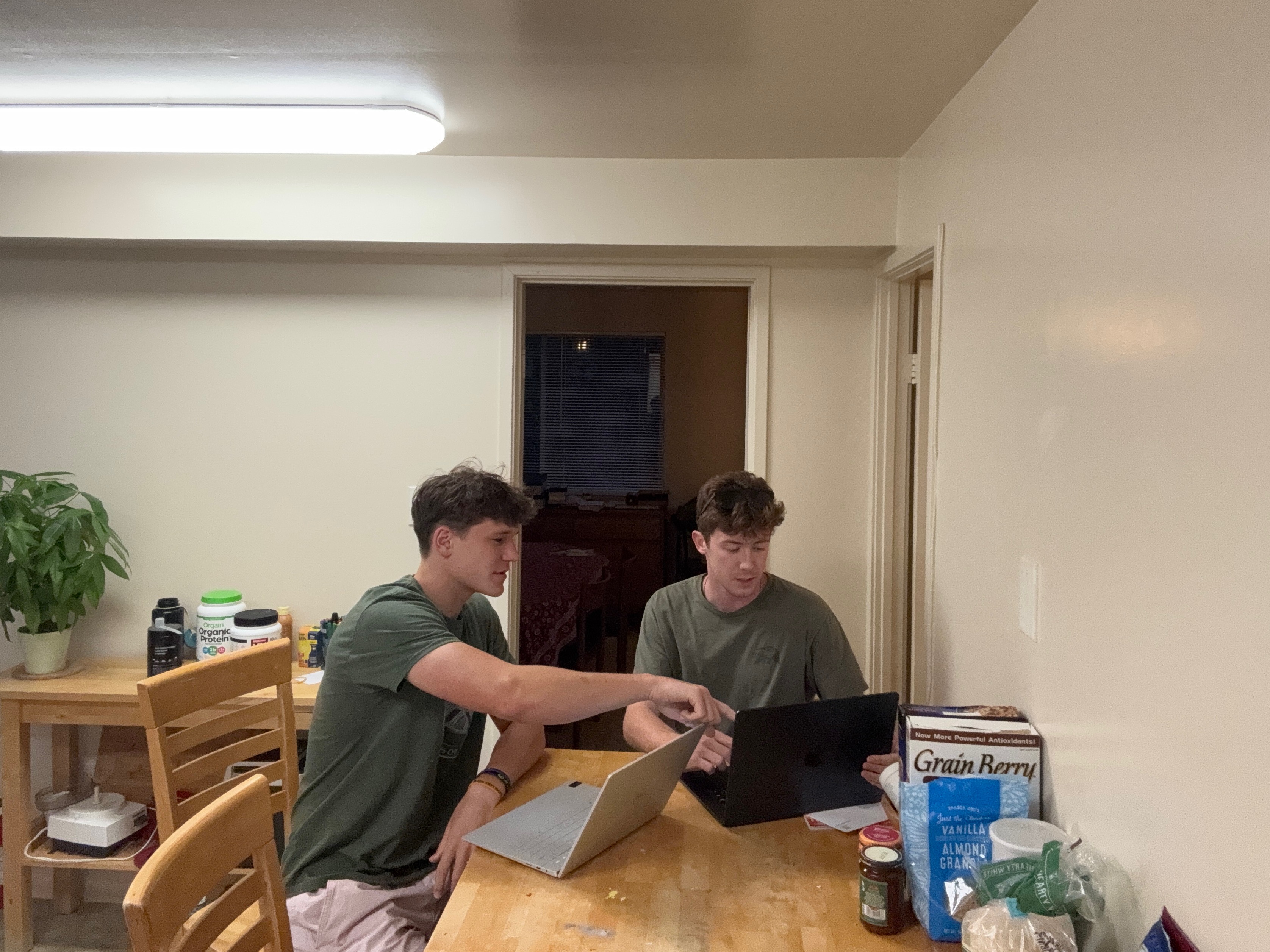
Members (Chase Rosen and Leo Fall) working on product

LaunchBridge began with Bryan Eckle, who founded, grew, and sold his own Virginia-based technology services business over 20 years and now mentors our team. His experience gave us a real, firsthand starting point, but rather than building LaunchBridge around one founder's story alone, we went out and interviewed other small-business owners across Virginia to understand what actually held people back. What we heard, over and over, was that starting a business is a tremendous amount of work: navigating formation paperwork, tax registration, banking, and payment setup all at once, often with no guidance and no time to spare. That consistent frustration, informed by Bryan's own experience building and exiting a company and sharpened by everything we learned from other founders, is what LaunchBridge was built to solve. What LaunchBridge does is compress that entire formation process into something fast, affordable, and AI-driven. For a single flat fee of $350, which includes the $100 Virginia state filing fee, with no subscription and no hidden costs, a founder walks away within 72 hours with a formed LLC, an EIN, a professional website, and a Stripe account ready to accept payments. We also offer an optional registered agent service for $110 a year for founders who want ongoing compliance support. Everything is powered by an AI-native Evidence Layer that Leo built to handle the underlying complexity of the formation workflow, letting us deliver in three days what traditionally takes weeks and often requires an attorney. The build started with those conversations with Virginia business owners, not with code. What we kept hearing was that the process wasn't hard because any one step was difficult, but because every step was scattered across different systems with no one guiding you through in order, and that's what shaped how LaunchBridge is actually structured. Instead of a form to fill out, we built a single flow: a founder describes their business in plain language, and from there the platform handles classification, filing, EIN registration, a starter website, and payment setup as one continuous process rather than a checklist the founder has to manage themselves. Under the hood, that means Python and FastAPI deployed on Google Cloud Run across separate staging and production environments, with a staging-first deploy process that requires explicit approval before anything reaches a real customer. Firestore holds the data, and Vertex AI with Gemini 2.5 Flash does the reasoning-heavy work, starting with reading that plain-language business description and classifying it into the correct legal and tax category, replacing what would otherwise be a manual dropdown with something closer to actual understanding of what the founder is describing.
The starting road wasn't easy. Finding the right customers was slow going, because LaunchBridge isn't an impulse purchase; it requires reaching someone at the precise moment they've decided to start a business, which meant our outreach had to be deliberate and personal rather than broad. We were also racing a brutal timeline, going from a raw idea in mid-June to a fully working, revenue-generating product ready for competition in under two months. Leo faced his own set of technical challenges as the developer of the app. The hardest piece wasn't the AI, it was getting a program to reliably act as a human filling out government paperwork. The Virginia SCC and IRS don't offer APIs, so there was no clean way to plug into either system. Instead, I had to actually map the SCC website by hand, using Playwright alongside Claude to walk through the real filing flow step by step and running tests against the live site to understand its structure, its form behavior, and every place it could break, before I could write automation reliable enough to file real customers' paperwork on it. Government sites weren't built to be automated, so brittle form structures and unannounced changes could break the flow with no warning, and every fix had to be verified against the live system rather than a test environment. Security added its own weight: handling sensitive data like Social Security numbers meant building a KMS-encrypted vault and treating every step of that flow as something that had to be right the first time, not iterated on in the open. And because we were claiming an AI-native business, not just an AI-assisted one, we had to go beyond making the product work and actually instrument it, building the Evidence Layer to measure, honestly, how much of the pipeline runs through AI without a human stepping in, rather than just asserting it.
Fortunately, we landed our first paying customers and, as of the hackathon, have three more promising leads in the pipeline. We stood up the entire company from scratch, including a real registered agent service most early-stage formation tools skip entirely. We earned unsolicited attention along the way too: a feature on WTOP News about our founding story, a feature with Arlington Magazine, and an op-ed about LaunchBridge written by the American Edge Project, all before we'd even finished building. We also caught the interest of the Virginia Small Business Development Center, which works daily with exactly the kind of early-stage entrepreneurs LaunchBridge is built for. Our biggest takeaway while building LaunchBridge is that starting a business is genuinely hard, even when you're the ones building the tools meant to make the process easier for others. We also learned how much starting a company depends on finding and connecting with the right people and institutions, whether that's a SCORE mentor, a chamber of commerce contact, or an investor willing to meet with two college students. None of the operational groundwork, legal documents, or outreach infrastructure would have come together without learning that lesson early. Looking ahead, our first priority is to formalize a referral partnership with the Virginia SBDC so we can reach entrepreneurs directly when they decide to form a business, rather than trying to find them after the fact. We also want to do more to educate founders about the real advantages of forming an LLC early, rather than operating unprotected for months or years. Leo and I plan to keep building LaunchBridge throughout college rather than treating this as a summer project, with a goal of doubling our income year over year as we grow. Longer-term, we're aiming to expand geographically into roughly ten additional states, including Delaware, Florida, California, North Carolina, and Texas, adjusting pricing and workflows to match each state's specific filing fees and legal requirements along the way.
Built With
- css3
- fastapi
- firebase-hosting
- google-cloud
- google-cloud-build
- google-cloud-firestore
- google-cloud-kms
- google-cloud-run
- google-cloud-secret-manager
- google-gemini-api
- google-genai-sdk
- html5
- jinja
- playwright
- python
- reportlab
- stripe-connect
- svglib


Log in or sign up for Devpost to join the conversation.