-
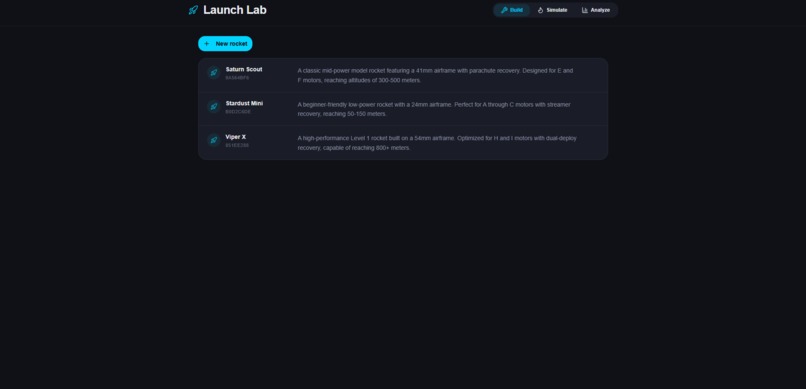
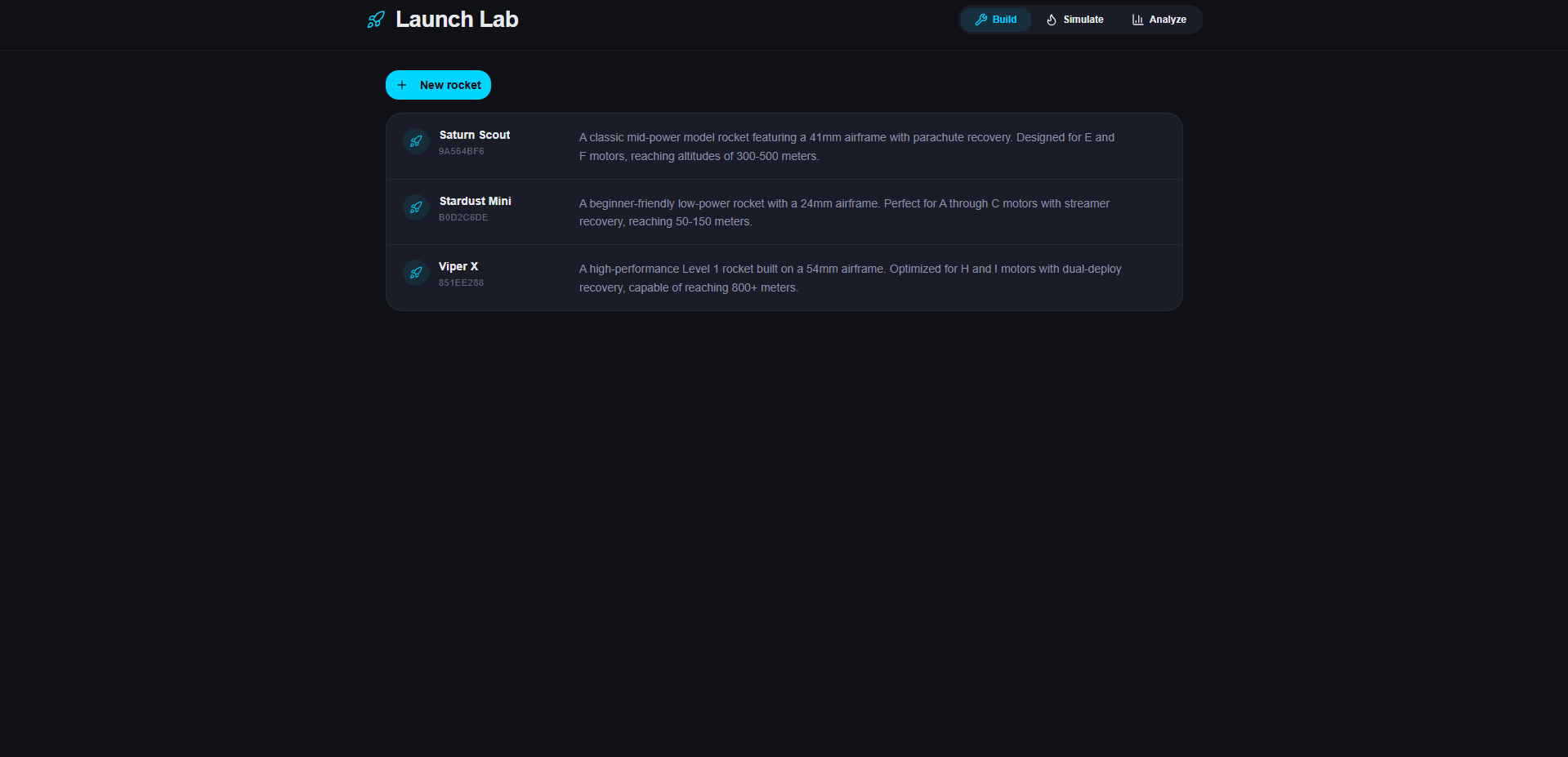
home page
-
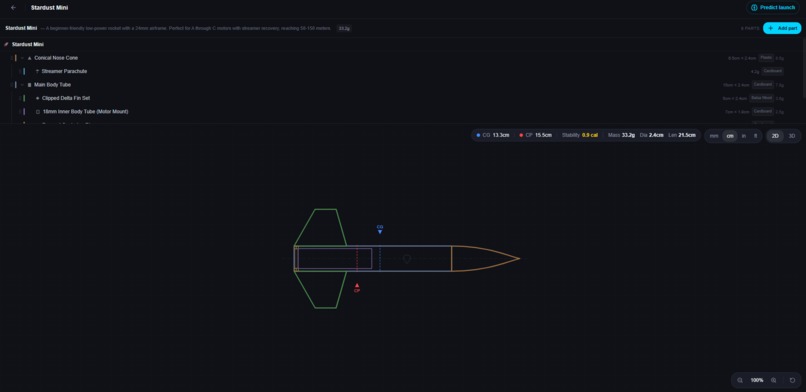
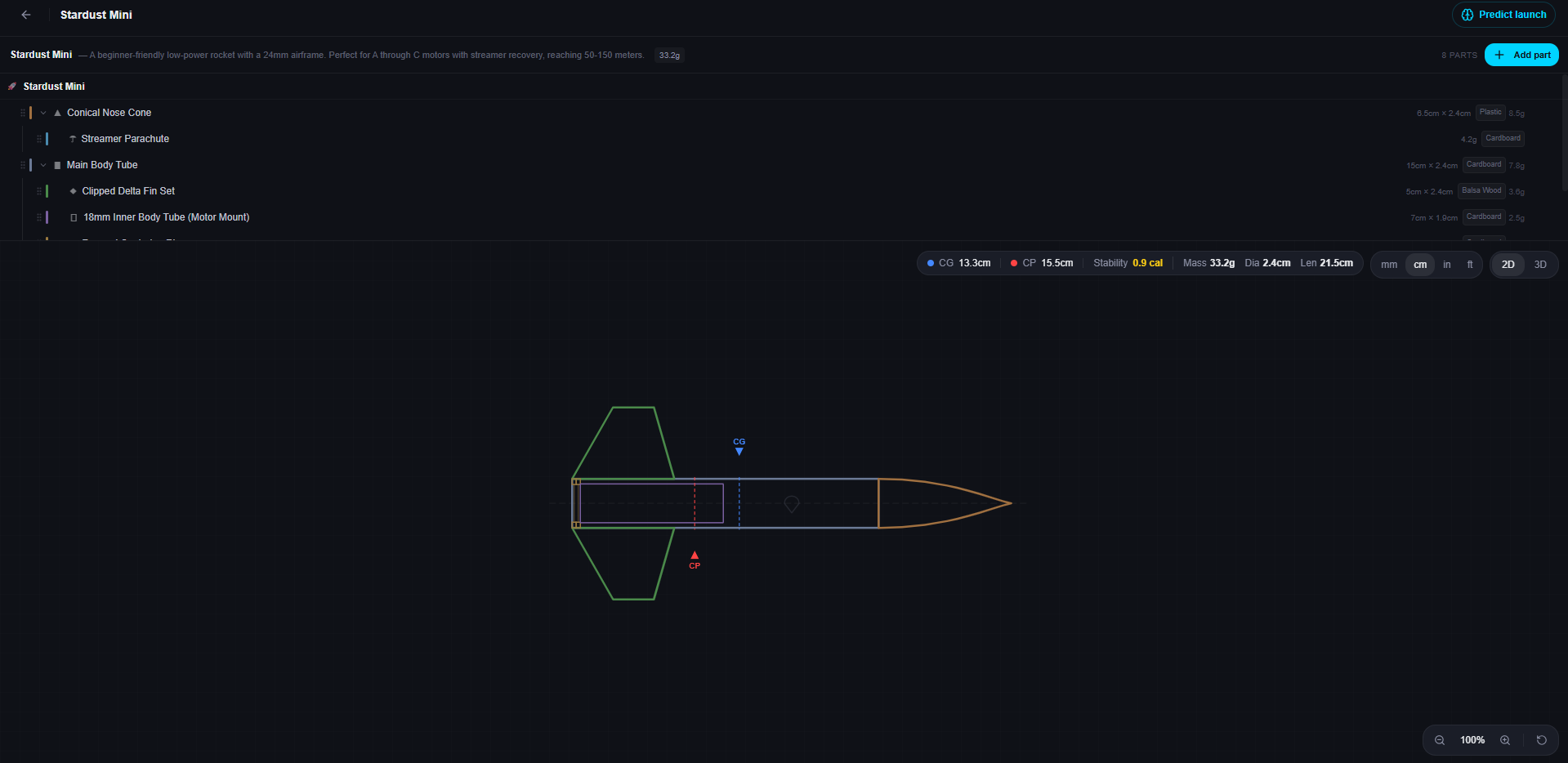
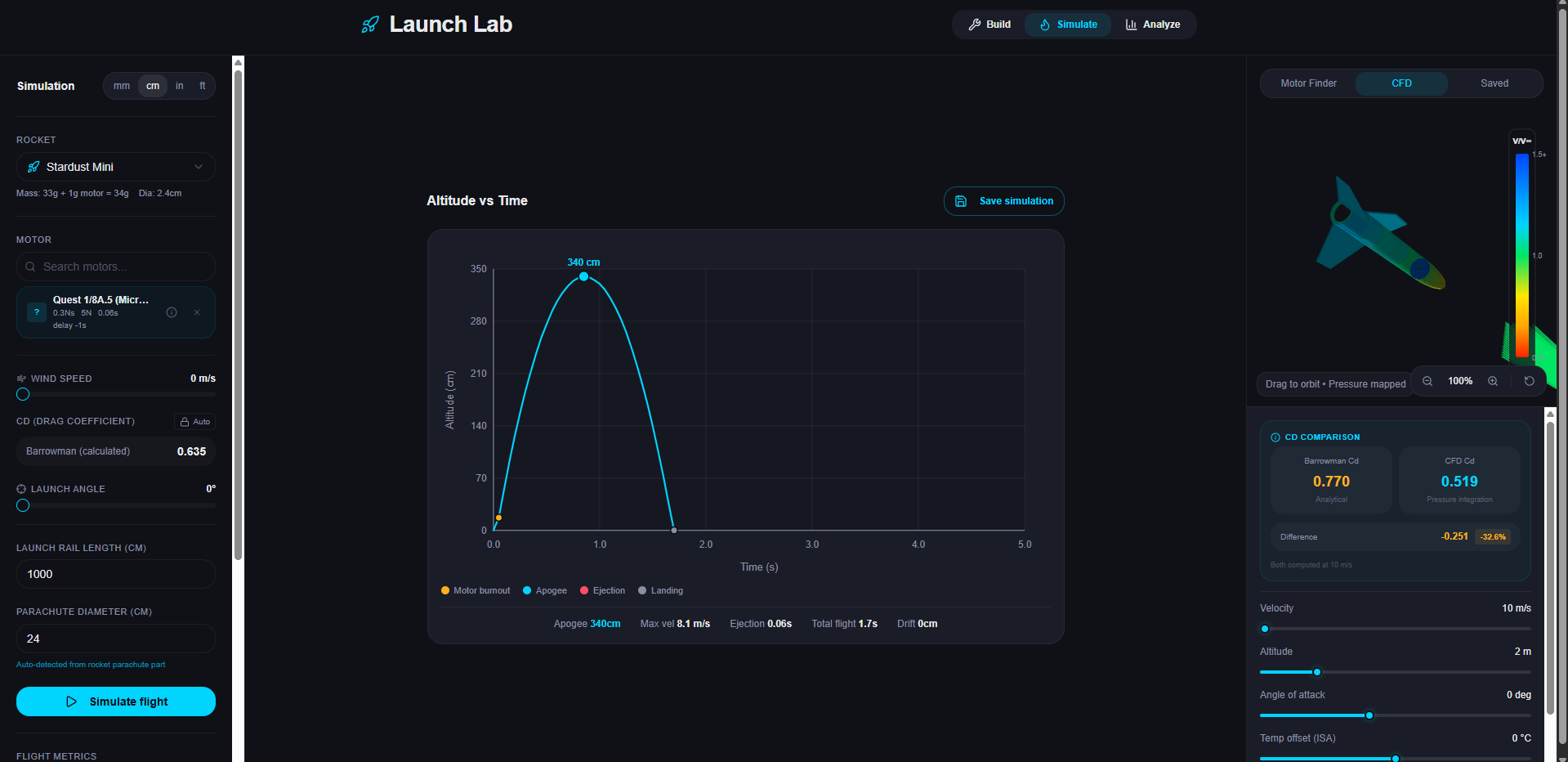
rocket build software
-
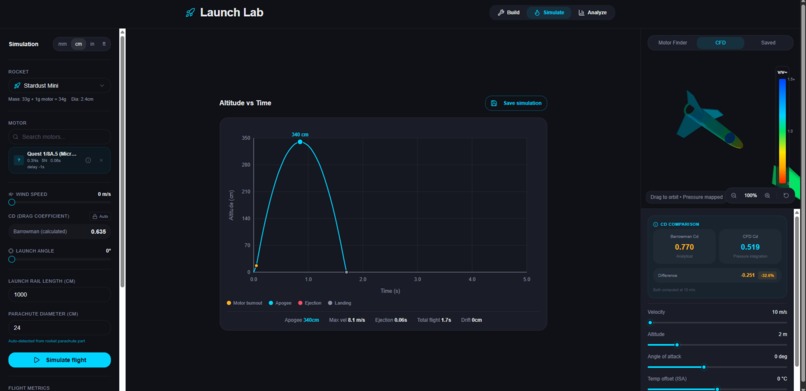
simulation software
-
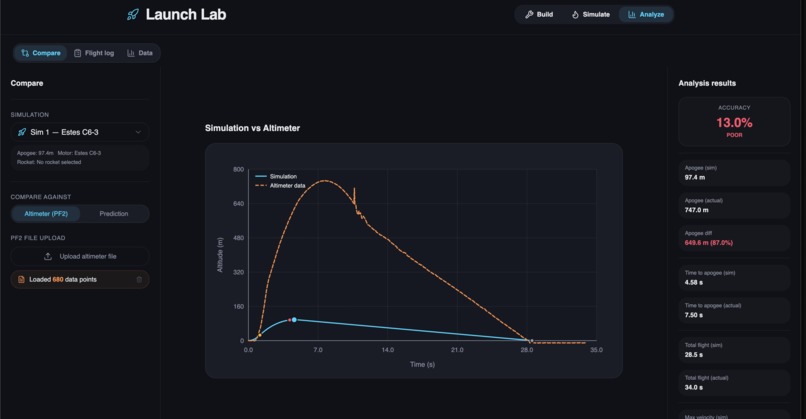
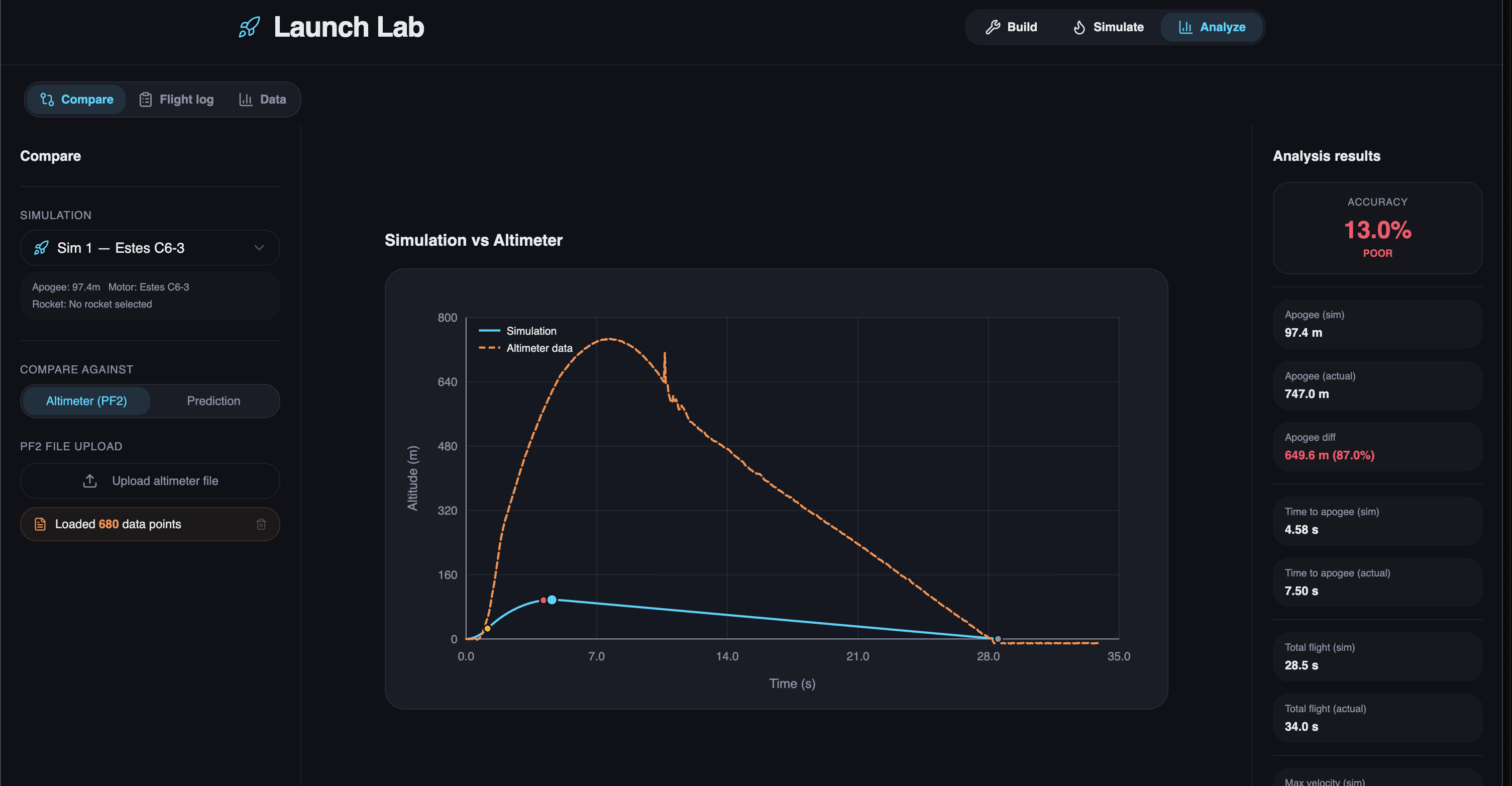
comparison between real data and simulated
-
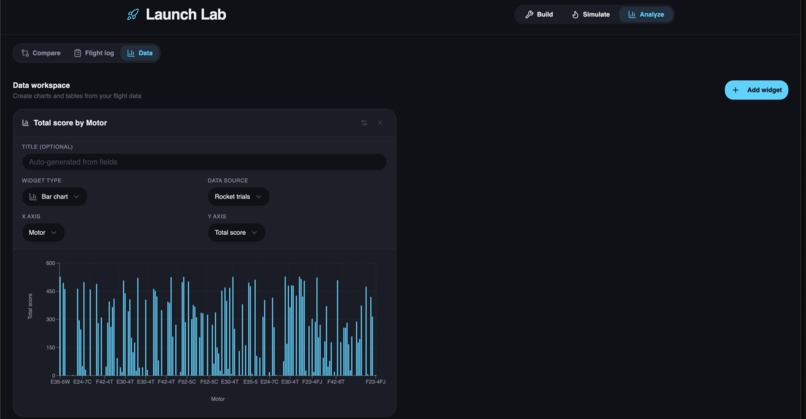
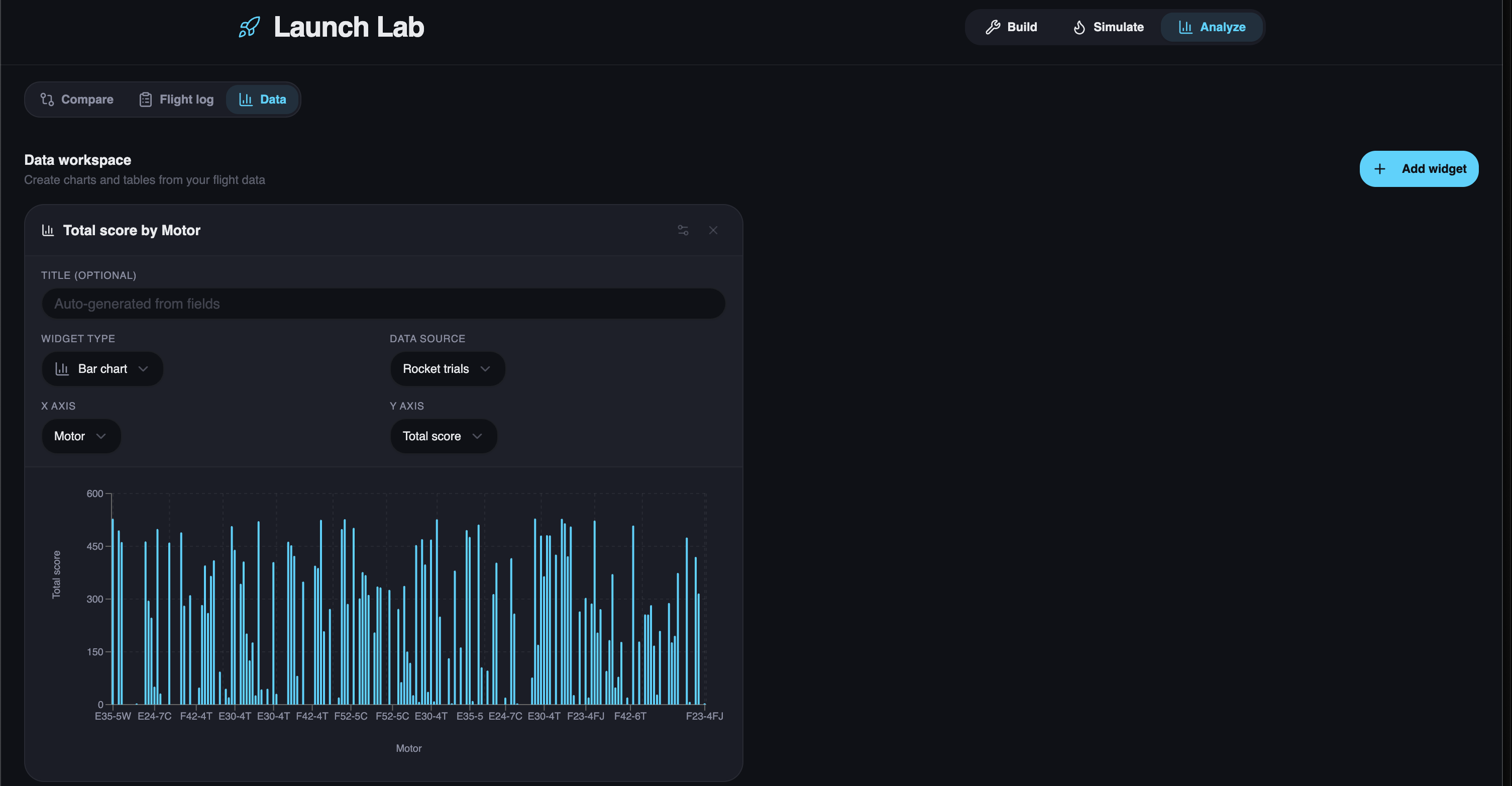
data chart/table generator
-
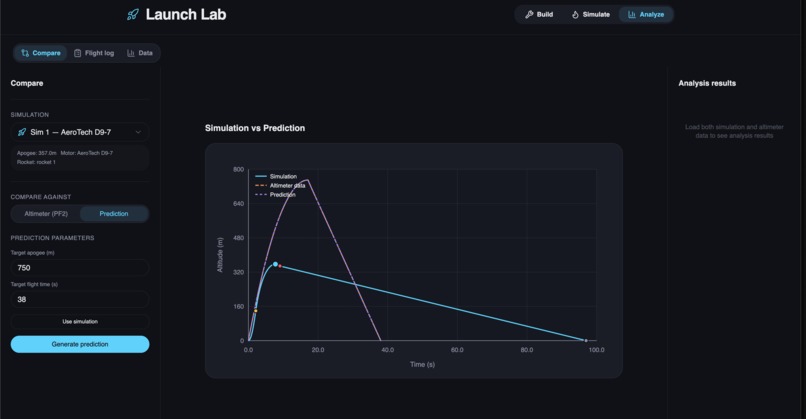
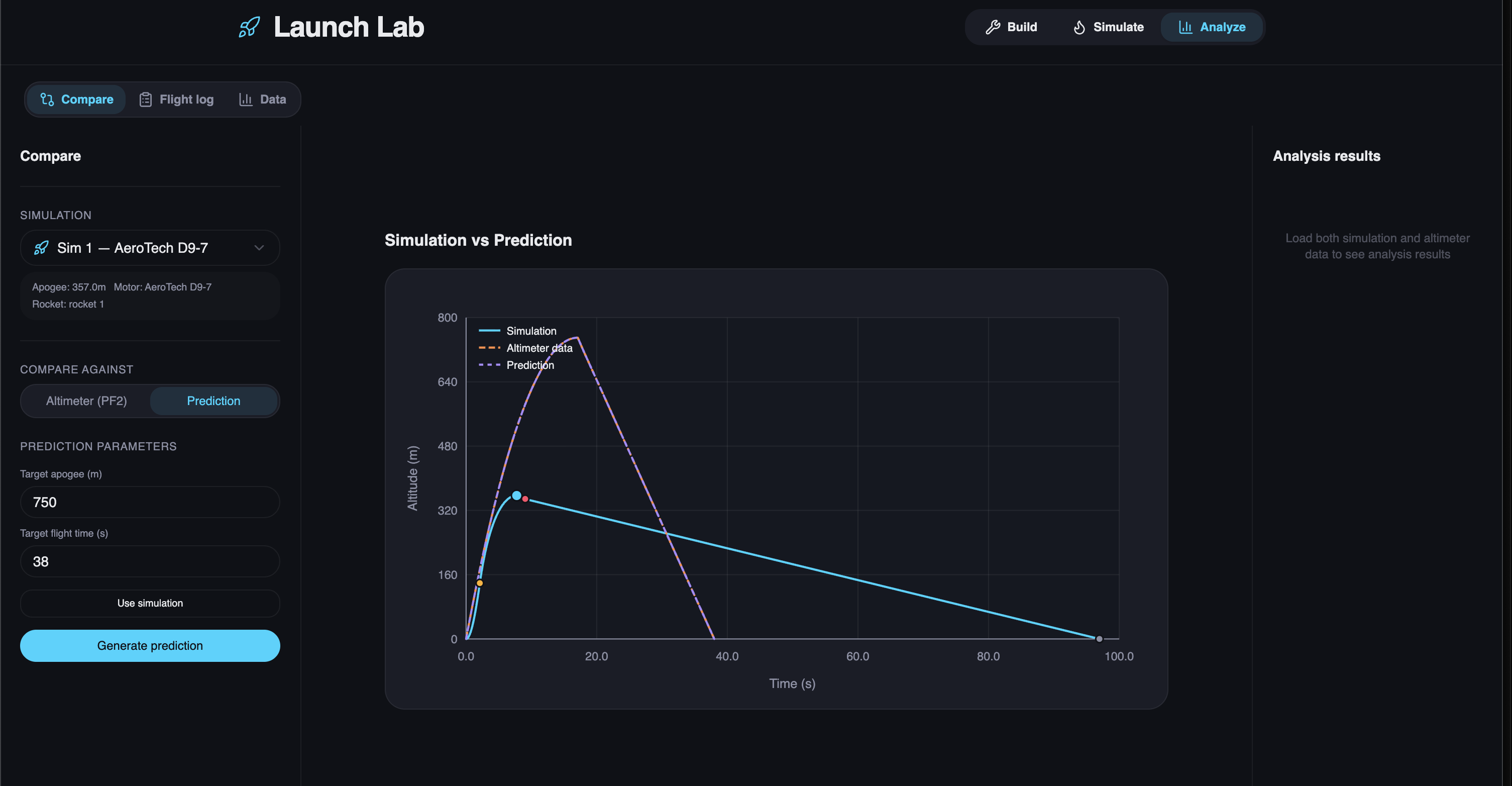
comparison between predicted data and simulated
Inspiration
ARC--The American Rocketry Competition, a model rocketry competition made of aspiring rocketeers all over the country. However, there is a big issue: the software used is only helpful to a certain extent, after which students have to use their own, incomplete resources to come up with solutions for model rocket science. That's why we decided to build Launch Lab.
What it does
Launch Lab is a single interface that has everything a model rocketeer could possibly have; we have the interface to build the rocket and simulate its path based on the parameters, just like OpenRocket, the current most popular interface, but we also have many other tools that help users:
- We have a place to simulate the coefficient of drag with a CFD (Computational Fluid Dynamics), along with the previous method of calculating drag, to have a more accurate model (as well as a place to override the whole rocket's coefficient of drag, unlike OpenRocket, where users have to override it for each component).
- We have a motor recommendation tool, which takes the rocket's target height and flight time as parameters and recommends what motors are the best for reaching those targets (which is something OpenRocket does not do--in OpenRocket, users have to use the trial-and-error process for an extremely large database of motors).
- We have a tab where users can input their flight data and create any type of graph they want, which is extremely helpful for them to realize which parameters they need to tweak to reach their target (this is completely new; OpenRocket does not have any interface like this).
- The most important addition: a predicted model based on real rocket launching. We made a data base of real rocket launch data so the site can compare the difference between simulated data and what would be actual data based on the inputted parameters. We also added a feature where the simulated data can compare to the user's real data (from the altimeter). ## How we built it We used the Palantir AIP platform, especially Pilot, FDE, and Foundry to develop the frontend (using prompt engineering) and the backend (the model for the predicted data). ## Challenges we ran into We had an especially hard time connecting the backend to the frontend; the machine learning model we were implementing required real flight data. However, since the topic we chose was relatively niche with no major databases online, we specifically chose to use a neural network that required less data and that relied more on physics equations to come up with the predictions. The data we ended up using was modeled based off of the small amount of flight data that we gathered from our past ARC season. With the frontend, we had difficulty modeling the UI to be user friendly, since there were many things we wanted to implement. We also had some difficulty modeling the 3D aspects of the interface (like the CFD or the 3D visualization of the rocket). ## Accomplishments that we're proud of We are especially proud of how much we were able to implement and expand around the previous simulation software, such as adding the CFD (allowing us the visualize the pressure and the drag coefficient around the rocket), the prediction software (which makes data more accurate compared to just simulations), and the data creation interface (which makes it much, much easier to see what we want to change about our rocket). ## What we learned In the technical aspect, we learned how to implement a database for data that we did not have full access to. Through this process, we also learned how to use physics informed neural networks. We also got much better at prompt engineering, because we realized how to be as specific as possible to get the outcome we desired. In the non-technical aspect, we learned just how useful AIPs (and just AI in general) are for making interfaces that otherwise would not be possible. We brushed the idea off quickly in the beginning, as we were daunted by the idea of making an entire rocket science simulation from scratch. However, AI has been an extremely useful tool to get our ideas out in code, which will undoubtedly be invaluable in the future. ## What's next for Launch Lab We have many plans for the future of Launch Lab; this project is something that is extremely useful to the club we are part of, so we would like to transform it into a website that is used across the US by ARC teams.
- Interface: there were some ideas that we were unable to implement due to a lack of time (like a chatbot that gives advice about what to change about the rocket to reach the target requirements), which we will definitely implement soon.
- Login: we would like to make a sign-in page that allows people to save projects and their data, making it extremely easy to access; OpenRocket only runs as an app, so having a website with these tools would be extremely helpful to all students participating in ARC.
- Data: for now, our neural network is based off of physics equations and very little actual data. In order to expand our database, we thought of the idea of reaching out to ARC teams across the country and ask them to submit their launch data into a database that will improve the quality of the flight predictor for all users. This will not only help students with their rocket launching endeavors, but it will connect many people around the country who share the same passion.
Built With
- css
- palantir
- react
- typescript

Log in or sign up for Devpost to join the conversation.