Inspiration
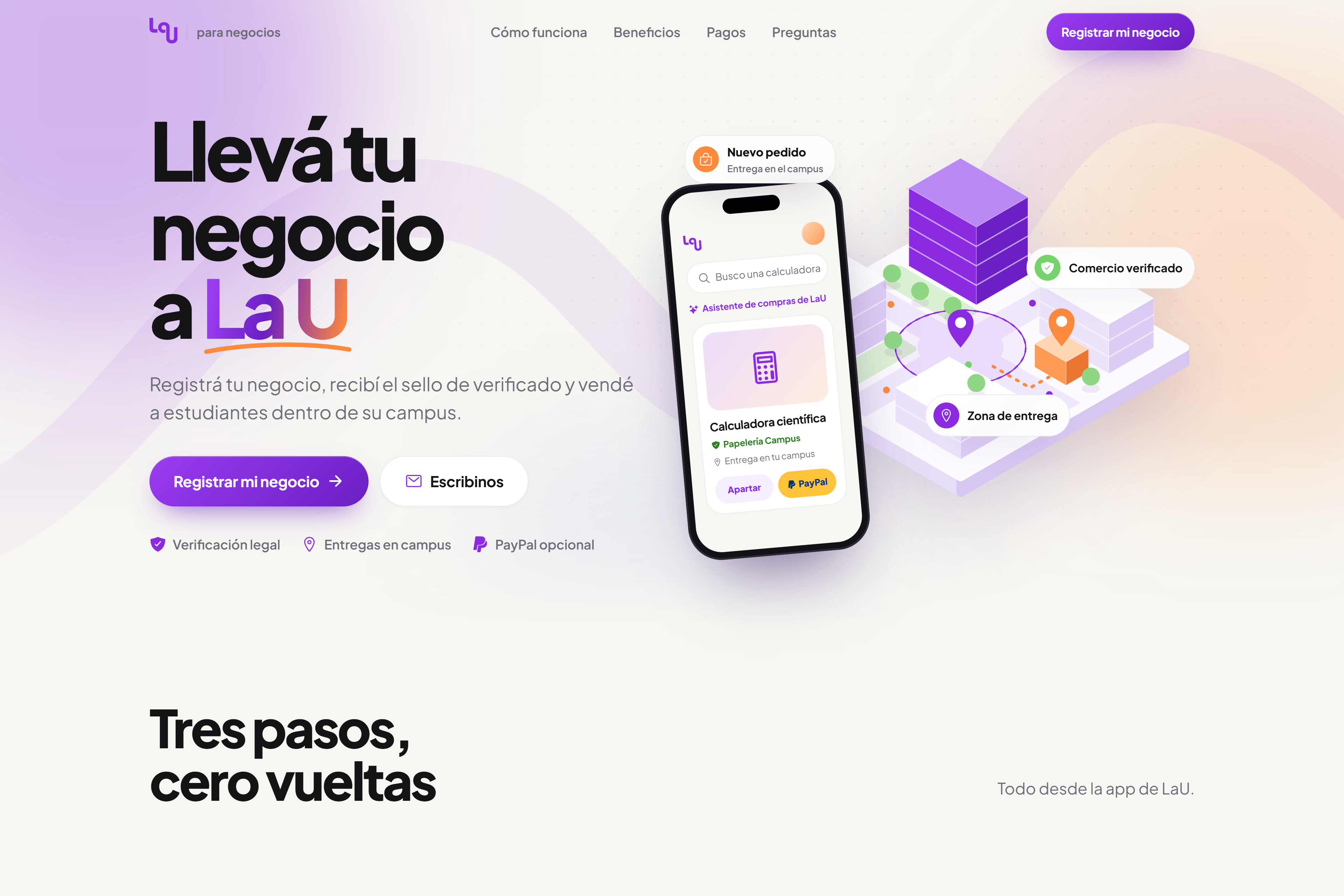
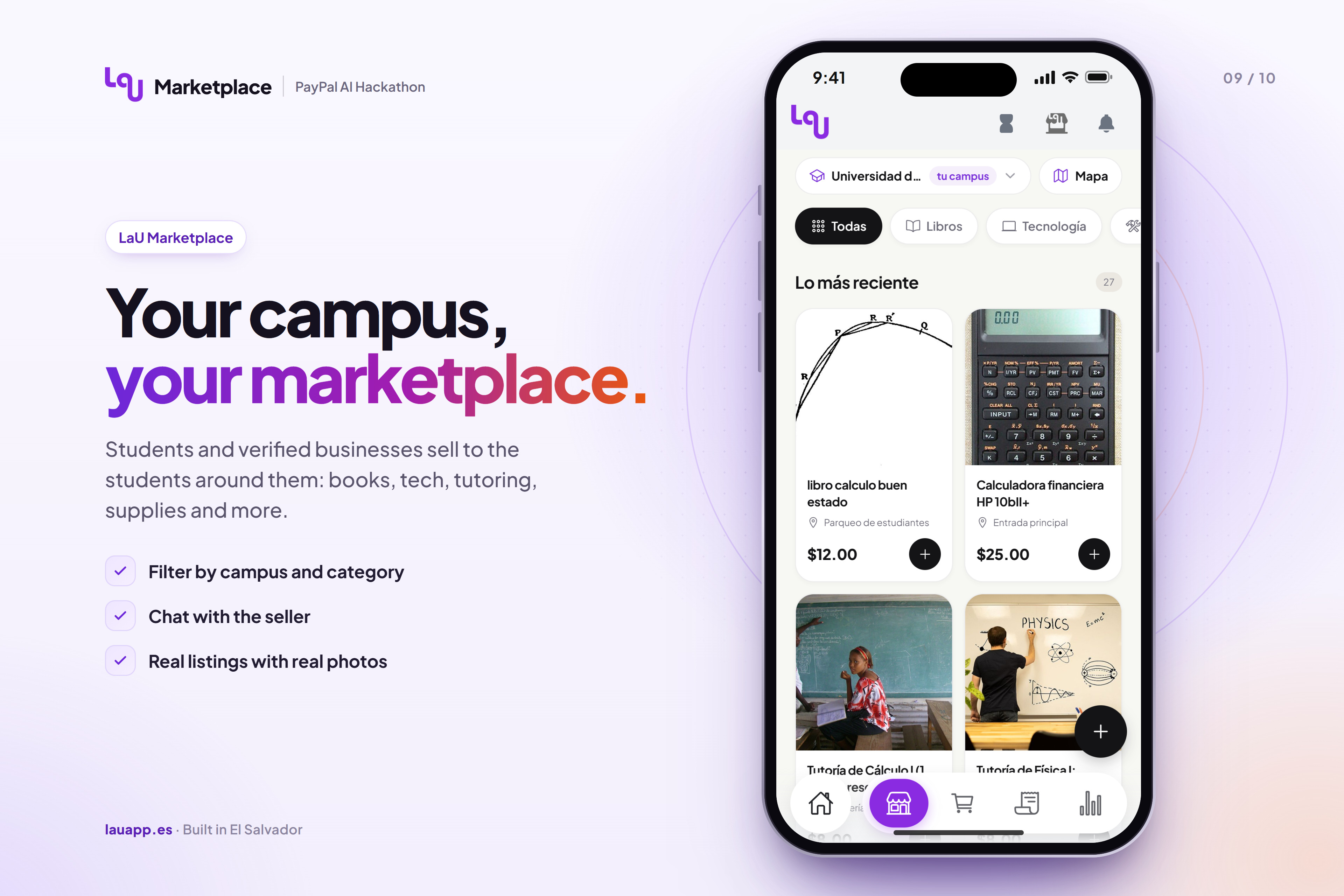
When I started university in El Salvador, I sold maní dulce (sweet candied peanuts) between classes to get by. I learned firsthand how campus commerce really works: sales through WhatsApp groups and word of mouth, cash only, meeting strangers in random places, and no way for buyers to know who they can trust. Many students run small ventures like mine, and local businesses want to reach students too, but there is no safe place for them to meet. LaU is the social network I built for university students in El Salvador (feed, chat, study tools). With LaU Marketplace I wanted to put trust and online payments right where students already spend their day: verified sellers, delivery only inside the campus, and PayPal so a business gets paid directly.
What it does
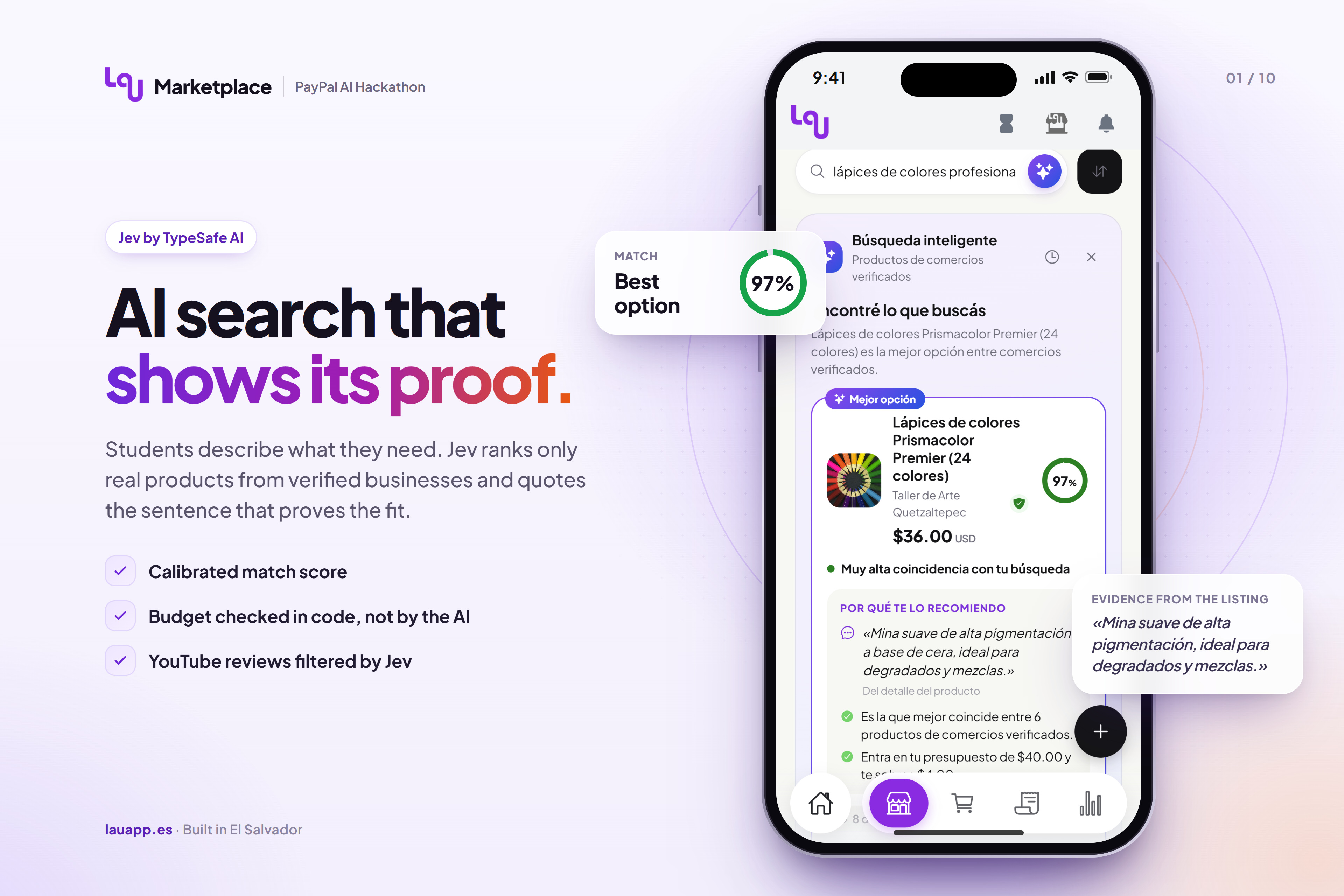
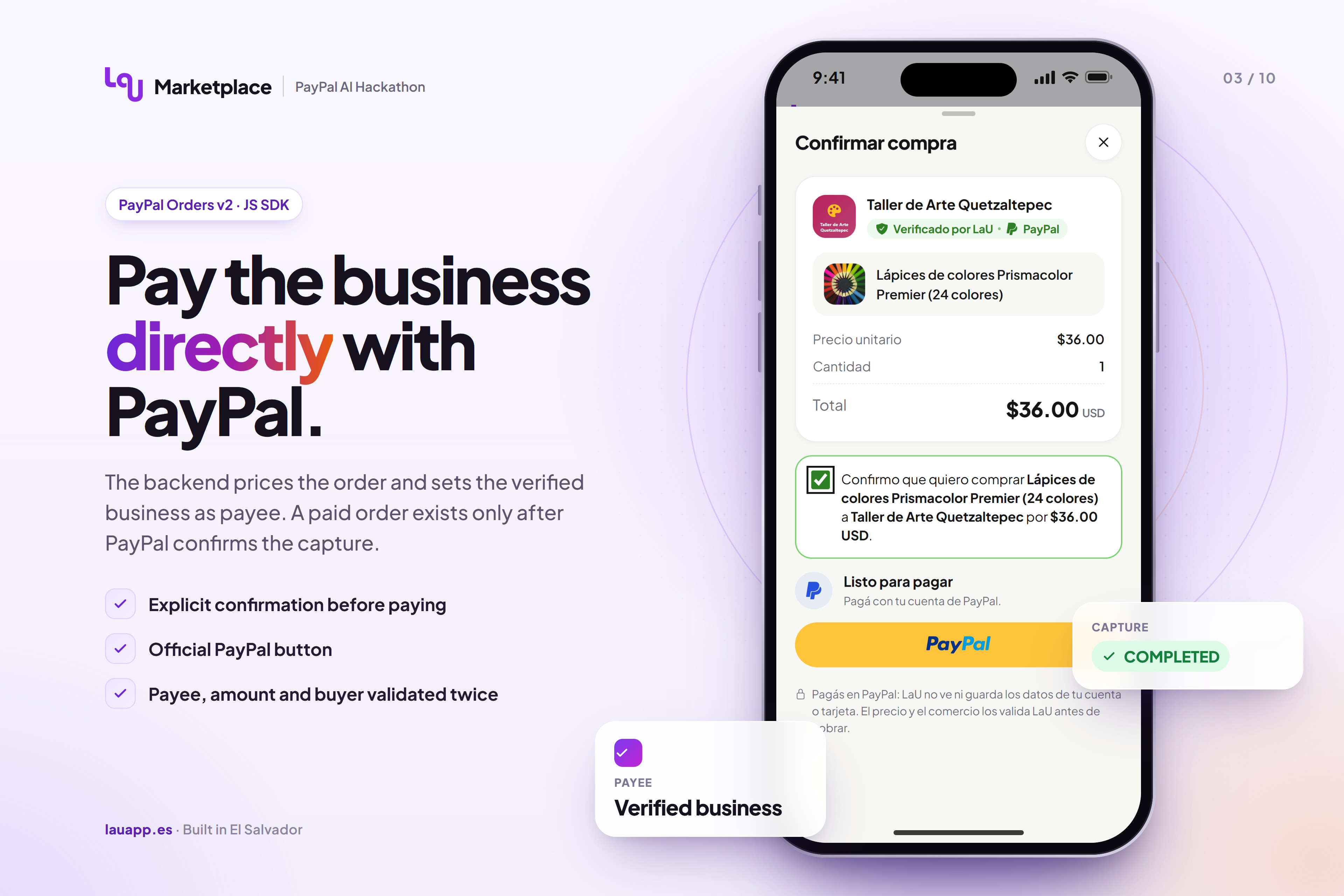
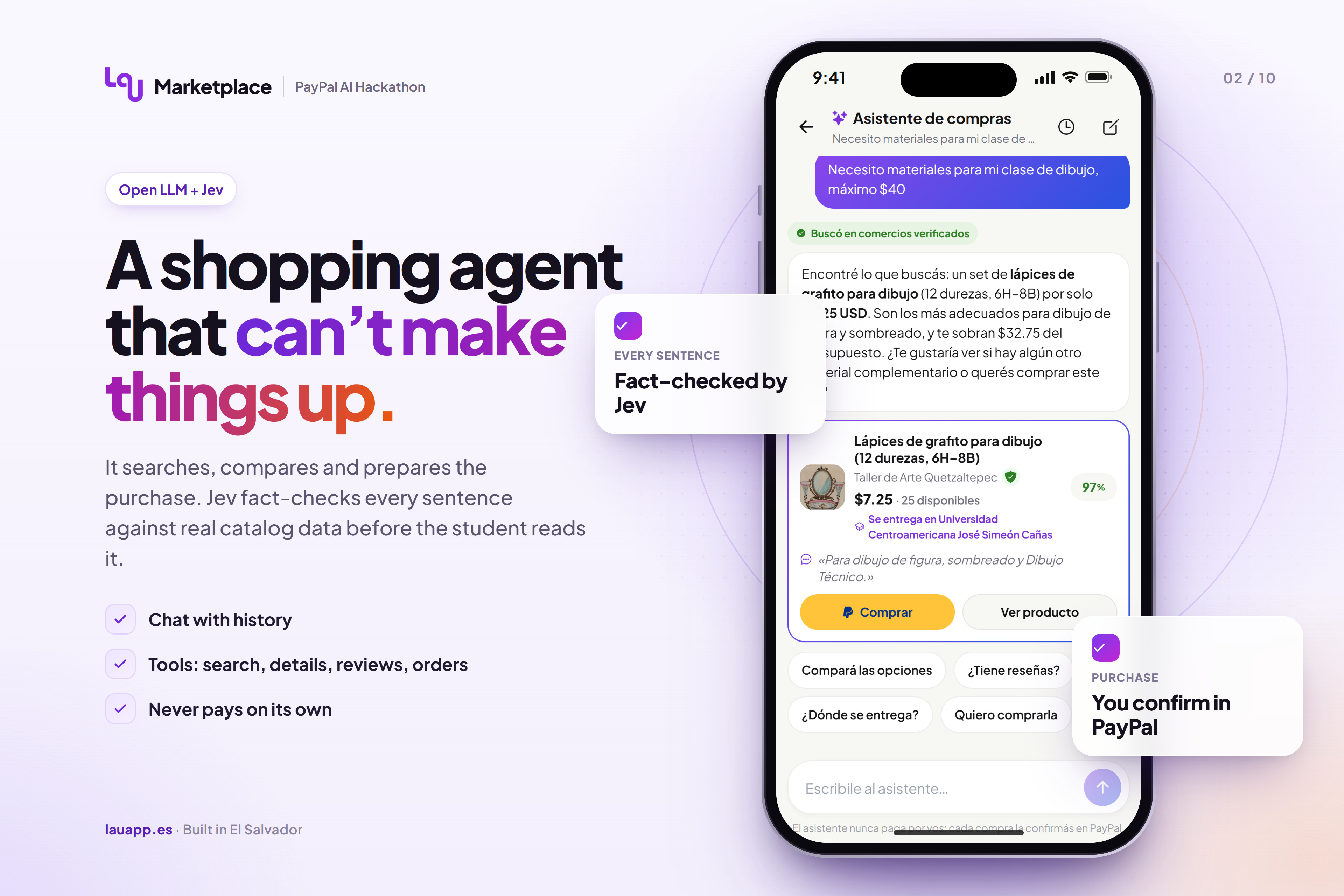
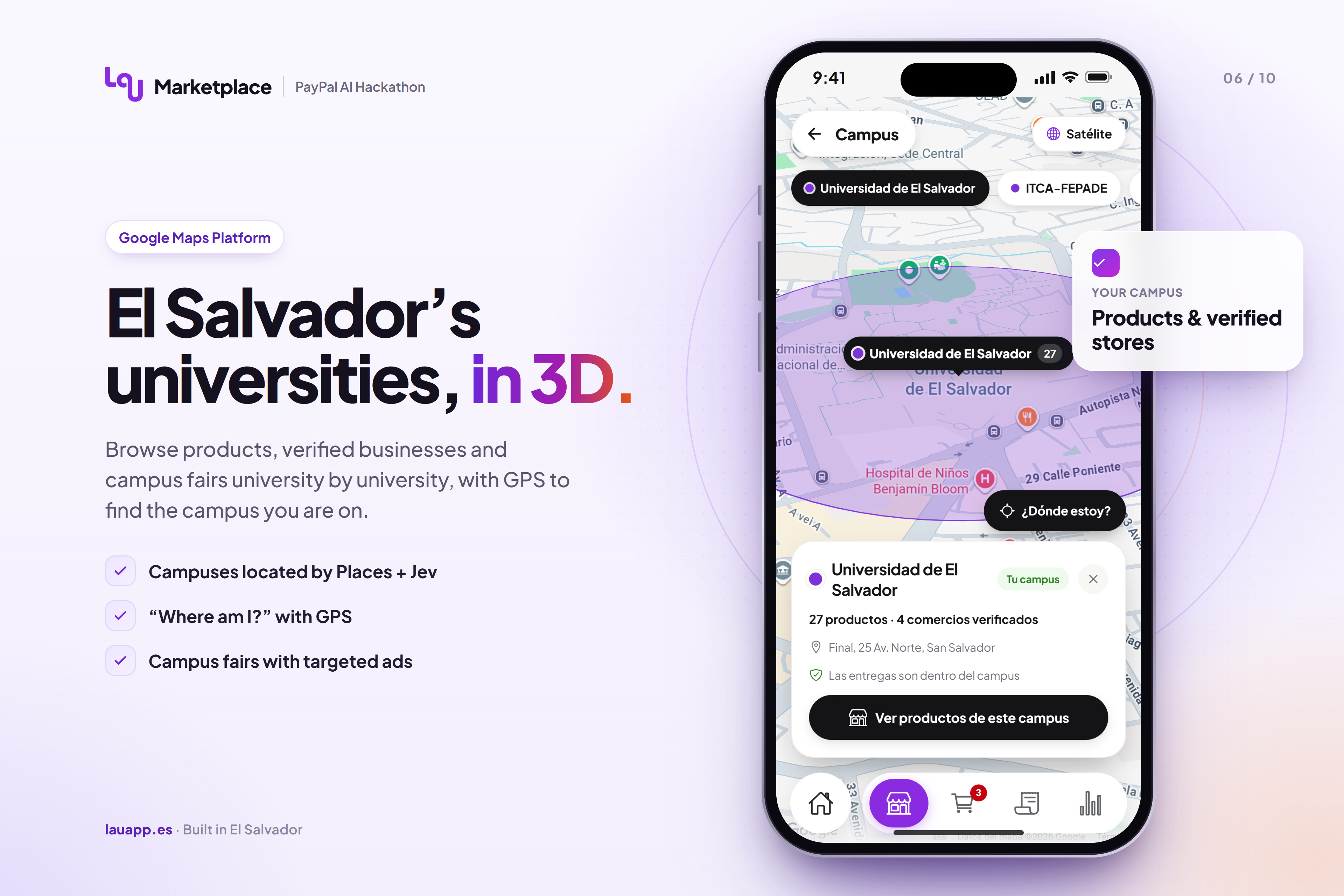
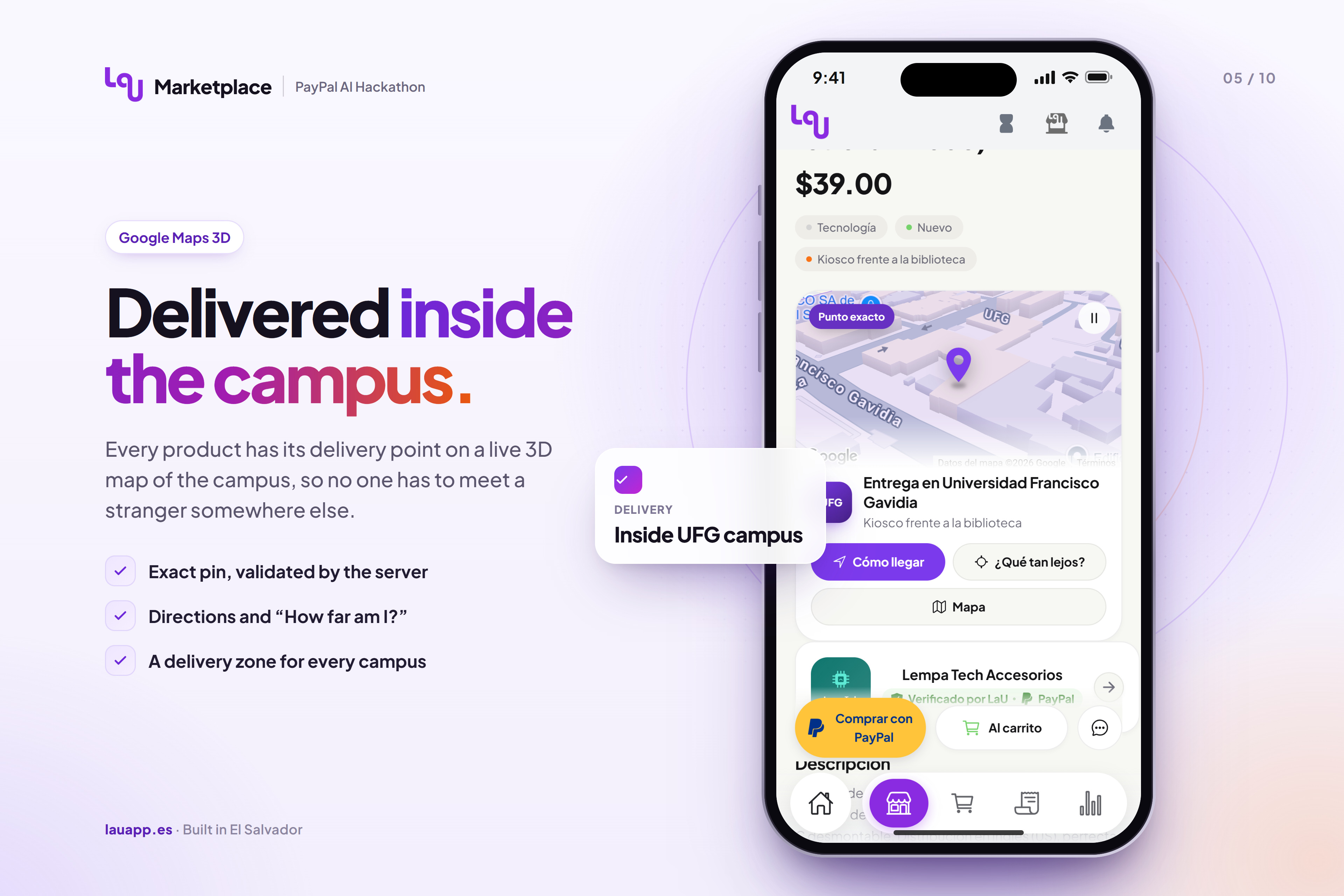
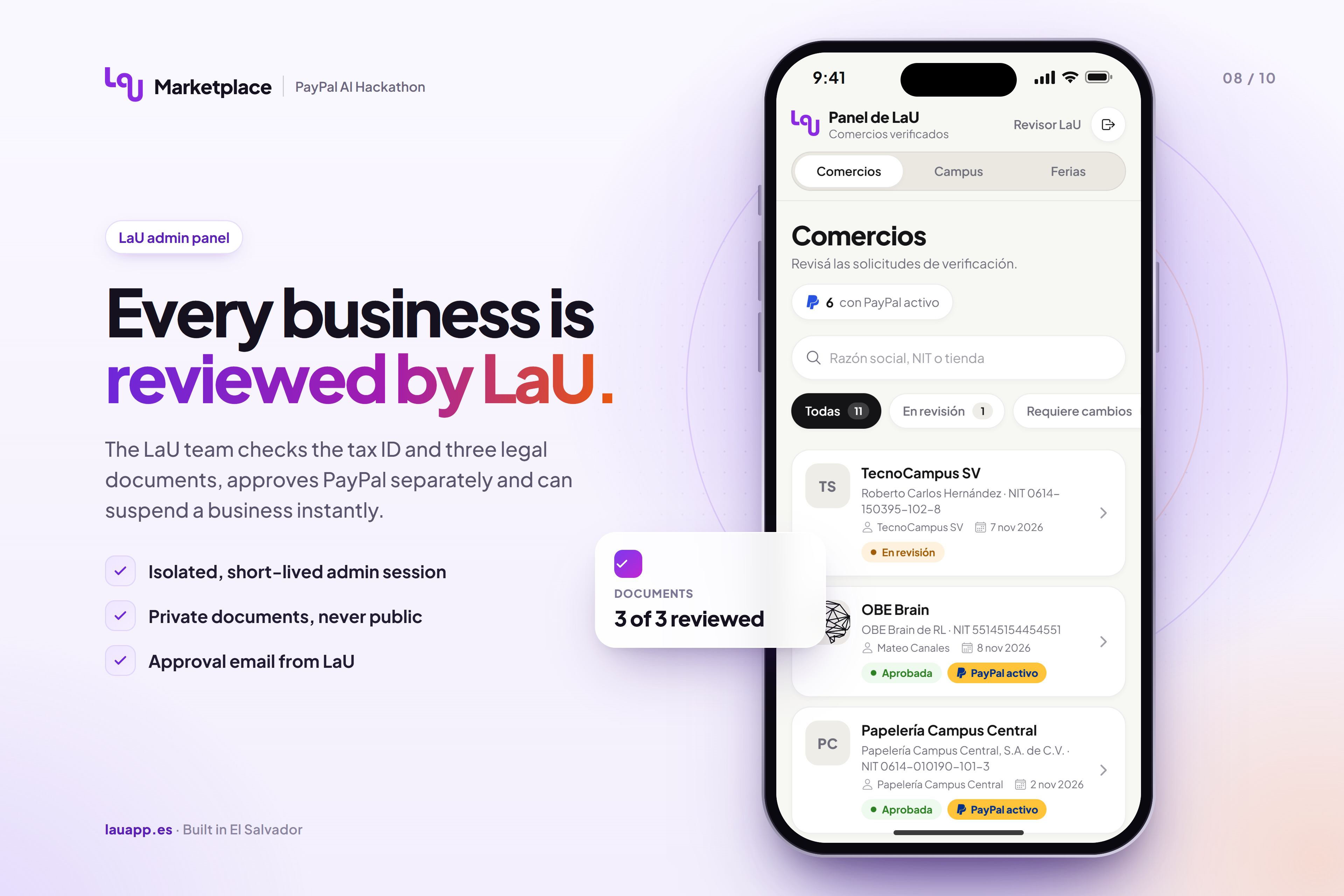
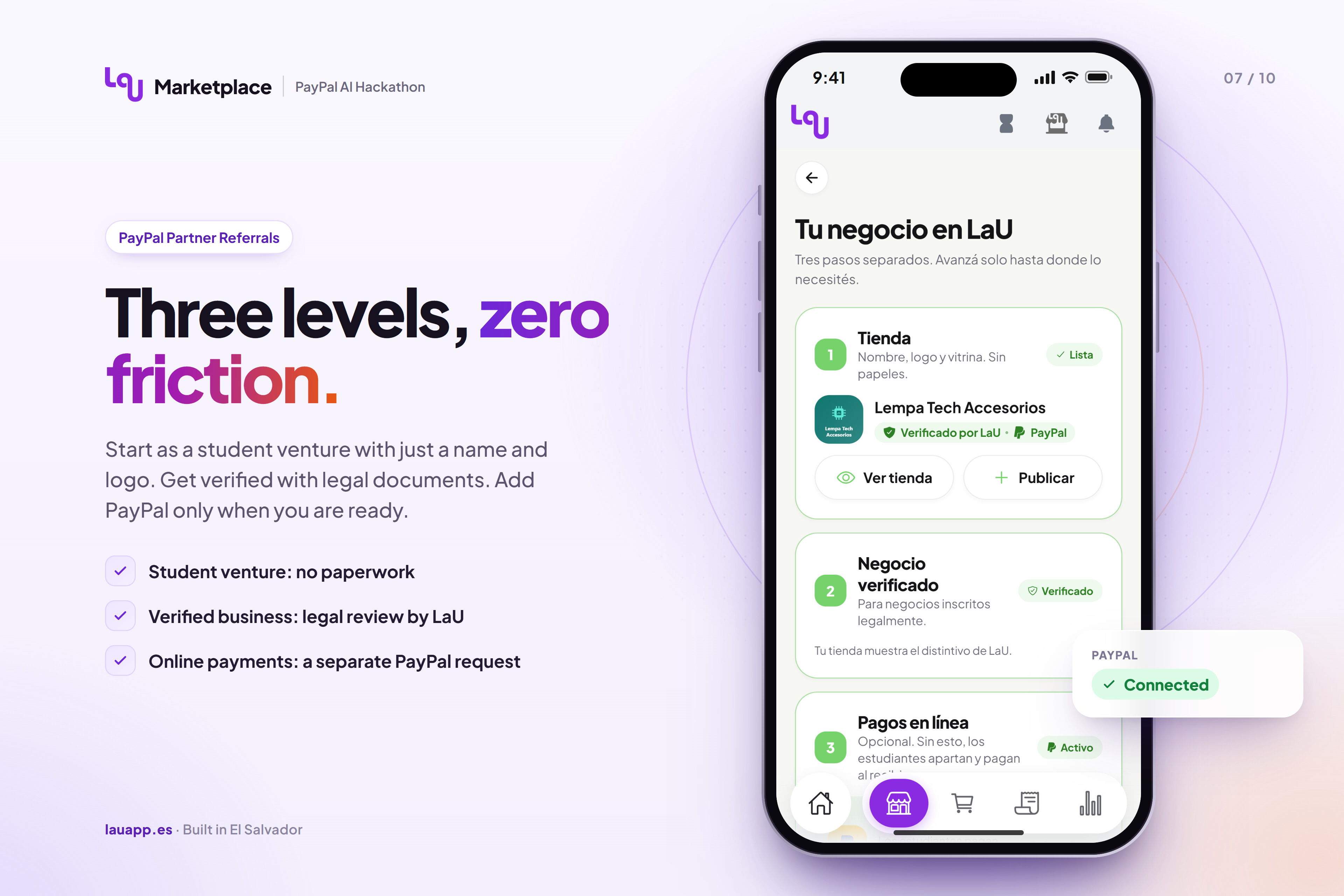
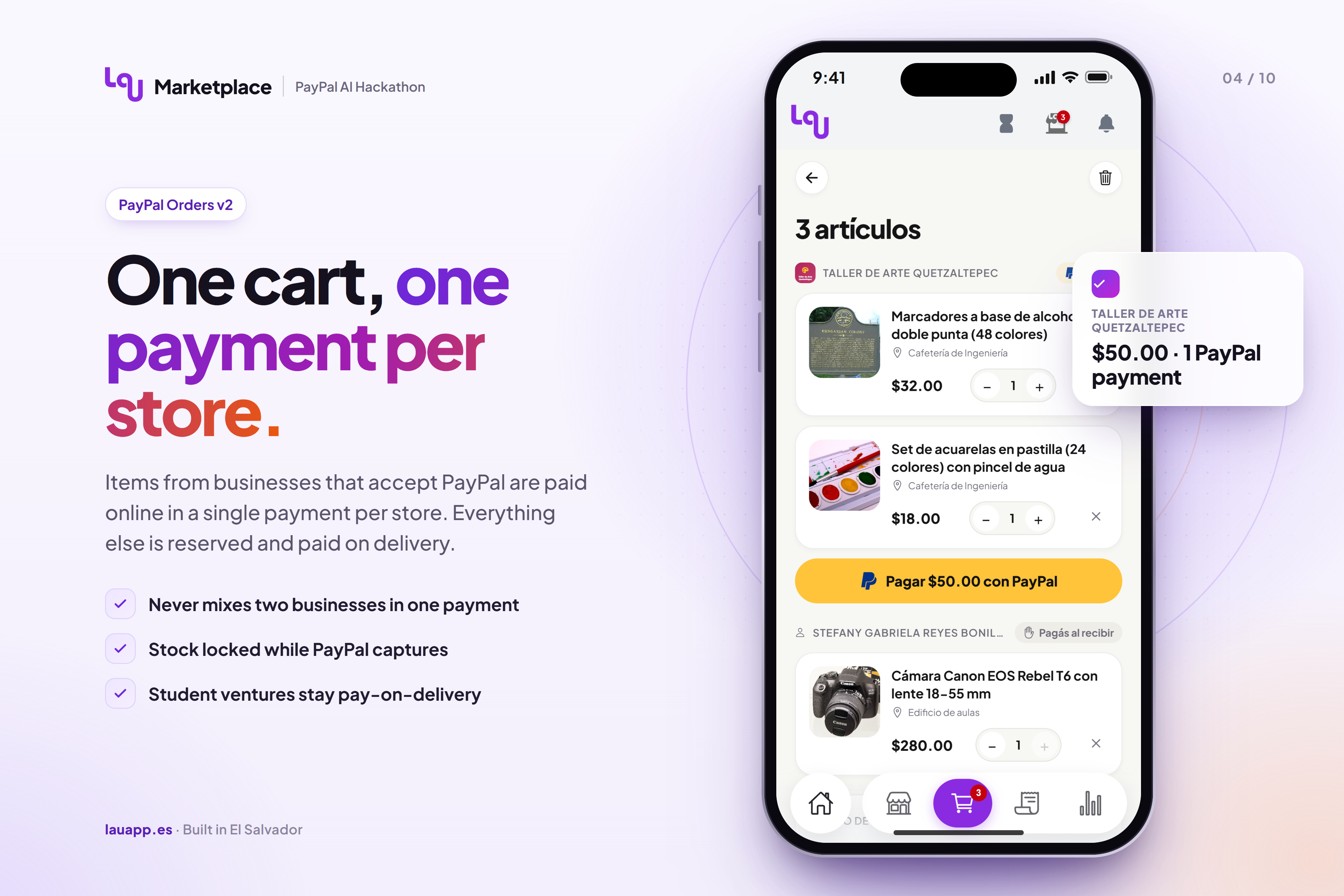
Three seller levels, each optional: Student venture: anyone opens a store with a name and logo, no paperwork. Buyers reserve and pay on delivery — exactly what I needed when I sold maní dulce. Verified business: a legally registered business applies with its tax ID (NIT/NRC, or its own country's tax ID) and three legal documents. LaU reviews them in an in-app admin panel and grants the "Verified by LaU" badge. Online payments: a separate request. The business asks for PayPal (while applying or later), LaU approves it, and the business connects its PayPal Business account with Partner Referrals. LaU checks with PayPal that the account can receive payments before showing "Verified by LaU · PayPal". Businesses can also tell LaU which gateway they already use, for future integrations. PayPal checkout to the right merchant: from a product or from the cart (one PayPal payment per store, for all its items). The backend computes prices and creates an Orders v2 order with the merchant as payee; the student confirms explicitly and approves in the PayPal JS SDK. A paid order exists only after PayPal confirms the capture as COMPLETED. AI search: students describe a need in plain Spanish, e.g. "calculadora científica para Cálculo II, máximo $20". Jev by TypeSafe AI evaluates only real products from verified merchants and shows the match, the sentence from the real description that proves the fit, the budget check, YouTube reviews Jev confirmed are about that product, and web pages that show the product photo (Google Cloud Vision + Jev). AI shopping agent with chat history: an open-weight LLM with tools (search, details, reviews, orders, prepare purchase). Jev is its judgment layer: it gates off-topic messages and fact-checks every sentence of the reply against real data. The agent never pays; the student always confirms in PayPal. Campus-only delivery: every product is delivered inside a university campus, so no one meets strangers elsewhere. A 3D map of El Salvador's universities, GPS "Where am I?", a delivery card with a rotating 3D map and "How far am I?", and campus business fairs with ads shown only to that campus. After the sale: buyer and seller see the order as Paid and talk in LaU's chat with the product quoted.
How we built it
Frontend: Vue 3 + Ionic 8 (web on Firebase Hosting, Android via Capacitor), PayPal JS SDK, Google Maps JavaScript API (3D) and @capacitor/geolocation. Backend: Laravel 12 + Sanctum on my own VPS. PayPal (OAuth, Partner Referrals, Merchant Integrations, Orders v2) is called server-side with idempotency keys and strict validation of payee, amount, currency and buyer before and after capture. AI design — the AI makes judgments, my code makes decisions: Jev answers small typed questions (noul, choice, score) with calibrated probabilities; budgets, totals and the decision table live in code, and every decision is stored for auditing. The agent is an OpenAI-compatible tool loop (Qwen 3.5 on Ollama locally, an open-weight model on Groq in production) with a step cap. Existing project, significantly updated: LaU (feed, chat, study tools, a basic cash marketplace) existed before October 1, 2026. Everything in this submission was built during the Submission Period — see the "Key commits" table in HACKATHON.md.
Challenges I ran into
Keeping PayPal as the source of truth: seller status is checked before quoting, creating and capturing; captures are validated against payee, amount, currency and buyer. Letting AI help without touching money: designing small typed questions, a conservative decision table and a per-sentence fact check for the agent. Separating trust levels so a student venture can start with nothing while legal businesses earn the verified badge and online payments. Running it all on a 1-CPU VPS and a Spanish UI while keeping it auditable for an international jury.
Accomplishments that we're proud of
A complete real flow, from a business applying to a student paying a verified merchant with PayPal Sandbox, inside an app students already use. An AI that is transparent: it only recommends real verified products, quotes real evidence and always asks the student to confirm. Campus-only delivery with a 3D map, so buying on campus is safe.
What we learned
How PayPal's multiparty pieces fit together: Partner Referrals, Merchant Integrations and Orders with a payee. Typed decision models are a great fit for commerce: calibrated probabilities make thresholds and audits easy.
What's next for LaU Marketplace
Refunds and disputes from the merchant panel, and PayPal webhooks. More payment gateways chosen by the businesses themselves. Going live in El Salvador, then opening LaU Marketplace to businesses from other countries.
Built With
- capacitor
- firebase-hosting
- google-cloud-vision
- google-maps
- google-places
- groq
- ionic
- jev
- laravel
- mysql
- ollama
- paypal
- paypal-js-sdk
- paypal-orders-api
- paypal-partner-referrals
- php
- typesafe-ai
- vue
- youtube-data-api
