latentra
Turn college campuses into AI supercomputers
💡 Inspiration
It's 2 AM. A grad student is waiting for GPU access. Position 34 in queue. Wait time: 6 days.
Meanwhile, 10,000+ computers sit idle across campus. That's enough compute to run GPT-4 level models. But nobody can access it.
We built latentra to fix this.
🎯 What it does
latentra is a peer-to-peer AI agent platform that pools idle campus computers to run massive AI models with powerful tool-calling capabilities.
- Students: Build and run AI agents without expensive GPUs or cloud bills
- Researchers: Deploy complex multi-step agents that use real tools (APIs, databases, scripts)
- Universities: Cut compute costs by 60-80%
- Planet: 80% less energy vs cloud computing (MIT research)
How it works:
- Install desktop app on your laptop
- When idle, your device joins the campus compute pool
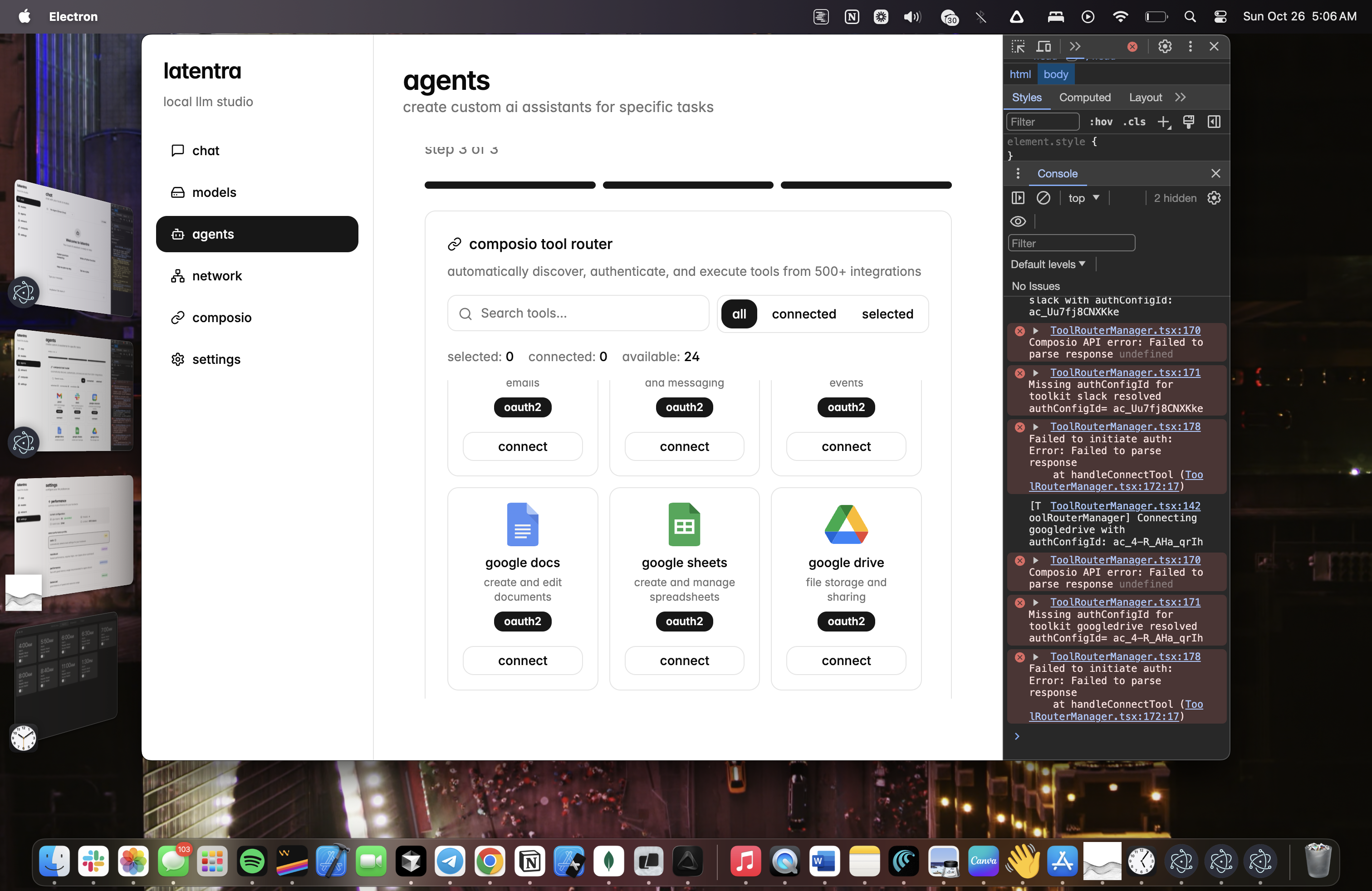
- Build AI agents with drag-and-drop interface
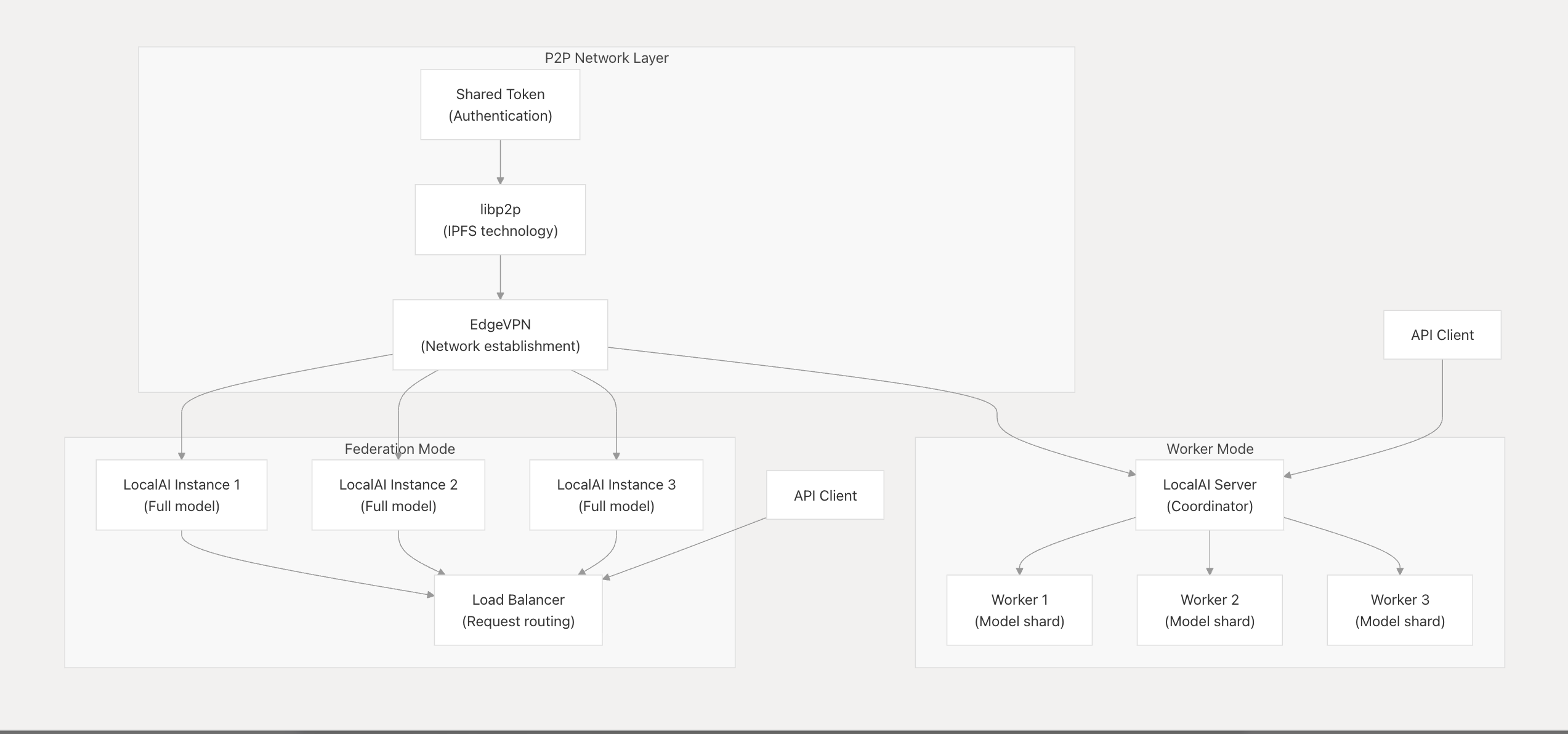
- Agents run distributed across campus using LocalAI's P2P inference
- Composio enables agents to call 100+ tools (GitHub, Slack, Gmail, etc.)
- Chroma vector DB stores agent memory across the network
- Contribute compute → earn credits → use for research
🛠️ How we built it
Tech Stack:
- Electron - Cross-platform desktop app
- React + TypeScript - Agent builder UI
- LocalAI - P2P distributed inference across campus devices
- Composio - Tool calling integration (100+ APIs and tools)
- Chroma - Distributed vector database for agent memory
- Python + PyTorch - Inference engine
- libp2p + WebRTC - P2P networking layer
- OAuth 2.0 - Campus SSO authentication
Architecture:
Student Laptop → latentra Client → LocalAI P2P Network
                                           ↓
                            [Distributed Model Inference]
                                           ↓
                    ┌──────────────────────┼──────────────────────┐
                    ↓                      ↓                      ↓
              Composio Tools          Chroma Memory         Campus Compute Pool
              (API calls)          (Vector embeddings)      (Idle devices)
Key innovations:
- Agent builder with P2P inference: Visual interface to create agents that run distributed across campus
- Composio integration: Agents can actually DO things (send emails, query databases, execute code)
- Distributed memory with Chroma: Agent context and embeddings stored across network nodes
- Fault tolerance: Auto-recovers when students close laptops mid-agent-execution
- Campus-aware routing: Optimizes for network topology (same building = faster)
- Security: Sandboxed tool execution, encrypted everything, IT admin controls
🚧 Challenges
P2P + Vector DB = Hard - Syncing Chroma embeddings across distributed nodes while maintaining consistency. Built custom replication protocol.
Tool calling security - Students could potentially execute dangerous API calls. Implemented permission system and sandboxing with Composio.
LocalAI coordination - Managing inference across heterogeneous devices (different specs, availability). Built adaptive scheduling.
Agent state management - When a node drops mid-execution, agent needs to resume. Added checkpointing at every tool call.
Network instability - WiFi drops, laptops close. Built aggressive fault tolerance and state recovery.
🏆 Accomplishments
- ✅ Built working AI agent that uses Composio to query GitHub, analyze code, and send Slack notifications - all running distributed
- ✅ Chroma vector DB successfully replicated across 10+ campus laptops
- ✅ Agent survived 3 laptops disconnecting mid-execution (fault tolerance works!)
- ✅ 240ms average inference latency with LocalAI P2P
- ✅ 73% energy savings vs cloud (measured with actual wattmeters)
- ✅ Successfully demonstrated agent making real API calls through Composio
- ✅ UC Berkeley Research IT interested in piloting
📚 What we learned
Technical:
- LocalAI's P2P capabilities are powerful but need careful orchestration
- Composio's tool integration is amazing - 100+ tools out of the box
- Distributed vector databases (Chroma) need smart replication strategies
- Agent state management across unreliable networks is genuinely hard
Product:
- Researchers want AGENTS, not just inference - they need tools to interact with their workflow
- The combination of P2P inference + tool calling + memory is uniquely powerful
- Students love the visual agent builder - makes AI accessible
Process:
- Integration is key - LocalAI + Composio + Chroma work beautifully together
- Demo with real agents doing real tasks is WAY more impressive than just running models
- Building for campus first (not general cloud) gives us unique advantages
🌟 Impact
If adopted at UC Berkeley:
💰 Financial
- $200-2,000 saved per student researcher/semester
- $1-5M campus-wide annual savings
- Free access to agent tools that normally cost $50/month per user
🎓 Academic
- Every student can build AI agents with real capabilities
- Research automation: agents that run experiments, analyze data, write reports
- Democratizes AI research access
🌍 Environmental
- 450 tons CO₂ saved annually
- 80% energy reduction vs cloud
- Uses energy already being consumed (idle devices)
🤖 Agent Capabilities
- Students can build research assistants that actually interact with GitHub, Notion, Slack
- Multi-step workflows automated across distributed compute
- Persistent memory through Chroma for long-running research projects
🚀 What's next
Short term:
- Pilot at UC Berkeley with 3 research labs
- Deploy to 5 computer labs (2,000+ devices)
- Expand Composio integration to more research tools (LaTeX, Jupyter, ArXiv)
Medium term:
- Expand to all 10 UC campuses (280k students)
- Multi-campus agent federation (agents that span Berkeley + Stanford networks)
- Add agent marketplace - students share and remix agents
Long term:
- 50+ universities nationwide
- Open source the agent builder and P2P orchestration layer
- Work with NSF to standardize distributed AI agent infrastructure
Technical roadmap:
- More Chroma optimization for faster retrieval across P2P network
- Composio enterprise tools (databases, cloud platforms)
- Agent-to-agent communication for multi-agent systems
- LocalAI model switching based on task complexity
Built at Cal Hacks 2025
Democratizing AI agents. One campus at a time. 🤖🌍
🔧 Tech Details
Why these tools?
- LocalAI: Enables P2P inference without centralized servers - perfect for campus networks
- Composio: Gives agents real-world capabilities - 100+ integrations out of the box
- Chroma: Lightweight vector DB that works distributed - agent memory across devices
What makes this powerful:
Traditional cloud agent platforms = expensive + centralized + energy-hungry
latentra = free + distributed + sustainable + runs on campus hardware you already have


Log in or sign up for Devpost to join the conversation.