Inspiration
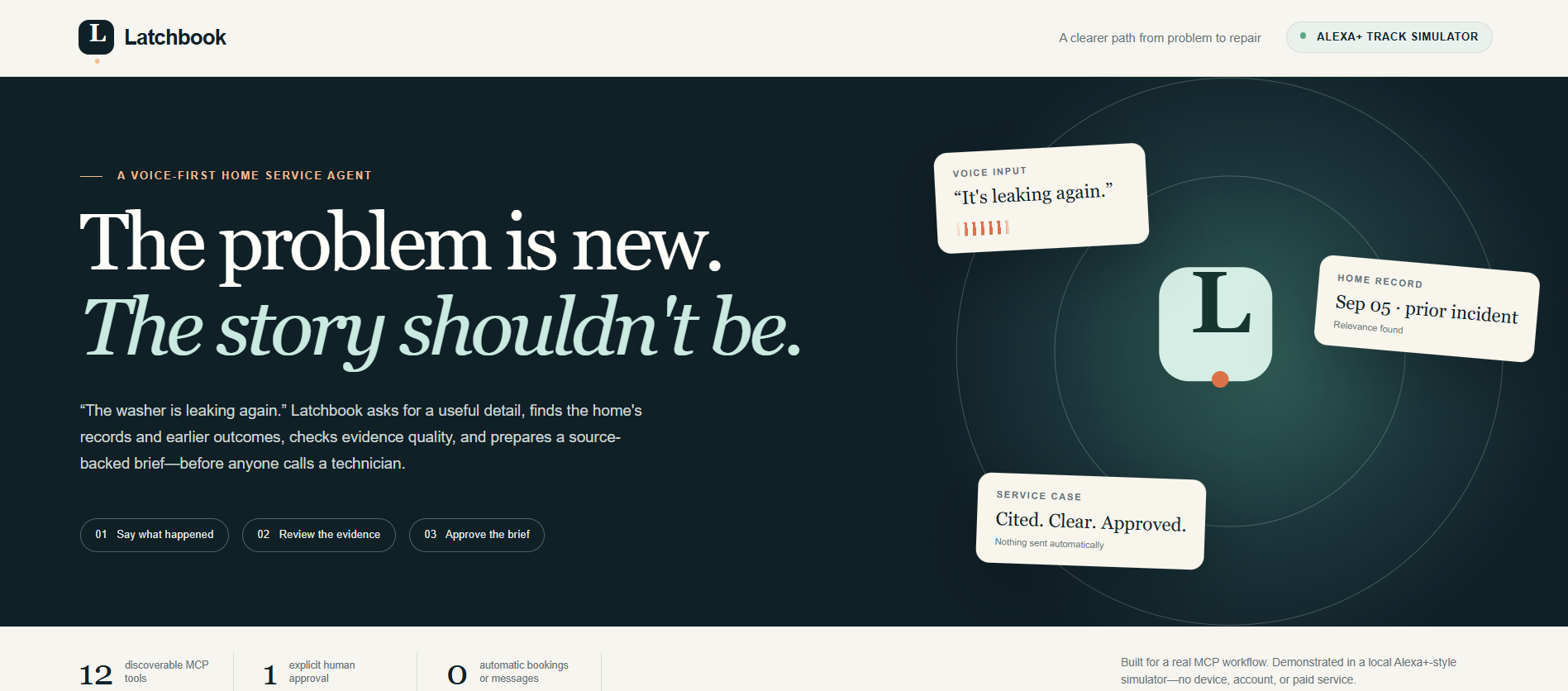
“The washer is leaking again” is a short sentence, but a useful service call needs the story behind it: which appliance, where the water appeared, what happened last time, and which records are worth checking. I built Latchbook because that context is often scattered across notes or forgotten entirely.
What it does
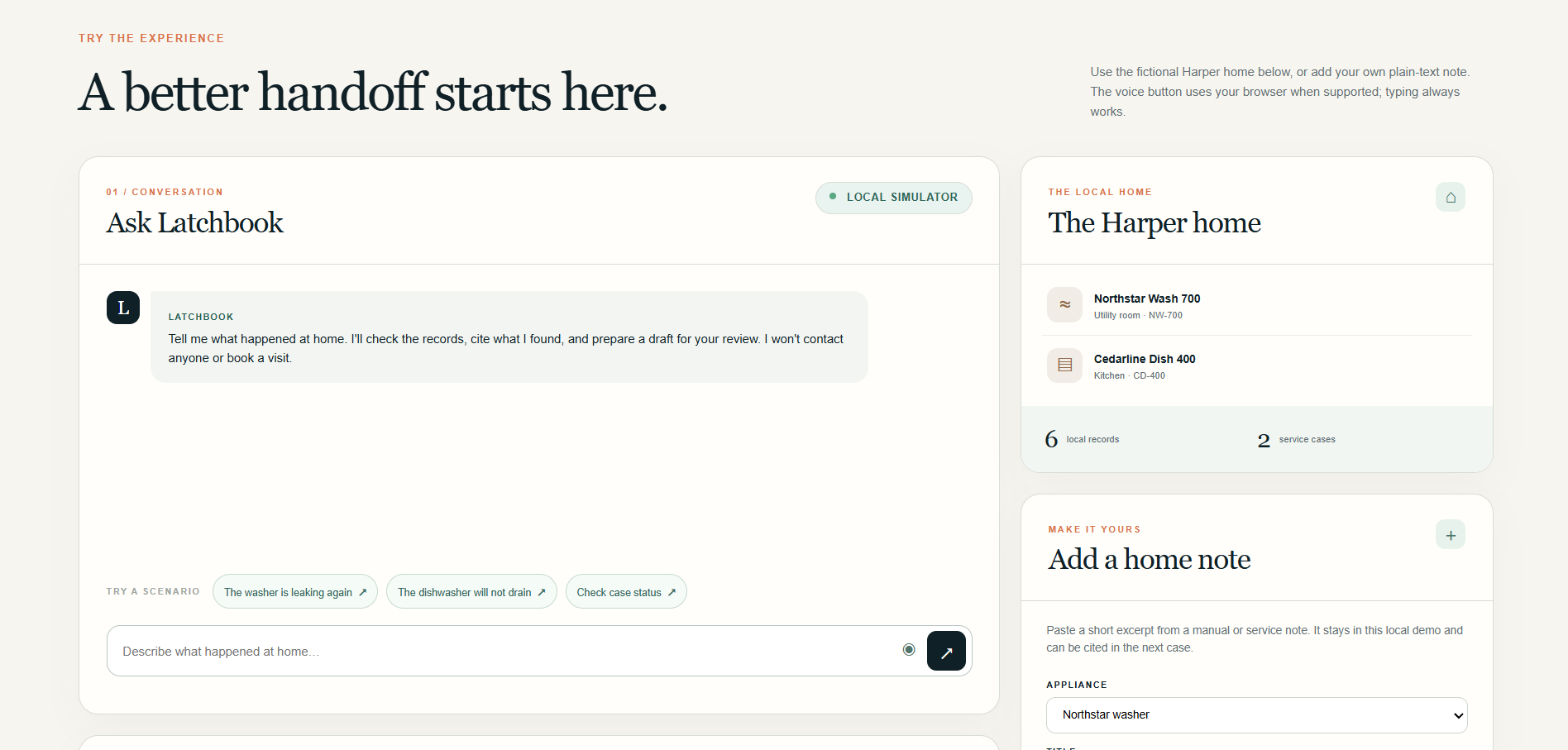
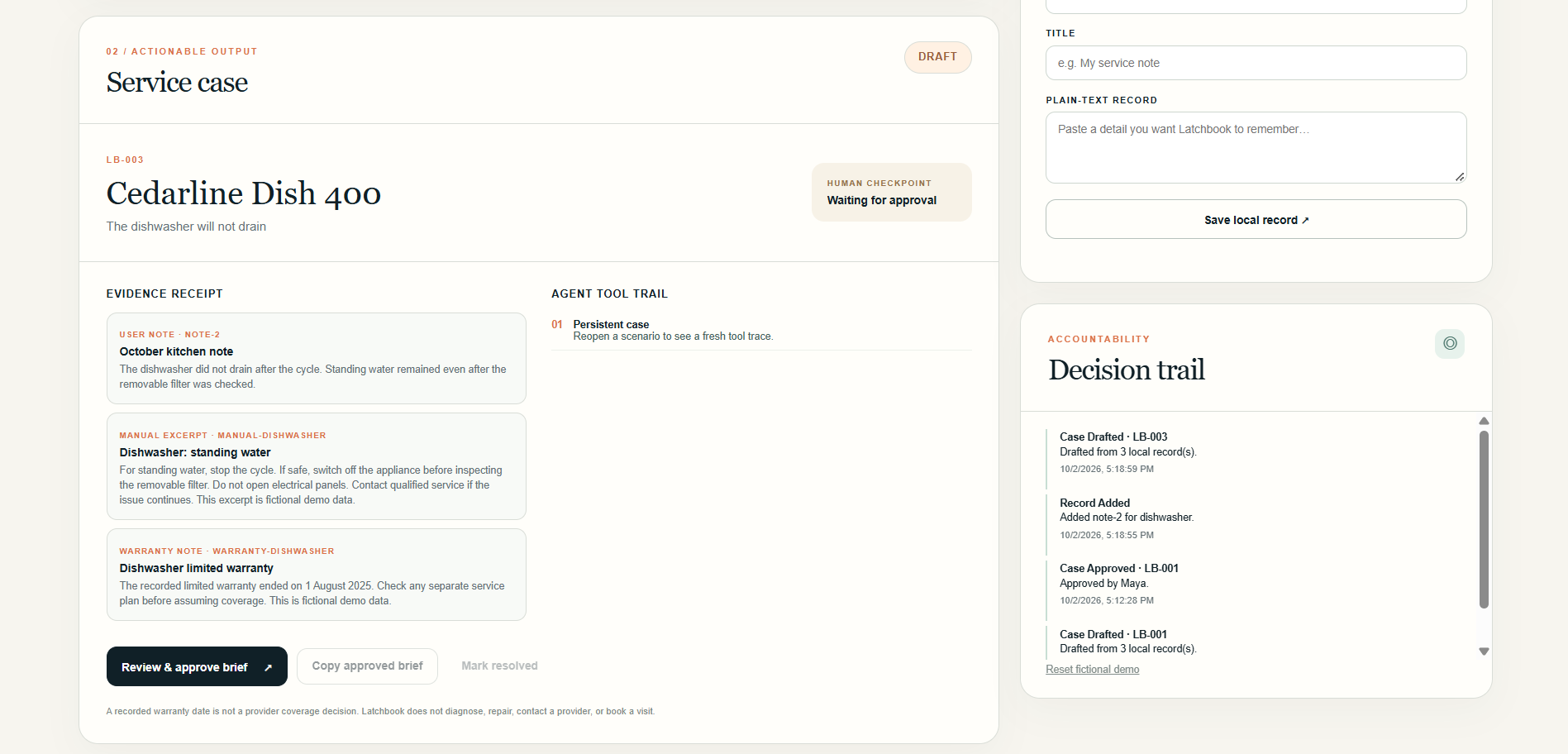
Latchbook turns an appliance problem into a cited, reviewable service brief. If the first report is vague, it asks a targeted follow-up before drafting anything. It then searches local household records, checks the recorded warranty date, reviews earlier cases, and flags evidence that is missing, old, or conflicting.
The person remains in control: a draft cannot be copied as a shareable brief until it is explicitly approved. After a case is resolved, the household can record the outcome. If a similar problem returns, Latchbook retrieves that earlier outcome as a clearly labelled, household-reported source.
How I built it
I built a responsive web simulator and a real MCP 2025-11-25 Streamable HTTP server using dependency-free Node.js. Twelve tools handle the interview, appliance lookup, record retrieval, evidence checks, and case workflow. Local storage preserves the history across turns. An in-app inspector demonstrates a live MCP handshake, tool discovery, and a tool call; thirteen automated tests cover the protocol and core workflow. Browser speech input is optional, and typing works without it.
Challenges I faced
The biggest challenge was deciding what the agent should not do. A stored warranty date is not proof of coverage, and a household description is not a repair diagnosis. I designed the evidence trail and approval checkpoint to preserve those distinctions. I also needed to demonstrate the Alexa+ concept without claiming access to unavailable preview tooling, so the browser experience is explicitly an independent simulator, not a deployed Alexa+ add-on.
What I learned
A helpful home agent does not need to make every decision. Asking one good question, showing where information came from, remembering the outcome, and stopping for human approval can make the next real-world step much clearer. Latchbook runs locally without a paid API, cloud service, or physical device.
Built With
- agentic-ai
- automated-testing
- css3
- html5
- human-in-the-loop
- javascript
- json-rpc
- local-first
- mcp-server
- model-context-protocol
- node.js
- responsive-design
- streamable-http
- voice-interface
- web-speech-api

Log in or sign up for Devpost to join the conversation.