-
-
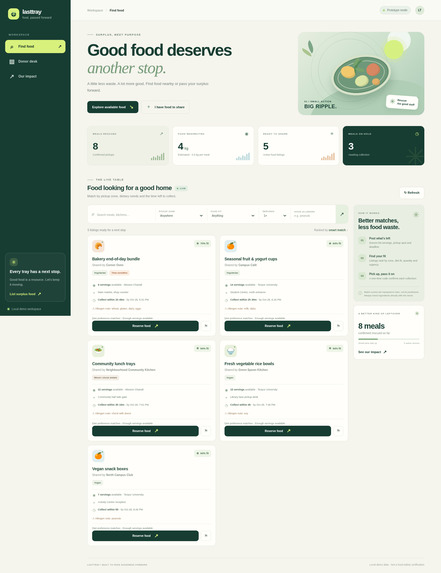
Find Food
-
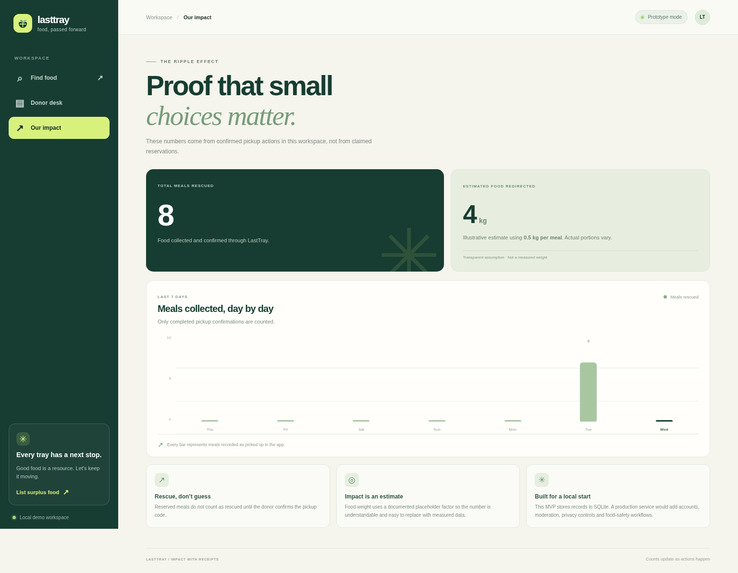
Our Impact
-
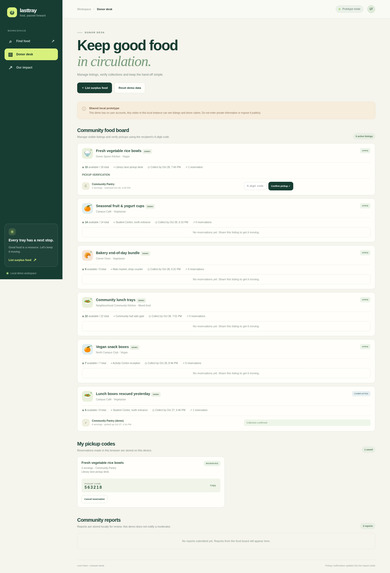
Donor
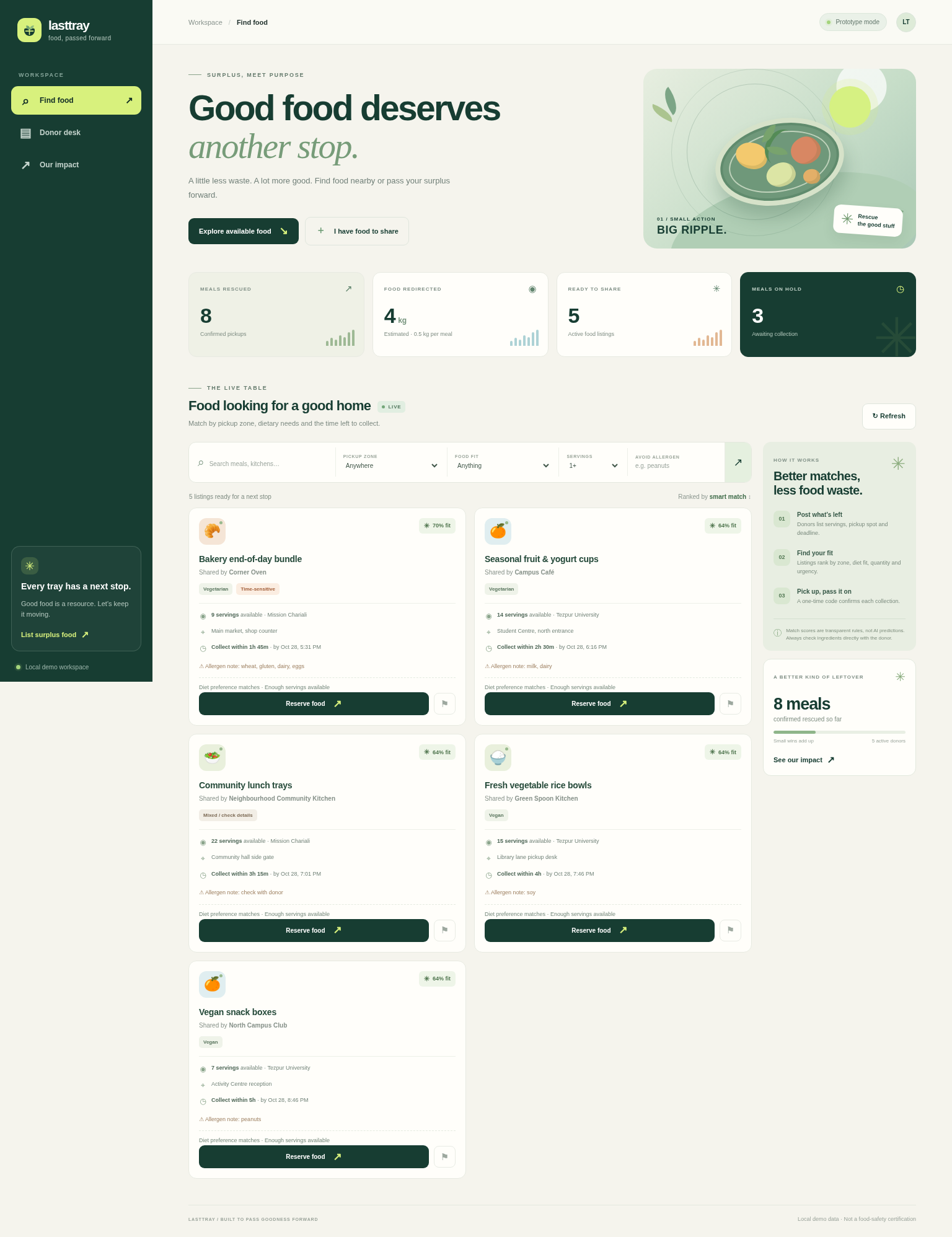
Inspiration
Good food is often thrown away because the people who could use it do not know it is available—or do not see the collection deadline in time. LastTray gives cafés, campus kitchens, event organizers, and community groups a simple way to list surplus food and helps recipients discover suitable listings before the pickup window closes.
What it does
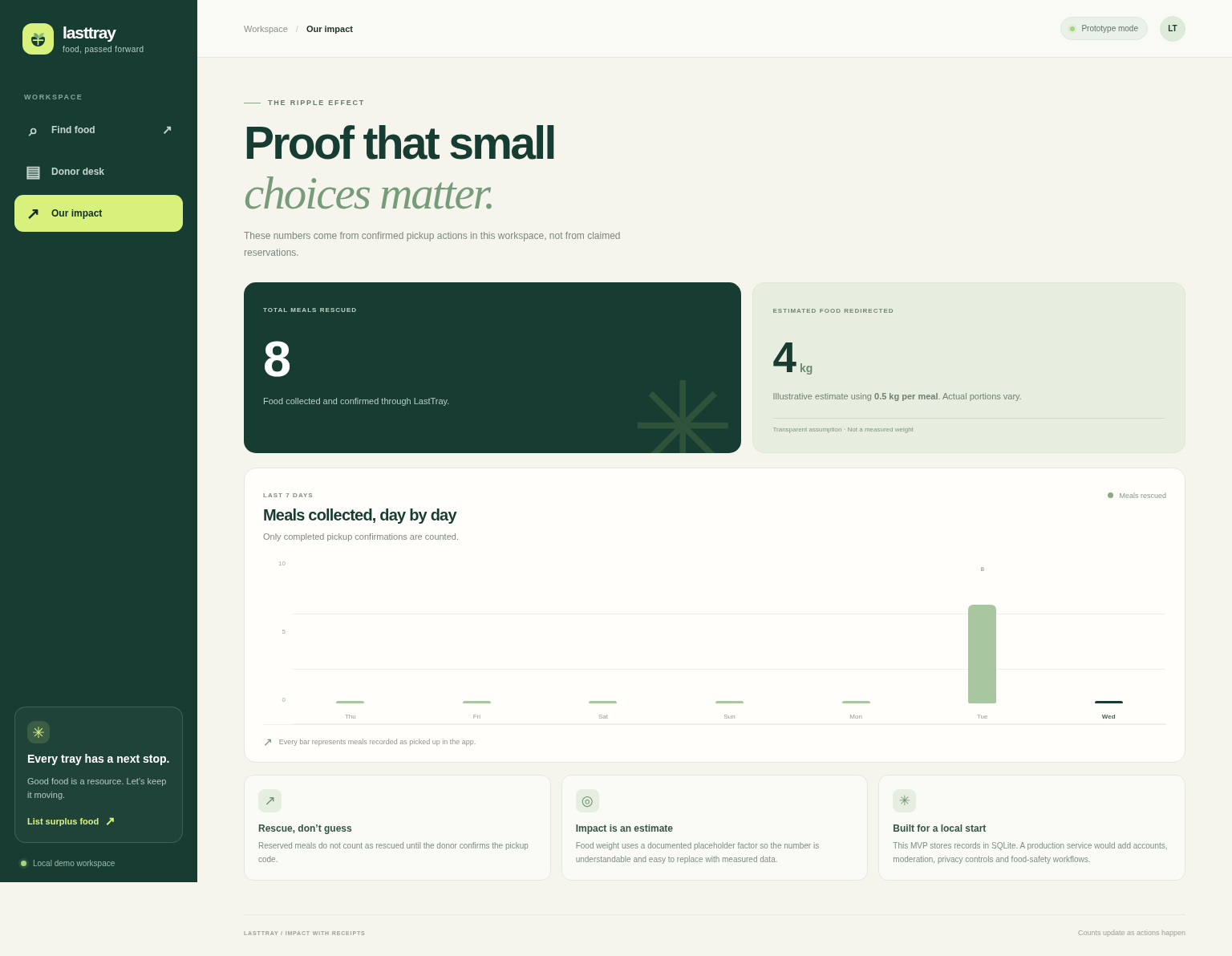
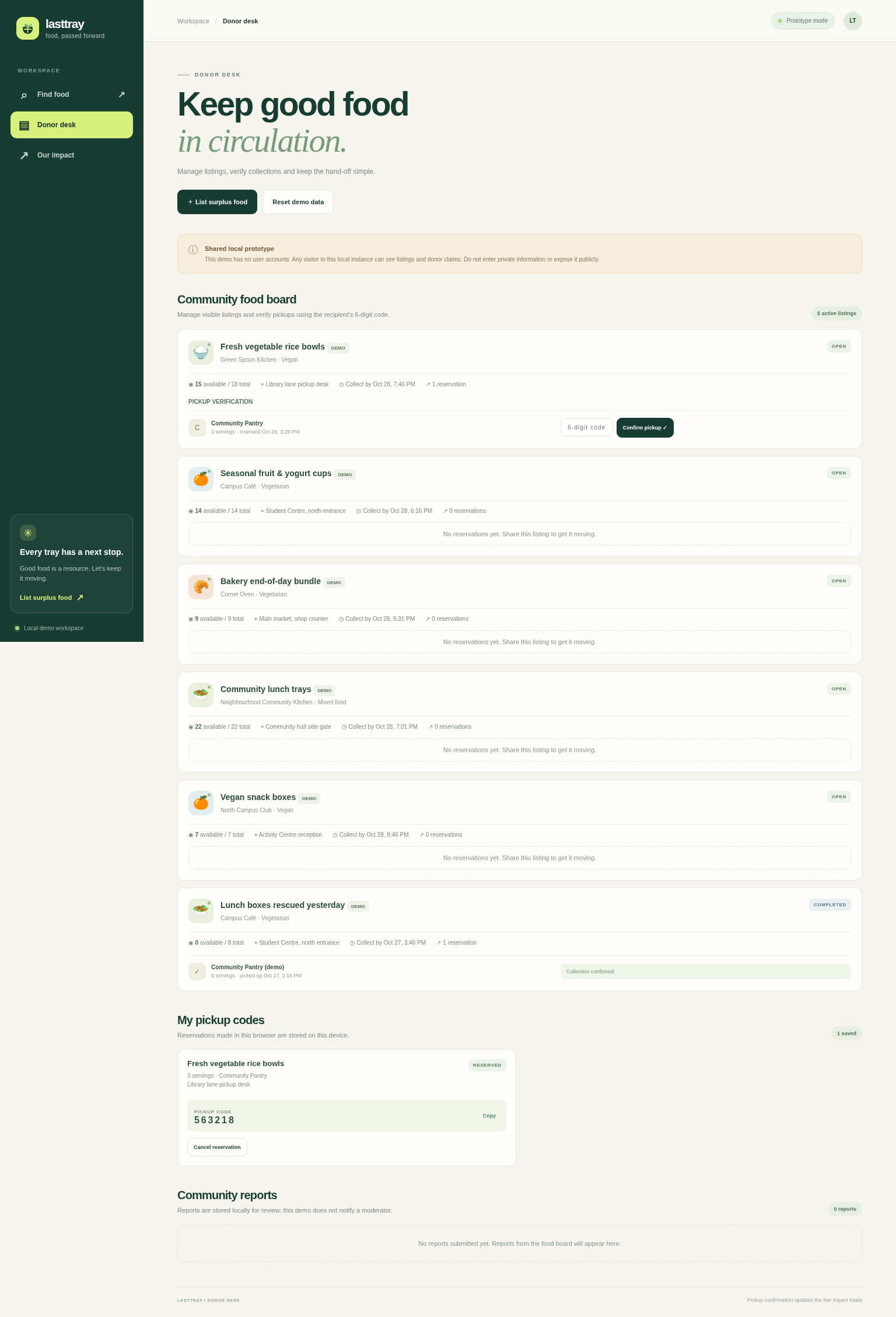
A donor publishes the number of servings, food category, pickup spot, collection deadline, and known allergens. Recipients can filter by dietary preference, pickup zone, number of servings, and a known allergen. LastTray ranks eligible listings with a transparent rules-based score that considers zone, dietary fit, availability, and urgency. When someone reserves servings, the app creates a one-time pickup code. A donor confirms collection with that code, and only completed pickups count toward the live impact dashboard.
How we built it
The prototype uses Flask and SQLite with a responsive HTML/CSS/JavaScript interface. It runs locally without paid APIs or external service credentials.
Challenges we ran into
The central workflow is not just posting a listing. The app also needs to keep available servings consistent when multiple recipients reserve at once, distinguish a reservation from a completed pickup, and avoid counting uncollected food as rescued. LastTray uses a transaction for reservations and a separate pickup-code verification step so the dashboard updates only when a donor confirms collection.
Accomplishments that we're proud of
We are proud of building LastTray, a platform that connects surplus food donors with people who need it. We implemented food listings, smart matching, reservations, pickup verification, and an impact dashboard. Our biggest achievement is turning a real-world problem into a practical technology-based solution.
What we learned
We learned how to build a full-stack web application using Flask, Python, SQLite, HTML, CSS, and JavaScript. We also gained experience with database management, matching algorithms, and designing user-friendly solutions to real-world problems. Most importantly, we learned how technology can help reduce food waste and create social impact.
What's next for LastTray
Add account-based donor and recipient roles, verified organization profiles, server-side moderation, safe handling of allergy information, real map-based travel estimates, pickup reminders, multilingual support, and impact reports based on measured weights. Before a real launch, implement production security and review all food-safety and privacy requirements for the deployment location.

Log in or sign up for Devpost to join the conversation.